





Painted Fields
Streaks of reds, browns, greys, and yellows warp the Painted Fields. This sprawling biome on Capepo is so large it can be seen from space.
The Painted Fields are vibrant heathlands in central Veresta. Its cool climate has made it the perfect place for outer space residents to find their home here. Some of the biggest cities on Capepo are found in this biome, including Ammi and Nidularia, two cities with populations in the tens of millions.
Geography, Location & Climate
The Painted Fields was voted the most gorgeous place on Capepo last year. Visitors can wander through the heathlands, by rushing rivers, or take a trip to the nearest bustling city. This place really has it all.
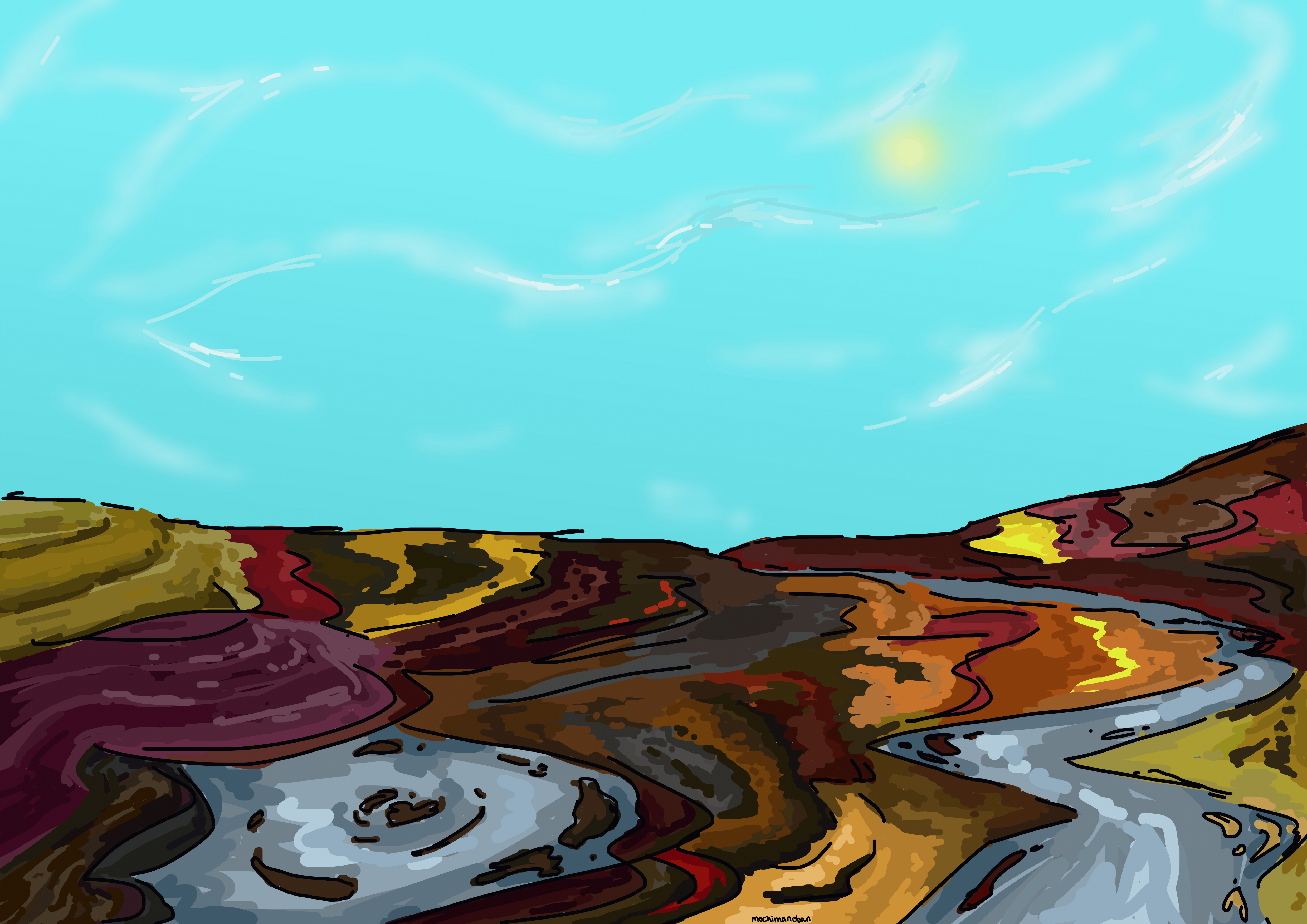
Rivers cut through the Painted Fields, flowing up and down the hills. They defy gravity, some rivers raising far above the ground, twisting and turning in the sky.
Temperatures are relatively cool in the Painted Fields, the height of summer daytimes reaching around thirty degrees Celsius. The rainy season persists for two months of the year, flooding flatter areas.
The soil of this region is silty and not fertile. Heather is one of the few things that can survive in the Painted Fields, along with a select few species. Due to the terrible soil quality, much of the fields have been transformed into eclectic urban areas instead of farmland.
Major Settlements
Ammi
Ammi, the City of Flowers, is famous for its heather festivals every spring.Nidularia
The fourth most populous city on Capepo. A third of its residents are from various other planets.Flutter
Built in the shape of a bird's wing, the city of Flutter has mandatory aeromancy classes for all of its students.Ecology
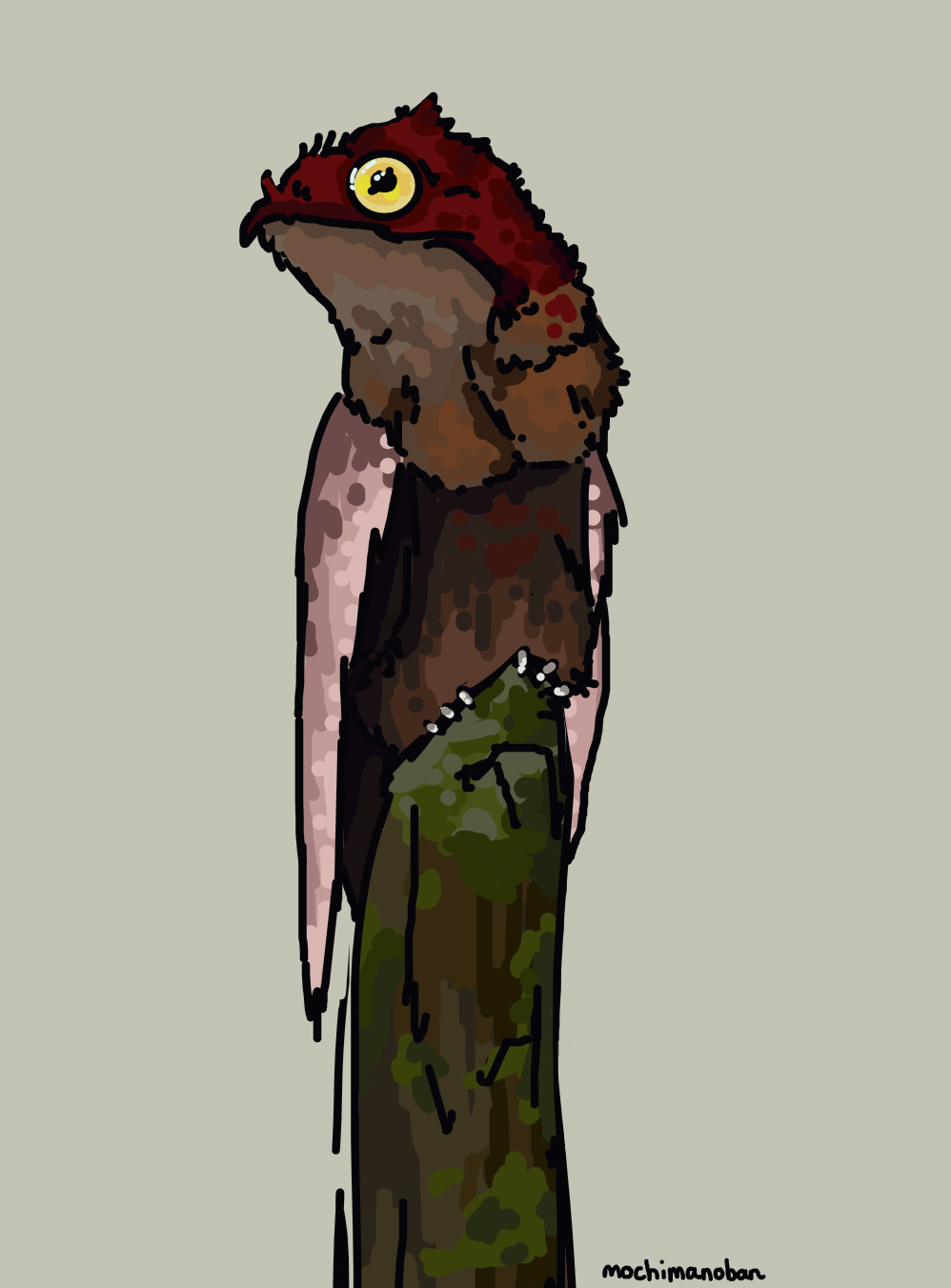
Omg ew those eyes keep following me I'm freaking out
Surprisingly, the Painted Fields are not overly diverse. Heather dominates the land, forming a thick blanket of shrubbery that is hard to trek through. In wilder areas, civilians must follow desire paths formed by many years of walkthroughs.
Some rarer species of heather are protected, such as the purple kiss heather, only found in very small clusters within the fields.
Hobbly potoos, stinnits, and a number of other lively birds flit through the bushes at night. They dart under shrubbery to protect them from bristlebacks, large omnivorous deer that enjoy the thrill of chasing down prey.
Hobbly potoos are an infamous bird in the region thanks to their gigantic yellow eyes. In the dark of night these eyes pierce through the thick gloom and can be spotted from a mile away. Many superstitions still surround this bird.
Major Organisms
Bristleback
Standing at nearly two metres tall, bristlebacks navigate the heathlands on thin, needle-pointed legs. They chase prey down with a smile on their face.Hobbly Potoo
Hobbly potoos struggle to stand on their own two feet. If they stand still for too long, they'll lose balance and fall to the ground like a split log.Stinnit
Tiny warblers, no larger than a heather plant's flower. They steal pollen off the legs of bees, which greatly angers them. Stinnits are responsible for angry bee swarms around local cities.Ashen Scorpus
A species of beetle that mimics scorpions to appear more threatening. This variety has an affinity with pyromancy, and likes to set fire to whatever it walks on.Fil Lake Salmon
Fil Lake salmon are a species of fish found in just a single lake of the same name. Now captive bred, this species is at the hands of farmers.Sbark
Sbarks are named after their electrifying ability to blend in with tree trunks. One wrong placement and the skin on your hand will blister and peel off, after being cooked.Cloudhopper
Cloudhoppers are found all across Capepo, but are important to the ecosystems in the Painted Fields. They help maintain the water cycle with their hydromagical abilities.Purple Kiss Heather
One of the rarest varieties of heather found in the Painted Fields. Hundreds of years ago it was used to create purple dyes.Spiny Ant Tree
The spiny ant tree is a tall tree that grows infrequently around the Painted Fields. They can't absorb enough nutrients to allow their leaves to grow, so they remain rolled up, forming sharp spines.Related Articles
| Atlas | Ash Field · Atigeo Sea · Chrihaia Lake · Endless Tower · Ison Copper Mine
| ||
|---|---|---|---|
| Biota | Atigean Clam · Clam-Eyed Fish · Fire Frog · Fire Noodle · Firepede · Firewood Beetle · Frogfish · Helsaurus · Mayhem Fish · Sawshark · Thermal Carp · Thorn-backed Thrasher | ||
| Cultures | Hell's Holiday | ||
| Misc | Hell · Hell Notes |









I was bursting out in laughter when reading about the Hobbit Potoo. Probably less funny for them. And I think, the region is rather versatile regarding fauna and flora. How big are those bees?
hehehehe, the potoos are very clumsy xD it's quite a diverse place in terms of fauna, but less in flora. not many plant species! the bees aren't too big! perhaps i can make some more articles on the animals of this region :D