




Ecology26
Piggybacking on what I did a couple years ago with Galaxy24, every day of 2026 I hope to write a little something about a brand new species!
Every week is a new region of the Yonderverse. It typically will be nothing more than a biome, but maybe one week I'll feel like working on a whole realm, whole planet, or something else!
Tuesday: Create a secondary consumer
Wednesday: Create an tertiary consumer
Thursday: Create a plant
Friday: Create a fungus/detritivore
Weekends: Two wildcards, create whatever I like!
Hopefully these rules will mean I then create lots of mini ecosystms, with creatures that can interact with one another. If I miss a day or two, I'll skip it, no need for me to stress about catching up. If I really feel like it, I'll come back to those days and add something!
If you'd like to know a bit more about worldbuilding ecosystems, check out my guide below!
Week 1: Steel Mountains, Venviri
Rockhoppers are small rodents that flit between the floating rocks of the Steel Mountains. They gnaw at the soil, absorbing metals for nutrition.
They are a common prey items for predators due to their abundance. In some areas of the mountains they gather around and completely cover the ground, often during earthquakes and magnetic shifts.
Rockhoppers are a dark blue with white wings. During mating season males shed their feathers in the skies, performing a free fall. If the female is impressed, she catches him. If not, he dies.
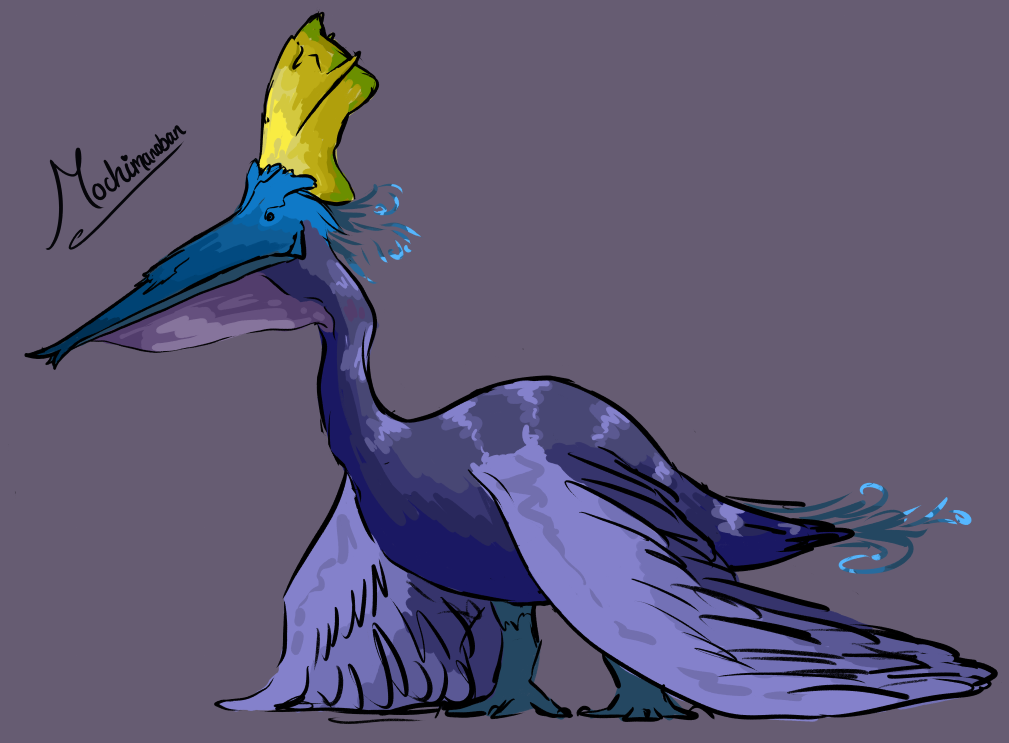
Titan crests are gigantic birds that wander the mountains, scooping up rockhoppers in their gigantic mouths. They are closely related to pelicans, in the same family as them.
Titan crests are gregarious birds. They stand tall, almost three metres when perched comfortably on the ground. Titan crests gather in groups of up to two hundred, screaming every dusk and dawn. They paddle in the metallic ponds around the mountains, larger flocks causing tremors in the ground.
Duckmouth festers are eight-legged felines with a duckbill and a clubbed tail. The species can utilise metal magic, using it to manipulate soil underneath them and hunt prey easier.
While they are extremely powerful, they are not very intelligent. To a person their attacks are very predictable, and with enough skill, duckmouth festers aren't a threat.
They are apex predators, hunting anything they are able to capture.
Siltwrilths are a freshwater plant growing in the metallic ponds around the mountains, particularly within valleys. They grow extremely fast and fill these ponds, often draining them of the water completely. Omnivorous birds like titan crests often eat this plant, as well as most herbivores in the region. Siltwrilths are one of very few plants in the Steel Mountains, and the only fast growing food source.
Ironworms dig through the ground, popping up wherever a corpse lay. They navigate the underground blindly, burrowing wherever their mouth takes them. Millions of ironworms infest the Steel Mountains, some scientists partially attributing them to the geological instability in the region.
These metallic grubs are short and fat, no more than three inches long. They can chew through more than ten kilograms of soil a day, absorbing nutrients and excreting remaining soil.
Formed when iron filings magically gain sentience, ironsprites are adorable metallic dustballs that roll around the Steel Mountains. They are an inanimal, reliant on magic to survive.
They roll in the wind, reaching speeds of nearly fifty miles per hour. They collapse as they smack into rock faces, dispersing, each strand of iron growing into a new ironsprite.
Mukanns are large omnivorous bovines that wander the Steel Mountain valleys. Using a magical foresight they can predict the movement of the mountains.
Mukanns follow the stars, using their antlers to draw a pathway to them. In the middle of the circular antlers are a glassy substance that magnifies sunlight and magic.
Week 2: Man
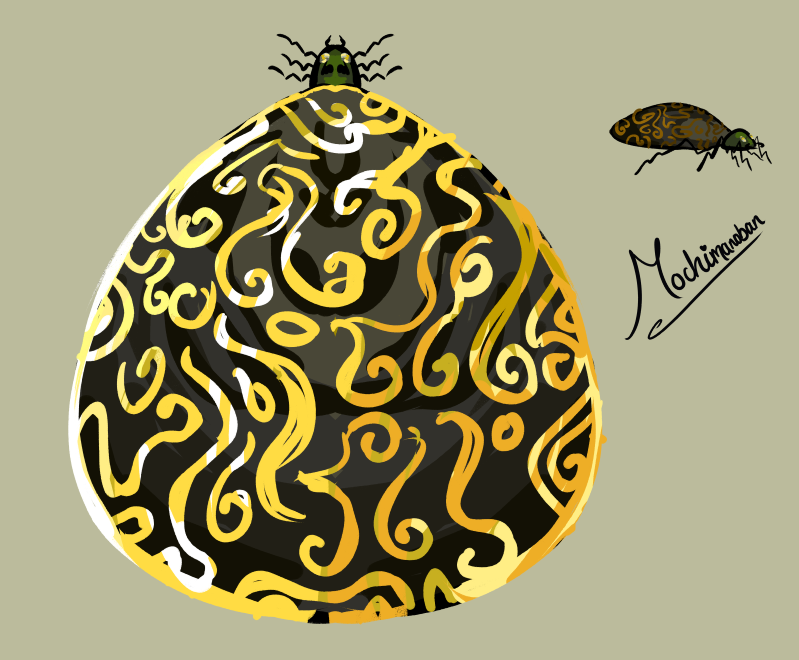
Tearing through Man's skin are titanic ticks. They drink whatever ichor is left in the corpse, coursing through his veins. Titanic ticks swell up to great sizes, thirty metres before exploding.
Bloodpokes wait for a titanic tick to swell up, then they grasp on with their proboscis and drink this blood. Their proboscis cannot puncture Man, but it can puncture the tick.
Bloodpokes are featherless birds measuring in at just two metres in length. They rarely attack people, unless they encroach on their nest territories.
Bloodbears are giant tardigrades. They aren't tethered to Man, unlike most other creatures. They float around space in its orbit, stalking its prey - people. Once an easy kill is spotted, they dive down in the cover of darkness.
Weeper vines grow out of the eye sockets of Man. They feed off fluids left over in the sockets. Slow growers, the species functions as one plant, a single hivemind.
These plants grow infinitely, the longest vines measuring in at over five hundred metres in length. They are one of the only plants growing on Man and are the food source of countless herbivores.
Gloomy ankleshrooms are a table mushroom found growing on Man's toes. The fungi have completely covered Man's right pinky toe, and continue to spread down around to the next toes.
These mushrooms feed on Man, absorbing nutrients directly from the rotting body. They are bioluminescent, with glowing blue and yellow spots.
Sunspot moths are peculiar creatures drawn to Man's shimmering skin. While they are found in abundance across the Capital Realm, they congregate around Man like, well, a moth to a flame.
These moths come in all colours of the prism, but most commonly a yellow or orange. The closer they come in contact to a light source, the stronger their glow. They feed on prismatic energy, siphoning it using a proboscis that pokes through dimensional walls.
Sickle saproots directly absorb ichor, growing and flowing through Man's veins. Roots stab through vein walls.
Week 3: Great Red Spot, Jupiter
Weighing next to nothing, whirligigs spin in the breeze. Their aerodynamic anatomy allows them to follow the winds, getting caught up in the red stormclouds. They have no control of where they fly, often bashing into skyscrapers and collapsing on the ground.
Whirligigs feed on aeroplankton. A continuous current flowing in the centre of this torus-shaped creature captures food molecules and delivers it to filter organs. Any inedible molecules are removed.
Whirligigs help clean the atmosphere, and giant flocks of them are seen as a sign of good luck. Whirligig-friendly skyscrapers have even been designed to ensure as few creatures as possible collide with these buildings.
Brassaea are giant chirping flattel rays. One of the largest alloformes on the planet, brassaea soar through the skies with mouths wide open. They are predators of the whirligigs and any other smaller floating filter feeder in the regions.
Brassaea have a wingspan of nearly thirty feet. They lack any other appendages and spend their entire lives drifting in the air.
The only birds of prey native to Jupiter just happen to be apex predators of the Great Spot. While they are not a threat to jovians, they are a common sight above the cities. They roost atop buildings, their nests sometimes tumbling down in the winds.
Great spot hawks are a dark red and brown, with lighter red spots on the wings. They dive-bomb brassaea and other slow-moving rays. They will bring their prey into the nest for chicks to feed on until there is nothing more than a pile of bones.
Cloudlights can only grow in the upper atmosphere, at the very tip of the Great Red Spot. Their flashing lights deter predators and disrupt satellites in orbit.
These plants grow in gigantic clumps on floating islands. Larger clusters overwhelm this island, turning it to dust. These plants then form their own anchor out of a mound of roots and stems.
These giant mounds of mushroom fester and grow in alleyways around unkept areas of cities. They are porous, wind catching in these holes creating loud whistling noises. These fungi are responsible for a great amount of noise pollution.
Whittlerunners are one of the only wyverns native to Jupiter. Whittleseed flowers grow on the back of this dragon. These dragons are relatively docile, even interacting with people from time to time.
They breathe a green fire, with a barium-infused flame sac.
Whittleseeds exclusively grow on the backs of whittlerunners. They measure around ten to twenty centimetres in height, with seventeen white petals per flower. They have an aroma comparable to lavender.
Week 4: Glitter Void & Glitter Field
Prismatic starflies flutter around the Glitter Void and throughout the Milky Way. They collect stellar energy and store it in their glowing abdomen.
When threatened by a predator these starflies shoot out this energy as a bright flashing light, fluttering away while the predator is stunned.
Closely related to mosaic reapers, mosaic worms are far less dangerous. Mosaic worms eat cosmic glitter, and they prefer the glitter stuck to spacecrafts as they enjoy the metallic aftertaste of a ship's hull.
Despite their penchant for chewing on spacecrafts, some spacefarers domesticate mosaic worms and turn them into guard worms. Voidrushers, pirates of the Lesser Field, have tamed many mosaic worms.
Lumpykings are an inanimal, creatures of a magical origin. They are clumps of cosmic glitter brought to life.
Lumpykings are ravenous, eating away at anything that moves. Thankfully these inanimals are very slow, much slower than most things moving in space. Any spacecraft can outrun a lumpyking. But what can't outrun one is an elderly shrill whale. An elderly whale cannot reach speeds of a younger adult and are left behind by the showers, or pods. A lumpyking tracks an elderly whale down and envelops it in glitter, absorbing it and replacing flesh and tissue with cosmic glitter.
These perplexing plants use cosmic glitter as jet fuel to propel themselves through space. They collect this glitter using thousands of feelers, funnelling into a spiral shaped stem, which shoots the glitter out at nearly five hundred miles per hour.
Scintiplankton is a special form of plankton found exclusively near black holes. They are drawn to psychic energy, detecting witches light years away. The plankton is harmless in small quantities but when it gathers, it condenses and causes psychic blockages.
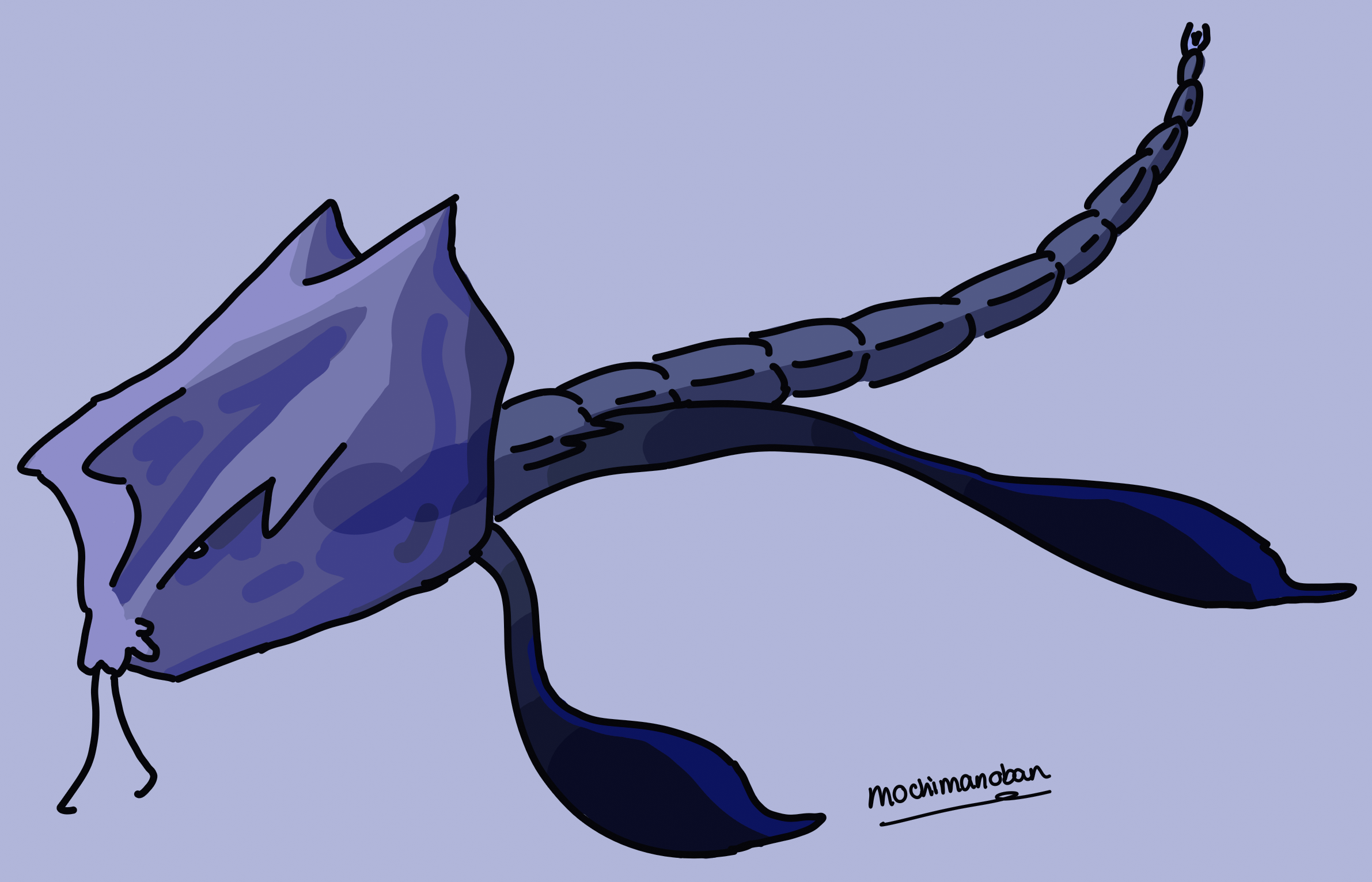
Solarophages are a primitive inanimal. They feed off solar energy, hence the name.
Solarophages have just two body parts - the head, made of a jelly-like substance, and the body, with thin hard-plated segments.
These creatures can measure from just a foot in length to over two hundred metres. They grow continuously throught its lifetime, speeding up as it feeds growth on solar energy.
Lurking in the depths of space around the Glitter Void are burning goliaths. Their skin is as hot as a star, and they snake around entire planets. A sight of a burning goliath is the end of an entire civilisation.
Week 5: Night Islands, Hothiri
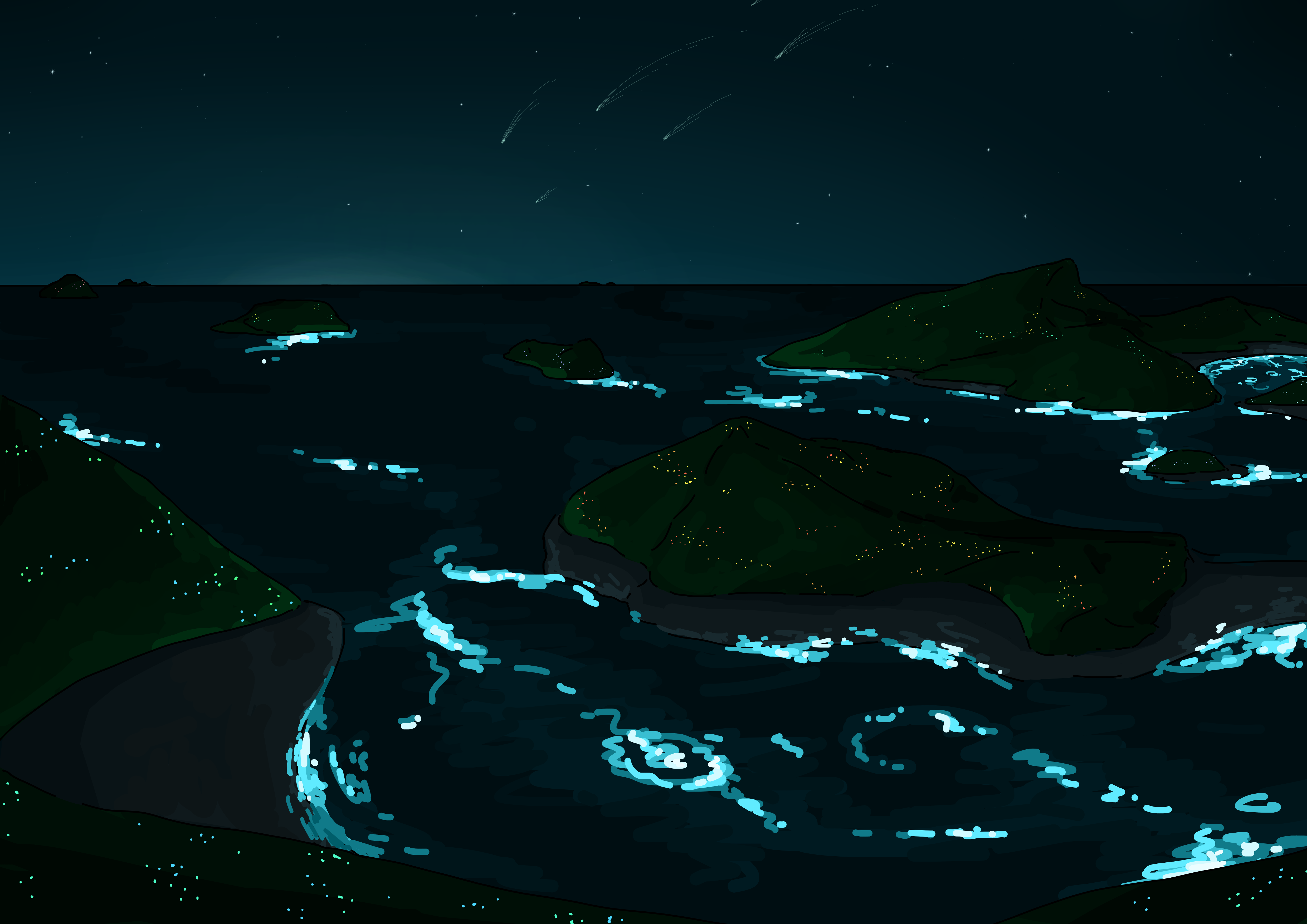
Salthorns are small ovines found on Night Islands in the Catanan Circle. They rarely exceed more than two feet in height.
They drink ocean water, filtering salt out. This salt funnels through the body into the horns, which grow as long as they can before snapping off under its own weight.
One of few fish that can survive on land for extended periods of time, shrieking sandeels live around the Night Islands while they're submerged underwater during the day, and remain on them once they've risen to the surface at night.
Their screams can be heard from hundreds of metres away, sailors once mistaking these screams for the shrieks of an animal in pain. They feast on small fish and crustaceans, crushing them with three sets of jaws.
Shrieking sandeels grow to around two feet in length. They are a deep brown in colour, with white and yellow spots in males and stripes in females.
Beetail coatis are named after their long black and yellow striped tails. In small groups they run around the Night Islands, terrorising populations of birds. Where they go during the daytime is a mystery.
While not a plant, sungleam kelp greatly resembles one. This orange kelp glows at night, floating in the air as if it were underwater.
It stores sunlight during the day, beaming at night. They grow in large forests around the bigger Night Islands.
Glowcores are small bioluminescent mushrooms found across every Night Island on Hothiri.
A small primate with a long, bony finger. They climb through the trees and howl at night. The glowing red eyes of these animals can be seen from very far away. They never blink; this has been recorded by passerbys, people believing these are angry spirits.
Akuwas are delicate water spirits that glide over the Night Islands during the day. While they are submerged, these spirits protect the islands from above the water's surface. They manifest in the shape of a manta ray, with a sparkling glow.
Week 6: Equator Range, Maloruno
Magmous elkris live around the dormant volcanoes in this mountain range. They are few and far between, but the animals presence can be felt from far away. Their heavenly hollers in the morning echo through the mountains and can be heard from many miles away.
Once upon a time magmous ekris were nearly hunted to extinction. When people realised how crucial they are to the ecosystem of the region, consuming any magma spilling from the mountains, hunting them was forbidden.
Small, slender marsupials resembling weasels. They feast on animals five times their size, stalking them for hours and constricting to kill.
Stellerets blend in with the green mountains with the dark, mottled fur. They sleep in crevices in giant bundles with ten to twenty others.
The apex predator of the mountains, hessora bears are dangerous hunters. Standing in at over ten feet tall on their hind legs, hessora bears can smell blood from two miles away. Once they catch onto a smell, nothing stops them.
They are a jet black, with long curled talons and protruding fangs. Six rows of sharp bony spikes extend from the back.
The faster wind speeds, the more energy this bamboo generates. Holes in the alpeine's stem funnel wind inwards. It is an aeromagical plant, consuming it temporarily strengthens wind magic powers.
The alpeine fungus is a parasitic mushroom that grows inside the hollow stem of the spinning alpeine. Essentially, they suffocate the plant, leaving it unable to filter wind and absorb energy. They then feed off the decaying plant.
Extremely slender weasels, related to stellerets. Woven weasels trip up larger prey using their bodies, which can reach a length of nearly five feet, and can even be stretched to twenty feet.
One of the only crab species on Maloruno. Mountain crabs are entirely land-dwelling, disguising as rocks and pebbles. They are herbivorous, eating small plants.
Mountain crabs have a venomous pinch, and just contact with skin can cause severe rashes.
Week 7: Razhea Capita's Underworld, Razhea Capita
Infesting trash heaps are rainbow bin beetles. They mimic the colour of whatever they last ate. Eating a colour changing item causes them to explode.
Despite being called beetles, they are closer related to termites, under the order Blattodea. A pair of bin beetles can grow into a colony of a thousand in just a few days.
Trailing sandskits are an inanimal. They drag themselves around the Underworld, leaving a trail of sand everywhere. This sand hardens and turns into a sticky tar-like substance. They then return to these trails and eats whatever it catches.
Vases are giant furry mammals native to Razhea Capita. Naked vases are a hairless subspecies, unable to grow fur due to the immense levels of radiation in the lower parts of the Underworld. Where there is a complete lack of light, naked vases prowl.
They have six long legs, sharp claws and teeth, and a rotting black skin.
These flowers grow wherever death occurs. Wilttip azaleas thrive on decomposing corpses, and for thousand of years were a sign of misfortune.
Meragos are giant worms found in the deepest parts of the Underworld. They are harmless wriggling blobs that feed off waste products, organic and inorganic. Their primitive stomachs can digest nearly any material.
Meragos are responsible for much of the damage of the lower Underworld. Disruptions and instability on the surface of Razhea Capita are often caused by these worms. There is a large cash prize for any meragos killed.
Oricaos are bright blue birds found in the upper levels of the Underworld. While they may be incredibly vicious, oricaos are generally docile - some are even seen fluttering into homes and snacking on food left on countertops.
Oricaos are small, rarely growing to lengths of ten centimetres. What they lack in size is made up for by razor sharp claws, beak, and poisonous feathers.
Korlamas are small passerines found on many planets. Six-lined korlamas live in the Underworld. They flit around the Underworld, nesting in cracks in houses, feasting on food they scavenge. Their beak can break through brick and they cause significant damage to housing around the upper areas of the Underworld.
Week 8: Frostbite Caverns, Daglaci
From the deepest parts of the caverns are hailstone deer. They are blind, relying entirely on echolocation to navigate. Hailstone deer have shovel-shaped feet to dig through ice.
They have only been spotted once by daglacians.
Boneslingers aren't nearly as terrifying as their name might suggest. These winged scavengers collect bones, using their slender tongue to dig in and consume the marrow inside. Once they're finished with a bone, they fling it out of their nest.
Icesears are pyromagical menaces. They enjoy the thrill of the hunt, melting the base of gigantic icicles with their fiery breath, to spear unsuspecting prey down below. They crawl along the ceiling of these vast caverns. If you feel dripping water above you, watch out.
Attaching themselves to the ceilings of the Frostbite Caverns are hanging tiltroots. Small bioluminesecent seed pods hang from these roots, lighting up the caves.
Tiltroots snap and squirm with the changes in temperatures brought about by wind currents.
Firelight blossoms are fungi disguised as brightly coloured flowers. They absorb nutrients from firelight roses, the plant they mimic.
While the roses are non-toxic, the fungi are. They are often mistakenly eaten by creatures which quickly die from absorbing potent toxins.
Squwuffs are very small colony birds found across Daglaci, both on the surface and within the caverns. Green Island squwuffs hang around the large submerged landmass, where they build elaborate subterranean nesting sites.
Gasileos are dangerous felines lurking around the caverns. They release a mildly toxic gas into the atmosphere with the bulbous appendage on their tail. Gasileos are pack hunters, organising elaborate hunting games to corner and take down prey more than five times their size.
Week 9: Teratan Tunnels, Xiskin
Lichenwings are small insects, related to gnats. They fly in swarms of millions in larger caves, around underground lakes and slow-moving rivers. Their wings resemble lichen.
Ferrous ferrets are inanimals that greatly resemble ferrets under the kingdom Animalia. As they scamper around the tunnels, their magnetic paws pick up magnetic materials in the ground. A business of ferrous ferrets can cause minor tremors in the tunnels with these magnetic disruptions.
A blind species of bird, their bright red bellies glow faintly in the caves. They emerge from the tunnels during sunsets, feasting on swarms of insects in the air.
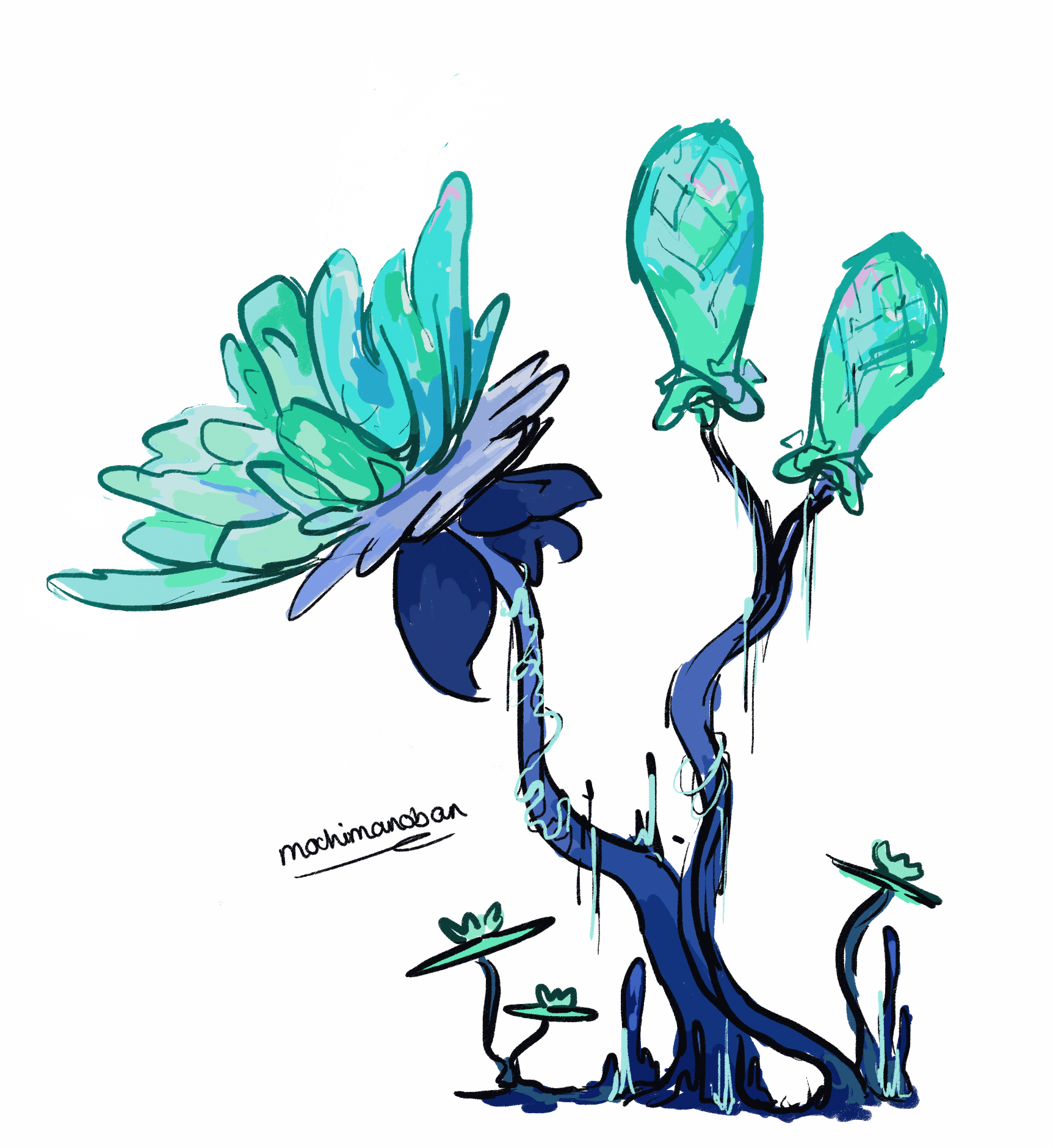
A close relative of diamond keons, the emerald variety is a stunning green colour. Emerald keons grow closer to the surface of Xiskin, particularly around subterranean bodies of water.
Like similar species, emerald keons carry traces of terramancy. They are steamed in pots of water, the liquid then drained, leaving behind a bluish-green paste. When applied as a face mask, it aids with tremor resonance.
These mushrooms utilise phosphomancy to survive. Their chloroplasts absorb light magic instead of sunlight, to cope with the lightless environments. They are bioluminescent, glowing a bright white and yellow.
Phosphor shroom caps grow to diameters of about three feet, and stand nearly two metres tall.
Gella gellas are large lizards. They store food in pouches for up to six months at a time, turning it into a liquid to drink when food becomes scarce. They bask under the light produced by phosphor shrooms, and mate for life. Gella gellas use thick claws to dig through hard stone surfaces, to create little pockets where eggs are laid.
Golmites are small burrowing insects, closely related to termites. They are a colonial species, the queen a prominent crimson colour while the rest of the colony a duller shade.
Crimson golmites are exclusive to the Teratan Tunnels, while other golmites inhabit different regions.
Week 10: Embura Ocean, Pluto
Bellis are small pod-forming cetaceans. They are the songwriters of the sea, singing elegant songs with their highly developed vocal chords. The loudest of songs can be heard across the entire dwarf planet.
Flowerpot jellies lurk along the seabed of the ocean, using their legs to clamber across the sand. Their bell is covered in wire like tentacles, which catch small particles in the water.
These animals dominate the seabed, sometimes gathering in groups of millions.
Fissure leviathans circle around hydrothermal vents in the subterranean oceans of Pluto. They measure in at nearly a hundred feet in length, with a tail that makes up half of its size.
There are roughly two hundred fissure leviathans on Pluto, ninety percent of which are found within the Embura Ocean. These leviathans lay one egg per century, tending to it for fifteen years before it hatches.
These baby blue vine-like plants split into two, which grow apart then curl back together. Heartvine tetras weave their eggs in a silken nest between the two parts of this plant.
Spirenti are small filter feeding plankton. They feed on the even smaller zooplankton, often their own larva.
A saltwater tetra species. They mate for life, and grow their silken nests after each year. A single batch of eggs is anywhere between a hundred to two thousand.
A close relative of wiwaxia, doripolis are squishy, soft-bodied molluscs. They have a fleshy pink body with long yellow spines running along its back.
Week 11: Ecoan Rainforest, Emycelium
A small therizinosaur. Paratostractus wanders the Ecoan Rainforest slicing tall bamboos with their sharp claws.
Giant glens are massive millipedes that roll right through thick mangrove roots. They float along the surface of rivers and lakes throughout the rainforest, helping nutrients seep into the soil.
Alasasaurs are small tyrannosaurs. They stand at approximately eight feet tall, predominantly hunting paratostractus. They have a dark green plumage to conceal themselves within the dark rainforest.
A vibrant flowering plant, glade camellias are a dark green yellow spots. They grow in the shade of giant trees, pollinated by bees and butterflies.
Amanesian softcaps are the National Fungi of Amanesia, a large country in central Mycela. These gigantic fungi tower over even the tallest of trees.
Blue tailed skippers are small salamanders found around bodies of water. Their bright blue tail wiggles in the air to taunt predators, as it dives deep in the water and straight into the thick muddy bed.
One of the largest insects of the Ecoan Rainforest, Ecoan mantises reach incredible lengths of nearly three metres. As an apex predator, these insects hunt small dinosaurs. While their size means they can't hunt the largest of dinosaurs in the forest, their skill and agility prevents any other predators from preying on them.
Week 12: Burning Slopes, Osao
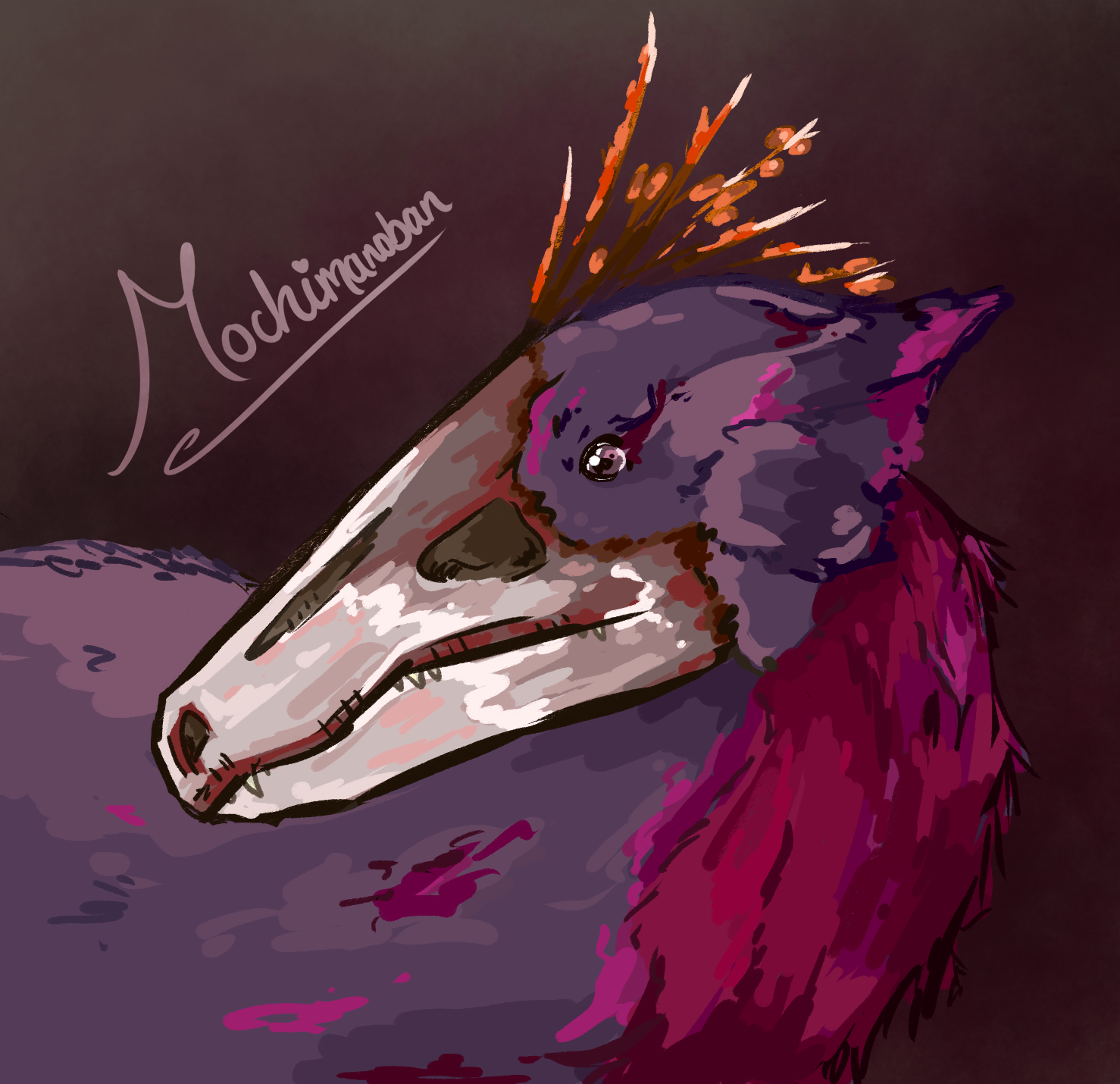
A small wading bird species. They have a red and black plumage, with burnt orange wingtips. They incubate eggs in small groups with a communal nest.
Singewing jacanas strut along giant lilypads growing in the Boiled Lakes. They feed on fast growing aquatic plants.
Silverwicks are devious critters that lurk in small tunnels criss-crossing through the slopes. They resemble snakes, yet are more closely related to sea slugs. They feed on whatever small insects they wriggle over, releasing a fluid to dissolve prey.
Ferocious dinosaurs, deiviraptors stand around seven feet tall with purple and pink plumage.
Deiviraptors stalk the Burning Slopes, hunting herds of embertail deer. Localised populations have been domesticated.
Week 13: Rubrinean Heathlands, Rubrinea
Heathbacks are large tortonids with gardens adorning their flat shells. They stand between four and five metres tall, feeding on the heathland while stirring up the ground to catch seeds on their backs.
Heathbacks are incredibly common, and megaherds of well over a thousand can be seen roaming these giant grasslands.
Heather wrens are small red passerines that nest atop heathbacks. A small colony of wrens will tend to the garden and weave nests between the bushes. Each colony has its own individual taste, and this reflects in the style of said garden. Scientists believe the wrens and heathbacks communicate over these gardens.
Rosebursts conceal themselves as pretty flowers, waiting for unsuspecting prey to wander by. As an inanimal, their existence relies on Floramancy. Rosebursts consume creatures as large as an adult heathback, which they will wrap in constricting leaf-like appendages before tearing the dead body apart for easier consumption.
Siphoning the magical energy from a roseburst is a parasitic worm of the same name. With its axe-like head, it burrows into the inanimal's trunk and consumes it from the inside out. They are small, only growing between three and five centimetres in length, with a distinct red and black striped body.
Leather mites feast on the skin of recently deceased animals, particularly domestic livestock. Swarms in the millions will coat the carcass until there is nothing left but flesh and bones.
Small burrowing owls that take over burrows of other animals on the cliffsides of the heathlands. Every morning, just before the crack of the dawn, the grasslands erupt with the symphony of these birds screaming into the sun. They have a dark red and brown mottled plumage, with white wingtips and a flat, disc-shaped face.
One of the largest owls on the planet, with two white tufts atop their heads. They are an exclusively diurnal species, hunting in the middle of the day preying on basking reptiles.
Week 13: Thunder Paths, Temperil
Small goat-like inanimals. Bellowbolts swallow small motes of electricity that gather at the base of these valleys, firing small pellets of static electricity to stun prey. They target people whenever they can, which thankfully isn't very often.
They follow the path of the Forever Storm, so long as it hovers over the Thunder Paths.
Monarch wasps are the largest hymenopterans on the planet, the queen measuring in at a metre long. They have a yellow, black, and white colouration, with deep red spots.
Seen as creatures of legend, monarch wasp hawks are seldom seen, with no real proof of existence. They are supposedly the only natural predator of the monarch wasp, and have enough power to take down a trode bear.
When the Forever Storm passes over siphon willows, every leaf stands upright in the air. Touching the trunk of the tree during this event causes a serious electrical shock.
Rolling fungi are tiny intelligent lifeforms that wander the Thunder Paths using mycelial strands to grasp at the electrified soil.
Giant birds that glide above the Forever Storm, following its path. They have a wingspan of around two hundred feet.
Black and white potatoes, popular crops and easy to grow. They are a staple of cuisine on Temperil.
Week 15: Pinnipera
A giant sea cow species, growing to lengths of up to six metres. They have giant rounded fins, with deep purple stripes. They eat the sea grasses and algae growing on and around coastal waters.
Large cetaceans with sparkling fur, hence the name. Like all species in this genus, individuals have a pair of asymmetrical tusks.
They can crawl onto land, and to nest they create large holes in the sand where they give birth live.
Skilled hunters with six fins and four eyes. Thick blubber makes them look cute and fluffy, but these animals can tear a jovian in half.
Grows on other kelp species and kills the host. Bright yellow float sac.
Small white shrimp that clean skeletons and corpses by consuming the marrow inside. These hollowed out bones are lived in by the shrimp.
A small seal species with a crest and spikes running down its spine. They live on sandy shores.
Small weasel like carnivores that hunt baby seals - often caught darting about breeding grounds. Short, stumpy, with six legs.
Week 16: Seacos, Cilvarth
Small domesticated ovines. Brass coloured body, four long legs and ridges along the back and sides. Farmed for its leather, in mountainous areas.
Porpoises found around docks and piers. Spits at passerbys with extreme precision.
Week 19: Rainbow Fields, Pighumas
These glossy teal bovines have four eyes and four ears, and wander the rainbow fields at night. As a nocturnal animal, their eyesight is unparalleled. They have hydrophobic fur which prevents dewdrops from catching on. Their fur is also thin, and a herd of these cows will groom each other in a large circle.
Grovehorns have four long horns, two straight and two curved back towards the neck, like a ram's. While they aren't technically a domesticated species, grovehorns are very friendly with farmers, often seen tending to crop fields at night, outside of the farmer's watch. Farmers typically leave food by the crop fields for the grovehorns to eat.
Six eyed scavengers, spindetail painted dogs travel around in large packs. Their tail is long, spiralled like a corkscrew, with leaf-like hairs. They primarily feed on fruits, nuts, and flowers, then scavenge on whatever meat they can.
Prowling the rainbow fields are fervent stalkers. Their long legs brush up against the grass, their six eyes able to swivel in separate directions all at once to spot prey out in the prairies. While they may be apex predators, they are omnivorous, typically feeding on berry trees. Not the berries though, the trunk, branches, and roots.
The name stalker actually comes from their bamboo-like legs, nearly ten feet tall at the shoulders.
Evanescent vapourgrass grows throughout the dewy rainbow fields; it is all the eye can see. It spreads for miles, and its hue shifts in the sunlight. It catches water overnight, turning into a morning mist. In the coldest of winters, the grass hardens and snaps into tiny splinters.
The grass itself grows anywhere from a few centimetres to nearly two metres tall. Farmers may trim the grass around crop fields, though it grows back faster and thicker each time. Instead, they'll typically tie them up into bundles, which have much more structural support.
Speck mushrooms grow beneath blades of grass. They might go unnoticed, but the cushioning cap creates a bouncy surface to these rainbow fields. These mushrooms break one's fall despite being so small, and a fall from even a three story building can have zero physical impact if landed on a bed of speck mushrooms.
Surple birches are silvery-purple trees found across the rainbow fields. They grow atop small rocky mounds, their roots wrapping around stone to break through the soil underneath.
Surple birches make for a great platform to build bird nests on, thanks to the sturdy interlocking branches.
Named after their metallic, hook-shaped petals, tinclaw magalos grow throughout the rainbow fields, particularly around surple birch roots. Their petals grow in a circular pattern, and spin when they catch the wind.
Week 20: Aton
Whirlwind jellies survive in the harsh climates of Aton thanks to their ability to phase through solid objects. Their atomic structure is loose, and each atom can separate itself to allow it to pass through solid objects.
Slightly more anatomically advanced salps. Salpods swirl through the storms of Aton.
Week 1 29/12 - 4/1
Steel Mountains, Venviri
Week 2 5/1 - 11/1
Man
Week 3 12/1 - 18/1
Great Red Spot, Jupiter
Week 4 19/1 - 25/1
Glitter Void/Glitter Field
Week 5 26/1 - 1/2
Night Islands, Hothiri
Week 6 2/2 - 8/2
Equator Range, Maloruno
Week 7 9/2 - 15/2
Razhea Capita's Underworld, Razhea Capita
Week 8 16/2 - 22/2
Frostbite Caverns, Daglaci
Week 9 23/2 - 1/3
Teratan Tunnels, Xiskin
Week 10 2/3 - 8/3
Embura Ocean, Pluto
Week 11 9/3 - 15/3
Ecoan Rainforest, Emycelium
Week 12 16/3 - 22/3
Burning Slopes, Osao
Week 13 22/3 - 29/3
Rubrinean Heathlands, Rubrinea
Week 14 30/3 - 5/4
Thunder Paths, Temperil
Week 15 6/4 - 12/4
Pinnipera
Week 16 13/4 - 19/4
Seacos, Cilvarth
Week 17 20/4 - 26/4
SKIPPED FOR NOW
Week 18 27/4 - 3/5
SKIPPED FOR NOW
Week 19 4/5 - 10/5
Rainbow Fields, Pighumas
Week 20 11/5 - 16/5
Aton
Related Articles
| Atlas | Ash Field · Atigeo Sea · Chrihaia Lake · Endless Tower · Ison Copper Mine
| ||
|---|---|---|---|
| Biota | Atigean Clam · Clam-Eyed Fish · Fire Frog · Fire Noodle · Firepede · Firewood Beetle · Frogfish · Helsaurus · Mayhem Fish · Sawshark · Thermal Carp · Thorn-backed Thrasher | ||
| Cultures | Hell's Holiday | ||
| Misc | Hell · Hell Notes |










WOOOOOOO! So cool! I wish you the bestest of luck!!
> Root Directory is my hub world <
Legends of the Dragonguard • /dev/null
Summer Camp 2026
Thank youuuu! <3