





Atigean Clam
Named after the Atigeo Sea, atigean clams are one of the largest clams on Hell. They live along the coastlines of the sea where they are harvested for pearls, shells, and meat.
Atigean clam shells make for popular decorations. Outside of their long work hours, industrial workers all across Hell will style themselves with these shimmering shells.
Taxonomy
Atigean clams are in the genus Spinatesta, commonly known as spiny clams.
Anatomy
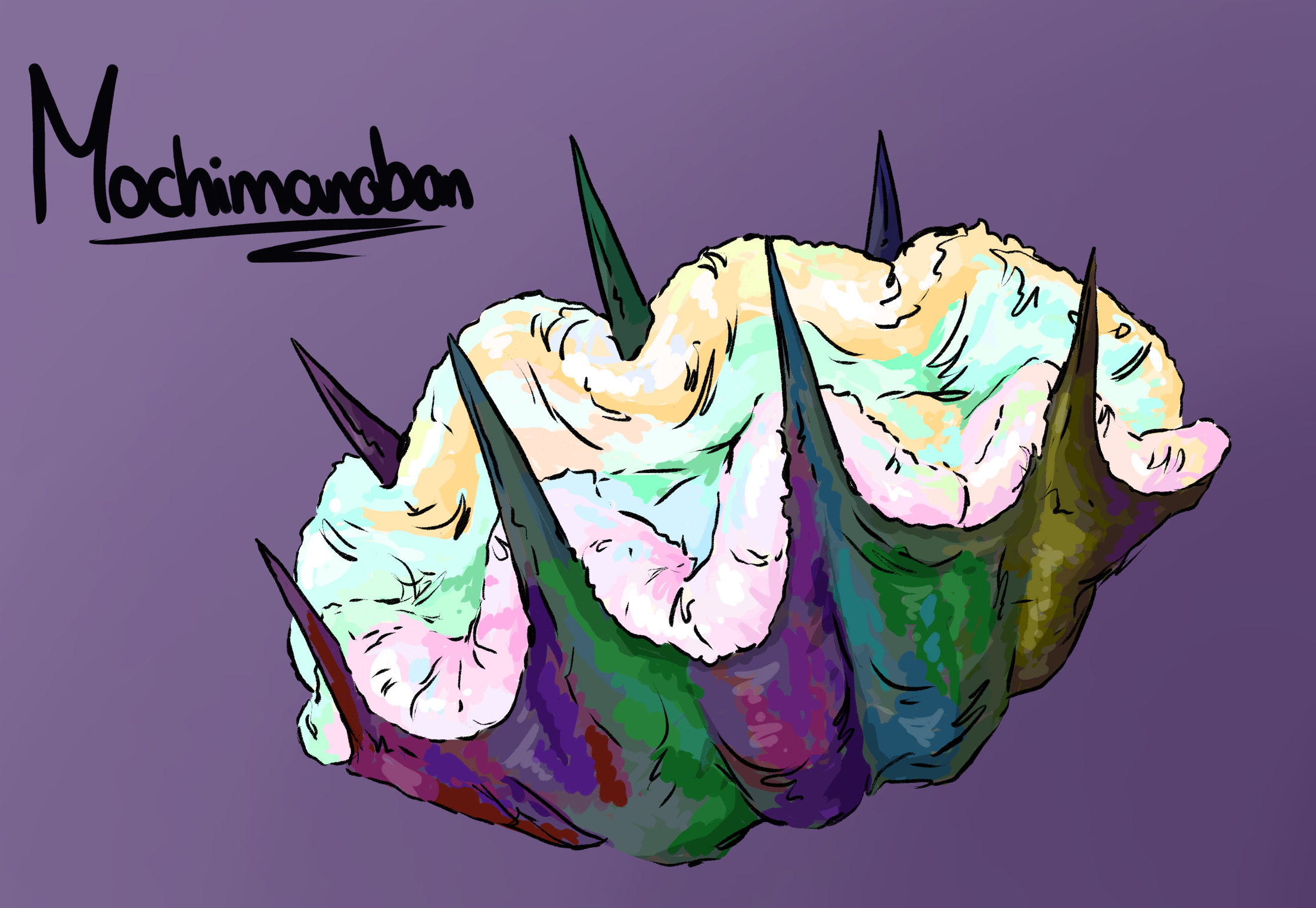
Atigean clams grow up to ten feet in length over the course of about fifty years, then it remains at a fixed size. During the first decade of its life, atigean clams are able to locomote, using their shells to clap, and expel water which pushes them forwards.
When atigean clams become too large and heavy to move, they will root themselves in the burning rocks of the seabed. Using specialised clamps on their bottom shells, the clams suction themselves to the seabed.
Lining the inside of the shells are exactly a hundred miniscule blue eyes, guarded by thin razor-like bumps on the outer shell. The shell itself is smooth, with a pearlescent shimmer to it.
Diet
Atigean clams have a diverse diet, consisting of anything that passes through their filtration system. This includes algae, tiny fragments of plants and kelp, organic matter such as faeces - anything that contains even a sliver of nutritional value.
To reach such large sizes, these clams will filter through lava to ingest any and all micro-organisms, even on a planktonic scale. On larger clams, small polyp colonies thrive, which in turn help feed the clam.
Habitat
At first we thought they were weird spiky rocks. Then they opened up... wow. Never seen anything quite like it, and this is the fifth planet I've worked on.
Atigean clams thrive in the lavawastes of the western Atigeo. There is an estimated population of about twenty thousand, classified as vulnerable. Wild clam populations are generally left alone, while several thousand are bred in farms in the Razhean District.
These clams prefer shallower waters, around coastal regions, lagoons, and large rock pools.
Their size allows for numerous parasitic species to thrive inside the shell. Clam-eyed fish are one such species, feasting on the meat of the clam until there is nothing left. Once the clam is dead and the shell has been hollowed, it is used as a hiding space for any creature that can fit. The spines do well at deterring predators - once the clam dies, the shell locks shut and is incredibly difficult to open.
Related Articles
| Atlas | Ash Field · Atigeo Sea · Chrihaia Lake · Endless Tower · Ison Copper Mine
| ||
|---|---|---|---|
| Biota | Atigean Clam · Clam-Eyed Fish · Fire Frog · Fire Noodle · Firepede · Firewood Beetle · Frogfish · Helsaurus · Mayhem Fish · Sawshark · Thermal Carp · Thorn-backed Thrasher | ||
| Cultures | Hell's Holiday | ||
| Misc | Hell · Hell Notes |




They look like forbidden cotton candy! Though I enjoyed details on species the art caught my eye first!
Thank you so much! I'm so glad you enjoyed the article and the art! <3