


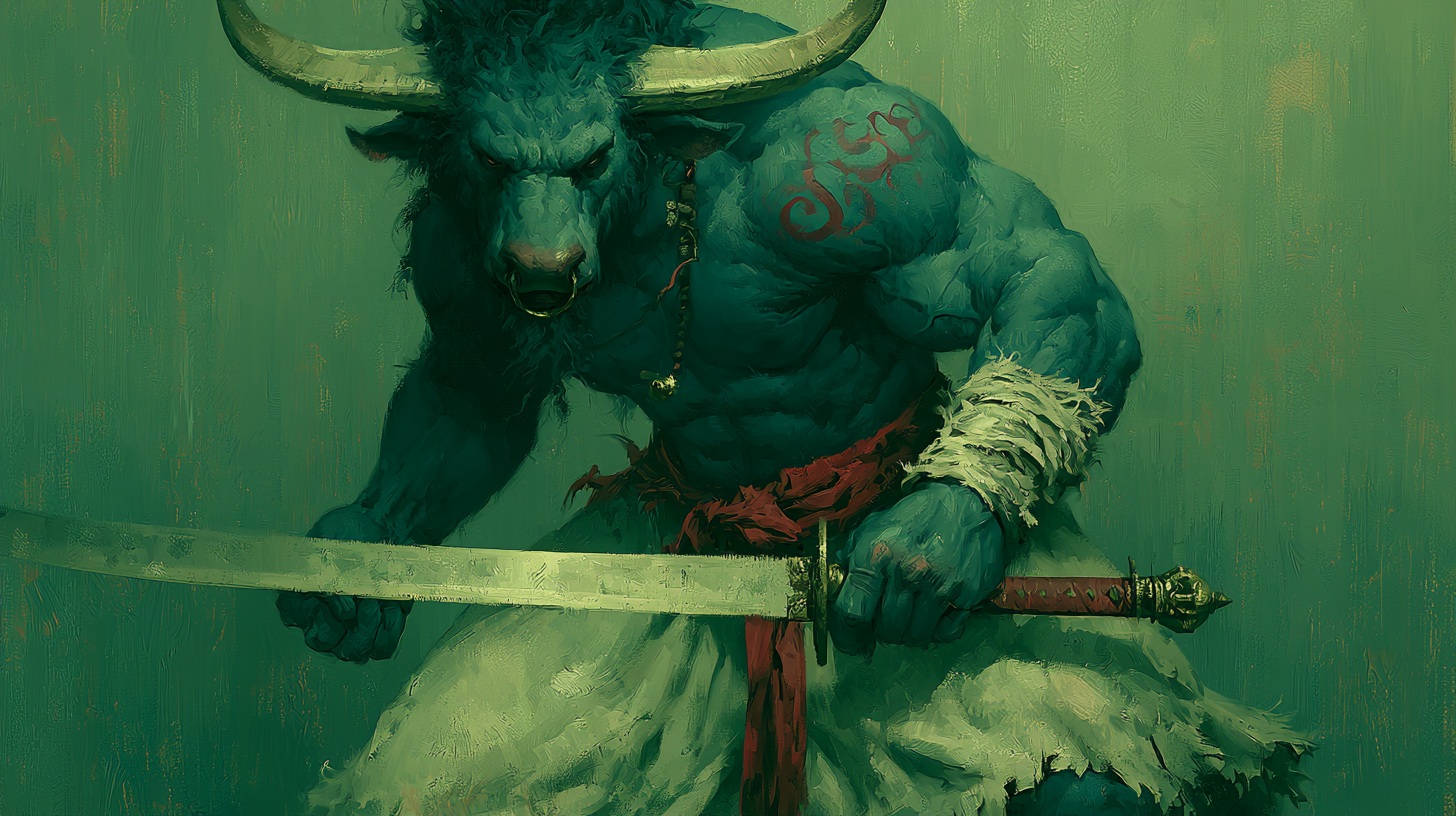
Minotaur
Inheiritors of Fire
"A straight road is for those who fear becoming lost."
Minotaurs are formidable bovine humanoids celebrated for their physical strength, unwavering resolve, and instinctive sense of direction. Though ancient legends often portray them as savage monsters lurking within labyrinths, minotaurs know those stories tell only a fragment of their history. To them, the labyrinth is not a prison but a symbol. Every life is a winding path, and honor is found by continuing forward regardless of the obstacles encountered.
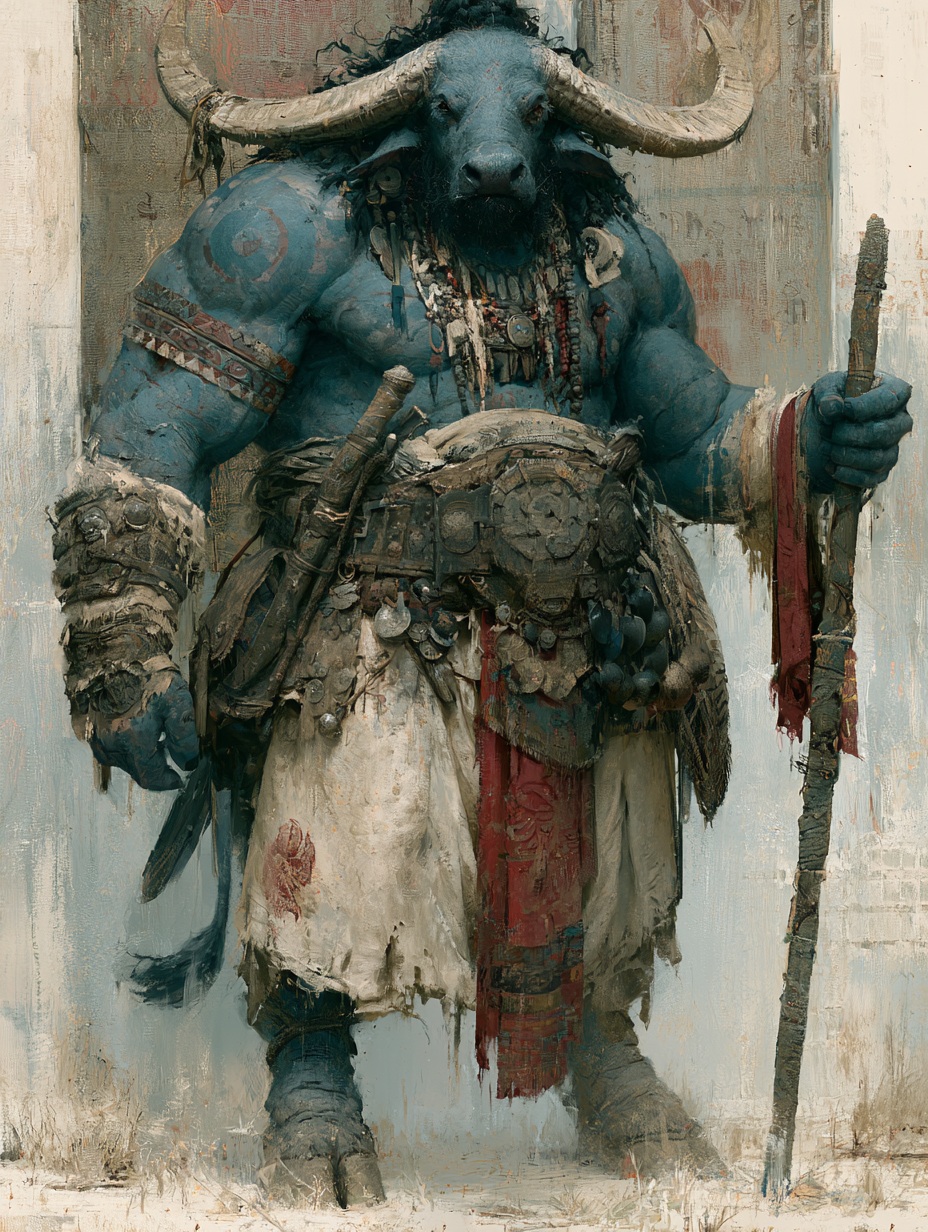
Towering above most humanoids, minotaurs possess broad shoulders, powerful limbs, cloven hooves, and the distinctive heads of great bulls. Their coats range through countless shades of brown, black, red, white, and brindle, while impressive horns vary widely in size and shape. Many decorate their horns with carved runes, polished metal rings, painted markings, or woven cords commemorating personal achievements, family traditions, or important journeys.
Minotaur settlements are commonly found within rugged mountains, sweeping grasslands, deep canyons, and ancient stone fortresses. Their architecture favors broad halls, strong walls, and open courtyards designed to accommodate their size while encouraging communal gatherings. Labyrinthine patterns often appear throughout these structures, serving as artistic motifs, ceremonial spaces, and reminders that wisdom is earned by navigating life's complexities rather than avoiding them.
Strength is deeply respected within minotaur culture, but physical power alone is never enough to earn lasting admiration. Courage, honesty, perseverance, and responsibility are regarded as equally important virtues. A warrior who protects others earns greater honor than one who simply proves themselves the strongest.
Many minotaurs become soldiers, sailors, caravan guards, explorers, artisans, or merchants. Their natural confidence and determination make them dependable companions during difficult journeys, while their keen sense of direction often proves invaluable in unfamiliar lands. Losing one's way is viewed not as failure, but as an opportunity to discover a better path.
Hospitality carries significant importance among many minotaur communities. A traveler who enters peacefully is welcomed with food, shelter, and conversation before questions of purpose are asked. Guests are expected to respect the household in return, and betrayal of that trust is remembered long after material losses have been forgotten.
Ceremonial labyrinths remain central to many minotaur traditions. Young adults often complete a symbolic journey through one before being recognized as full members of the community. The path itself rarely changes, but every traveler returns having discovered something different about themselves.
"The labyrinth isn't meant to trap you. It's meant to introduce you to the version of yourself that only appears after you've been lost for three days."



Comments