


Deathless
Who Wants to Live Forever?
"The cruelest part isn't watching them die. It is learning that one day you'll struggle to remember the sound of their laughter, and knowing they would have hated that most of all."
Most people imagine immortality as a gift.
The Deathless know better.
Among the countless wounds left behind by the Shattering, few are stranger than the condition known as Deathlessness. Somewhere within the chaos that followed the breaking of the world, something fundamental ceased functioning correctly. For reasons still poorly understood, a small number of humans simply stop aging.
Not immediately. Not dramatically.
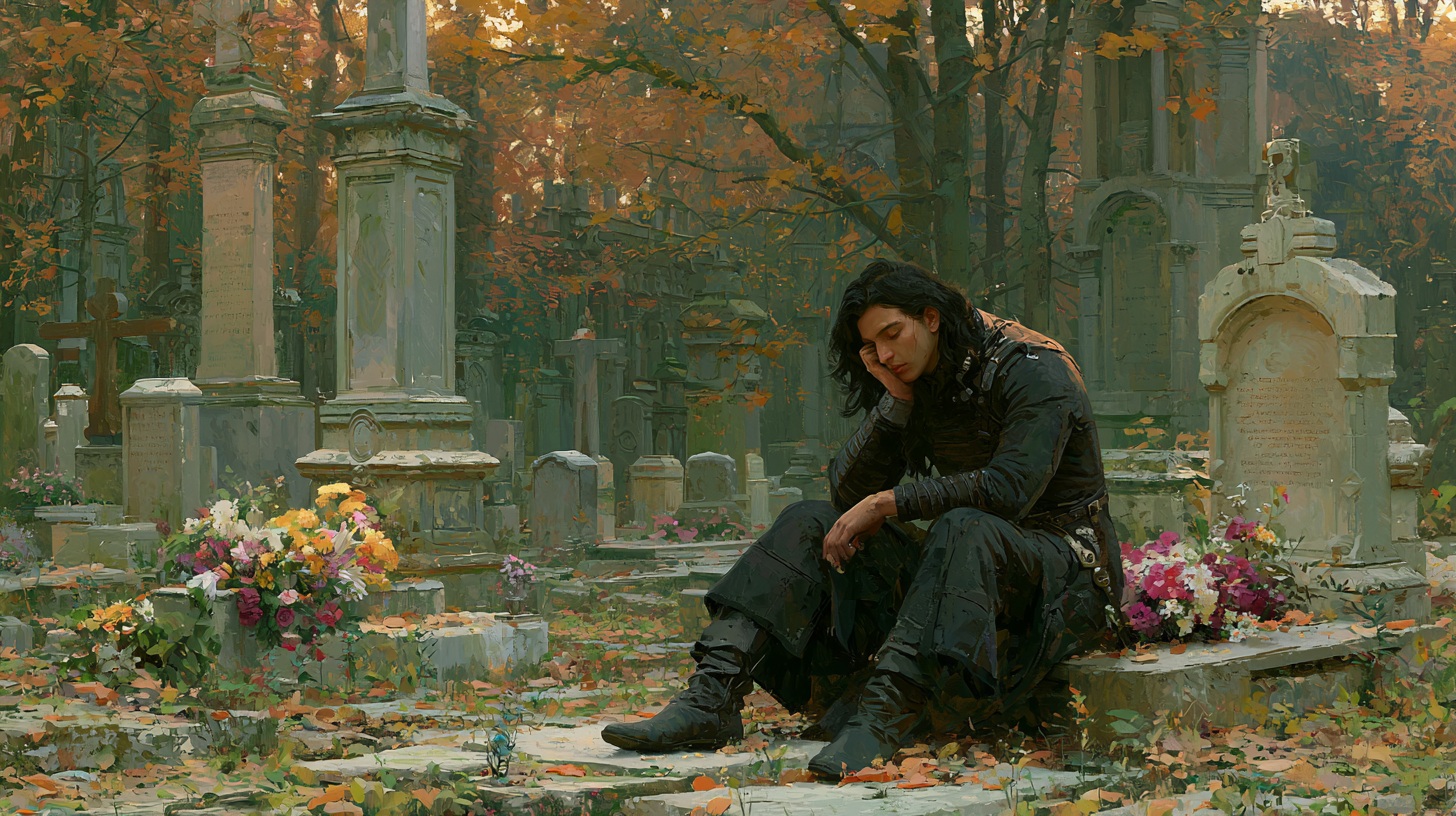
One day they are ordinary people. Farmers, merchants, sailors, laborers, nobles, scholars, thieves. Then the years begin passing without leaving their mark. Friends develop gray hair. Siblings grow old. Children become adults. Decades accumulate. Yet the Deathless remain unchanged.
At first, most refuse to acknowledge what is happening.
They explain away the differences. Good health. Strong blood. Fortune. Favor from the gods. Eventually such explanations become impossible to maintain. Time continues moving forward while their reflection remains stubbornly fixed in place.
No Deathless knows exactly when the change occurs. Some discover it in their thirties. Others in middle age. A few seem older still when aging finally ceases. Once it happens, however, the process never resumes. Their bodies remain permanently fixed at that point of life.
The Deathless are not immortal.
This distinction is important.
They can be stabbed, drowned, poisoned, burned, crushed, or killed by countless other means. Violence claims many of them long before age ever could. Yet if left alone, a Deathless may live indefinitely. No known Deathless has ever died from natural causes.
This fact has inspired endless speculation.
Priests debate whether the condition represents a blessing, a curse, or a flaw in the natural order. Philosophers argue over its implications for the soul. Scholars continue searching for some biological explanation despite centuries of failure. Every generation produces new theories, and every generation ultimately discovers how little is truly understood.
Most Deathless care far less about why it happened than about what happens next.
The practical consequences of endless life prove far more complicated than most people imagine.
Remaining physically unchanged quickly becomes difficult to hide. Communities notice. Neighbors ask questions. Families grow suspicious. Rumors spread. Sooner or later, most Deathless are forced to make a choice. Reveal themselves, disappear, or construct increasingly elaborate lies to explain the impossible.
Many become wanderers as a result.
A person who never ages cannot remain in one place forever. The familiar rhythm of ordinary life eventually becomes dangerous. Friends begin asking uncomfortable questions. Children notice that their parents appear older than someone who should belong to the same generation. Histories stop making sense.
Moving on becomes easier.
A new town. A new name. A new profession. Another attempt at an ordinary life.
For some, this pattern repeats for centuries.
Others embrace their condition. A handful become scholars, archivists, historians, and collectors of knowledge. They accumulate experience impossible for ordinary mortals to match. Entire fields of study have occasionally been influenced by individuals who quietly spent two or three lifetimes pursuing a single question.
Some rise to positions of power.
A ruler who never ages can build influence beyond anything available to ordinary people. Yet such ambitions rarely end well. The longer a Deathless remains visible, the more attention they attract. Rivals become suspicious. Followers become fearful. Legends begin forming around them. History shows that many Deathless who sought power eventually found themselves destroyed by the very fascination they inspired.
Not all challenges come from the outside.
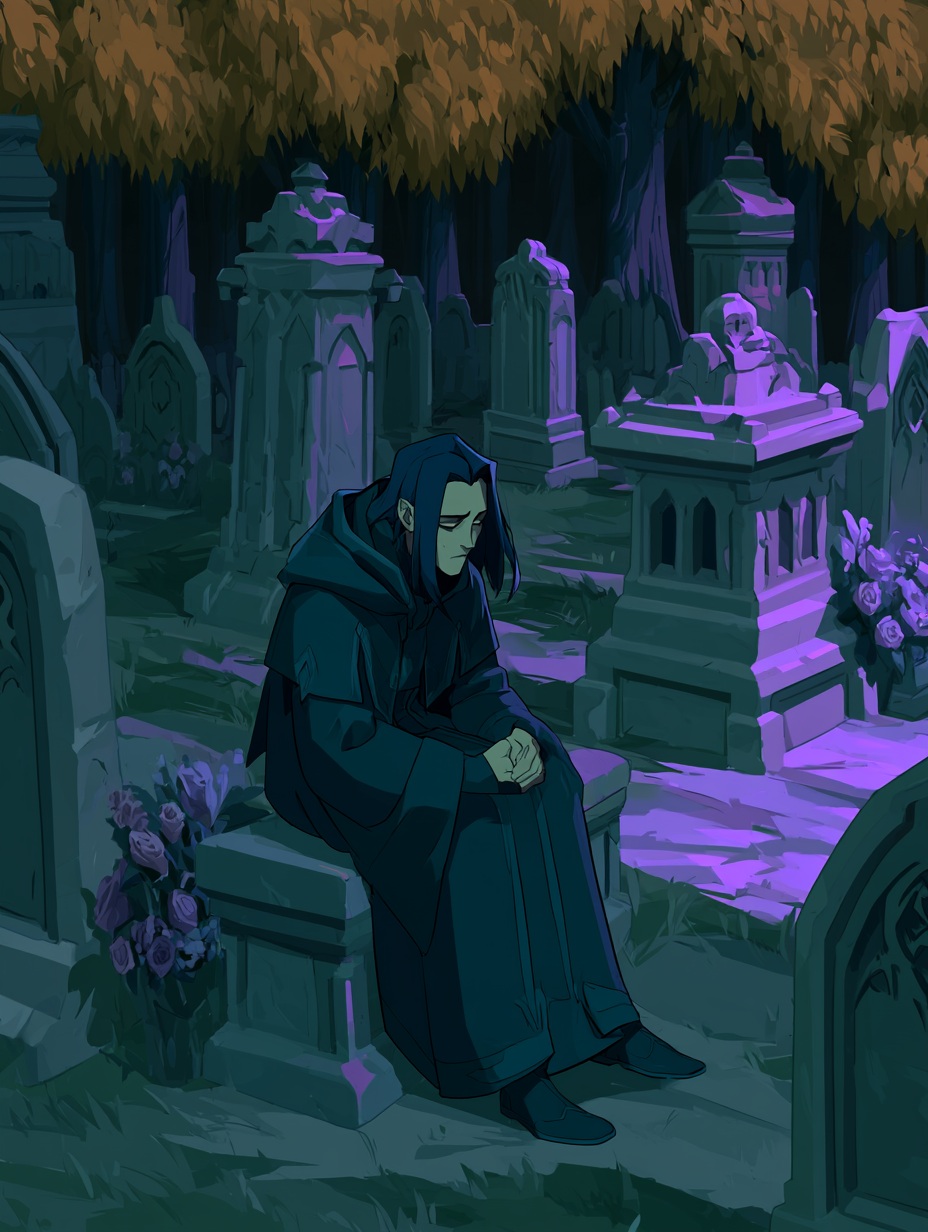
Many Deathless describe a gradual sense of separation from ordinary life. The details vary from person to person, but certain experiences appear remarkably consistent. Old memories lose their emotional immediacy. Important events blur together. Familiar places change so completely that they become unrecognizable. The passage of decades begins feeling strangely compressed, while individual moments remain vivid.
Some struggle to remember precisely when things happened.
Others find themselves emotionally disconnected from events that once defined their lives.
A childhood home becomes a ruin.
A beloved city becomes a different city built atop the old one.
Entire bloodlines appear and vanish.
The world remains familiar, yet increasingly distant.
Among the Deathless themselves, one phenomenon is universally recognized.
They know when another Deathless is near.
The sensation manifests differently for each individual. Some hear distant breathing. Others smell rain, dust, old paper, smoke, or blood. Some experience an indescribable certainty that another like them is nearby. Whatever form it takes, the awareness is unmistakable.
No one understands why this occurs.
Many Deathless spend decades searching for others of their kind. Some form friendships that span centuries. Others avoid one another entirely. Shared longevity does not necessarily produce shared values.
The condition remains exceedingly rare. Most people will never knowingly encounter a Deathless. Many live their entire lives believing such individuals exist only in stories. Yet nearly every culture possesses legends that appear to reference them. The ageless wanderer. The soldier who survives every war. The mysterious innkeeper who never changes. The stranger who appears every generation carrying the same face.
Whether viewed as blessed, cursed, chosen, or unnatural, the Deathless occupy a peculiar place within Aerith. They are living reminders that the Shattering damaged more than cities, kingdoms, and landscapes.
It damaged reality itself.
Most wounds eventually heal.
The Deathless are what happens when one doesn't.



I really like the way that you explored the social impact that being immortal would have on a person. The forgetting of things and seeing things change over time is perfect. I love that it is humanity and our inability to accept things that are different that makes things so difficult for them rather then an inherent cursed nature. Brilliant.
Thank you! I've long been fascinated by the horrific notion of living forever. Like.... no thanks. <3
Oh I seriously have a strong fascination with the idea of it. I acknowledge that if you were alone in it, that it would mean seeing everything that you care about fading away. But that is what would be so interesting. The way that the world and history is built on layers of lives that we never see. It would be interesting to live long enough to see a few of these layers. But the truth of it is that I would manage to trip and impale myself on something long before anything interesting happened any way! lol