


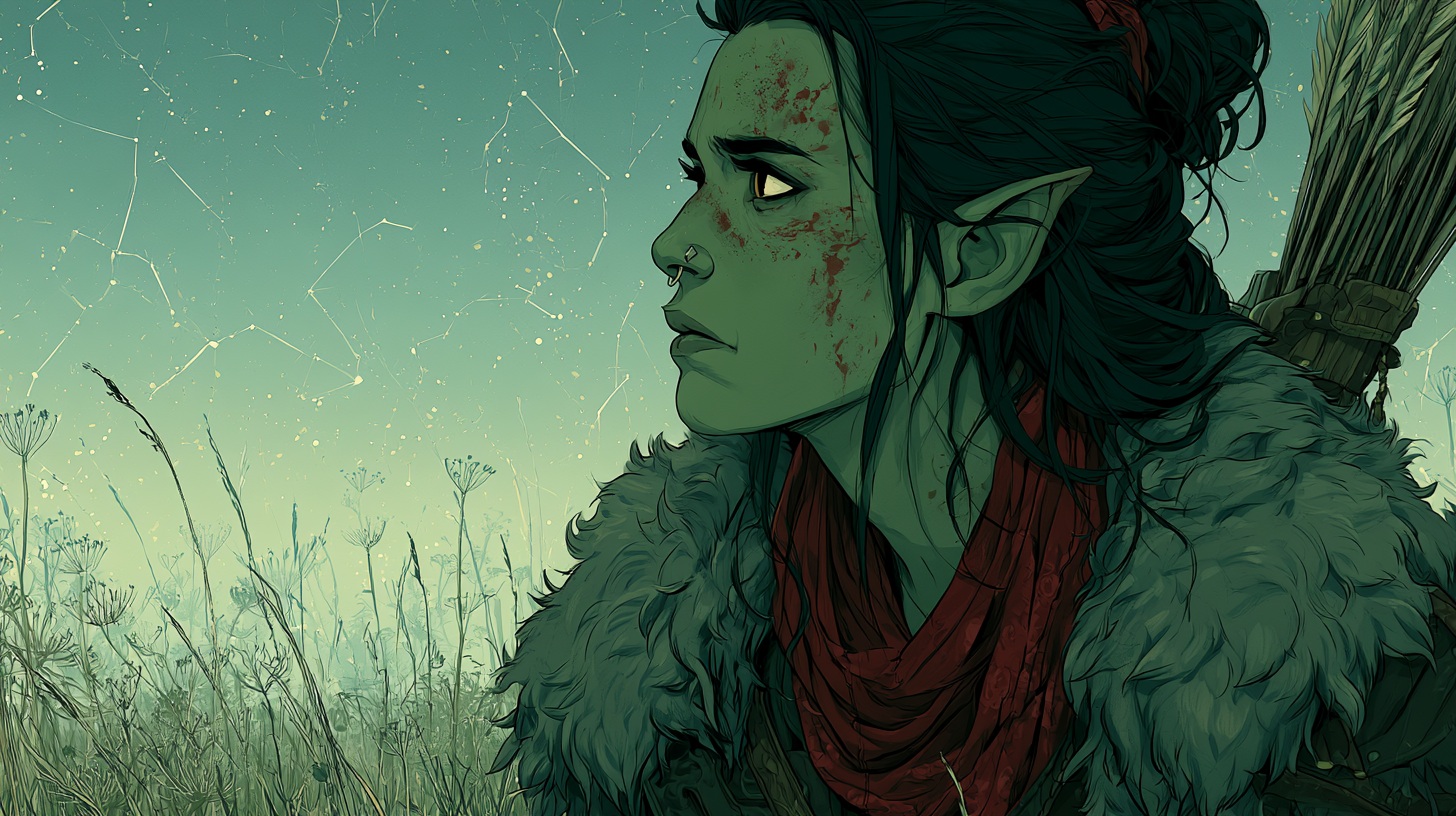
Half-Orc
Lonesome Strength
"Strength opens the door. Character decides whether you are welcomed inside."
Half-orcs inherit the resilience of orcs and the adaptability of humans, creating a people renowned for their determination, physical prowess, and unwavering resolve. Though outsiders often judge them by appearance alone, half-orcs have long proven that courage, loyalty, and honor are measured by deeds rather than ancestry.
Broad-shouldered and heavily built, half-orcs are immediately recognizable by their prominent tusks, square jaws, and muscular frames. Their skin ranges from pale gray and olive green to deep brown and charcoal, while their eyes often carry an intensity that many mistake for hostility. In truth, half-orcs express emotion as openly as any other people, though years of prejudice often teach them to guard it carefully.
Half-orcs seldom establish nations of their own. Instead, they are found wherever human and orcish cultures meet, whether along contested frontiers, bustling trade routes, or growing cities where countless peoples live side by side. Some are raised among humans, others among orcs, and many grow up within communities that blend traditions from both.
Perseverance is one of the defining virtues of half-orc culture. Hardship is expected, but surrender is not. Many half-orcs believe that adversity reveals character more clearly than success ever can, and they often admire resilience in others regardless of race or station.
Their formidable physiques naturally lend themselves to lives as soldiers, hunters, laborers, guards, explorers, and adventurers, but just as many become respected artisans, healers, scholars, or community leaders. Those who underestimate a half-orc's intellect often discover their mistake only after losing an argument to someone they assumed would settle it with a fist.
Many half-orcs become skilled at navigating cultures that view them differently. They learn when to speak firmly, when to exercise patience, and when quiet dignity carries greater weight than anger. This ability to bridge expectations often makes them capable negotiators, trusted companions, and dependable leaders during difficult times.
Among many half-orc families, scars are remembered with pride rather than shame. They are not celebrated because they represent violence, but because they tell stories of hardship endured, loved ones defended, and challenges overcome. A scar earned while protecting another is often regarded as more honorable than one earned seeking glory.
"Humans see an orc's strength and an elf's grace. I see a half-orc carry burdens that would break either one."



Comments