


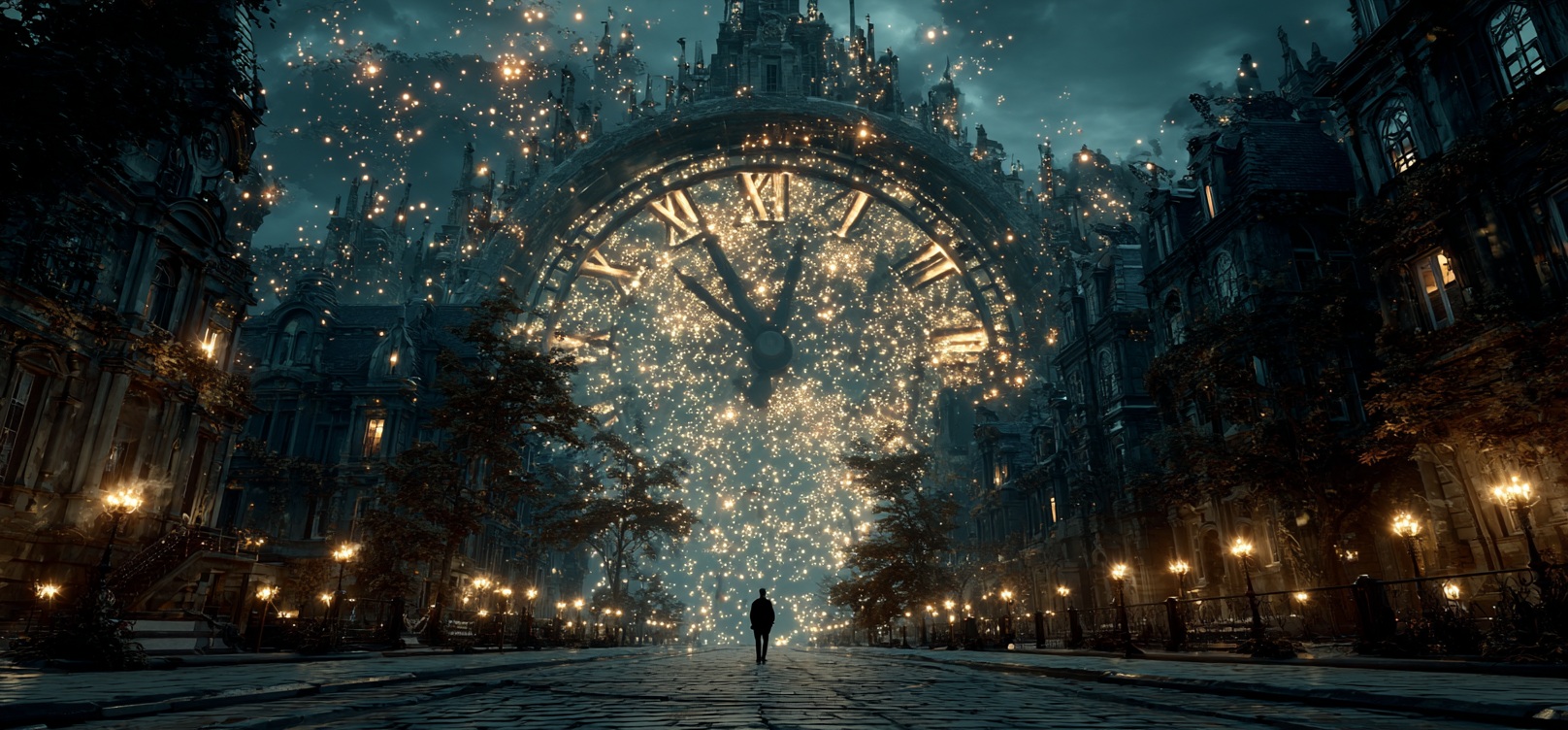
Lost
...Oh Boy...
“He spoke about tomorrow the way old men speak about yesterday.”
Some people survive catastrophe imperfectly.
Not wounded in flesh. Not cursed in the ordinary sense. Something subtler and far more difficult to explain happens to them instead. Time loosens around them. Memory behaves incorrectly. The world occasionally fails to agree on where they have been or how long they were gone.
These people are called the Lost.
The Lost are not an ethnicity, kingdom, bloodline, or culture. They share no homeland and no common ancestry beyond humanity itself. Most never encounter another person like themselves. In many regions, the condition is barely understood outside obscure magical scholarship and frightened folklore.
To ordinary people, the Lost are unsettling because reality itself seems uncertain around them.
A traveler disappears during a storm and returns unchanged despite swearing they wandered for months. A child survives near an ancient ruin but afterward speaks casually about buildings that no longer exist. A soldier declared dead remembers conversations that supposedly happened years after the battle where they vanished. Some awaken from illness physically younger than expected. Others carry memories belonging to places history insists were destroyed centuries earlier.
No explanation fully accounts for all recorded cases.
Most scholars trace the phenomenon to catastrophic metaphysical instability left behind by ancient magical disasters, shattered planar boundaries, failed rituals, temporal collapse, or lingering scars in the structure of reality itself. Others believe the Lost are victims of unfinished timelines, displaced consciousness, or failed destinies that never properly settled into history.
The Lost themselves rarely know what happened to them.
That uncertainty shapes nearly every aspect of their lives.
Many suffer fragmented memory and distorted relationships with time. Entire years may feel missing. Certain places provoke overwhelming familiarity despite being objectively unknown. Some remember conversations nobody else recalls. Others carry emotional attachment to people they have supposedly never met.
This creates profound isolation.
Friends age while the Lost vanish unchanged. Families mourn them before impossible reappearances. Records contradict lived experience constantly. Some Lost become obsessed with reconstructing the truth of their own existence. Others stop trying entirely.
Neutrality becomes common among them not because they lack conviction, but because repeated encounters with unstable reality erode certainty itself. The world becomes difficult to trust when memory, history, and time repeatedly contradict one another.
The most defining trait of the Lost is the phenomenon known as Slipping.
During periods of rest, unconsciousness, severe trauma, magical disruption, or metaphysical instability, some Lost vanish completely from ordinary reality for brief spans of time. Where they go remains unknown.
Those who return often describe fragmented impressions rather than coherent experiences. Impossible cities beneath unfamiliar stars. Futures where kingdoms never existed. Childhood homes abandoned centuries earlier. Endless oceans under dead skies. Battlefields containing unfamiliar banners and corpses wearing their own faces.
Most descriptions collapse under scrutiny because the memories themselves refuse consistency.
While Slipping, the Lost cannot be reached or affected by the world they left behind. To observers, they simply disappear. Some leave faint distortions behind. A depression in bedding. Lingering cold air. Shadows behaving incorrectly for a few seconds after departure.
When they return, they rarely come back unchanged.
Many carry strange remnants of other realities with them afterward. Foreign currency from nonexistent nations. Weathered journals written in familiar handwriting describing events that never occurred. Keys without locks. Religious symbols belonging to forgotten faiths. Maps depicting cities not yet built or ruins long destroyed.
Most such objects appear mundane.
Very few feel meaningless.
Other Lost return carrying altered skills or inexplicable familiarity instead. A farmer suddenly understands military tactics. A sailor speaks a language nobody taught them. A scholar remembers techniques from civilizations erased from history.
The phenomenon terrifies certain religious authorities because it raises deeply uncomfortable questions regarding fate, continuity, and identity. If another version of a person exists somewhere beyond ordinary reality, which version is truly real? If memory changes but the soul persists, what actually defines the self?
Some faiths consider the Lost spiritually damaged and dangerous. Others regard them with pity or reverence. A few believe the Lost glimpse truths mortal minds were never meant to survive intact.
Arcane scholars remain equally divided.
Divination magic interacts strangely with the Lost. Attempts to examine their futures often produce contradictory results or fragmented imagery. Prophetic visions involving them tend to shift unpredictably. Certain records claim time itself behaves inconsistently near concentrations of Lost individuals, though proving this scientifically remains nearly impossible.
Small distortions frequently accompany them regardless.
Mirrors lag half a second behind movement. Clocks stop unexpectedly nearby. Animals react with unease or confusion. Familiar streets feel subtly wrong around them for reasons difficult to explain. Strangers occasionally mistake them for someone else with complete sincerity.
Most of these incidents remain harmless.
Most.
The Lost rarely organize into communities because shared experience offers little actual understanding. One Lost may vanish into alternate pasts while another experiences impossible futures. Some Slip only once in a lifetime. Others disappear repeatedly. A few eventually fail to return at all.
That final possibility haunts every one of them.
Because no Lost can ever know whether the next disappearance ends somewhere else.



Comments