
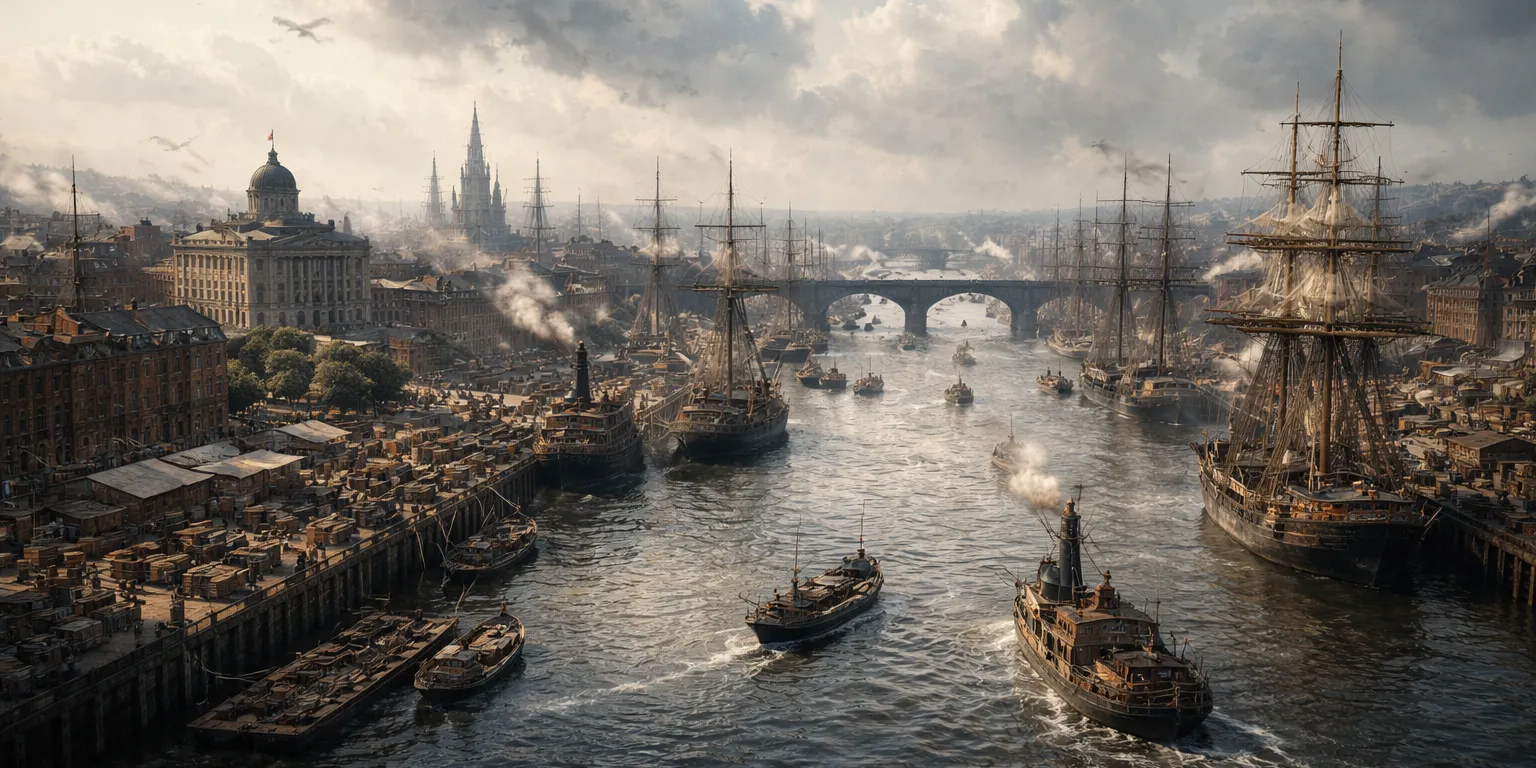
Rivergate
Rivergate is the district of Lundeinjon that serves as the administrative heart of the Port. It is the only one of the Port Districts located entirely on the west bank of the River Lunde, and it houses the port’s administrative apparatus, including the headquarters of the River Patrol and the Custom House, which handles all taxes and duties on trade goods. The district stretches for over six miles along the riverbank and is filled with docks, shipping offices, and lodging houses for the more affluent transients in the city, including merchants, sea captains, and more frugal sailors. Water stairs are found all along the banks, especially near the bridges, allowing people to descend to the river, usually to engage transport with one of the watermen.
Demographics
Rivergate is a district filled with watermen, fishermen, dockworkers, customs clerks, and merchants. The district revolves around the port but is more affluent than the other port districts of Marshreach and the Lower Quays. The people of Rivergate make their living on the river or at sea and take great pride in their work. It is a mixture of families who have lived in the district for centuries, usually as fishermen or watermen, and transients who reside here while their ships are in port and vanish again as the tide goes out.
History
Before the 1789 municipal map created by the Lundeinjon Metropolitan Police Force, Rivergate consisted of two separate neighborhoods. Upstream was Old Ashes, which was largely commercial. The Brenningsgate Fish Market is located here, along with the Coal Exchange and the guild halls of the Fishmongers and the Watermen. Further downstream lay the Upper Quays, home to the Custom House, the Rivergate Constabulary, and the docks.
While both areas were centered on the river, the creation of Rivergate puzzled many, who argued that Old Ashes belonged with Ashmarket and that the Lower and Upper Quays should be grouped together. However, as with many other disputes regarding the constabulary map, the LMPF refused to revise it, stating that it met their needs and that no one else was required to use their boundaries. It was later adopted by the Imperial Mail, but residents typically retain their local names rather than those laid out in the municipal map.
Points of interest
Old Ashes
This is the neighborhood furthest upstream in Rivergate and has more in common with Ashmarket to the north than with the docklands further downstream. It is centered around the northern end of Black Bridge, and the largest single landmark in the neighborhood is the Brenningsgate Fish Market. This is an enormous open-air fish market adjacent to Brenningsgate Wharf, filled each day with fishermen selling their catch. The fish are sold in open-air stalls after being cleaned and gutted, with the offal swept directly into chutes that lead into low-slung, heavily tarred offal barges. These are hauled two miles upstream by steam-powered tugs to the entrance of the White Pudding Canal, destined for the rendering plants and bone mills of Tallowmere.
Fishmonger's Hall stands at the center of the market, where the Worshipful Company of Fishmongers oversees all transactions. This neighborhood also contains the Coal Exchange, a magnificent rotunda-style building where the city's coal supply is regulated. The current building, opened in 1829, is the first substantial structure in the city constructed from cast iron. The original Coal Exchange was established in 1750 by the principal coal merchants as a private body to regulate and control the coal trade in the capital. It is also the site where shipments of coal are measured and where taxes are levied by officials from the Custom House.
Overlooking the market at the north end of Black Bridge is St. Erik-on-Lunde, the guild church of the Worshipful Company of Fishmongers and the Company of Watermen and Lightermen. A church has stood on this site since at least 1214, though the current building dates to 1805. Adjacent to the church are the Black Bridge waterstairs, which descend to the river, where watermen congregate while waiting for passengers.
These stairs also provide access to one of the district's least savory landmarks, the Lunde Morgue, more commonly known as "Dead Man's Hole". This is an alcove beneath Black Bridge where bodies recovered from the river are stored and publicly displayed so that they may be identified by friends or family. It features white-tiled floors and walls for ease of cleaning. Many bodies remained unidentified for so long that, during decomposition, some would burst under the pressure of accumulated gases.
At the bottom of the stairs is Three Swans Pier, the primary departure point for steamboats traveling upstream through the Twiddington Locks, to coastal destinations across the Empire, or onward to The Independent Principality of Piffling, where international Wayfaring may be accessed. The pier is named for the Old Swan Pub, which bears three swans on its sign. Watermen are often found waiting here, ready to take passengers up or down the river.
The Upper Quays
Moving downstream, one reaches the administrative heart of the Port of Lundeinjon. The Custom House is the central landmark, where the collection of customs duties is coordinated. A custom house has existed in this area since the 14th century, and the current building, most recently rebuilt in 1805, stands on the same site.
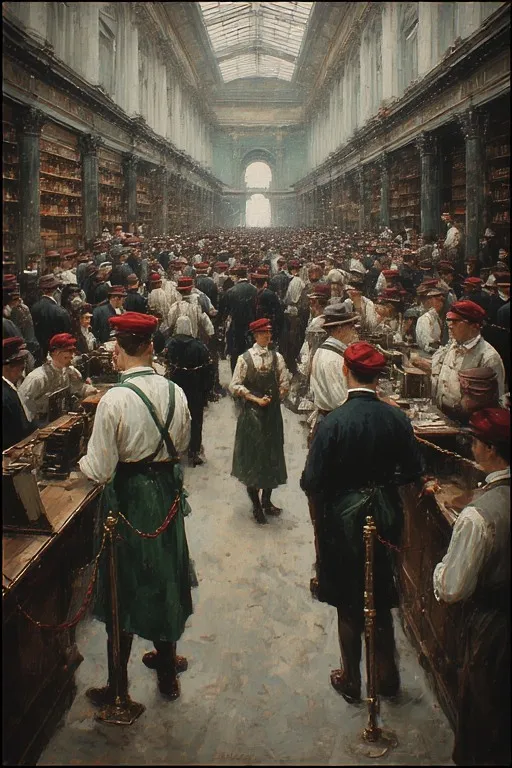
The building is notable for its central hall, known as "The Long Room", a vast space filled with clerks, manifests, seals, and ledgers documenting all goods shipped in and out of the port. Officials determine which docks are designated as Legal Quays, where ships carrying dutiable goods must unload. Large enclosed docks owned by major companies may also be licensed, with dedicated on-site customs officials, while independent vessels must use city-owned docks. Docks without this designation are known as Sufferance Wharves and may only accept ships carrying low-value goods, such as timber or iron, as they are not considered secure enough for high-duty cargo like tea or brandy.
The streets surrounding the Custom House are lined with shipping offices and warehouses, including the Contraband Warehouse, where confiscated goods are stored following customs violations. Periodic auctions are held there, offering such goods at low prices, with proceeds returning to the government. Adjacent to the Custom House stands the Rivergate Constabulary, headquarters of the River Patrol, which maintains its own docks and spends much of its time combating smugglers and river pirates.
Another notable landmark is Abigail's Coffee House, a popular gathering place for sailors, merchants, and shipowners. Its management caters to this clientele by providing reliable shipping news. The maritime community frequents the coffee house to discuss insurance, shipbroking, and foreign trade. A pulpit in the main room is used to announce shipping news and auction prices, and the establishment also serves as a venue for auctions, often involving ships and cargo.
Further downstream stands Beacon House, home of the Imperial Lighthouse Authority, an organization founded in 1614. It maintains and operates lighthouses across the Empire, manages lantern signals along inland waterways, trains and licenses pilots, and maintains navigational aids such as lightvessels and buoys. Nearby is Watermen's Hall, headquarters of the Company of Watermen and Lightermen in Lundeinjon. It is best known as the starting point of the annual Watermen's Race, in which competitors row ten miles upstream while spectators line the banks and bridges, betting and cheering for their favorites.
Below Rivergate Bridge, the district becomes predominantly dockland. Some docks are massive enclosed complexes, such as the Churchyard Docks, while others extend directly into the river. It is here that one finds The Hulks, decommissioned warships repurposed as floating prisons. Originally authorized as a temporary two-year measure in 1756, they remain in use nearly eighty years later.
Conditions aboard The Hulks are deplorable, even by the standards of Lundeinjon's prisons. There is ongoing debate in Parliament over ending their use, though no resolution appears imminent. At present, four hulks are in operation, though historically the number has varied from as many as eight to as few as one. These vessels are no longer seaworthy, having had essential components removed or disabled. They are capable only of floating and must be towed to new moorings when necessary.
Lantern Row
Lower Quays
Marshreach (across Rivergate Bridge)
Mirebank (across Black Bridge)
Related Articles
Visions of Rivergate
Below are paintings of Rivergate by some of Lundeinjon's most prominent artists.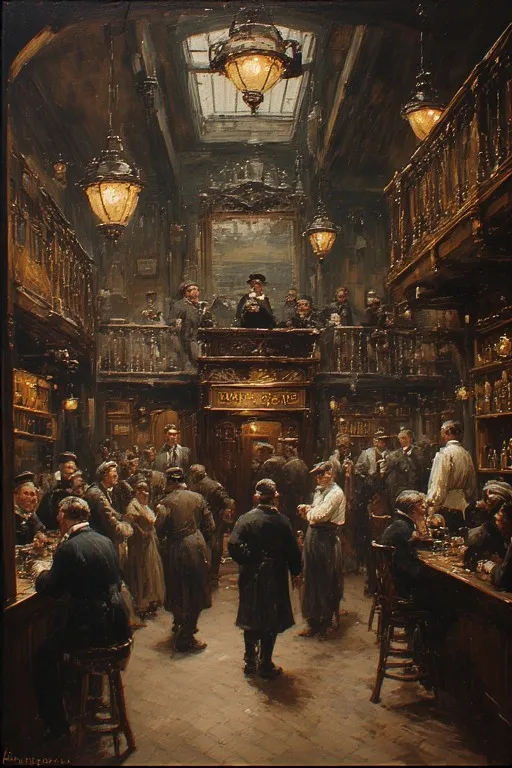
Abigail's by Maex Darles
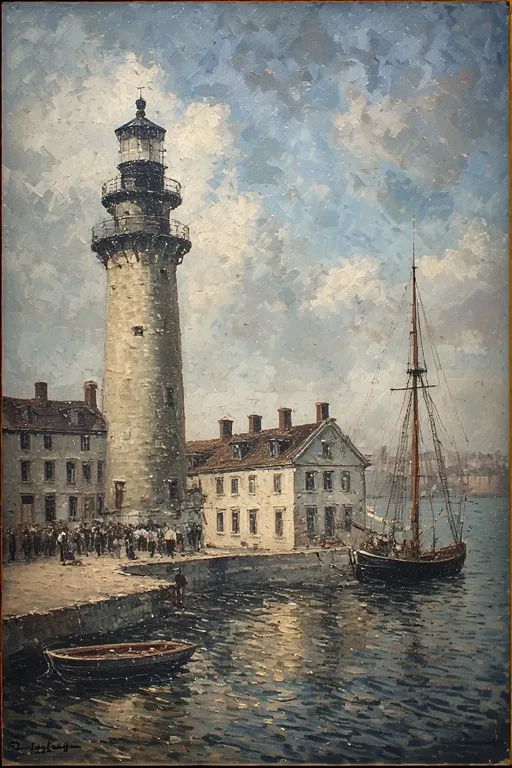
Beacon House by J.S.A. Carver
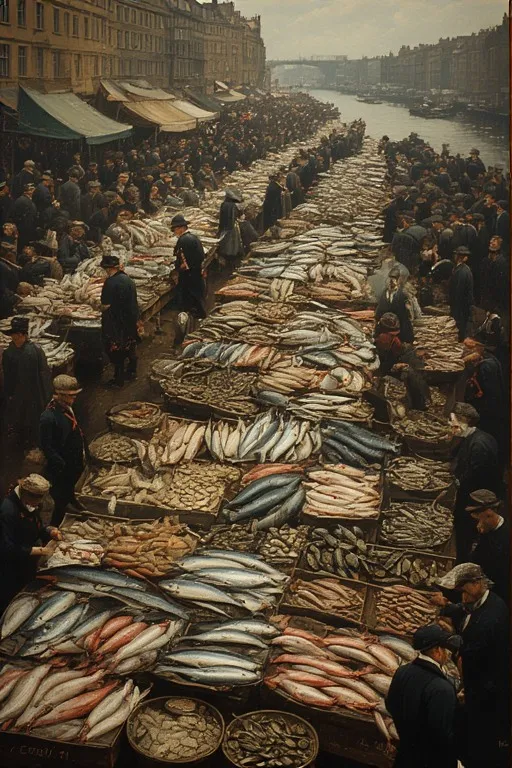
Brenningsgate Fishmarket by J.S.A. Carver
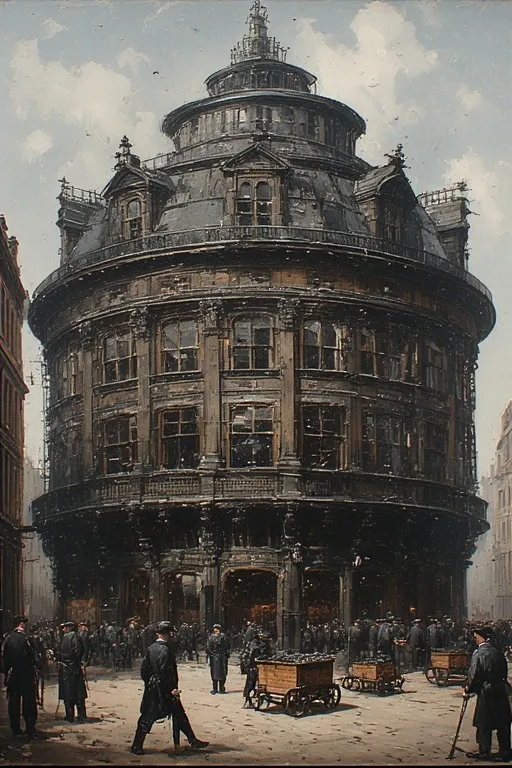
Coal Exchange by Georges Deoilles
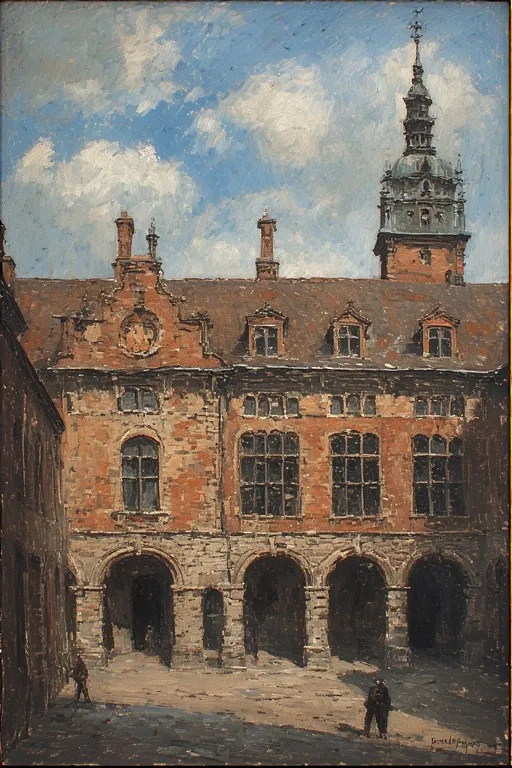
Custom House by Frank Dearings
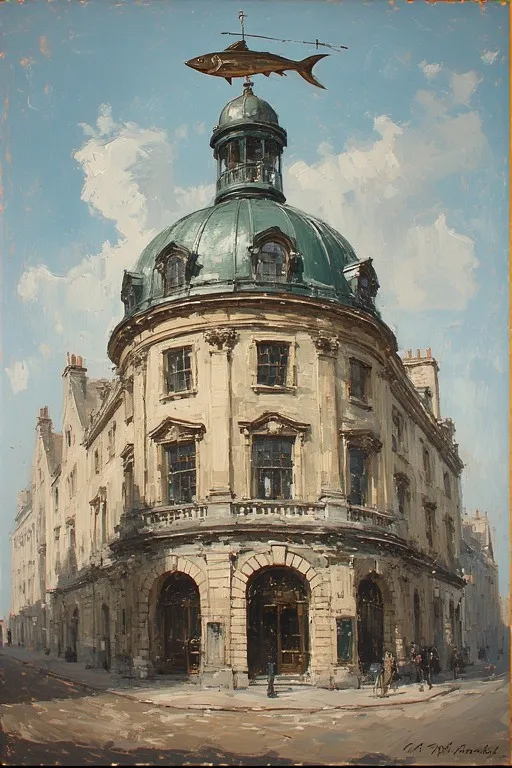
Fishmonger's Hall by Kersage Ashy
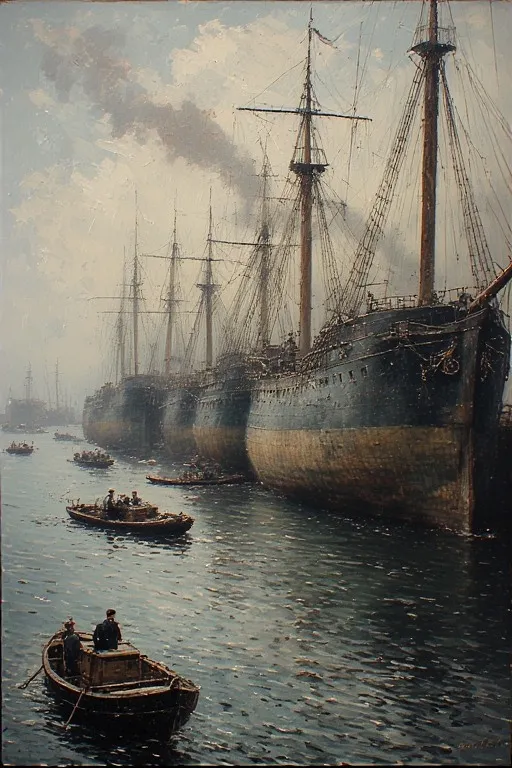
Hulks by Maex Darles
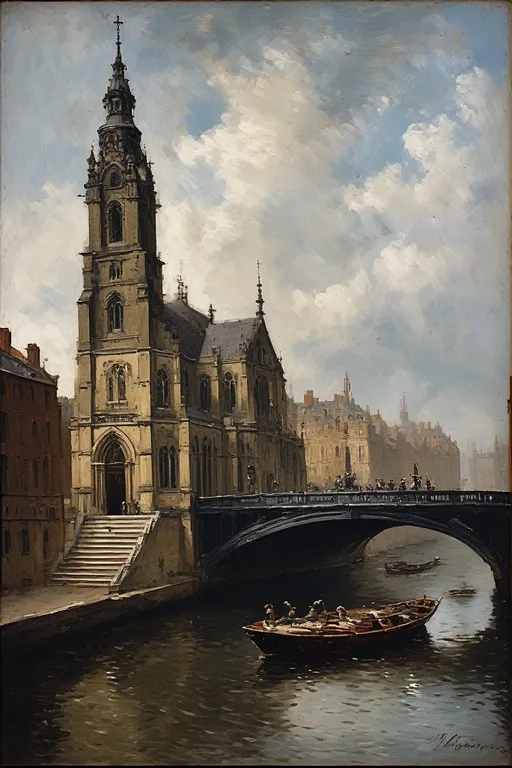
St. Eric-on-Lunde by J.S.A. Carver


Comments
Author's Notes
Thanks to Daernhelm for making the images in "Visions of..."