


Ash Choir
Fire & Pain
“The city did not die all at once. First came the screaming. Then the heat. Then the terrible moment when every soul in the crowd realized the doors would never open again.”
There are undead born from hatred. Others rise from curses, necromancy, vengeance, or unfinished purpose.
The Ash Choir is born from catastrophe.
It forms when enormous numbers of people die together in overwhelming terror during a magical disaster powerful enough to scar reality itself. Burning cities. Arcane reactor collapses. Failed rituals. Planar breaches. Divine punishment. The dead do not pass on cleanly. Fear, agony, confusion, and the instinctive desperation to survive fuse together into something singular and monstrous.
The result is not a collection of ghosts.
It is a mass casualty event that learned how to move.
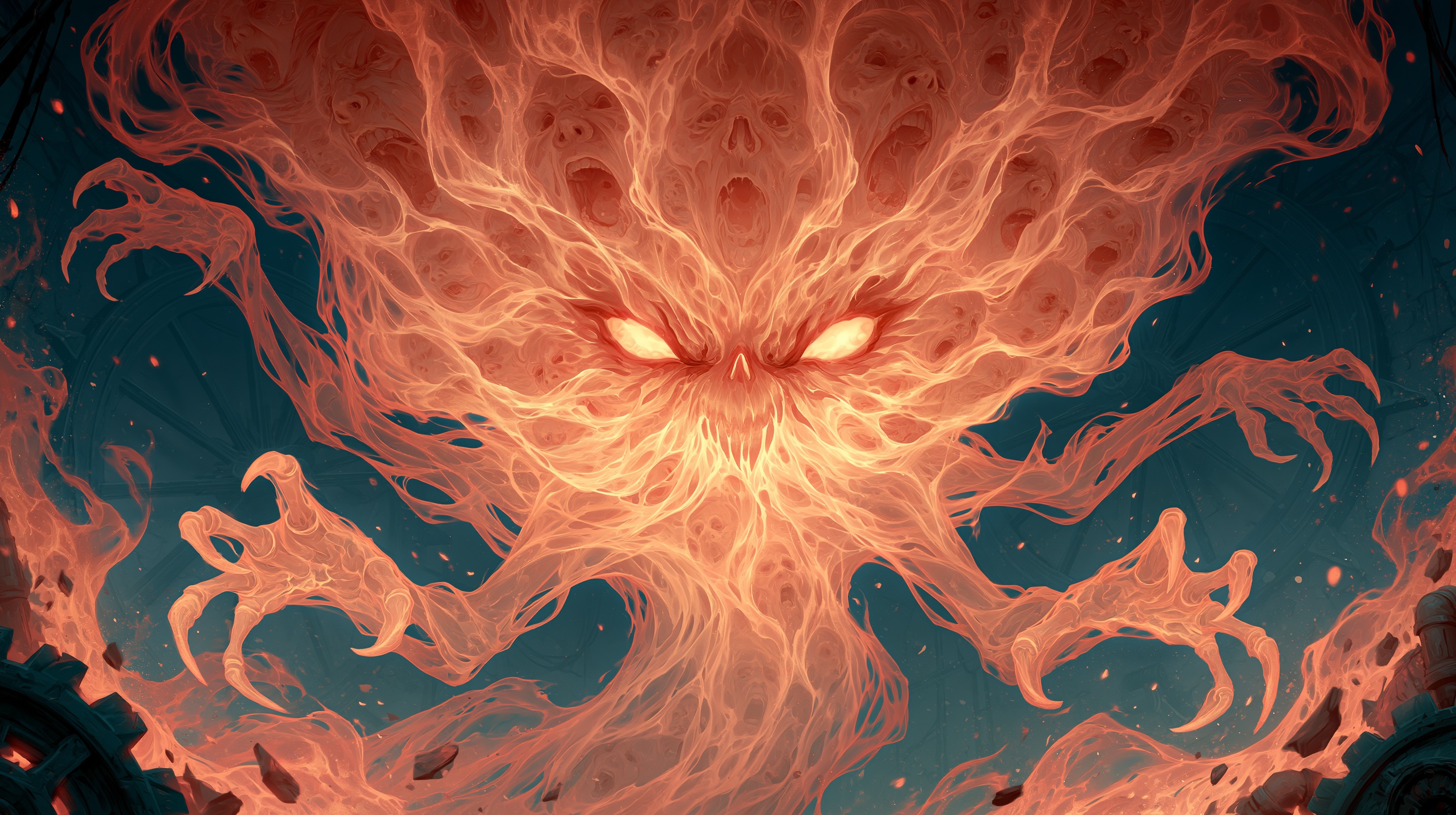
An Ash Choir appears as a colossal drifting shape composed of fire, ash, smoke, and half formed human figures writhing endlessly within the blaze. Faces emerge briefly from the inferno before sinking back beneath the surface. Some scream. Some beg for help. Others simply stare with the numb horror of people still trapped in the final moments of their deaths.
Witnesses often report hearing thousands of overlapping voices at once. Pleading. Crying. Calling loved ones. Giving contradictory warnings. Screaming for doors that no longer exist.
The sound alone has driven experienced soldiers into panic.
Unlike many undead horrors, the Ash Choir is not truly malicious in a conscious sense. It does not stalk prey for pleasure or scheme with deliberate cruelty. Instead, it reenacts the emotional reality of the disaster that created it. It spreads panic because panic created it. It traps people because its victims were trapped. It warps escape routes because, in its final moments, escape became impossible.
To stand near one is to feel reality behaving incorrectly.
Hallways seem longer than they should be. Smoke moves against the wind. Exits appear farther away. Crowds become difficult to navigate even when no one is present. Survivors frequently describe the sensation that the environment itself is trying to recreate the catastrophe around them.
Scholars of necromancy debate whether the Ash Choir possesses true intelligence or merely collective instinct. The answer appears to be both.
The entity reacts tactically during conflict. It recognizes danger, isolates prey, and manipulates movement with frightening efficiency. Yet beneath these behaviors lies something more primal and terrible. Every action ultimately reflects the emotional memory of mass death. It does not simply kill its victims. It forces them into the same hopeless psychological state that birthed the Choir in the first place.
This is why encounters with an Ash Choir are so psychologically devastating.
A warrior facing a dragon fears destruction.
A warrior facing the Ash Choir fears becoming part of it.
Many cultures possess stories resembling the creature long before formal records identified it as a specific undead phenomenon. Entire villages vanished after following screaming voices through smoke filled streets that did not exist. Refugees spoke of burning crowds appearing in empty roads during heavy fog. Survivors of magical disasters reported seeing towering shapes within the flames before collapsing from shock or suffocation.
Modern arcane researchers eventually connected these accounts to a single horrifying conclusion.
Sometimes magical catastrophes leave behind emotional pressure too immense for death itself to contain.
The conditions required to create an Ash Choir are thankfully rare. Ordinary fires, wars, or massacres do not produce them. The deaths must occur alongside tremendous magical instability or reality damage. The catastrophe effectively imprints itself onto the souls of the dying population, welding thousands of final moments into one ongoing supernatural trauma.
Locations haunted by an Ash Choir become infamous quickly.
Flames behave strangely nearby. Animals refuse to approach. Survivors suffer recurring nightmares involving crowds, suffocation, and blocked exits. Buildings associated with the entity often remain abandoned for generations regardless of practical value. Even hardened scavengers and adventurers tend to avoid such places after dark.
The undead’s connection to its birthplace is especially troubling. Destroying an Ash Choir away from the site of its creation merely disperses it temporarily. Unless the underlying magical wound tied to the disaster is resolved, the entity eventually reforms where the tragedy occurred. Priests and occult scholars compare this behavior to a scar reopening repeatedly because the original infection was never removed.
Methods used to combat the creature reflect its unusual nature.
Silence magic weakens it significantly because the entity relies heavily on layered auditory terror and psychic overwhelm. Effects that calm emotions can suppress some of its more destructive manifestations, temporarily disrupting the emotional momentum holding the mass together. Radiant magic often destabilizes individual souls trapped within the entity, causing faces to separate briefly from the larger form before being reabsorbed into the inferno.
Unfortunately, this process can be even more horrifying to witness than the creature itself.
Some exorcists claim fragments of individual consciousness still survive within the Choir. They describe hearing coherent pleas hidden beneath the screaming during moments of magical disruption. Whether these are genuine trapped souls or merely emotional echoes remains unknown.
Most who investigate too closely do not remain emotionally stable afterward.
Veterans who have encountered an Ash Choir rarely describe the battle itself in detail. Instead, they remember sensations.
The heat.
The screaming.
The feeling that every exit in the world had suddenly become too far away.
And the unbearable realization that the creature did not hate them personally.
It simply remembered what happened.
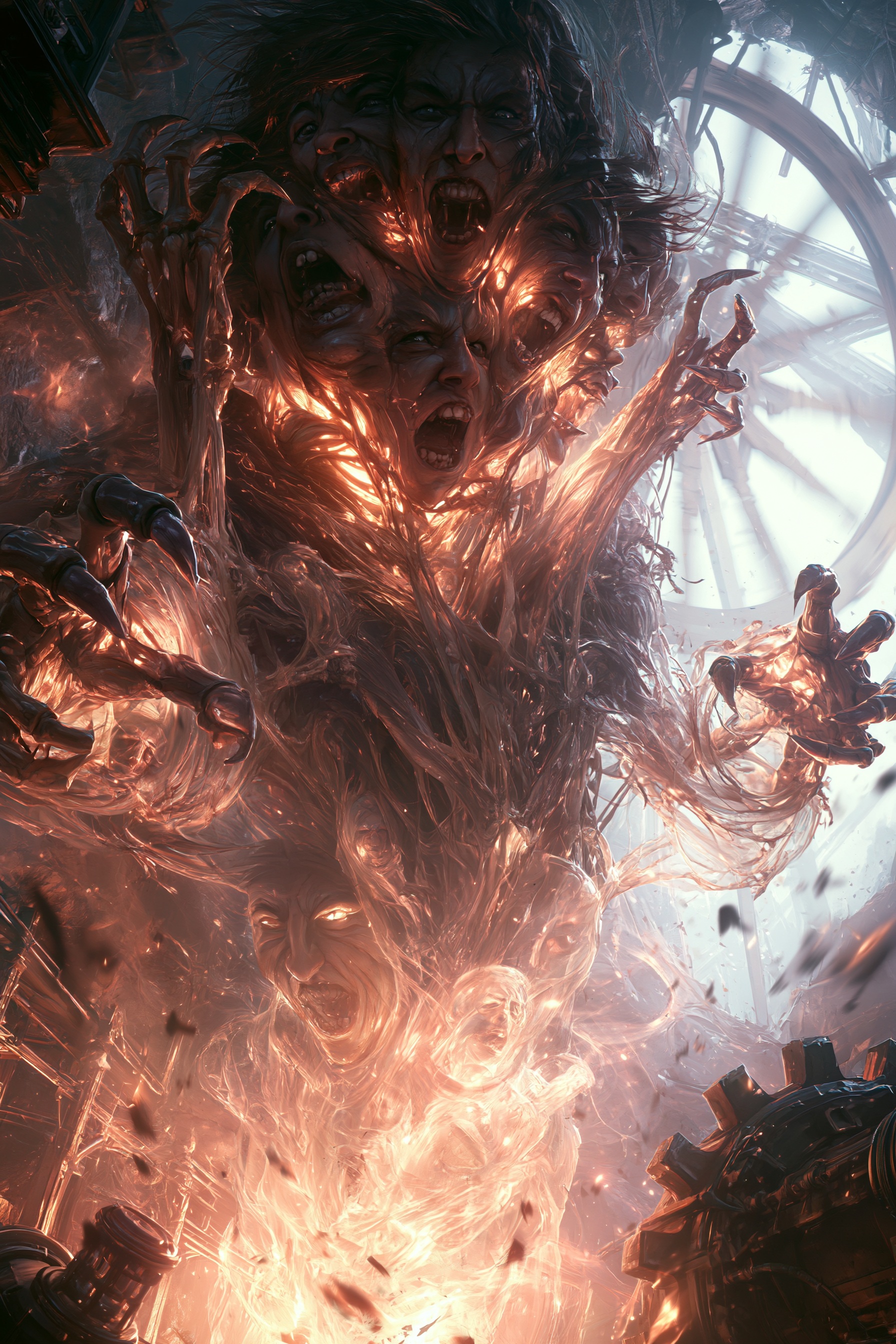
“People think the screaming is anger at first. It isn’t. It’s panic. The thing is still trying to escape the fire.”



Comments