



Spectral Memory
The Pain of Yesterday
“Who wears my voice and speaks it ill? What hollow thing doth mouth my name, yet knows it not? I am undone, not slain, for something walks that should remember me.”
A spectral memory is not the echo of a life. It is the failure of one.
It does not rise from vengeance, nor from unfinished duty, nor from any of the reasons the living prefer to assign to the dead. It forms when identity itself fractures at the moment of death, when memory does not settle into silence but instead breaks apart and continues in pieces. What lingers is not a person. It is the remnants of one, scattered and incomplete, attempting to assemble itself from whatever it can reach.
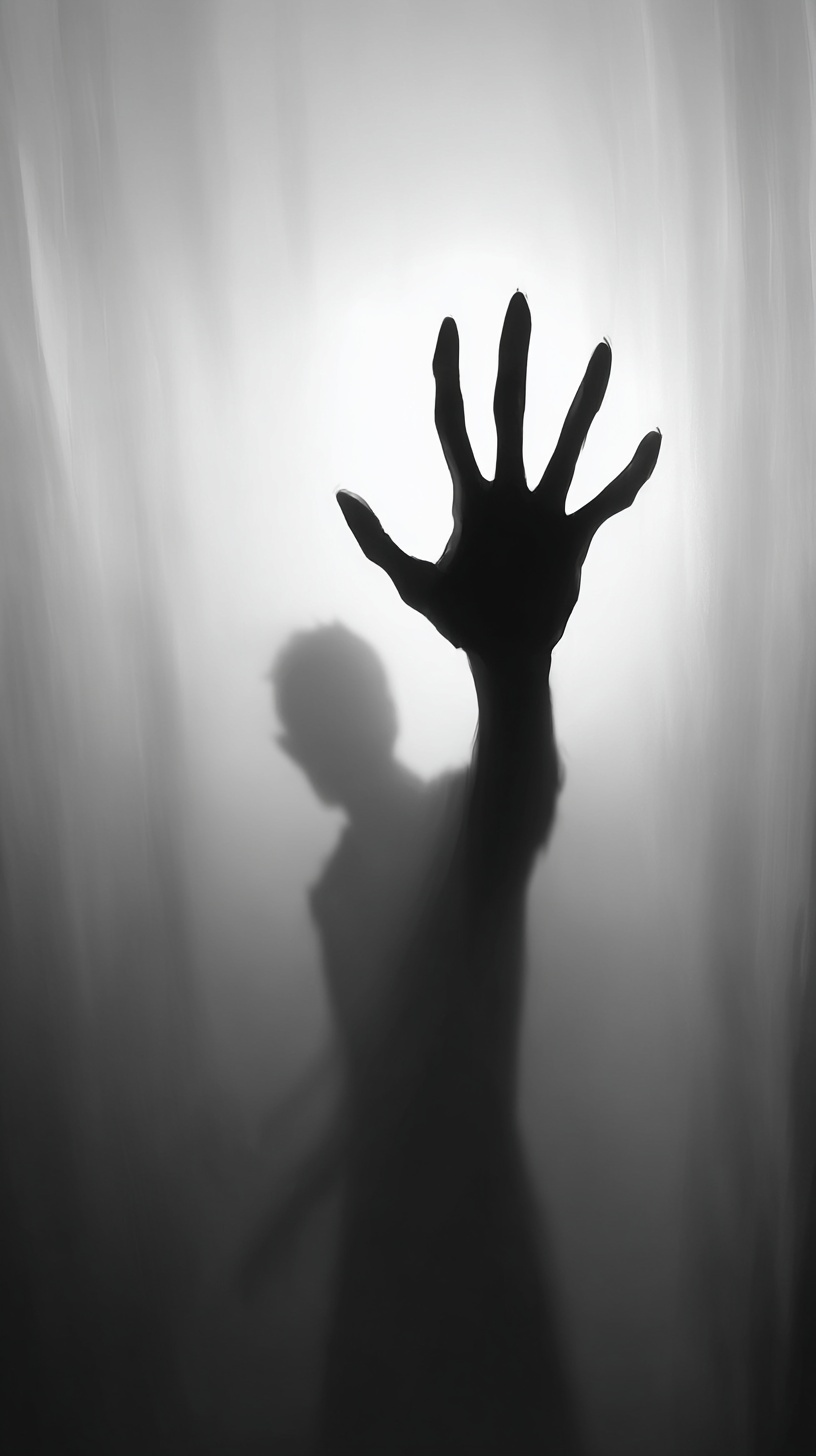
To encounter such a being is not immediately terrifying in the way one might expect. It does not announce itself with rage or malice. It drifts, uncertain, its form shifting in subtle ways that are easy to dismiss at first glance. A face almost familiar, a posture that seems to belong to someone else, a gesture that feels remembered rather than performed.
Then it gets closer.
The presence of a spectral memory carries with it a strange distortion of perception. Those nearby often feel a brief hesitation in thought, as though something has slipped out of place. A word forgotten mid sentence. A name that refuses to come to mind. The sense that a memory exists, but cannot quite be reached. These moments pass quickly, but they leave behind a discomfort that grows with proximity.
This is how it feeds.
When it strikes, it does not tear flesh so much as it reaches into the mind and removes something small but essential. A fragment of recall, a piece of understanding, a moment that once anchored the present to the past. The damage is not immediately visible, but it is felt. A sudden uncertainty. A faltering step where confidence once stood.
With each fragment taken, the spectral memory becomes more defined.
Not whole. Never whole.
But closer to something that resembles a person.
This is where the horror begins to take shape. The more it feeds, the more it stabilizes, drawing upon the stolen pieces of others to reinforce its own fractured existence. Its movements grow more deliberate. Its attacks more precise. It begins to reflect, in distorted ways, the identities it has taken from, wearing them not as disguises, but as incomplete attempts at coherence.
And yet, this growing stability carries its own weakness.
Those who observe it closely can begin to see the seams. The contradictions. The way one borrowed expression does not quite align with the next. The way its presence seems to hesitate, as though uncertain which version of itself should act. It is in these moments that the living can reach back, not with force, but with recognition.
Speaking to it can matter.
Challenging it, naming what it is not, forcing it to confront the instability of its own existence, can disrupt the fragile structure it is trying to maintain. Each successful challenge strips away a fragment, weakening its hold on the identities it has stolen. In contrast, hesitation or failure only reinforces it, allowing it to turn that uncertainty against those who attempted to understand it.
There is another path, though it is far more difficult.
Restoration.
If enough fragments are taken, the spectral memory reaches a threshold where it can no longer maintain the illusion of coherence. At this point, it becomes possible, briefly, to force those fragments into alignment, to impose a structure it cannot sustain on its own. This act does not heal it. It incapacitates it, overwhelming the fractured pieces with a momentary clarity they cannot endure.
Do this once, and it falters.
Do it twice, and it ends.
Because the truth is simple, and deeply unsettling.
A spectral memory does not want to harm the living in any meaningful sense. It does not understand harm in that way. It is attempting to become something it no longer is, using whatever pieces it can find to fill the absence left behind by its own failure to remain whole.
It is not stealing identity out of malice.
It is trying to remember how to exist.
And every fragment it takes only reminds it that it never will.
“I felt it take a thought from me as one might pluck a thread, and now the cloth hangs loose where once it held. Pray tell me, what remains of a man when memory itself is taught to wander?”
Genetic Ancestor(s)



Comments