
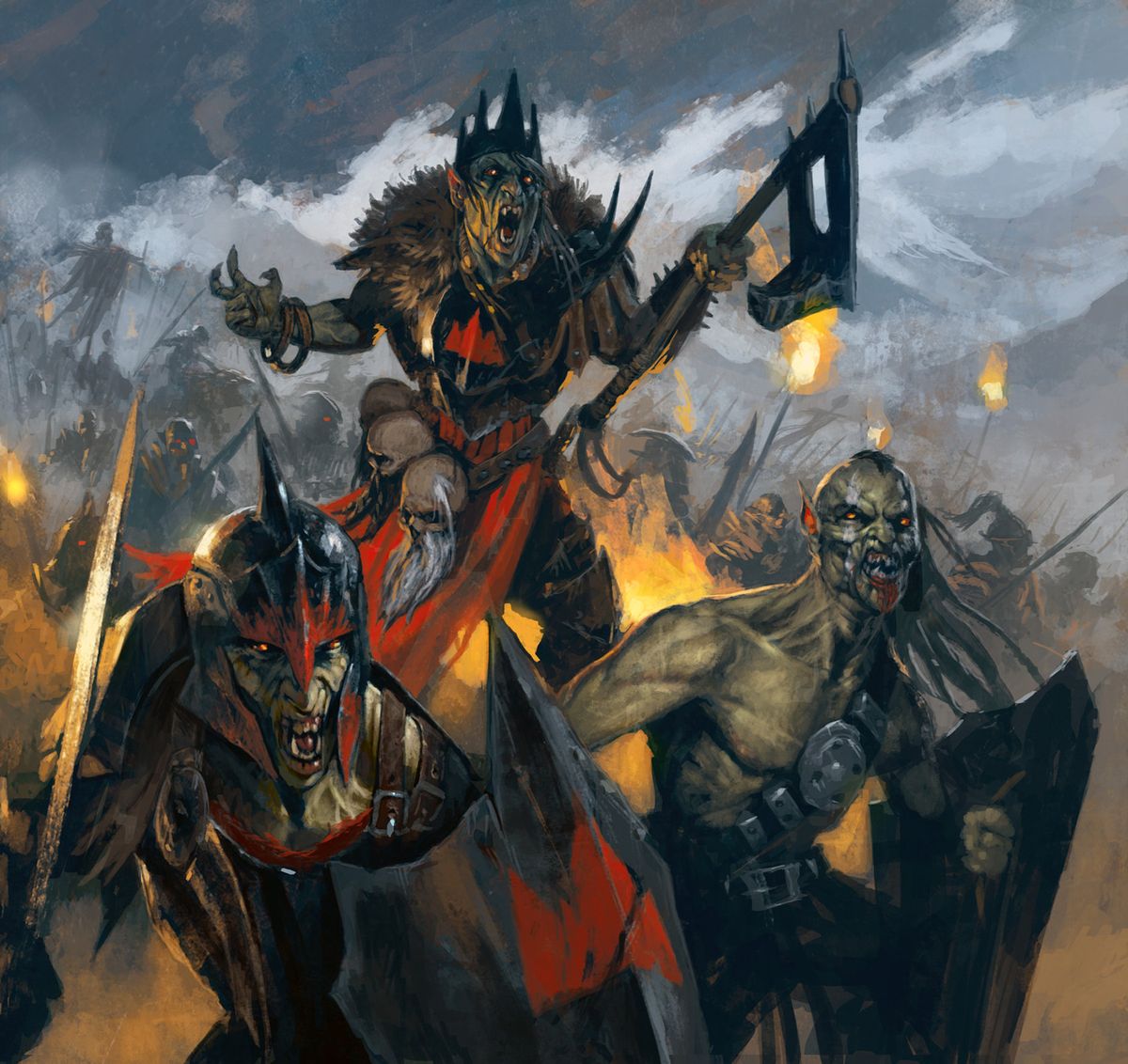
Hobgoblins
Hobgoblins are the most organised and industrialised of the goblinoid tribes, forming harsh militaristic societies built upon slavery, conquest, and ruthless hierarchy. Across the Dreknog Wastes, their fortified settlements and mobile war camps rise around mines, quarries, and heavily defended trade routes, sustained through brutal labour extracted from conquered peoples and weaker goblinoid clans alike. Though semi-nomadic by nature, many hobgoblin clans maintain permanent strongholds carved into cliffsides, canyons, and mineral-rich hills, from which they expand their influence through raids, slave-taking, and warfare. To outsiders, hobgoblins are often regarded as the closest goblinoid equivalent to the Orcs in terms of military threat, though where the Orcish Tribes value direct strength and glory, hobgoblins favour discipline, cruelty, and calculated domination.
Physically, hobgoblins stand larger and broader than Goblins, though smaller and less physically imposing than Bugbears. Most possess yellow, reddish, or ash-toned skin, with sharp features, heavy brows, and hardened physiques shaped by harsh living conditions and constant conflict. Their appearances often reflect the severe nature of their societies, with ritual scarring, branded insignia, and practical military attire being common among warriors and overseers alike. Hobgoblins are naturally resilient creatures, capable of enduring the extreme climates and unforgiving terrain of the Dreknog Wastes, and most are trained for warfare from an early age. Compared to the more primal goblins and bugbears, hobgoblins display greater patience, organisation, and strategic awareness, though they remain deeply shaped by the same goblinoid instincts toward ambition, suspicion, and cruelty.
Hobgoblin society is built upon rigid hierarchies enforced through fear, punishment, and relentless displays of authority. Cunning, intimidation, and the ability to maintain control over subordinates are equally important that brute strength or strategic skill. Their settlements operate through brutal systems of labour and military discipline, where suffering is expected to flow downward through every level of society. Slaves mine ore, construct fortifications, and sustain the war machine of the clans, while hobgoblin elites compete constantly for power, prestige, and influence. Though they worship Luthror, the Shattered as the other goblinoid races do, hobgoblins interpret his domains through structure and industry rather than chaos alone. Their priests and warlords preach domination through order, conquest through discipline, and cruelty as a necessary instrument of survival in a hostile world. This has allowed many hobgoblin clans to achieve levels of organisation and military capability unseen among other goblinoids. They are also often known to capture and enslave many of the massive beasts that call the Dreknog Wastes their homes, using them as beasts of burdain or even massive battle mounts.
Despite their strength and sophistication, hobgoblins have historically struggled to maintain lasting empires or unified kingdoms. Like all followers of Luthror, they are deeply prone to internal rivalry, greed, and betrayal, with ambitious leaders frequently undermining one another in pursuit of greater power. Throughout Imperial history, powerful hobgoblin warlords have occasionally succeeded in uniting large numbers of clans into formidable military coalitions capable of threatening entire Duchies. Yet such alliances rarely endure for long. Once conquest slows or leadership weakens, infighting inevitably fractures the coalition, splintering armies into rival factions that are far easier for the imperial forces to isolate, surround and overwhelm. Even so, hobgoblins remain the most dangerous peoples of the Dreknog Wastes, combining goblinoid cunning with disciplined warfare, industrial capability, and a willingness to employ cruelty on a scale few other races can match.

Hoboglobin (Politely)