



Tomb Strider
Keepers Of The Vigil
“The Tomb Striders walked ahead of her bier with those pale blue candles burning steady through the dark, and I remember thinking no queen in history had ever been buried more beautifully. Then I looked at Corvyn and realized beauty has nothing at all to do with whether a man survives the loss.”
The lantern appears first.
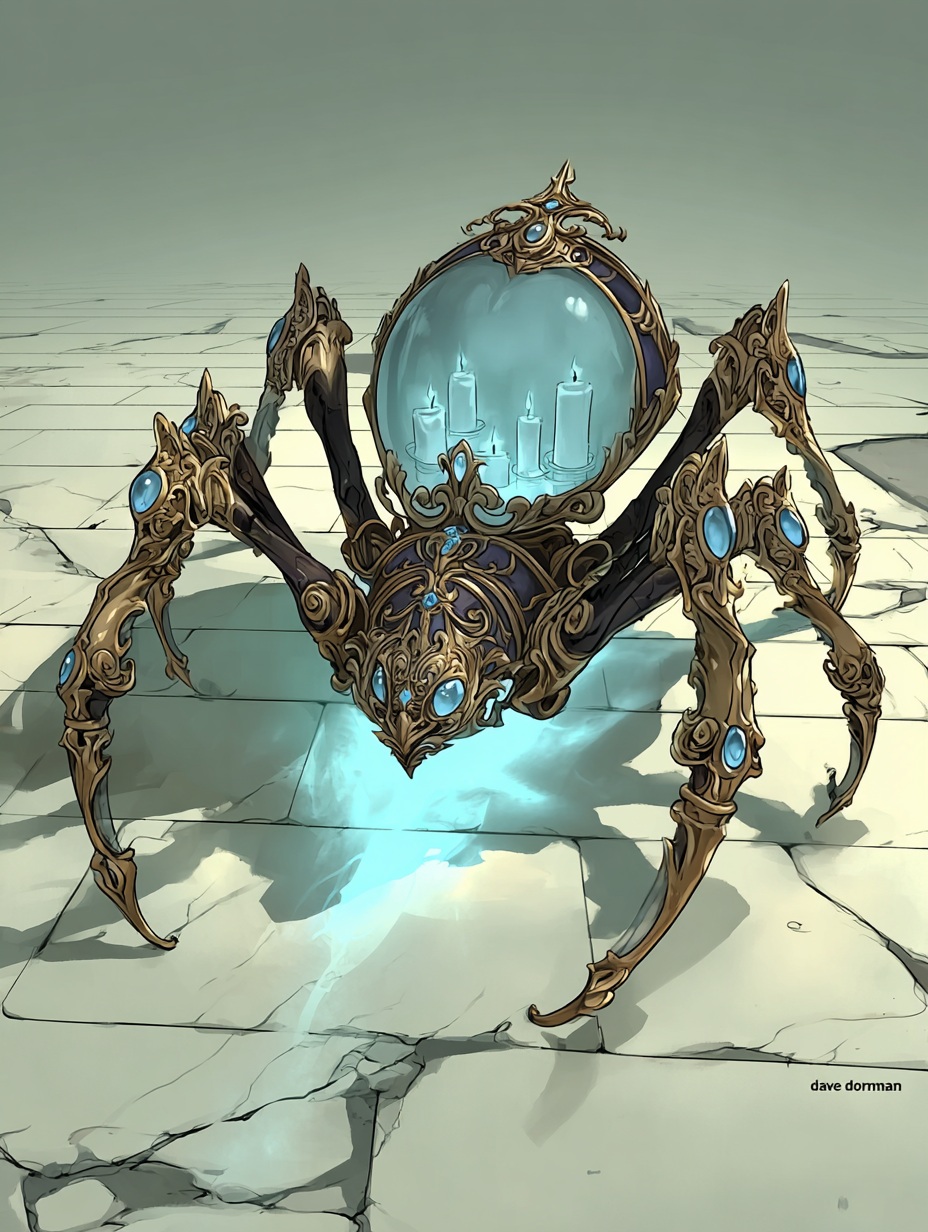
A pale blue funerary flame drifting slowly through darkness where no living hand carries it. Then comes the sound of iron feet against stone, steady and patient, echoing through crypt halls and burial corridors with the measured rhythm of ceremonial procession.
The Tomb Strider follows.
Unlike the towering brutality of greater reliquary constructs, Tomb Striders were never built for war primarily. They are guardians of passage, caretakers of sacred dead, escorts through catacombs and sepulchers where silence itself carries religious weight. Their bodies resemble narrow armored reliquaries shaped vaguely like gaunt pilgrims clad in gilded funerary frames and draped devotional cloth.
Candles burn constantly within their riblike chest chambers.
Those flames almost never go out willingly.
Most Tomb Striders are created by religious orders tasked with protecting crypt complexes, sainted burial grounds, ancestral vaults, or sacred catacombs too spiritually important to abandon entirely to mortal guards. They patrol endlessly through darkness without complaint, relighting extinguished candles, watching for tomb robbers, and driving back undead infestations with patient inevitability.
To encounter one unexpectedly in darkness unsettles even experienced adventurers.
Not because they appear aggressive.
Because they appear solemn.
The construct moves with ceremonial dignity rather than mechanical urgency. It climbs shattered stairways, broken crypts, collapsed stone corridors, and uneven burial tunnels effortlessly through its Processional Step trait, advancing with the calm certainty of ritual proceeding uninterrupted despite ruin and death around it.
Many describe the experience less like meeting a soldier and more like interrupting a funeral already in progress.
The Guiding Lantern ability reflects the construct’s deeper purpose. Tomb Striders are protectors not only of the dead, but of those escorting the dead. Their pale lantern glow steadies frightened minds, suppresses panic, and offers strange comfort amid crypt darkness and supernatural terror.
Wounded allies often report feeling less alone merely standing near one.
Some priests insist the constructs carry fragments of devotional memory from those whose relics rest inside their bodies. Whether true or not, dying creatures frequently survive longer beside Tomb Striders than reason alone should permit.
Undead creatures react very differently.
The Funeral Vigil surrounding the construct disrupts concealment and shadow among nearby undead, exposing them beneath pale funerary radiance. Spirits, wraiths, vampires, and corpse things hidden in darkness suddenly find themselves illuminated unwillingly before the ancient authority of ritual death properly observed.
Necromancers despise them.
Grave robbers fear them.
Clerics tend to speak to them quietly even knowing no answer will come.
In battle, Tomb Striders fight with graceful but relentless efficiency. Their claws resemble ceremonial burial tools sharpened into weapons through sacred reinforcement, each strike carrying radiant force meant not merely to wound but to rebuke the unnatural persistence of undeath itself.
The Sepulchral Light ability is particularly feared among undead hordes. When activated, every candle within the construct flares simultaneously into pale blue radiance strong enough to halt lesser undead outright beneath crushing funerary authority.
Witnesses often compare the effect to being judged silently by the dead themselves.
Perhaps the most beloved aspect of the construct emerges only upon destruction.
When a Tomb Strider finally falls, its candles extinguish one by one while pale ash rises gently from the broken reliquary within its chest. Rather than exploding violently or collapsing maliciously, the construct’s final act becomes one of protection. Nearby allies receive a lingering blessing of endurance and courage, as though the guardian spends the last remnants of sacred energy ensuring others survive after it cannot.
Several burial traditions consider this beautiful.
Others consider it heartbreaking.
Ancient catacomb records contain accounts of Tomb Striders continuing patrols for centuries after the temples that built them vanished entirely. Some still escort mourners through forgotten crypts whose original faiths no longer exist. A few reportedly maintain candles lit from fires older than kingdoms.
Among priests and crypt wardens, one belief regarding Tomb Striders remains nearly universal.
So long as the lantern still burns, the dead are not abandoned.
“The catacombs were full of light, incense, bells, saints, family, honor, tradition... everything the Seinrills had built across centuries to keep the dead from being forgotten. And still, when the procession ended and everyone else withdrew, Corvyn remained beside her tomb alone like a man the world had accidentally buried too.”
Genetic Ancestor(s)
Average Height
4.5 – 6 ft
Average Weight
350 – 700 lbs
Average Length
6 – 8 ft



Comments