


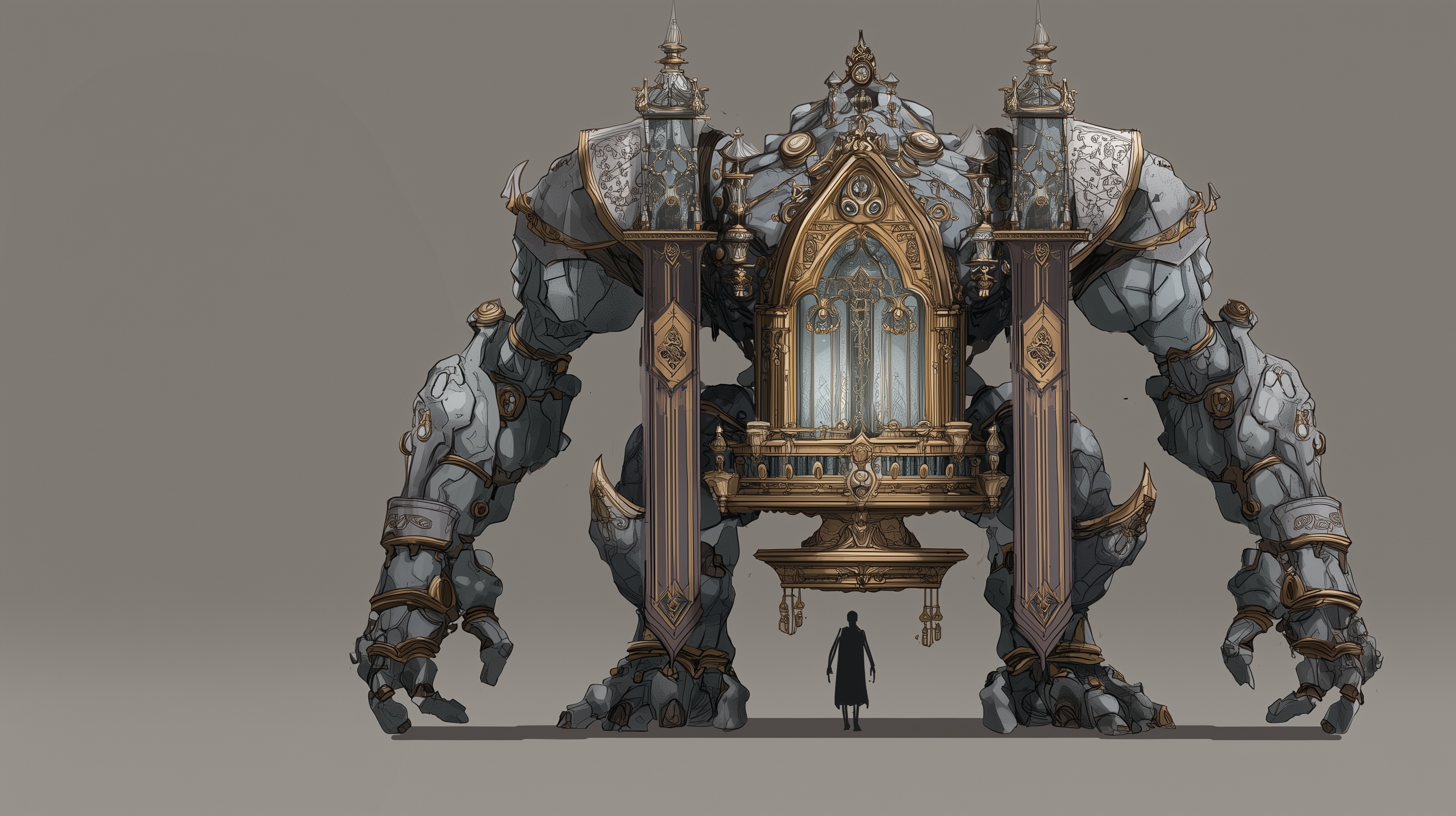
Dirge Walker
Juggernaut of Devotion
“It crossed the ruined city carrying candles for thousands already buried beneath the stones, and every man who saw it understood with horror that the great cathedral had survived only because there was no one left alive inside it to mourn.”
You hear the bells long before you understand what is approaching.
Not ordinary bells.
Cathedral bells.
Immense spectral tolls rolling across ruined battlefields and burial grounds with the weight of divine ceremony announcing something ancient enough that even the dead instinctively recoil from hearing it. The sound vibrates through stone, marrow, and memory alike, followed by distant sacred chanting echoing from nowhere visible.
Then the horizon moves.
The Dirge Walker emerges slowly into view like a walking cathedral advancing through smoke and ash.
These colossal constructs represent the highest and rarest form of sanctified funerary guardianship ever devised by mortal civilization. Entire shrines, reliquaries, ossuaries, and chapels are built directly into their bodies, transforming the construct itself into a mobile sacred site capable of carrying divine authority into battle against forces of undeath, corruption, and spiritual catastrophe.
A Dirge Walker is not merely a machine.
It is a procession.
Their bodies are formed from consecrated black stone reinforced with cathedral ironwork, sainted bone lattice, massive devotional chains, and towering stained glass sanctums glowing from deep within the construct’s torso. Chapel windows shine through drifting incense smoke while spectral choirs murmur continuously behind armored walls thick enough to survive siege engines.
Some carry entire reliquaries inside themselves.
Others house sainted remains, preserved martyrs, sacred scriptures, or fragments of annihilated holy cities.
The construct walks so the sacred may endure.
Most civilizations never build more than one.
The creation of a Dirge Walker requires generations of labor, impossible wealth, divine sanction, and relics considered too important to risk within stationary sanctuaries alone. Entire religious orders often dedicate themselves to maintaining a single Walker across centuries, treating it less as property and more as a moving extension of sacred history itself.
To stand near one is emotionally overwhelming even for allies.
The Consecrated Ground surrounding the construct forcibly sanctifies reality nearby. Necromantic regeneration collapses. Teleportation magic fails outright unless permitted by the Walker itself. Undead creatures weaken instinctively beneath crushing divine pressure saturating the terrain around the construct’s passage.
Many fiends describe the experience as physically painful.
The Procession of the Saint ability reflects the construct’s deeper spiritual purpose. Allies marching beside a Dirge Walker feel fear retreat from them like receding floodwater. Dying soldiers stabilize automatically beneath the towering cathedral shadow while necrotic corruption weakens against radiant protection flowing outward continuously from the reliquaries within.
Entire armies have survived hopeless engagements solely because a Walker continued advancing steadily through the center of collapsing lines.
Witnesses often describe the experience in religious language regardless of personal belief.
Hope becomes difficult not to feel around them.
The Bell of Final Passage is among the most feared anti undead phenomena in recorded history. At the beginning of every turn, spectral bells toll from somewhere inside the construct’s immense cathedral body, each reverberation carrying enough sacred force to scorch undead flesh and tear concealment away from creatures attempting to hide from judgment.
The dead hear those bells differently than mortals do.
According to surviving necromancers, the sound resembles being remembered unwillingly by Heaven.
When forced into direct battle, the Dirge Walker fights with catastrophic ceremonial power. Massive stone fists strike like collapsing mausoleums, shattering fortifications and undead monstrosities alike beneath radiant impacts capable of pulverizing siege towers.
Then the choir begins.
The Reliquary Choir ability releases sacred chanting from every chapel and reliquary embedded within the Walker simultaneously. Enemies caught nearby often collapse motionless beneath overwhelming divine revelation as impossible truths and spiritual terror flood mortal comprehension all at once.
Some survivors emerge from the experience converted permanently.
Others never speak coherently again.
The destruction of a Dirge Walker is considered civilizational tragedy among cultures capable of creating them. When one finally collapses, the entire cathedral structure caves inward amid shattering stained glass and exploding sanctified light visible for miles.
Its final blessing remains terrifyingly beautiful.
Nearby allies receive cleansing grace strong enough to break curses, possessions, and supernatural terror entirely while the radiant death of the Walker annihilates fiends and undead unfortunate enough to remain nearby.
Even dying, it protects the living.
Ancient chronicles insist several Dirge Walkers still wander forgotten roads and ruined kingdoms long after the faiths that created them vanished from history entirely. Some continue guarding dead cities whose names no living culture remembers. Others walk endless funeral routes beneath broken skies carrying relics no mortal hands remain worthy to receive.
Among surviving clerical orders, one truth regarding Dirge Walkers remains sacred.
When even cathedrals must learn to march to war, something has already gone terribly wrong with the world.
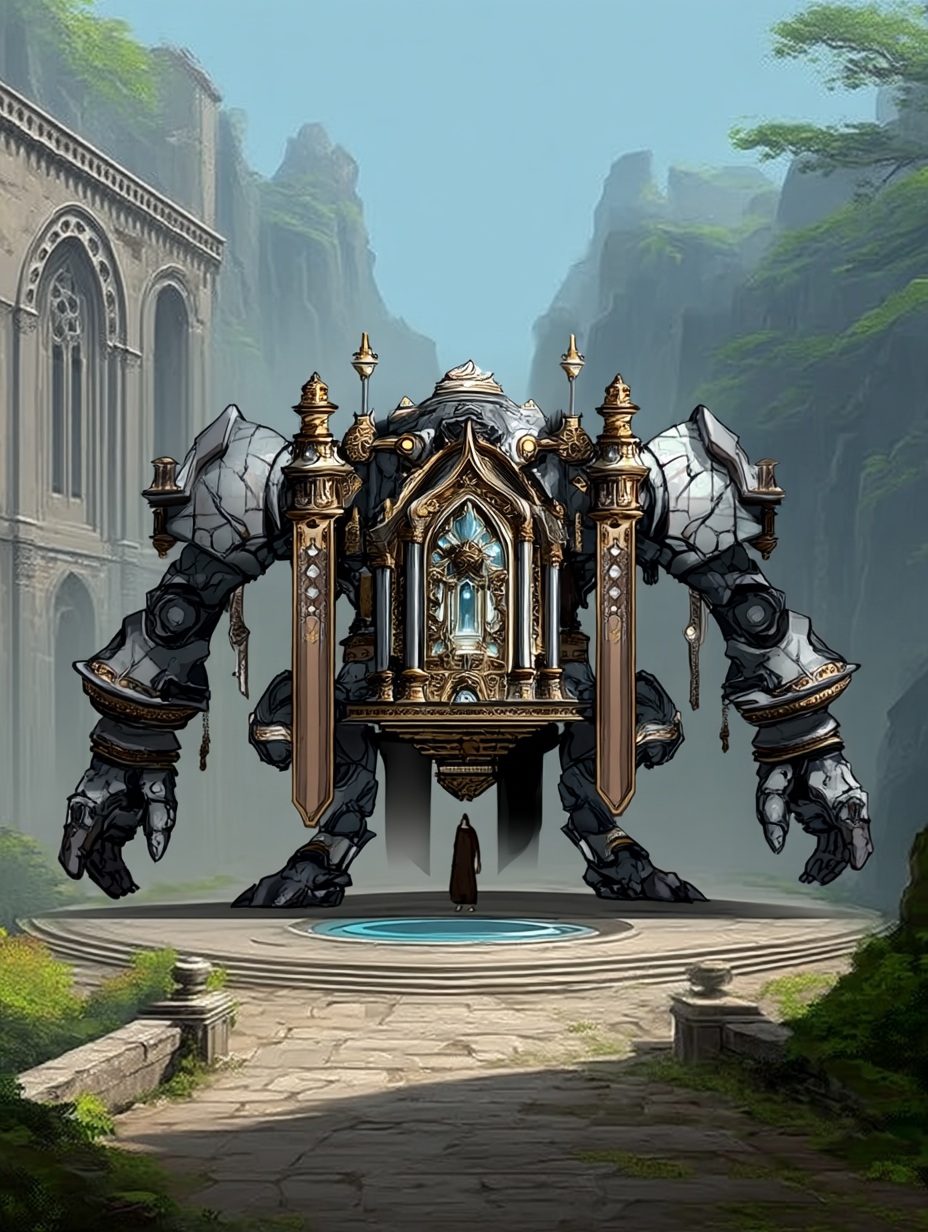
“The bells were not calling the dead to rest anymore. They were warning the living that mercy itself had begun to march.”
Genetic Ancestor(s)
Average Height
30 – 45 ft
Average Weight
90 – 140 tons
Average Length
40 – 60 ft



Comments