


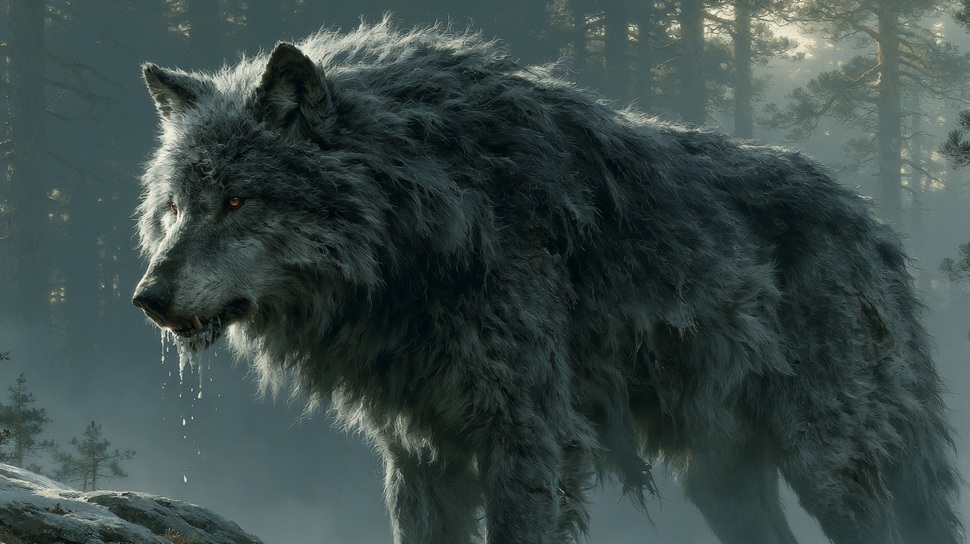
Rabid Dire Wolf
Savage Pain
"A starving wolf can be reasoned with. A frightened wolf can be driven away. Pray you never meet one that has forgotten both hunger and fear."
The rabid dire wolf is not a distinct species, nor is it a monster born through dark magic. It is a tragedy made flesh.
Somewhere within every infected beast is the creature it once was, a disciplined hunter that understood the rhythms of the forest, the strength of its pack, and the patience required to bring down prey many times its own size. Dire wolves are among the most intelligent predators in the wild, relying upon coordination rather than reckless aggression. They test their quarry, retreat from overwhelming threats, and rarely waste energy on unnecessary violence.
Dire rabies strips all of that away.
The disease attacks the mind before it destroys the body, unraveling instinct piece by piece until nothing remains except an overwhelming compulsion to bite. Hunger disappears. Fear vanishes. Even the powerful social bonds that define a wolf pack collapse beneath the infection. Healthy wolves instinctively abandon infected companions, driving them away long before the disease reaches its final stages. A rabid dire wolf therefore wanders alone, driven across the wilderness by impulses it no longer understands.
The physical transformation is horrifying.
The once-proud animal grows gaunt despite retaining tremendous muscle. Thick ropes of blood-flecked saliva hang constantly from its jaws, which seldom close completely. Its breathing becomes ragged and uneven, interrupted by violent spasms that ripple beneath its hide. Teeth splinter from biting stone, roots, and fallen timber during bouts of uncontrollable frenzy, leaving its muzzle scarred and stained with old blood. The eyes remain the most unsettling feature. They never seem to blink, fixed upon every movement with a vacant intensity that suggests recognition without understanding.
Unlike healthy predators, a rabid dire wolf does not stalk.
It announces itself through destruction.
Trees along its path bear deep gouges where powerful jaws have stripped away bark in mindless attacks. Rocks become marked with bloody foam. Half-eaten carcasses lie abandoned where the animal lost interest the moment something else moved nearby. Streams often remain untouched despite obvious thirst, and experienced woodsmen learn to recognize the eerie silence that settles over territory the beast has entered. Birds depart. Deer vanish. Even bears and owlbears often choose to avoid the area entirely.
When the attack comes, it is immediate.
There is no circling, no testing, and no attempt to isolate weaker prey. The wolf throws itself toward the nearest living creature with astonishing speed, heedless of injury or terrain. If another opponent inflicts greater pain, the beast abandons its current victim without hesitation and redirects its fury toward the new source of suffering. This chaotic behavior often creates the false impression that the creature is behaving unpredictably.
It is not.
Pain has simply become the only language its ruined mind can still understand.
Perhaps the most terrifying aspect of the disease is how it changes the animal's response to injury. Most predators grow cautious once wounded, preserving their strength or seeking an avenue of escape. A rabid dire wolf does precisely the opposite. As blood loss and exhaustion mount, the infection drives the body into increasingly violent bursts of activity. It runs faster. It crashes through terrain that would slow any healthy animal. Every bite becomes more savage than the last, as though the body is burning away its final reserves in one desperate explosion of violence.
This has claimed the lives of countless overconfident hunters.
Many believe the fight is won when the wolf begins to stagger, only to discover that its final moments are its most dangerous. Even mortally wounded, an infected dire wolf often hurls itself forward in one last uncontrollable lunge before collapsing where it stands. Veterans therefore teach a simple rule to every apprentice.
Never assume the beast is dead until several heartbeats have passed.
The disease itself is feared almost as much as the creature that carries it. A single bite can transmit the infection, though not every victim succumbs. Those who survive exposure often spend anxious weeks under the watchful care of physicians and priests, waiting for the first unmistakable signs to appear. Entire villages have quarantined themselves after a lone wolf wandered through at night, unwilling to risk allowing the sickness another opportunity to spread.
Fortunately, outbreaks remain uncommon.
The infection's greatest weakness is its own brutality. Infected animals rarely survive long enough to spread the disease widely, either dying from exhaustion, starvation, or wounds sustained during their relentless attacks. Healthy predators avoid them, and scavengers often leave their carcasses untouched for days. Nature itself seems eager to erase the sickness wherever it appears.
Even so, stories of rabid dire wolves endure in every land where great wolves roam. Rangers pass warning signs between one another. Villages keep children indoors whenever strange snarling echoes through otherwise silent woods. Hunters who discover fresh bite marks carved into living trees often turn back without shame.
There is no glory in hunting a creature that has already lost everything that once made it noble.
There is only survival.
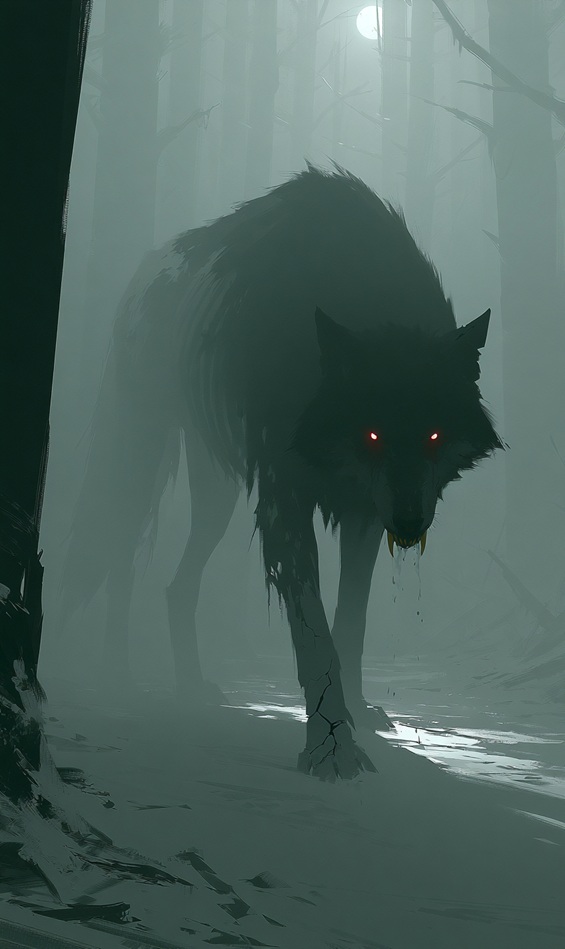
"A wolf hunts because it must. A rabid wolf bites because it cannot stop."



Winter is coming.
As long as its had its shots.