


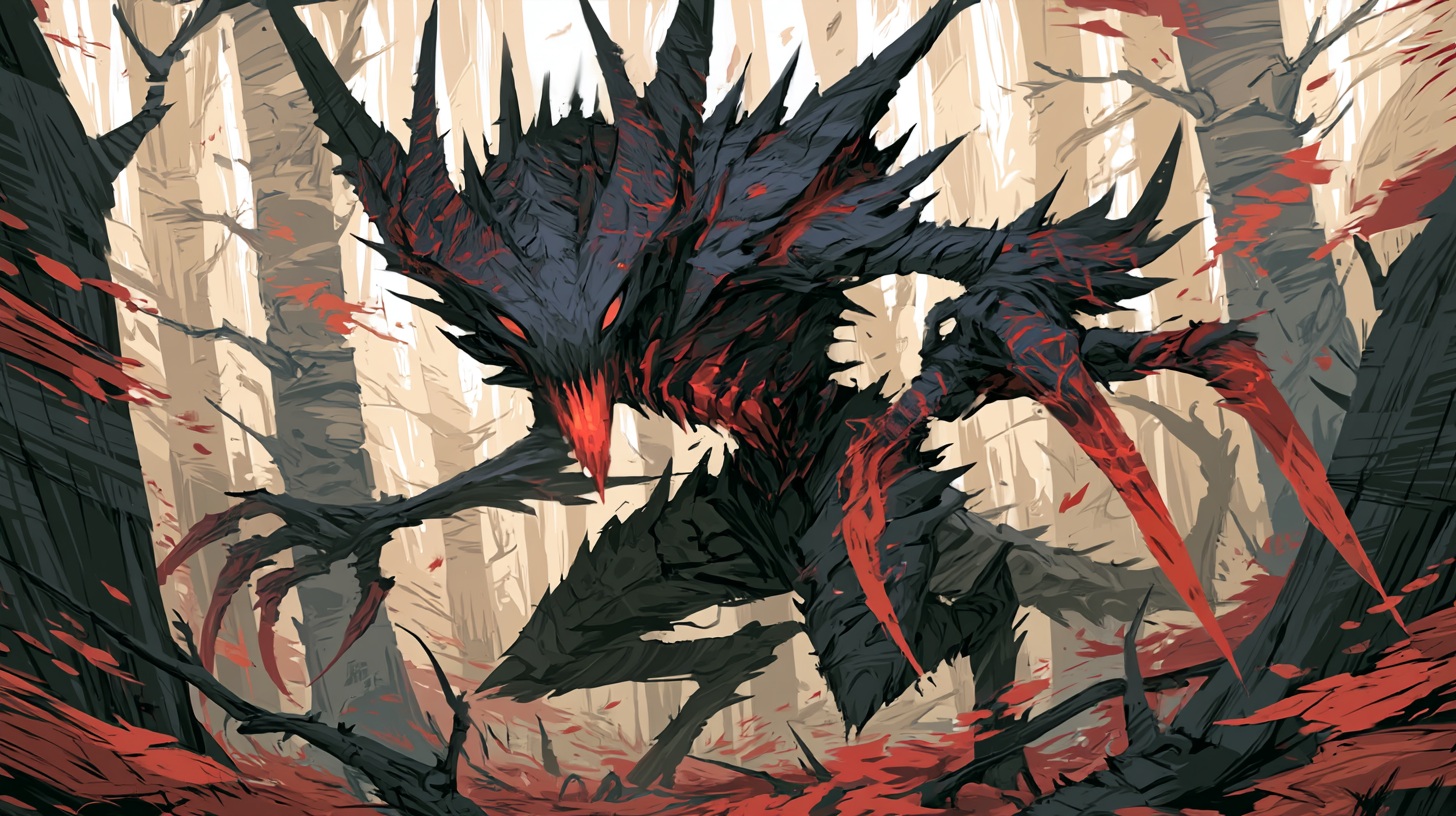
Bramble Ripper
A Thorny Mess
"Don't look for the predator. Look for the place where a predator would choose to wait. If you can't find one... you've probably already walked past it."
The bramble ripper sits at the very top of the woodland food chain. It is neither the largest beast to haunt the forests nor the most aggressive, but few predators equal its patience. Entire generations of hunters have lived and died without ever seeing one in the open. Those who have almost always wished they had not.
Unlike the great cats that rely upon speed or wolves that depend upon numbers, the bramble ripper has perfected the art of remaining unseen. Every feature of its body seems designed to erase its presence. Thick bark-like plates cover its massive frame, catching moss, fallen leaves, and broken twigs until the beast resembles nothing more than an old log collapsed beside the trail. Vines drape naturally across hooked thorns, while patches of lichen slowly establish themselves across its armored back during long periods of stillness. A patient observer might stare directly at a resting bramble ripper for several minutes before realizing the fallen timber has eyes.
That realization rarely lasts long.
Despite weighing nearly a ton, a bramble ripper moves with astonishing silence. Powerful limbs carry it over roots, around fallen trunks, and through dense undergrowth without disturbing more than the occasional fern. It rarely crashes through vegetation as lesser beasts do. Instead, it flows through the forest with practiced confidence, always choosing the route that conceals rather than reveals its approach.
Its preferred hunting strategy reflects this remarkable discipline.
Rather than pursuing prey across great distances, a bramble ripper studies movement through its territory for hours or even days. It observes game trails, watches where travelers choose to rest, and quietly learns which paths they are most likely to follow. Once it understands their course, the predator circles ahead, positioning itself where the forest naturally limits escape. Narrow ravines, dense bramble patches, fallen timber, creek crossings, and tangled root systems all become silent accomplices in the hunt.
Only when every advantage favors the predator does the attack begin.
The initial assault is explosive. What moments earlier appeared to be nothing more than deadfall suddenly erupts into motion, covering impossible distances with bounding leaps before victims fully understand what they are seeing. Long forelimbs ending in wicked claws slash outward, dragging prey off balance and pulling them closer. Those who stumble rarely recover. A crushing bite follows almost immediately, capable of splintering armor, breaking bone, or killing smaller creatures outright.
Should resistance prove greater than expected, the bramble ripper adapts instantly. Rather than remaining locked in combat, it melts back into surrounding vegetation, disappearing behind trees and brush before striking again from another direction. Survivors often report the terrifying sensation of fighting several different predators at once, convinced multiple beasts surrounded them on every side.
There was only ever one.
This behavior has given rise to countless folk tales describing woodland spirits, cursed forests, or shape-changing monsters that imitate fallen trees. Rangers know the truth, though few find it any less unnerving. The bramble ripper simply understands terrain better than those who wander through it.
Unlike many apex predators, the creature displays little interest in defending territory for its own sake. It avoids unnecessary confrontation with bears, owlbears, trolls, and even dragons whenever possible. Food is worth fighting for. Pride is not. If badly wounded, the bramble ripper withdraws without hesitation, vanishing into terrain where pursuit quickly becomes impossible. It may not return for days or weeks, but it seldom forgets those who escaped it.
The beast's diet reflects its opportunistic nature. Deer, elk, giant boars, giant spiders, and other large woodland animals form the bulk of its meals, though it readily preys upon humanoids foolish enough to travel alone through dense forests. It has even been observed scavenging carcasses abandoned by larger predators, dragging them beneath heavy cover before feeding in relative safety.
Little is known of their social behavior because so few have ever been observed together. Most appear to live solitary lives, maintaining enormous hunting ranges that overlap only during the breeding season. Mothers prove fiercely protective of their young, hiding cubs within nearly impenetrable thickets while teaching them the patience that defines their species. Young bramble rippers are far more reckless than adults, a trait that likely explains why sightings of smaller individuals are considerably more common.
Foresters measure the health of ancient woodlands in curious ways. Some count bird species. Others examine streams or old-growth trees.
The oldest among them simply ask whether bramble rippers still hunt there.
If they do, the forest remains wild enough that nothing has truly conquered it.
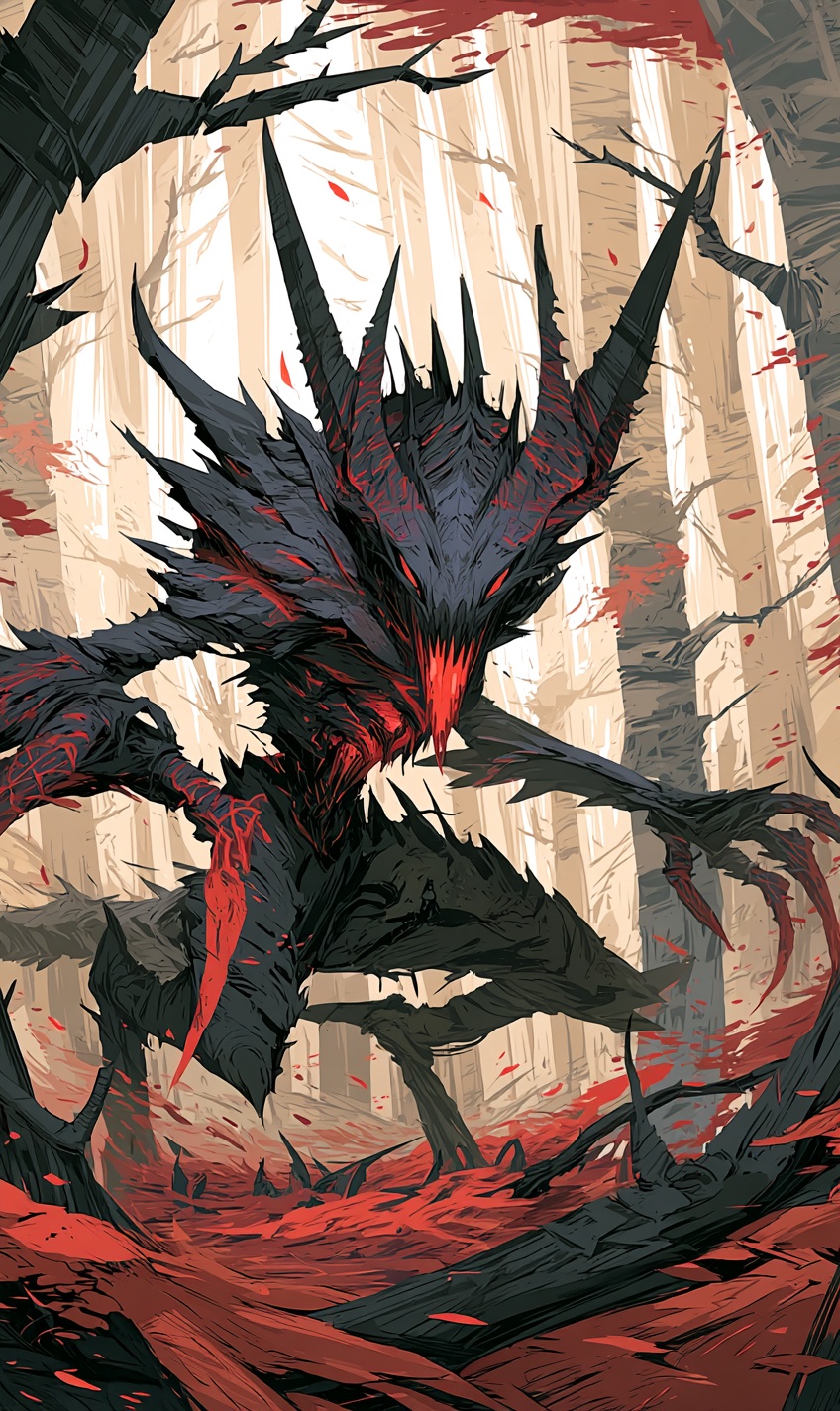
"A wolf runs you down. A bear drives you away. A bramble ripper convinces you the forest itself has decided you no longer belong."
Genetic Ancestor(s)
Scientific Name
Brambelix ferox
Lifespan
55 - 70 years
Average Height
6 - 8 ft.
Average Weight
1,600 lb.
Average Length
13 - 15 ft.
Geographic Distribution



Comments