


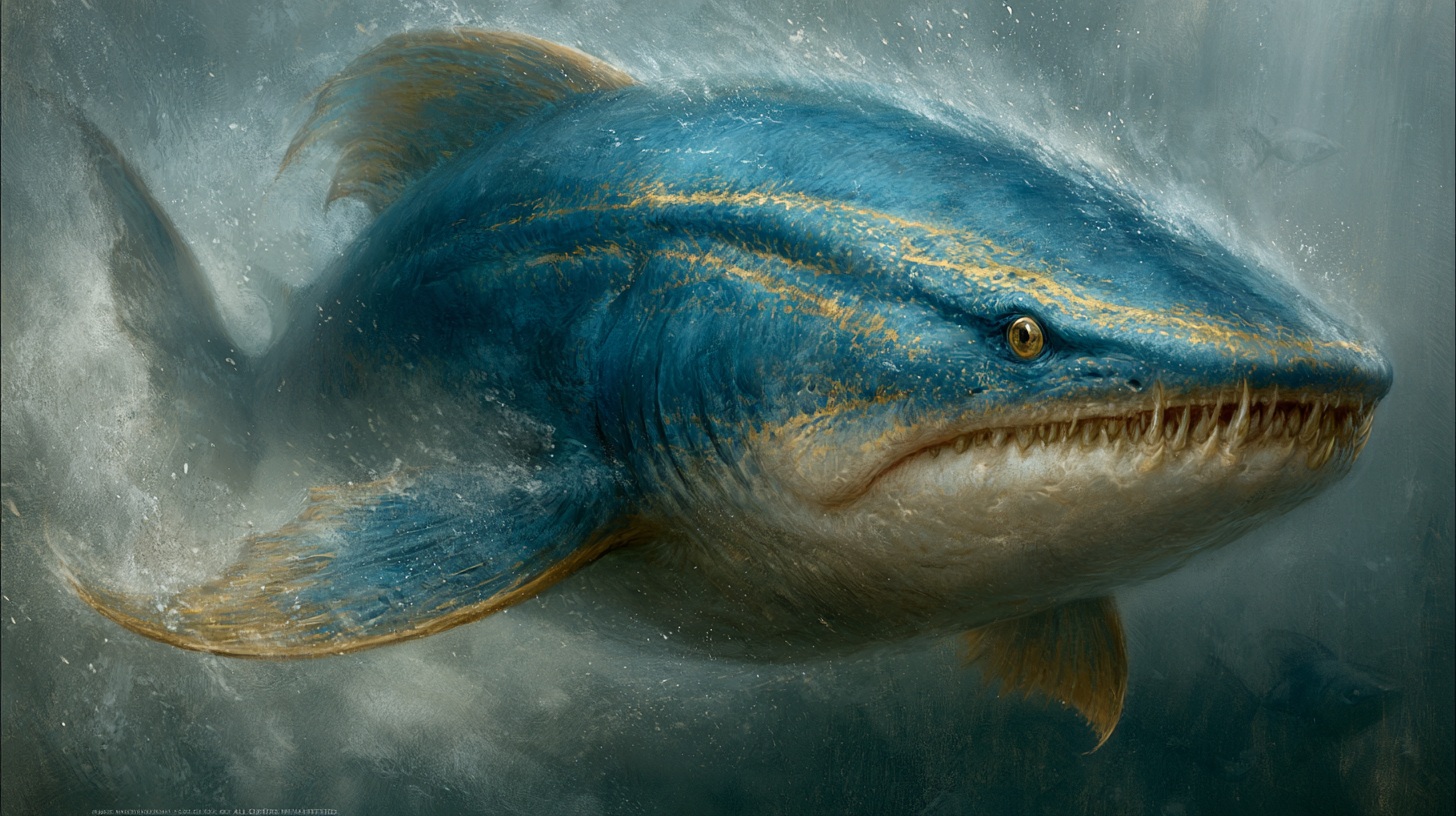
Leviathan Pike
Beware The Deep
"The first pass brings curiosity. The second brings fear. If it circles a third time, start writing letters to people you love."
Few creatures inspire more dread among experienced sailors than the leviathan pike. Unlike dragons, krakens, or other legendary terrors of the deep, a leviathan pike possesses neither malice nor ambition. It does not attack ships to establish territory, demand tribute, or satisfy some ancient grudge. It hunts because hunting is what it was built to do.
Ancient beyond reliable record keeping, leviathan pikes have prowled the oceans for thousands of years. Natural philosophers studying preserved remains have noted remarkable similarities between modern specimens and descriptions found in some of the oldest surviving maritime records. While entire civilizations have risen and fallen along the world's coastlines, the leviathan pike has endured with little apparent need to evolve. It was already one of the ocean's most efficient predators when many cultures were still learning to build seaworthy vessels.
The creature's relationship with ships is frequently misunderstood. Sailors often describe leviathan pikes as ship killers, but this characterization mistakes the means for the end. A leviathan pike does not regard a vessel as prey. Timber, canvas, and iron possess no value to a carnivore. What interests the creature are the dozens or hundreds of living beings contained within the hull. A ship is simply a floating concentration of food.
This distinction explains much of the creature's behavior. Leviathan pikes are patient hunters. Rather than attacking immediately, they often shadow vessels for extended periods, observing from below while remaining almost impossible to detect. Survivors frequently report seeing a massive shape pass beneath their ship multiple times over the course of several hours or even several days. Many captains consider this behavior more unsettling than an outright attack. A predator that strikes immediately can be fought or fled. A predator that waits forces its prey to imagine when the attack might come.
Experience appears to have taught the species that wounded prey is easier to harvest than healthy prey. Leviathan pikes are frequently encountered following storms, naval battles, shipwrecks, and other maritime disasters. Whether through instinct or learned behavior, they have developed an extraordinary ability to locate injured creatures in the water. Entire rescue operations have reportedly fallen victim to pikes drawn by survivors struggling to remain afloat after larger catastrophes.
The attack itself is usually swift and devastating. A leviathan pike relies on overwhelming force rather than prolonged combat. It smashes through hulls, scatters crews, and isolates individual targets before retreating beneath the surface. Once panic spreads and sailors enter the water, the creature gains a significant advantage. Unlike surface predators, it is perfectly adapted to hunting in three dimensions while its prey struggles merely to stay alive.
This behavior has earned the leviathan pike an infamous reputation throughout maritime culture. Countless superstitions surround the species. Sailors refuse to discuss sightings openly, captains omit encounters from official logs, and some crews consider it unlucky to count the number of times a large shadow passes beneath the vessel. The most widespread belief claims that a leviathan pike circles a ship three times before deciding whether those aboard will ever see land again. No evidence supports the superstition, yet it persists across ports separated by vast distances and entirely different cultures.
Whether viewed as a natural wonder or a nautical nightmare, the leviathan pike remains one of the defining predators of the open ocean. It serves as a reminder that despite humanity's mastery of navigation and shipbuilding, the sea remains an environment shaped by forces far older, larger, and less concerned with human survival than sailors would prefer.
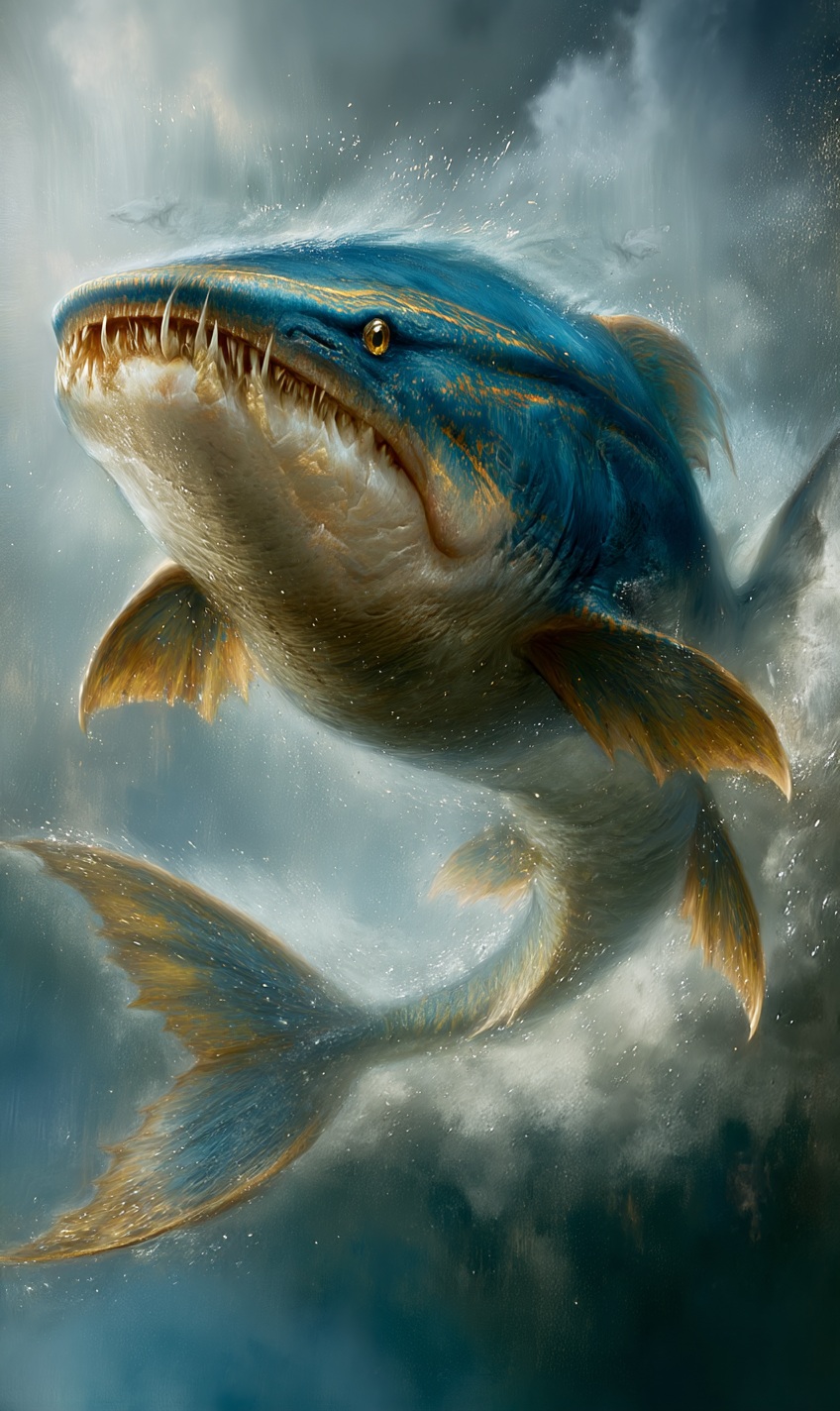
"The sea has many predators. Most hunt what they can catch. The leviathan pike hunts what misfortune delivers."
Genetic Ancestor(s)
Scientific Name
Leviathanichthys vorax
Lifespan
120-180 years
Average Weight
26,000-55,000 lbs
Average Length
33-46 ft
Geographic Distribution



Comments