Illuminated Kingdom
“When I was young and virtuous, the world seemed filled with generosity, and I asked an Archbishop why others would choose evil. I am old now and no longer wonder, for I have seen how easily the light is abandoned.”
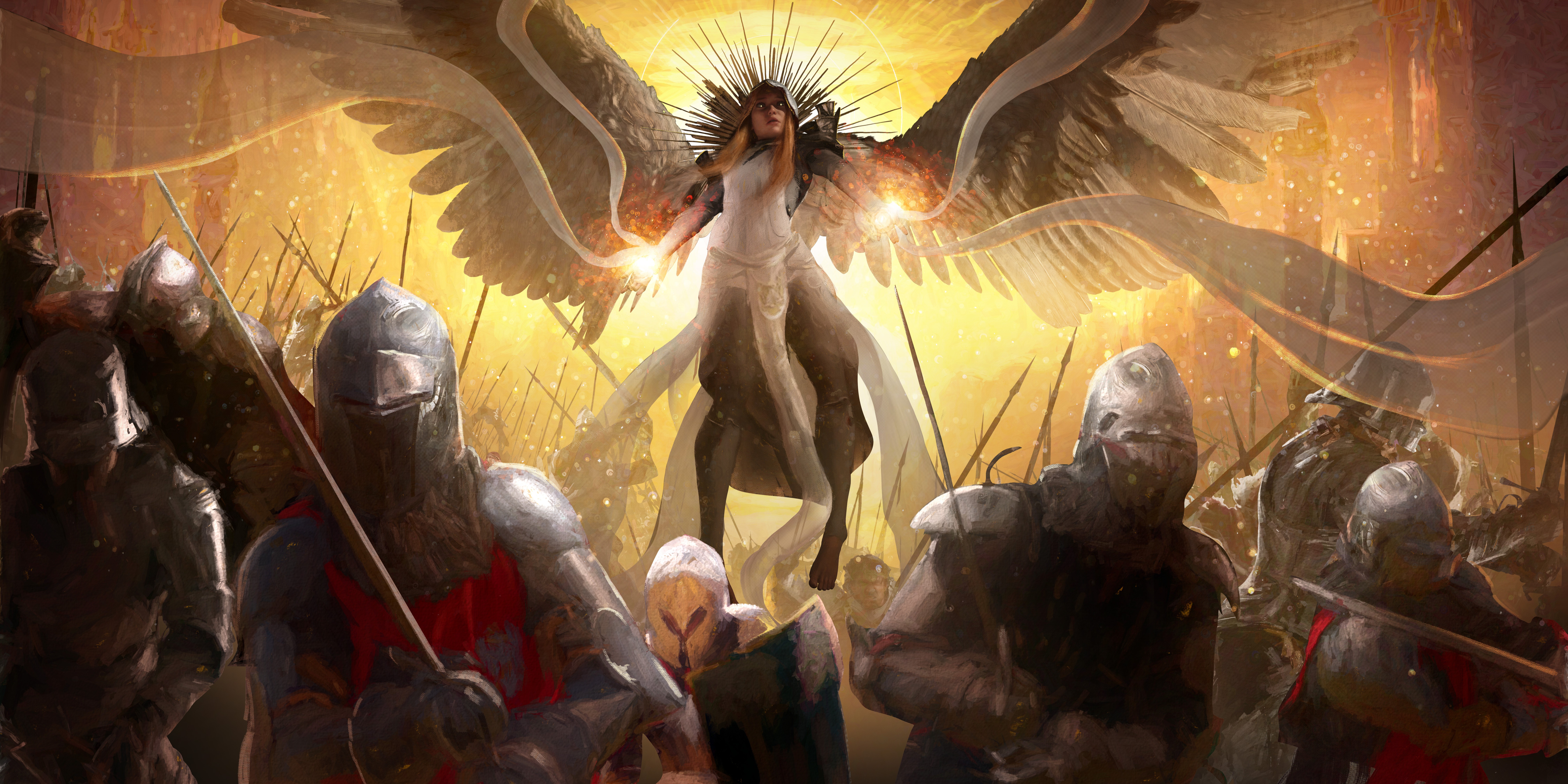
The Illuminated Kingdom is a theocratic monarchy located south of Grenchester’s Rise, renowned for its devotion to the deities of light and its deep ties to the Illuminated Church. From its capital in Grenchester, the kingdom projects stability, order, and religious unity throughout its lands.
While Queen Brenna Ambercrown serves as the public ruler, real ideological authority lies with the Illuminated Church. The Crown governs the people, but it is the Church that defines the purpose of that governance, shaping law, morality, and the kingdom’s long-term direction. To its citizens, this relationship isn’t seen as control but as a necessary alignment. The Church provides meaning, and the Crown maintains order.
Settlements of the Illuminated Kingdom
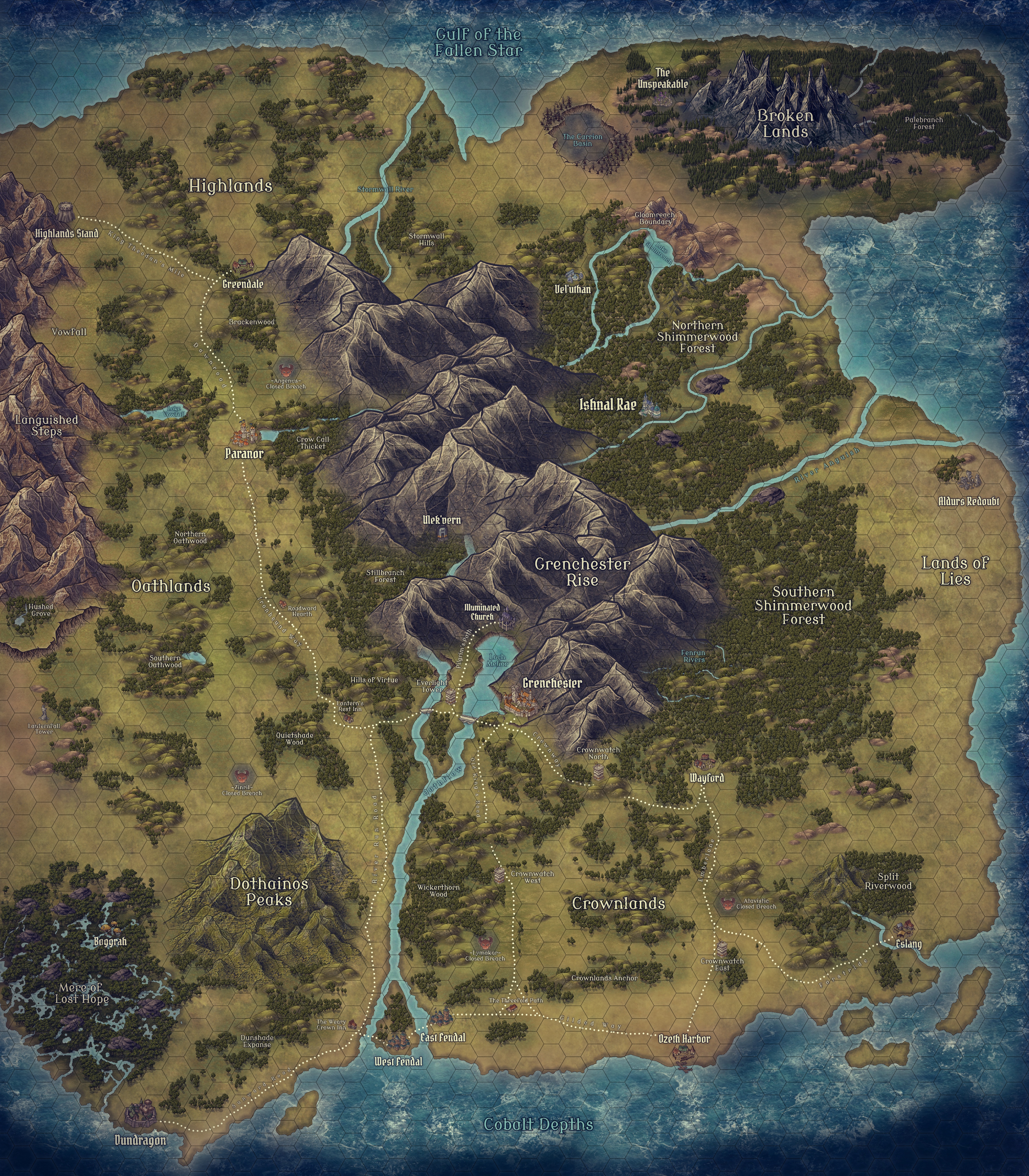
The Illuminated Kingdom occupies the southeastern region of the continent of Lyrathil, defined as much by natural boundaries as by its faith and governance. At its center lies the capital city of Grenchester, from which both Crown and Church extend their influence across the surrounding lands.
To the north, the kingdom is bordered by the towering mountain range known as Grenchester’s Rise. These peaks form a natural barrier between the Illuminated Kingdom and the ancient elvish forests beyond. Within those forests lies Ishnal Rae, the secluded capital of the Ishnal Rae Elves, who stand as silent wardens against a hidden threat in the Broken Lands further north. Though the mountains provide protection, they also create a clear divide between two very different worlds.
To the south, the kingdom opens into rolling hills, fertile plains, and managed farmland known collectively as the Crownlands. These lands serve as the agricultural backbone of the kingdom, supplying its cities, armies, and clergy. Settlements such as Wayford, Eslang, and Paranor are scattered throughout this region, each contributing to the steady flow of goods and labor that sustain Grenchester.
Along the southern coast lies Dundragon, a major port city positioned on the Cobalt Depths. While it functions as the kingdom’s primary trade hub, its distance from Grenchester and constant influx of foreign influence have allowed less regulated activity to take root beneath its surface.
Despite its size, the Illuminated Kingdom remains tightly connected through maintained roads, military patrols, and the constant movement of travelers. Chief among these routes is the Pilgrimage Road, which begins at the western gates of Grenchester and stretches outward, carrying the faithful from across Lyrathil toward the heart of the Church.

by Jeff Brown
History
Founding of the Illuminated Church
Year 134, Era of Inner FlameThe Illuminated Church is founded in response to the growing instability of a world shaped by fractured divinity and the lingering influence of the Six Sins of Light’s End. Early leadership is not centralized, but guided by the first recorded manifestations of divine communication from the three deities of light. These early figures, later recognized as the first Heralds, establish the foundational doctrines of the Church and begin organizing its structure. During this period:
- The role of the Ordi is established as an entry point into the faith.
- Early temples dedicated to each deity of light begin appearing in major settlements across Erenel.
- The concept of Yearning and Sin is formalized as a central belief.
Expansion of Influence
Years 135 - 356, Era of Inner FlameOver the next two centuries, the Illuminated Church spreads across Erenel, embedding itself into both common life and noble courts. Rather than conquering land, the Church gains power through:
- Healing, restoration, and public works led by the Hearth Keepers of Asanna.
- Enforcement of justice and protection by the Lantern Priests of Rezmir.
- Quiet elimination of supernatural threats by the Midnight Eyrie of Luniwyn.
- The Herald system becomes formalized, with one chosen voice for each deity of light.
- Nobility begins seeking church approval to legitimize their rule.
- The Doctrine of Light becomes widely accepted.
- Early versions of the Sullied and penance begins to appear.
- Grenchester grows from a small regional settlement into a major hub.
Founding of the Illuminated Kingdom
Year 357, Era of Inner FlameThe Illuminated Kingdom is established under King Sullivan Ambercrown, a Thalorian noble who fully aligned himself with the Illuminated Church. With the support of the Heralds, Sullivan unified the region through diplomacy, strategic alliances, and the removal of opposing rulers.
The founding is formalized through the Triarch Covenant, which establishes:
- The Crown governs the people and lands.
- The Church defines doctrine and divine purpose.
- Both are bound together in authority.
The Era of Illumination
Years 358 - 491, Era of Inner FlameThe Church refers to this period as the Era of Illumination, a time in which the light of the deities was brought into full alignment with mortal governance. Under Sullivan Ambercrown and his successors:
- The Crown tax and Church tithe are standardized.
- The Pilgrimage Road is constructed and formalized.
- The Balefire Knights are established to combat infernal threats.
- The Sullied system is codified, including penance and execution of the Lost.
- Church-backed officials are placed across all major settlements.
Aetherreach Arcanum and Morthos Dray
During this era, the arcane academy known as the Aetherreach Arcanum operates within Grenchester, serving as a center for magical study. Among its students is Morthos Dray, a gifted but dangerous mage who begins conducting human experimentation in pursuit of power. His actions are discovered, and he is expelled from the Arcanum, an event that is later referenced by the Church as a failure of unchecked ambition.
This expulsion becomes a critical turning point, as Dray’s work continues beyond the reach of the academy, eventually leading to his rise as a major threat to the region.
The Fall of Morthos Dray
Year 492, Era of Inner FlameBy 492, Morthos Dray had risen to power, claiming cities and forging a growing empire through the creation of Dragonborn bound to his will. His dominance, however, fractured from within. A second generation of Dragonborn, born beyond his laboratories, began to question their purpose and turned against him under the leadership of Razmarn of the Storm Phalanx. This uprising erupted into open conflict at the Battle of Highlands Stand, where Adrex Scalesear fell in combat and the dragon Volestrasz was gravely wounded before vanishing into the skies.
As Dray’s forces collapsed, the Illuminated Kingdom moved to contain the chaos, deploying both the Grenchester Army and the Balefire Knights. At the height of the conflict, Morthos Dray disappeared, leaving behind only a scorched crater and warped remnants of his empire. The Church declared his fall a victory of the light, though no body was ever recovered. Rumors persist that his essence survives, and cults devoted to his return continue to search for fragments of his power.
The Reign of Queen Brenna Ambercrown
Present DayThe Illuminated Kingdom now stands as a unified and deeply structured nation under the rule of Queen Brenna Ambercrown, whose reign is defined by visible devotion to the Illuminated Church and continued alignment with the Triarch Covenant.
Despite this outward stability, pressures continue to build beneath the surface. Reports of demonic portals have increased across the kingdom, drawing greater involvement from the Balefire Knights, while tensions persist in distant settlements where the Church’s influence is less absolute.
Military
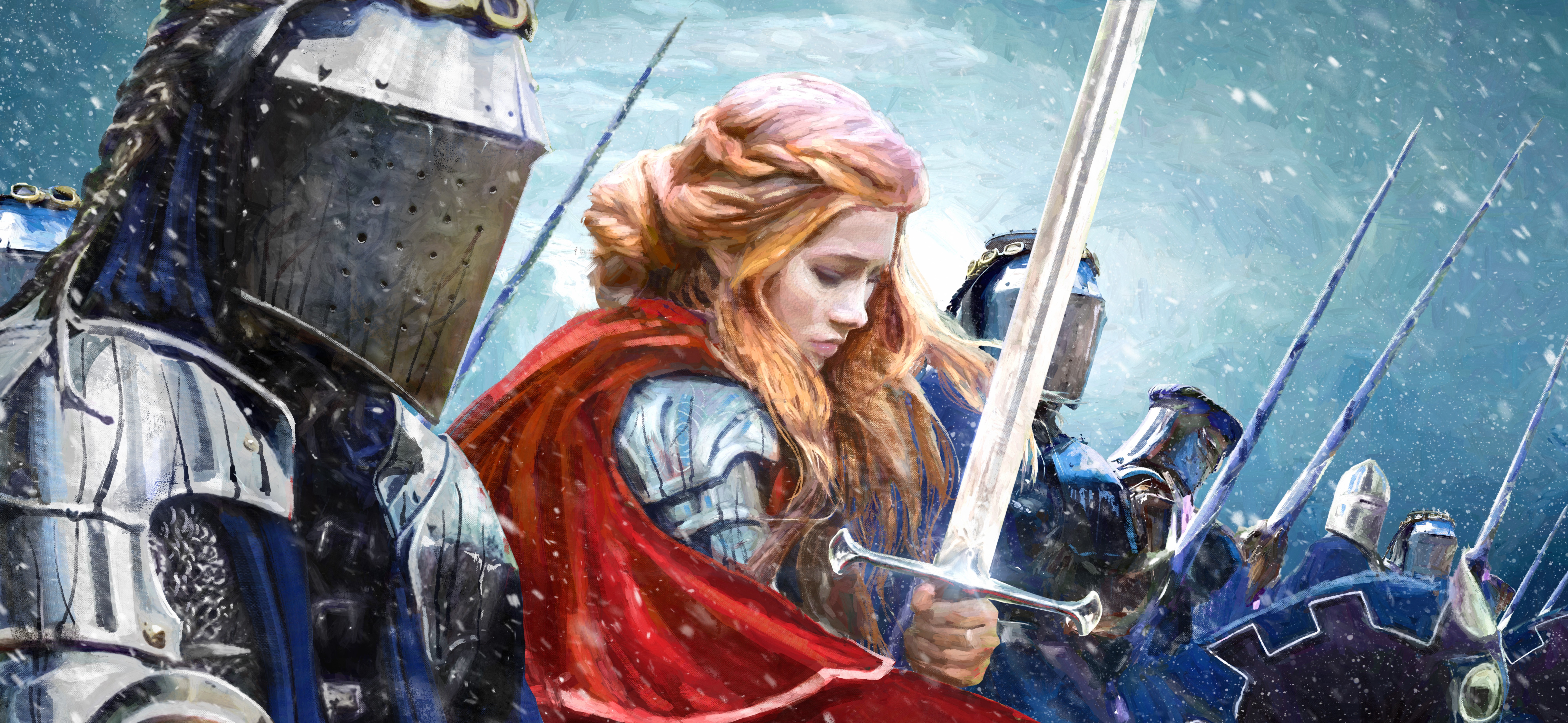
The military of the Illuminated Kingdom is divided between the authority of the Crown and the influence of the Church. While both forces serve the same purpose of protecting the realm and preserving the light, their methods, leadership, and priorities often differ. Together, they form a unified front that is both disciplined and deeply ideological.
Grenchester Army
The Grenchester Army serves as the standing military force of the Crown, responsible for defending borders, maintaining order across settlements, and responding to large-scale threats. It is composed primarily of trained soldiers drawn from Thalorian citizens, many of whom view service as both duty and honor.
Command flows through traditional military structure, with officers appointed by the Crown and advised by Church officials when necessary. The Army is highly organized, favoring disciplined formations, fortified positions, and calculated engagements over reckless aggression. In times of unrest, they are the visible force of authority, patrolling roads, guarding cities, and reinforcing the stability of the kingdom.
While loyal to the Crown, the Army operates with a clear understanding that its actions must align with the Doctrine of Light. This expectation ensures cooperation with the Church, even when objectives differ.
Balefire Knights
The Balefire Knights are the militant arm of the Illuminated Church, composed of holy warriors devoted to eradicating corruption and confronting threats beyond the reach of conventional forces. Where the Army maintains order, the Balefire Knights act with purpose against the unnatural, the demonic, and the blasphemous.
These knights are chosen instruments of faith, often trained within the Church and guided by its doctrine. Many are believed to carry divine blessing, allowing them to stand against horrors that would break lesser warriors. Their presence is most often felt where danger is greatest, particularly in response to demonic incursions and emerging portals tied to The Below.

by Forrest Imel
Unlike the Army, the Balefire Knights answer first to the Church and its Heralds. Their authority can supersede local command when matters of faith are involved, creating moments of tension between Crown and Church when priorities conflict.
Laws
Within the Illuminated Kingdom, crimes are not simply punished. They are categorized by how they distort the Yearning and opposed through structured penance aligned with the Doctrine of Light. When a creature is marked Sullied, a Lantern Priest or appointed authority assigns a Tier of Penance based on severity, intent, and repetition.
Tier I: Minor Transgressions
These are small deviations that do not threaten others but erode personal discipline. Upon penance completion the name of the Sullied is cleared with no long term mark.
Examples
- Petty theft
- Public drunkenness or disorder
- Neglecting duties or contracts
- Minor fraud or deception
Penance
- 3 to 10 days of labor under Church supervision
- Public confession before a member of the Church.
- Mandatory tithe repayment with interest
Tier II: Civil Violations
These acts harm others or disrupt order but are still considered correctable. Upon penance completion the name of the Sullied is cleared but records are kept with repeat offenses escalating immediately.
Examples
- Assault without intent to kill
- Smuggling or black market trade
- Refusal to tithe or pay tax
- Harboring known Sullied
Penance
- 1 to 3 years of labor or service under Church supervision
- Brand or mark worn to signify Sullied status until Penance fulfilled
- Mandatory yearly service to a Church order until death
Tier III: Grave Transgressions
These acts threaten stability or show disregard for the system itself. Upon penance completion the name of the Sullied may be restored, but a reputation rarely recovers as the individual is closely monitored.
Examples
- Desecration of Church property
- Defying Church authority
- Intent to kill (failed or interrupted)
- Aiding enemies of the kingdom
- Organized crime or repeated offenses
Penance
- 5 to 10 years of labor or service under Church supervision
- Permanent visible mark of penance (scar, brand, or sigil)
- Magical binding or oath enforced by the Church
Tier IV: Corruption of the Light
These acts are considered direct threats to the kingdom and the Yearning itself. Most Sullied are declared lost and penance is no longer offered.
Examples
Maps
-
Southeastern Lyrathil
Founding Date
357 EoIF
Type
Geopolitical, Kingdom
Capital
Ruling Organization
Government System
Theocracy
Official State Religion
Subsidiary Organizations
Location
Controlled Territories
Notable Members
Related Ethnicities
The Triarch Covenant
The Triarch Covenant is the founding agreement of the Illuminated Kingdom, established in 357 EoIF under King Sullivan Ambercrown and the authority of the three Heralds. This covenant defines the relationship between Crown and Church and remains the legal and spiritual foundation of the kingdom. Though interpreted differently across regions, its core principles remain unchanged.
Pillars of the Triarch Covenant
Authority of the Crown
The Crown governs the people and lands of the kingdom, holding responsibility for law, taxation, military command, and the maintenance of order. The monarch serves as the visible authority of the realm, ensuring stability and continuity under the guidance of the Church.
By the terms of the Covenant, the Crown passes through the Ambercrown lineage, though succession is not considered valid until it is affirmed by the Heralds. This affirmation is presented as recognition of divine will, ensuring that each ruler is both a rightful heir and a sanctioned servant of the light.
By the terms of the Covenant, the Crown passes through the Ambercrown lineage, though succession is not considered valid until it is affirmed by the Heralds. This affirmation is presented as recognition of divine will, ensuring that each ruler is both a rightful heir and a sanctioned servant of the light.
“The Crown rules the land, but the Church decides if it is worthy to be ruled.”
Authority of the Church
The Illuminated Church defines doctrine, morality, and the interpretation of the deities of light's will. Through its clergy and the authority of the Heralds, the Church establishes what is considered righteous, what requires penance, and what must be eradicated. Its teachings shape not only faith, but law, education, and social expectation across the kingdom.
This authority extends into governance through formal and informal means. Church officials advise rulers at every level, oversee the spiritual standing of communities, and maintain systems such as confession, penance, and the classification of the Sullied. While the Crown enforces law, the Church determines its moral framework, ensuring that justice aligns with doctrine.
The Heralds serve as the highest voices of this authority, each believed to speak with the will of their deity. Their interpretations carry the weight of divine intent, and their approval or disapproval can shape policy, succession, and military action. Though this influence is presented as guidance, it functions as a defining force that few within the kingdom are willing to oppose.
This authority extends into governance through formal and informal means. Church officials advise rulers at every level, oversee the spiritual standing of communities, and maintain systems such as confession, penance, and the classification of the Sullied. While the Crown enforces law, the Church determines its moral framework, ensuring that justice aligns with doctrine.
The Heralds serve as the highest voices of this authority, each believed to speak with the will of their deity. Their interpretations carry the weight of divine intent, and their approval or disapproval can shape policy, succession, and military action. Though this influence is presented as guidance, it functions as a defining force that few within the kingdom are willing to oppose.
Unity of Light and Rule
The Triarch Covenant binds Crown and Church together as a single structure of governance. Neither institution stands independently as the Crown derives its legitimacy through divine alignment, while the Church relies on the Crown to enact and uphold its will within the world.
The Ambercrown Line
The Ambercrown dynasty has ruled the Illuminated Kingdom since the founding of the Triarch Covenant in 357 EoIF.
King Sullivan, the First Light
(r. 357–389)Founder of the kingdom and architect of the Triarch Covenant, binding Crown and Church into a single governing structure.
King Ulric, the Shepherd King
(r. 389–421)Expanded the Church’s reach across the Crownlands, guiding rural communities into structured faith and governance.
Queen Merial, the Veiled Hand
(r. 421–458)Formalized penance, tithing, and the classification of the Sullied, embedding the Church’s influence into everyday life.
King Theodan, the Flame of Highlands Stand
(r. 458–513)Led the kingdom through the war against Morthos Dray, securing victory alongside the Church and solidifying its authority through fire and blood.
King Virgil, the Quiet Crown
(r. 513–533)A transitional ruler whose reign was marked by rising external threats and increasing reliance on the Heralds to maintain order.
Queen Elira, the Everstead
(r. 533–624)Maintained the longest reign, preserving unity with quiet stability rather than sweeping change.
Queen Brenna, the Steady Hand
(r. 624–Present)Rules in a time of rising tension, inheriting a throne shaped by centuries at a young age.
Sacred Obligation
The Sullied
The Sullied are those who have strayed from the Doctrine of Light, whether through doubt, association with forbidden forces, or actions influenced by the Six Sins of Light’s End. This status does not immediately condemn a person, but it marks them as spiritually compromised and places them under the Church’s scrutiny.
Those named Sullied are expected to submit to judgment. Refusal to do so is seen as defiance, often accelerating their descent toward harsher judgment.
Those named Sullied are expected to submit to judgment. Refusal to do so is seen as defiance, often accelerating their descent toward harsher judgment.
Penance
Penance is the path to restoration. Through confession, often enforced with a Quill of Truth, the Sullied must speak plainly of their actions and intent before a member of the clergy. Once confessed, they are assigned acts of service, restitution, or devotion meant to realign them with the Doctrine of Light.
Completion of penance restores standing within both Church and society. This system reinforces a core belief of the Illuminated Church that most souls can be corrected, so long as they submit to the authority of the light.
Completion of penance restores standing within both Church and society. This system reinforces a core belief of the Illuminated Church that most souls can be corrected, so long as they submit to the authority of the light.
The Lost
The Lost are those judged beyond redemption. This status is reserved for individuals who commit acts that directly oppose the Doctrine of Light, including rebellion alongside blasphemous entities or the selling of one’s soul. At this point, penance is no longer offered.
The Church teaches that allowing the Lost to live invites further corruption into the world. As a result, they are sentenced to death by burning, a method believed to purify what remains of their soul and prevent further harm. These executions are public and deliberate, serving as both judgment and warning.
The Church teaches that allowing the Lost to live invites further corruption into the world. As a result, they are sentenced to death by burning, a method believed to purify what remains of their soul and prevent further harm. These executions are public and deliberate, serving as both judgment and warning.
Tax and Tithe
All who live under the Illuminated Kingdom are expected to contribute to its preservation. This responsibility takes two forms: tax to the Crown and tithe to the Church.
Taxes support the structure of the kingdom, funding the Grenchester Army, maintaining roads, and protecting settlements from external threats. Tithes are given to the Church, typically in coin, goods, or labor, and are seen not as payment but as devotion made tangible.
Failure to meet these obligations is not treated purely as a financial matter. Persistent refusal or evasion may be interpreted as a rejection of duty, drawing the attention of both Crown officials and Church clergy. In such cases, the line between civic failure and spiritual failing begins to blur, and individuals risk being marked as Sullied if their actions are deemed willfully defiant.
Taxes support the structure of the kingdom, funding the Grenchester Army, maintaining roads, and protecting settlements from external threats. Tithes are given to the Church, typically in coin, goods, or labor, and are seen not as payment but as devotion made tangible.
Failure to meet these obligations is not treated purely as a financial matter. Persistent refusal or evasion may be interpreted as a rejection of duty, drawing the attention of both Crown officials and Church clergy. In such cases, the line between civic failure and spiritual failing begins to blur, and individuals risk being marked as Sullied if their actions are deemed willfully defiant.
Religion in Practice
Though unified under the Illuminated Church, the three Churches of Yearning shape daily life in distinct ways. Hearth Keepers are most present in rural communities, where their focus on healing, restoration, and community support makes them trusted figures among farmers and laborers. Lantern Priests are commonly found in towns and along major roads, acting as visible protectors who reinforce law, order, and the pursuit of justice. The Midnight Eyrie operate more distantly, their presence felt less in daily comfort and more in quiet fear, as their work often involves rooting out unseen threats tied to the Null and the Nothingness.
For most citizens, faith is not a matter of choice but of expectation. To neglect service, avoid confession, or openly question doctrine invites attention. While open accusation is rare, communities are close-knit, and deviation is noticed. A missed service, a careless word, or an association with the wrong individual can lead to quiet concern, followed by guidance from a priest or deacon.
This system is not maintained through force alone. It is sustained through culture, routine, and shared belief. Most Thalorians do not feel oppressed by their faith. They feel guided by it. Yet beneath that structure lies an unspoken understanding that to drift too far from the light is to risk being seen, and once seen, to be judged.
For most citizens, faith is not a matter of choice but of expectation. To neglect service, avoid confession, or openly question doctrine invites attention. While open accusation is rare, communities are close-knit, and deviation is noticed. A missed service, a careless word, or an association with the wrong individual can lead to quiet concern, followed by guidance from a priest or deacon.
This system is not maintained through force alone. It is sustained through culture, routine, and shared belief. Most Thalorians do not feel oppressed by their faith. They feel guided by it. Yet beneath that structure lies an unspoken understanding that to drift too far from the light is to risk being seen, and once seen, to be judged.
Churches of Yearning
Dive into Yearning and Sin
Hearth Keepers
Herald
Zendaya Lifebringer, Thalorian HumanHearth Keepers follow the tenets of Asanna, seeking to spread her faith wherever they go, performing great deeds of healing and community restoration.
Herald Lightbringer determines the Hearth Keepers' official mission and goals, which almost always align with the Church of Light, leading many to seek out Herald Lifebringer for day-to-day matters of both the Hearth Keepers and Illuminated Church.
Common Phrases
Greeting/Happy: Hale and hearty!Anger/Suspicion: By the blasphemous bell.

Lantern Priests
Herald
Osric Stoutheart, Valthera AasimarLantern Priests follow the tenets of Rezmir, seeking to provide justice for all children of the light. With their lanterns attached to their hips, a Lantern Priest is a protector, unafraid to step into the darkness in pursuit of evil.
Herald Stoutheart’s gaze often falls on the destruction of anything to do with the Below or the demons who call it home. Brasher than the other heralds, Stoutheart looks to the offensive beyond the church's walls.
Common Phrases
Greeting/Happy: Faith and honor!Anger/Suspicion: Light burns you.

Midnight Eyrie
Herald
Luna Silvermaul, Lunar ElfThe Midnight Eyrie follow the tenets of Luniwyn, seeking to protect the Realms of Remembrance from the Null and void spawn found in the Nothingness.
The most feared of the three churches of yearning, the Midnight Eyrie scour the world looking for void infestation to slaughter and put to the fire. This difficult task, unfortunately, requires purging every infested individuals by fire against the otherworldly threat.
Common Phrases
Greeting/Happy: Stars guide you.Anger/Suspicion: By Luniwyns wrath!

Adventures in the Illuminated Kingdom
The Illuminated Kingdom is a land defined by structure, faith, and consequence. Life within its borders is not lawless or uncertain but carefully maintained, with every action measured against the ideals of the True Law and the weight of the Six Virtues. Yet this order exists under constant threat. Demonic incursions, cults devoted to the Below, and whispers of the Null beyond the northern borders all press against the kingdom’s edges. These dangers are not distant rumors, but active forces that test the strength of the faithful and justify the Church’s unyielding grip on power. To many, the system is not oppressive, but necessary.
Adventurers in this region are not free agents for long. Whether through service, suspicion, or circumstance, they are drawn into the systems that govern the kingdom. Their actions carry social and spiritual consequences, and even small choices can determine how they are viewed by those in power. Campaigns set here thrive on tension, asking players to navigate a world where belief and control are often indistinguishable.
Working with the Crown or Church
Those who serve the Crown or the Illuminated Church operate within a system that values stability. The party may be tasked with protecting trade routes, escorting pilgrims, investigating unrest, or responding to hellish threats that cannot be allowed to spread. Their work often requires discretion, as not every problem can be addressed openly without risking wider instability. In many cases, they act as extensions of authority, sent to resolve situations before they attract greater attention.
Service brings access, but also limitations. Orders must be followed, doctrine must be respected, and decisions are rarely made in isolation. The party will come to understand that the Crown governs through balance, while the Church governs through certainty, and the space between the two is where most of their work will take place. Over time, they may begin to question whether they are truly protecting the kingdom or simply preserving the image that it cannot fail.
Working Against the Crown or Church
To oppose the Crown or Church is to live under constant pressure. The system is hard to avoid, and those who resist are quickly marked, monitored, or branded as Sullied. Whether the party is falsely accused, openly defiant, or secretly operating, they must navigate a world designed to detect and correct deviation. Survival often hinges on subtlety, alliances, and the ability to move unnoticed.
Such campaigns put the party in direct conflict with authority, forcing them to face the realities of the system from outside. They may reveal corruption, expose false judgments, or try to dismantle parts of the structure that have gone too far. In doing so, they need to decide what they are truly fighting for, as even a flawed system might be the only thing preventing something from becoming worse.
Congratulations! I love the religious tone of The Illuminated Kingdom. I have a location with some similarities and you have inspired me with ideas to expand it.