

Orcs
Where orcs came from is often up for debate but what all scholars can agree however is that they are a very prolific species across Necessa. The orcs were the sword of the sword and shield of the giants against the dragons in the war. Desert orcs tend to have the darkest complexions of all orc skin types. The green skins of the hill orcs are what most think of when orcs are mentioned. Mountain orcs are like their hill orc brethren but tend to be bigger and more assertive of the orc species. Orcs have also taken to the coasts and seas and have become accomplished seafarers. Migrant orcs have even found success in living in the rough tundra and ice plains where others find the climate too cold to thrive. Regardless of where orcs commonly reside, they can be found in nearly any climate and locale. Even among the competitiveness that orc tribes show to one another they can often come together for a common cause, and their resolve can be tough to break.
Since the end of the Onyx Rose War and the resulting truce orcs have found gradual acceptance and success being integrated into more established nations and organizations. While there is still some animosity shown towards them one does not deny that if you need a difficult task done an orc will rise to the challenge. Orcish tenacity extends to their ability to craft as well. Skills once used for grand war machines have led to ingenuity in making inhospitable locations habitable. Their ability to make use of everything can even rival some dwarven and elvish smiths for items that are durable and highly functional while they might not look it aesthetically.
Orc Culture With shorter lives than the longer-lived lineages orc culture has shifted much over the decades however there are still some constants. Orcs tend to keep their migratory nature in mind so many of their communities are mobile. They also tend to only keep what they can move freely with them and focus more on experiences than coveting items. Orcs still recognize locales that offer them tactical advantages in regions so will make permanent outposts. Oral stories and traditions are favored among orcs though now we are starting to see many of these stories and songs being transcribed to physical medium to share with other species as trade and co-habitation have become more common place since the sundering.
Desert Orcs
Orcs travel all sorts of climates in search of glory and have settled in the dunes of the hot desert sand. Riding giant lizards and as beasts of burden entire desert orc camps are on the move, migrating from one water source or community to the next. Some tribes take up raiding or scavenging while most nowadays take up trading. The desert orcs were servants on the fire giants back during the Dragon wars until they rebelled when the giant kingdoms fell. They were prominent across the dunes before Necessa was sundered and since then they have continued to thrive as though nothing had changed for them. Some have joined the foreign legionnaires as scouts or pathfinders due to their skills as navigating the wilderness.
The most nomadic of all the orc lineages are made up of a mix of greens, oranges, and greys darkened in the constant gaze of the sun. Hair styles tend to vary as their heads are covered to avoid the oppressive heat. Their physique is taller and leaner than their other orc cousins as they have adapted to their environment.
Hill Orcs
The orcs of the hills and highlands are the most encountered and were the siege workhorse of the giant kingdoms. Hill orcs are the most prolific of the orc lineages and the origin of many of the sublineages. Their forts and settlements dot the landscape and while they can be mobile, they tended to stay in place as outposts to offer shelter and stocks for raiding parties that would operate in the area. These settlements also were where armies were drafted first when the war drums were sounded. After the sundering of Necessa many of the tribes were split up from each other and hunkered down during the chaos. After the world settled many drifted off to found new communities or rebuild what they have. They also found enlistment in the legions of Janus with the promise of battle and glory. Their newfound fellow legionnaires found the orcs to be fine and sturdy companions that have become indispensable.
Hill orcs are known for their green hue of skin and a variety of hair styles though they tend to prefer them short of shaved to avoid complications during battle. Those that aren’t combat oriented have found success in trade and scholarly arts. Hill orc physique tends to be sturdy and broad and muscular. It is rare to see an obese orc.
Mountain Orcs
Stone giants cultivated their orcs to be a frontline fighting force. They were trained to fight in the tight tunnels, and mountain passes that they themselves could not traverse. The mountain orcs were the first to rebel under their stone giant masters when the giant kingdoms began to fall. These fights trained the orcs to be an elite fighting group that was nearly unstoppable. They went to war off the back of their successes against the giants and took the Azcragg Hold from the dwarves that was home to the mother forge. The mountain orcs are renowned smiths that can rival some of the best metal workers among the dwarven and elven artisans. After the sundering of Necessa the orcs opened up Azcragg back to the obsidian dwarves to help mend relations as well as gain knowledge of the failed wards that were unsealed during the sundering. The obsidian dwarves are also viewed as outcasts among their brethren so took the opportunity to regain access to their ancestral home. Now the two species share the hold and have some of the finest wares that can be crafted in the lands.
While mountain orcs are green in complexion it tends to be darker than those of the hill orcs whether tanned from the forges or stained with soot. They are the largest and most muscular of all the orcs and are known for their ferocious martial prowess in close quarters. They also are the least migrant of all the orcs where they build and fortify their mountain fortresses. Hair styles range from long to short and can be adorned with trinkets of the fallen or crafted jewelry.
Sea Orcs
After the fall of the storm giants the orcs under their rule took to the coasts and the seas to find their fortunes. Now known as sea orcs they found work as seafarers. Some channeled their ferocity and took over ships to become a pirate menace to the Crystal Atolls and other surrounding seas. Those that don’t take up piracy have acclimated to the various seaside communities on the coasts. Sea orcs often also find work as academics and explorers due to their migratory nature. Post sundering and with the invention of the aetherfiliers sea orcs thrive as aetherfarers exploring the aether and the newly connected worlds to the remains of Nacessa.
Sea orcs have a lighter sea green or ochre complexion. They tend to wear their hair longer than most others of their species. Since they are the most migrant of all orcs they are exposed to the most diverse range of species and have adopted many of their fashions, hairstyles, and even mannerisms.
Tundra Orcs
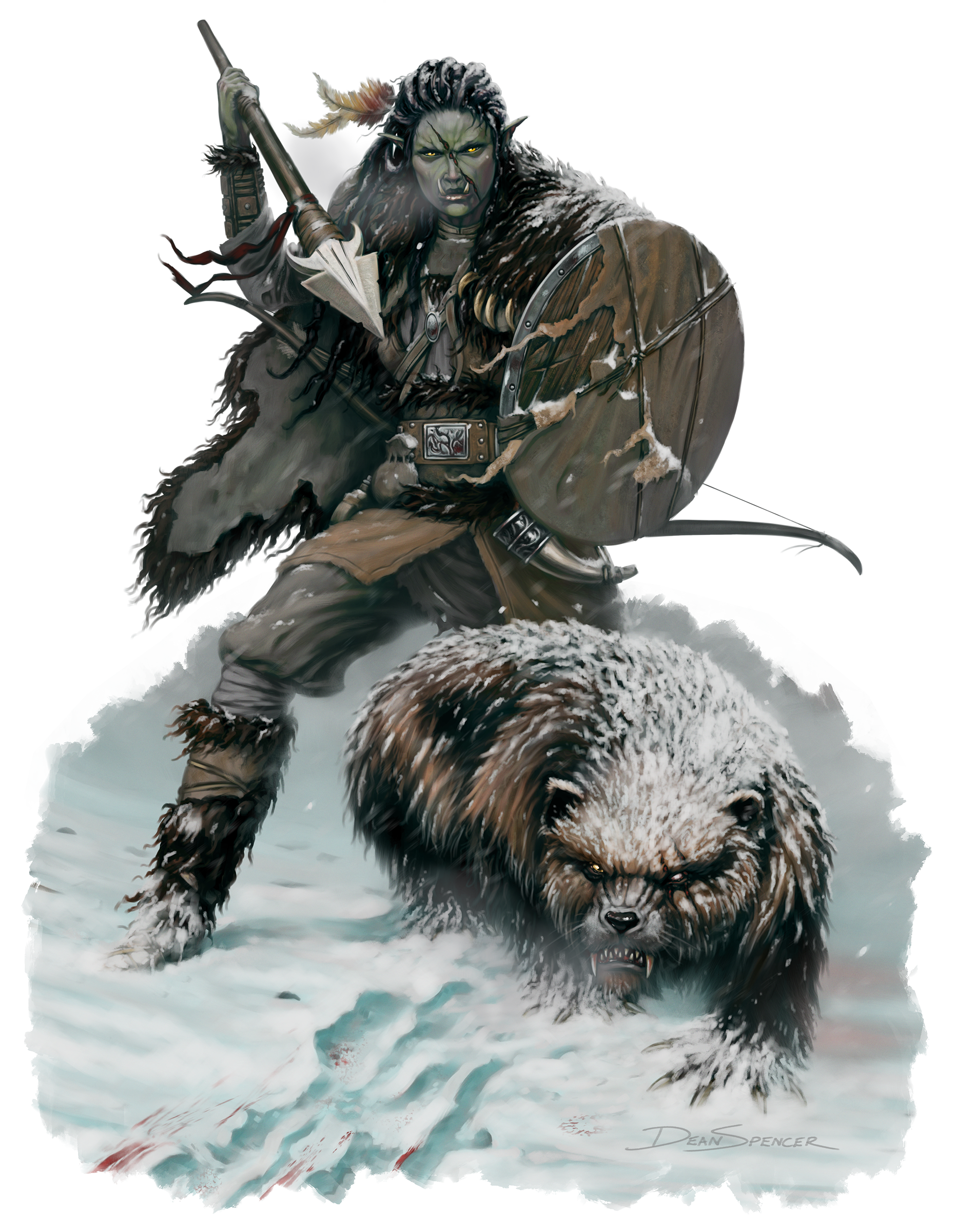
Orcs were brought to the colder climates by frost giants for similar reasons that stone giants used the mountain orcs. When the orcs rebelled, they burrowed into the snow-covered mountains and was nearly impossible to dislodge before the giant kingdoms fell. The end of the dragon and giant war did not stop the animosity of orcs towards the dragons that also resided in the frozen lands. These orcs became known as fierce dragon and giant slayers. They strike from the tundra and return with their bounty to the frozen mountain fortresses or camps on the plains.
Often confused for barbarians the tundra orcs dress in furs and hides made of their enemies. This is a choice to stay warm and use materials they have on hand since they cannot grow much year-round as other orcs can. Tundra orcs are the most traditional of all the tribes by sticking to the old ways of doing things and are some of the most superstitious.
Since the end of the Onyx Rose War and the resulting truce orcs have found gradual acceptance and success being integrated into more established nations and organizations. While there is still some animosity shown towards them one does not deny that if you need a difficult task done an orc will rise to the challenge. Orcish tenacity extends to their ability to craft as well. Skills once used for grand war machines have led to ingenuity in making inhospitable locations habitable. Their ability to make use of everything can even rival some dwarven and elvish smiths for items that are durable and highly functional while they might not look it aesthetically.
Orc Culture With shorter lives than the longer-lived lineages orc culture has shifted much over the decades however there are still some constants. Orcs tend to keep their migratory nature in mind so many of their communities are mobile. They also tend to only keep what they can move freely with them and focus more on experiences than coveting items. Orcs still recognize locales that offer them tactical advantages in regions so will make permanent outposts. Oral stories and traditions are favored among orcs though now we are starting to see many of these stories and songs being transcribed to physical medium to share with other species as trade and co-habitation have become more common place since the sundering.
Desert Orcs
Orcs travel all sorts of climates in search of glory and have settled in the dunes of the hot desert sand. Riding giant lizards and as beasts of burden entire desert orc camps are on the move, migrating from one water source or community to the next. Some tribes take up raiding or scavenging while most nowadays take up trading. The desert orcs were servants on the fire giants back during the Dragon wars until they rebelled when the giant kingdoms fell. They were prominent across the dunes before Necessa was sundered and since then they have continued to thrive as though nothing had changed for them. Some have joined the foreign legionnaires as scouts or pathfinders due to their skills as navigating the wilderness.
The most nomadic of all the orc lineages are made up of a mix of greens, oranges, and greys darkened in the constant gaze of the sun. Hair styles tend to vary as their heads are covered to avoid the oppressive heat. Their physique is taller and leaner than their other orc cousins as they have adapted to their environment.
Hill Orcs
The orcs of the hills and highlands are the most encountered and were the siege workhorse of the giant kingdoms. Hill orcs are the most prolific of the orc lineages and the origin of many of the sublineages. Their forts and settlements dot the landscape and while they can be mobile, they tended to stay in place as outposts to offer shelter and stocks for raiding parties that would operate in the area. These settlements also were where armies were drafted first when the war drums were sounded. After the sundering of Necessa many of the tribes were split up from each other and hunkered down during the chaos. After the world settled many drifted off to found new communities or rebuild what they have. They also found enlistment in the legions of Janus with the promise of battle and glory. Their newfound fellow legionnaires found the orcs to be fine and sturdy companions that have become indispensable.
Hill orcs are known for their green hue of skin and a variety of hair styles though they tend to prefer them short of shaved to avoid complications during battle. Those that aren’t combat oriented have found success in trade and scholarly arts. Hill orc physique tends to be sturdy and broad and muscular. It is rare to see an obese orc.
Mountain Orcs
Stone giants cultivated their orcs to be a frontline fighting force. They were trained to fight in the tight tunnels, and mountain passes that they themselves could not traverse. The mountain orcs were the first to rebel under their stone giant masters when the giant kingdoms began to fall. These fights trained the orcs to be an elite fighting group that was nearly unstoppable. They went to war off the back of their successes against the giants and took the Azcragg Hold from the dwarves that was home to the mother forge. The mountain orcs are renowned smiths that can rival some of the best metal workers among the dwarven and elven artisans. After the sundering of Necessa the orcs opened up Azcragg back to the obsidian dwarves to help mend relations as well as gain knowledge of the failed wards that were unsealed during the sundering. The obsidian dwarves are also viewed as outcasts among their brethren so took the opportunity to regain access to their ancestral home. Now the two species share the hold and have some of the finest wares that can be crafted in the lands.
While mountain orcs are green in complexion it tends to be darker than those of the hill orcs whether tanned from the forges or stained with soot. They are the largest and most muscular of all the orcs and are known for their ferocious martial prowess in close quarters. They also are the least migrant of all the orcs where they build and fortify their mountain fortresses. Hair styles range from long to short and can be adorned with trinkets of the fallen or crafted jewelry.
Sea Orcs
After the fall of the storm giants the orcs under their rule took to the coasts and the seas to find their fortunes. Now known as sea orcs they found work as seafarers. Some channeled their ferocity and took over ships to become a pirate menace to the Crystal Atolls and other surrounding seas. Those that don’t take up piracy have acclimated to the various seaside communities on the coasts. Sea orcs often also find work as academics and explorers due to their migratory nature. Post sundering and with the invention of the aetherfiliers sea orcs thrive as aetherfarers exploring the aether and the newly connected worlds to the remains of Nacessa.
Sea orcs have a lighter sea green or ochre complexion. They tend to wear their hair longer than most others of their species. Since they are the most migrant of all orcs they are exposed to the most diverse range of species and have adopted many of their fashions, hairstyles, and even mannerisms.
Tundra Orcs
Orcs were brought to the colder climates by frost giants for similar reasons that stone giants used the mountain orcs. When the orcs rebelled, they burrowed into the snow-covered mountains and was nearly impossible to dislodge before the giant kingdoms fell. The end of the dragon and giant war did not stop the animosity of orcs towards the dragons that also resided in the frozen lands. These orcs became known as fierce dragon and giant slayers. They strike from the tundra and return with their bounty to the frozen mountain fortresses or camps on the plains.
Often confused for barbarians the tundra orcs dress in furs and hides made of their enemies. This is a choice to stay warm and use materials they have on hand since they cannot grow much year-round as other orcs can. Tundra orcs are the most traditional of all the tribes by sticking to the old ways of doing things and are some of the most superstitious.
Genetic Ancestor(s)
Lifespan
Orcs reach maturity at 18, but tend to live about 100 years.
Average Height
5'6" - 6'8"
Average Weight
179 - 367 lbs
Average Physique
It is rare to see an obese orc. Their culture and lifestyles tend to promote being very active. Even sedentary or scholarly orcs tend to be leaner than those of their associates.
Body Tint, Colouring and Marking
Orcs are varied in appearance. Their skin tones range from very light to very dark greens, browns, and greys. They have a broad spectrum of eye colors and hair colors, thicknesses, and styles. Orcs also have a wide spectrum of muscular body types.
Geographic Distribution
Related Organizations
Related Ethnicities

Comments