
Zalgurim
A historically renowned city on the plains of central Myruthea, now part of the Trans-Oceanic Empire, but once the first capital of the Old Pale Empire, Zalgurim became less significant after the capital of the Old Pale Empire was relocted to Honirham in 3120 BPC. In the years following the Planar Conformation, other cities have risen to play a more prominent role in the economy and politics of Magicians' End, but Zalgurim has remained continuously inhabited and despite having a population now that is well below the peak it once supported, it is still considered an important regional settlement.
Government
Zalgurim has had a number of different forms of government at different times in its long history. In the early years, before and during the age of the Twelve Wise Ones and at the beginning of the Myruthean Unification Wars it was ruled by kings in a traditional monarchy.
As the first capital of the Old Pale Empire it fell under the direct rule of the Emperor / Empress until with the rapid expansion of the Empire, local civic responsibilities were devolved to a City Council which assumed more power after the Empire capital was moved to Honirham.
After the Planar Conformation and the Fall of the Old Pale Empire, the City Council transformed into a body known as the Council of Eight, each of the eight representing one of the ancient noble houses. This more streamlined and less democratic structure became the default form of government up until the present day, with brief interruptions during periods of political upheaval, most notably during the Time of Terrors in the fourth millennium APC.
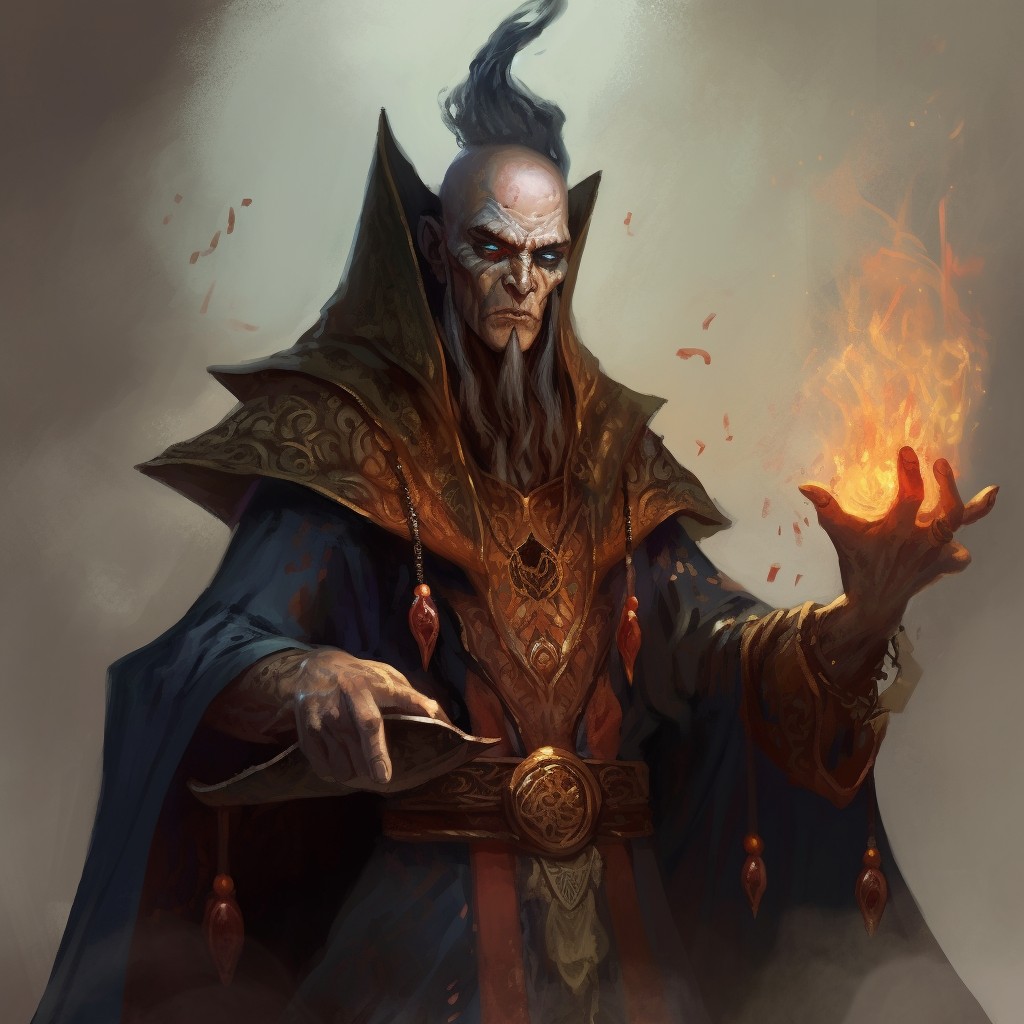
The first of these "interruptions" was when the mage Jermon Verelfeth seized power between 3053 APC and 3128 APC. The Council of Eight was restored to power after his death but within a relatively short time the machinations of the Sisters of Vabatan led by Clarise Vabatan herself had put Lady Ruth Fenlass in charge by 3184 APC. Although the Council was notionally sovereign, in practice Ruth Fenlass ruled with no regard for its weakened members, until she was overthrown in 3309 APC. Between 3358 APC and 3377 APC the city was an equal partner with Klaractazum in the short lived alliance known as the Wardens of the Central Plains. This was a period of direct military rule which excluded much of civic society, but it was followed by the return of the Council of Eight. Appointed governors, administered the city under the rule of both the Limit Princes and the Loyalist Thaumatic Army Council but in all subsequent years down to the present day, the model of a Council of Eight has become entrenched ever more deeply into the customs and practices of the city.
Industry & Trade
The city is a centre for steel making and metal work of all kinds, with links to mining centres in the south and west. This has always been a major feature of city life, even in the early years before it became the first capital of the Old Pale Empire. This trade continued to be significant after the Empire capital was moved to Honirham, although much of the wealth of Myruthea migrated, moving west and north along the axis of the Old Pale Empire Road, which resulted in a relative decline in the importance of the city.
After the Fall of the Old Pale Empire, Zalgurim recovered more slowly than many of its rival cities as the Council of Eight squabbled and struggled to restore its fortunes.
It was not until late in the age of the age of the Four Aerial Courts in 2364 APC that the Copolleme Corporation was founded in Zalgurim, a wealthy mercantile trading and retail group that expanded to operate throughout Myruthea and became a well known and respected institution which was significant on a continental scale over many centuries until its demise in the age of the Jewelled Queendoms, late in the 6th millennium APC.
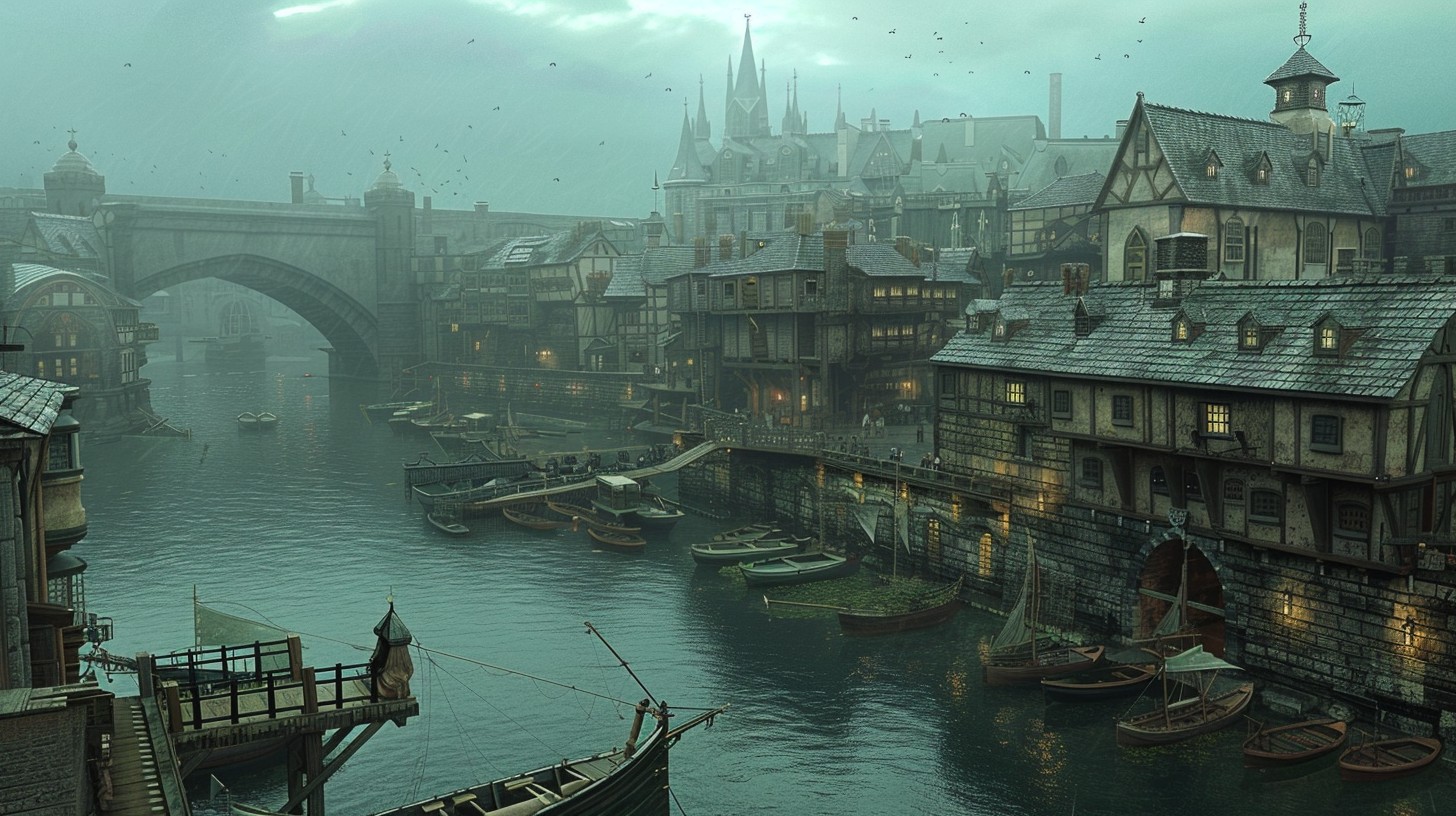
 The Meldine River Company, which was founded here during the age of the Moderators' Council in 2642 APC, was a major employer and wealthy trading and transport conglomerate, with interests in a wide variety of commercial activities all along the length of the river until it collapsed on the last day of 4371 APC. This did not stop the city itself from continuing to function as the important river port it remains to this day.
Copolleme Corporation Headquarters at Zalgurim by DMFW with Leonardo AI
History
Zalgurim was one of the original twelve settlements that was home to one of the Twelve Wise Ones. The era of the Twelve Wise Ones was the first sign of civilisation on Myruthea beganning to get more organised again after most of the ice had retreated, following the unnatural glaciation caused by the Sundering. Later, the city would become heavily involved in the unification wars that are usually said to have concluded with the formation of the Old Pale Empire, although looked at from another perspective, unification wars of a slightly different character still had a long way to go...
In any case, Zalgurim emerged as first amongst equals in the key alliance that became the Empire, and it became the Empire's first capital, a position which it would maintain for over a thousand years. In 3120 BPC, a little while after the construction of the Old Pale Empire Road, the capital was moved to Honirham and Zalgurim declined in importance, but it still played a key role in such later events as the War of the Three Sisters.
In modern times it remains a significant regional power, but it has never again attained the world wide influence it enjoyed in the early centuries of the Old Pale Empire.
Points of interest
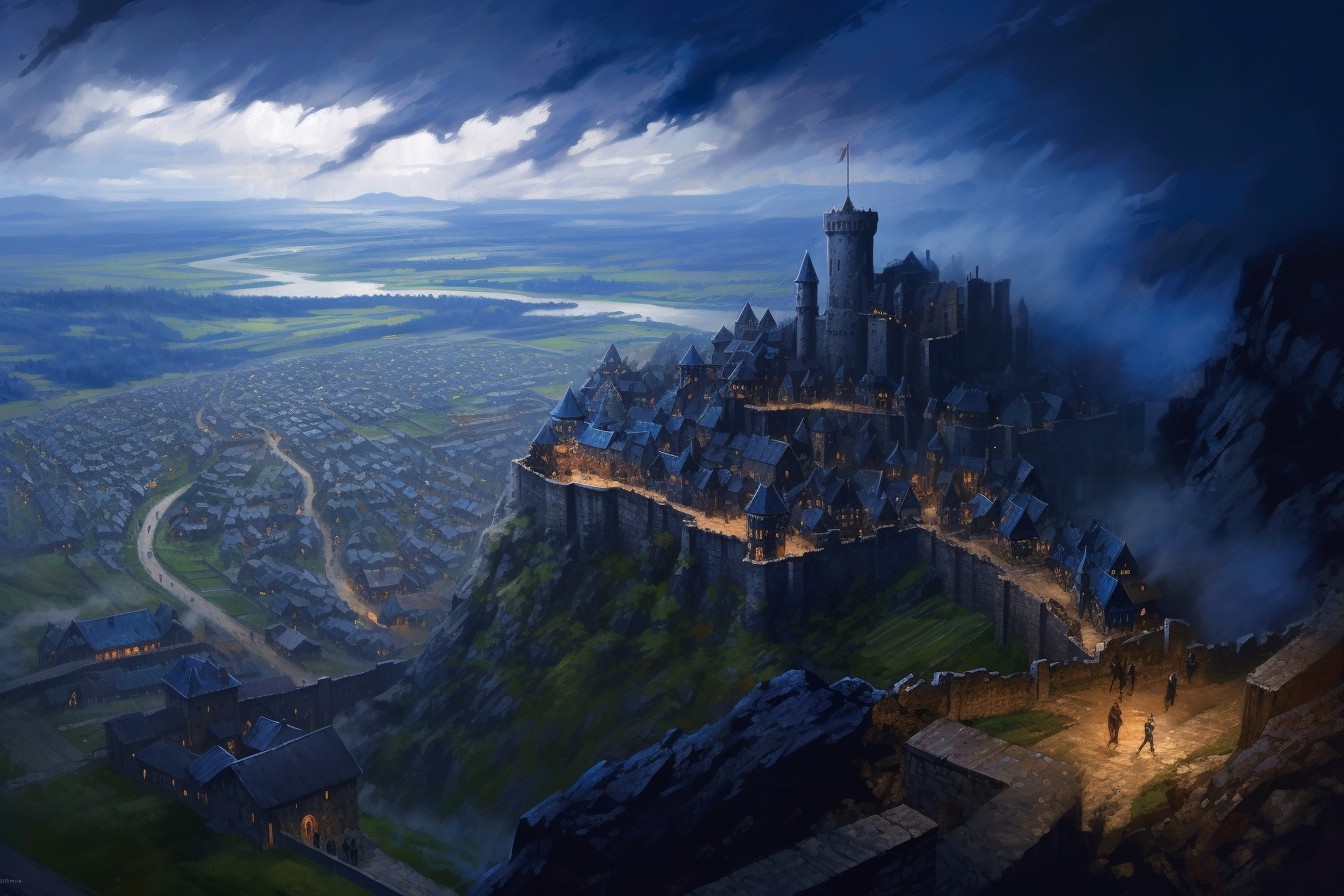
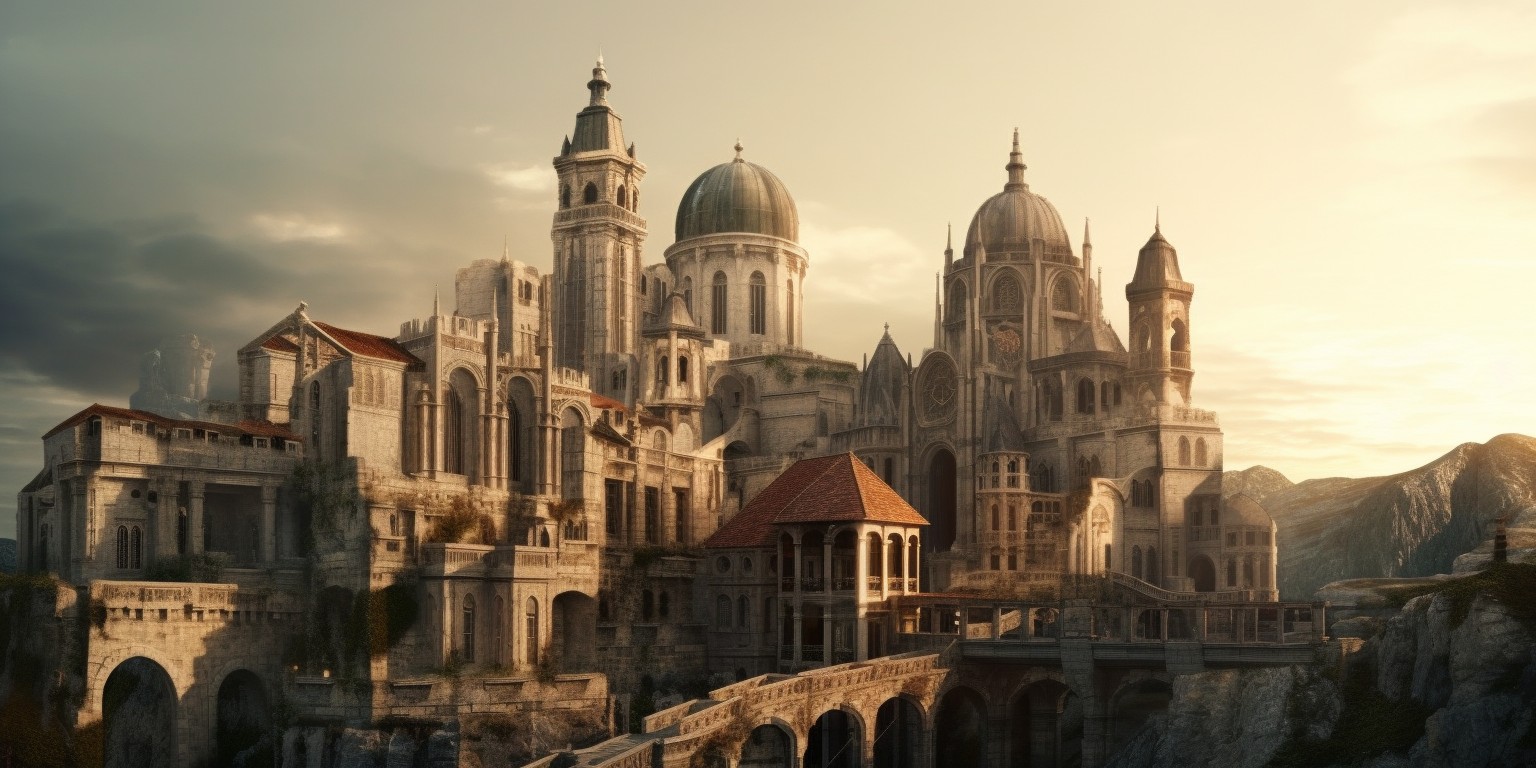
After the Zalgurim Watch, which looms over the sprawling metropolis from the heights of its rocky fortress castle, the Basilica of Bright Hope is the most famous building in the city. Completed in 4318 BPC when Zalgurim was still the capital of the Old Pale Empire, it was designed to provide a focus for the newly fashioned Imperial Faith.
 The building persists as a source of civic pride and a mausoleum for Zalgurim's most important public figures, even though the Imperial Faith and the Old Pale Empire have both long gone.
The Basilica of Bright Hope at Zalgurim by DMFW with Leonardo AI
Tourism
The Lake Chapel of the Way of the Harmonic Path at Zalgurim is famed for its beauty, and after the Foundation Stone Song House at Jebbin City, it is the second most important site of pilgrimage for devotees. Numbers who can visit are restricted to those who are granted a limited number of tickets each year, to preserve the peace and tranquillity of the site. The Lake Chapel stands on an island in the middle of the Lake of Statues and was consecrated in 771 APC.

Lake of Statues - Zalgurim by DMFW with Leonardo AI
Geography
Zalgurim has been built outwards from the Zalgrum Watch, a castle standing in a naturally strong defensive position on a high rocky outcrop to the south of the River Meldine, where it flows east out of the Lumina Hills. The lower city, now covers all the land between the Watch and the river, and extends further south, west and east. The river is navigable all the way from here to the ocean, and woods and metals come downstream from the Lumina Hills.

Early Zalgurim Aerial View by DMFW with Midjourney
Founding Date
5813 BPC
Type
Large city
Population
~1,100,000
Location under
Included Locations
Owning Organization
Related Traditions
Notable City Rulers
As the capital of the Old Pale Empire between 4542 BPC and 3120 BPC, the city was the seat of the Emperor or Empress who typically exercised direct control over its administration. Refer to the article about their lineage for further details. The leaders listed here, governed the city in earlier or later ages, as independent rulers or as governors for greater authorities beyond the city walls.Jera Ward : 3358 to 3377 APC
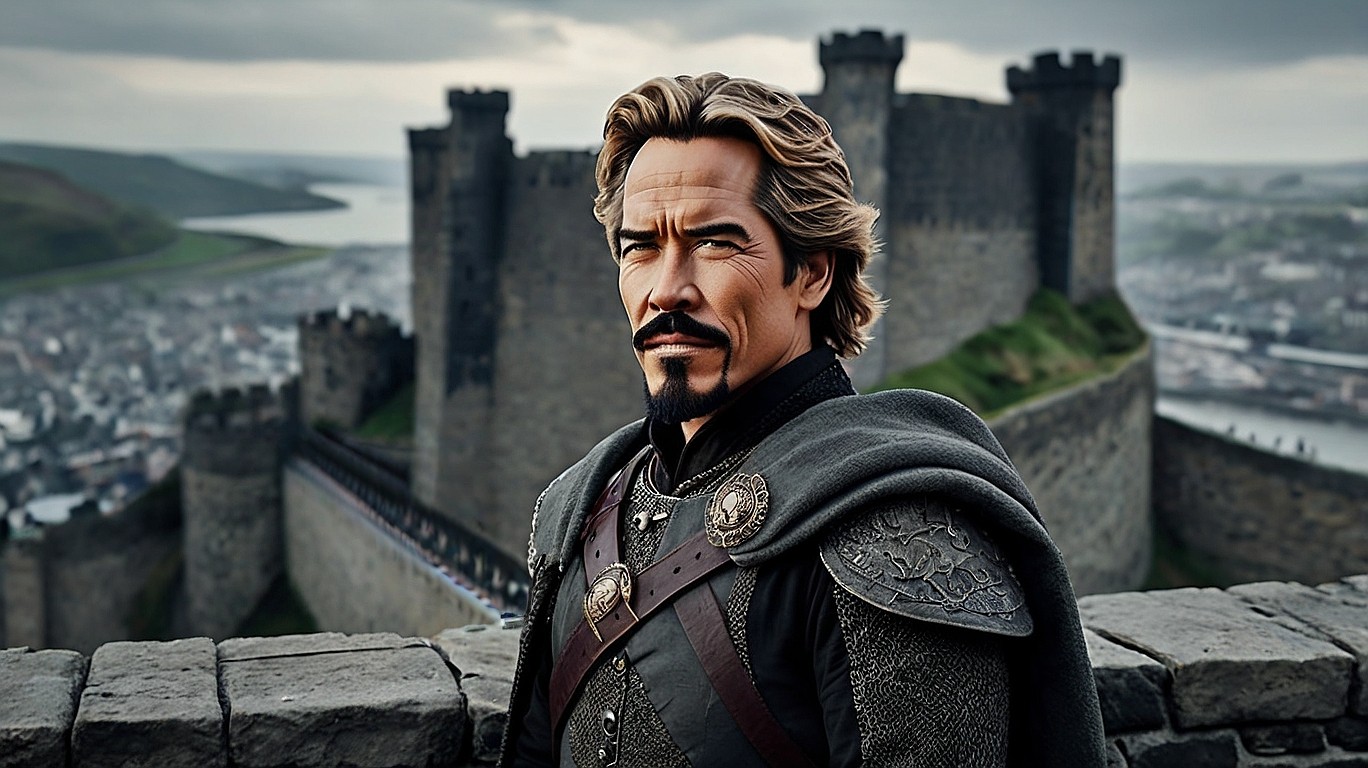
Jera Ward in Zalgurim by DMFW with Leonardo AI

Lady Ruth Fenlass. by DMFW with Leonardo AI

Jermon Verelfeth by DMFW with Midjourney

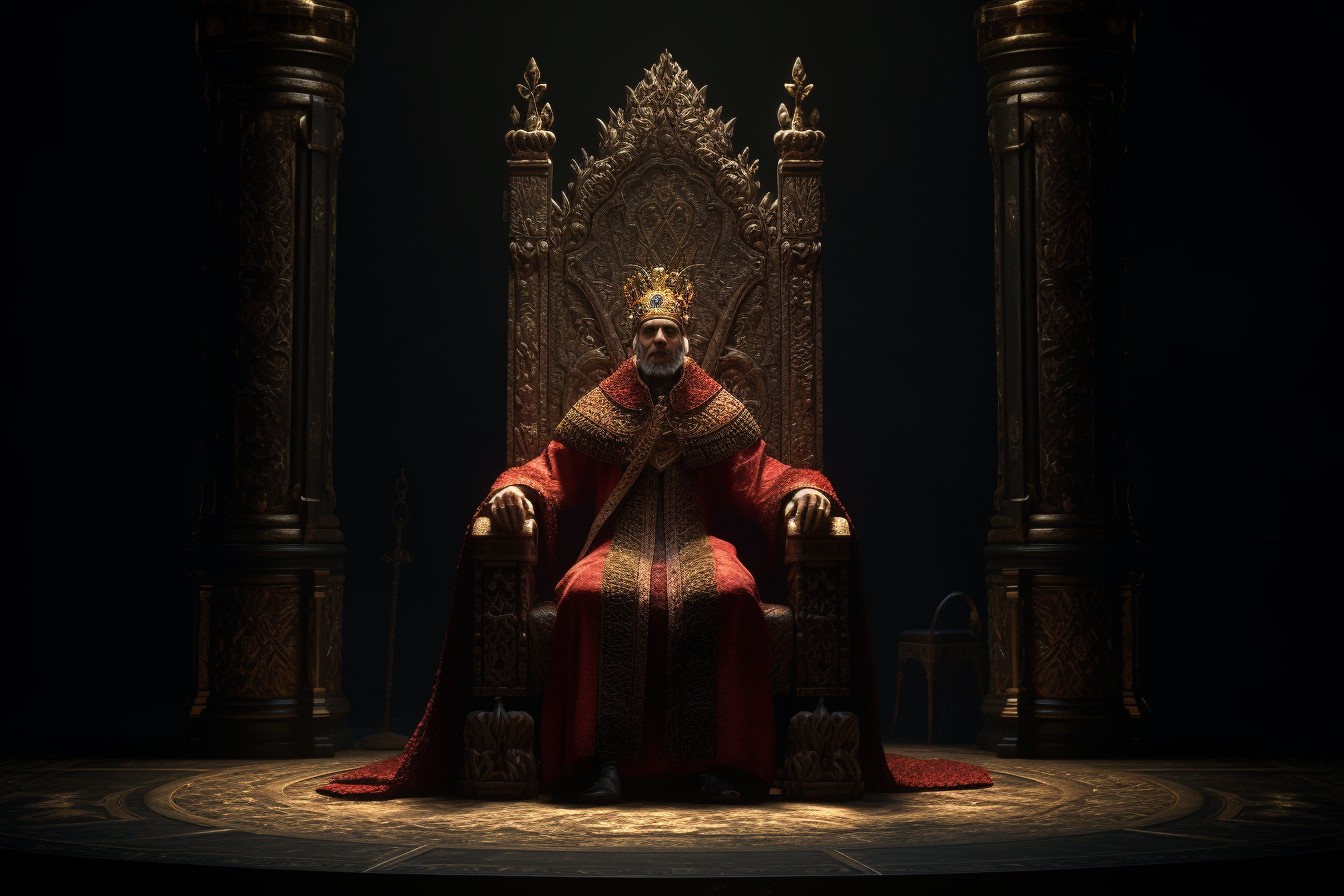
Magicians' End - Simeon Therbold by DMFW with Midjourney






















Comments