

Historical Overview
The realm of Magicians' End has a long and complex history. This overview only summarises the major events. At the bottom of the page there is a timeline button, which opens up a linear and more comprehensive list of the entire chronology, providing a visual alternative to aid in understanding the sequence and nature of the narrative recorded here. Subordinate articles, such as the ones which describe the Old Pale Empire and the Moderators' Council, cover specific periods in greater detail and are linked from the timeline, within this article text or directly at the bottom of the page. These articles will sometimes themselves contain links to even more fine grained articles and timelines, focusing on more specific incidents and events within the period in question. There is much to explore in the details if you go looking, but this is the place to get the big picture.
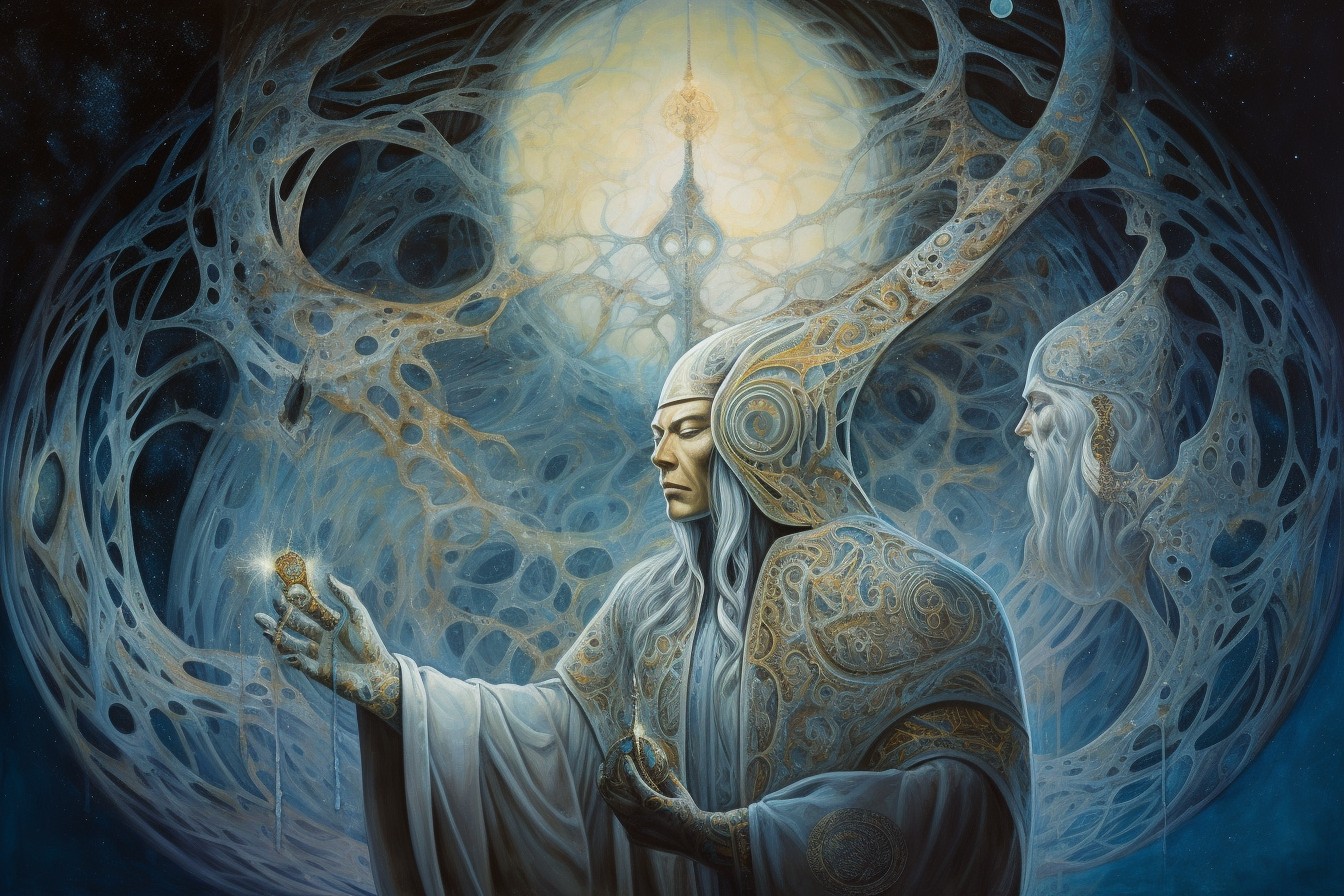
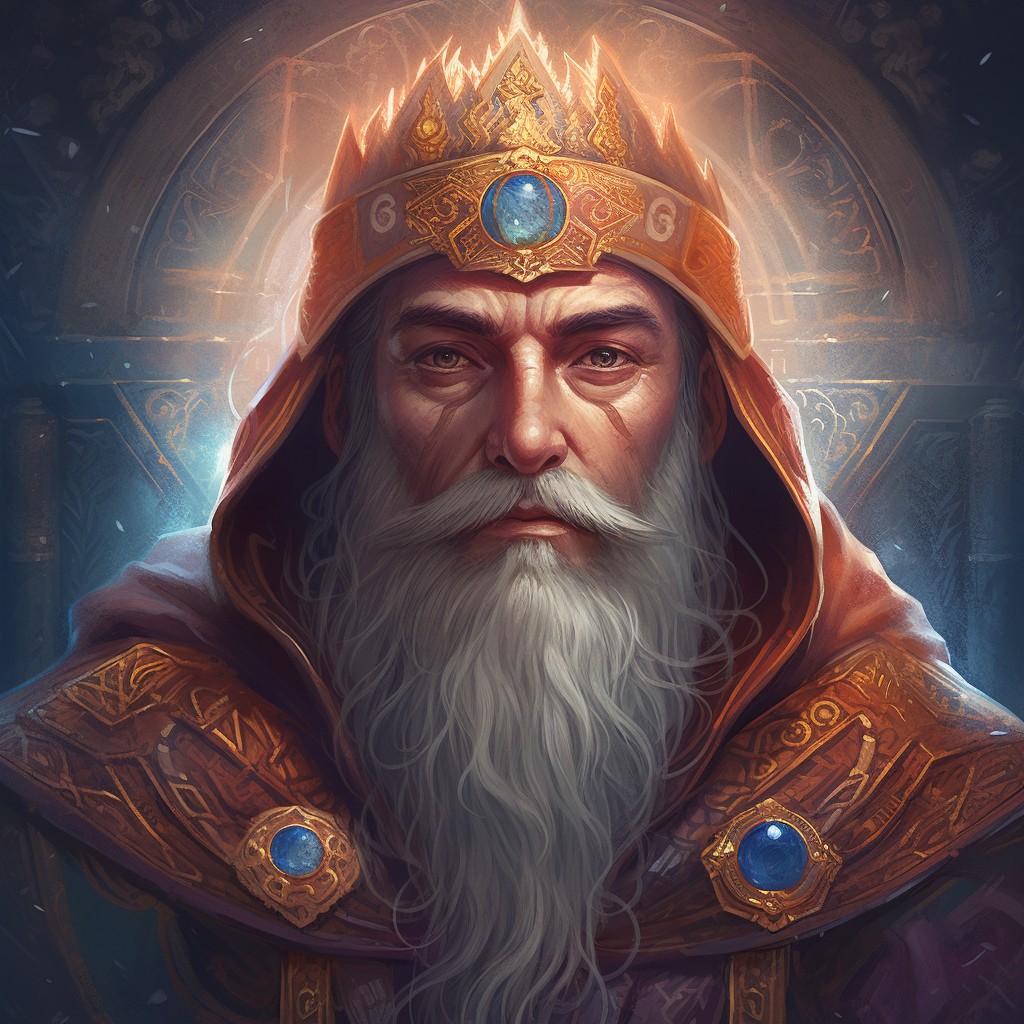
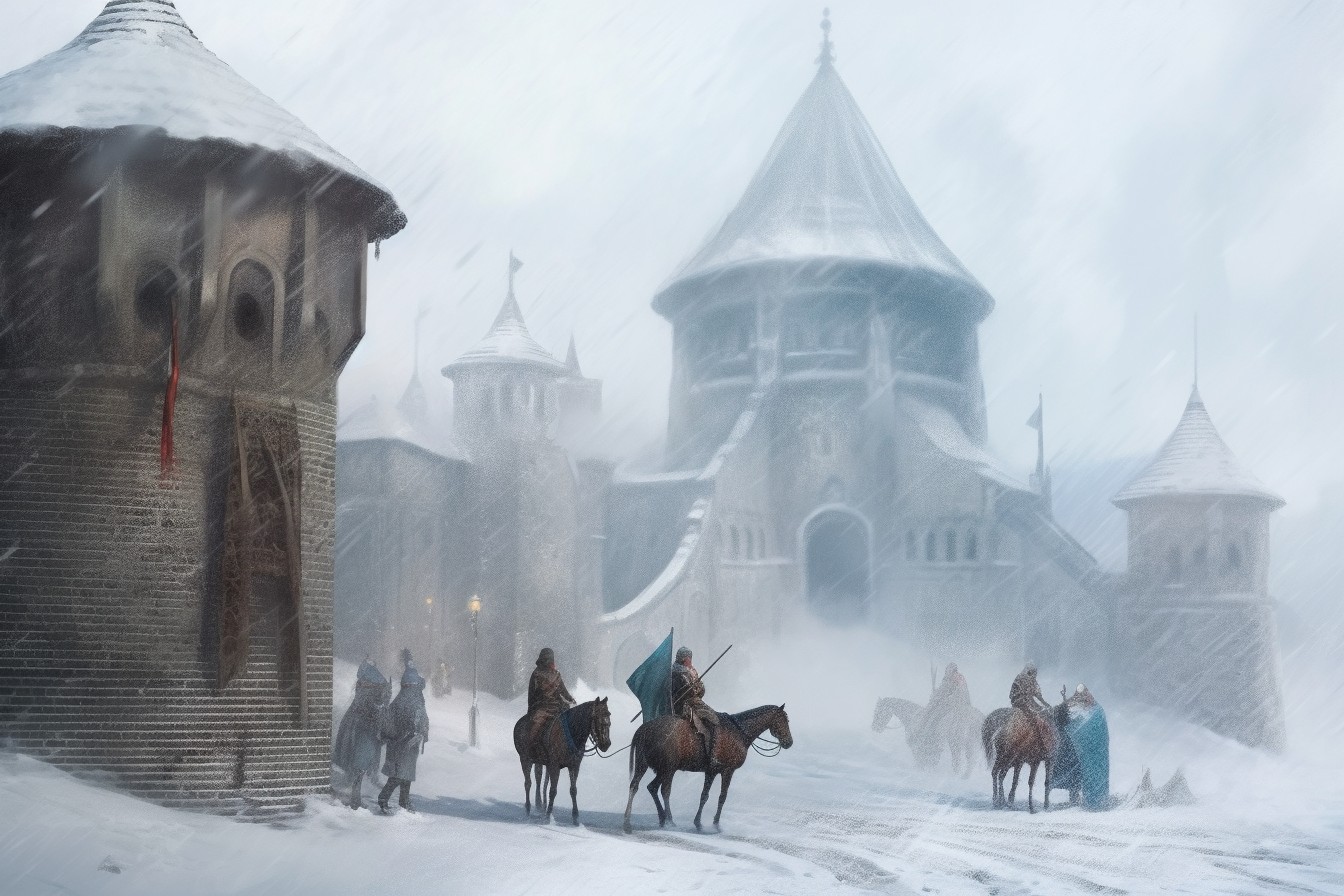
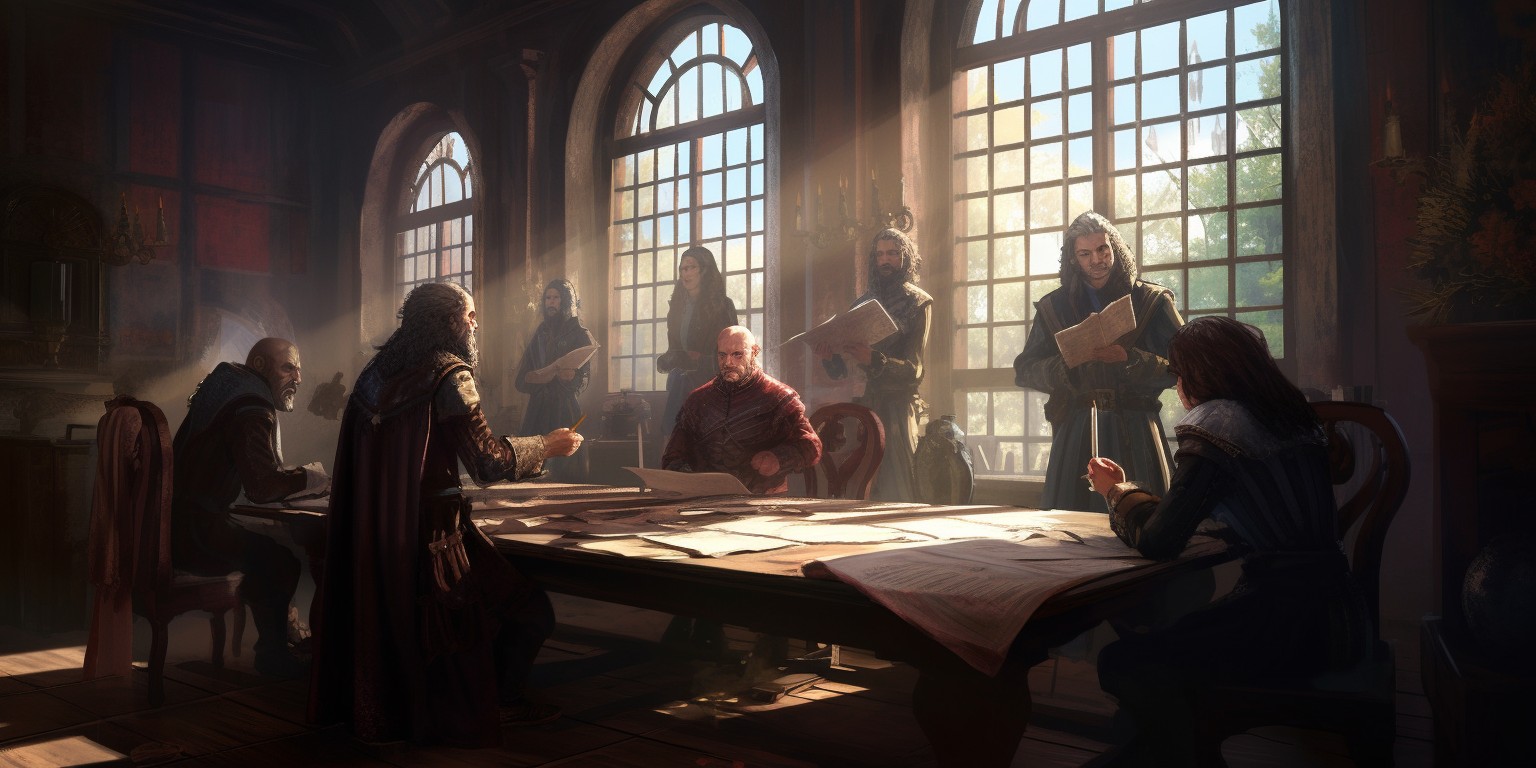
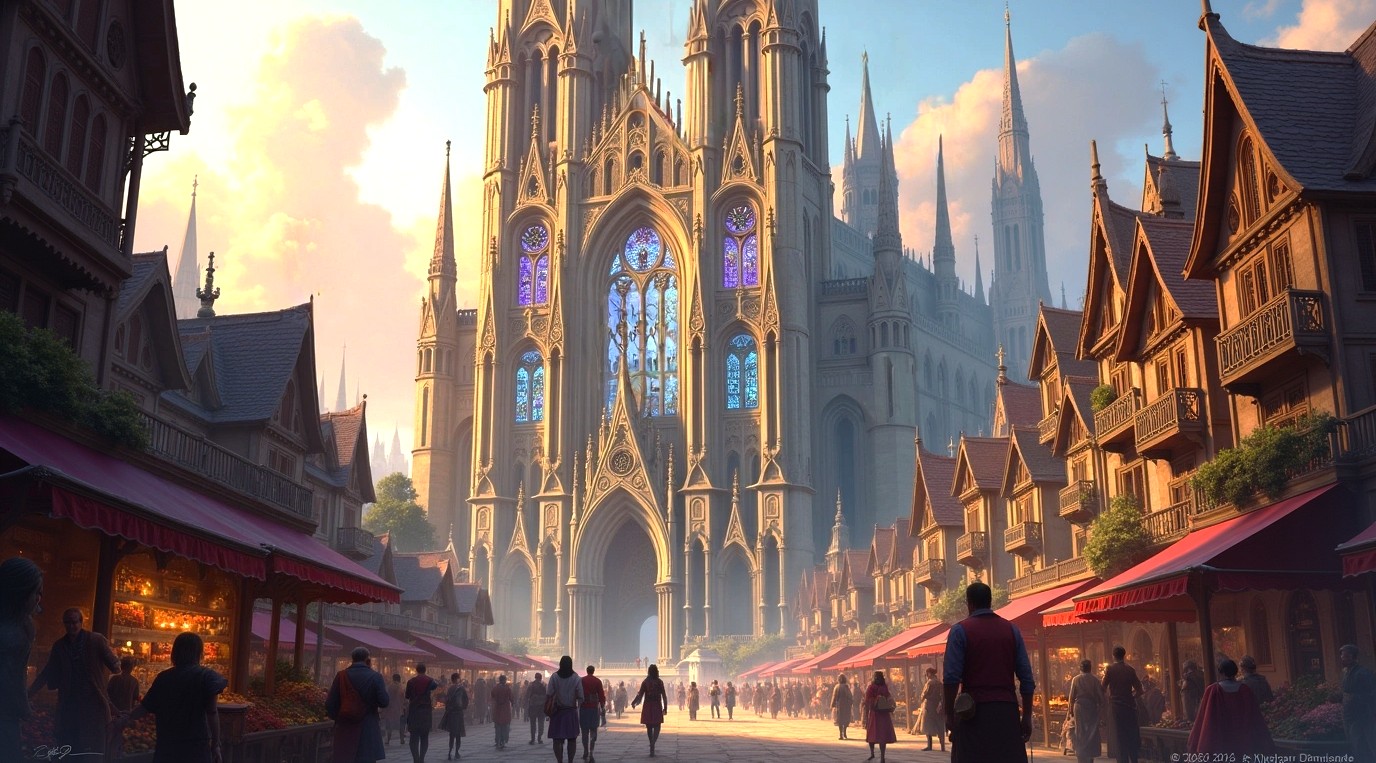
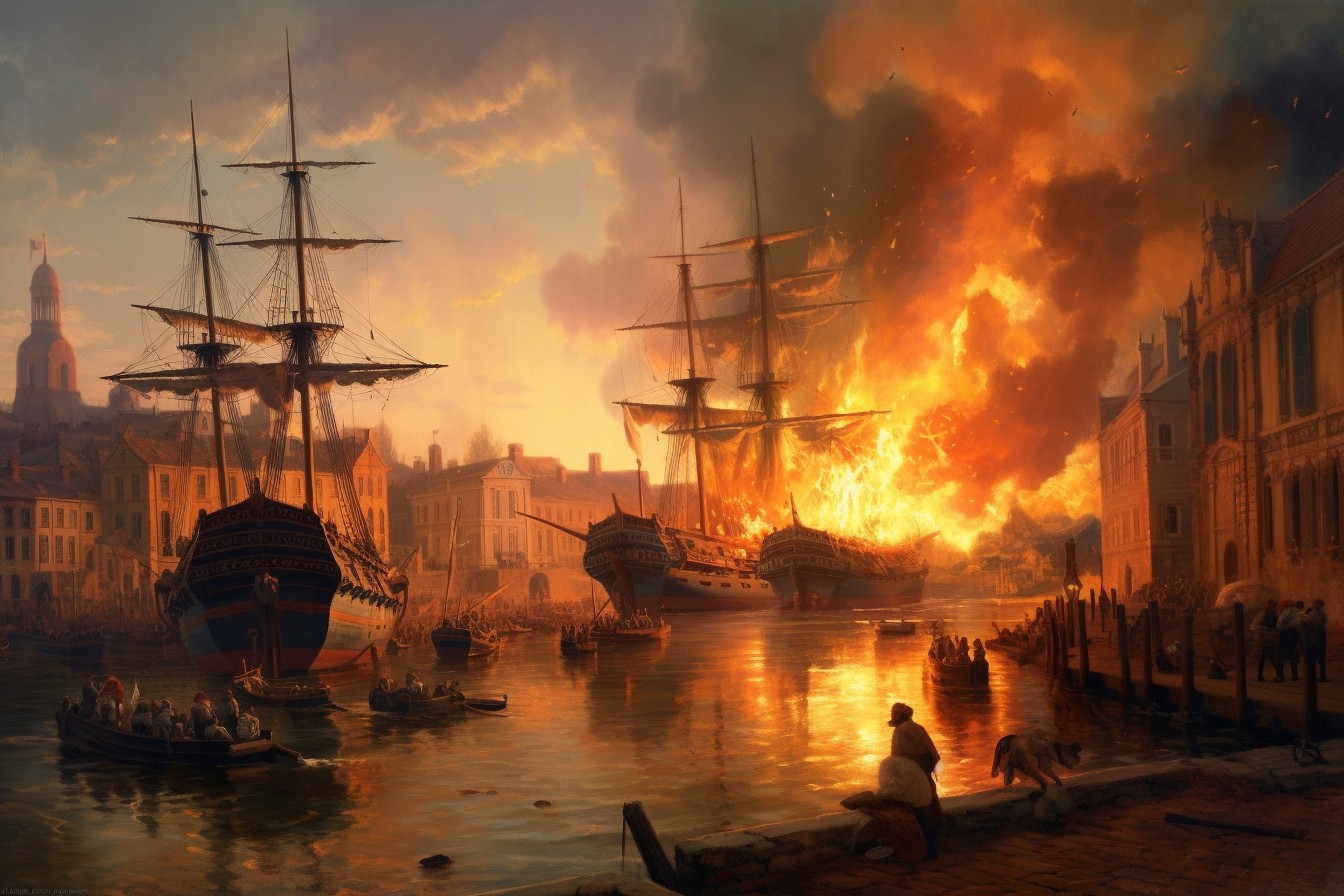
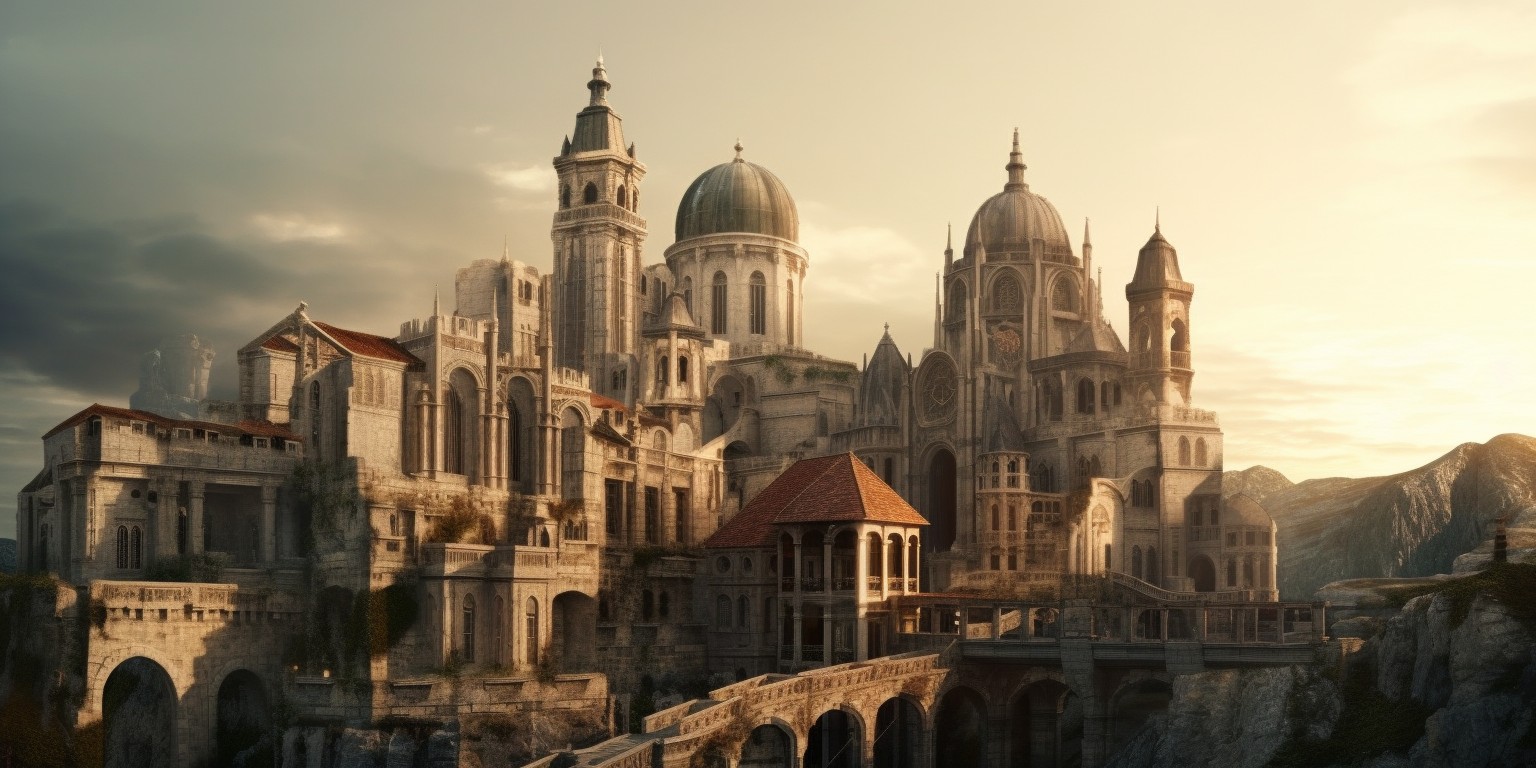
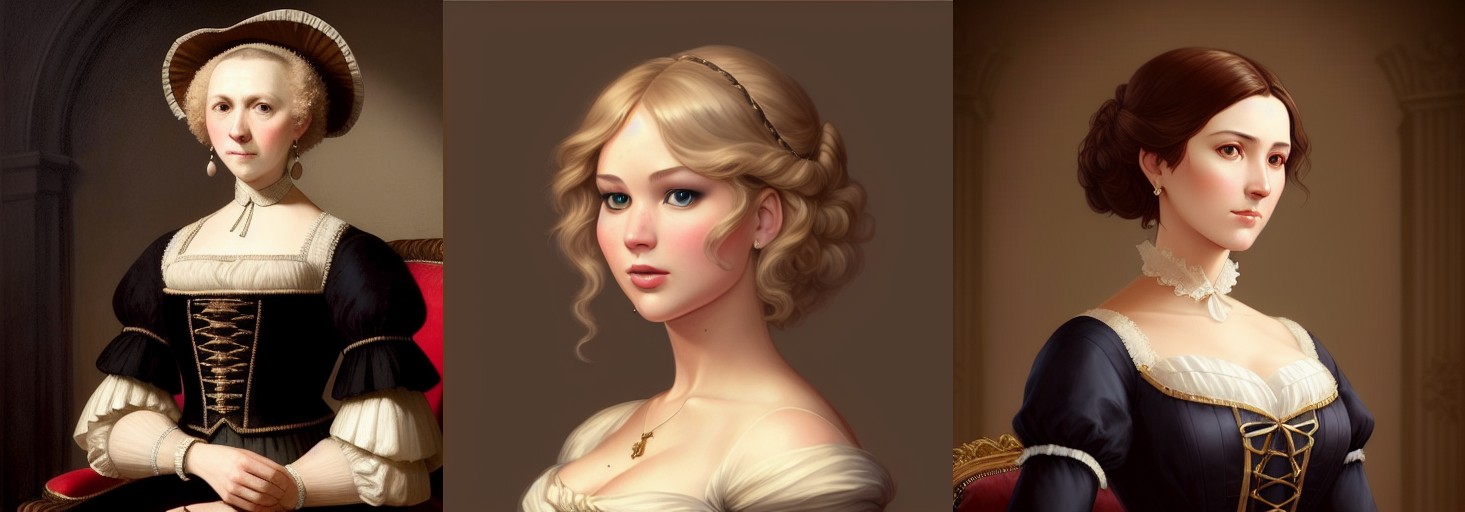
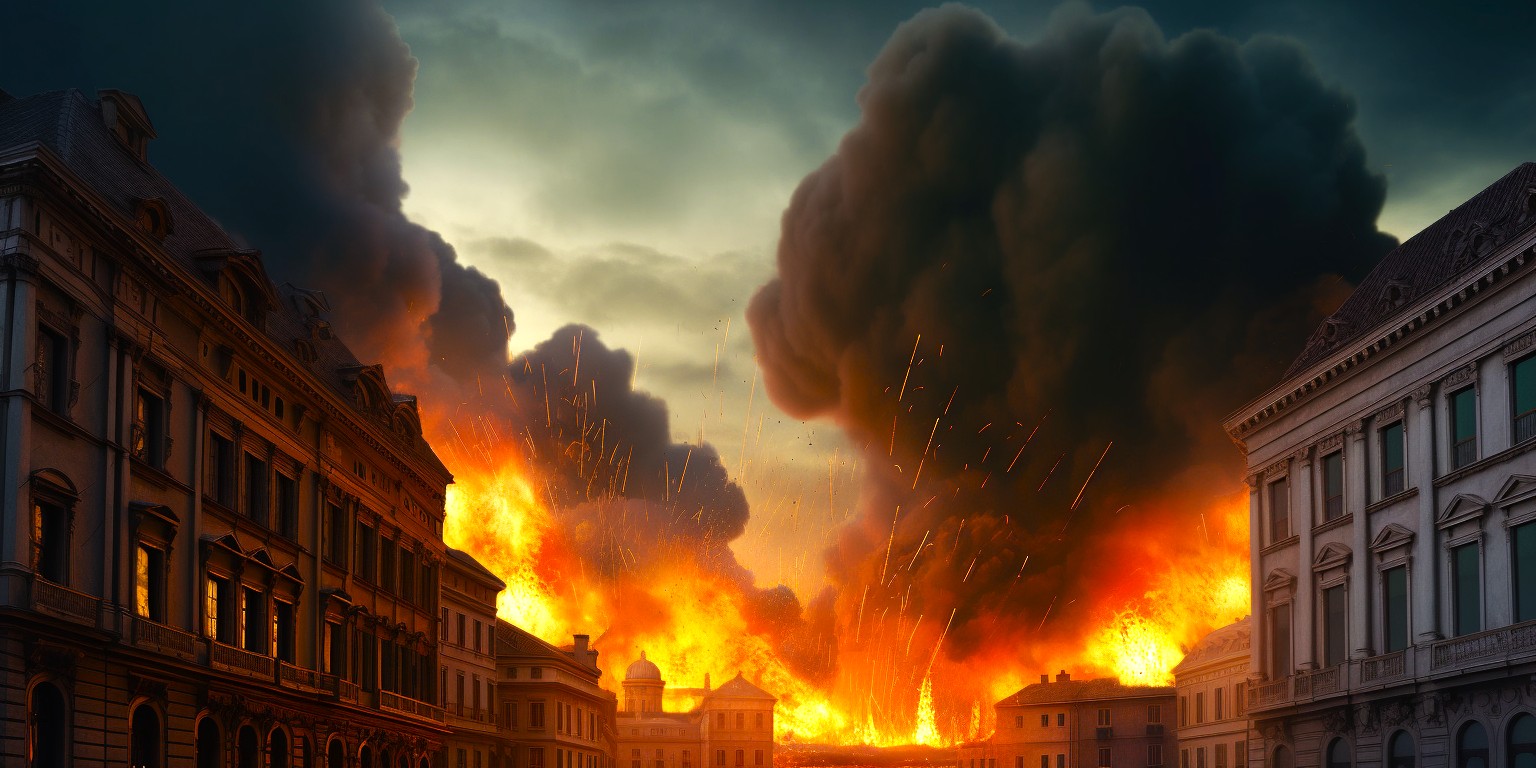
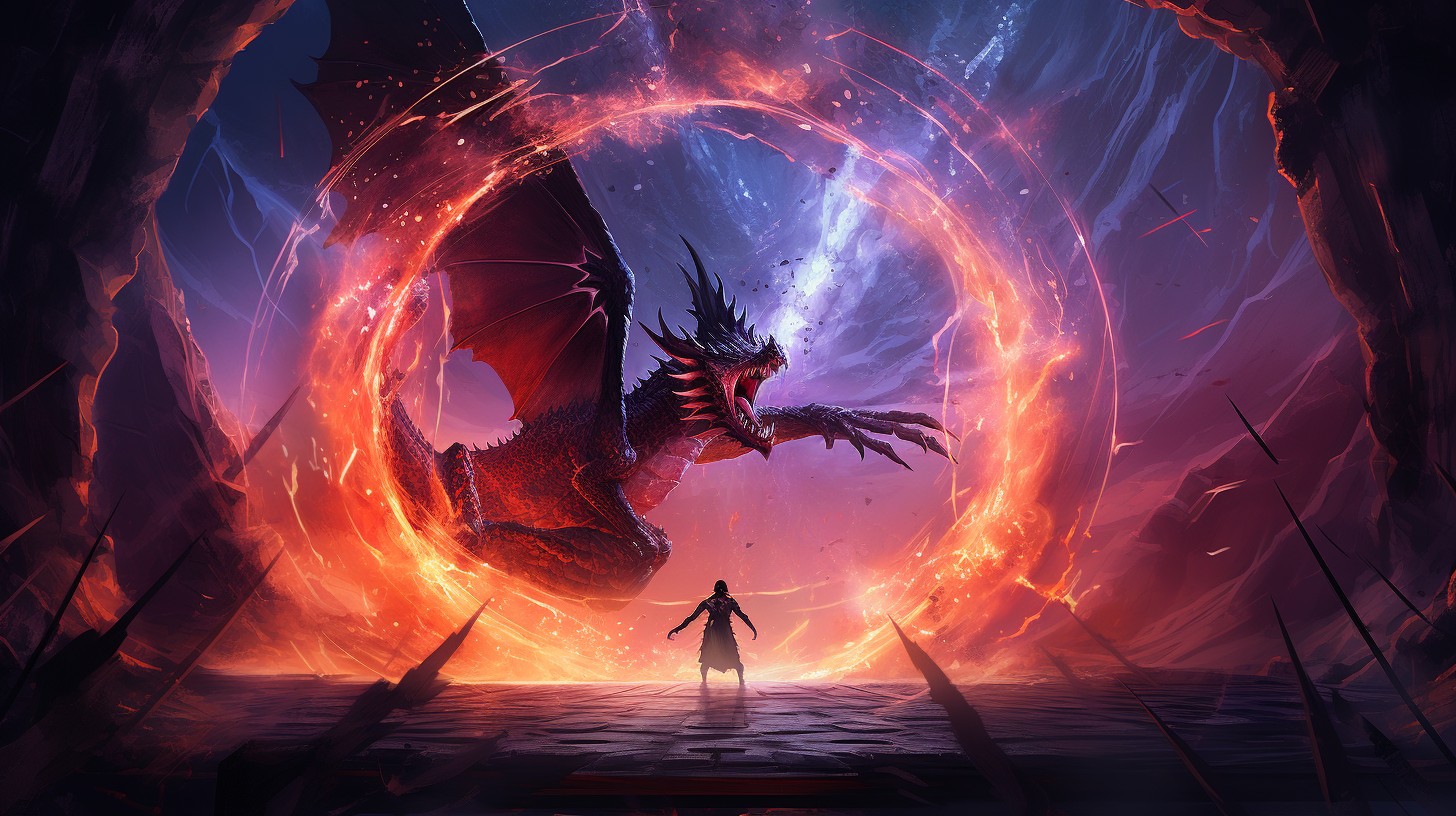
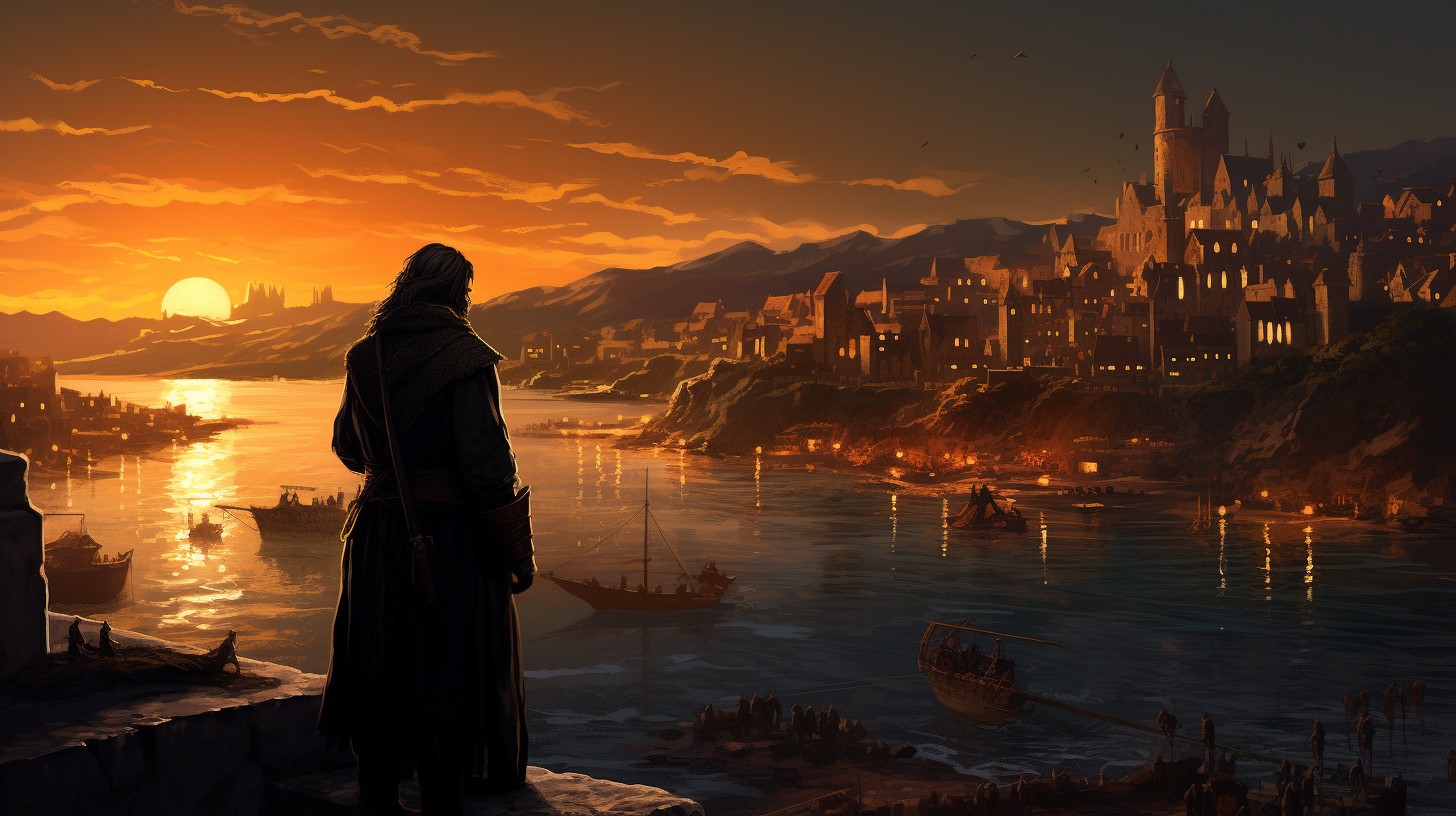
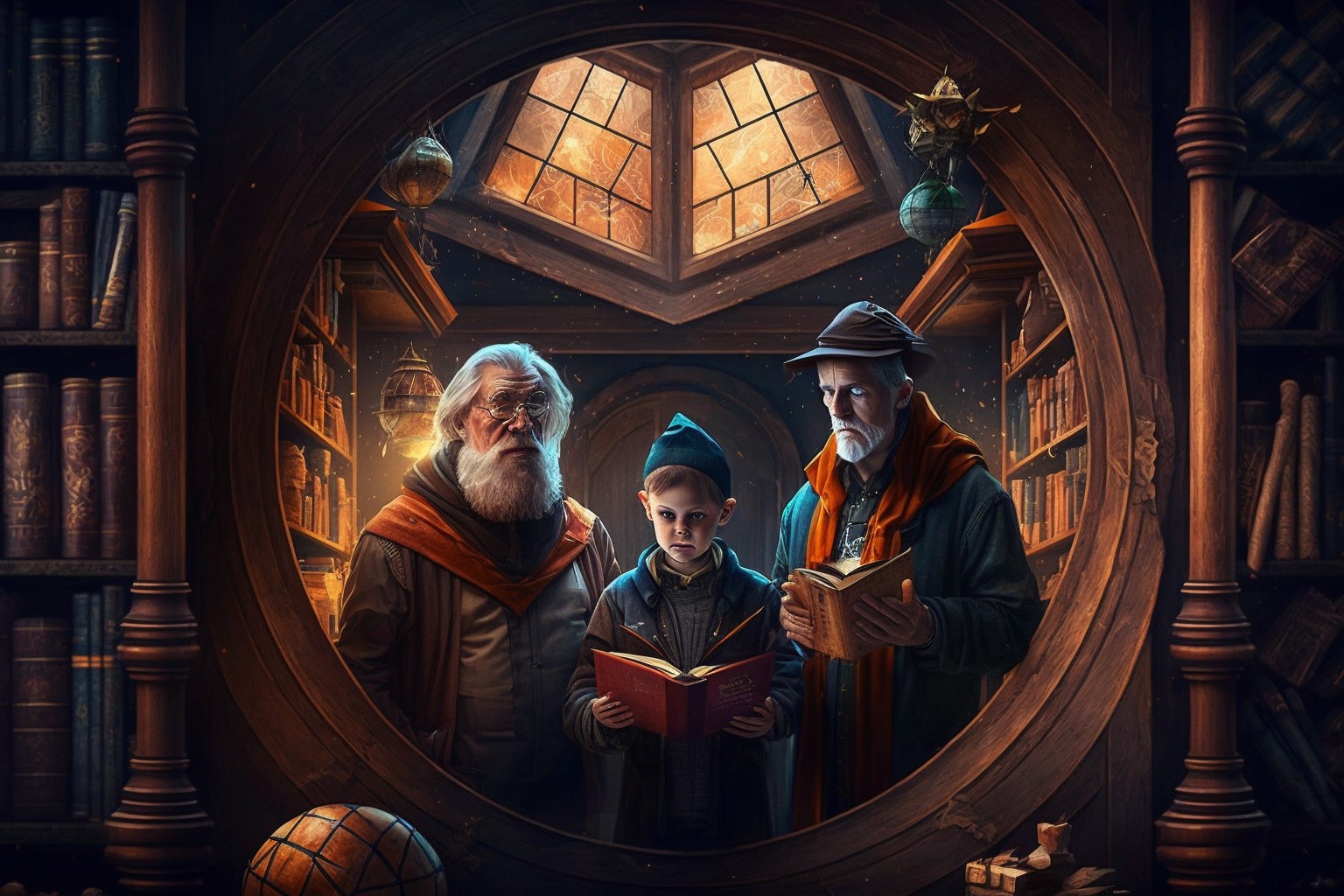
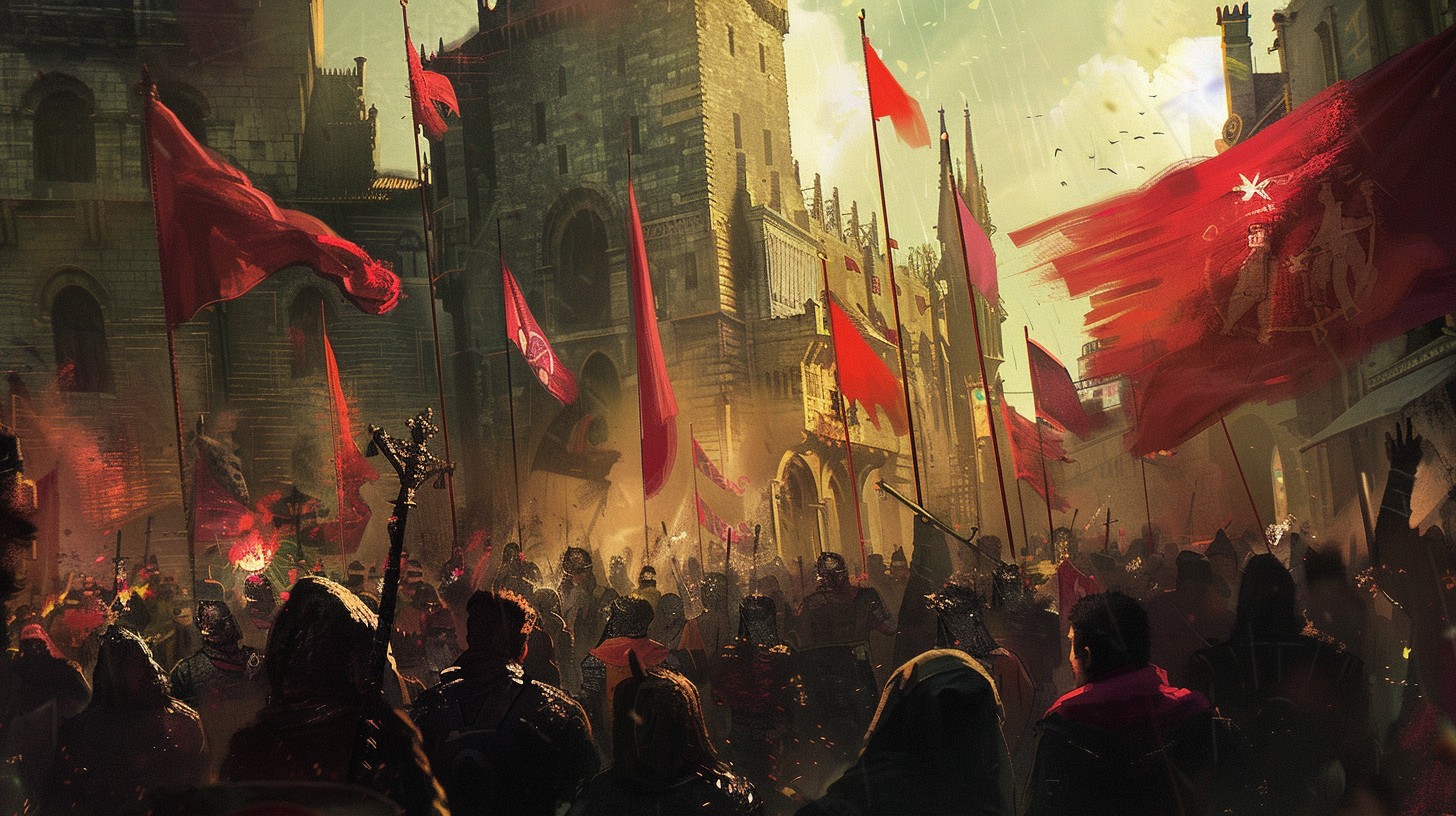
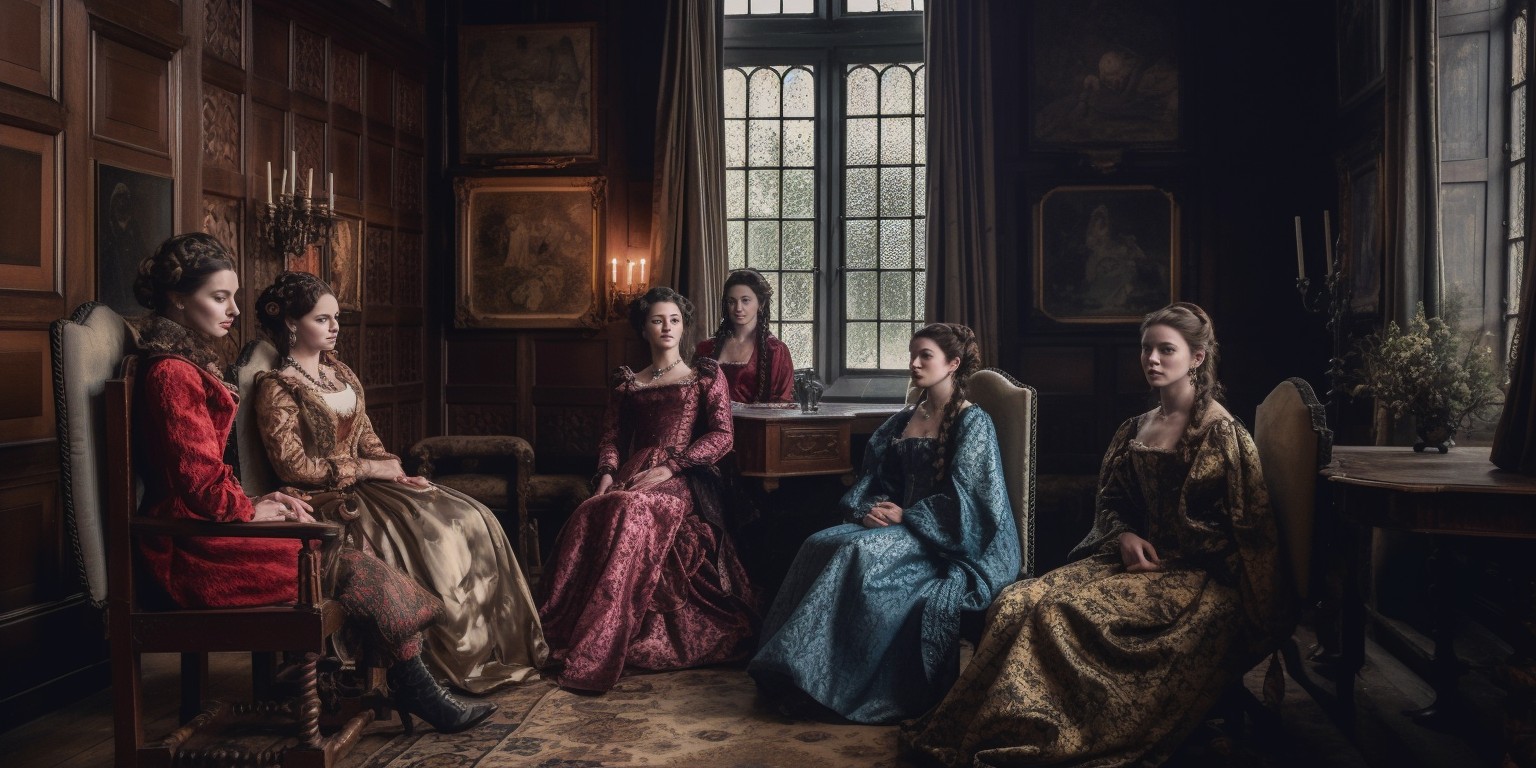
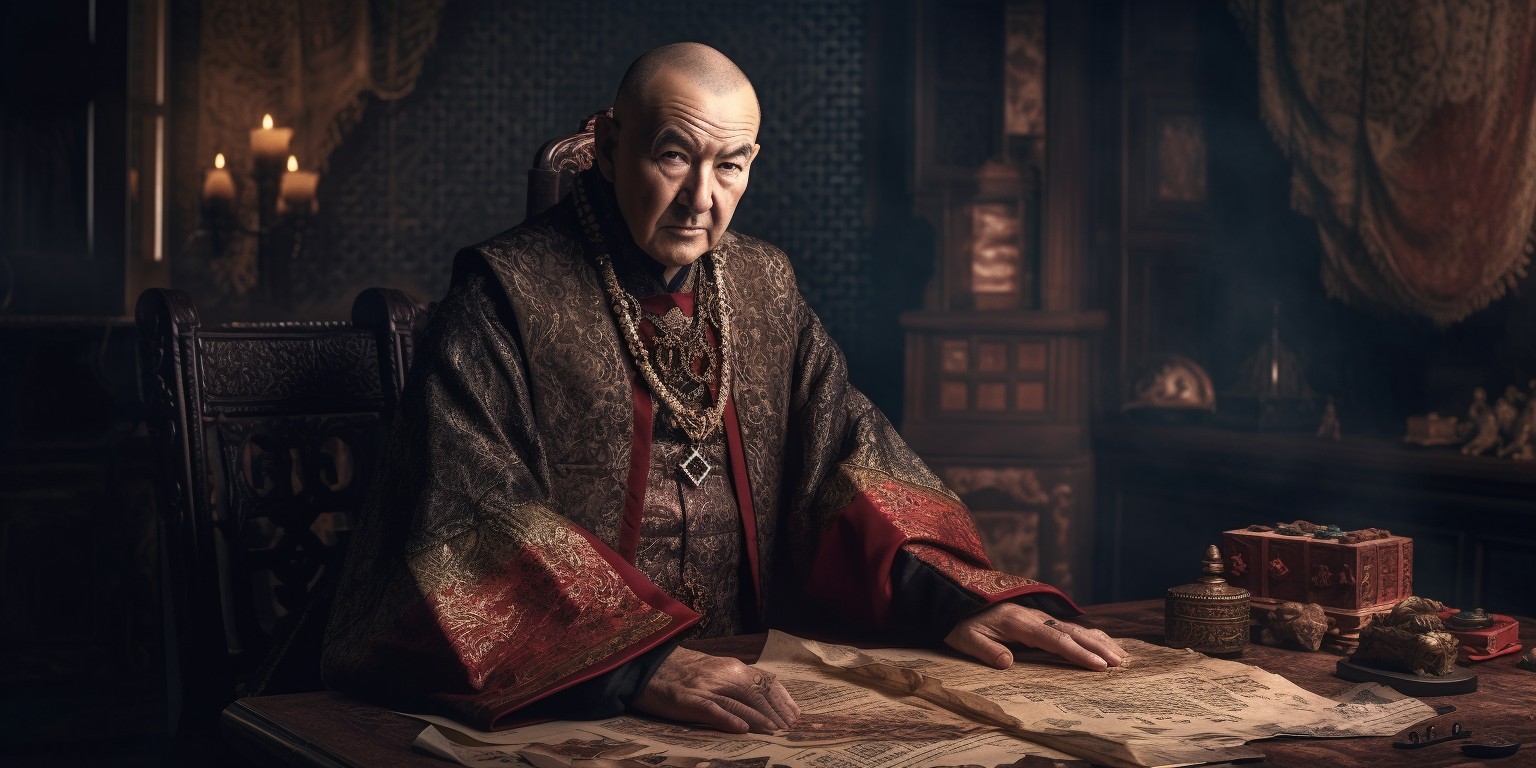
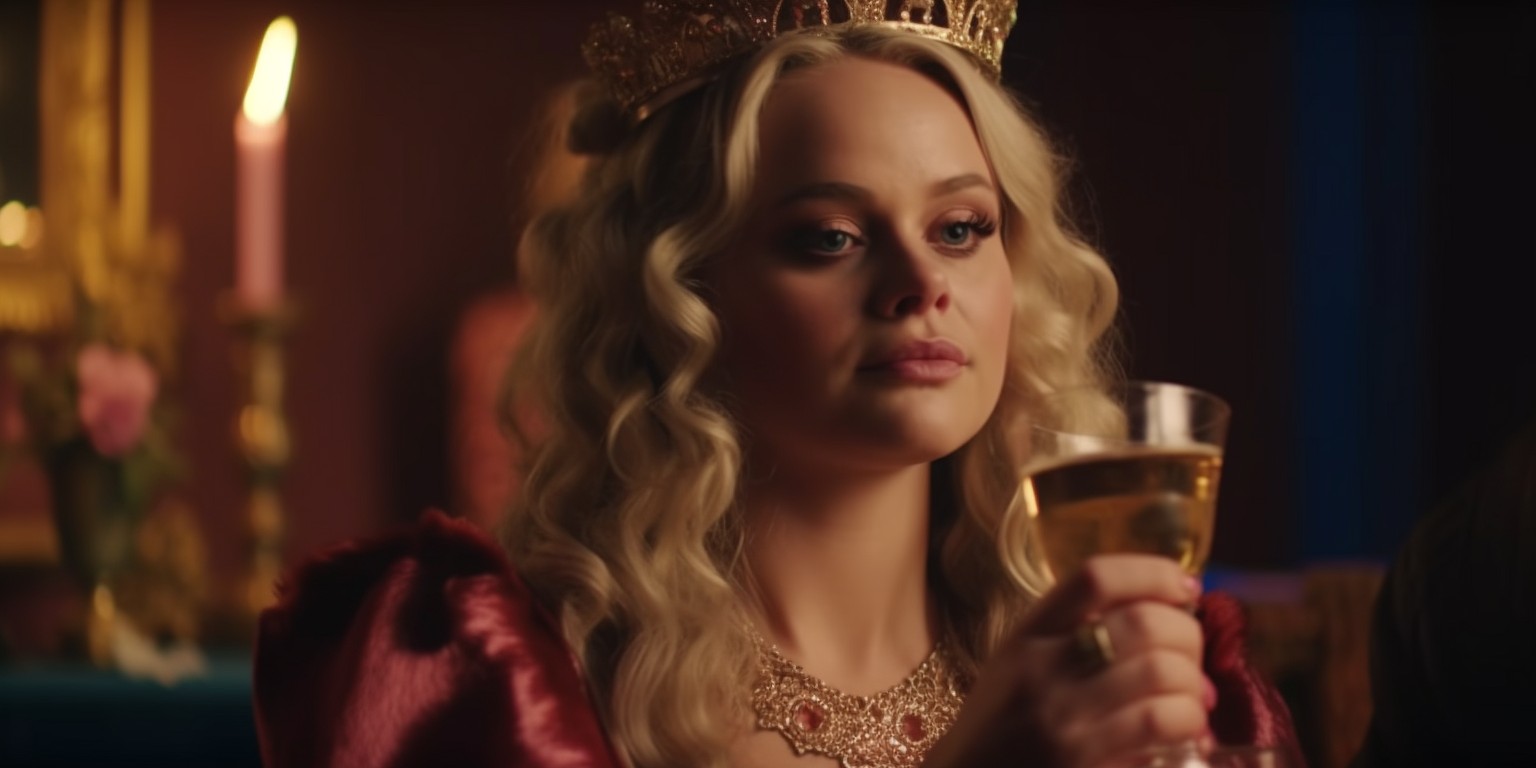
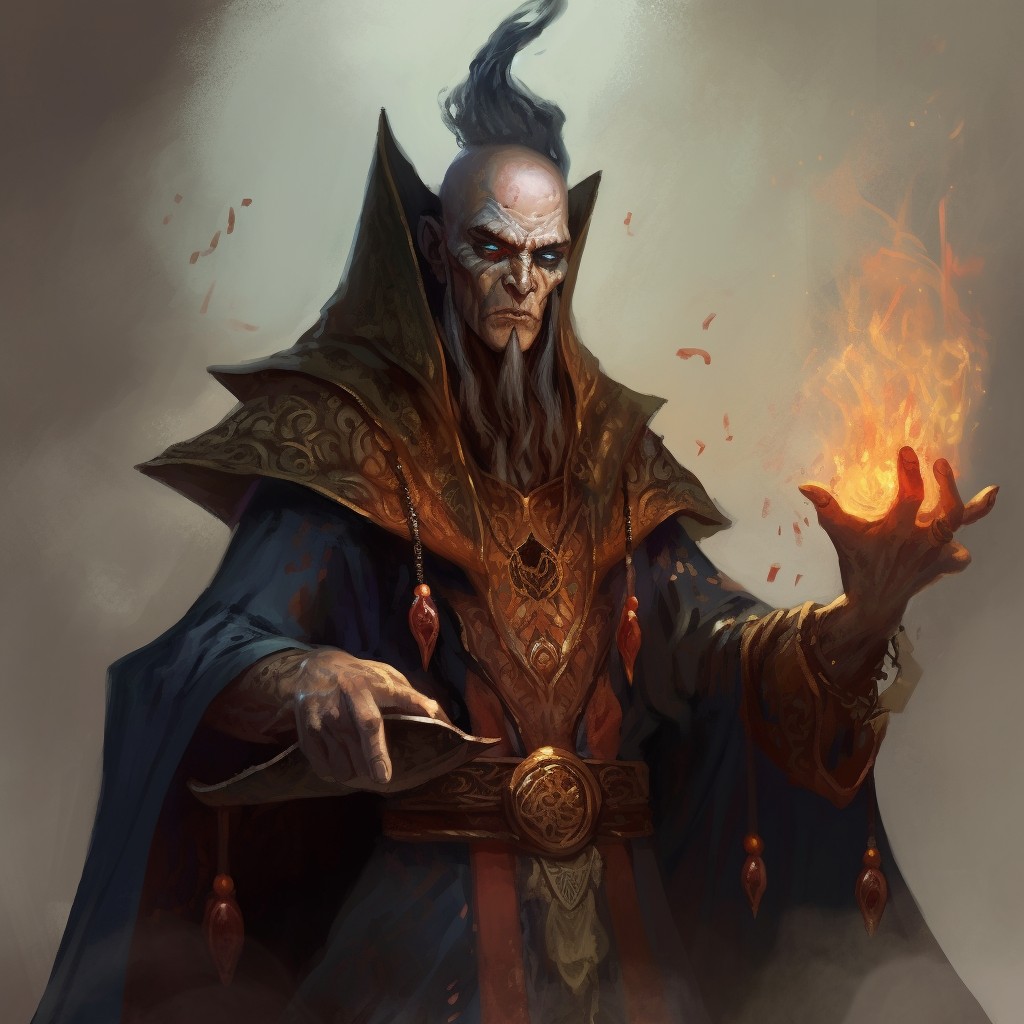
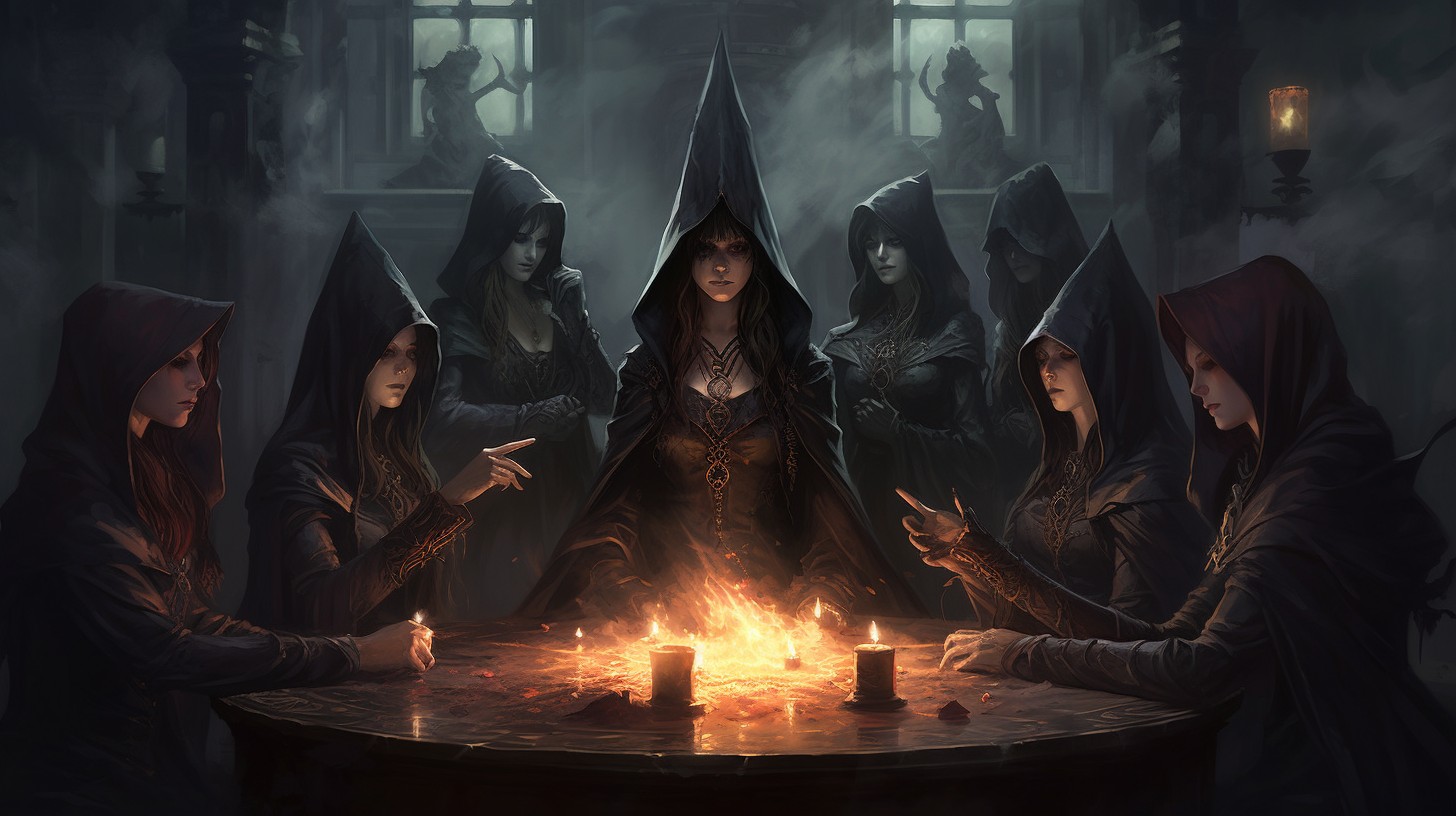
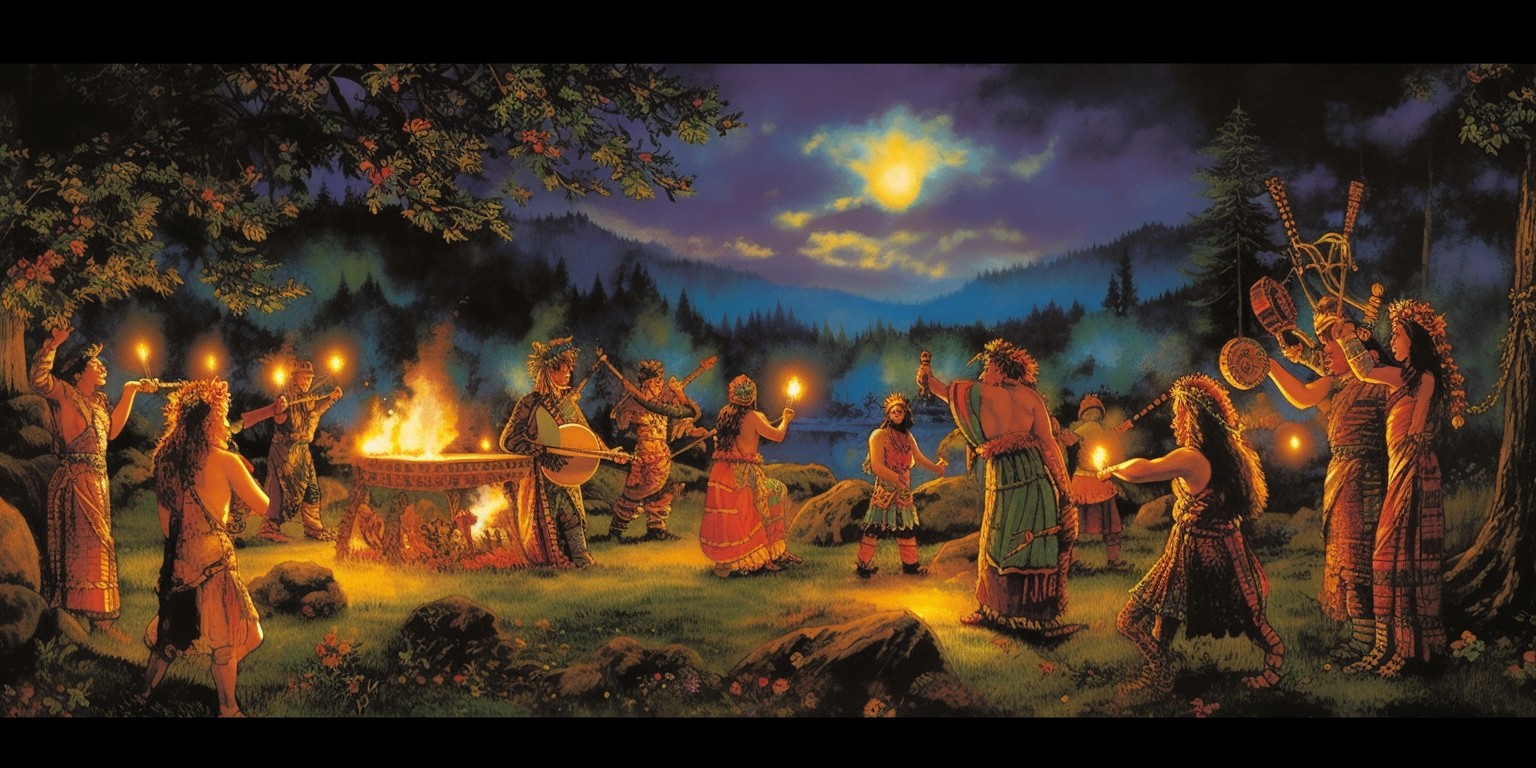
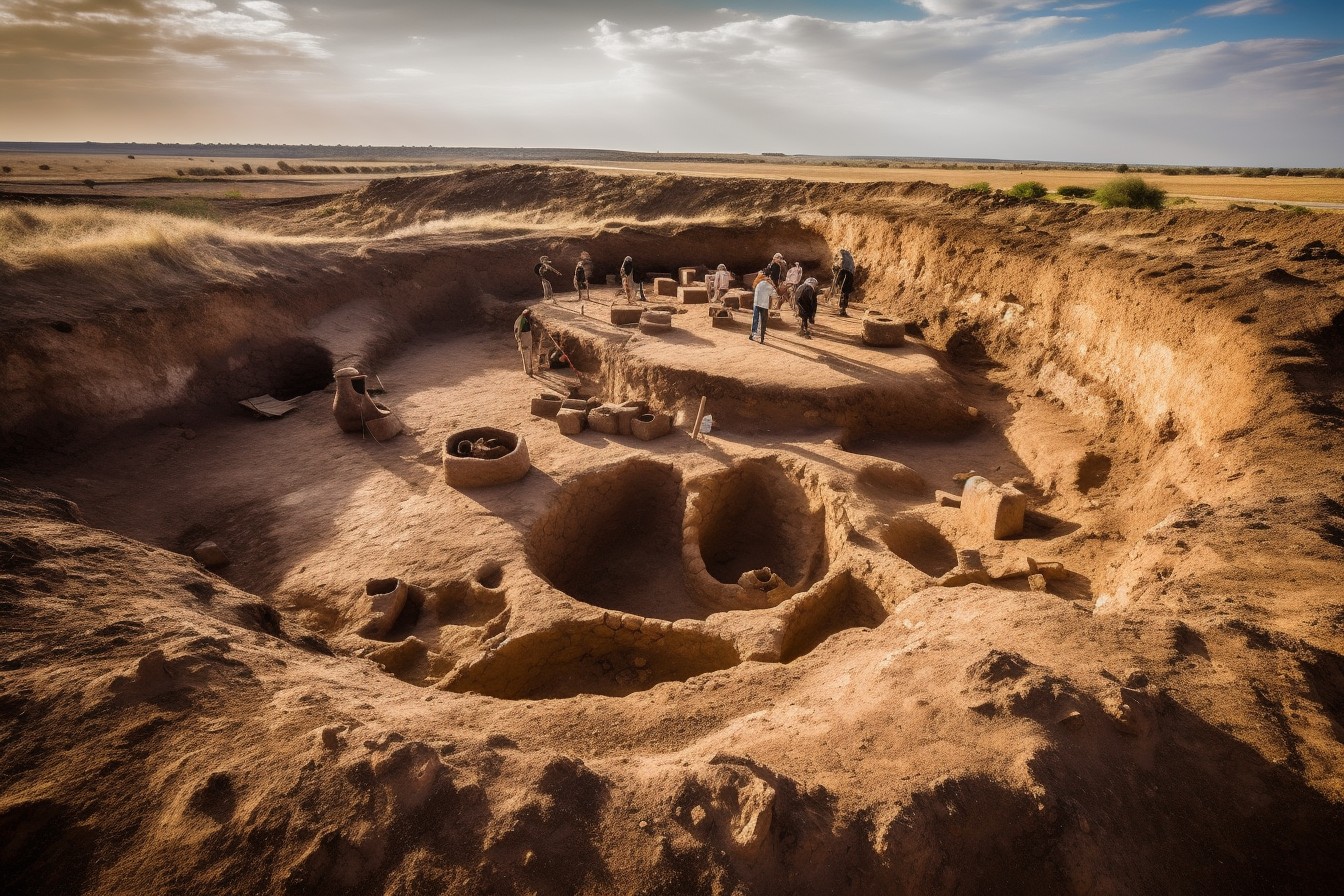
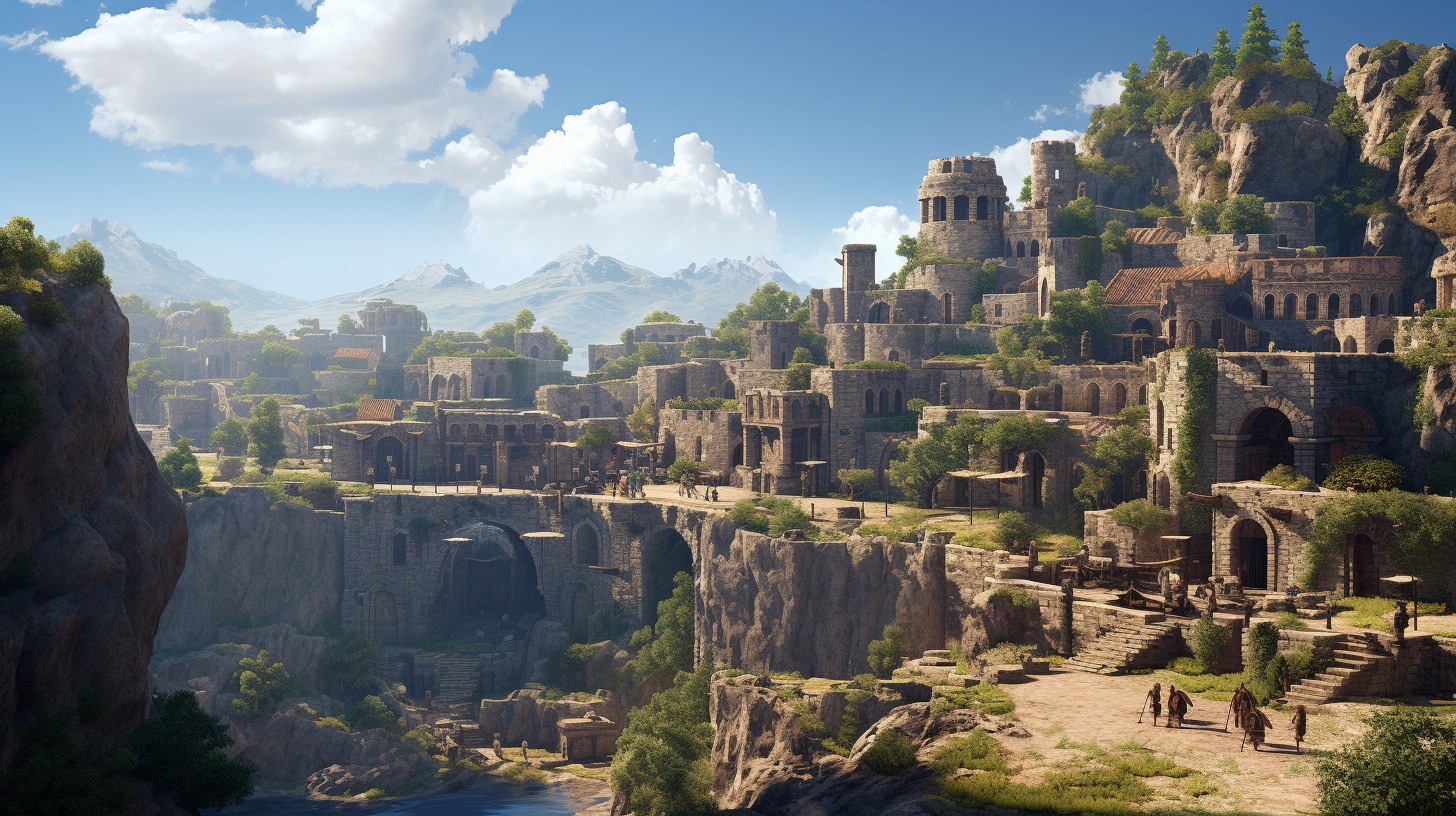
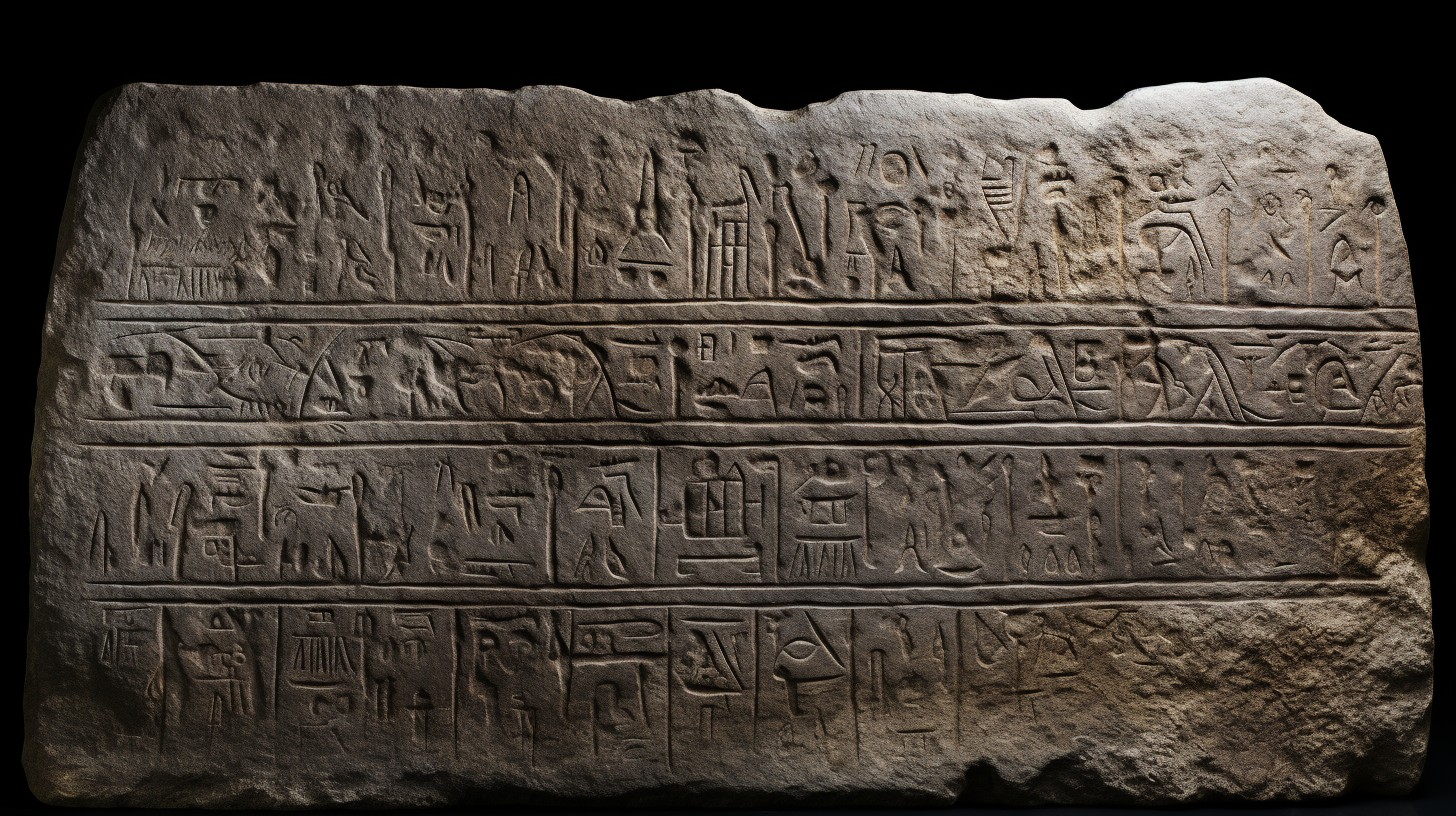
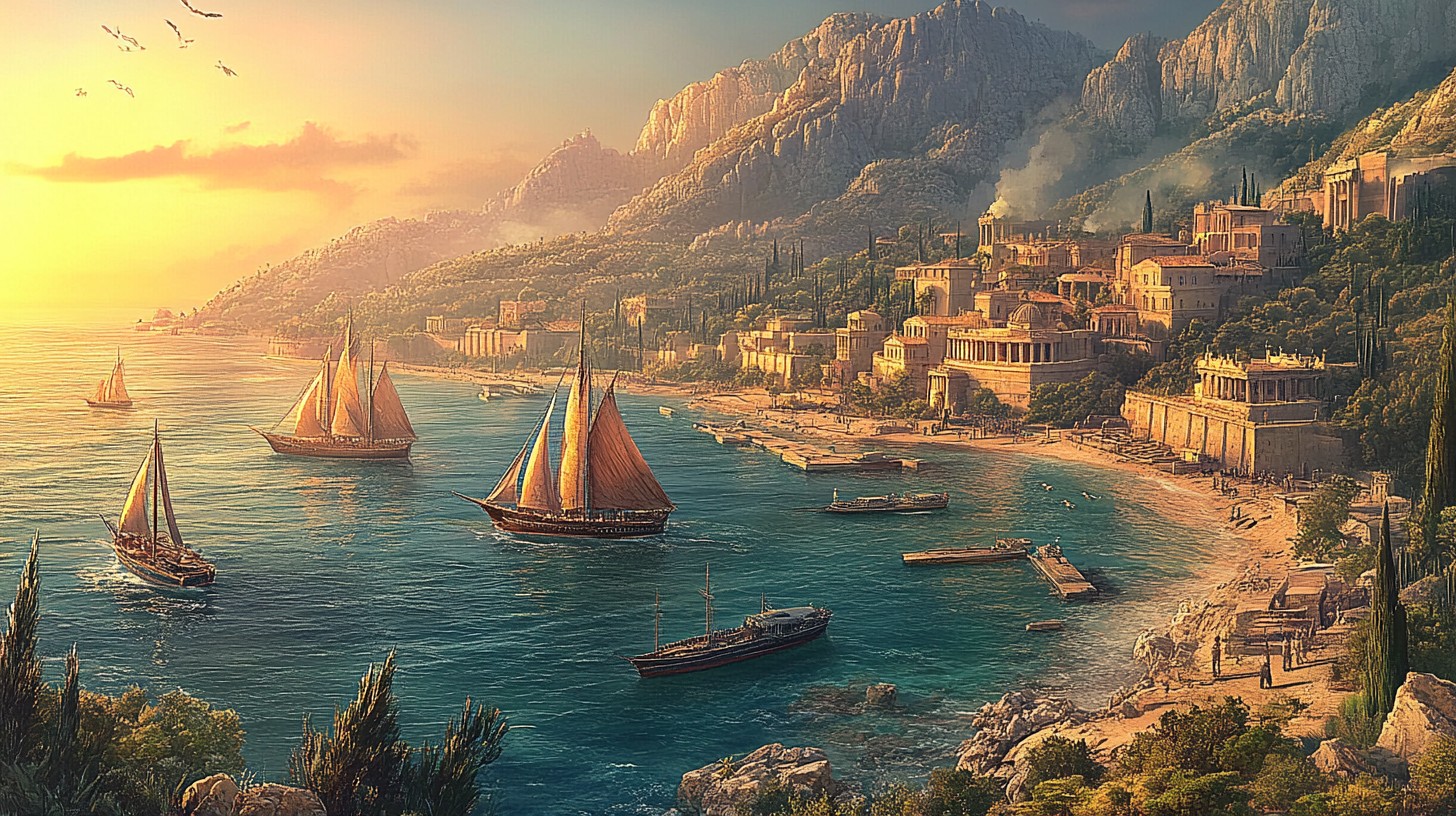
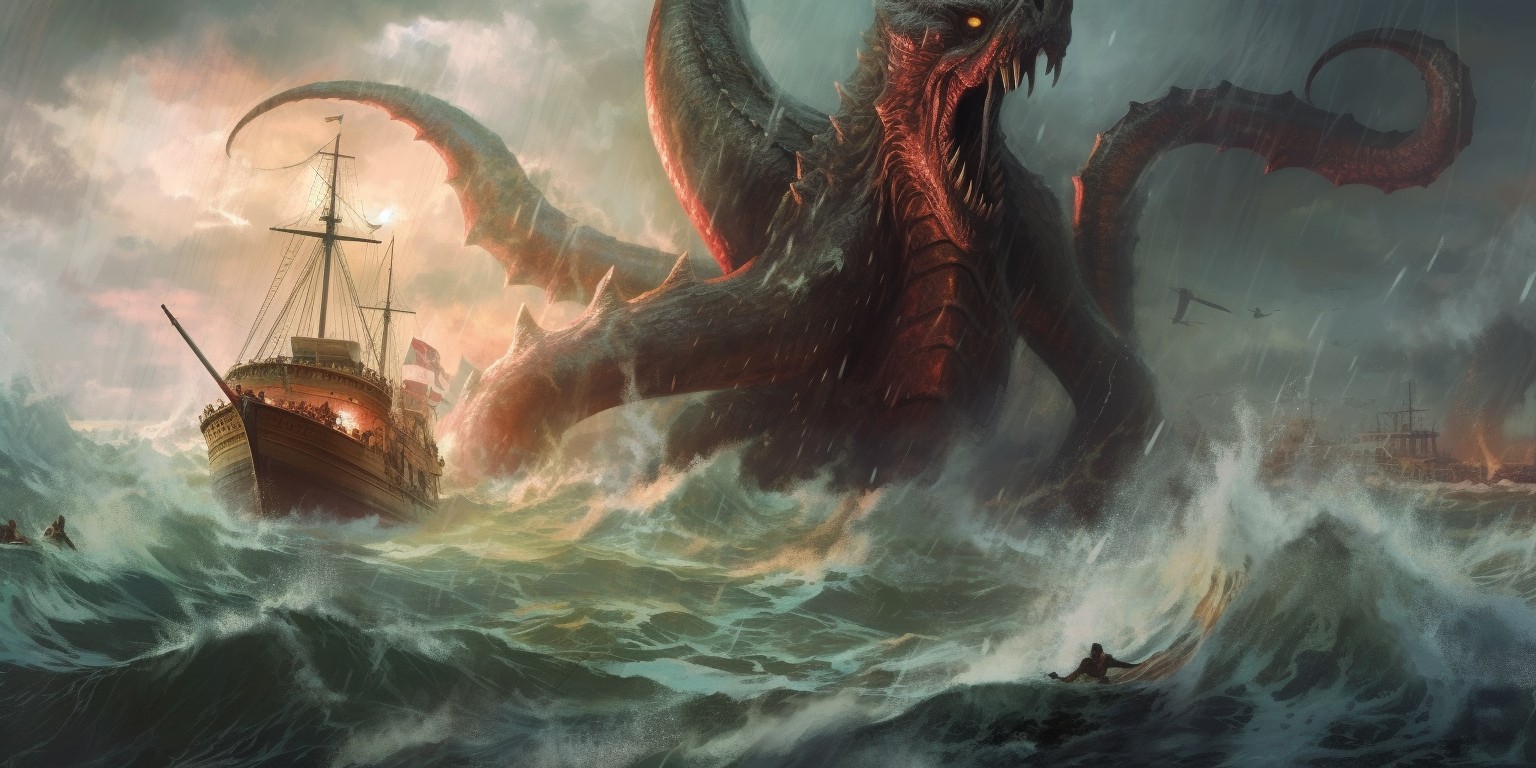
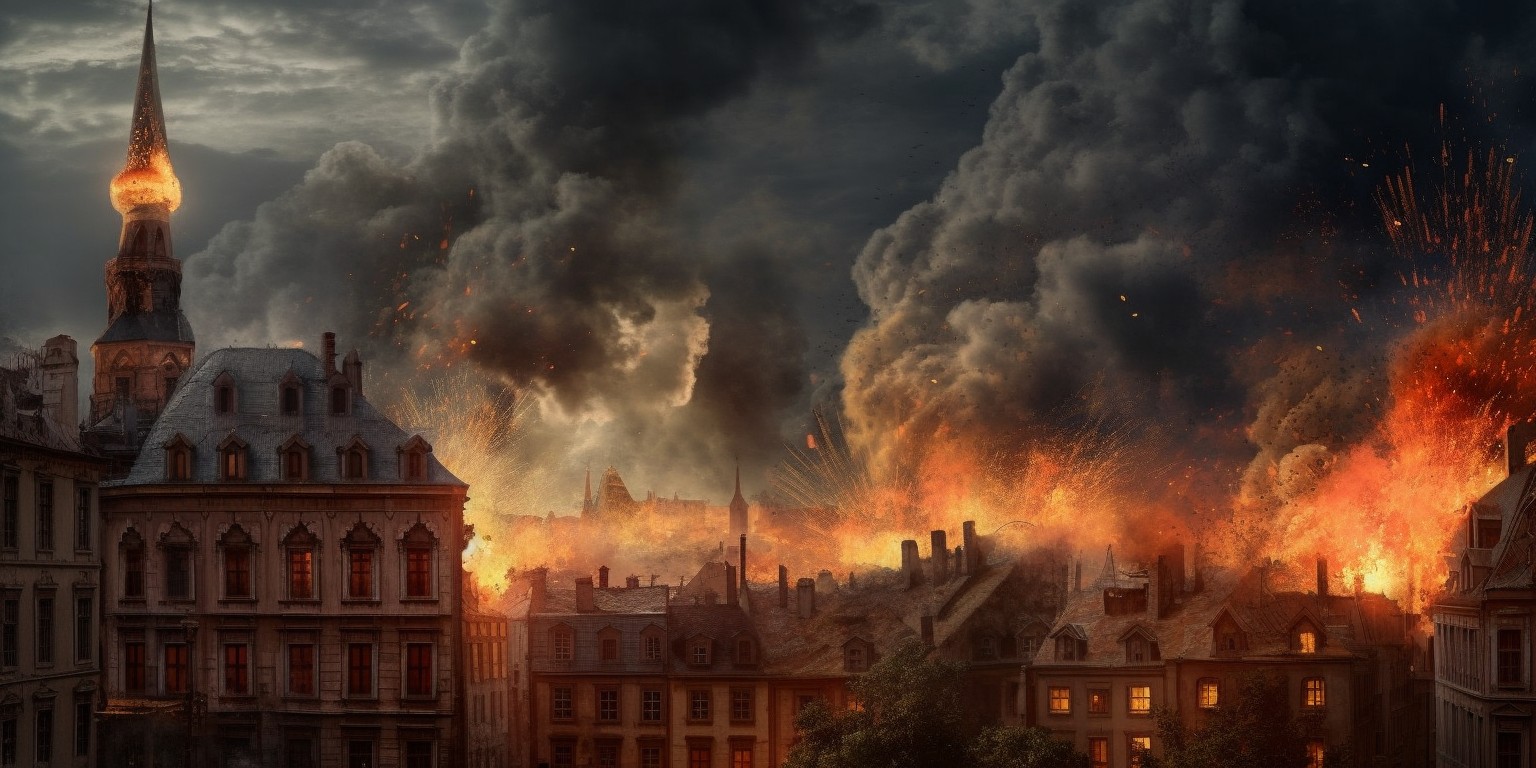
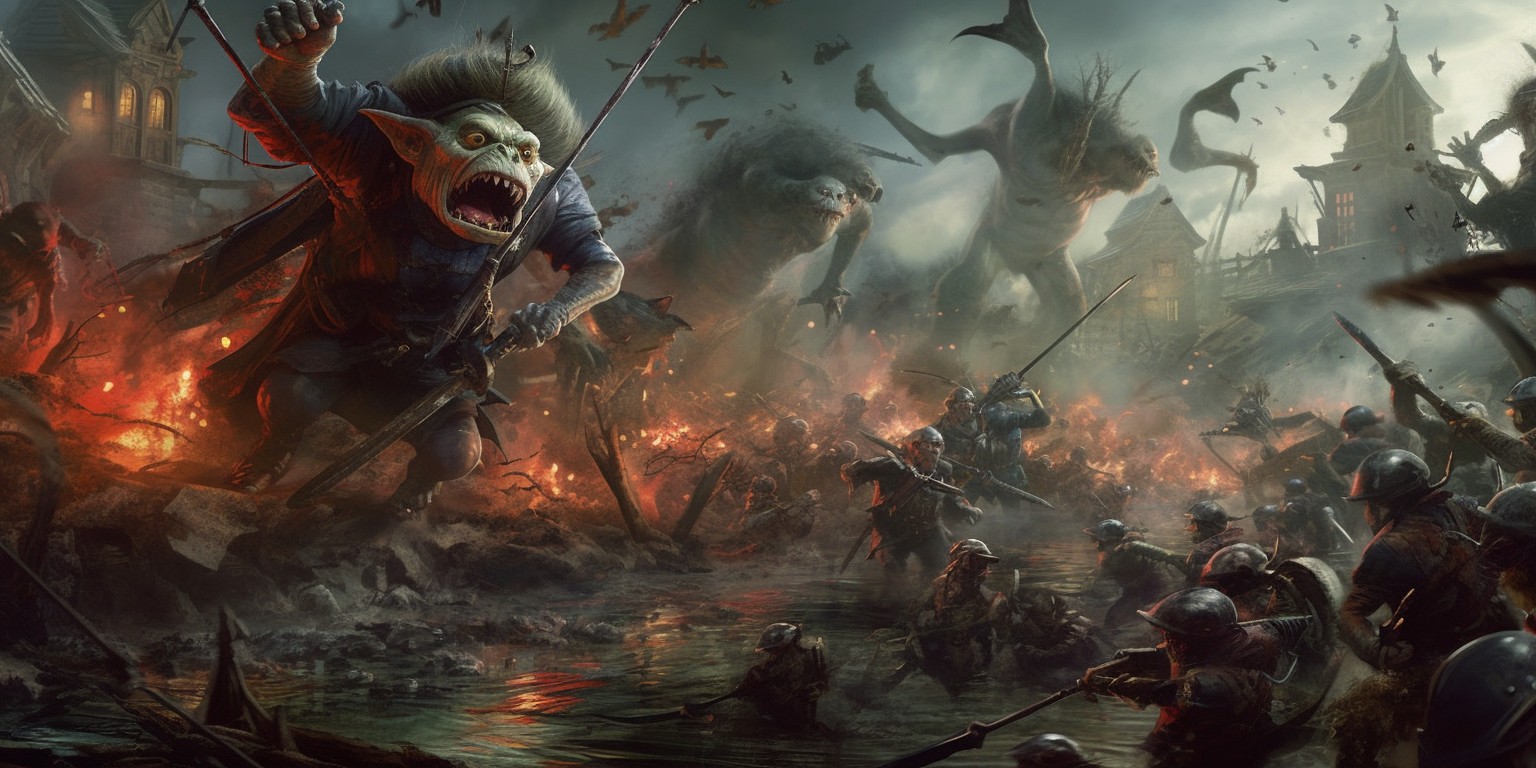
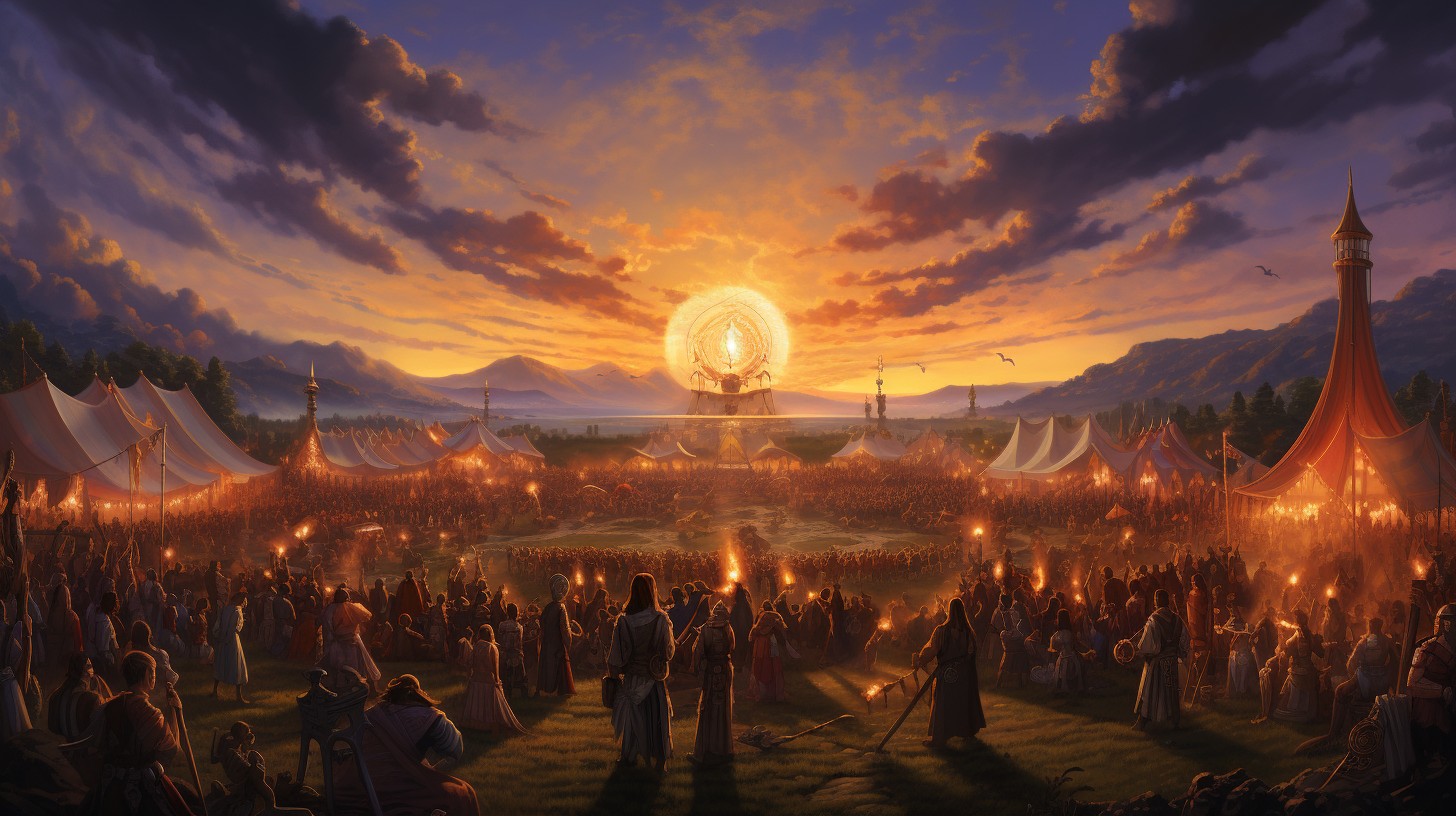
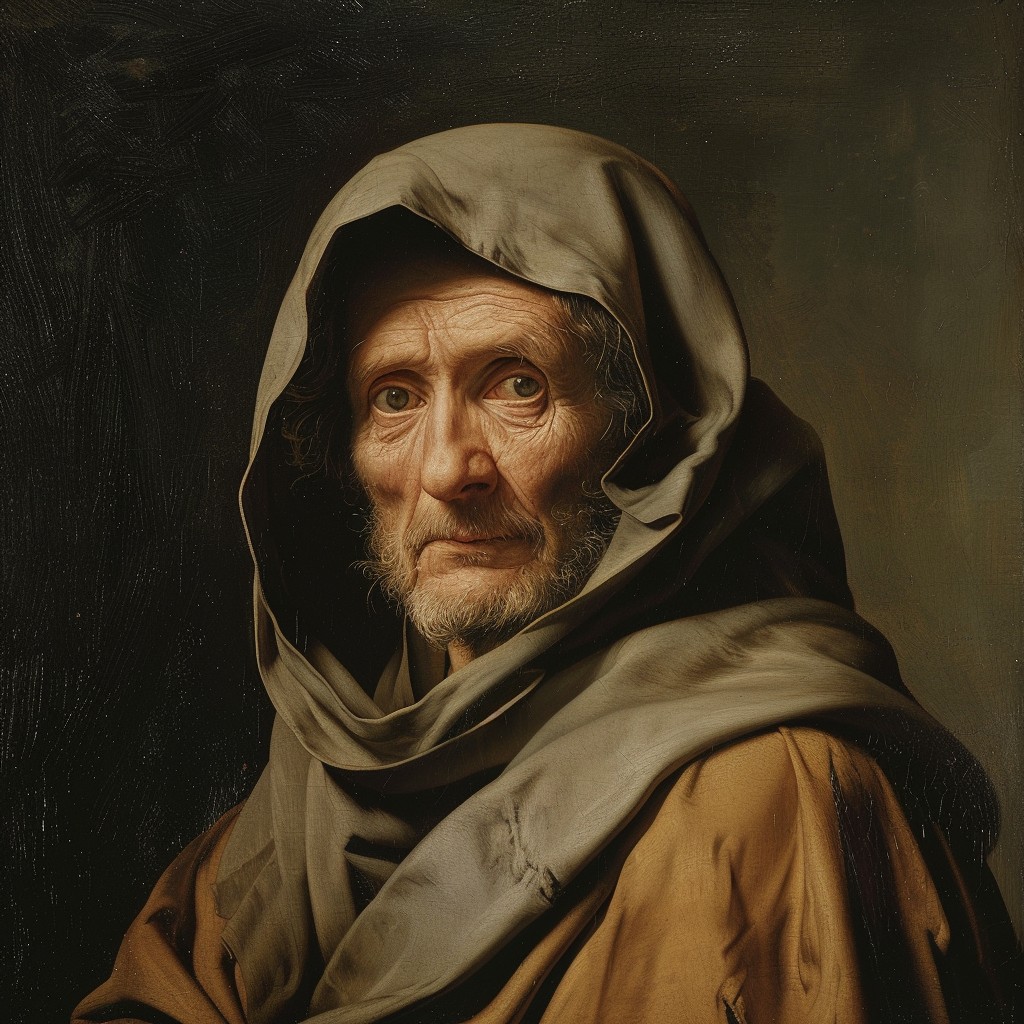
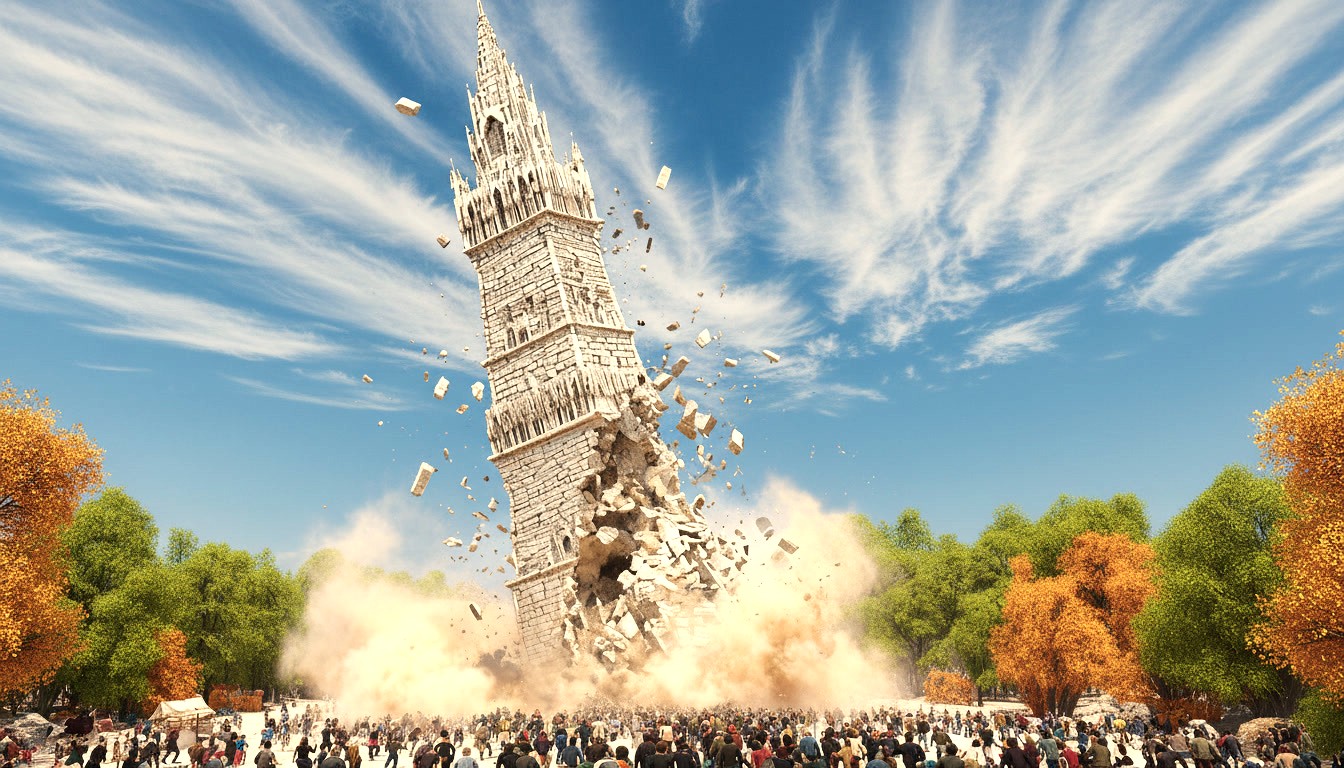
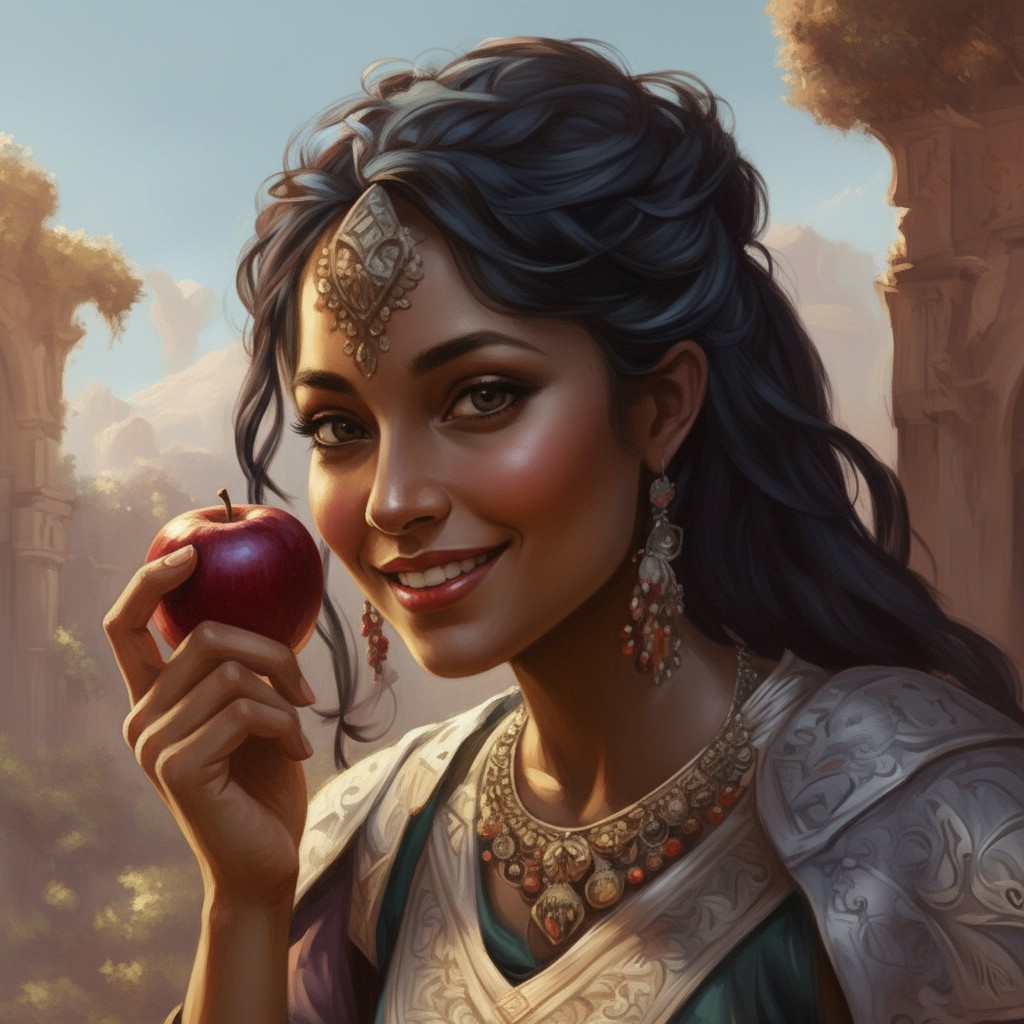
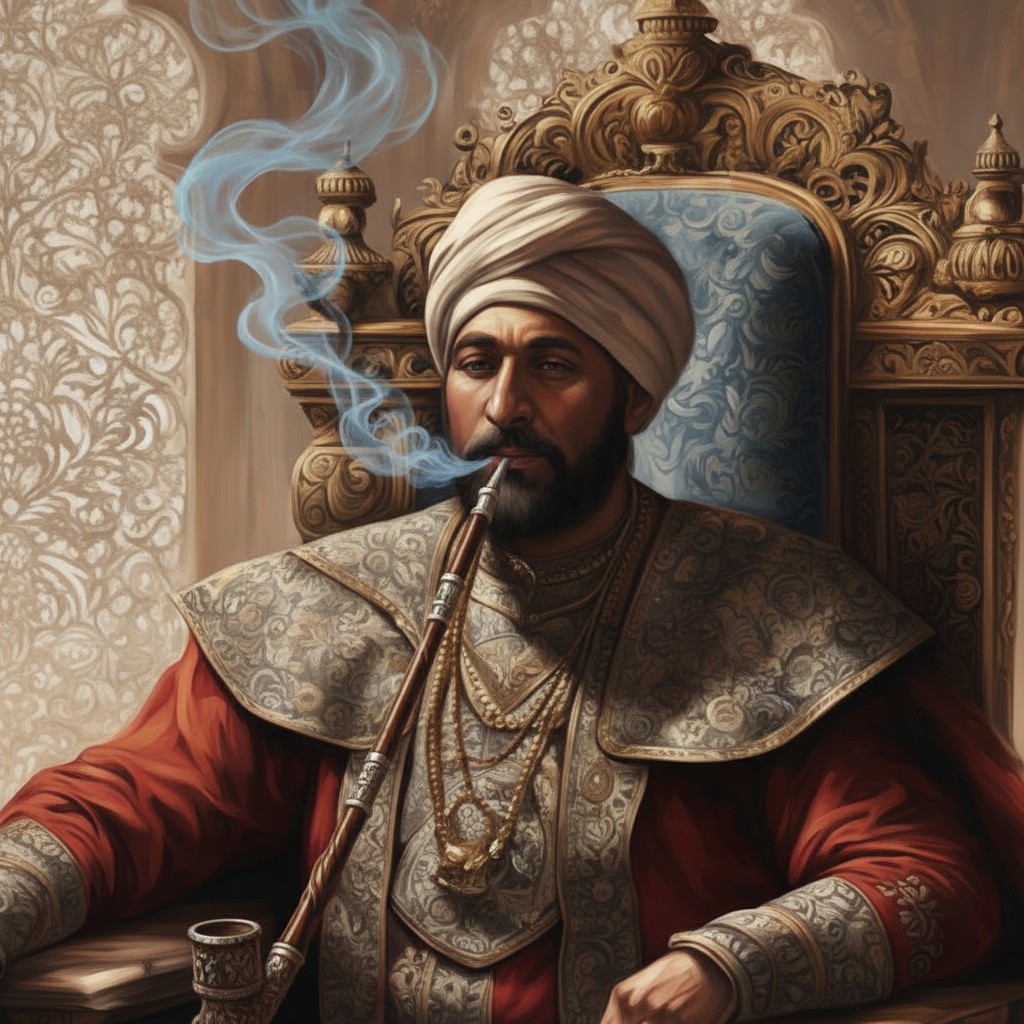
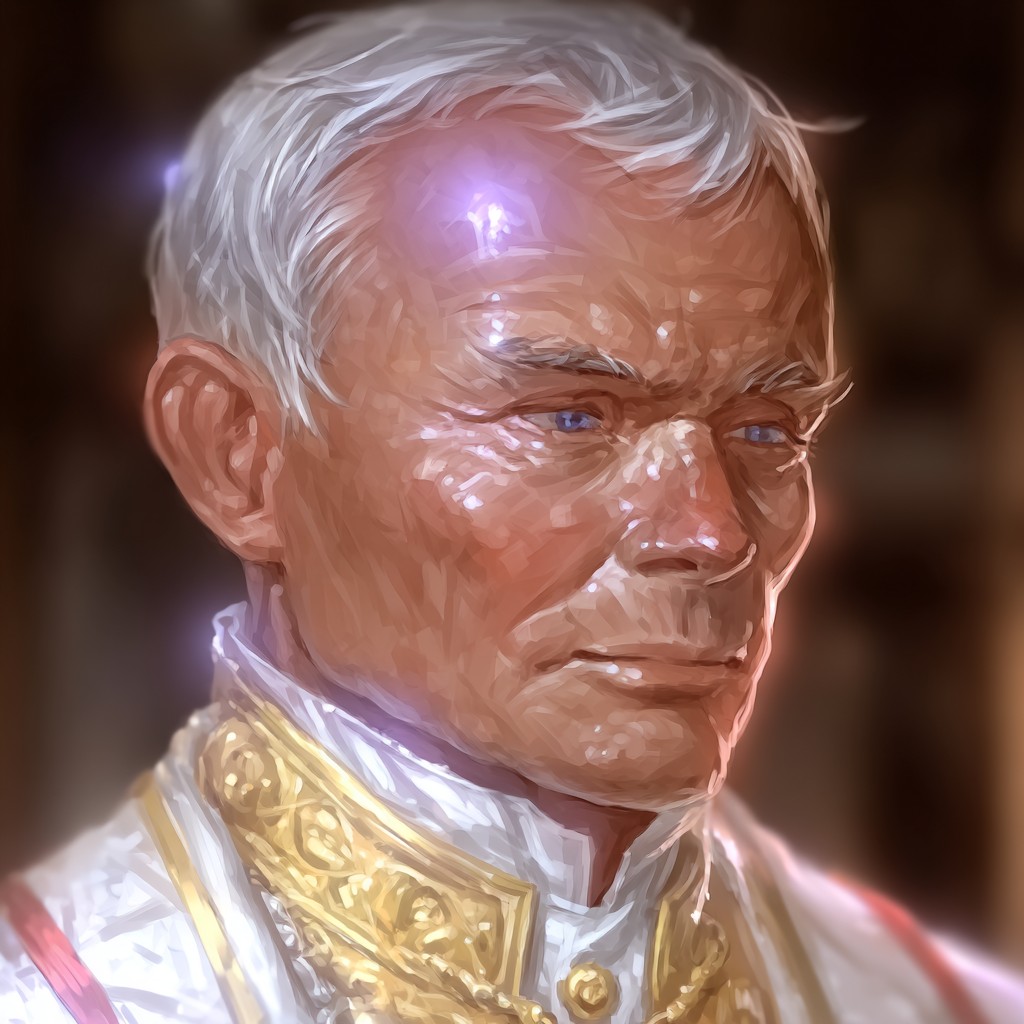
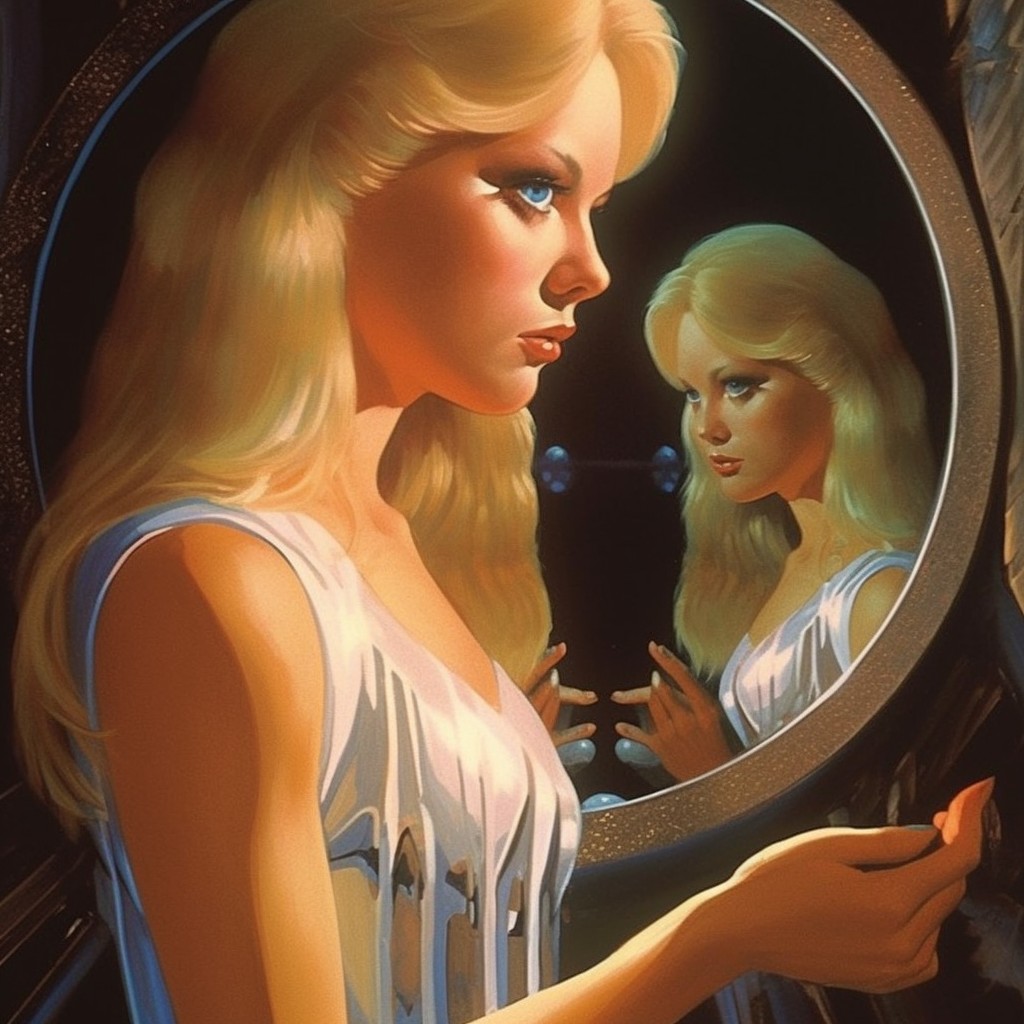
To understand the realm dating system and calendar, please see the Timekeeping article and note particularly that a year on Magicians' End is only approximately two thirds of the length of that on Earth Zero. The image gallery, shown below the main text here, illustrates some selected people and events from the history of the world in chronological order. All these images are also found either on the timeline, in the body of this article, or in subsidiary linked articles.
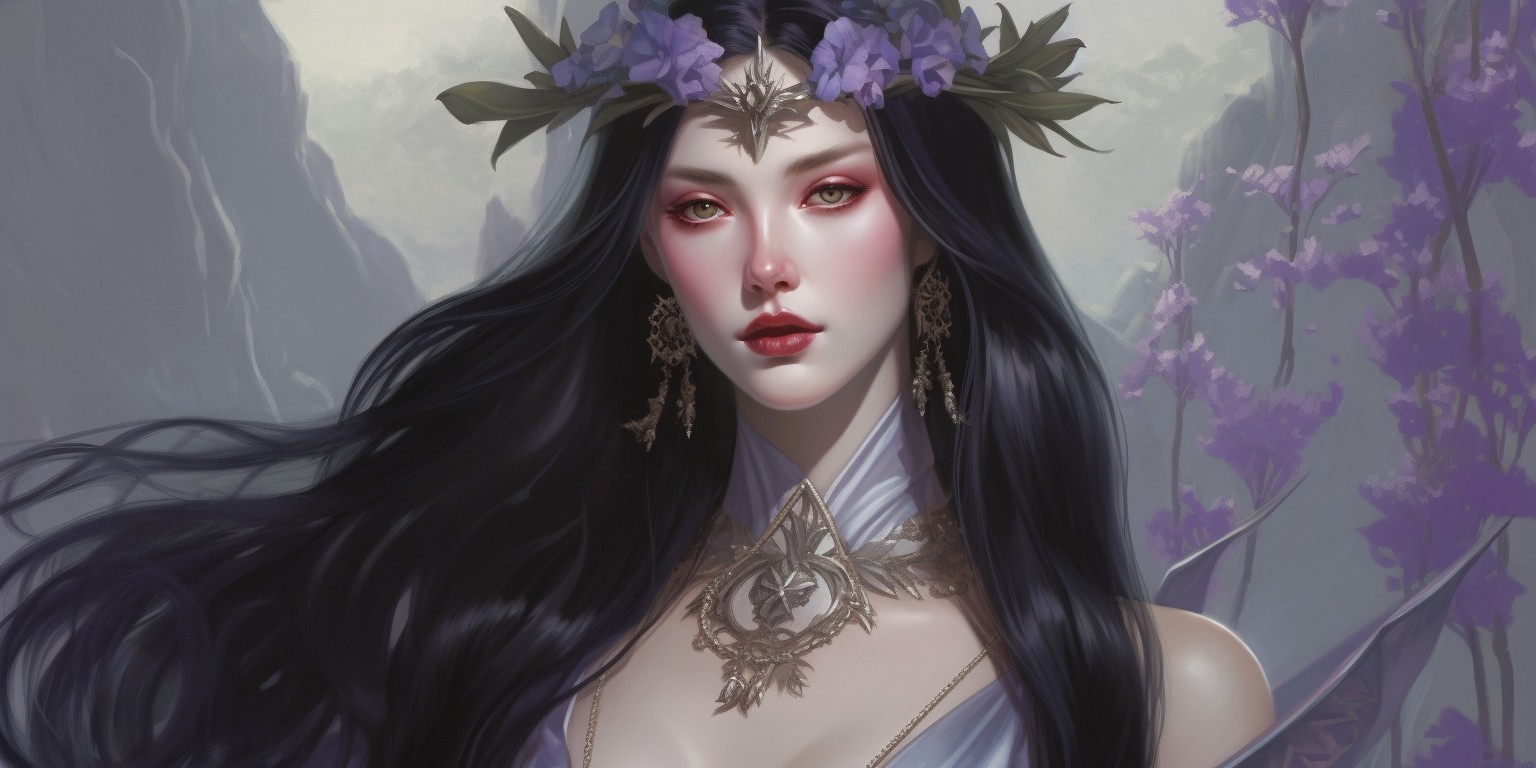
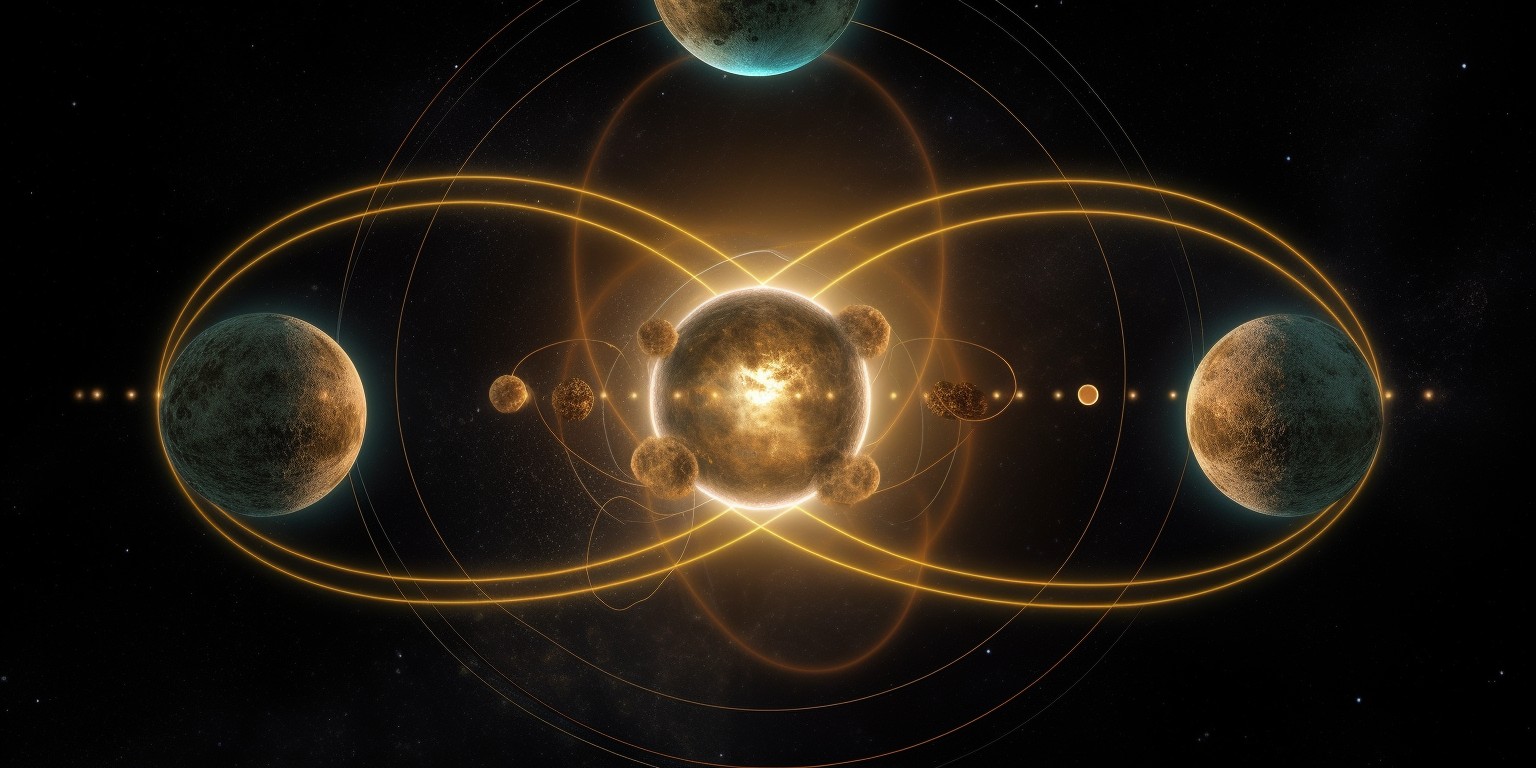
In the first days, even before there was writing there were stories pased by word of mouth and there were pictures painted on the walls and both these sources tell us of the Old Gods who came before all else. Contact between wandering Fey and the indigenous peoples of this world is also thought to have started long before recorded history. At some early time, either before or after this contact, the Blood Iris Sisters settled in the Lake Oxylium region, although the reason why they chose to immigrate and the exact time when they did so are likely to remain unknown mysteries. Humans in the realm were organised into nomadic tribes and it is amongst these cultures that "The Way of Trinity Moon" developed, a contemplative religion based on astronomical observations of the planet's three moons. Their stone circles were perhaps precursors to other permanent settlements.
The foundation of the city of Pavol-Rag-Rag by the Painted People in the north west of Myruthea, is the first historical event which can be accurately dated. It took place 12238 years before the Planar Conformation, an event of such significance that all dates on Magicians' End are now defined in relation to it, either as occurring BPC (before the planar conformation) or APC (after the planar conformation). Over the next 2000 years or so, the Painted People would experiment with larger social structures capable of maintaining order over wide geographical regions and would experience the first wars on a greater scale than anything the world had known before. Their political organisations are referred to now as the Old Kingdoms, and although the details are patchy, we know far more about them from a variety of historical records than we do about the times that came before.
In 9996 BPC, a famous peace treaty known as "The Settlement Of Zaranon" was agreed between three factions on the continent of Myruthea, resulting in the merger of two of them to form the Kingdom of Myruth, the first of the New Kingdoms. The modern continent takes its name from that ancient kingdom. The New Kingdoms were larger in scale and for the first time, expanded into the other continents of the world. In these times skilled adepts, attuned to the lines of magic, began to have an increasing influence on all the cultures of the world.
In the interests of brevity we will mention only two of the most significant political structures which rose to power over a time period that amounted to somewhat less than three thousand years, but the age of the New Kingdoms was characterised by the rise and fall of several competing kingdoms and empires with a slow trend towards their consolidation into larger groups.
The Trinity Moon Triple Enfolding was an alliance of three formerly independent powers which came together in 8613 BPC when they agreed on a way to unite their forces and leadership. Together they controlled southern Myruthea, northern Punjuki and all of Tinturbean, which made the Enfolding the most extensive power grouping the world had yet seen, and one which would not be equalled for over five thousand years until the Old Pale Empire surpassed it. Of the few smaller fragmented states that remained independent, one would split into two even smaller entities when the Kingdom of Snowborne seceded from the Great Northern Dukedom of Peld in 8394 BPC, although the split was short lived when Peld was absorbed back into the new kingdom. Snowborne was governed by a line of Mage Kings, their most important act being to sign what became known as the Thousand Year Alliance with the The Fey Court. After a long period of prosperity which didn't quite last for the full thousand years, the Fey brought the kingdom and much of the entire world to ruin, in a catastrophic event known as the Sundering in 7231 BPC. It is from this time forward that Trinity Moon became known as Magicians' End.
It took a very long time after the Sundering before any kind of political organisation would arise which could manage to govern anything larger than a single city state. During the period known as the Long Thaw, almost all of Tinturbean and the northern third of Myruthea were covered in ice sheets whilst Zisleth was completely uninhabitable. The world population fell dramatically. Nevertheless there was growth in some new areas where communities came together for shelter and protection. It was during the Long Thaw that the city of Klaractazum was founded on the melting edge of the Myruthea ice sheet as it began to retreat. And in the dark early days of this era, too, the Way of the Harmonic Path was founded, a religion which would grow to become the most important faith on Magicians' End.
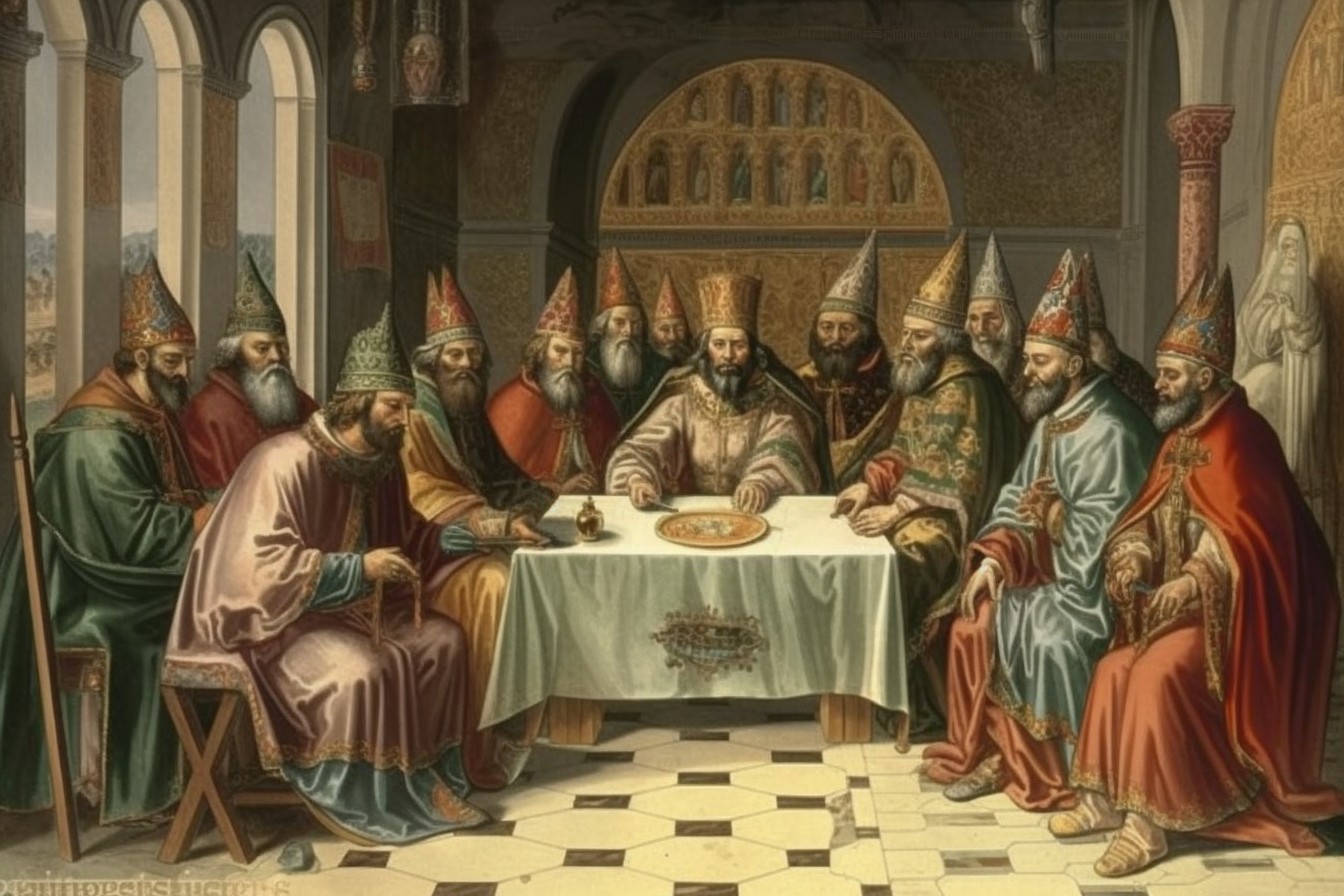
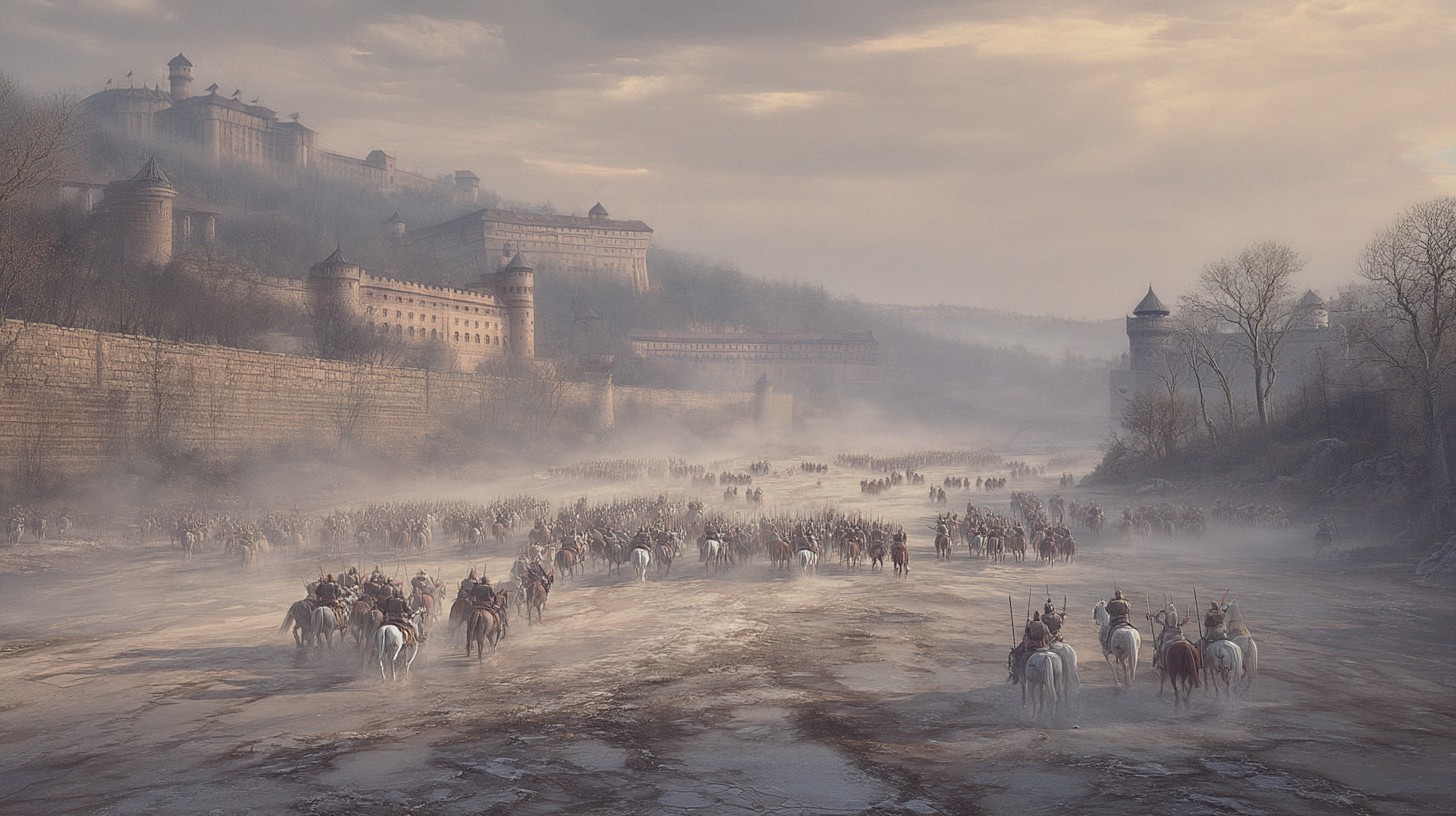
Milder conditions had already returned after the unnatural ice age when the so called Twelve Wise Ones, initiated a series of regular meetings between the major centres of population on Myruthea in 5342 BPC. Their informal deals and pacts kept the peace for almost six hundred years, as the world continued to warm and the city states grew stronger and began to form small countries. In 4778 BPC, however hostilities broke out for the first time, marking the start of an age known as the Myruthean Unification Wars which lasted until 4514 BPC. The Myruthean Unification Wars resulted in the formation of the Old Pale Empire, an entity which, over the course of the next few hundred years would go on to become a single globe spanning authority, even greater than the Trinity Moon Triple Enfolding had ever been in the age of the New Kingdoms.
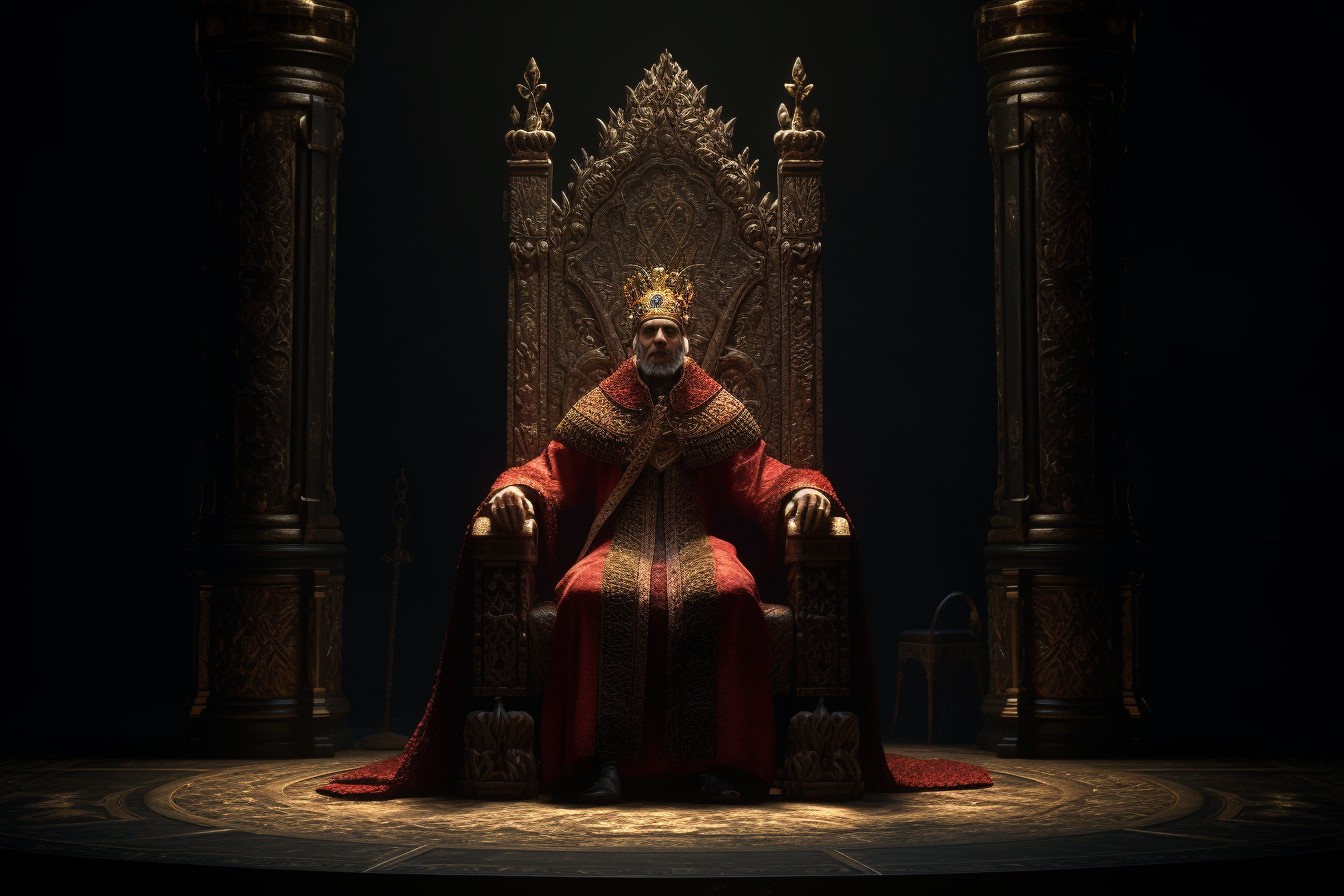
It is impossible to overstate the importance of the Old Pale Empire in the history of Magicians' End. Not only did it have the most comprehensive geographical coverage of any political structure before or after but it lasted for more than four and a half thousand years, making it greater on both counts than the Trinity Moon Triple Enfolding which is the only other organisation that comes close to matching it. The age of the Pale Empire officially began when Hanrith I declared himself Emperor on 14th Authon, 4542 BPC, following the surrender of the city of Tylisfort. His capital was the central plains city of Zalgurim and even at this time, the Empire was the world's largest single political force. This did not, however, mean that unification wars were over. It merely meant that they had entered a new phase where the Empire dominated and slowly but surely began to conquer and subsume its rivals. For a more detailed account of the Empire and its long history, refer to the timeline and the article about the Old Pale Empire. In this high level summary we must move swiftly over this very long age to reach the fateful events of the Planar Conformation.
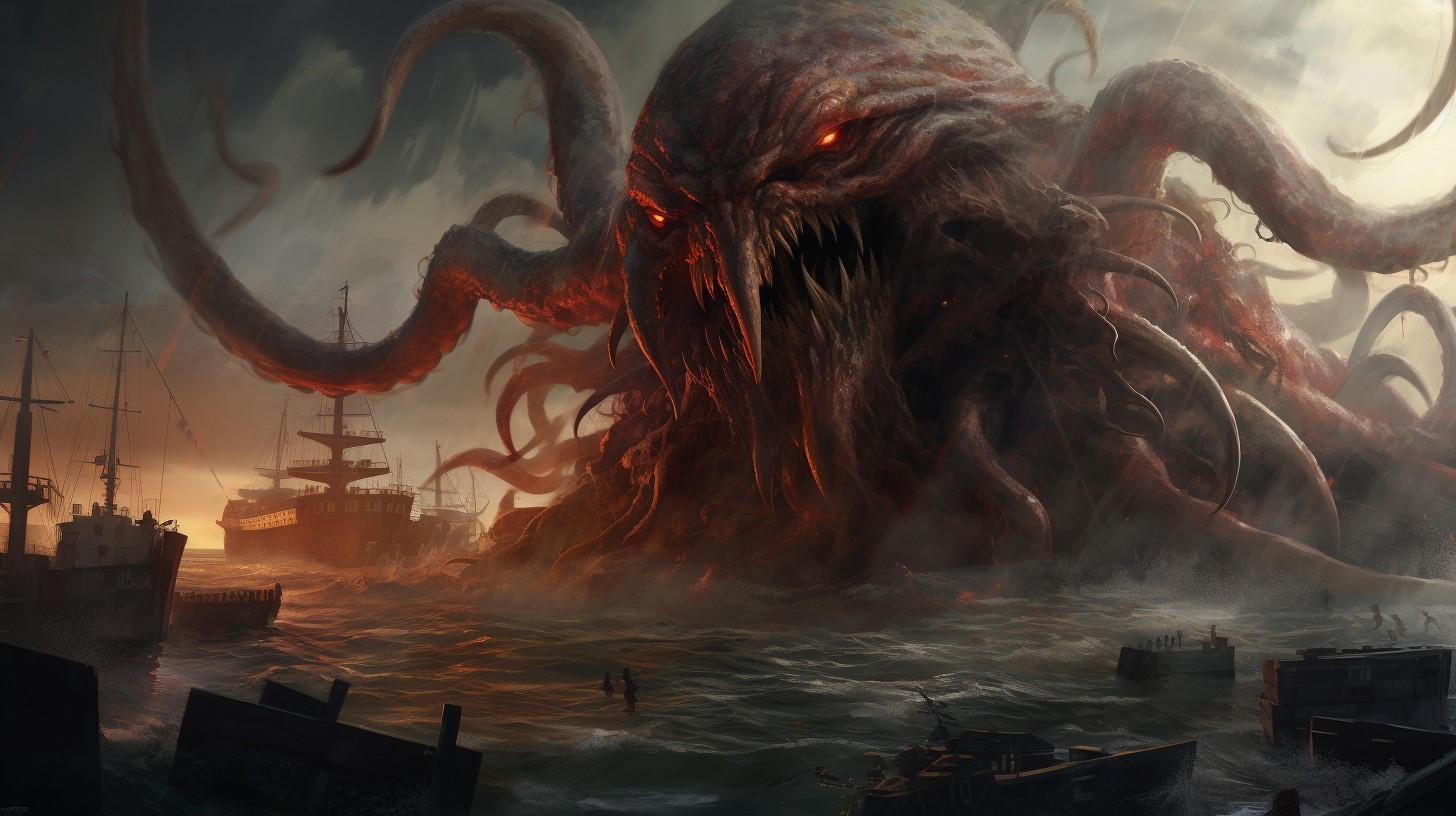
Although the Planar Conformation was a vast event with dramatic consequences affecting a whole swath of universes within the Discontinuum, from the perspective of those realms regularly visited by the Stability Council, Magicians' End was the only significantly affected realm. The impact on Magicians' End, however, was startling and profound. Overnight, far in the Orothonian Ocean, a six sided depression appeared with the unnaturally straight lines of a near perfect hexagon. Around the perimeter, great mounds of stone rose as barriers, so that the waters were pushed back from the new land and all around it were long escarpments of sheer cliff walls. So the Dark Domains (which some call Novanoir) were created and changed the geography of the world forever (in so far as we can say that anything is forever). The effects on the rest of the world, though bad enough, could have been worse. The seas churned with huge tidal waves and there were great storms for more than two months afterwards, but there was no long term increase in sea level such as might have been expected from so great a displacement. Whatever forces had inserted Novanoir into Magicians' End seemed also to have removed a corresponding slice of matter from the seas and lithosphere (and who knows where that went?) so that geologically the world settled down remarkably quickly. However, there is no denying that the Dark Domains have an extremely unnatural geometry and only arcane forces allow them to keep their rigid shape to this day, the intense vertigo of their surrounding cliffs apparently little changed by the erosion that gravity and weathering might have been expected to produce by now under more normal conditions.
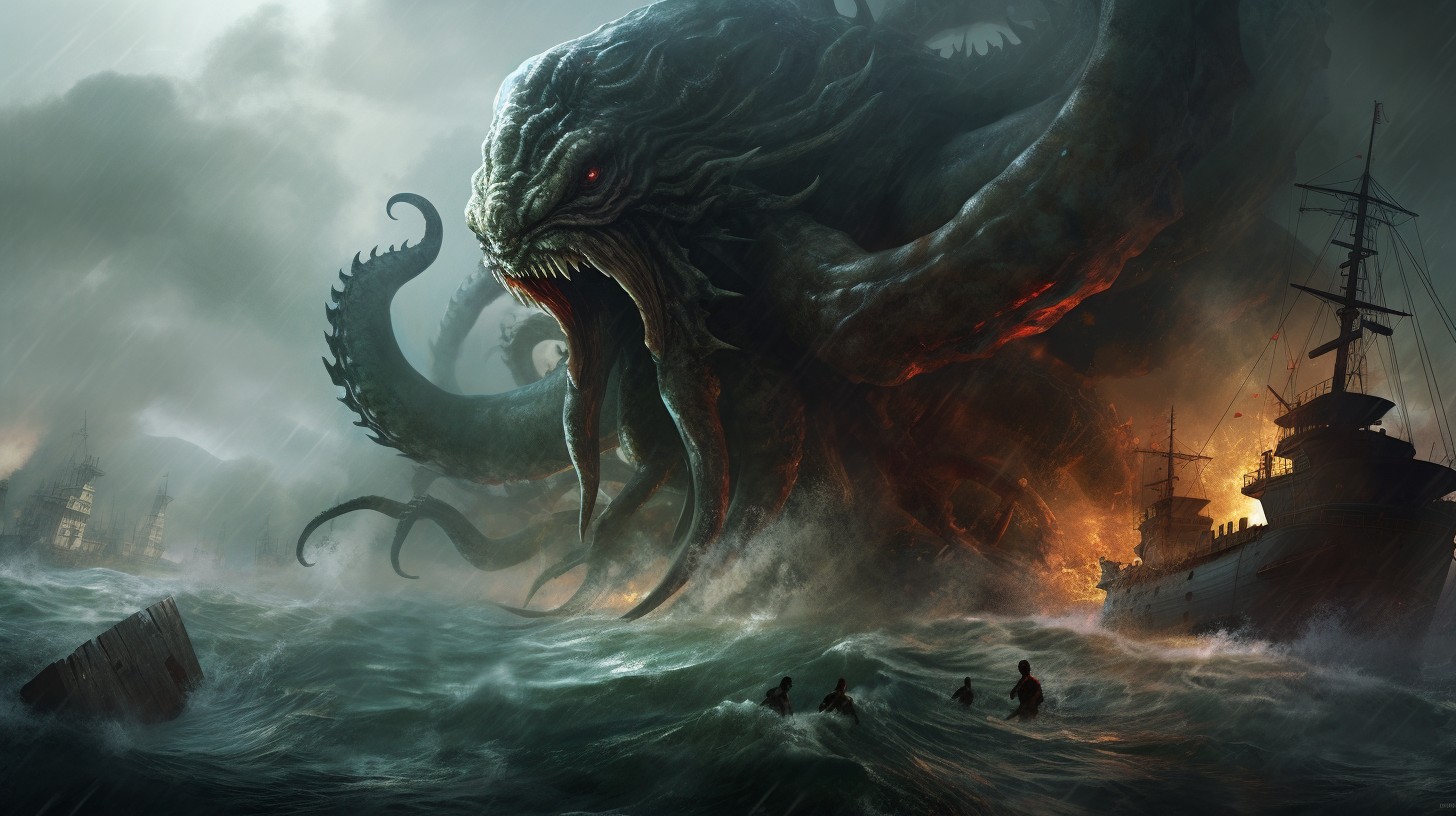
In any case, it was not so much the drastic alteration of the planet's geography that concerned its inhabitants, as the antisocial behaviour of their new neighbours, for the Dark Domains were inhabited and their denizens were hosts of ferocious and strange creatures, of a kind the world had only ever seen before in nightmares. Within seven years, the conflict between the supernatural aliens and the embattled natives would cause the Fall of the Old Pale Empire when a rain of meteors striking its capital, killed the Emperor and almost all of the civilian and military leaders. So began an age of despair, fear and terror, in which the population fell dramatically as the invaders preyed upon their weaknesses and most could see no prospect of an end to it.
After the destruction of Honirham, the disconnected territories of the former Empire found themselves subjected to a series of invasions from the Dark Domains. Tinturbean was the most frequently and seriously threatened, beginning with the sack of Brukin in 12 APC, but Myruthea and Punjuki were also attacked and within twenty years, significant territories had been lost on all three continents. Human military forces gained only a few precious victories to stem the tide of the wars but were unable to reverse the gains made by their supernatural foes.
But all was not lost. The prophet Hylacon had warned his followers of the dangers of these days and had given the Hylacon Peoples hope that they could fight back. His bold and ambitious plan called for the construction of an arcane barrier around the entire perimeter of the Dark Domains which would prevent its inhabitants from spreading into the rest of the world. Each link in the magical chain would be a gateway, drawing on the power of the deep Laws of Form to resist the hostile transformations threatened by the invaders. These were the so called Hylacon Gates, built in great secrecy and great danger between 37 and 68 APC and activated by the locking of the gates between 68 and 74 APC. During this final phase, Hylacon himself returned from intelligence gathering in distant realms of the Discontinuum and at the great Easter Gate was able to overcome the resistance of the enemies of humanity, only in a final supreme sacrifice called the Transcendence of Hylacon, which is still commemorated on Easter Day, the 15th of Mald, every year even to this day.
The deeds of these wars are explored in more depth in this detailed article about the Breach Wars.
The sealing of the borders of the Dark Domains was a hugely important and welcome victory for humanity, preventing further invasions onto the native continents of Magicians' End, but it did not immediately solve the problem of the occupying hostile forces which had already conquered most of Tinturbean, significant areas of Myruthea and even established outposts on Punjuki (although that had been the least affected region), all within the seventy four years since the Planar Conformation. It would take several hundred years to cleanse the human continents of the realm from the taint of their terrifying supernatural enemies, but isolated from their base on Novanoir and without the guiding intelligence of the Ancient and Glorious they were a much less formidable foe and the success of the long process of the human fightback was never seriously in doubt. Punjuki became the active organising centre for the restoration of human authority over the whole of Magicians' End and at this time it hosted the most advanced examples of returning civilisation.
In 75 APC, the remnants of the Hylacon Peoples created the Society of Arcane Adepts as a mutual aid organisation for magic users. This became a kind of non-proscriptive and loosely organised guild which provided skeletal ethical and practical guidance to mages and it would be the only global "authority" in arcane matters for the next two thousand years.
On the 14th of Doloph, 77 APC a group of mages called the Friends of the Trinity Moon (a sect within the Way of Trinity Moon) used a powerful geomancy trigger spell to make Mt. Coramandexia errupt in a violent volcanic explosion, just as a wing of dragons and wyverns was passing over it. This successfully killed two of the larger beasts and several of the smaller ones and weakened the survivors so that they became susceptible to follow up attacks from other mages. Ever after, Mt. Coramandexia has been more popularly known as Mt. Defiance, in honour of its role in kickstarting the process of evicting Dark Domain invaders. The society that organised itself around this hugely symbolic victory became the first of the Flame Kingdoms. Others would follow, taking their inspiration from the cleansing power of fire in burning their enemies and even if none of them would have quite such a spectacular success as this opening shot, pyromancy of various forms would play a big role in all their military operations.
By the middle of the fourth century APC, the creatures from the Dark Domain had been extirpated on Punjuki and Myruthea, and only a few small pockets remained on Tinturbean. There was good news too from the sea. The monsters of the deep who had been agitated by the Planar Conformation appeared to have settled into a more benign state where shipping could once again be conducted with more acceptable levels of risk. The Age of the Water Kingdoms, which succeeded the Flame Kingdoms, began when a bold sailor Walthar Bass, risked the first successful sea voyage between Myruthea and Punjuki. On the strength of this hugely popular and significant moment, he declared himself the first Fisher King of Nephatar on 11th Mald, 467 APC. Within twenty years, King Kleyth the Great had founded the Kingdom of Saltmoat, focusing on off shore island trading around Punjuki and this became the second of the Water Kingdoms. Further maritime powers would arise in the years that followed, taking inspiration from these two pioneers.
The Water Kingdoms were more advanced than the Flame Kingdoms, bringing with them a quickly realised goal of reuniting the continents once again under stable bonds of friendship and trade which they had not enjoyed since the fall of the Old Pale Empire.
On 11th Kerax 1188 APC, in a secret family ceremony they called the Solemn Swearing, the mage Allakai, his son Serndin and grandson Mikerav dedicated themselves to the service of Magicians' End as its hereditary rulers. These were the so called "three rogue mages" and their venture was the first attempt at some kind of limited intercontinental government since the end of the Old Pale Empire. Eight years after the Solemn Swearing, Allakai's plans came to fruition and the three rogue mages declared the formation of the Arcane Supremacy, discussed in more detail in the article dedicated to this period of history.
The Arcane Supremacy did not last as long as its founder envisaged. Grandfather, father and son, each took their turn in ruling and whilst they had succeeded in establishing a more internationalist outlook, their leadership was uninspiring and surprisingly weak towards the end. When Mikerav died without an heir in 1390 APC, the Arcane Supremacy quietly faded away. The historian Hera Plerin, writing some two centuries after the end of their dynasty, coined the phrase, "three rogue mages" to describe Allakai, Serndin and Mikerav, and rather than the grandiose name of the Arcane Supremacy, when this period of history is discussed it is much more popularly called the age of the three rogue mages.
An organisation known as the Puzzle Lords Directorate rose to power in 1390 APC, following the end of the Arcane Supremacy. The Puzzle Lords are one of the more unusual groups to have ever ruled on Magicians' End. Like most of the governments after the Planar Conformation, we should be careful not to overstate their powers. The Puzzle Lords were the most important organisation of their age but it was a complex and fragmented picture and there were several lesser authorities who did not acknowledge them as their leaders.
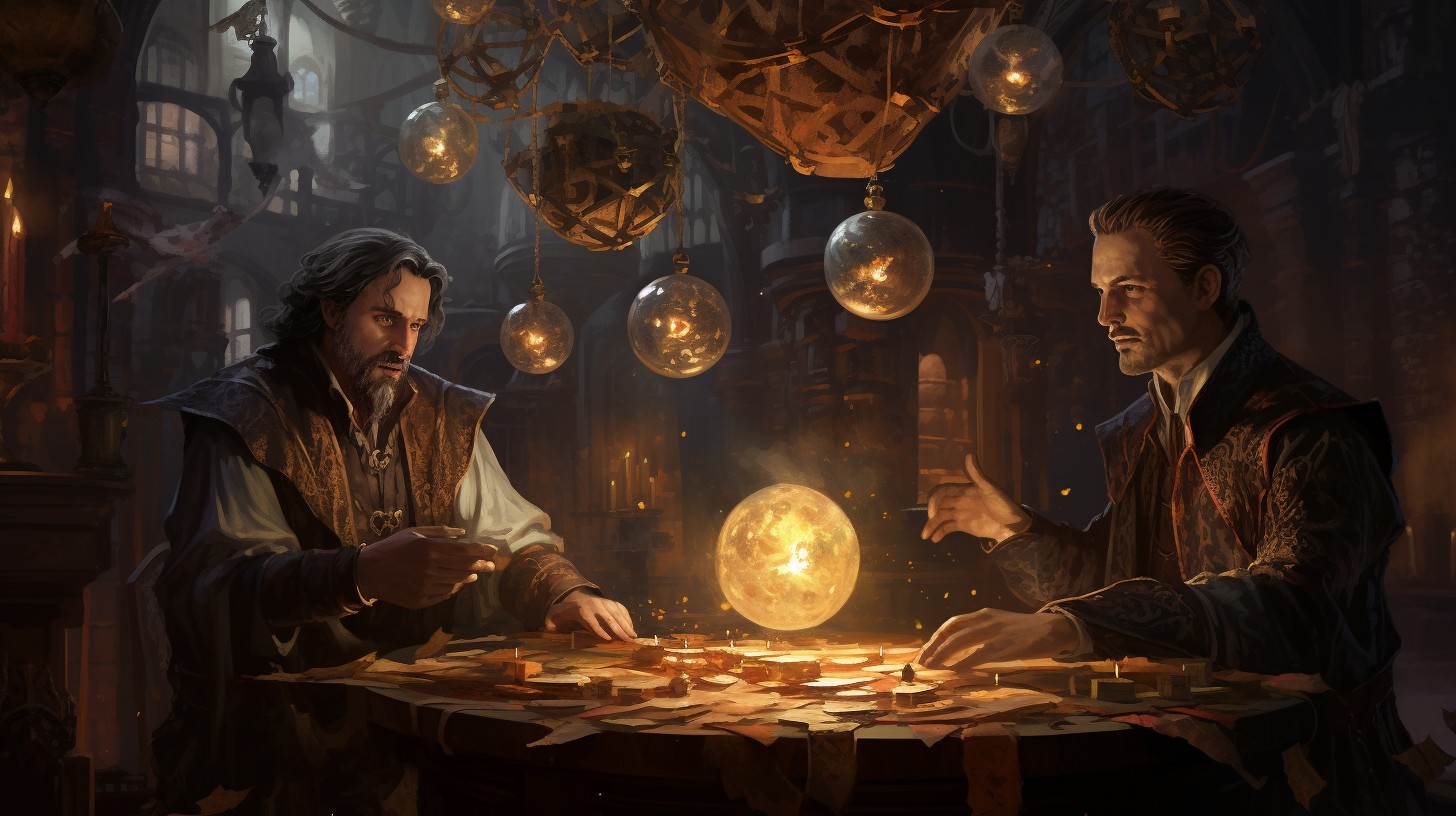
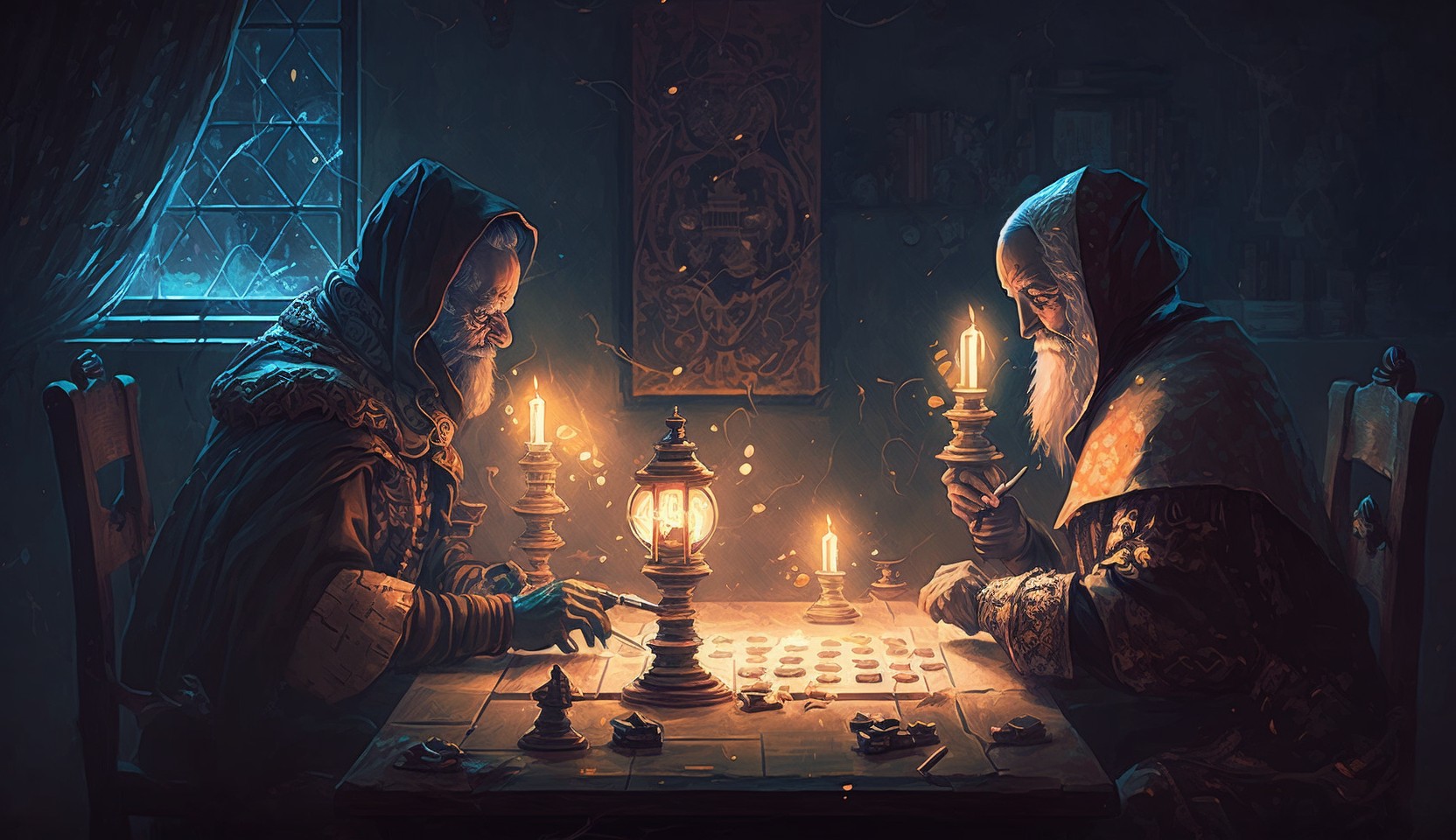
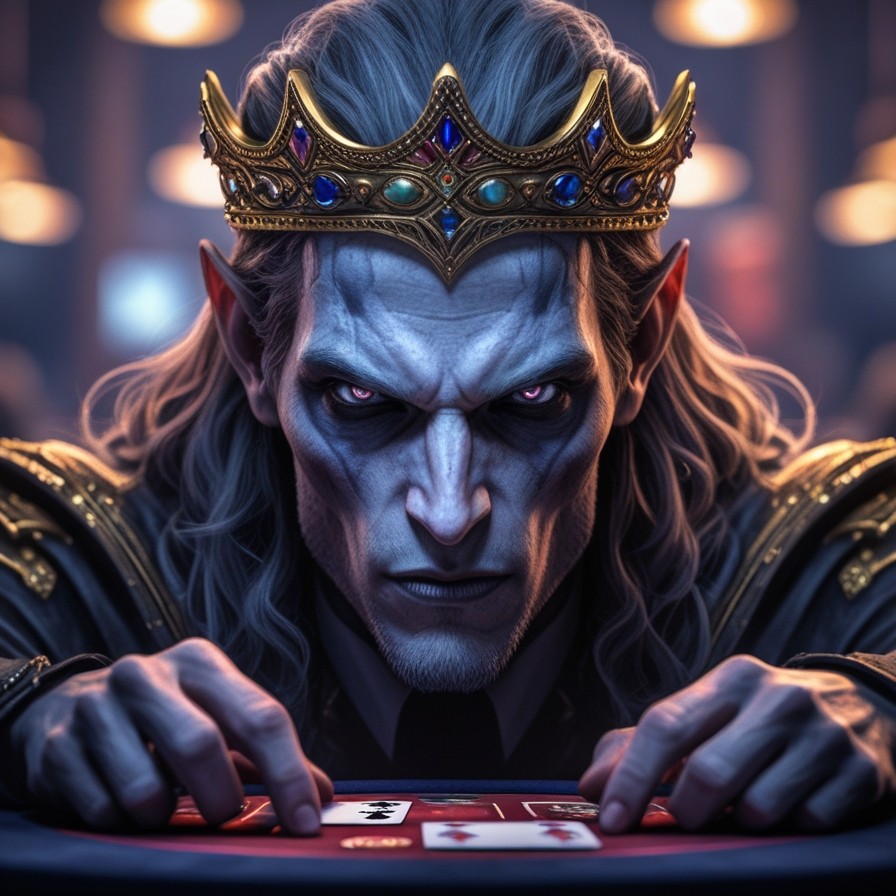
The Puzzle Lords were an oligarchy of aristocrats who ran an intercontinental trading society with a military wing which operated from a number of notionally independent city states. In origin, they had been a gaming society with interests in mathematics, gambling, card and board games of various kinds and of course, puzzles of all types. They transfered these proclivities into a form of government that valued strategic thinking and rewarded tactical awareness on the board and in their business dealings. They managed their operations with a light touch and by balancing the competing interests of their rivals against one another, they maintained their position as the most powerful agency in the world for almost five hundred years.
It was one of the Puzzle Lords who created the Uncertain Watchman in 1809 APC, originally as one piece in a complex animated game, but a piece that long outlasted its makers.
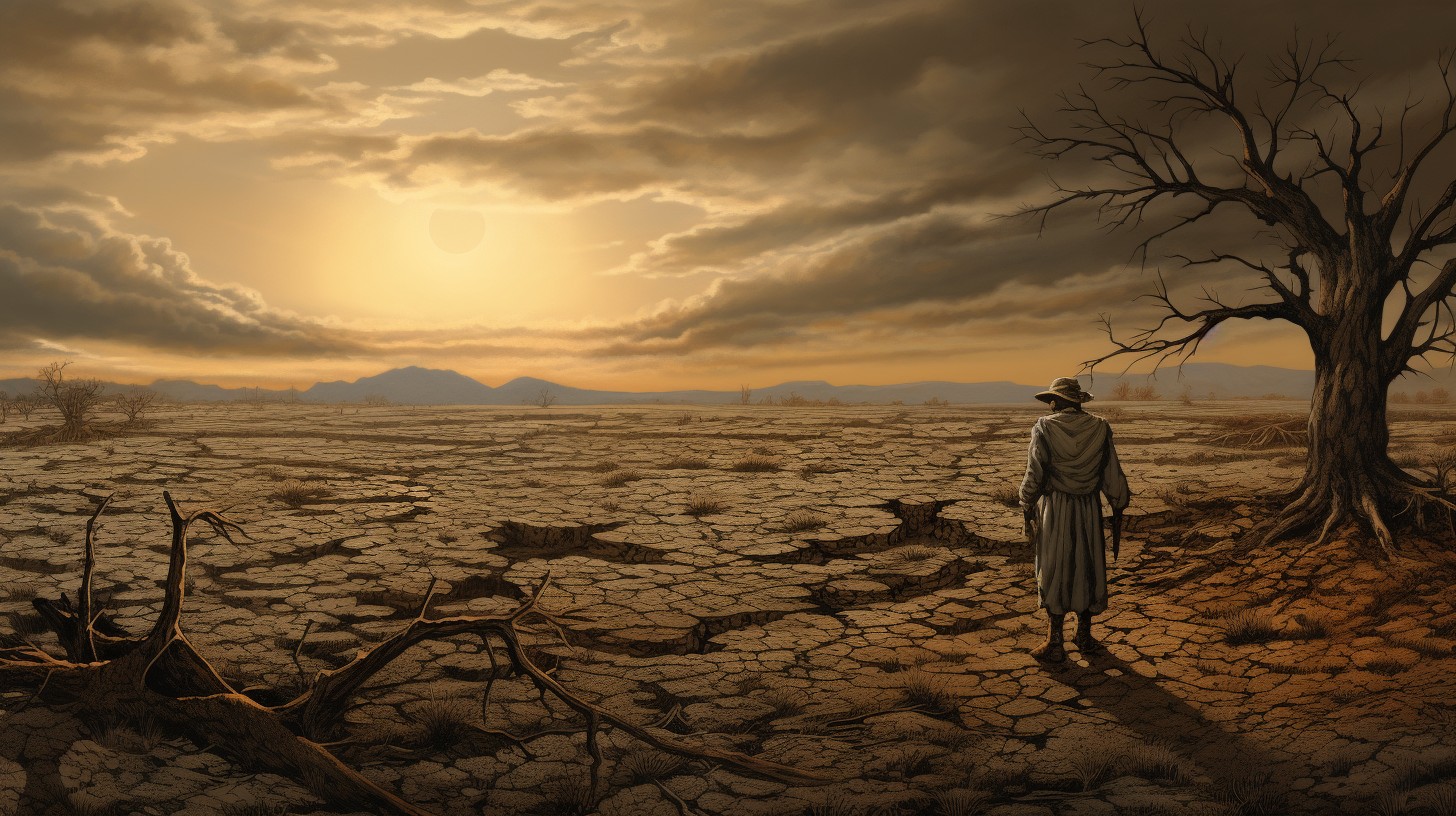
The Long Famine is the name which historians give to the years between 1830 APC and 1920 APC. The famine was caused by climatic changes which were themselves due to an increase in the flux of solar radiation. This might have been a delayed reaction to changes caused by the Planar Conformation, although astronomers are uncertain. Fortunately, whatever variability within the sun resulted in the brightening, it proved to be a temporary phenomenon, lasting for "only" about ninety years. Temperatures eventually returned to something like their old averages and the world has not suffered from similar episodes in the subsequent centuries. It has to be hoped that this example of solar instability was an isolated incident.
It was the extensive droughts affecting the main agricultural areas of Myruthea and Tinturbean which caused the crop failures that resulted in the Long Famine. Magical geomantic remedies were ineffective against the dominance of solar dynamics, although they did help with some small scale relief in limited areas.
From this age comes the traditional story of Hella and the Widow, a supernatural explanation for the way the city of Nephatar continued to feed its peoples, even at the worst of times. It was also the time of the foundation of the city of Arginbury which grew around its fabled spring, discovered in 1840 APC.
As the years passed, the authority of the Puzzle Lords Directorate weakened beyond repair in the face of this global natural calamity which they were generally powerless to resist. New powers would arise to replace them as conditions improved on the other side of the Long Famine.
Although it only lasted for a hundred and twenty years, the government known as the First Popular Ascendancy, which was the most significant authority on Magicians' End between 1920 APC and 2040 APC, is of interest to historians for the way in which it broke with many old traditions and established new patterns of thought that have left a continuing legacy even down into the modern world. These political ideas are environmental, somewhat mystical but atheist and anti-magical, manifesting a deep distrust of the arcane powers that are so often integral to the conservative power structures that have maintained order in the realm for most its history. The Popular Council, which governed from the beautiful and relatively recently settled town of Arginbury in central Myruthea, demonstrated fresh ideas for democratic constitutional government and their first leader, Claire Argin, is still a revered figure for those that aspire to these same traditions today.
Between 2040 APC and 2412 APC, the largest governments on Magicians' End reverted to a more aristocratic style with traditional attitudes to magic. The first of these was the New Pale Empire which was a publically professed attempt to revive the lost glories of the Old Pale Empire. It split from the First Popular Ascendancy in an ambitious power grab in 2040 APC, but lasted for only 35 years and was derided by its opponents as the "Paler Empire" or the "Empire of Glass" (this last name partly in acknowledgement of the trade in which the self proclaimed first emperor had gained his wealth and partly to mock its fragility). Nevertheless, the New Pale Empire did establish the conditions that allowed for the much longer age of the Four Aerial Courts which followed. New technologies enabled the competing cities of Sunrock, Highloft, Nephatar and Quarowl to extend their trading and military influence over wide areas on all three of the human populated continents through a variety of exotic flying vehicles, although at all times there were several important independent cities which remained outside the authority of these Aerial Courts. The Great Summit of the Fleets in 2125 APC was a defining moment, when mechanisms to resolve mercantile disputes were agreed and this helped to ensure peaceful relations between the four wealthy cities. In the popular imagination the time period as a whole is often thought of as sophisticated, glamorous, exotic, and risqué, perhaps largely by contrast with the sombre years that would follow it. The coronation of Queen Aketheema of Nephatar in 2231 APC was the high point of the public extravagance of the age, combining all these elements in a single ceremony.
In 2280 APC the barons of Quarowl established the famous Institute of Magical Analytics (aka the IMA) which was the first systematic centre for the development and teaching of magic since the end of the Old Pale Empire. Whilst they forsaw many possible benefits from this venture, undoubtedly one of the more important goals was to find an alternative to Arcane Amplification Perfume (aka AAP), over which the city of Highloft had a monopoly on which it had built its wealth. In 2291 APC the Free Society of Arcane Scholars split from the IMA, founding their own independent organisation at Greystow. The rivalry between these two institutions would be a feature of life on Magicians' End for a long time thereafter.
In the late 24th century APC, three separate magical scandals would characterise the changing public attitudes to magic and magic users and catalyse the formation of the Moderators' Council.
The age of the Moderators' Council is usually said to have begun with its first meeting in 2412 APC. This sharp boundary imposed by later historians might suggest a more dramatic transition of power than actually took place. In reality there was a more gradual political process which unfolded over many years. An understanding of the reasons behind the creation and slow ascent to power of this organisation can only be gained through a detailed study of the late history of the Four Aerial Courts. This is discussed much more fully within the specific article dedictated to the Moderators' Council. For the purposes of this high level overview, we need only note that the Council assumed global responsibility for the training of mages, the licencing of mages and more importantly perhaps, the sanctioning of mages who broke the norms of magical usage which they defined and policed. This included legalised assassination in the more extreme cases, carried out by a specialist force called the Final Examiners.
The world was generally (but not invariably) peaceful whilst the Moderators' Council kept firm control over magical practices for the best part of six hundred years and in this overview we do not need to concern ourselves with a detailed history. The interested reader who wishes to know more about this age, should read the article about the Council and consult a dedicated timeline for the period which is linked inside it.
In 2964 APC Synaptic Unbinding Potion (more popularly known as SUP) was discovered at the IMA and the stage was set for the events that would ultimately result in the downfall of the Moderators' Council.
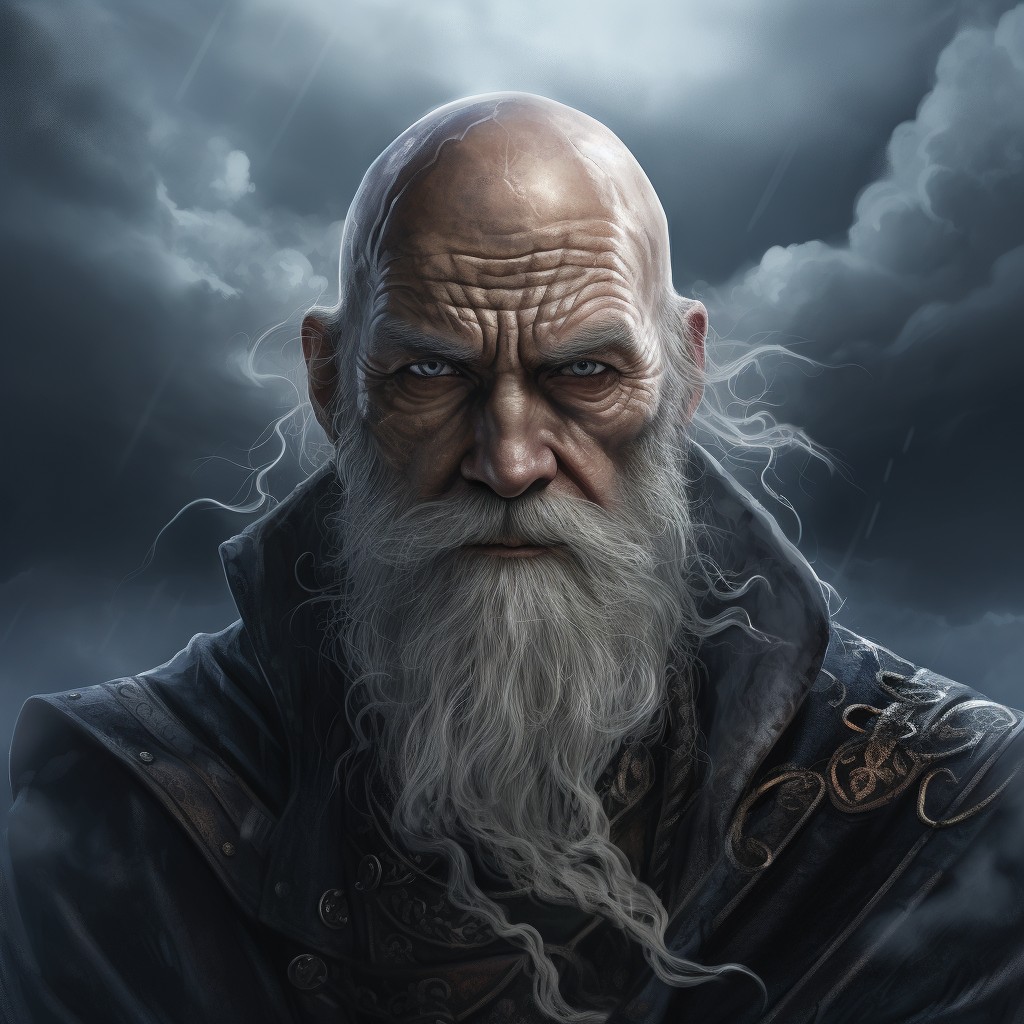
SUP was a lot more powerful than AAP and its ready availabilty undermined the authority of the Council and the ability of the Final Examiners to terminate rogue mages. Matters came to a head when Zemdath Romuth aka Zemdath the Terrible, dissolved the Council Examination Board in a notorious atrocity on 1st Tivith, 3004 APC, which ended the rule of the Council and led to the more chaotic age that followed.
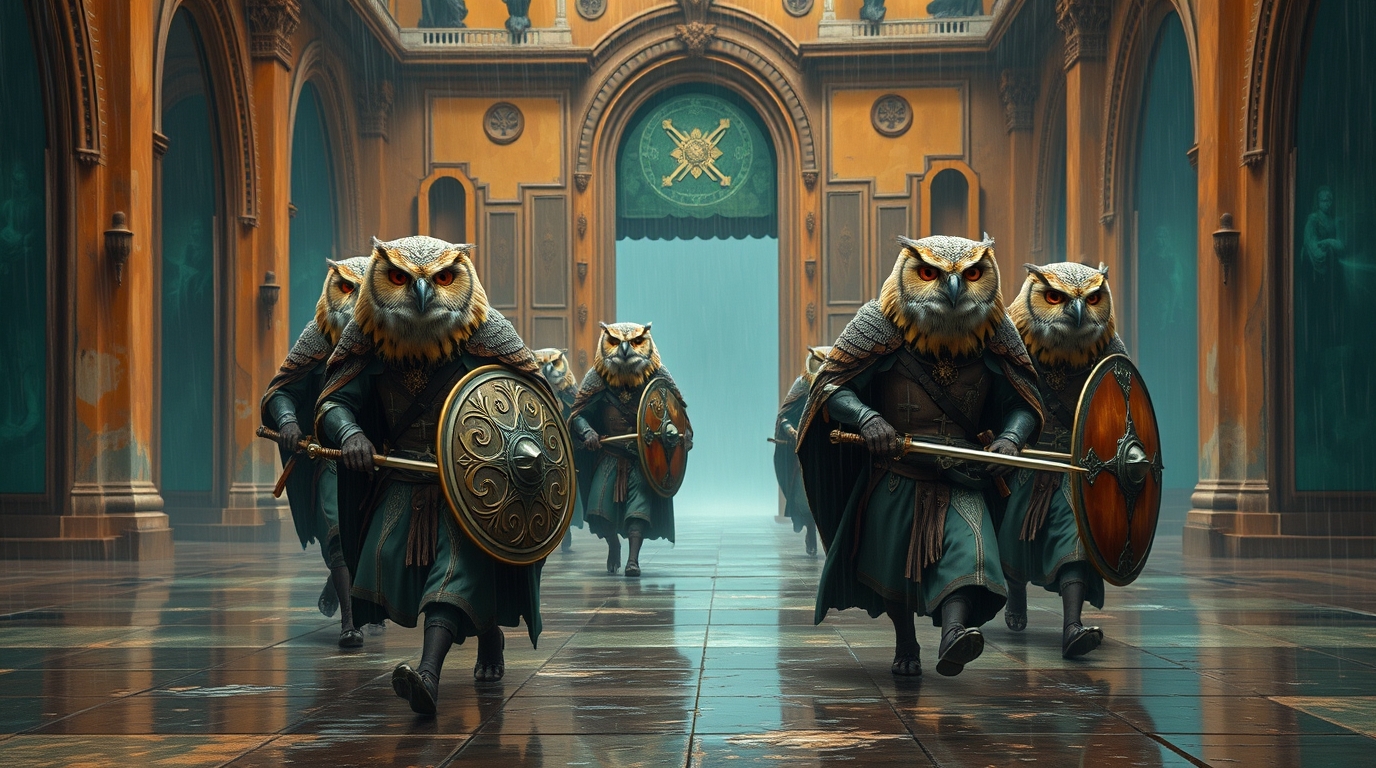
The Time of Terrors lasted from 3004 APC until the restoration of a more peaceful and widely acceptable form of world government when the Second Popular Ascendancy came to power in 3642 APC. Fuelled by Synaptic Unbinding Potion and unfettered by the restrictions of the Moderators' Council, malevolent and self aggrandising mages seized power throughout the world. Where formerly and by long tradition, arcane practitioners had generally worked in the service of other forms of government, now they felt free to act as rulers in their own right. Whilst it was not unprecidented for mages to operate in this way (for example under the Arcane Supremacy) such widespread and wanton rebellion, characterised in many cases by a seemingly complete abandonment of moral principles had never been seen before in Magicians' End. The opening of portals into the Discontinuum, a practice which had been proscribed under the Moderators' Council for fear of the dangers it might unleash, now became commonplace. Zemdath the Terrible travelled freely and frequently to the realm of Noctaliya where he recruited a body guard of Owlblood warriors, seemingly on no more than a whim because the coincidence of using "owls" in the city of Quarowl amused him.
At Katrapetch, Clarise Vabatan founded the mysterious Sisters of Vabatan, who exercised a hypnotic and frightening power beyond the reach of conventional authorities. Operating in secret at first, by the end of the age they had taken open power in a number of key locations throughout Magicians' End.
As mages everywhere carved out their own fiefdoms they became jealous of one another and suspicious. Conflict between rival magic users occurred on many different scales, ranging from assassination to open warfare between cities. The most notable example is perhaps, the Battle of the Rising Deep which took place in 3324 APC. Cruel and cunning mages did not scruple to terrorise their subjects and the subjects of their rival mages with Bontater the Fat, who ruled over Klaractazum between 3441 APC and 3502 APC being a particularly notorious example.
The interested reader should consult the linked article about this age for more detail than can be provided in this summary and a specific timeline of the period.
In 3627 APC, the Nexorin Pathogen emerged, a viral infection which selectively affected users of Synaptic Unbinding Potion and had the effect of curtailing arcane excess throughout the world. Only when the disease had become endemic would conditions allow for a more moderate and helpful use of magic to return and with the accession of the Second Popular Ascendancy, the Time of Terrors came to an end.
The Second Popular Ascendancy picked up the pieces after the collapse of the autocratic mages and achieved a more balanced government which attempted (and usually succeeded) to rule by democratic consent. Where city states had been independent during the Time of Terrors, and had often been used like pawns in the power games of their magical rulers, now they sought to heal their wounds by coming together under the umbrella of a quasi world government. But the second popular ascendancy was only a loose and flexible forum with a great deal of local power and control still devolving to individual cities and regions and it was never universal.
It was in this age that the Defenders of the Common Grace, technically founded towards the end of the Time of Terrors grew greatly in popularity to become the dominant religion throughout the world.
Consult the detailed article for more information about this period of history.
The Age of Shadows began with the fall of the Second Popular Ascendancy in 4289 APC and only ended in 5149 APC when the Limit Protectorate was established on Magicians' End, an interval of more than eight hundred and fifty years.
For most of this period, there were no political groupings much larger than a city state and in this sense it resembled the pattern of the Time of Terrors more than the relatively global reach of the Second Popular Ascendancy. In another sense too, it resembled the Time of Terrors in that it was an epoch of great unease and disquiet although the cause was different. Where the problem had once been overpowerful mages and their careless ambition, now the rise of the Defenders of the Common Grace caused magic users everywhere to behave with much greater humility and there was a popular mood against exercising arcane powers at all. In the Age of Shadows there was a different issue, the escape of certain sinister powers from the Dark Domains who managed to a limited extent, to bypass the Hylacon Gates which had protected Magicians' End from their malign designs for four and a half thousand years. These included the Skrurtulgripper, Dragonspiders, Noctipedes, Dark Fakes and perhaps most dangerous of all the Shadow Suckers.
The Ancient and Glorious were able to sponsor the initially secret cult of the Justice of the Shadows using Shadow Suckers as their agents. Eventually the cult would grow strong enough to claim the so called Shadowlands in the south west of Tinturbean as their own. They sought to break the Hylacon Gates a plan which was very close to succeeding until the Holy Battle of Oroth in 5146 APC. It was only three years later that Prince Rygarde arrived on Magicians' End and imposed the Limit Protectorate which brought an end to the age.
Consult the detailed article for a more comprehensive account of the Age of Shadows with a timeline.
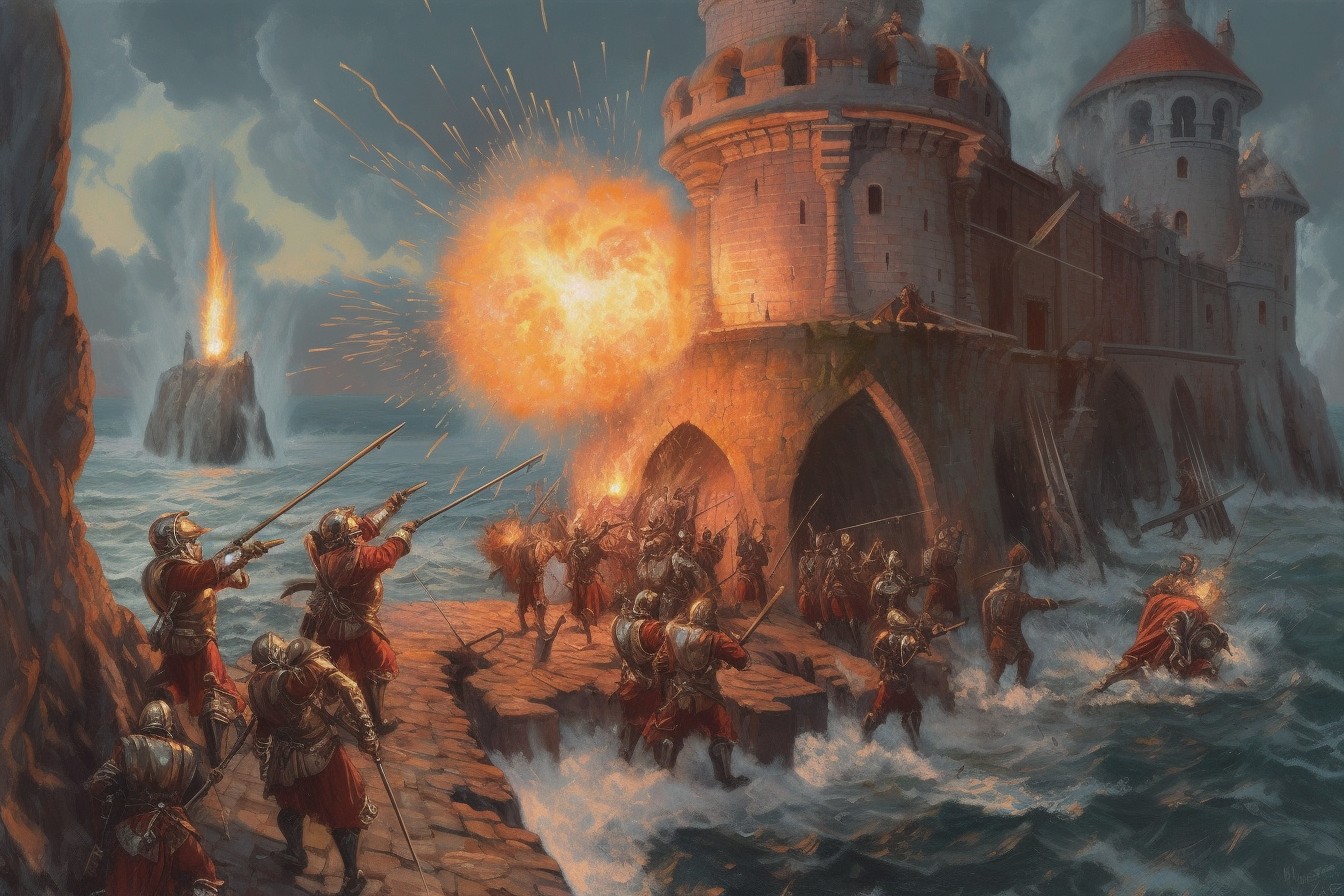
In 5149 APC, Prince Rygarde, one of the wilder Limit Princes succeeded in breaking through the barriers from the Limit Lands to mount a successful full scale invasion. This led to the establishment of a short lived world government known as the Limit Protectorate. Seeking to bring Magicians' End into the Limit Lands Prince Rygarde had a plan to transform it from an evolution to an archetype which involved the assembly of the Fate Stones. This was thwarted in 5184 APC when the Loyalist Thaumatic Army Council defeated him at the Fortress of Ocroven in a battle called the Eviction.
Consult the detailed article for a full account of the Limit Protectorate and a timeline.
Having defeated the Limit Protectorate and its spurious "protection", the Loyalist Thaumatic Army Council took charge of Magicians' End between 5184 APC and 5265 APC. Prince Rygarde, despite his deceptive words, had done absolutely nothing to counter the malignant and growing hostility of the Dark Domains. The disturbing incursions in the Age of Shadows, the Salmoth Survey of the Hylacon Gates and of course the Dark Scream after the Holy Battle of Oroth were all deeply concerning symptoms and it was clear that the looming threat had not been properly confronted.
The Hylacon Gates Repair Program which was initiated in 5186 APC and continued until 5218 APC was a serious recognition of the neglect of five thousand years. It was a complex, difficult and dangerous project. Many of the spells and wards locking the most important gates were poorly understood by modern mages. Hylacon's original designs were impossible to follow. Instead, the Thaumatic Army Council worked to create a second layer of defences, buttressing the original ones and taking pressure off the weakest links. Although less sophisticated and potent than the original gates, the new protective shields proved to be very valuable additions. Incursions from the Dark Domains receded to levels that had not been experienced since before the Second Popular Ascendancy and the program was considered a great success.
In its later years, internal strains within the Council started to tear it apart. Many people also felt that it was overusing the legitimate powers it had taken under emergency conditions to impose an unnecessarily authoritarian and centralised rule. It eventually collapsed in 5265 APC under pressure for reforms and a movement to restore local civic rights.
The Third Popular Ascendancy was first proclaimed in 5266 APC, on the back of the global wave of popular uprisings against the Loyalist Thaumatic Army Council. Acting first as a supranational council, it began more as an ideal than anything else, fostering democratic practices and seeking to mediate and resolve tensions between rival city states that had regained their independence. It gradually assumed more centralised powers as it strengthened down the years, eventually taking the effective form of a world government.
The Jewelled Queendoms marked a return to the more traditional, magic loving, aristocratic style of government which has so often ruled Magicians' End.
{when this one gets written up, we're done...}
To understand the realm dating system and calendar, please see the Timekeeping article and note particularly that a year on Magicians' End is only approximately two thirds of the length of that on Earth Zero. The image gallery, shown below the main text here, illustrates some selected people and events from the history of the world in chronological order. All these images are also found either on the timeline, in the body of this article, or in subsidiary linked articles.
Prehistory
In the first days, even before there was writing there were stories pased by word of mouth and there were pictures painted on the walls and both these sources tell us of the Old Gods who came before all else. Contact between wandering Fey and the indigenous peoples of this world is also thought to have started long before recorded history. At some early time, either before or after this contact, the Blood Iris Sisters settled in the Lake Oxylium region, although the reason why they chose to immigrate and the exact time when they did so are likely to remain unknown mysteries. Humans in the realm were organised into nomadic tribes and it is amongst these cultures that "The Way of Trinity Moon" developed, a contemplative religion based on astronomical observations of the planet's three moons. Their stone circles were perhaps precursors to other permanent settlements.
The Old Kingdoms
The foundation of the city of Pavol-Rag-Rag by the Painted People in the north west of Myruthea, is the first historical event which can be accurately dated. It took place 12238 years before the Planar Conformation, an event of such significance that all dates on Magicians' End are now defined in relation to it, either as occurring BPC (before the planar conformation) or APC (after the planar conformation). Over the next 2000 years or so, the Painted People would experiment with larger social structures capable of maintaining order over wide geographical regions and would experience the first wars on a greater scale than anything the world had known before. Their political organisations are referred to now as the Old Kingdoms, and although the details are patchy, we know far more about them from a variety of historical records than we do about the times that came before.
The New Kingdoms
In 9996 BPC, a famous peace treaty known as "The Settlement Of Zaranon" was agreed between three factions on the continent of Myruthea, resulting in the merger of two of them to form the Kingdom of Myruth, the first of the New Kingdoms. The modern continent takes its name from that ancient kingdom. The New Kingdoms were larger in scale and for the first time, expanded into the other continents of the world. In these times skilled adepts, attuned to the lines of magic, began to have an increasing influence on all the cultures of the world.
In the interests of brevity we will mention only two of the most significant political structures which rose to power over a time period that amounted to somewhat less than three thousand years, but the age of the New Kingdoms was characterised by the rise and fall of several competing kingdoms and empires with a slow trend towards their consolidation into larger groups.
The Trinity Moon Triple Enfolding was an alliance of three formerly independent powers which came together in 8613 BPC when they agreed on a way to unite their forces and leadership. Together they controlled southern Myruthea, northern Punjuki and all of Tinturbean, which made the Enfolding the most extensive power grouping the world had yet seen, and one which would not be equalled for over five thousand years until the Old Pale Empire surpassed it. Of the few smaller fragmented states that remained independent, one would split into two even smaller entities when the Kingdom of Snowborne seceded from the Great Northern Dukedom of Peld in 8394 BPC, although the split was short lived when Peld was absorbed back into the new kingdom. Snowborne was governed by a line of Mage Kings, their most important act being to sign what became known as the Thousand Year Alliance with the The Fey Court. After a long period of prosperity which didn't quite last for the full thousand years, the Fey brought the kingdom and much of the entire world to ruin, in a catastrophic event known as the Sundering in 7231 BPC. It is from this time forward that Trinity Moon became known as Magicians' End.
A Fractured World
It took a very long time after the Sundering before any kind of political organisation would arise which could manage to govern anything larger than a single city state. During the period known as the Long Thaw, almost all of Tinturbean and the northern third of Myruthea were covered in ice sheets whilst Zisleth was completely uninhabitable. The world population fell dramatically. Nevertheless there was growth in some new areas where communities came together for shelter and protection. It was during the Long Thaw that the city of Klaractazum was founded on the melting edge of the Myruthea ice sheet as it began to retreat. And in the dark early days of this era, too, the Way of the Harmonic Path was founded, a religion which would grow to become the most important faith on Magicians' End.
Milder conditions had already returned after the unnatural ice age when the so called Twelve Wise Ones, initiated a series of regular meetings between the major centres of population on Myruthea in 5342 BPC. Their informal deals and pacts kept the peace for almost six hundred years, as the world continued to warm and the city states grew stronger and began to form small countries. In 4778 BPC, however hostilities broke out for the first time, marking the start of an age known as the Myruthean Unification Wars which lasted until 4514 BPC. The Myruthean Unification Wars resulted in the formation of the Old Pale Empire, an entity which, over the course of the next few hundred years would go on to become a single globe spanning authority, even greater than the Trinity Moon Triple Enfolding had ever been in the age of the New Kingdoms.
The Old Pale Empire
It is impossible to overstate the importance of the Old Pale Empire in the history of Magicians' End. Not only did it have the most comprehensive geographical coverage of any political structure before or after but it lasted for more than four and a half thousand years, making it greater on both counts than the Trinity Moon Triple Enfolding which is the only other organisation that comes close to matching it. The age of the Pale Empire officially began when Hanrith I declared himself Emperor on 14th Authon, 4542 BPC, following the surrender of the city of Tylisfort. His capital was the central plains city of Zalgurim and even at this time, the Empire was the world's largest single political force. This did not, however, mean that unification wars were over. It merely meant that they had entered a new phase where the Empire dominated and slowly but surely began to conquer and subsume its rivals. For a more detailed account of the Empire and its long history, refer to the timeline and the article about the Old Pale Empire. In this high level summary we must move swiftly over this very long age to reach the fateful events of the Planar Conformation.
The Planar Conformation
Although the Planar Conformation was a vast event with dramatic consequences affecting a whole swath of universes within the Discontinuum, from the perspective of those realms regularly visited by the Stability Council, Magicians' End was the only significantly affected realm. The impact on Magicians' End, however, was startling and profound. Overnight, far in the Orothonian Ocean, a six sided depression appeared with the unnaturally straight lines of a near perfect hexagon. Around the perimeter, great mounds of stone rose as barriers, so that the waters were pushed back from the new land and all around it were long escarpments of sheer cliff walls. So the Dark Domains (which some call Novanoir) were created and changed the geography of the world forever (in so far as we can say that anything is forever). The effects on the rest of the world, though bad enough, could have been worse. The seas churned with huge tidal waves and there were great storms for more than two months afterwards, but there was no long term increase in sea level such as might have been expected from so great a displacement. Whatever forces had inserted Novanoir into Magicians' End seemed also to have removed a corresponding slice of matter from the seas and lithosphere (and who knows where that went?) so that geologically the world settled down remarkably quickly. However, there is no denying that the Dark Domains have an extremely unnatural geometry and only arcane forces allow them to keep their rigid shape to this day, the intense vertigo of their surrounding cliffs apparently little changed by the erosion that gravity and weathering might have been expected to produce by now under more normal conditions.
In any case, it was not so much the drastic alteration of the planet's geography that concerned its inhabitants, as the antisocial behaviour of their new neighbours, for the Dark Domains were inhabited and their denizens were hosts of ferocious and strange creatures, of a kind the world had only ever seen before in nightmares. Within seven years, the conflict between the supernatural aliens and the embattled natives would cause the Fall of the Old Pale Empire when a rain of meteors striking its capital, killed the Emperor and almost all of the civilian and military leaders. So began an age of despair, fear and terror, in which the population fell dramatically as the invaders preyed upon their weaknesses and most could see no prospect of an end to it.
The Breach Wars
After the destruction of Honirham, the disconnected territories of the former Empire found themselves subjected to a series of invasions from the Dark Domains. Tinturbean was the most frequently and seriously threatened, beginning with the sack of Brukin in 12 APC, but Myruthea and Punjuki were also attacked and within twenty years, significant territories had been lost on all three continents. Human military forces gained only a few precious victories to stem the tide of the wars but were unable to reverse the gains made by their supernatural foes.
But all was not lost. The prophet Hylacon had warned his followers of the dangers of these days and had given the Hylacon Peoples hope that they could fight back. His bold and ambitious plan called for the construction of an arcane barrier around the entire perimeter of the Dark Domains which would prevent its inhabitants from spreading into the rest of the world. Each link in the magical chain would be a gateway, drawing on the power of the deep Laws of Form to resist the hostile transformations threatened by the invaders. These were the so called Hylacon Gates, built in great secrecy and great danger between 37 and 68 APC and activated by the locking of the gates between 68 and 74 APC. During this final phase, Hylacon himself returned from intelligence gathering in distant realms of the Discontinuum and at the great Easter Gate was able to overcome the resistance of the enemies of humanity, only in a final supreme sacrifice called the Transcendence of Hylacon, which is still commemorated on Easter Day, the 15th of Mald, every year even to this day.
The deeds of these wars are explored in more depth in this detailed article about the Breach Wars.
Kingdoms of Flame and Water
The sealing of the borders of the Dark Domains was a hugely important and welcome victory for humanity, preventing further invasions onto the native continents of Magicians' End, but it did not immediately solve the problem of the occupying hostile forces which had already conquered most of Tinturbean, significant areas of Myruthea and even established outposts on Punjuki (although that had been the least affected region), all within the seventy four years since the Planar Conformation. It would take several hundred years to cleanse the human continents of the realm from the taint of their terrifying supernatural enemies, but isolated from their base on Novanoir and without the guiding intelligence of the Ancient and Glorious they were a much less formidable foe and the success of the long process of the human fightback was never seriously in doubt. Punjuki became the active organising centre for the restoration of human authority over the whole of Magicians' End and at this time it hosted the most advanced examples of returning civilisation.
In 75 APC, the remnants of the Hylacon Peoples created the Society of Arcane Adepts as a mutual aid organisation for magic users. This became a kind of non-proscriptive and loosely organised guild which provided skeletal ethical and practical guidance to mages and it would be the only global "authority" in arcane matters for the next two thousand years.
On the 14th of Doloph, 77 APC a group of mages called the Friends of the Trinity Moon (a sect within the Way of Trinity Moon) used a powerful geomancy trigger spell to make Mt. Coramandexia errupt in a violent volcanic explosion, just as a wing of dragons and wyverns was passing over it. This successfully killed two of the larger beasts and several of the smaller ones and weakened the survivors so that they became susceptible to follow up attacks from other mages. Ever after, Mt. Coramandexia has been more popularly known as Mt. Defiance, in honour of its role in kickstarting the process of evicting Dark Domain invaders. The society that organised itself around this hugely symbolic victory became the first of the Flame Kingdoms. Others would follow, taking their inspiration from the cleansing power of fire in burning their enemies and even if none of them would have quite such a spectacular success as this opening shot, pyromancy of various forms would play a big role in all their military operations.
By the middle of the fourth century APC, the creatures from the Dark Domain had been extirpated on Punjuki and Myruthea, and only a few small pockets remained on Tinturbean. There was good news too from the sea. The monsters of the deep who had been agitated by the Planar Conformation appeared to have settled into a more benign state where shipping could once again be conducted with more acceptable levels of risk. The Age of the Water Kingdoms, which succeeded the Flame Kingdoms, began when a bold sailor Walthar Bass, risked the first successful sea voyage between Myruthea and Punjuki. On the strength of this hugely popular and significant moment, he declared himself the first Fisher King of Nephatar on 11th Mald, 467 APC. Within twenty years, King Kleyth the Great had founded the Kingdom of Saltmoat, focusing on off shore island trading around Punjuki and this became the second of the Water Kingdoms. Further maritime powers would arise in the years that followed, taking inspiration from these two pioneers.
The Water Kingdoms were more advanced than the Flame Kingdoms, bringing with them a quickly realised goal of reuniting the continents once again under stable bonds of friendship and trade which they had not enjoyed since the fall of the Old Pale Empire.
The Three Rogue Mages and the Puzzle Lords
On 11th Kerax 1188 APC, in a secret family ceremony they called the Solemn Swearing, the mage Allakai, his son Serndin and grandson Mikerav dedicated themselves to the service of Magicians' End as its hereditary rulers. These were the so called "three rogue mages" and their venture was the first attempt at some kind of limited intercontinental government since the end of the Old Pale Empire. Eight years after the Solemn Swearing, Allakai's plans came to fruition and the three rogue mages declared the formation of the Arcane Supremacy, discussed in more detail in the article dedicated to this period of history.
The Arcane Supremacy did not last as long as its founder envisaged. Grandfather, father and son, each took their turn in ruling and whilst they had succeeded in establishing a more internationalist outlook, their leadership was uninspiring and surprisingly weak towards the end. When Mikerav died without an heir in 1390 APC, the Arcane Supremacy quietly faded away. The historian Hera Plerin, writing some two centuries after the end of their dynasty, coined the phrase, "three rogue mages" to describe Allakai, Serndin and Mikerav, and rather than the grandiose name of the Arcane Supremacy, when this period of history is discussed it is much more popularly called the age of the three rogue mages.
An organisation known as the Puzzle Lords Directorate rose to power in 1390 APC, following the end of the Arcane Supremacy. The Puzzle Lords are one of the more unusual groups to have ever ruled on Magicians' End. Like most of the governments after the Planar Conformation, we should be careful not to overstate their powers. The Puzzle Lords were the most important organisation of their age but it was a complex and fragmented picture and there were several lesser authorities who did not acknowledge them as their leaders.
The Puzzle Lords were an oligarchy of aristocrats who ran an intercontinental trading society with a military wing which operated from a number of notionally independent city states. In origin, they had been a gaming society with interests in mathematics, gambling, card and board games of various kinds and of course, puzzles of all types. They transfered these proclivities into a form of government that valued strategic thinking and rewarded tactical awareness on the board and in their business dealings. They managed their operations with a light touch and by balancing the competing interests of their rivals against one another, they maintained their position as the most powerful agency in the world for almost five hundred years.
It was one of the Puzzle Lords who created the Uncertain Watchman in 1809 APC, originally as one piece in a complex animated game, but a piece that long outlasted its makers.
The Age of the Long Famine
The Long Famine is the name which historians give to the years between 1830 APC and 1920 APC. The famine was caused by climatic changes which were themselves due to an increase in the flux of solar radiation. This might have been a delayed reaction to changes caused by the Planar Conformation, although astronomers are uncertain. Fortunately, whatever variability within the sun resulted in the brightening, it proved to be a temporary phenomenon, lasting for "only" about ninety years. Temperatures eventually returned to something like their old averages and the world has not suffered from similar episodes in the subsequent centuries. It has to be hoped that this example of solar instability was an isolated incident.
It was the extensive droughts affecting the main agricultural areas of Myruthea and Tinturbean which caused the crop failures that resulted in the Long Famine. Magical geomantic remedies were ineffective against the dominance of solar dynamics, although they did help with some small scale relief in limited areas.
From this age comes the traditional story of Hella and the Widow, a supernatural explanation for the way the city of Nephatar continued to feed its peoples, even at the worst of times. It was also the time of the foundation of the city of Arginbury which grew around its fabled spring, discovered in 1840 APC.
As the years passed, the authority of the Puzzle Lords Directorate weakened beyond repair in the face of this global natural calamity which they were generally powerless to resist. New powers would arise to replace them as conditions improved on the other side of the Long Famine.
The First Popular Ascendancy
Although it only lasted for a hundred and twenty years, the government known as the First Popular Ascendancy, which was the most significant authority on Magicians' End between 1920 APC and 2040 APC, is of interest to historians for the way in which it broke with many old traditions and established new patterns of thought that have left a continuing legacy even down into the modern world. These political ideas are environmental, somewhat mystical but atheist and anti-magical, manifesting a deep distrust of the arcane powers that are so often integral to the conservative power structures that have maintained order in the realm for most its history. The Popular Council, which governed from the beautiful and relatively recently settled town of Arginbury in central Myruthea, demonstrated fresh ideas for democratic constitutional government and their first leader, Claire Argin, is still a revered figure for those that aspire to these same traditions today.
Aristocratic Experiments In Government
Between 2040 APC and 2412 APC, the largest governments on Magicians' End reverted to a more aristocratic style with traditional attitudes to magic. The first of these was the New Pale Empire which was a publically professed attempt to revive the lost glories of the Old Pale Empire. It split from the First Popular Ascendancy in an ambitious power grab in 2040 APC, but lasted for only 35 years and was derided by its opponents as the "Paler Empire" or the "Empire of Glass" (this last name partly in acknowledgement of the trade in which the self proclaimed first emperor had gained his wealth and partly to mock its fragility). Nevertheless, the New Pale Empire did establish the conditions that allowed for the much longer age of the Four Aerial Courts which followed. New technologies enabled the competing cities of Sunrock, Highloft, Nephatar and Quarowl to extend their trading and military influence over wide areas on all three of the human populated continents through a variety of exotic flying vehicles, although at all times there were several important independent cities which remained outside the authority of these Aerial Courts. The Great Summit of the Fleets in 2125 APC was a defining moment, when mechanisms to resolve mercantile disputes were agreed and this helped to ensure peaceful relations between the four wealthy cities. In the popular imagination the time period as a whole is often thought of as sophisticated, glamorous, exotic, and risqué, perhaps largely by contrast with the sombre years that would follow it. The coronation of Queen Aketheema of Nephatar in 2231 APC was the high point of the public extravagance of the age, combining all these elements in a single ceremony.
In 2280 APC the barons of Quarowl established the famous Institute of Magical Analytics (aka the IMA) which was the first systematic centre for the development and teaching of magic since the end of the Old Pale Empire. Whilst they forsaw many possible benefits from this venture, undoubtedly one of the more important goals was to find an alternative to Arcane Amplification Perfume (aka AAP), over which the city of Highloft had a monopoly on which it had built its wealth. In 2291 APC the Free Society of Arcane Scholars split from the IMA, founding their own independent organisation at Greystow. The rivalry between these two institutions would be a feature of life on Magicians' End for a long time thereafter.
In the late 24th century APC, three separate magical scandals would characterise the changing public attitudes to magic and magic users and catalyse the formation of the Moderators' Council.
The Moderators' Council
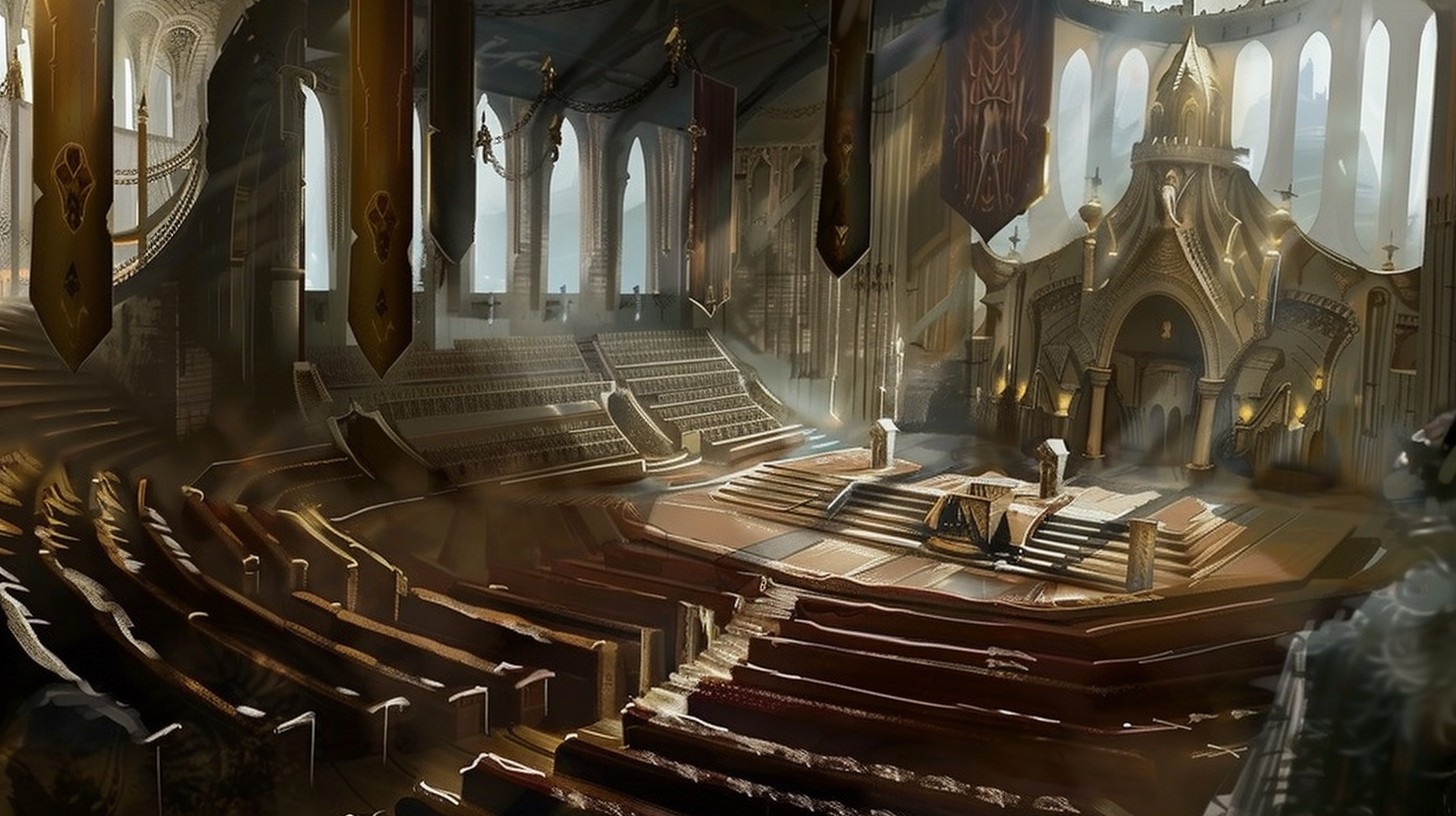
The age of the Moderators' Council is usually said to have begun with its first meeting in 2412 APC. This sharp boundary imposed by later historians might suggest a more dramatic transition of power than actually took place. In reality there was a more gradual political process which unfolded over many years. An understanding of the reasons behind the creation and slow ascent to power of this organisation can only be gained through a detailed study of the late history of the Four Aerial Courts. This is discussed much more fully within the specific article dedictated to the Moderators' Council. For the purposes of this high level overview, we need only note that the Council assumed global responsibility for the training of mages, the licencing of mages and more importantly perhaps, the sanctioning of mages who broke the norms of magical usage which they defined and policed. This included legalised assassination in the more extreme cases, carried out by a specialist force called the Final Examiners.
The world was generally (but not invariably) peaceful whilst the Moderators' Council kept firm control over magical practices for the best part of six hundred years and in this overview we do not need to concern ourselves with a detailed history. The interested reader who wishes to know more about this age, should read the article about the Council and consult a dedicated timeline for the period which is linked inside it.
In 2964 APC Synaptic Unbinding Potion (more popularly known as SUP) was discovered at the IMA and the stage was set for the events that would ultimately result in the downfall of the Moderators' Council.
SUP was a lot more powerful than AAP and its ready availabilty undermined the authority of the Council and the ability of the Final Examiners to terminate rogue mages. Matters came to a head when Zemdath Romuth aka Zemdath the Terrible, dissolved the Council Examination Board in a notorious atrocity on 1st Tivith, 3004 APC, which ended the rule of the Council and led to the more chaotic age that followed.
The Time of Terrors
The Time of Terrors lasted from 3004 APC until the restoration of a more peaceful and widely acceptable form of world government when the Second Popular Ascendancy came to power in 3642 APC. Fuelled by Synaptic Unbinding Potion and unfettered by the restrictions of the Moderators' Council, malevolent and self aggrandising mages seized power throughout the world. Where formerly and by long tradition, arcane practitioners had generally worked in the service of other forms of government, now they felt free to act as rulers in their own right. Whilst it was not unprecidented for mages to operate in this way (for example under the Arcane Supremacy) such widespread and wanton rebellion, characterised in many cases by a seemingly complete abandonment of moral principles had never been seen before in Magicians' End. The opening of portals into the Discontinuum, a practice which had been proscribed under the Moderators' Council for fear of the dangers it might unleash, now became commonplace. Zemdath the Terrible travelled freely and frequently to the realm of Noctaliya where he recruited a body guard of Owlblood warriors, seemingly on no more than a whim because the coincidence of using "owls" in the city of Quarowl amused him.
At Katrapetch, Clarise Vabatan founded the mysterious Sisters of Vabatan, who exercised a hypnotic and frightening power beyond the reach of conventional authorities. Operating in secret at first, by the end of the age they had taken open power in a number of key locations throughout Magicians' End.
As mages everywhere carved out their own fiefdoms they became jealous of one another and suspicious. Conflict between rival magic users occurred on many different scales, ranging from assassination to open warfare between cities. The most notable example is perhaps, the Battle of the Rising Deep which took place in 3324 APC. Cruel and cunning mages did not scruple to terrorise their subjects and the subjects of their rival mages with Bontater the Fat, who ruled over Klaractazum between 3441 APC and 3502 APC being a particularly notorious example.
The interested reader should consult the linked article about this age for more detail than can be provided in this summary and a specific timeline of the period.
In 3627 APC, the Nexorin Pathogen emerged, a viral infection which selectively affected users of Synaptic Unbinding Potion and had the effect of curtailing arcane excess throughout the world. Only when the disease had become endemic would conditions allow for a more moderate and helpful use of magic to return and with the accession of the Second Popular Ascendancy, the Time of Terrors came to an end.
The Second Popular Ascendancy
The Second Popular Ascendancy picked up the pieces after the collapse of the autocratic mages and achieved a more balanced government which attempted (and usually succeeded) to rule by democratic consent. Where city states had been independent during the Time of Terrors, and had often been used like pawns in the power games of their magical rulers, now they sought to heal their wounds by coming together under the umbrella of a quasi world government. But the second popular ascendancy was only a loose and flexible forum with a great deal of local power and control still devolving to individual cities and regions and it was never universal.
It was in this age that the Defenders of the Common Grace, technically founded towards the end of the Time of Terrors grew greatly in popularity to become the dominant religion throughout the world.
Consult the detailed article for more information about this period of history.
The Age of Shadows
The Age of Shadows began with the fall of the Second Popular Ascendancy in 4289 APC and only ended in 5149 APC when the Limit Protectorate was established on Magicians' End, an interval of more than eight hundred and fifty years.
For most of this period, there were no political groupings much larger than a city state and in this sense it resembled the pattern of the Time of Terrors more than the relatively global reach of the Second Popular Ascendancy. In another sense too, it resembled the Time of Terrors in that it was an epoch of great unease and disquiet although the cause was different. Where the problem had once been overpowerful mages and their careless ambition, now the rise of the Defenders of the Common Grace caused magic users everywhere to behave with much greater humility and there was a popular mood against exercising arcane powers at all. In the Age of Shadows there was a different issue, the escape of certain sinister powers from the Dark Domains who managed to a limited extent, to bypass the Hylacon Gates which had protected Magicians' End from their malign designs for four and a half thousand years. These included the Skrurtulgripper, Dragonspiders, Noctipedes, Dark Fakes and perhaps most dangerous of all the Shadow Suckers.
The Ancient and Glorious were able to sponsor the initially secret cult of the Justice of the Shadows using Shadow Suckers as their agents. Eventually the cult would grow strong enough to claim the so called Shadowlands in the south west of Tinturbean as their own. They sought to break the Hylacon Gates a plan which was very close to succeeding until the Holy Battle of Oroth in 5146 APC. It was only three years later that Prince Rygarde arrived on Magicians' End and imposed the Limit Protectorate which brought an end to the age.
Consult the detailed article for a more comprehensive account of the Age of Shadows with a timeline.
The Limit Protectorate
In 5149 APC, Prince Rygarde, one of the wilder Limit Princes succeeded in breaking through the barriers from the Limit Lands to mount a successful full scale invasion. This led to the establishment of a short lived world government known as the Limit Protectorate. Seeking to bring Magicians' End into the Limit Lands Prince Rygarde had a plan to transform it from an evolution to an archetype which involved the assembly of the Fate Stones. This was thwarted in 5184 APC when the Loyalist Thaumatic Army Council defeated him at the Fortress of Ocroven in a battle called the Eviction.
Consult the detailed article for a full account of the Limit Protectorate and a timeline.
The Loyalist Thaumatic Army Council
Having defeated the Limit Protectorate and its spurious "protection", the Loyalist Thaumatic Army Council took charge of Magicians' End between 5184 APC and 5265 APC. Prince Rygarde, despite his deceptive words, had done absolutely nothing to counter the malignant and growing hostility of the Dark Domains. The disturbing incursions in the Age of Shadows, the Salmoth Survey of the Hylacon Gates and of course the Dark Scream after the Holy Battle of Oroth were all deeply concerning symptoms and it was clear that the looming threat had not been properly confronted.
The Hylacon Gates Repair Program which was initiated in 5186 APC and continued until 5218 APC was a serious recognition of the neglect of five thousand years. It was a complex, difficult and dangerous project. Many of the spells and wards locking the most important gates were poorly understood by modern mages. Hylacon's original designs were impossible to follow. Instead, the Thaumatic Army Council worked to create a second layer of defences, buttressing the original ones and taking pressure off the weakest links. Although less sophisticated and potent than the original gates, the new protective shields proved to be very valuable additions. Incursions from the Dark Domains receded to levels that had not been experienced since before the Second Popular Ascendancy and the program was considered a great success.
In its later years, internal strains within the Council started to tear it apart. Many people also felt that it was overusing the legitimate powers it had taken under emergency conditions to impose an unnecessarily authoritarian and centralised rule. It eventually collapsed in 5265 APC under pressure for reforms and a movement to restore local civic rights.
The Third Popular Ascendency
The Third Popular Ascendancy was first proclaimed in 5266 APC, on the back of the global wave of popular uprisings against the Loyalist Thaumatic Army Council. Acting first as a supranational council, it began more as an ideal than anything else, fostering democratic practices and seeking to mediate and resolve tensions between rival city states that had regained their independence. It gradually assumed more centralised powers as it strengthened down the years, eventually taking the effective form of a world government.
The Jewelled Queendoms
The Jewelled Queendoms marked a return to the more traditional, magic loving, aristocratic style of government which has so often ruled Magicians' End.
The Mad Mage
The Sacred Coven
Empire, Assembly and Congress
{when this one gets written up, we're done...}
























































Looking forward to when you continue this!
Its Worldember!I am building out a spooky world, which you can read about here! (psst, its a link)
To learn about my main world click on this link! (if you want to ;) )