
Leybark Cloth
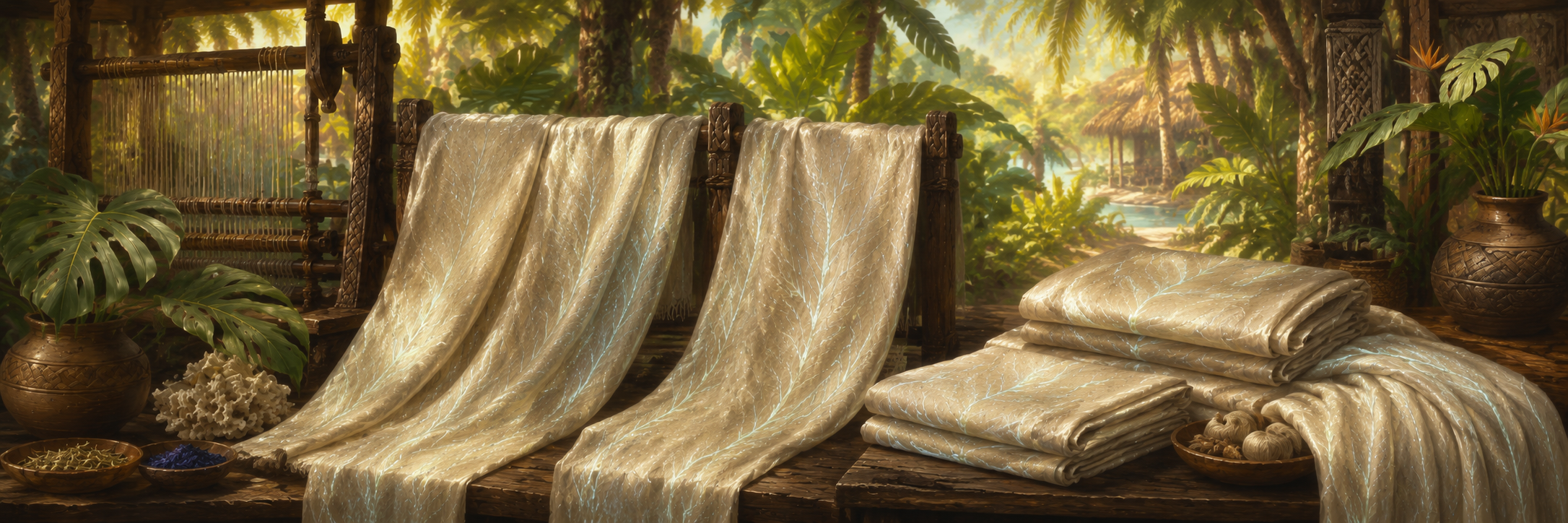
Leybark Cloth is a prized barkcloth made from the softened inner bark of tropical trees that grow near leylines, nexus points, and other places where arcane power gathers close to the surface of the world. The trees used to make it are not a single species. Most begin as ordinary broadleaf trees, but generations of growth in ley-touched soil alter the structure of their inner bark, leaving it pale-veined, unusually supple, and faintly responsive to magic.
The raw bark, commonly called leybark, is harvested without killing the tree whenever possible. Skilled cutters remove narrow sections of the inner bark, leaving enough living tissue for the tree to recover over time. The bark is then soaked, stretched, and beaten until the fibers loosen and bind into a flexible sheet of cloth. This process is slow, physically demanding, and highly specialized, since overworking the bark can destroy the natural veining that gives the fabric much of its value.
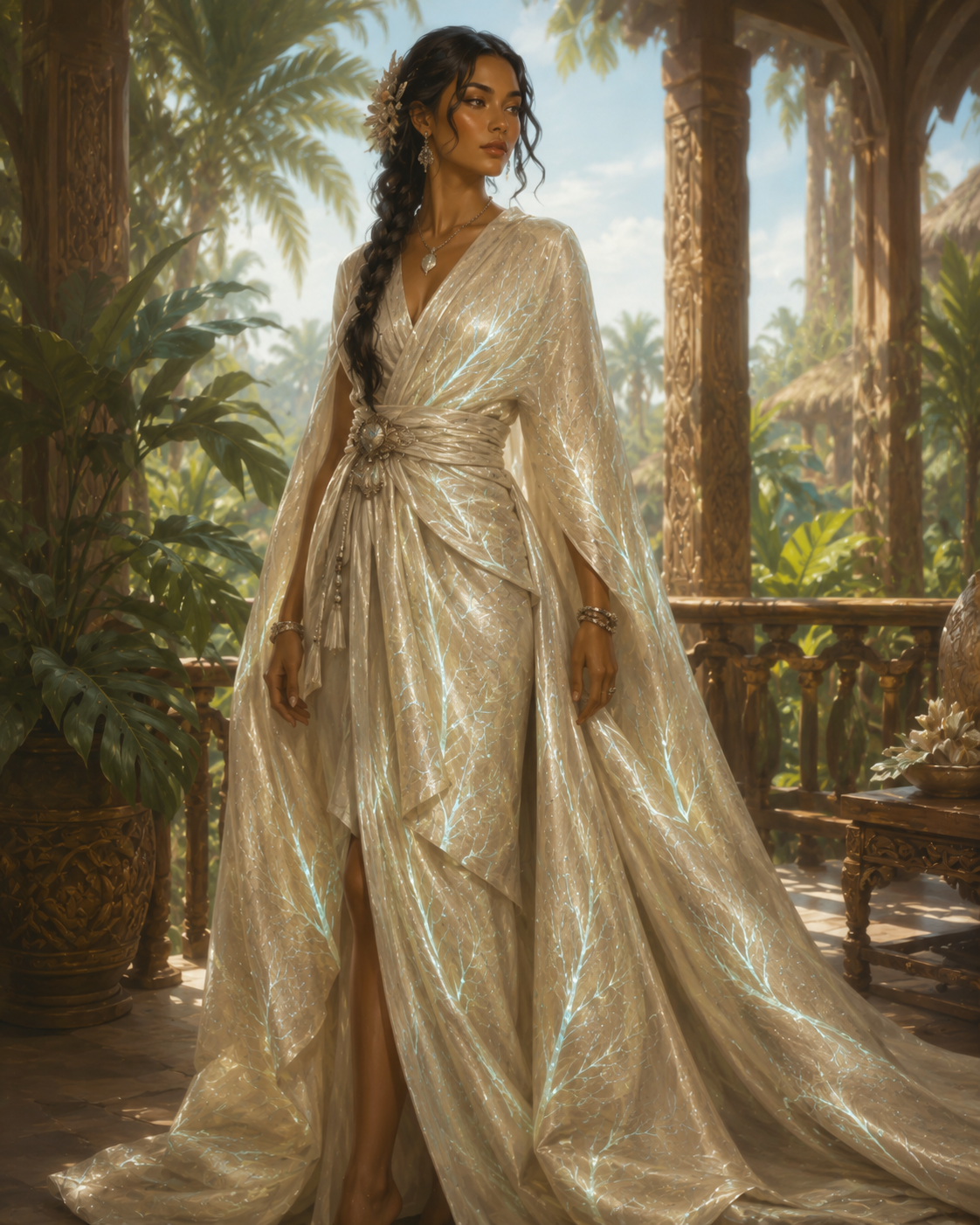
Although not all Leybark Cloth is enchanted, it is widely regarded as an excellent base for spellwork. Enchanters prize it for protective garments, oath sashes, ritual veils, and items meant to hold subtle magic over long periods of time. Even mundane pieces are treated with respect, both as luxury textiles and as evidence of the strange beauty that appears when living trees grow too long in the shadow of magic.
The raw bark, commonly called leybark, is harvested without killing the tree whenever possible. Skilled cutters remove narrow sections of the inner bark, leaving enough living tissue for the tree to recover over time. The bark is then soaked, stretched, and beaten until the fibers loosen and bind into a flexible sheet of cloth. This process is slow, physically demanding, and highly specialized, since overworking the bark can destroy the natural veining that gives the fabric much of its value.
Although not all Leybark Cloth is enchanted, it is widely regarded as an excellent base for spellwork. Enchanters prize it for protective garments, oath sashes, ritual veils, and items meant to hold subtle magic over long periods of time. Even mundane pieces are treated with respect, both as luxury textiles and as evidence of the strange beauty that appears when living trees grow too long in the shadow of magic.
Properties
Material Characteristics
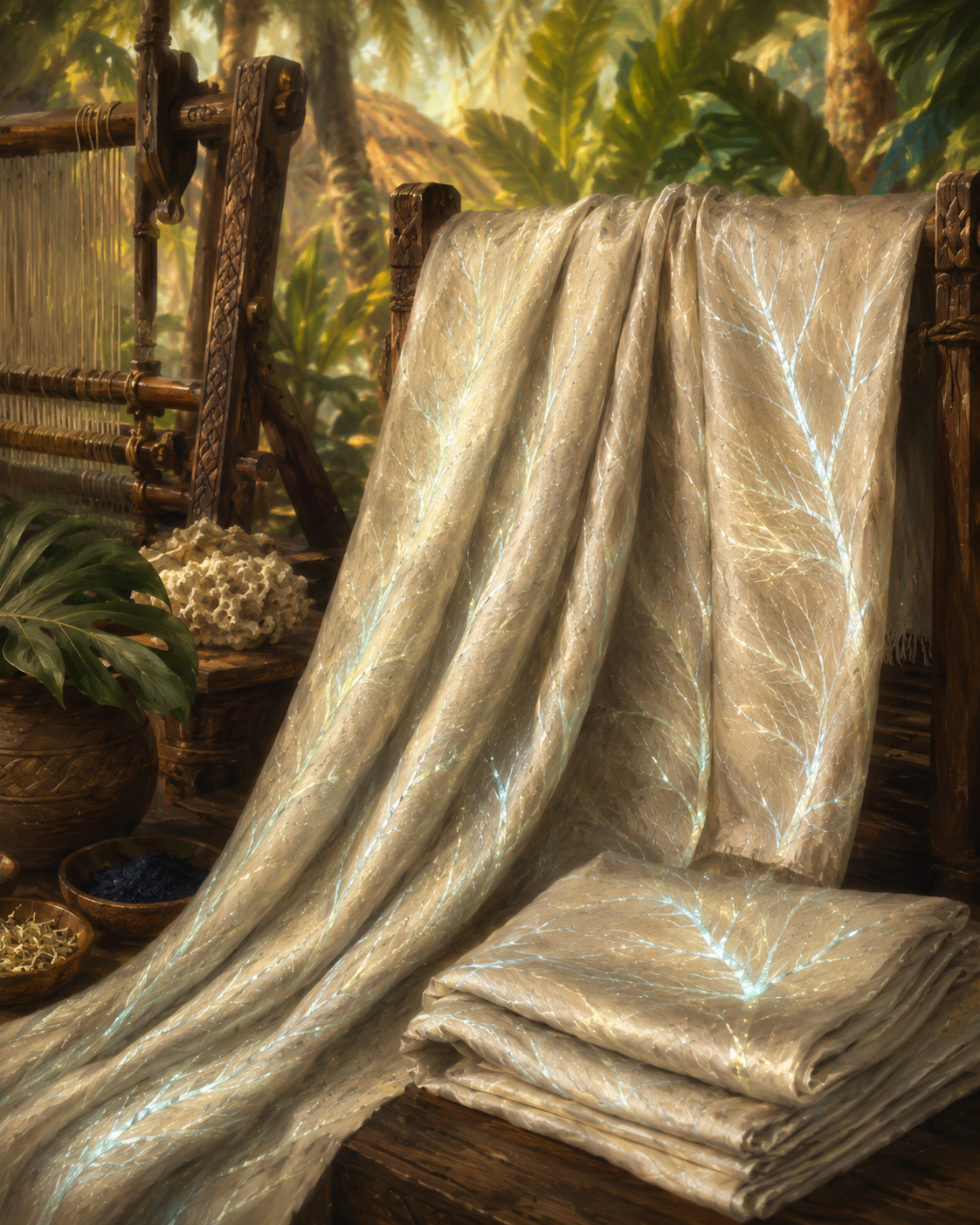
Leybark Cloth is light, flexible, and cool to the touch, with a surface that feels somewhere between fine linen, softened suede, and pressed leaves. It is smoother than common barkcloth, but not perfectly uniform. Even the finest pieces retain a faint organic grain, usually visible as branching lines that run through the material like leaf veins, river deltas, or pale roots beneath the skin of the cloth.
Undyed Leybark Cloth ranges from ivory and cream to muted grey-brown, depending on the tree, grove, and curing method. Its prized veining may appear silver-white, pale green, blue-grey, or soft gold. Under moonlight, spell-light, or strong lamplight, these veins often seem to catch the glow before the rest of the fabric does, giving the cloth a subtle otherworldly shimmer.
The cloth drapes well but has more structure than ordinary linen. Thin pieces move easily in the air and are often used for veils, wraps, and ceremonial overlays. Thicker pieces hold their shape better and may be used for formal panels, sashes, masks, and painted story cloths. When folded, genuine Leybark Cloth tends to crease softly rather than sharply, and old creases can usually be eased out with steam, oiling, or careful hand-stretching.
Leybark Cloth accepts dye unusually well. Colors sink deeply into the material without fully obscuring the natural veining, which remains visible beneath the surface. This quality makes it highly valued by dyers and embroiderers, especially those who work with layered symbolic designs. Embroidery placed along the natural grain of the cloth is considered especially beautiful, as though the thread is following paths the tree already remembered.
Undyed Leybark Cloth ranges from ivory and cream to muted grey-brown, depending on the tree, grove, and curing method. Its prized veining may appear silver-white, pale green, blue-grey, or soft gold. Under moonlight, spell-light, or strong lamplight, these veins often seem to catch the glow before the rest of the fabric does, giving the cloth a subtle otherworldly shimmer.
The cloth drapes well but has more structure than ordinary linen. Thin pieces move easily in the air and are often used for veils, wraps, and ceremonial overlays. Thicker pieces hold their shape better and may be used for formal panels, sashes, masks, and painted story cloths. When folded, genuine Leybark Cloth tends to crease softly rather than sharply, and old creases can usually be eased out with steam, oiling, or careful hand-stretching.
Leybark Cloth accepts dye unusually well. Colors sink deeply into the material without fully obscuring the natural veining, which remains visible beneath the surface. This quality makes it highly valued by dyers and embroiderers, especially those who work with layered symbolic designs. Embroidery placed along the natural grain of the cloth is considered especially beautiful, as though the thread is following paths the tree already remembered.
Life & Expiration
Properly cured Leybark Cloth can last for generations, but it is not indestructible. Its greatest enemies are mildew, stagnant damp, insects, careless folding, and prolonged exposure to harsh sun. In the humid regions where it is made, finished cloth is usually stored with drying herbs, fragrant woods, mineral powders, or preservation oils to keep rot and pests away.
A well-made ceremonial panel stored correctly may remain usable for a century or more. Garments worn regularly deteriorate faster, especially at seams, cuffs, hems, and areas where sweat and body oils gather. Thin veil-grade Leybark Cloth may begin to weaken after a few decades of use, while thicker panels and sashes can survive far longer if periodically cleaned and re-oiled.
As Leybark Cloth ages, the surface becomes softer and slightly duller. The natural veining may fade from bright silver or green into muted ivory, grey, or amber. This fading is not always considered a flaw. In Necai, older heirloom pieces are often prized for the way their veins mellow over time, especially when they have been worn at many births, marriages, funerals, or seasonal rites.
Spoiled Leybark Cloth develops a sour wet-wood odor and dark bruised patches along the grain. Once mildew enters the veining, the damage is difficult to reverse. If the cloth becomes brittle, flakes at the edges, or loses its cool smoothness, it is considered dead cloth: still meaningful as an heirloom or relic, but no longer suitable for formal wear, enchantment, or ritual use.
A well-made ceremonial panel stored correctly may remain usable for a century or more. Garments worn regularly deteriorate faster, especially at seams, cuffs, hems, and areas where sweat and body oils gather. Thin veil-grade Leybark Cloth may begin to weaken after a few decades of use, while thicker panels and sashes can survive far longer if periodically cleaned and re-oiled.
As Leybark Cloth ages, the surface becomes softer and slightly duller. The natural veining may fade from bright silver or green into muted ivory, grey, or amber. This fading is not always considered a flaw. In Necai, older heirloom pieces are often prized for the way their veins mellow over time, especially when they have been worn at many births, marriages, funerals, or seasonal rites.
Spoiled Leybark Cloth develops a sour wet-wood odor and dark bruised patches along the grain. Once mildew enters the veining, the damage is difficult to reverse. If the cloth becomes brittle, flakes at the edges, or loses its cool smoothness, it is considered dead cloth: still meaningful as an heirloom or relic, but no longer suitable for formal wear, enchantment, or ritual use.
History & Usage
Everyday use
In Necai, Leybark Cloth is most often used for ceremonial wraps, marriage garments, burial coverings, heirloom sashes, and formal household textiles. In Klokarr, it is commonly worked into festival clothing, painted story panels, dancer’s veils, masks, and ritual banners. Outside these regions, true Leybark Cloth is rare and expensive, often imitated with painted linen, common barkcloth, or magically treated cotton.
Type
Organic
Value
Expensive to very expensive, depending on quality, origin, and veining.
Rarity
Rare. Leybark trees can only be harvested from groves that have grown for generations near leylines, nexus points, or other arcane concentrations.
Odor
Fresh Leybark Cloth has a faint green-wood scent mixed with damp leaves, rain, and clean earth. After curing, the scent becomes very subtle, often described as cool, woody, and slightly floral.
Taste
Leybark Cloth is not eaten, but a loose fiber touched to the tongue has a mild woody bitterness with a faint mineral aftertaste, similar to rainwater held in stone.
Color
Undyed Leybark Cloth ranges from pale ivory and warm cream to soft grey-brown, depending on the tree and grove.
Density
Low to moderate. Leybark Cloth is lighter than wool and most leather, but denser and more structured than fine linen or gauze.
Related Locations


Very cool idea. I loved the detail and that the process to make the cloth is physical despite being used for magical purposes
I figured a lot of people for this prompt would create things akin to cotton, I wanted to do a barkcloth like those that were once common in Asia, Africa and the Pacific.
"Every story is a thread, and together we weave worlds."
The Origin of Tanaria