
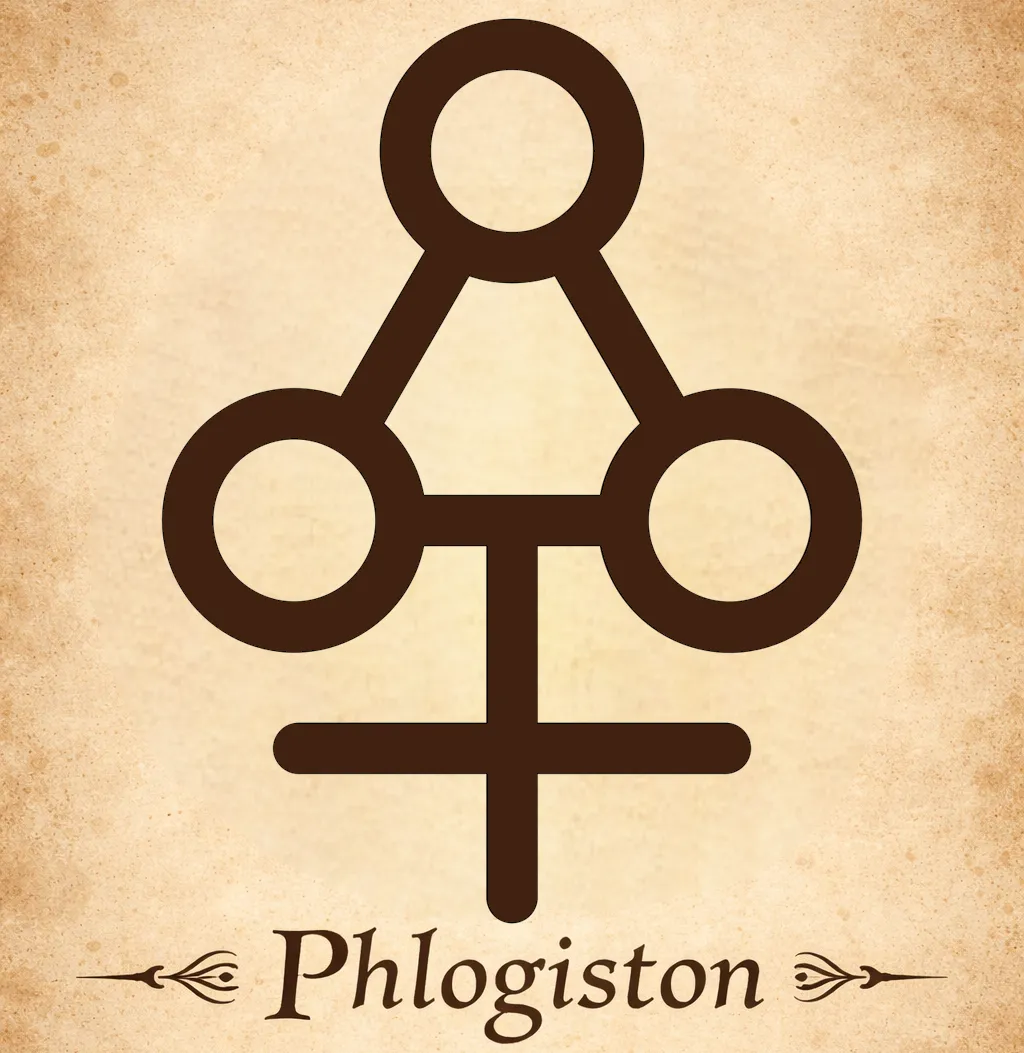
Phlogiston
"What a miracle of light has been wrought, making night into day by the power of knowledge and art."
Phlogiston is an alchemical substance, possibly related to or a variant of quintessence, found in all physical objects to one degree or another. It is not matter or energy in any traditional sense, but rather a quasi-physical substance that carries the inherent quality of flammability. In the natural world, higher amounts of phlogiston are present in more flammable materials, and lower concentrations in materials that do not burn easily.
Properties
Physical & Chemical Properties
Phlogiston carries the essence of inflammability. That is to say, substances permeated with phlogiston are more easily set ablaze than those without such concentrations. Under normal circumstances, phlogiston is not itself inflammable. When released into the environment, it rapidly binds with whatever matter is nearby at the time. Unless special precautions are taken, pure phlogiston vanishes almost immediately. It must be contained within specially shielded vessels and conduits that prevent it from being absorbed by the container itself.
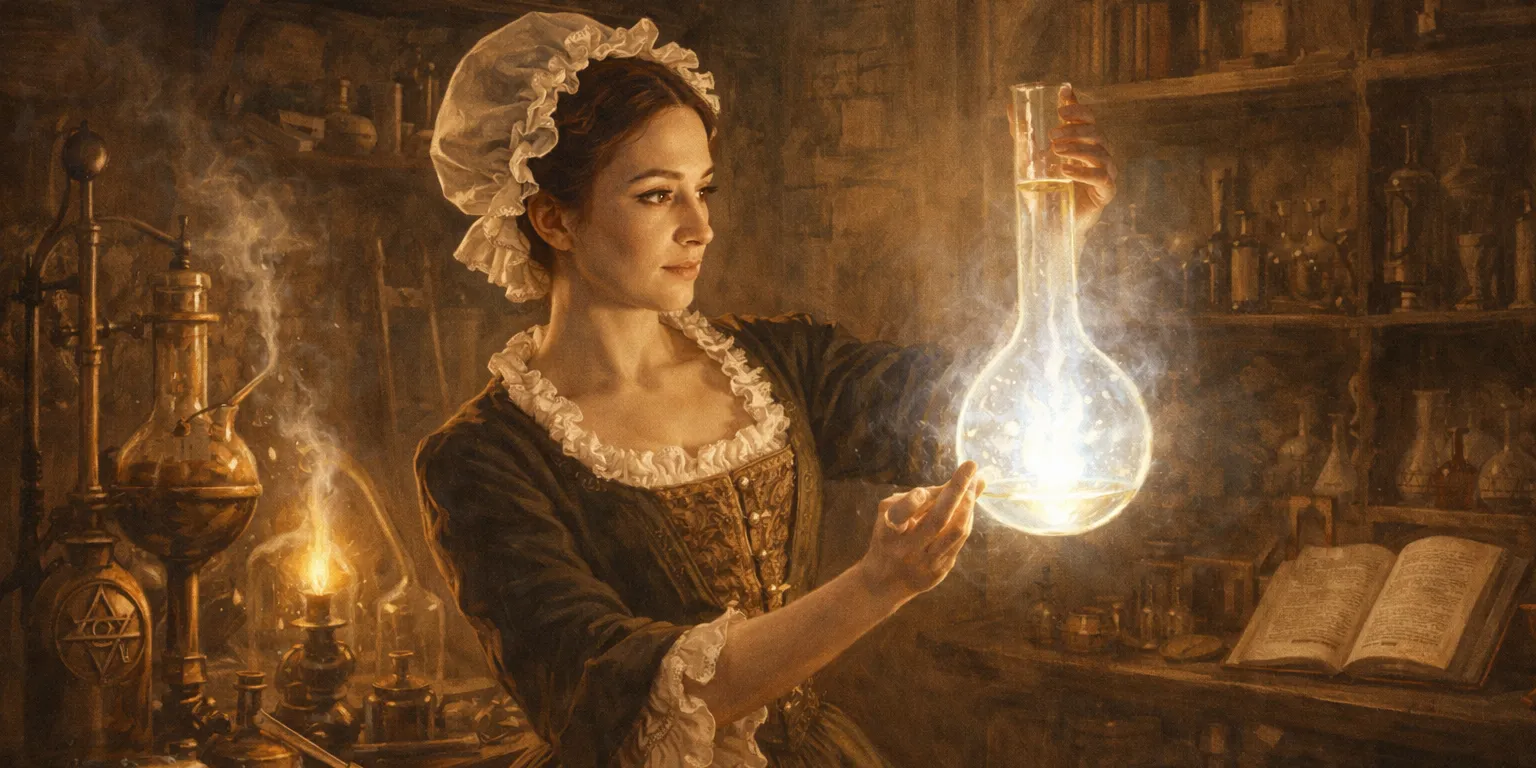
When exposed to untethered quintessence, such as active Magic, phlogiston can in fact ignite. This has been demonstrated to be the underlying mechanism in most fire-based thaumaturgy. When it burns, phlogiston releases a pure white light brighter than an ordinary flame. It leaves no residue of soot or ash and burns with exceptional efficiency. A small amount of phlogiston can power a lantern far longer than comparable volumes of mundane substances.
It is also less of a fire hazard than one might expect. A phlogiston flame draws phlogiston from nearby objects, rendering them more fire-resistant than they were previously. A piece of paper thrust into the light of an alchemical lantern will not burn. Rather, it will become less flammable than paper ordinarily is, for a time. This effect is temporary, as objects naturally reestablish a balance of phlogiston according to their internal qualities. However, the effect can last for days, weeks, or even months depending on local conditions.
The paper will grow quite warm, however, possibly reaching temperatures sufficient to ignite other nearby materials that are not in direct contact with the burning phlogiston and thus are not being actively dephlogisticated.
History & Usage
Discovery
Phlogiston was first theorized by Ernst Beaker and Joanna Steel, a pair of alchemists and thaumaturgical theorists who held fellowships at the University of Carbury. They published their theory of phlogiston in 1697, one of many such theories advanced in the aftermath of Harlowe's publication of the Principia Arcana a decade earlier.
While the exact details of Beaker and Steel's theories were later disproven, they were sufficiently accurate to enable the brilliant alchemist Marie-Lauren Pierrette to isolate phlogiston from coal gas in 1708. Once isolated, Pierrette established the specific properties of phlogiston, leading to its use in a number of modern innovations, most notably the alchemical gas lamps popular in The Empire of Albion.
Everyday use
Phlogiston is most often used in alchemical lanterns to produce a clean and brilliant light. The process of producing it is labor-intensive, and thus phlogiston is quite expensive. As a result, these lanterns are generally found only in the homes of the wealthy. However, the efficiency with which it burns means that over time, those who can afford the initial investment will spend less on lighting than those whose financial circumstances require them to rely on mundane sources such as candles or coal gas lanterns.
Industrial Use
Phlogiston is also used in a number of industrial applications. Manipulating the flammability of a material with phlogiston has implications for both mundane and thaumaturgical manufacturing. In alchemical processes, saturating a component with phlogiston, or depleting an ingredient's natural phlogiston via contact with an alchemical flame, can alter its properties and affect the final formula being produced.
In more conventional operations, manipulating the flammability of a substance can have profound consequences. It may allow metal or stone to burn at relatively low temperatures, or permit flammable materials such as leather or paper to withstand previously untenable levels of heat. In several industrial processes, this has enabled the production of unusual materials. For example, when leather is heated above the melting point of steel without burning in the presence of certain proprietary catalysts, it undergoes a transformation into a lightweight material that cannot be cut or penetrated once returned to normal temperatures. This material is commercially sold as Dragon-Hide. It is also used extensively in the shaping of materials. By allowing an object to absorb different quantities of phlogiston in specific locations, the object can be set ablaze in such a way that only the undesired portions are burned away.
The Incident in Tallowmere
Working with phlogiston can be dangerous, as demonstrated by the incident at Tolliver's Phlogiston Manufactory, a gasworks formerly located in the Tallowmere district of Lundeinjon. On October 17, 1829, the facility, which was at that time the largest phlogiston manufacturer in the world, exploded. The exact death toll is unknown but is estimated to have been at least fifteen hundred people, killed either in the initial blast or in the resulting fire. When the flames were finally extinguished, nearly fourteen acres had been laid waste. Today, a circular region of Tallowmere nine hundred feet across remains uninhabitable due to the extreme phlogiston saturation of everything within it.
The investigation concluded that a leak in the facility's phlogiston storage vessels, unwisely stored adjacent to their coal reserves, allowed the coal used in production to become supersaturated with loose phlogiston. As the stored coal absorbed increasing quantities of the substance, it became progressively more flammable, to the point that it could be ignited by nearly any source of heat. The precise trigger is unknown. However, once the phlogisticated coal ignited, it initiated a chain reaction that destroyed the storage vessels and dispersed vast quantities of phlogiston across the entire site. Everything burned, from wood and paper to stone, soil, metal, and flesh.
Only the extreme rapidity of the blaze spared the rest of the city. The Manufactory was consumed so quickly that it exhausted its available fuel within seconds. Even so, the residents of Tallowmere nearly failed to extinguish the surrounding fires, and the scars remain visible in the neighborhood to this day.
The site of Tolliver's Phlogiston Manufactory remains unusable. The explosion forced phlogiston deep into the ground, saturating the soil to a depth of at least ten feet before it could combust. While most of it eventually burned away, enough remains to render the ground itself flammable if exposed to sufficient heat, even something as small as a match. The site is also highly reactive to quintessence. Any unshielded magic, whether spells, formulae, or talismans, can trigger an alchemical fire. Such ignition draws phlogiston out of the immediate surroundings but also raises temperatures far beyond those required to ignite more conventional materials at the perimeter.
It is estimated that several years will pass before the remaining phlogiston dissipates sufficiently to make the site safe for construction. Although some have proposed deliberately burning off the remainder to accelerate the process, the plan has not been attempted due to the considerable danger it would pose to the rest of the district.


Comments