Generator - Faction


GM-Info!
Work in progress!
Slightly NSFW!
FEATURED
Comments / improvement ideas welcome.
Generators: Background | Creatures | Factions | Murder Mystery | Rumours
Generators: Background | Creatures | Factions | Murder Mystery | Rumours
Most random faction systems fail because they treat all elements as independent rolls. You end up with a tiny, secretive, pacifist organisation that controls military supply lines through open political lobbying - each element defensible on its own, the combination complete nonsense. The fix is cascade generation: roll the six pillars in order, and each result narrows the following choices to logical ones. Contradictions are treated as deliberate tensions: a tension makes you ask how it ended up like that. Once the six pillars are established and validated, depth rolls and system-specific tables add more texture to make a faction feel lived-in.
Note: At the end of the article you can find a stat block template for Cypher System, D&D 5e, and WFRP4e.
Note: At the end of the article you can find a stat block template for Cypher System, D&D 5e, and WFRP4e.
Pillar 1: Type
What kind of organisation is this? Roll 1d12.| d12 | Type | Notes |
|---|---|---|
| 1 | Criminal syndicate | Operates outside the law by design; survival depends on staying invisible or untouchable. |
| 2 | Mercenary company | Violence and capability are the product; loyalty is contractual, not ideological. |
| 3 | Religious order | Doctrine binds members; authority derives from faith, office, or divine mandate. |
| 4 | Trade guild | Economic control is the lever; membership confers privilege and obligation equally. |
| 5 | Noble house or dynastic lineage | Blood, name, and inheritance are the currency; internal politics are personal. |
| 6 | Revolutionary cell | The existing order is the enemy; urgency and secrecy create internal pressure. |
| 7 | Scholarly or arcane society | Knowledge is the core resource; access and gatekeeping define power within. |
| 8 | Military regiment or veteran brotherhood | Shared service or combat history is the bond; hierarchy is earned, not assigned. |
| 9 | Cult or mystery religion | Initiatory structure conceals inner teachings; outsiders see only the surface layer. |
| 10 | Intelligence network | Information is the product; identities and compartmentalisation are survival tools. |
| 11 | Mutual aid society or underclass collective | Members serve a community the wider world ignores; loyalty is local and fierce. |
| 12 | Ancient or secret brotherhood | Long history, long memory; traditions may have outlasted their original purpose. |
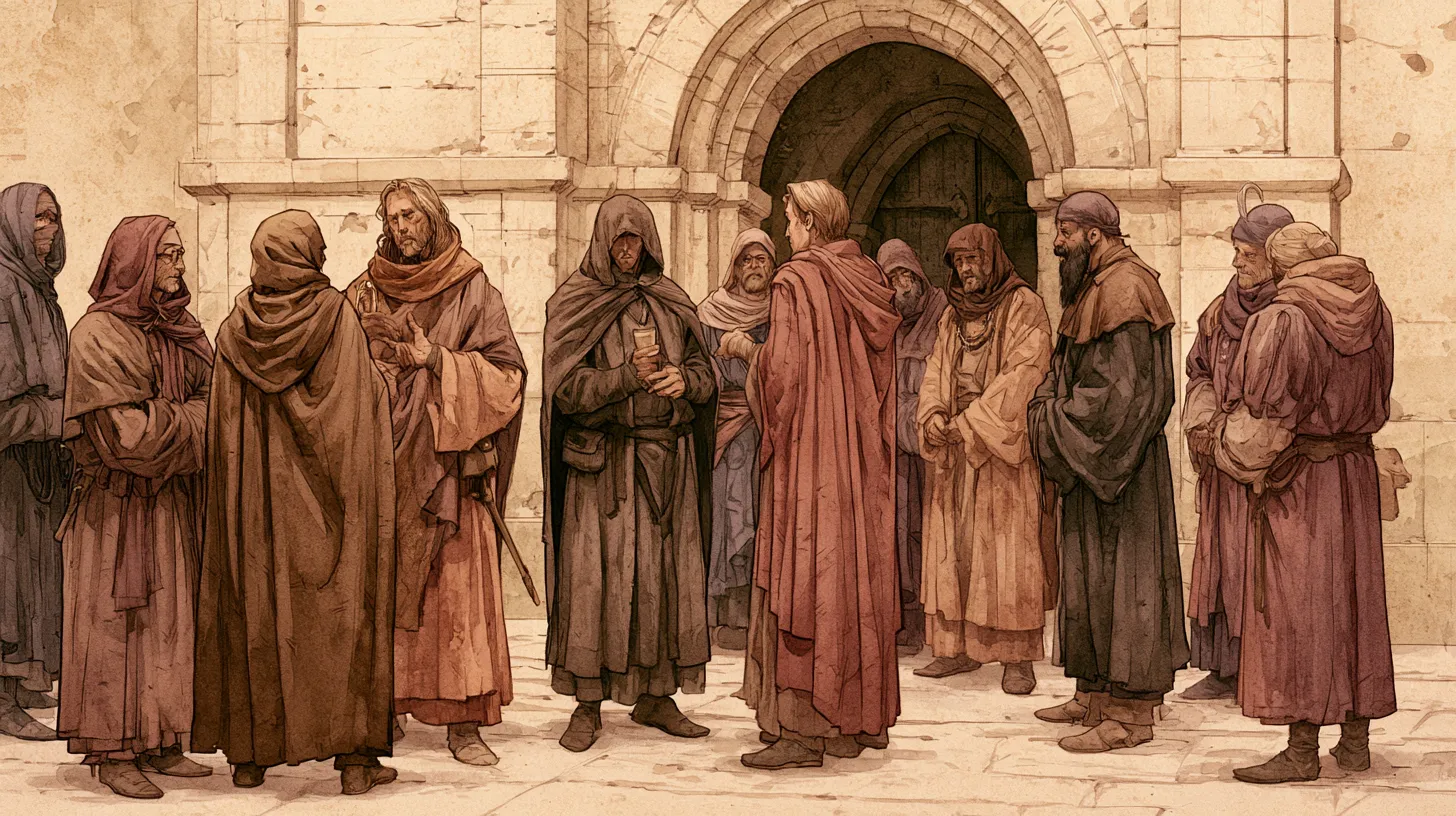
Factions 1 by Tillerz using MJ
Pillar 2: Drive
Why does this faction exist? What hunger holds it together even when individual goals fail? Roll 1d10.| d10 | Drive | What it looks like in practice |
|---|---|---|
| 1 | Accumulate wealth | Every decision is weighed against profit. Alliances last exactly as long as they pay. |
| 2 | Protect a people, place, or secret | The protected thing defines identity. Threats to it trigger extreme responses. |
| 3 | Seize or hold political power | Access, leverage, and influence are tracked obsessively. Weakness invites replacement. |
| 4 | Pursue forbidden or lost knowledge | Acquisition comes before ethics. Members rationalise the cost of what they seek. |
| 5 | Enforce a moral or religious doctrine | The faction believes it is right. Dissent is treated as error, corruption, or betrayal. |
| 6 | Survive under persecution | Paranoia is reasonable; trust is earned slowly. Every resource is rationed against the next crisis. |
| 7 | Exact revenge or achieve justice | A wound drives everything. Members disagree on when enough is enough. |
| 8 | Expand territory or influence | More is always better. Consolidation feels like stagnation. |
| 9 | Undermine or destroy a rival | The rival defines the faction as much as the faction defines itself. |
| 10 | Preserve an old order against change | The past is better than the present. New things are threats until proven otherwise. |
Cascade Check: Type + Drive
After rolling Drive, compare it to Type. Some pairings produce a tension - note it and keep it. Some produce a contradiction - reroll Drive.Tensions to keep:
- Religious Order + Accumulate Wealth: doctrine conceals appetite. Hypocrisy is the story.
- Mutual Aid Society + Exact Revenge: this is a resistance movement with a specific wound.
- Trade Guild + Enforce Doctrine: the guild has annexed a moral framework, or the doctrine has gone mercantile.
- Mercenary Company + Protect a People: these soldiers once served coin; now something changed.
- Intelligence Network + Expand Territory openly: a network that waves a flag is no longer a network.
- Revolutionary Cell + Preserve an Old Order: these pull against each other at the structural level. Only keep if the "revolution" is explicitly reactionary (which is valid, but make that choice deliberately rather than accidentally).

Factions 2 by Tillerz using MJ
Pillar 3: Scale
How much reach and resource does the faction have right now? Roll 1d4, then apply the table.| d4 | Scale | Membership | Reach |
|---|---|---|---|
| 1 | Cell | A handful of individuals | Local only. One neighbourhood, one village, one building. |
| 2 | Lodge | Dozens of members | One city or region. Known in the area; invisible elsewhere. |
| 3 | Chapter | Hundreds of members | Multiple regions or a significant city. Has formal presence in more than one place. |
| 4 | Order | Thousands of members | Empire-wide or cross-border. Institutional. Has rivals who are themselves institutional. |
| * | Empire | Even more | Continent-spanning, generational, functions as a shadow state. |
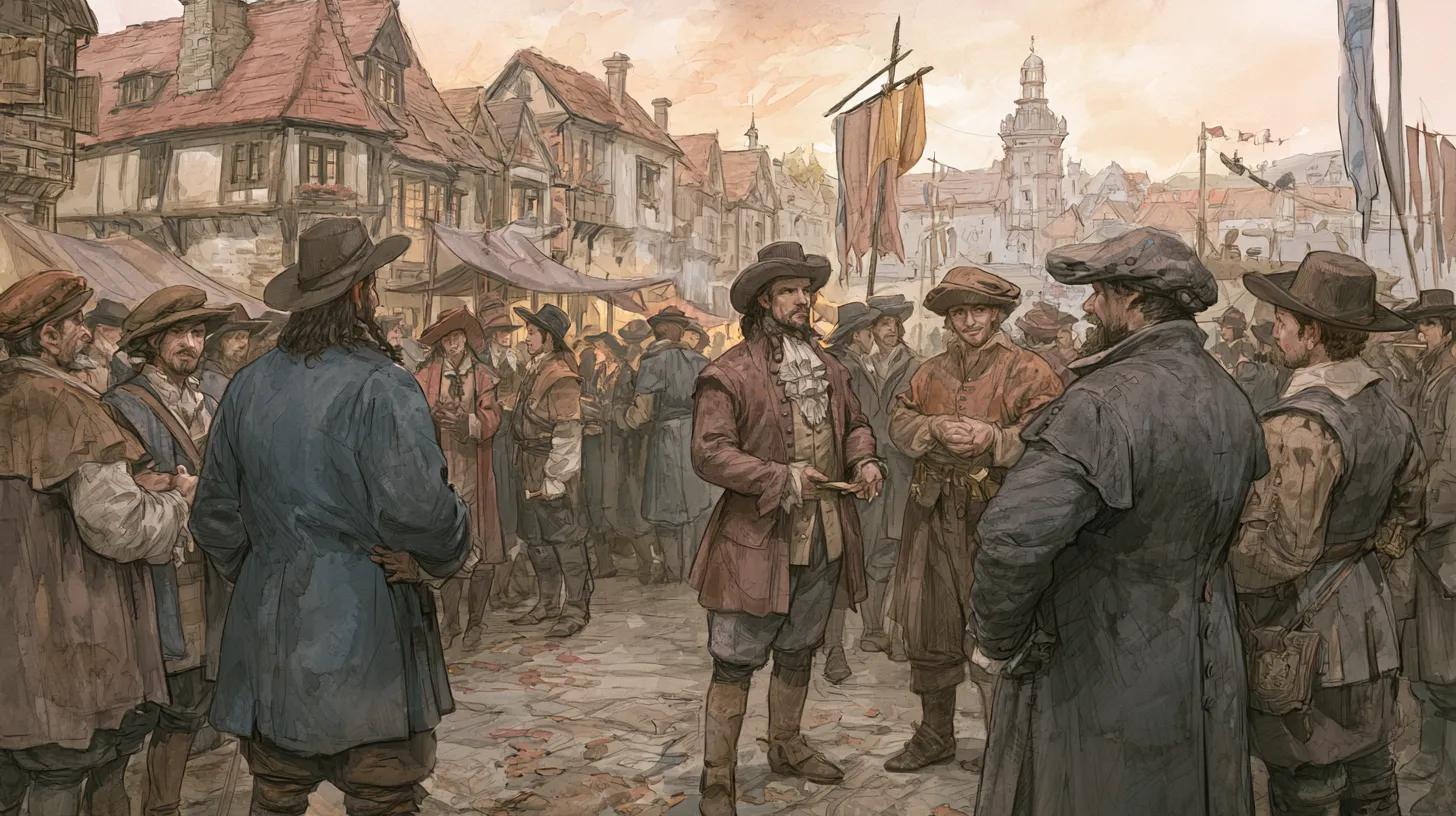
Factions 3 by Tillerz using MJ
Pillar 4: Structure
How is authority organised inside the faction? Roll 1d8. Check the minimum Scale requirement - if the result falls below the faction's Scale, roll again or step up one entry.| d8 | Structure | Minimum Scale | Description |
|---|---|---|---|
| 1 | Flat / consensus | Cell | Decisions are made collectively. Slow but resilient; one person cannot betray the whole. |
| 2 | Single autocrat | Cell | One leader holds all authority. Fast decisions; catastrophic succession problem. |
| 3 | Council of equals | Lodge | Small leadership group with rough parity. Effective until the group splits. |
| 4 | Patron / client web | Lodge | Loyalty flows to individuals, not titles. Power shifts when patrons fall. |
| 5 | Ranked hierarchy | Chapter | Formal tiers, titles, ceremonies. Clear advancement path; also clear bottlenecks. |
| 6 | Cell network | Chapter | Semi-independent branches with loose coordination. Hard to destroy; hard to coordinate. |
| 7 | Bureaucratic institution | Order | Roles, offices, written procedures. The organisation outlives any individual - for good and ill. |
| 8 | Hereditary lineage | Order | Leadership passes by blood or formal appointment. Stability until the line runs bad. |
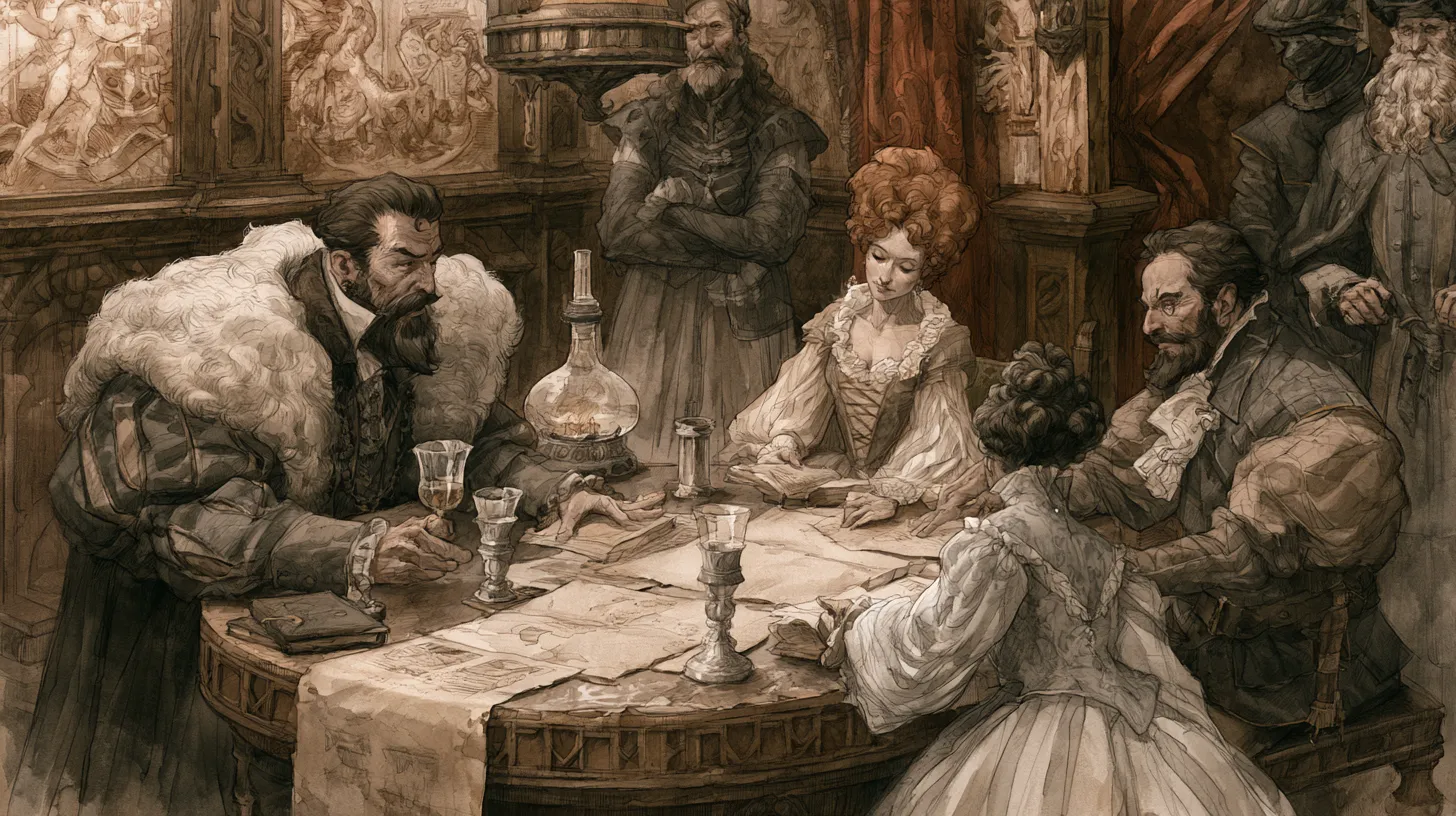
Factions 4 by Tillerz using MJ
Pillar 5: Method
How does the faction pursue its Drive? Roll 1d6 for the Category, then 1d2 for the Variant.| d6 d2 | Category | Variant 1 | Variant 2 |
|---|---|---|---|
| 1 | Coercion | Targeted / surgical: specific threats against specific people | Broad / terrorising: fear as a general tool against a population |
| 2 | Commerce | Legitimate markets: trade, investment, debt | Black markets: smuggling, fencing, unlicensed trade |
| 3 | Influence | Open lobbying and patronage: visible political pressure | Blackmail and compromise: hidden leverage over individuals |
| 4 | Secrecy | Espionage and intelligence: gathering and holding information | Erasure and disinformation: destroying or poisoning information |
| 5 | Force | Hired and contracted: outsourced violence | Standing cadre: the faction's own trained arm |
| 6 | Doctrine | Open evangelism: public conversion and culture-shaping | Closed initiatory system: revelation reserved for the trusted inner circle |
Cascade Check: Drive + Method
Check whether the method can plausibly advance the drive at the faction's current Scale. If yes, proceed. If the method cannot advance the drive, either reroll Method or record the mismatch as a faction crisis: the method is what the faction currently does, but it is straining against what the faction actually needs. That is a useful adventure hook.Examples of valid strain:
- Drive: Survive persecution. Method: Open evangelism. The faction is drawing attention it cannot afford. Leadership is divided.
- Drive: Accumulate wealth. Method: Enforce doctrine. The moral framework is cracking under financial pressure.
- Drive: Seize political power. Method: Closed initiatory system. The inner circle is invisible - which means they cannot be seen to be winning.
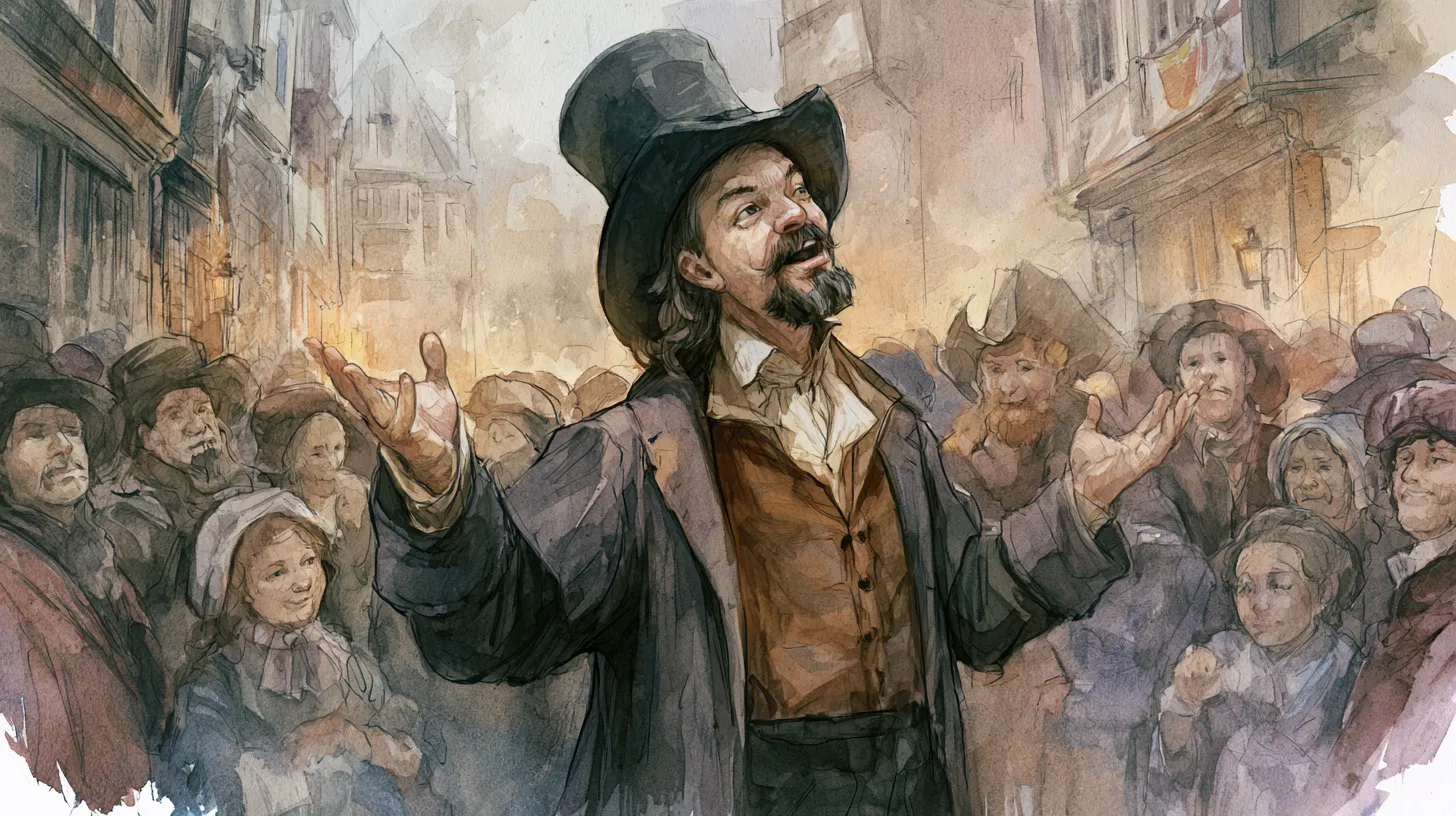
Factions 5
Pillar 6: Shadow
What does the faction hide, even from most of its own members? Roll 1d12. The Shadow should complicate the Drive, not simply restate it.| d12 | Shadow |
|---|---|
| 1 | The founding purpose was achieved long ago. The faction now exists only to perpetuate itself. |
| 2 | A rival faction has infiltrated the leadership. |
| 3 | The faction's key resource was stolen, bought, or borrowed. The original owner wants it back. |
| 4 | Leadership secretly pursues a personal agenda that diverges from the stated Drive. |
| 5 | The faction committed an atrocity it has successfully buried. Evidence still exists. |
| 6 | The faction is a front for a larger, more powerful entity that the rank and file are unaware of. |
| 7 | The faction's own doctrine or internal law contains a massive exploitable exception. Leadership uses it. |
| 8 | A schism is forming. Two factions are about to become three. |
| 9 | The faction is in terminal financial or political decline. Leadership is hiding the scope of it. |
| 10 | A founding member or early leader is still alive. They do not approve of what the faction has become. |
| 11 | The faction's stated enemy is actually a partner in a mutual arrangement. |
| 12 | The faction unknowingly serves the interests of an outside power. |
Validation Checklist
Run this before adding any depth rolls. Five questions. If any answer is no, reroll only the failing pillar.- Does the Drive explain why this faction was founded and why it still exists?
- Can the Structure actually operate at the faction's Scale?
- Can the Method plausibly advance the Drive, or is there a defined friction between them?
- Does the Shadow create dramatic potential without making the faction's continued existence implausible?
- Does the faction have at least one internal tension? A faction with none is not interesting to play. If the answer is no, apply the Shadow more aggressively or use result 8 (schism forming).
Depth Rolls
Roll these after the Validation Checklist passes. They add play-ready texture without changing the core. Make sure to check it fits your previous results. If not, reroll or just choose.Leadership Archetype
Roll 1d6.| d6 | Archetype | What it means in play |
|---|---|---|
| 1 | Idealist | Believes in the stated Drive completely. May be naive about the Shadow. |
| 2 | Pragmatist | The Drive is a tool as much as a belief. Ends justify means, usually. |
| 3 | Fanatic | The Drive is everything. Dissent is betrayal. Escalation is always on the table. |
| 4 | Opportunist | The Drive serves the leader, not the other way around. The Shadow may be their creation. |
| 5 | Figurehead | Real authority lies elsewhere. Who holds the leash is the question. |
| 6 | Unknown | No one outside the inner circle has met the leader. Their nature is itself a mystery. |
Key Asset
Roll 1d8.| d8 | Asset |
|---|---|
| 1 | Wealth: liquid capital, property, or reliable income streams |
| 2 | Information: files, blackmail material, or a network of eyes |
| 3 | Territory: physical space the faction controls and can defend |
| 4 | Military force: trained bodies willing to use violence |
| 5 | Political access: direct lines to power: officials, nobles, or clergy |
| 6 | A unique object or person: something irreplaceable that others want or fear |
| 7 | Legitimacy or legal standing: a charter, licence, or recognised authority |
| 8 | A secret: knowledge that would change everything if it became public |
Key Vulnerability
Roll 1d8.| d8 | Vulnerability |
|---|---|
| 1 | Financial dependence: the faction cannot operate without a single income source or patron |
| 2 | Single point of leadership: if one person falls, the faction loses cohesion |
| 3 | Internal fracture: two or more factions within the faction, each waiting for the right moment |
| 4 | Public exposure risk: one revelation would destroy reputation, legitimacy, or safety |
| 5 | A powerful enemy: someone with the resources and will to destroy the faction, currently biding their time |
| 6 | Legal jeopardy: past or present actions that authorities could prosecute if they chose to look |
| 7 | A secret liability: the Shadow is also a weapon pointed inward |
| 8 | An unsustainable promise: the faction has committed to something it cannot deliver |
Public Reputation
Roll 1d5.| d5 | Reputation | Effect on player interaction |
|---|---|---|
| 1 | Beloved | Approaching openly is easy. Hidden agendas are harder to see. |
| 2 | Ignored | The faction operates in the open without scrutiny. Dangerous to underestimate. |
| 3 | Unknown | The public has no knowledge of this faction. |
| 4 | Controversial | Strong allies and strong enemies. Associating with the faction costs something. |
| 5 | Feared | Cooperation is possible but always transactional. Defiance is costly. |
Relationship Seeds
Roll twice on this table. The first result is an ally; the second is a rival or enemy. Roll 1d8 for each.| d8 | Relationship type |
|---|---|
| 1 | Former partner now pulling apart over the Shadow |
| 2 | A shared enemy that forces cooperation despite mutual distrust |
| 3 | Ideological sibling: same Drive, different Method, regular friction |
| 4 | Patron relationship: one faction funds or protects the other, with strings attached |
| 5 | Territorial overlap: they operate in the same space and have worked out an uneasy arrangement |
| 6 | A personal connection between leaders that exists outside faction politics |
| 7 | One faction holds evidence of the other's Shadow |
| 8 | Historical grievance: something happened a generation ago that neither side has forgiven |
System-Specific Tables
WFRP4e 
Use these tables only when the faction operates in a setting where the following elements are mechanically or narratively active.
Chaos Exposure
Roll 1d6.| d6 | Result |
|---|---|
| 1-2 | None. The faction has no Chaos connection, knowingly or otherwise. |
| 3-4 | Peripheral awareness. The faction has encountered Chaos-adjacent actors but maintains distance. |
| 5 | Compromised cell. One branch or sub-group has been corrupted; leadership either does not know or is suppressing the knowledge. |
| 6 | Leadership is tainted. The inner circle knowingly pursues or serves Chaos interests. The faction's stated Drive is a cover or has been redirected. |
Witch Hunter Scrutiny
Roll 1d4.| d4 | Result |
|---|---|
| 1 | None. The faction is beneath notice or has too much protection to touch. |
| 2 | Watched. A Witch Hunter has opened a file. No action yet. |
| 3 | Actively investigated. Agents have been placed or informants turned. The faction may not know. |
| 4 | Persecution ongoing. Raids, arrests, and public accusations are either happening or imminent. |
Legal Standing
Roll 1d4.| d4 | Result |
|---|---|
| 1 | Fully sanctioned. Charter, licence, or Imperial recognition in hand. |
| 2 | Tolerated. No formal status, but authorities look the other way for now. |
| 3 | Operating illegally, but ignored. The faction breaks the law; no one with power currently cares. |
| 4 | Actively proscribed. The faction is illegal, and enforcement is active. Members risk arrest, confiscation, or execution. |
Cypher System 
Technology Access
Roll 1d4.| d4 | Result |
|---|---|
| 1 | None. The faction has no access to cyphers, artefacts, or extraordinary technology. |
| 2 | Occasional low-tier cyphers. Members may carry one or two at significant cost or risk. |
| 3 | Regular mid-tier access. The faction controls a supply line or cache. Leadership decides distribution. |
| 4 | Artefacts or permanent devices. The faction holds one or more artefacts that define its capabilities. Losing them is an existential threat. |
GM Intrusion Style
Roll 1d4. This is the type of pressure the GM reaches for first when intruding on a scene involving this faction.| d4 | Intrusion Style | Example |
|---|---|---|
| 1 | Internal betrayal | A contact turns, a message is intercepted, a member cracks under pressure |
| 2 | Outside pressure | A rival faction moves, authorities arrive, an old enemy resurfaces |
| 3 | Resource crisis | The safe house is gone, the funds are dry, the supply was cut |
| 4 | Exposed secret | The Shadow becomes known to exactly the wrong person at the wrong time |
D&D5e
Spellcasting Access
Roll 1d4.| d4 | Result |
|---|---|
| 1 | None. The faction has no spellcasters on staff. Magic it needs is hired or borrowed, which means it can be traced. |
| 2 | Minor. Cantrips and 1st-2nd level spells only. Useful for communication, minor utility, and basic divination. No strategic magic. |
| 3 | Significant. Up to 5th level. Scrying, teleportation, and raise dead are within reach. The faction can surveil, reposition, and recover from losses in ways a mundane group cannot. |
| 4 | Mastery. 7th level and above. The faction can reshape situations in ways that blur the line between tactics and plot. Reserve this result for factions at Order scale or above. |
Operative Profile
Roll 1d6. This represents the typical field agent the faction deploys first - not their most powerful members, but the bodies the party is most likely to encounter.| d6 | Profile | Typical stat block |
|---|---|---|
| 1 | Civilians with purpose | Commoner, Cultist |
| 2 | Trained but unexceptional | Guard, Spy |
| 3 | Professional operatives | Veteran, Assassin |
| 4 | Specialist cadre | Knight, Mage |
| 5 | Elite agents | Gladiator, War Priest |
| 6 | Mixed capability | Roll twice; the faction fields both profiles and assigns them by task |
Calibration Table
The calibration table maps the same faction across all three systems so a stat block written for one ruleset translates cleanly to the others:- WFRP4e uses Influence as a characteristic-style rating from 1 to 100.
- Cypher System uses Level on its standard 1-10 scale.
- D&D 5e uses Threat Rating, also 1-10, which sets the DC for all skill checks made against the faction.
The Faction Bonus in the 5e column is the faction's effective bonus to any roll it makes against the party: Insight checks to spot deception, Perception to notice surveillance, attacks if it comes to that. It scales with Threat Rating the same way proficiency scales with character level, so it stays calibrated against the party's own numbers throughout a campaign.
| Scale | WFRP4e Influence | Cypher Level | 5e Threat Rating | 5e Faction Bonus | Opposing DC | What this means |
|---|---|---|---|---|---|---|
| Minor local actor | 1-20 | 1-2 | 1-2 | +2 | 11-12 | One bad season ends them. |
| Established but fragile | 21-40 | 3-4 | 3-4 | +3 | 13-14 | Has real reach; has real enemies. |
| Significant faction | 41-60 | 5-6 | 5-6 | +4 | 15-16 | Confronting them directly is a serious undertaking. |
| Major power | 61-80 | 7-8 | 7-8 | +5 | 17-18 | Players need preparation, leverage, or allies to move against them. |
| Institutional force | 81-100 | 9-10 | 9-10 | +6 | 19-20 | Destroying them takes a full campaign arc. |
Quick Reference: Roll Sequence
- Roll Type ( 1d12 )
- Roll Drive ( 1d10 ), cascade check vs Type
- Roll Scale ( 1d4 )
- Roll Structure ( 1d8 ), check minimum Scale requirement
- Roll Method ( 1d6 , 1d2 ), cascade check vs Drive and Scale
- Roll Shadow ( 1d12 )
- Run Validation Checklist
- Add depth: Leadership ( 1d6 ), Asset ( 1d8 ), Vulnerability ( 1d8 ), Reputation ( 1d4 ), Relationships ( 1d8 , 1d8 )
- Add system-specific tables if applicable
Statblock Templates
FACTION NAME
Drive: One-clause statement of the faction's core hungerStructure: Structure type from Pillar 4
Method: Method category and variant
Influence: XX
Reach: Local / Regional / Imperial / International
Wealth: Destitute / Poor / Adequate / Comfortable / Prosperous / Wealthy
Standing Access: Underclass / Common / Middling / Noble / Imperial Court
Disposition: Hostile / Suspicious / Neutral / Cooperative / Allied
Favour Capacity: X per session
One-line GM summary.
Capabilities:
- Capability name (Characteristic): Effect.
- Capability name (Characteristic): Effect.
- Capability name (Characteristic): Effect.
- Weakness name: Effect.
- Weakness name: Effect.
Key Vulnerability: Mechanical weak point.
Relationship Notes: Sensitive relationship seeds.
FACTION NAME
Drive: One-clause statement (matching WFRP4e block)Structure: Structure type
Method: Method category and variant
Level: X
Resource Pool: XX
Intrusion Style: Internal betrayal / Outside pressure / Resource crisis / Exposed secret
One-line GM summary.
Eases: Task categories and step count.
Hinders: Task categories and step count.
Abilities:
- Ability name: Trigger, then outcome, then exception if any.
- Ability name: Trigger, then outcome, then exception if any.
- Ability name: Trigger, then outcome, then exception if any.
Shadow: Full Shadow text (matching WFRP4e block).
Key Vulnerability: Mechanical weak point.
FACTION NAME 5e
Drive: One-clause statement (matching WFRP4e block)Structure: Structure type
Method: Method category and variant
Threat Rating: X
Faction Bonus: +X
Resource Tier: Squalid / Poor / Modest / Comfortable / Wealthy / Aristocratic
Reach: Local / Regional / Imperial / International
Disposition: Hostile / Suspicious / Neutral / Cooperative / Allied
Favour Capacity: X per session
One-line GM summary.
Capabilities:
- Capability name (Skill, DC X): Effect.
- Capability name (Skill, DC X): Effect.
- Capability name (Skill, DC X): Effect.
- Weakness name: Effect.
- Weakness name: Effect.
Key Vulnerability: Mechanical weak point.
Examples
SAMPLE FACTION A: THE CLAIMANTS OF THE NINTHRolls: Type 6 (Revolutionary cell) / Drive 7 (Revenge) / Scale 2 (Lodge) / Structure 4 (Patron-client web) / Method 3-2 (Blackmail) / Shadow 4 (Personal agenda)
Depth: Leadership 4 (Opportunist) / Asset 2 (Information) / Vulnerability 5 (Powerful enemy) / Reputation 3 (Ignored) / Ally 5 (Territorial overlap) / Rival 7 (Holds evidence of Shadow)
The Claimants of the Ninth
Drive: Force acknowledgement of and restitution for a specific historical injusticeStructure: Patron/client web
Method: Influence - blackmail and compromise
Influence: 28
Reach: Local
Wealth: Adequate
Standing Access: Common / Middling
Disposition: Neutral
Favour Capacity: 2 per session
A tight-knit cell built around a shared grievance and the patron who gives it direction; most members believe they are building toward justice, unaware that their patron's real objective has nothing to do with theirs.
Capabilities:
- The Archive (Intelligence): The cell maintains a growing collection of compromising material on figures connected to the original injustice. A successful Intelligence test at difficulty 13 surfaces a relevant piece of leverage. The cell shares this willingly only if it advances their current objective.
- Invisible Operation (Perception): Nobody of consequence has noticed the cell yet. Attempts to investigate or identify its members start at +2 difficulty until the cell takes an action that draws attention. Once noticed, this capability is lost permanently.
- Patron's Network (Fellowship): The patron maintains personal connections across the Middling tier. Once per session the party may access one of these contacts through the patron, at the cost of a favour owed - to the patron personally, not the cell.
- Patron Dependency: The cell's cohesion runs through the patron personally. If the patron is removed, discredited, or exposed, roll a d6. On a 1–3 the cell dissolves within the week. On a 4–6 it fractures into two hostile splinters.
- The Powerful Enemy: The primary target knows someone is building a case against them. They do not know who yet. Once they identify the cell, they bring resources the cell cannot match in a direct confrontation.
Key Vulnerability: A powerful enemy - the primary target has begun asking questions. The cell's window of invisibility is closing.
Relationship Notes: A larger faction operating in the same district is aware of the cell but has not moved against them, and the cell is sitting on evidence of that faction's Shadow. Neither side has acted on this yet. It will not stay that way.
The Claimants of the Ninth
Drive: Force acknowledgement of and restitution for a specific historical injusticeStructure: Patron/client web
Method: Influence - blackmail and compromise
Level: 3
Resource Pool: 9
Intrusion Style: Internal betrayal
A tight-knit cell built around a shared grievance and the patron who gives it direction; most members believe they are building toward justice, unaware that their patron's real objective has nothing to do with theirs.
Eases: Gathering compromising information on local figures, moving through Common and Middling social spaces unnoticed - both eased by 2 steps.
Hinders: Persuading the cell to act against the patron's wishes, detecting the patron's private agenda - both hindered by 2 steps.
Abilities:
- The Archive: When the party needs leverage against a figure connected to the original injustice, the cell can produce one usable piece of compromising material. The cell requires something in return before handing it over, and the patron decides what that something is.
- Still Invisible: Until the cell takes a visible action, all attempts to investigate or locate it are hindered by 2 steps. The GM removes this ability permanently the first time the cell acts visibly.
- Fracture Point: Once per session the GM may reveal a moment where the patron's private agenda conflicts with the cell's stated drive. A player who succeeds on a difficulty 3 Intellect task recognises the inconsistency. What they do with it is their business.
Key Vulnerability: A powerful enemy - the primary target has begun asking questions. The cell's window of invisibility is closing.
The Claimants of the Ninth 5e
Drive: Force acknowledgement of and restitution for a specific historical injusticeStructure: Patron/client web
Method: Influence - blackmail and compromise
Threat Rating: 3
Faction Bonus: +3
Resource Tier: Modest
Reach: Local
Disposition: Neutral
Favour Capacity: 2 per session
A tight-knit cell built around a shared grievance and the patron who gives it direction; most members believe they are building toward justice, unaware that their patron's real objective has nothing to do with theirs.
Capabilities:
- The Archive (Investigation, DC 13): The cell maintains a collection of compromising material on figures connected to the original injustice. A successful check surfaces one usable piece of leverage. The cell shares it only when it advances their current objective, and the patron decides when that condition is met.
- Invisible Operation (Investigation / Perception, DC 16 to locate the cell): The cell has not yet drawn notice. All checks to identify, locate, or investigate it are made against DC 16 until the cell takes a visible action. This advantage is lost permanently once the cell is noticed.
- Patron's Network (Persuasion, DC 13): The patron's personal contacts open one door per session to a Middling-tier NPC. Access costs a favour owed to the patron directly. The party should note who holds that debt.
- Patron Dependency: If the patron is removed or exposed, the cell makes a DC 13 Wisdom saving throw as a group. On a failure it dissolves within the week. On a success it fractures into two splinters with opposing goals.
- The Powerful Enemy: The primary target has begun asking questions. Once they identify the cell, they bring resources far beyond what a Threat Rating 3 faction can match directly.
Key Vulnerability: A powerful enemy - the primary target has begun asking questions. The cell's window of invisibility is closing.
SAMPLE FACTION B: THE COVENANT OF HONEST MEASURES
Rolls: Type 4 (Trade guild) / Drive 5 (Enforce doctrine) / Scale 3 (Chapter) / Structure 5 (Ranked hierarchy) / Method 2-1 (Legitimate markets) / Shadow 1 (Purpose achieved) Depth: Leadership 2 (Pragmatist) / Asset 7 (Legal standing) / Vulnerability 3 (Internal fracture) / Reputation 1 (Beloved) / Ally 4 (Patron relationship) / Rival 3 (Ideological sibling)
The Covenant of Honest Measures
Drive: Enforce a commercial moral code that the leadership knows is historically obsoleteStructure: Ranked hierarchy
Method: Commerce - legitimate markets and economic exclusion
Influence: 52
Reach: Regional
Wealth: Prosperous
Standing Access: Common / Middling / Noble
Disposition: Cooperative
Favour Capacity: 2 per session
An Imperially chartered trading guild that enforces a strict commercial doctrine across its membership; beloved publicly as a guarantor of fair dealing, governed privately by pragmatists who use the doctrine as a lever rather than a belief.
Capabilities:
- Market Exclusion (Fellowship): A Fellowship test at difficulty 15 allows the party to request that the Covenant blacklist a specific merchant or trader from guild contracts across the region. The Covenant requires a demonstrable doctrinal violation to act - real or convincingly constructed.
- Charter Access (Intelligence): The Covenant's Imperial charter grants legal standing in commercial disputes across multiple jurisdictions. Once per session they can insert themselves into a contract dispute as a recognised arbitrating authority. Their ruling is binding unless challenged at the Imperial level.
- Beloved Reputation (Fellowship): Public trust in the Covenant adds +1 SL to any social test the party makes while visibly acting on the Covenant's behalf. This bonus is lost immediately if the party embarrasses the Covenant publicly.
- The Young Faction: A significant minority of members under forty regard the doctrine as an instrument of control rather than principle. A party that makes contact with this group gains a lever inside the Covenant - and creates a problem the leadership will move to contain.
- The Obsolete Doctrine: If the guild's founding records are located and the historical context of the doctrine made public, the Covenant loses its moral authority. Reduce Influence by 25 and shift Disposition to Suspicious until the leadership constructs a new justification.
Key Vulnerability: Internal fracture - the younger membership is organised enough to force a doctrinal review if they find the right moment and the right outside pressure.
Relationship Notes: A noble patron funds the Covenant's legal operations in exchange for preferred contract access - an arrangement that technically violates the doctrine the Covenant publicly enforces. A rival guild of ideological siblings operates in an adjacent region and knows about this arrangement. They have not used it yet.
The Covenant of Honest Measures
Drive: Enforce a commercial moral code that the leadership knows is historically obsoleteStructure: Ranked hierarchy
Method: Commerce - legitimate markets and economic exclusion
Level: 6
Resource Pool: 18
Intrusion Style: Resource crisis
An Imperially chartered trading guild that enforces a strict commercial doctrine across its membership; beloved publicly as a guarantor of fair dealing, governed privately by pragmatists who use the doctrine as a lever rather than a belief.
Eases: Navigating commercial and legal structures within the guild's region, gaining public trust when acting visibly on the Covenant's behalf - both eased by 2 steps.
Hinders: Operating commercially in the region without Covenant awareness, convincing Covenant members that their doctrine is obsolete - both hindered by 2 steps.
Abilities:
- Market Exclusion: The Covenant can blacklist any merchant or trader from guild contracts across the region. The party may request this as a favour. The Covenant requires a demonstrable doctrinal violation - real or credibly presented - before acting.
- Charter Authority: Once per session the Covenant may insert itself into any commercial or contractual dispute as a recognised arbitrating body. Their ruling stands unless challenged at Imperial level, which takes months and costs significant resources.
- The Young Faction: Once per session the GM may introduce a younger Covenant member who is visibly uncomfortable with a leadership decision. This NPC is a potential contact, informant, or lever - but cultivating them risks exposure to the leadership.
Key Vulnerability: Internal fracture - the younger membership is organised enough to force a doctrinal review if they find the right moment and the right outside pressure.
The Covenant of Honest Measures 5e
Drive: Enforce a commercial moral code that the leadership knows is historically obsoleteStructure: Ranked hierarchy
Method: Commerce - legitimate markets and economic exclusion
Threat Rating: 6
Faction Bonus: +4
Resource Tier: Wealthy
Reach: Regional
Disposition: Cooperative
Favour Capacity: 2 per session
An Imperially chartered trading guild that enforces a strict commercial doctrine across its membership; beloved publicly as a guarantor of fair dealing, governed privately by pragmatists who use the doctrine as a lever rather than a belief.
Capabilities:
- Market Exclusion (Persuasion / Deception, DC 16): The party may request the Covenant blacklist a specific merchant from guild contracts across the region. The Covenant requires a demonstrable doctrinal violation. Fabricating one convincingly requires a DC 16 Deception check; a genuine violation requires only a DC 12 Persuasion check to escalate.
- Charter Authority (no check required): Once per session the Covenant may insert itself into any commercial or legal dispute as a recognised arbitrating authority under Imperial charter. Their ruling is legally binding in the region. Challenging it requires Imperial-level resources and takes at minimum one month.
- Beloved Reputation (Persuasion): The party gains advantage on Persuasion checks made while visibly acting on the Covenant's behalf. This advantage is lost immediately and permanently if the party publicly embarrasses the Covenant.
- The Young Faction: A DC 14 Insight check during any interaction with Covenant members below senior rank surfaces signs of organised discontent. A party that cultivates this group gains an internal lever - and draws the attention of the guildmaster's investigators within 1d6 sessions.
- The Obsolete Doctrine: If the founding records are made public, the Covenant loses its Beloved Reputation, its Charter Authority is suspended pending Imperial review, and its Threat Rating drops to 3 until the leadership constructs a new justification.
Key Vulnerability: Internal fracture - the younger membership is organised enough to force a doctrinal review if they find the right moment and the right outside pressure.
Note: The following generator does not do any validation check, you need to roll until you get a properly explainable result!
If you want the bbcode output, too, use the standalone generator here: https://www.worldanvil.com/random-generator/tillerz-faction-generator-tillerz.





Elegant and essential. You truly have a gift for this. Adding this to my curated collection of RPG material. Thank you for this!