

GRAKH'SHETH
Four clans, one Vor'grak, and a silence at the Caldera.
Rome has a Senate, a Tabularium, a cursus honorum, and eleven centuries of continuous administrative memory. The Grakh'tor confederacy has none of these things and has, by any honest accounting, been more stable across the same span than we have.
Grakh'sheth, commonly known to Roman readers as the Grakh'tor Clan Confederacy, is a genuine nation, not a loose alliance, though it holds together through a mechanism Roman constitutional theory has no comfortable name for. Authority runs to whichever orc can hold it, validated by the Vor'keth and accepted by the confederacy's other powerful clans, and held for exactly as long as strength and the consent of rivals allow. Gharkon Krul'gash has held the position of Vor'grak for thirty-one years, the longest reign since the confederacy's founding roughly two thousand years ago, and has never lost a major engagement in that time. Plinius considers the confederacy's actual condition in 1200 A.P. more precarious than Gharkon's personal dominance suggests: the Caldera of Grakh'vol, whose response has validated every investiture in confederacy history, has been silent for three years, and no mechanism exists to make a successor's authority legible to the clans without it.
DM ONLYStructure
At the confederacy's head sits the Vor'grak, an office achieved through demonstrated martial worth and the consent of the Grak'thun, the council of clan chiefs, rather than through heredity. Beneath the Vor'grak, four regional clans hold effective rule over the confederacy's four territories: Krul'gash, the Skullbreakers, in Vor'kaal, the central highlands and current seat of the Vor'grak; Mor'shen Krath, the Blood-Mane, in Vor'sesh, the eastern zone facing the dwarven and Roman frontiers; Grath'shen, the Ash-Mane, in Grakh'mor, the volcanic coast and home to the bulk of the orc population and the Caldera itself; and Krul'dent Dur, the Iron-Tooth, in Sesh'krath Dur, the northern tundra border contesting the Joturvolk. Beneath the four regional clans, numerous lesser clans and warbands, some formidable, some, like the Skarn Vor'thal, considerably less so, hold pledged loyalty within the regional structure. The Vor'keth operate as a parallel authority throughout: they alone conduct the investiture that makes a Vor'grak's rule legible to the clans, and they alone maintain the Grakh'shen Dal, the confederacy's complete record of every warrior's assessed worth, an archive the Vor'grak himself does not have access to.
Show SpoilerCulture
The confederacy's defining cultural concept is Krul'vor, demonstrated worth: nothing is claimed or inherited in Grakh'tor culture that has not first been shown, and the war-gods, through the Caldera's response, acknowledge what they find worth acknowledging. A warrior's divine scar record, luminescent tissue produced by acknowledged acts of worth, functions as the most legible biography available in orc society. The game Keth'vor Grak, the War Without Blood, encodes this philosophy formally: a hexagonal strategy game in which resorting to physical violence forfeits the match outright, regardless of board position, and in which Gharkon himself has not lost a recorded game in twenty-three years, a fact Plinius considers more diagnostic of the man's actual temperament than anything in his military record. Orc society remains formally male in its political and military structures; orc women constitute the productive backbone of the confederacy, craftwork, trade, and the informal intelligence networks that keep the clans functioning between wars, and only rarely, as with Vorga of Mor'shen Krath, rise to Grak'thun rank.
Public Agenda
Stated confederacy priorities are straightforward: maintain the strength and cohesion of the four regional clans, hold the frontiers against Rome, the dwarves, and the Joturvolk, and prepare for whatever Rift XIII brings. Gharkon has, by Plinius's understanding, pursued this last priority with unusual foresight, dispatching scouts along the primary continent's eastern coast for two years in an attempt to determine where the next rift zone will land.
DM ONLYAssets
The confederacy's principal assets are martial rather than material: the pledged warriors of four regional clans and their lesser affiliates, the theological authority the Vor'keth extend over the whole confederacy, and exclusive control of the Grak'shor cultivation zone, whose ceremonial and stimulant value the Vor'keth ration carefully across the clan hierarchy as a mark of standing. Krul'gash Vor'thek, the current seat, houses some ten thousand permanent residents and stands roughly nine hundred kilometres from both the Caldera and the Roman fortress at Castellum Magnum.
DM ONLYHistory
The confederacy traces its founding to Vrak'thun Mor'zhaal's unification of the clans roughly two thousand years ago, commemorated in the Grak'thun Vor'shen, the War That Made the People. Mor'zhaal's most consequential campaign was the Keth'dural Grak against the Khazadum dwarves, the war Roman scholarship renders as Bellum Petraeum, a forty-year conflict that cost the confederacy some hundred and twenty thousand dead before ending in standstill, followed by the Vor'grak'vel, a plague the Vor'keth declared divine penance, that killed close to eight hundred thousand more. The confederacy has since absorbed a further defining crisis, the 634 A.P. Grak'vol Thun Vor'shen war and the destruction of the Dur'kaal and Mag'thun clans, which produced Keth'voral's consecration as sacred ground. Gharkon Krul'gash's own investiture in approximately 1169 A.P., ending an eighteen-month succession dispute without military engagement and producing the loudest recorded Caldera response in living memory, stands as the confederacy's most significant recent political event, now shadowed by the Caldera's unprecedented three-year silence. See Annales Mundi for full chronological detail.
DM ONLYDemography and Population
The confederacy maintains no census in the Roman sense, and any population figure Plinius could offer would be an estimate built from Vor'keth-mediated fragments rather than a documented count. The Vor'grak'vel's toll of roughly eight hundred thousand dead, recorded as approximately eighteen percent of the confederacy's population at the time, implies a population in the low millions some three centuries before the present day; the current figure is almost certainly larger, though by how much no source available to Plinius can say with any confidence.
DM ONLYTerritories
The confederacy claims the whole of Terrae Ferae, the Wildlands, organised into four regions under their respective ruling clans: Vor'kaal in the central highlands, seat of the Vor'grak, bordering centaur territory to the south; Grakh'mor along the volcanic coast, home to the Caldera and the bulk of the orc population, also bordering the centaurs to the south; Vor'sesh in the east, facing both the Khazadum dwarves and the Roman frontier at Terminus Magnus; and Sesh'krath Dur in the north, bordering tundra contested with the Joturvolk giants.
DM ONLYMilitary
Grakh'tor military strength is organised entirely through the war-clan system: each clan fields and equips its own warriors, of widely varying quality, from Mor'shen Krath's seasoned frontier forces under Vorga to warbands as thin and unreliable as the Skarn Vor'thal. Above ordinary clan command sits the Vor'grath, the Warlord-Priest, a role distinct from ordinary Vor'keth service: a warrior-priest who, upon judging their worth sufficiently proven or their end otherwise approaching, sheds the Vor'keth's customary restraint entirely and leads a volunteer death-commando warband, the Krul'vash, into a final, deliberately unsurvivable action intended to demonstrate worth beyond any question. The institution is rare, invoked only in the confederacy's most desperate or most consequential engagements, and Plinius has never witnessed one, only heard it described by warriors who had.
DM ONLYTechnological Level
Grakh'tor technology centres on practical metallurgy adequate to its warriors' needs, the specialised agricultural knowledge the Vor'keth maintain over the Grak'mor zone, and a deliberately oral culture of knowledge transmission that treats writing, where it exists at all, as either low-status transactional tool or restricted theological instrument, never as the primary vessel of confederacy memory that Rome's Tabularium represents.
Religion
Krul'vor, the doctrine of demonstrated worth, functions as the confederacy's de facto state religion, administered entirely by the Vor'keth from the Caldera of Grakh'vol and Keth'voral. Plinius is aware of no tolerated alternative tradition operating openly within confederacy territory, though the northern clans of Sesh'krath Dur are reported to hold variant practices at some remove from the Caldera-centred orthodoxy.
DM ONLYForeign Relations
The confederacy's relationship with Rome has held as a stable, generations-long stalemate at Terminus Magnus, neither side achieving permanent advantage. Relations with the Khazadum dwarves remain formally at peace since Bellum Petraeum's end, though the peace is old enough and the war costly enough that Plinius would not call it warm. The northern border with the Joturvolk sees ongoing, lower-intensity clashes across the Sesh'krath Dur tundra. Formal relations with the Zrek'vali goblins are, from the confederacy's own stated position, a matter of simple and unexamined subordination.
DM ONLYLaws
The confederacy has no written legal code comparable to Rome's lex system. Disputes between clans are arbitrated by the Grak'thun council; matters touching worth, theological legitimacy, or investiture fall to the Vor'keth; and the Vor'grak's own conduct is bound by nothing more formal than the continued willingness of powerful clans to accept his rule.
DM ONLYAgriculture & Industry
Subsistence agriculture, hunting, and metalworking sustain the four regions generally, with the Grak'mor volcanic zone standing as the confederacy's singular specialised resource: the Grak'shor cultivation the Vor'keth control entirely, its ceremonial and stimulant product distributed through the tribute network as a mark of standing rather than sold as an ordinary commodity.
Trade & Transport
No road network comparable to Rome's Via system exists; movement between the four regions follows long-established clan routes across open and highland terrain. Border-market trade with Rome is a stable, generations-old institution, and small quantities of Grak'shor seed reach Roman collectors through channels the Vor'keth themselves authorise, for reasons the order has never explained publicly.
Education
Formal education in the Roman sense does not exist; warriors are trained through direct clan mentorship culminating in the Grak'thun Vor'thek dedication at Keth'voral, where every warrior in the confederacy is personally assessed by a Vor'keth before their first campaign. The Vor'keth maintain their own considerably more selective internal training for prospective inner-council members, conducted with a discretion that has, on at least one documented occasion, extended to testing a candidate through years of unacknowledged embedding within an ordinary clan household.
Infrastructure
The confederacy's most distinctive infrastructural feature is that its capital is not a fixed place: Krul'gash Vor'thek carries Gharkon's clan name only because his clan currently holds the Vor'grak title, and the seat has been renamed with each change of investiture within living memory, Mor'shen Vor'thek and Dur'kaal Vor'thek before it. Beyond this, the confederacy's closest equivalent to Roman administrative infrastructure is the network of Vor'keth stations maintained at major clan seats, standing three-year postings that report on ceremonial routine and, though this is rarely stated plainly, the conduct of clan leadership itself.
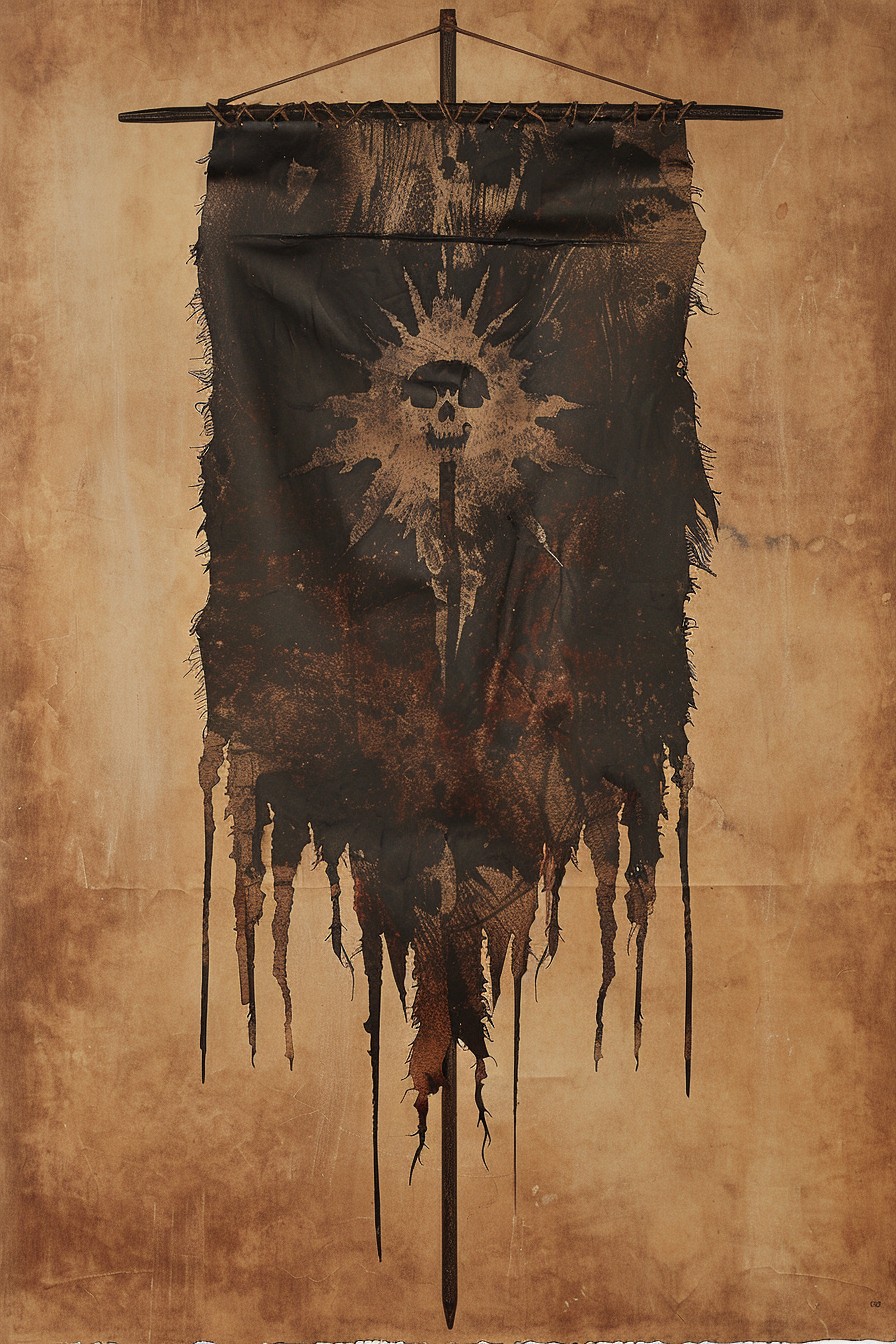
Krul'vor ha grath ("Worth is proven in the end")
Krul'gash Vor'thek; Keth'voral; the Caldera of Grakh'vol; Kharak-Bel frontier
None formal; tribute, barter, and demonstrated obligation
Grak'shor (restricted ore and worked metal; hides and furs; mercenary service
Manufactured goods and select metals via border trade


Comments