

SESH'KRA DUR
Fjord · Sesh'krath Dur (Terrae Ferae Septentrionales), Continens Principalis · Tenth Permutatio arrival site (unobserved)
The Inlet runs for more than six hundred kilometres inland and every one of them is unnervingly quiet. My vessel has been the only surface craft on those waters on each of my four voyages, and I have made my crew stay at the mouth on every occasion because I have not been prepared to be the first halfling captain to lose a vessel in that specific direction. What is beneath us is another matter, and one I have chosen not to think about further than the specific arrangements I have made with the specific individuals at the mouth who have permitted our passage.
The Sinus Borealis, known in Roman scholarship as the Northern Inlet and in halfling maritime commercial usage as the Krul'vel Inlet after the specific fisherman whose 843 A.P. accident produced the first documented surface contact with the Inlet's principal residents, is a deep fjord running approximately six hundred and twenty kilometres inland from the northern sea into the Continens Principalis. The Inlet lies within Sesh'krath Dur (the Deep Far-Reach), the northern region of Terrae Ferae that Roman cartography now designates the Terrae Ferae Septentrionales and that constitutes a distinct territorial holding of the Grakh'tor Confederacy under the traditional custody of a specific council of northern taiga clans. The Inlet's mouth is approximately eleven kilometres wide, narrowing rapidly to between two and four kilometres across most of its length, with steep walls rising two to four hundred metres above the water on both flanks and specific deep basins where halfling merchant soundings taken during the 11th and 12th centuries recorded depths exceeding twelve hundred metres. It is the deepest documented water feature on the primary continent's northern coast, and it is one of the specific water features whose full extent no surface party has ever mapped.
The Inlet is inhabited. The Keth'mor Sshen have resided in the Inlet's deep basins since approximately 400 A.P. Their presence was first documented by surface scholarship in 843 A.P. through the specific accident of the Krul'dent Dur fisherman Greth Krul'vel, who fell overboard while drunk near the Inlet's mouth and was recovered alive two days later by his own clan under specific circumstances that remain the subject of ongoing scholarly and folk interpretation. Subsequent contact has been sporadic, unpredictable, and consistently limited to specific individuals and specific circumstances rather than sustained diplomatic engagement.
Plinius has never visited the Northern Inlet, and no Roman scholar of his acquaintance has done so at any period. The Grakh'tor northern taiga clans have not extended surface access to Roman parties in any documented arrangement, and the specific isolation of Sesh'krath Dur from the Roman frontier has meant that Roman intelligence has never developed sustained interest in the region. Halfling merchant vessels, operating under a specific arrangement negotiated with the Northern Clan Council during the early period of halfling maritime commercial expansion (approximately 1050 A.P.), have been the only sustained surface party permitted access to the Inlet's mouth across the past century and a half. Plinius's sources for the material that follows include the specific halfling merchant reports transmitted through the Merchant Council's correspondence network (including the specific account of Captain Merrin Bramblefoot quoted above the Krul'dent Dur oral tradition transmitted through Uzrul Ironteeth (whose own clan preserves the Greth Krul'vel account with specific detail and portions of the Karneth dwarven cartographic references from the ninth century, provided in translation by Bera Khar-Thul under the standing arrangement he maintains with this author. The dwarven references are cartographic rather than hydrographic; the detailed sounding data at the Inlet is halfling in origin.
DM ONLYGeography
The Inlet cuts inland in a specific fjord pattern that Roman geographical scholarship has not previously documented at comparable scale on the primary continent. Its mouth opens onto the northern sea between two prominent headlands, the western of which the local Grakh'tor tradition names Sesh'kra Krath (the Northern Watching Point) and the eastern of which the same tradition names Sesh'kra Dur Vor (the Deep-Water Approach). The inlet then runs approximately south-southeast for the first four hundred kilometres of its length, before turning east for the final two hundred and twenty kilometres to its terminal basin. The specific terminal basin, which the Grakh'tor tradition names simply the Kra Dur (the Deep), reaches the maximum documented depth of twelve hundred metres and contains the specific geothermal features that the DM notes below.
The Inlet's walls rise steeply from the water for most of its length, with specific stretches where the wall on one flank or the other approaches the vertical. Above the walls, the terrain is northern taiga forest for most of the length, giving way to open highland moor in the specific interior sections. The Inlet has no significant tributaries in the ordinary sense; three specific small rivers enter the Inlet along its length, but each is short and drains only its immediate valley. The Inlet's specific geological character (steep walls, deep basins, minimal tributary inflow) is more consistent with a glacial fjord than with a river-cut valley, but no glacier is documented in the northern coast's recent geological history and the specific mechanism of the Inlet's formation is not established in any natural-philosophical framework Plinius has been able to consult.
From any surface commercial perspective, the Inlet is essentially useless as a route of movement or trade. The steep walls preclude significant surface settlement along its length; the deep water precludes anchorage in the ordinary halfling maritime pattern; the specific difficulty of navigating the Inlet's currents (which are described in the Ecosystem section) makes routine commercial passage impractical. Halfling merchant vessels operating under the standing 11th-century arrangement enter the Inlet only as far as approximately eight kilometres inland from the mouth, which is achieved only by specific vessels under specific weather conditions and is not a routine commercial pattern. What lies beyond the eight-kilometre mark is not documented by any surface source available to this author. Grakh'tor fishing operations from the northern taiga clans work the mouth and the outer stretches of the Inlet from small craft, but the clans themselves do not travel significantly further inland on the water; the specific reasons for this restriction have been the subject of clan tradition for at least eight centuries and are treated below under History and Localised Phenomena.
DM ONLYEcosystem
The Inlet's ecosystem is unusual for a body of water in its latitude and specific geological context. The upper water column, extending to approximately eighty metres depth throughout the Inlet, comprises a cold-water pelagic community broadly consistent with the northern sea's ecology beyond the Inlet's mouth: cold-water fish of the specific species that Grakh'tor northern taiga fishing depends on (including the specific salmonid whose annual migration through the Inlet's mouth constitutes the principal fishing interest of the local clans), specific crustaceans in the shallower fringes, and the specific bird populations that feed on these species along the coastal cliffs. Below approximately eighty metres, the ecosystem changes in specific ways that surface observation has documented only partially.
The deep-water column of the Inlet's terminal basin, in particular, hosts specific species that neither Grakh'tor traditional knowledge nor halfling maritime survey has fully catalogued. Specific bioluminescent species have been documented in the deep basins by the halfling merchant surveys of the 11th and 12th centuries, together with specific bottom-dwelling organisms whose morphology the survey records describe in terms that ordinary biological categories do not readily accommodate. Whether these species are indigenous to the primary continent's northern coast or arrived through the Tenth Permutatio alongside the Keth'mor Sshen is a specific question that Plinius considers open. The Keth'mor Sshen themselves are not present in the ecosystem in the ordinary predator-prey sense; they occupy a specific ecological position that surface scholarship has not been able to characterise and that the separate Keth'mor Sshen article addresses in appropriate detail.
Ecosystem Cycles
The Inlet's annual cycle broadly follows the northern coast's seasonal pattern with specific and instructive deviations. The upper water column freezes to a specific extent in the winter months (approximately five percent surface area coverage in an ordinary year, up to fifteen percent in the coldest recorded seasons), with ice formation concentrated in the sheltered stretches away from the mouth and away from the specific geothermal features of the deep basins that maintain warm water circulation to the surface. The annual salmonid migration through the mouth peaks in the specific window between late spring and early summer and constitutes the principal seasonal economic event for the Grakh'tor northern taiga clans whose fishing operations work the mouth.
Below the seasonal upper column, the deep basins maintain a stable thermal profile throughout the year that appears to be sustained by geothermal circulation. This stability is one of the specific characteristics that distinguishes the Inlet from ordinary northern-latitude fjords and that has attracted the attention of the small number of natural philosophers, this author included, who have been permitted to consult the halfling merchant survey records. The specific stability appears to have been continuous across the entire documented period of surface knowledge of the Inlet (from the halfling merchant surveys of the 11th century onward, with corroborating references in the earlier Karneth dwarven cartographic records), with no documented deviation until the past three years.
DM ONLYLocalized Phenomena
The Inlet exhibits a specific set of localised phenomena that surface scholarship has documented without adequately explaining. The first is the specific quality of sound that emerges from the Inlet's mouth in the late afternoon of most days, described consistently across multiple witnesses (Grakh'tor fishing accounts, halfling merchant reports, and the specific witnessing that Uzrul Ironteeth's own family has preserved from Greth Krul'vel's clan) as carrying a specific character that is not accounted for by the ordinary acoustic behaviour of wind through fjord walls. The second is the specific pattern of atmospheric mist that gathers over the Inlet's surface at dawn on most mornings, which has a specific density and persistence that the surrounding coastal weather patterns would not by themselves predict. The third is the specific visual phenomenon of subsurface luminescence visible from the surface on specific dark nights, most reliably in the terminal basin, which appears as specific patches of pale blue-green light beneath the water column and which halfling merchant captains have documented in specific observational notes preserved in the Merchant Council's northern route intelligence files.
Each of these phenomena is documented, each is consistent across multiple observations, and none has been adequately explained by any natural philosophical framework Plinius has been able to consult. Roman natural philosophy of the current century tends to attribute such phenomena to specific but poorly characterised interactions between water, air, and mineral composition; the specific attribution has the advantage of being unfalsifiable within the ordinary Roman scholarly framework and the disadvantage of not being predictive. Plinius considers the phenomena among the more specifically interesting features of the primary continent's poorly understood corners, and considers their specific coupling to the Keth'mor Sshen residence (whether direct or coincidental) a matter he cannot at present adjudicate.
DM ONLYClimate
The Inlet's climate is that of the primary continent's northern coast in its northern latitude: cold winters with substantial snowfall and specific ice formation as noted above, cool summers with the specific atmospheric character of northern maritime environments, and transitional seasons characterised by strong onshore winds and the specific fog patterns that the northern coast produces in autumn and spring. Winter temperatures fall to approximately minus fifteen degrees on the coldest recorded days in the halfling merchant records; summer temperatures reach approximately twenty degrees on the warmest afternoons. Precipitation is substantial throughout the year, with peaks in autumn and specific dry stretches in mid-winter. The Inlet's specific microclimate departs from the surrounding coast in two documented ways: the specific dawn mist described above under Localised Phenomena, and the specific tendency of the Inlet's immediate surroundings to remain slightly warmer than the surrounding coast throughout the year, which halfling captains have attributed to the deep basin's thermal profile and which the specific dwarven cartographic references corroborate through documented temperature comparisons.
Fauna & Flora
The upper water column supports the specific commercial fish populations described above under Ecosystem: the specific salmonid whose annual migration constitutes the principal Grakh'tor fishing interest, specific cod-analogues in the deeper upper water, specific herring-like species in the surface waters, and the specific crustaceans that populate the shallower fringes. Coastal cliffs above the Inlet host the specific seabird populations characteristic of the northern coast (specific gull and puffin analogues, the specific eagle whose range extends along the Inlet's western wall, and the specific corvid whose vocalisations feature prominently in the Grakh'tor tradition about the Inlet). The taiga forest above the walls contains the standard northern-latitude fauna of the primary continent (specific bear, wolf, and elk analogues), which do not enter the Inlet's water in significant numbers but which populate the surrounding land in patterns consistent with taiga ecology elsewhere on the continent.
Below the eighty-metre thermocline, the ecosystem's documented species diverge from the standard northern-coast pattern. Bioluminescent deep-water species have been documented by the dwarven survey and appear to inhabit the deep basins consistently, though their specific taxonomy has not been established in Roman scholarship. Specific bottom-dwelling organisms of unusual morphology have been documented in the terminal basin. The specific ecological role of the Keth'mor Sshen within this deep-water ecosystem is treated in the separate species article; for present purposes it is sufficient to note that they do not appear to occupy the position that Roman biological categories would expect for an intelligent species at the top of an ecosystem's trophic structure, and that their relationship with the deep-water species appears to be specific in ways surface scholarship has not been able to characterise.
Natural Resources
The Inlet's principal exploited natural resource is the specific salmonid fishery documented above. Grakh'tor northern taiga clans operate small-craft fishing at the mouth and the outer stretches of the Inlet, producing seasonal catches that supply the clans' own populations and generate specific surplus that has traditionally been traded through the eastern Grakh'tor frontier markets. Since approximately 1080 A.P., under the specific arrangement negotiated with the halfling Merchant Council, a portion of the seasonal catch has also been sold directly to halfling merchant vessels at the mouth, providing the clans with specific traded goods (halfling commercial glassware, specific southern textiles including small quantities of Nedjem-Sha, and specific metalwork) that the eastern frontier markets do not supply in comparable quality. The specific commercial arrangement is small in scale by halfling maritime standards but is one of the more consistent and long-standing halfling commercial relationships on the primary continent's northern coast.
Secondary resources include the specific timber of the taiga above the Inlet's walls (harvested by the clans for their own construction and for limited trade specific bird eggs collected seasonally from the coastal cliffs; and specific medicinal plants documented in the taiga margins whose Grakh'tor traditional use is well established and which the Vor'keth has traditionally shown specific interest in. What the Inlet does not provide, and what has kept surface commercial interest limited across the eight centuries of documented surface awareness, is the specific set of commodities that would justify substantial infrastructure investment. There is no significant timber production at scale; there is no significant agricultural potential; and there is no significant strategic value to any surface party's military planning. The Inlet has therefore been treated by surface scholarship as a marginal peripheral feature of the northern coast, and specific scholarly interest in it has been limited to the specific anomalies documented above and to the specific attention that this author has paid to it across the past two decades.
DM ONLYHistory
The Inlet's documented surface history begins with Grakh'tor traditional occupancy of the surrounding taiga forests, which the northern taiga clans' own oral tradition places continuously from the fourth or fifth century A.P. The Krul'dent Dur clan established their fishing operations at the mouth by the seventh century A.P.; the Vor'kaal and Sesh'kra Krath clans have held the adjacent territories since approximately the same period. The clans' council structure formalised in its current form during the eighth century, providing the specific institutional continuity that has governed Sesh'krath Dur since. Roman scholarship of the ninth and tenth centuries had no direct access to the region.
The specific event that placed the Inlet on the wider surface scholarly record was Greth Krul'vel's 843 A.P. accident. Greth, a Krul'dent Dur fisherman of ordinary standing in his clan, fell overboard while drunk during a specific late-autumn fishing expedition near the Inlet's mouth. His boat companions did not recover him and returned to the Krul'dent Dur fishing settlement of that period with the report that he had been lost. Two days later, Greth was discovered alive on the western shore of the Inlet, approximately six kilometres from the point of his disappearance, in a state of significant physical exhaustion but without the injuries that would ordinarily accompany two days of exposure. His account of what had happened during the intervening period was fragmentary, incoherent in specific ways, and included specific references to individuals and interactions that his clan interpreted as the specific fabrications of a drunk and disoriented survivor. Uzrul Ironteeth's clan preserves the specific account in family memory across the twelve generations since; the account has not been fully transmitted outside the clan but Uzrul has shared specific fragments with this author that suggest Greth encountered the Keth'mor Sshen directly and was returned to the surface by them under specific circumstances that surface Grakh'tor culture of the ninth century could not accommodate.
The halfling arrival on the primary continent (1000 A.P., see Annales Mundi) and the subsequent expansion of halfling maritime commerce brought the first sustained surface exploration of the Inlet. Halfling merchant vessels began systematic survey of the primary continent's western and northern coasts during the mid-eleventh century, and specific halfling captains reached the Inlet's mouth by approximately 1050 A.P. The specific arrangement negotiated between the Northern Clan Council and the halfling Merchant Council in approximately 1080 A.P. permitted sustained halfling maritime access to the Inlet's mouth under specific limitations and commercial terms, an arrangement that remains substantially unchanged and that provides the specific channel through which most current surface knowledge of the Inlet has flowed. Subsequent Keth'mor Sshen contact with surface parties has continued sporadically across the intervening centuries, in specific incidents documented in Grakh'tor and halfling sources with varying levels of detail. Each contact has been limited to specific individuals and specific circumstances; no sustained diplomatic engagement has developed. The Vor'keth have shown specific interest in the Inlet across the past three centuries in ways that suggest more information than the order has publicly acknowledged.
DM ONLY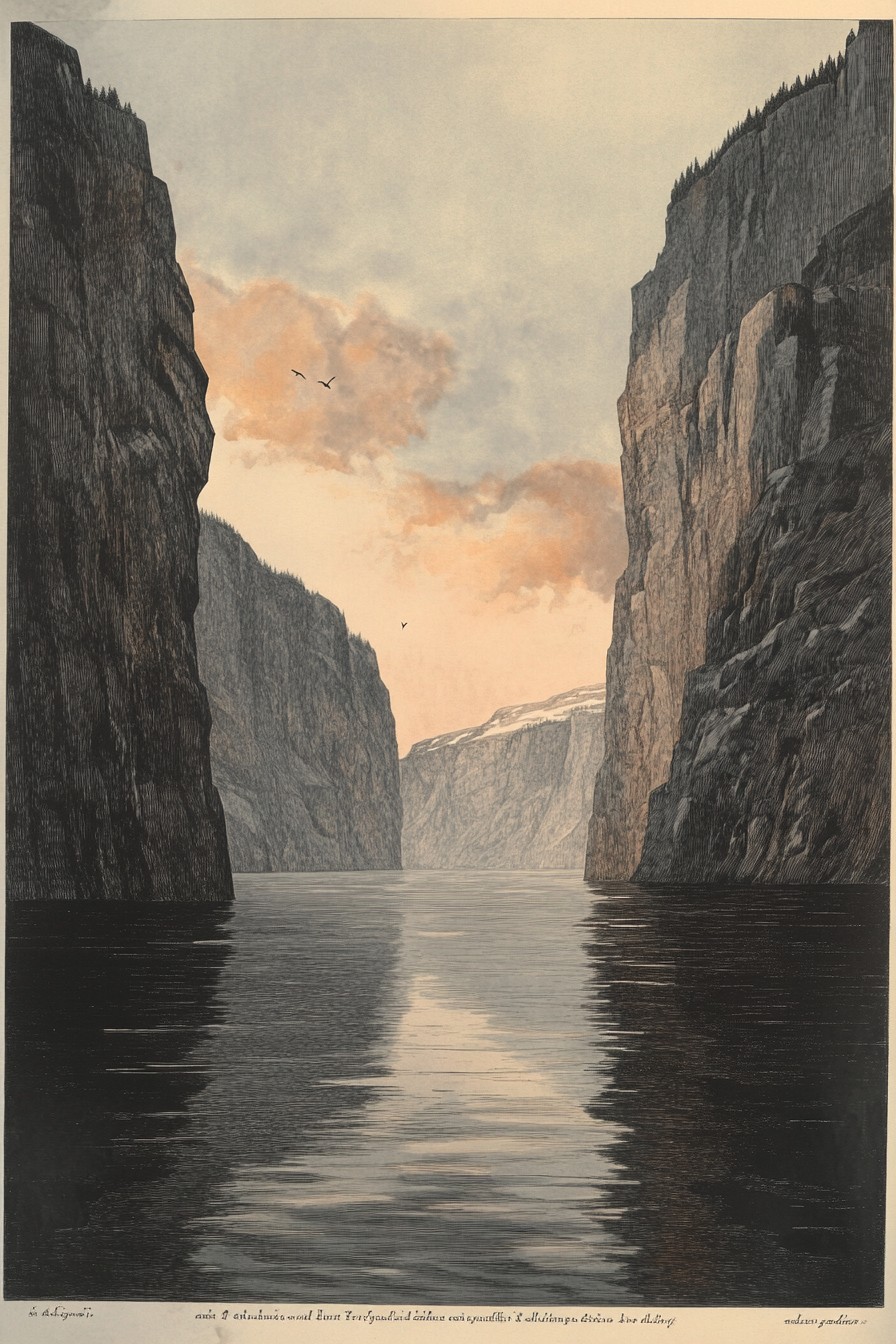

A great submission as always my friend, keep up the good work!
Your freind,
The Graiffe
Working hard at Summercamp 2026