


Obscure Inspiration
From Pop-Culture Uncovered's Tabeltop Tuesday
In the year or so since I returned to tabletop gaming, I have spent a lot of time lurking in online groups that discuss every aspect of RPGs. Many of the participants are new players looking for advice. Since I run games far more often than I play, I naturally gravitate toward discussions started by other game masters. I am often surprised by the nature of some of the questions that come up. A great many of them ask for ideas or inspiration for their games. They want a hook, an NPC trait, a magic item, or some other spark to get things moving.
Sometimes I chuckle when I read a question that seems to have an obvious answer. That reaction probably comes from age, experience, or a combination of both. That said, only a fool never asks questions, and this is not a judgment of anyone seeking advice. If anything, those questions remind me of myself when I first started writing and running games. After years of running more campaigns than I can remember and spending just as many years writing fiction, gathering ideas has become second nature. It is not unlike an episode of Hoarders, except instead of objects, I am collecting ideas. I am always on the lookout for something that might be useful in a story someday, even if it never actually gets used.
Because I enjoy helping people tell their stories, I want to share one of the methods I use to generate ideas.
One of the richest sources I return to again and again is human history. That may sound dull at first glance, but history is full of astonishing feats of craftsmanship alongside objects so strange that they seem almost unreal. Many of these creations make you wonder how they were made at all, let alone why. When you need an item for your game, whether it grants powers, hides forbidden knowledge, or serves as a story hook, history provides endless raw material. Any game master worth their weight in dice should have inspiration sources that extend beyond rulebooks and franchise canon.
Visual references are useful, but they are not enough on their own. If an image sparks an idea, it is important to write that idea down immediately. Use a notebook, an app, a text file, whatever works. Just as important is going back and reviewing those notes. If you never revisit what you record, you have not actually done anything useful. Review your notes. That step matters more than people think.
Starting from a historical object does not limit you to fantasy settings. History is a foundation, not a cage. You never know when something will prove useful, but the more you train yourself to look for ideas, the more you will notice when something resonates with you. Do not ignore that instinct. Inspiration is not about finding things that are objectively interesting. It is about finding things that speak to you personally. That connection is what makes an idea worth developing. Take what is useful, reshape it, and add your own touch. Do not hesitate to share your influences either. Something used in Call of Cthulhu can, with a few adjustments, work perfectly well in Star Wars.
To illustrate what I mean, here are two real examples drawn from history.
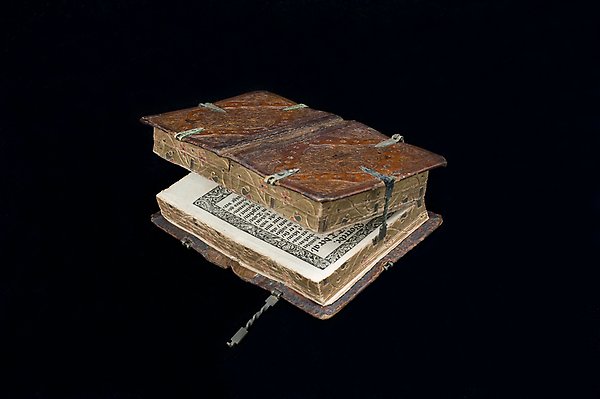
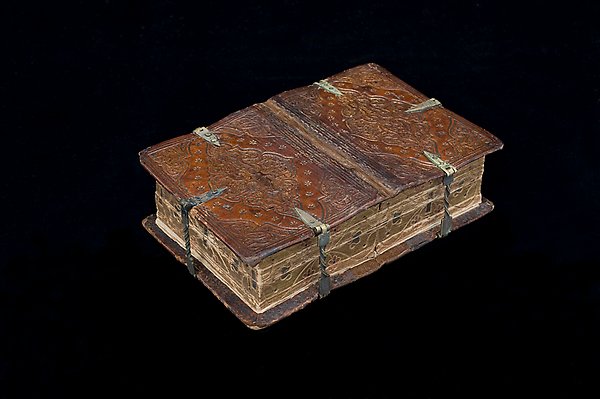
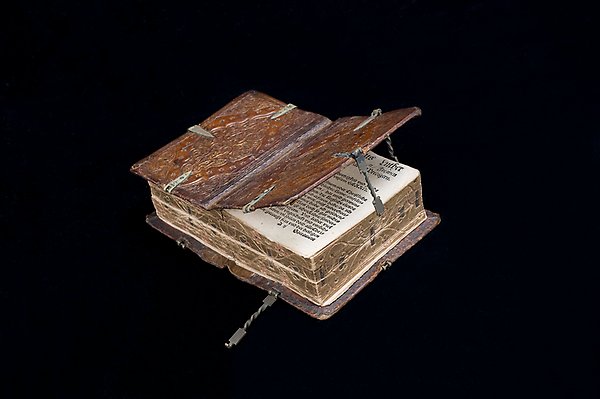
This manuscript from 1566 is held in the National Library of Sweden. It is a book that can be opened in six different ways, each revealing a different text. Read that again if you need to. If this object does not immediately suggest spellbooks, traps, forbidden lore, or eldritch horrors, consider a small genre shift. In a Star Wars game, this becomes a holocron that opens in multiple ways, each configuration revealing a different source of information. This is a real object sitting in a museum, one most people have never heard of, and even a basic description opens countless possibilities for storytelling.
If that is not enough, let us double down.
Have you ever heard of De Occulta Philosophia Libri Tres? Unless you work in a rare books collection or the occult book trade, probably not. It is a 1533 text discussing occult philosophies. The copy held by Texas A and M University contains a note written in the margin, reportedly in blood. The note reads, “When you have done all that is contained here, I will be at your command. Beelzebub.” The odds that a literal demon wrote in what was essentially a science textbook of its time are slim, but fiction thrives in the space between fact and possibility. What if the notes were written by a former owner driven mad by their studies? What if they were written by something far worse?
Now combine these two ideas. A book that opens six different ways, each revealing a different text, some of which contain the ravings of a long dead scholar and others bearing notes left by an actual demon. This was a period when science and religion were deeply intertwined. Who is to say a bored monk did not invent an elaborate way to hide forbidden interests and heretical research? From this single connection, you have the seed for an item that could anchor an entire campaign.
All of this comes from connecting just two historical sources. Inspiration is everywhere if you train yourself to see it.
As Bruce Lee once said, “Adapt what is useful, reject what is useless, and add what is specifically your own.”
Be water, my friends.



Really great article. Interesting to see, where you get your inspiration from. But where exactly do you get it from? Like, watching documentations? Reading history books randomly? Any tips on how to approach that if one has limited time? Because I probably would never have found out about that book :D