


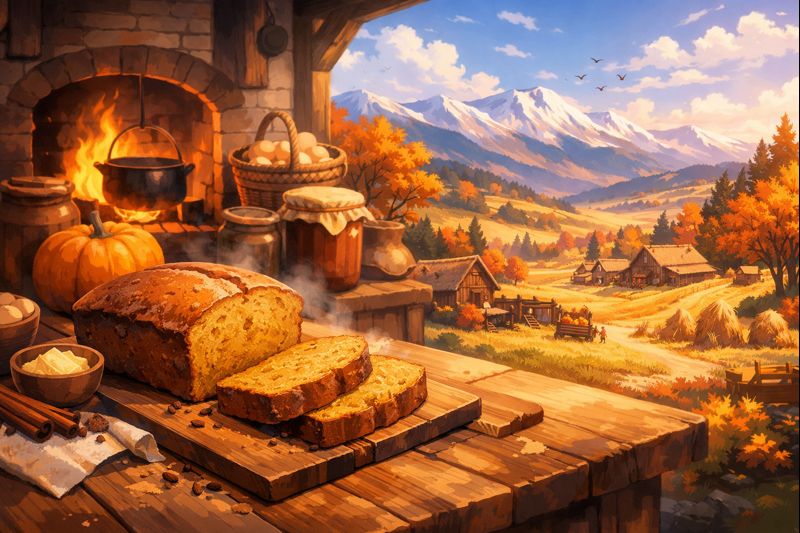
Lyan Pumpkin Bread
The Flavor Of Autumn
“When the bread comes out of the oven and the house smells like spice and warm grain, you know the year has turned whether you wanted it to or not. We bake it to remember the harvest, and we eat it to remind ourselves that winter has not won yet.”
In the lowland foothills of the Agriss Mountains, where the air first sharpens and the forests turn copper and gold, pumpkin bread marks the true beginning of autumn in Lyanmar. It is baked when the harvest wagons come down from the hills and the last pumpkins are pulled from cold soil, their skins still damp with morning frost. The scent of butter and spice drifting from an open kitchen window is as much a seasonal signal as migrating birds or the first fires lit before dusk. In farmsteads and small towns alike, this bread is not prepared for guests or special occasions but for the household itself, meant to be eaten slowly as the days shorten.
Though strongly associated with Lyanmar, the recipe has traveled far beyond its foothill origins. Across Areeott, cooks add extra spice or sweeten it further for festival tables, while in Kestenvale it is often baked denser and darker to better endure damp lowland weather. Even the dwarves of Iron Gate have adopted their own version, heavier and less sweet, baked in deep molds and eaten alongside hard cheese or salted meats during long underground shifts. Each variation reflects local taste and necessity, yet all are immediately recognizable as kin to the same humble loaf.
Despite these many adaptations, the Lyanmar version is widely regarded as the original form from which the others descend. It favors balance over excess and practicality over display, using readily available ingredients and producing loaves sturdy enough to last several days without losing their character. The crumb is moist but firm, the sweetness present without being cloying, and the spices restrained so they warm rather than dominate. In households that value thrift and continuity, this balance is seen not as refinement but as correctness, the way the bread is meant to be.
To eat pumpkin bread in Lyanmar is to participate in a quiet continuity that predates borders and modern trade routes. Slices are cut thick and served plain, often with nothing more than a mug of cider or dark tea, sometimes eaten standing near the hearth while work pauses for a moment. No one speaks of tradition while doing so, because none is needed. The recipe endures because it works, because it feeds people well, and because every autumn, when the Agriss foothills cool and the land exhales, it still tastes like the season arriving exactly as it should.
Instructions
1. Preheat oven to 350°F. Grease and flour two loaf pans.
2. Cream butter and sugar together in a large bowl.
3. Add eggs one at a time, beating thoroughly after each addition.
4. Mix in pumpkin and water until smooth.
5. In a separate bowl, combine all dry ingredients.
6. Stir dry ingredients into wet mixture a little at a time until just combined.
7. Pour batter into pans, filling each about ⅔ full.
8. Bake for 1 hour 10 minutes, or until a toothpick comes out clean.
9. Cool slightly, then remove from pans and cool completely.
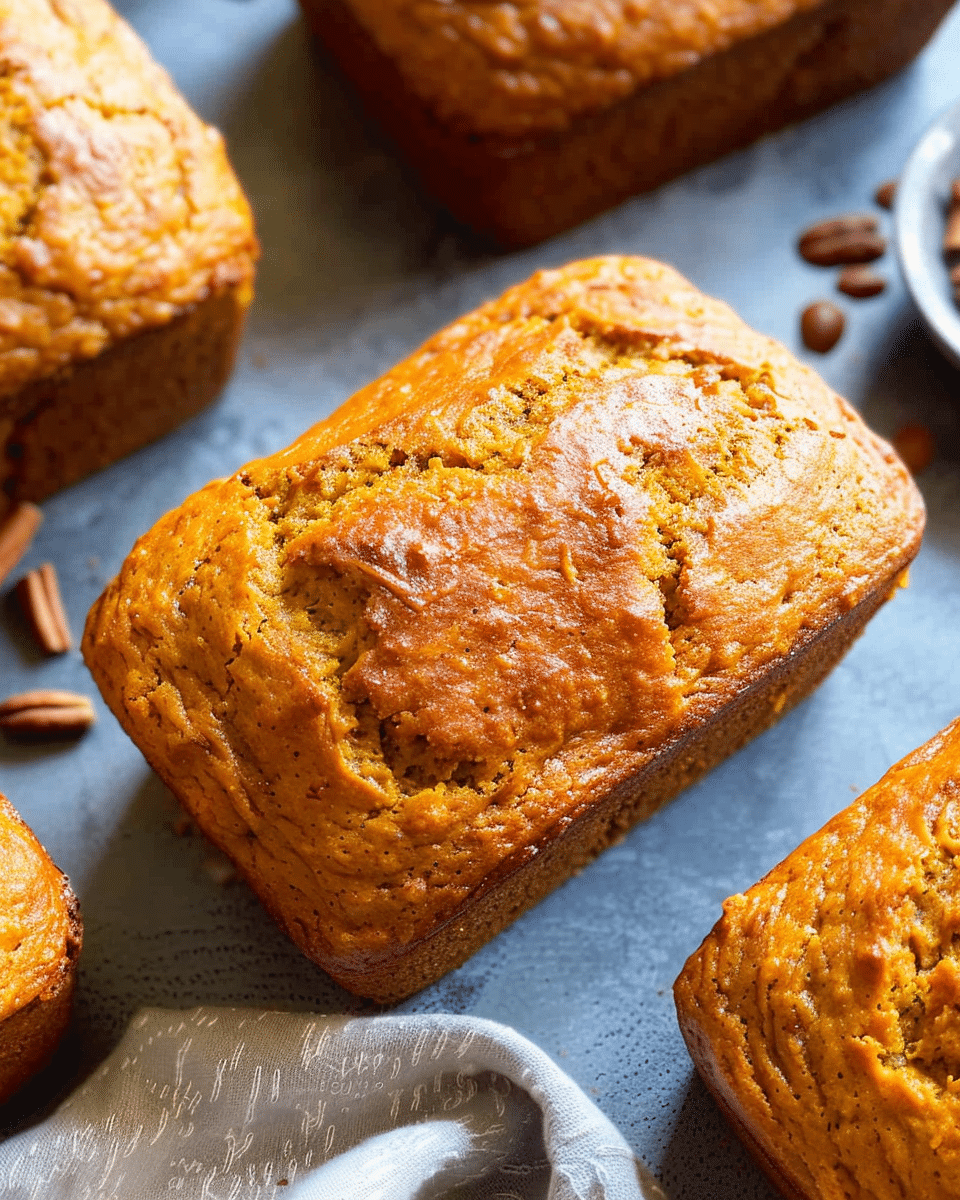
“You can tell where a cook learned by how their pumpkin bread tastes. Too sweet and they learned in the cities. Too heavy and they learned below the mountain. When it is simple, steady, and gone by the third day, that is Lyanmar doing things the way they always have.”
Ingredients






This is really beautiful, both in writing/design and in how it is grounded in the culture around it. If it wasn't for the cinnamon I'd be really tempted to try it!
This is actually a family recipie. We've been making it for years. You can swap out just out any spice blend. The best part is that it freezes really well, and is banging toasted with a ton of butter. I hope you give it a go! <3