


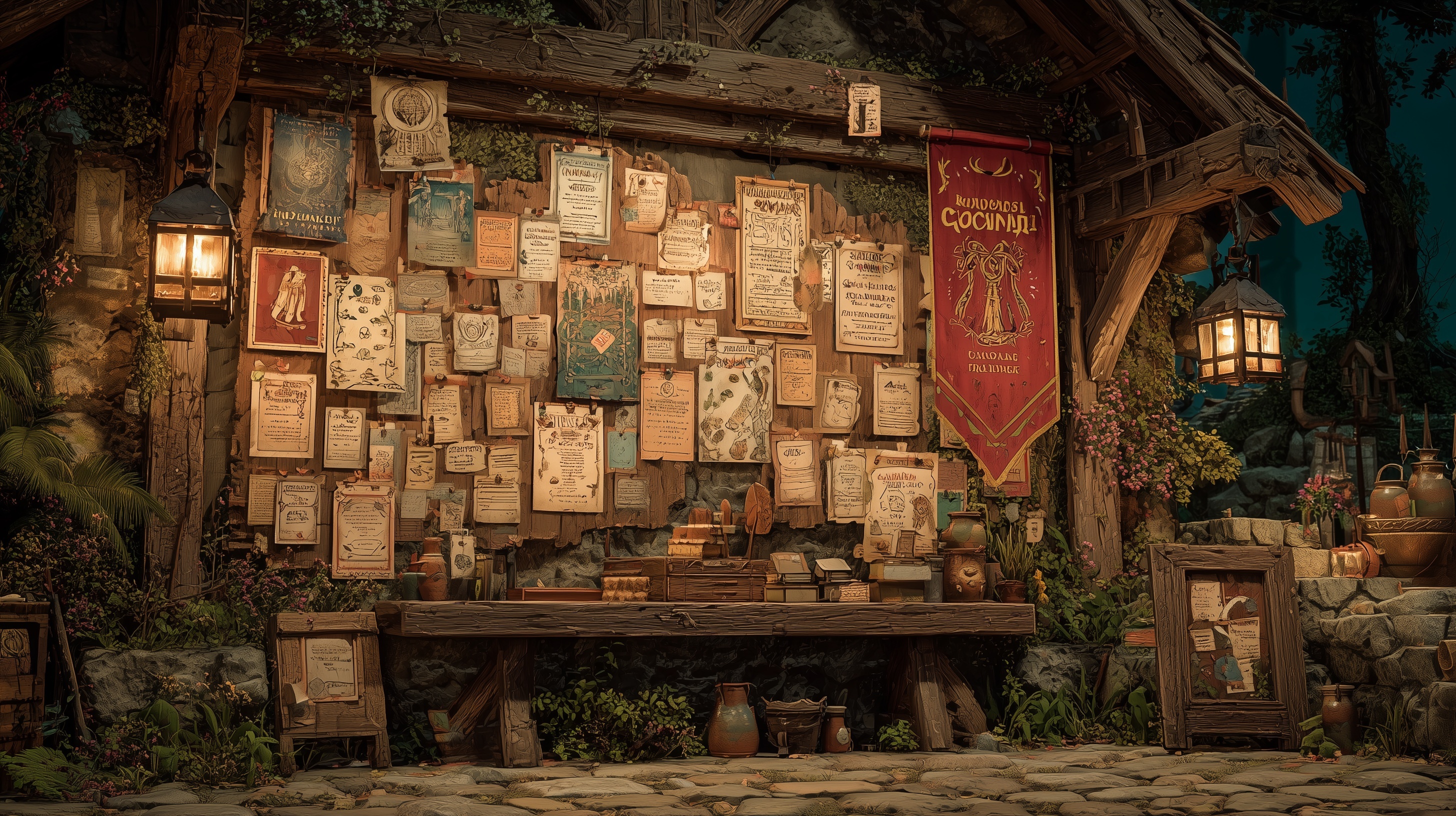
Herald Board
Word Has Arrived From Distant Lands
"I will nail these words in every village so that no soul walks blind through the long quiet after the Shattering."
In the earliest scarred years the people of Aerith could not hear the distant cries of neighbors because roads were broken and messengers scarce. Eliah and a handful of traveling writers carried small wooden boards on their backs and set them upright in the center of every camp they reached. They called these planks Herald Boards and upon them they pinned news of storms and sightings and the rare glad tidings of a newborn canton.
Each board stood about the height of a tall man and was framed with iron so animals could not worry the edges. Across its sanded face ran rows of shallow grooves that kept paper from sliding in the wind. A small shelf at the base held stubby sticks of charcoal wrapped in waxed twine for anyone who could write a hurried line. If ink was scarce folk scratched their words straight into the wood and darkened the cut with soot.
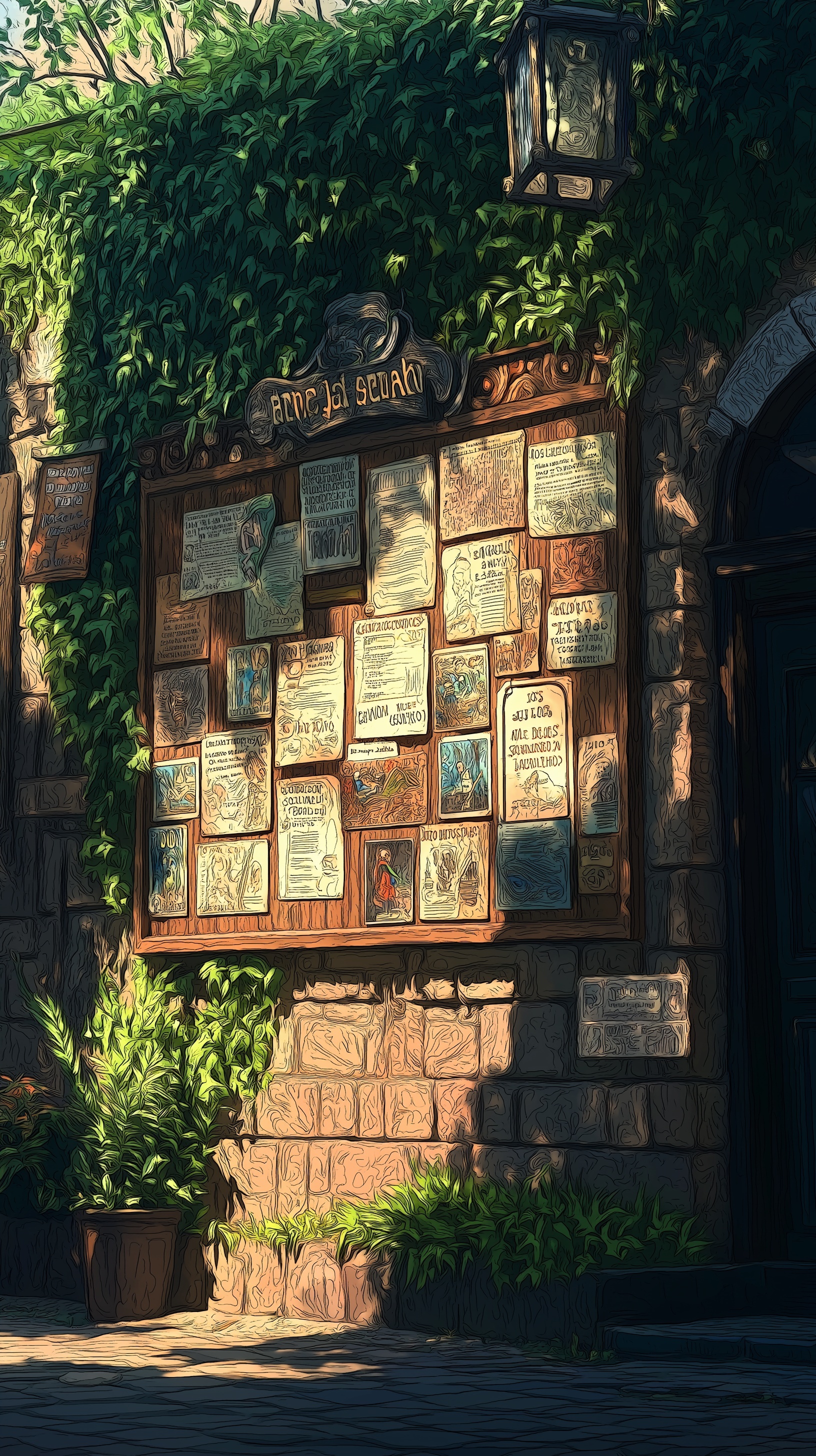
Notices soon covered the surface like patchwork. A shepherd in one valley offered wool for salt. A midwife asked for help crossing the pass before the snows rose. A survivor listed the names of kin still missing. Every message mattered because a stranger on the road might be the only thread connecting two shattered homes.
Over seasons the boards grew into small markets. A traveler could leave a jar of preserved fruit and take a coil of rope that someone else had outgrown. Books began to appear bundled in oilcloth. Children swapped carved toys and teachers left copied prayers and lessons so letters spread faster than any school could march.
When a roving Herald reached a town the board became a stage. The reporter read the freshest sheets aloud while townsfolk patched the corners with pine pitch. After the reading folk traded questions and the Herald wrote answers that would ride on to the next stop. Voices wove together until dusk pulled lamps from every window.
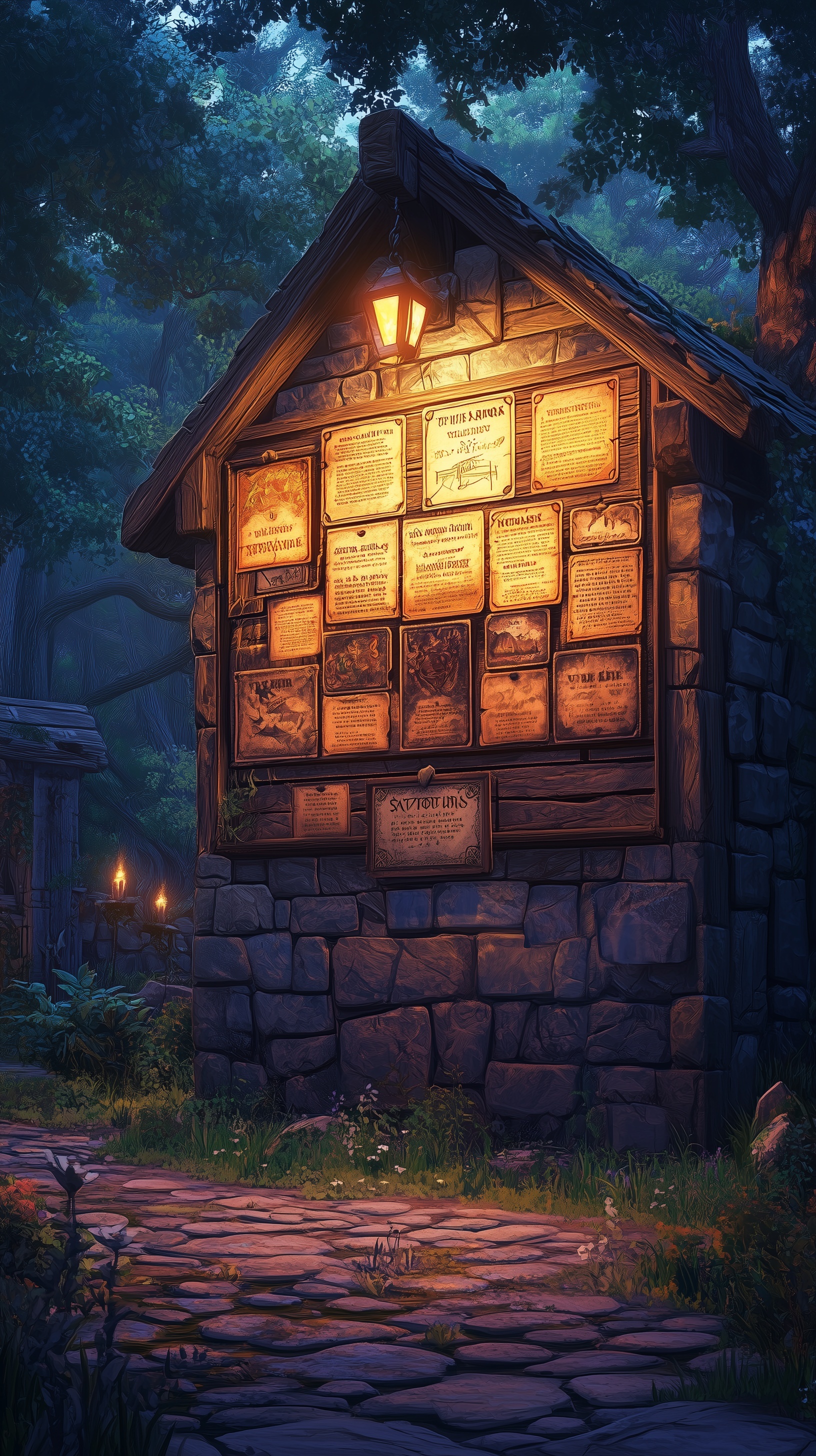
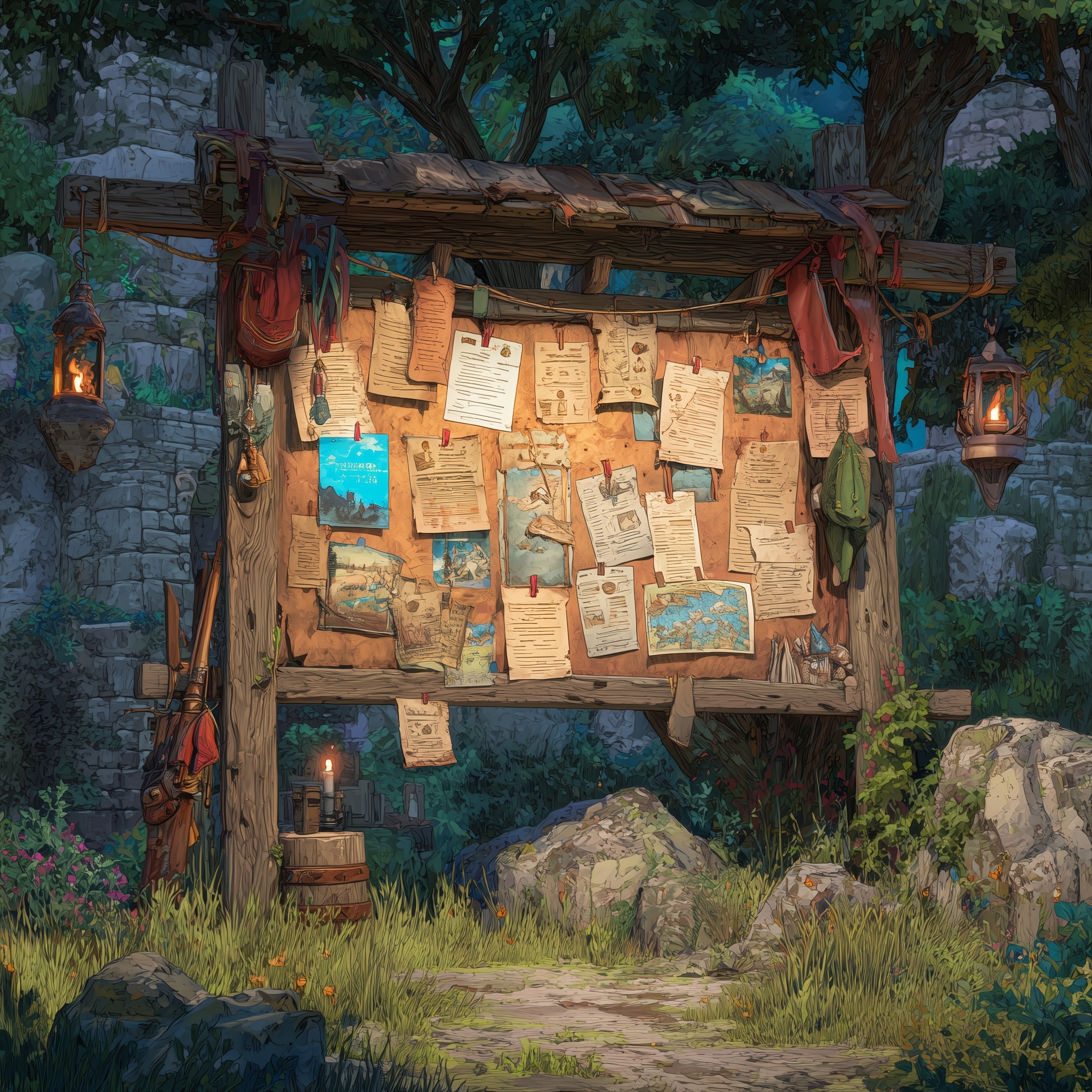
Rituals sprouted without plan. Some villages lit a lantern beside the board each night and called it the Watchlight. Others rang a small hand bell whenever a new posting went up so that no ear missed a warning of hungry beasts or a call for midwinter aid. The simple plank became the pulse of each settlement.
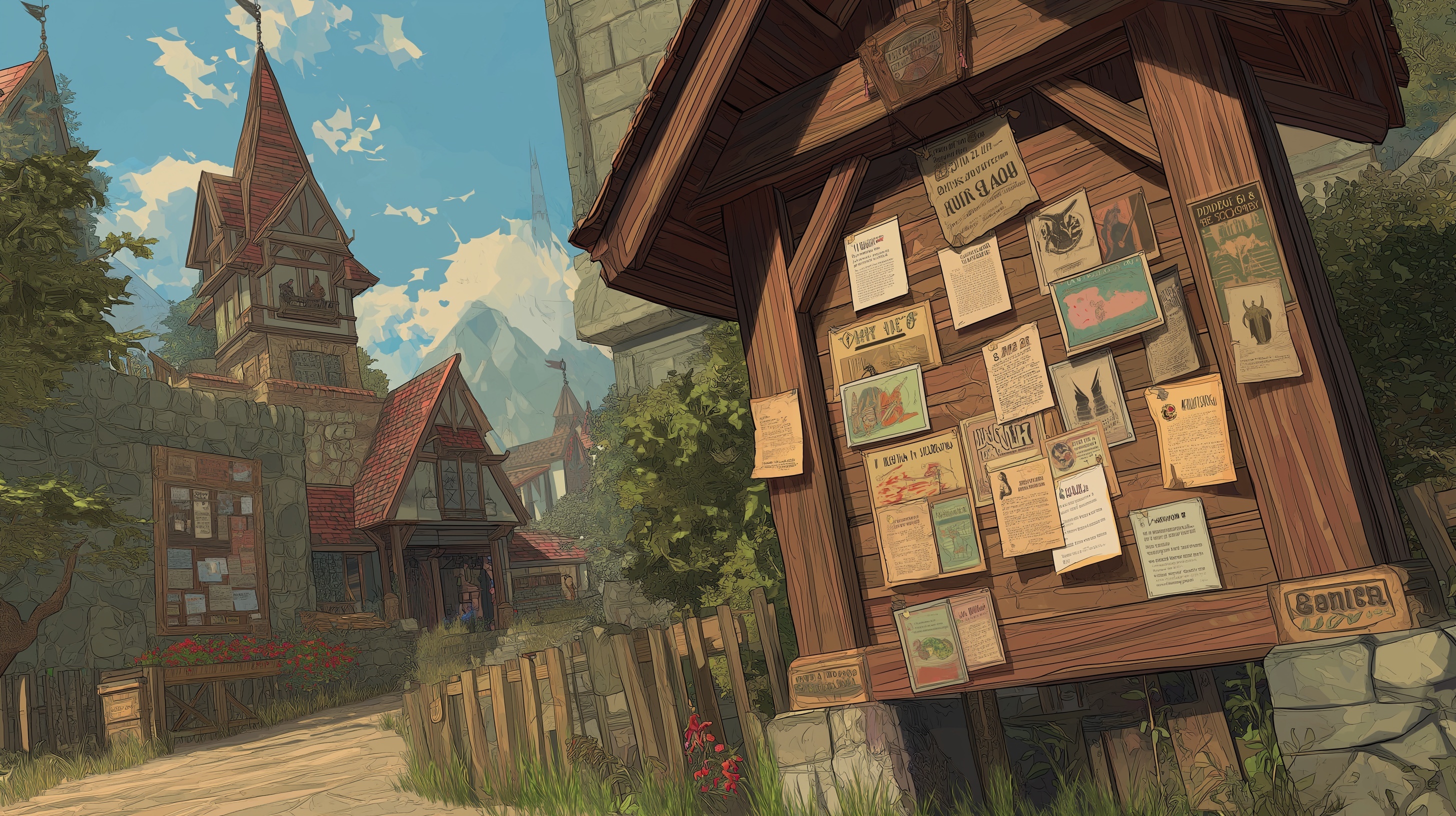
Even now travelers know to look for the wide roofed notice stand at the edge of every square. They will find fresh bread cooling for barter a note from a child who seeks a lost hound and a neatly folded paper bearing the seal of the Guild of Heralds. The board listens to all who come and tells their stories onward.
A Herald Board is more than timber and nails. It is the promise that no corner of Aerith will ever again stand silent and alone while news and hope are willing to walk the roads.
Mechanics & Inner Workings
"Any fool can post a notice. But a good board reads like the soul of the town. You just have to know how to look at it."
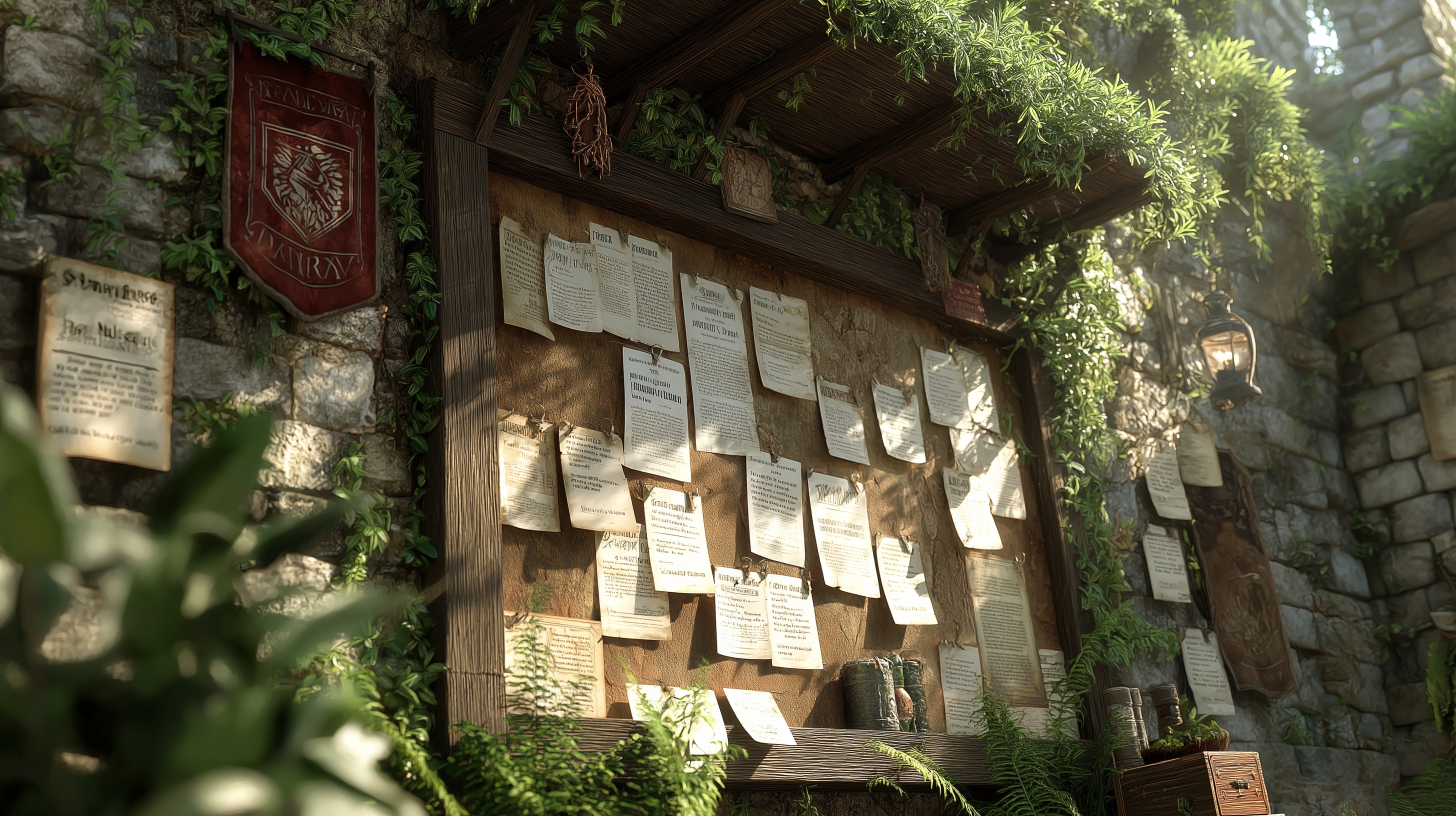
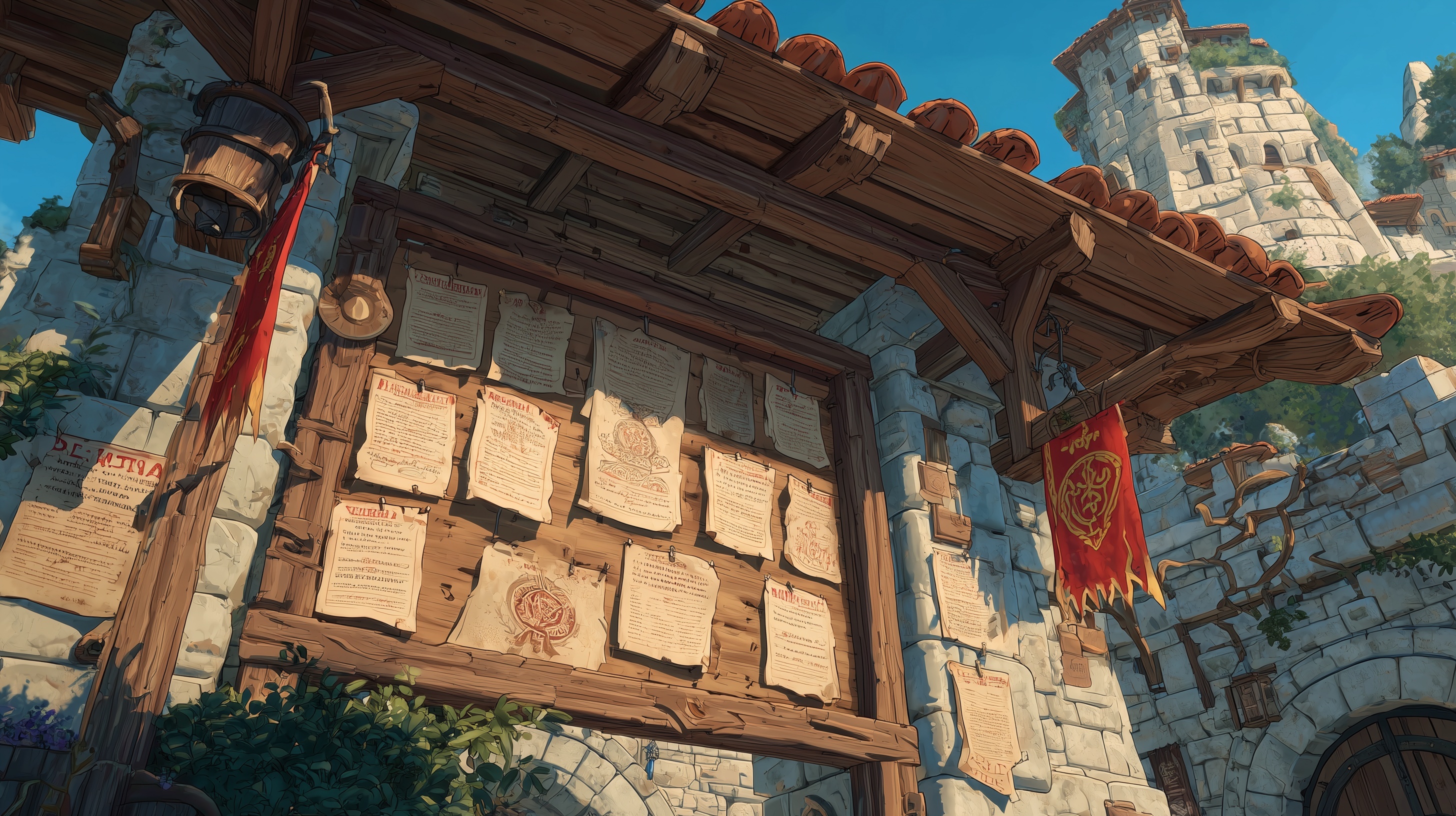
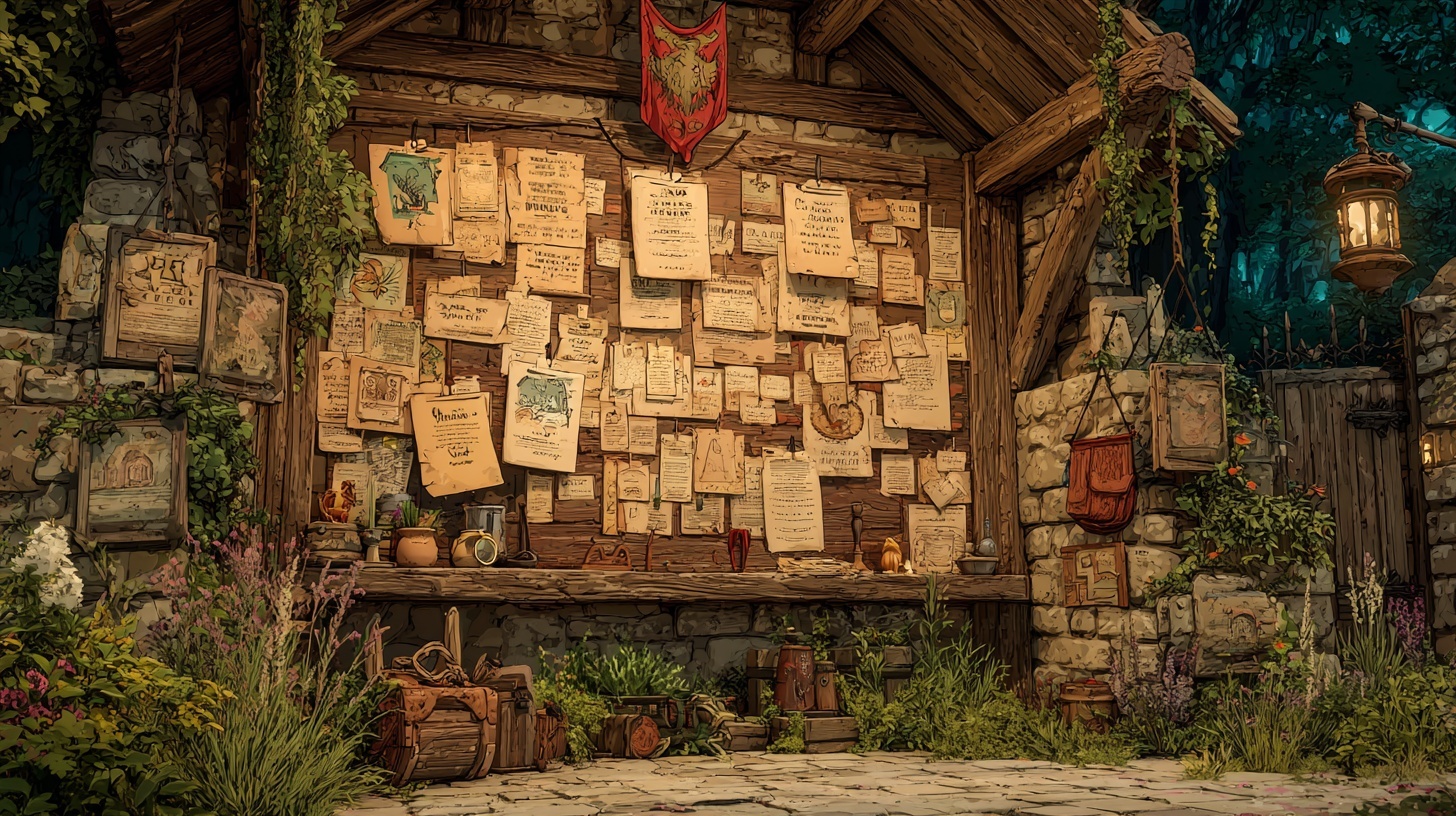
Most Herald Boards are simple things. A tall frame of wood with a wide face for postings. A narrow roof or awning keeps the weather off. A shelf or small box near the base holds charcoal sticks, bits of twine, or stubby pens. Some even keep a little oilcloth tucked under a stone for wrapping up papers in the rain. Nothing fancy. Nothing locked. Just what people need to leave a message and let it be seen.
Boards are placed where people gather. Near wells. Beside markets. At the edge of ferry landings. Always somewhere visible. Some towns build benches nearby or plant low shrubs to keep the wind down. In colder places the board might be shielded with clear panels or have lantern hooks for night reading. In hotter places it might sit under a tiled roof or between shady pillars. But it is always easy to find. That is part of how it works.
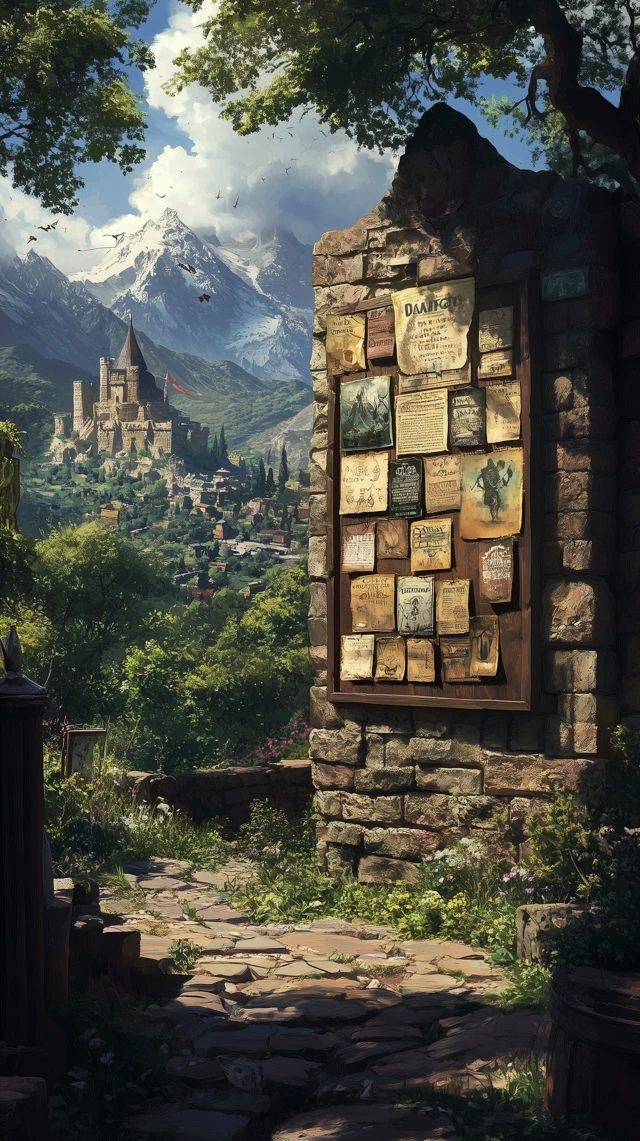
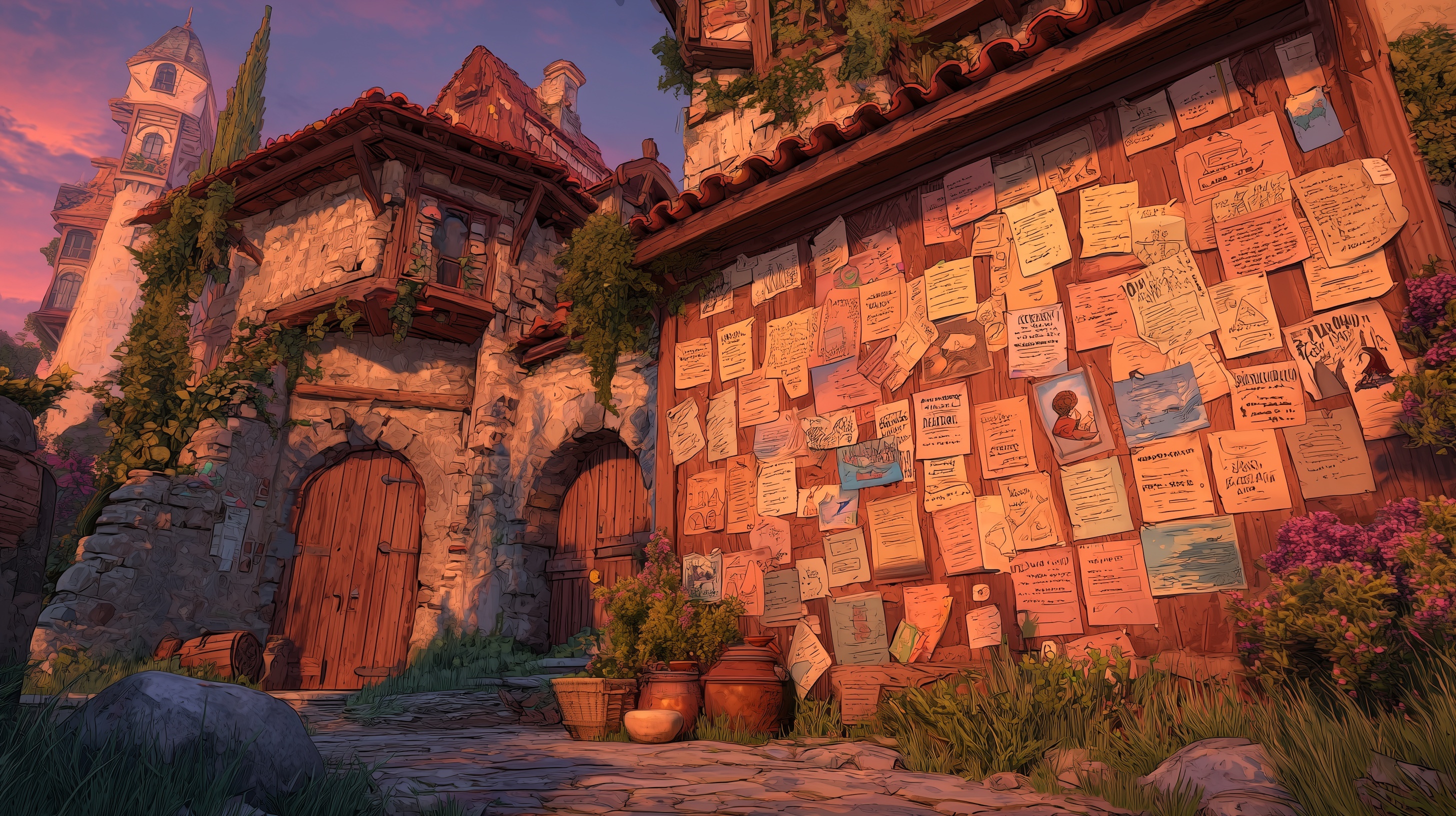
Anyone can post. That is the rule and the charm. You do not need permission or coin. If there is room and you have something to say, you write it and tack it on. If there is no room, you move something old to make space. If it matters more, it goes higher. If it is fresh, it gets pinned firm. Most boards are self-sorting. People who visit them often know how to spot what is new and what has lingered too long.
Older posts fade or fall. When that happens, anyone can remove them. Some towns assign a person to clean the board every few days. Others let the rain and the wind do it. If someone writes something foul or false, it is usually torn down by the next visitor. In some places a posting that lasts a week is taken as truth. In others it is simply ignored after a few days. No one writes the rules down. But everyone seems to know them.
News from the Society of the Free Press usually arrives by courier or spell. In cities the board might have a sealed box at the top where enchanted sheets are delivered by arcane means. These posts are marked with the seal of the Herald Guild. In smaller towns a local agent of the Society may ride through once a week and tack up the latest broadsheets by hand. Some of these include national updates. Others are regional or just a few curated notices from far-off places.
Even in places with registered boards, local use comes first. People still post what they need. A watchmaker’s hours. A call for roofers. A recipe for pickled greens. The arcane messages might flash or glow for a time, but they fade like anything else. What matters most is that someone saw them. That is all a board ever promises. That someone will look. That someone will know. That someone will come.
Manufacturing process
"I have built boards for mountain towns and coastal harbors. Every one starts the same. Measure the space. Find good wood. Make something worth leaning on."
Making a Herald Board begins with wood. The builder chooses boards that are dry and free of cracks. Pine and oak are common because they last and are easy to shape. The wood is cut by hand or with tools from a local shop. Long flat planks form the face of the board. Thicker beams make the frame and legs. The builder sands the surface smooth so paper will stick without curling.
The frame is shaped with care. Most boards are joined with pegs or fitted notches. This keeps the wood from splitting when the weather changes. Nails are sometimes used but only if the wood is strong enough to hold them. The legs are cut longer than needed so they can be buried deep. Some builders burn the bottoms of the legs to help keep away rot. Others coat them in pitch or oil.
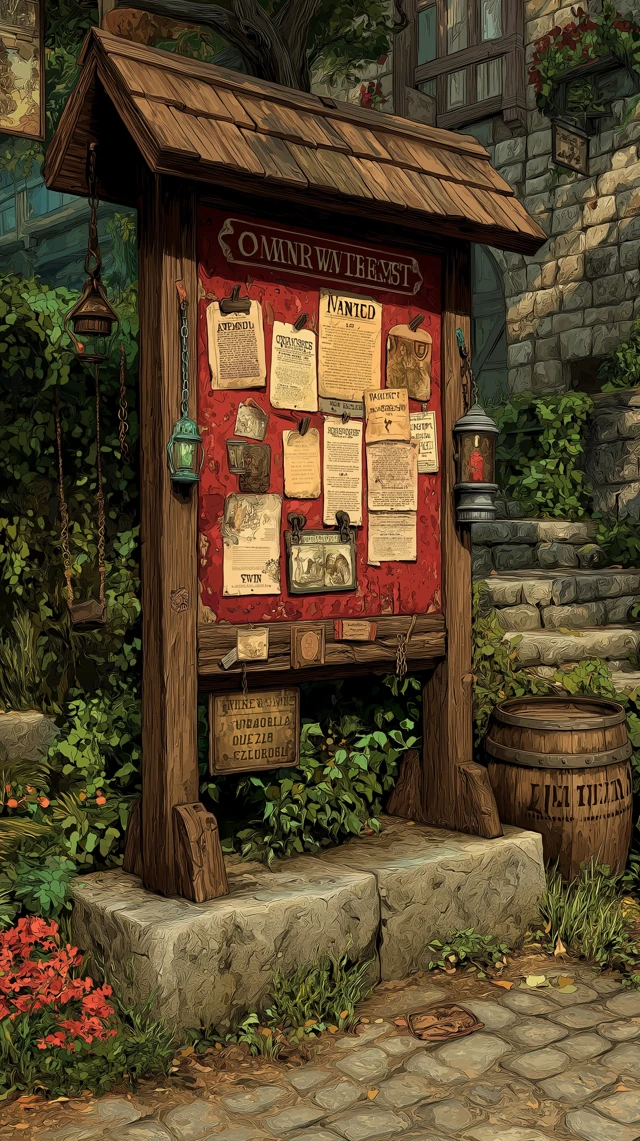
Once the frame is built, the face is set in place. Some builders carve shallow grooves to guide where the notices go. Others leave it smooth and plain. The shelf is added last. It might be a flat board or a small box. This is where people leave charcoal, ink, or spare paper. If the board is large, the shelf might have a small drawer or lid to keep the rain out.
The roof is made from whatever is common nearby. In the north it might be pine slats or scrap tin. In rich towns it could be tile or even slate. The roof is set at a slight angle so rain and snow can slide off. Some boards have little gutters or lip edges to keep water from running down the face. Others just let it drip and trust the paper will be pinned well.
Once the board is finished, it is carried to the place where it will stand. The ground is dug deep. Stones or packed dirt are added around the legs to keep them firm. If the place is windy, braces might be added to the sides. A flat stone is sometimes laid at the base so people can step close without sinking into mud.
Some boards are painted with oil or sap to keep them from fading in the sun. Others are left bare so the wood can age and gray with time. If the town is proud, someone may carve a symbol at the top or add the name of the village. If the board is being registered with the Society of the Free Press, a small iron plate is added with the seal.
The whole process can take a day or a week. It depends on how many people help and how much they care. Some boards are raised with a toast or a song. Others are just there the next morning. What matters is that it stands. That it is strong. That it is ready to hold the words someone needs to leave behind.
History
"Words fail when magic flees. So we carved them into wood. We made them loud with nails and ink and callused hands. That is how the world began to speak again."
The Herald Board did not start with a name. After the Shattering, the world went quiet. Magic stopped working. All the ways people used to talk across long distances were gone. You could not send a message with a spell or scribe a truth to last in enchanted ink. There were only voices and feet and wood. One day, in some town that nobody remembers, someone started pinning bits of news to the same wooden board where jobs and barter offers already hung. It was not a big idea. Just another scrap of paper nailed up beside the rest.
But that one choice caught on. People started posting more news. Weather reports. Sightings. Who came through town. Who was missing. Who was born. What was feared. Someone else read it aloud. Then someone else copied it and walked it to another village. The idea spread faster than anyone expected. Whole regions started relying on what showed up on the board in the square.
The people who traveled from place to place with news did not have a name either. For a while they were just wanderers with ink stains and walking sticks. When they joined together they called themselves the Society of the Free Press. They wrote things down and kept moving. Every village they reached had a board by then. They posted what they had. Nothing more. But it mattered.
The name Herald came from the people. At first it was something they called the travelers. Like a town crier or royal messenger. A Herald was someone who announced something. Someone who told you what had happened and what might come next. Over time the word stuck to the messengers and then to the boards too. Nobody decided it. The name just stayed.
Later came the printing press. The first true newspaper was called the Herald. After that, even when dozens of others appeared, the word never left. A news sheet was a Herald Sheet. The board where you read it was a Herald Board. Even today the words have not changed. It is just what people say.
Now there are Herald Boards in every corner of the world. Some are rough timber held up with rope. Some are carved walnut under tile roofs. Some are watched by local officials. Some are updated by the Society with spells. But many are still just wood and nails and whatever news someone cared enough to post.
You can register a board with the Society if you want the official updates. You do not have to. A Herald Board does not need a seal to be real. If people post on it and people read from it then that is enough. That is what it has always been.
The world does not shout its truths anymore. It pins them to wood and waits for someone to stop and read. That is how it began. That is how it still works.
Significance
"Not all roads lead home. But if there's a board in the square, you are not lost. You are somewhere that still remembers how to listen."
A Herald Board does not change the world. It does not shake kingdoms or summon armies. But it matters because it is there. When you arrive in a place you do not know and see a board standing near the well or beside the market stall or under the old cedar tree, you know you have reached people who care what happens next.
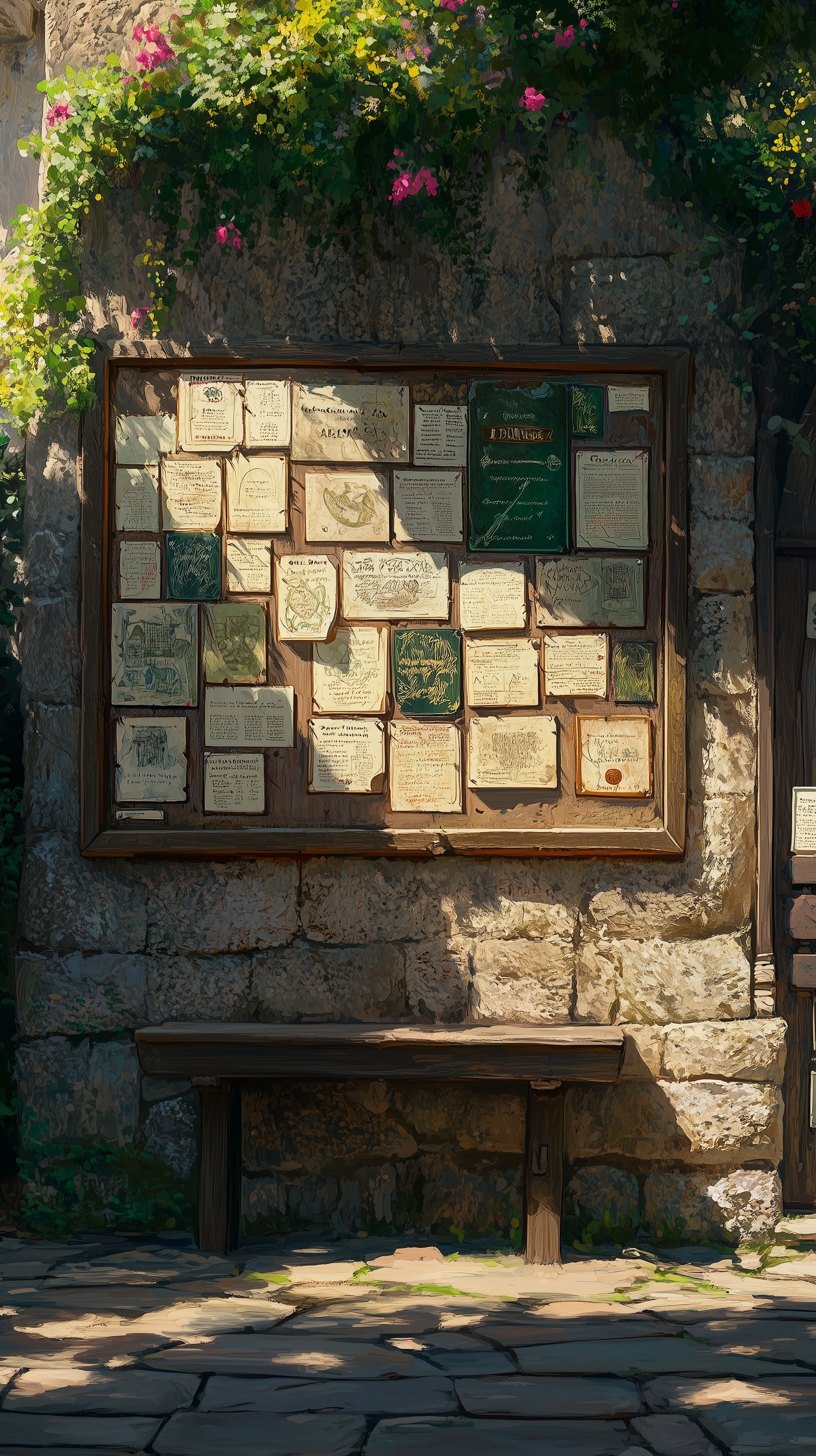
The boards are a sign that someone is paying attention. Someone wants to know if the ferry is late or if wolves were seen in the pass. Someone wants to find a lost goat or sell a crate of peaches or ask for help fixing a broken gate. The big news is there too. When a baron dies or a peace breaks or the sea does something it should not, that news reaches even the smallest boards. But the heart of the board is not kings and empires. It is the day to day.
People trust the boards because they are not far away. They are not voices from a tower or whispers in a book. They are where you stand. What your neighbor wrote. What your uncle tacked up yesterday. What your child might read out loud tomorrow. Even in cities where magic delivers the news with ink and light, people still walk to the square to see the board. They want to stand where others have stood and touch what others have touched.
It is not rare for a traveler to learn everything they need about a place from the Herald Board. Who lives there. What matters. What is missing. What is feared. What is hoped for. It is all written there in crooked lines and pinned leaves and thumb-stained ink. No guard watches the board. No priest blesses it. But it says more about a town than any monument ever could.
There is no rule about who may post. A noble can tack up a decree. A child can draw a picture. A farmer can list his surplus grain. A bard can leave a poem. The board makes no rank and keeps no order. It waits. It listens. It fills. Then it begins again.
In a world that once fell silent, the Herald Boards remind people that the silence ended because someone spoke. Because someone cared enough to leave a mark. Because someone believed that what they knew was worth sharing.
"News is not just what happened. It is how we remember we are part of the same world. It is the thread that keeps us tied to voices we have not heard and faces we may never see."
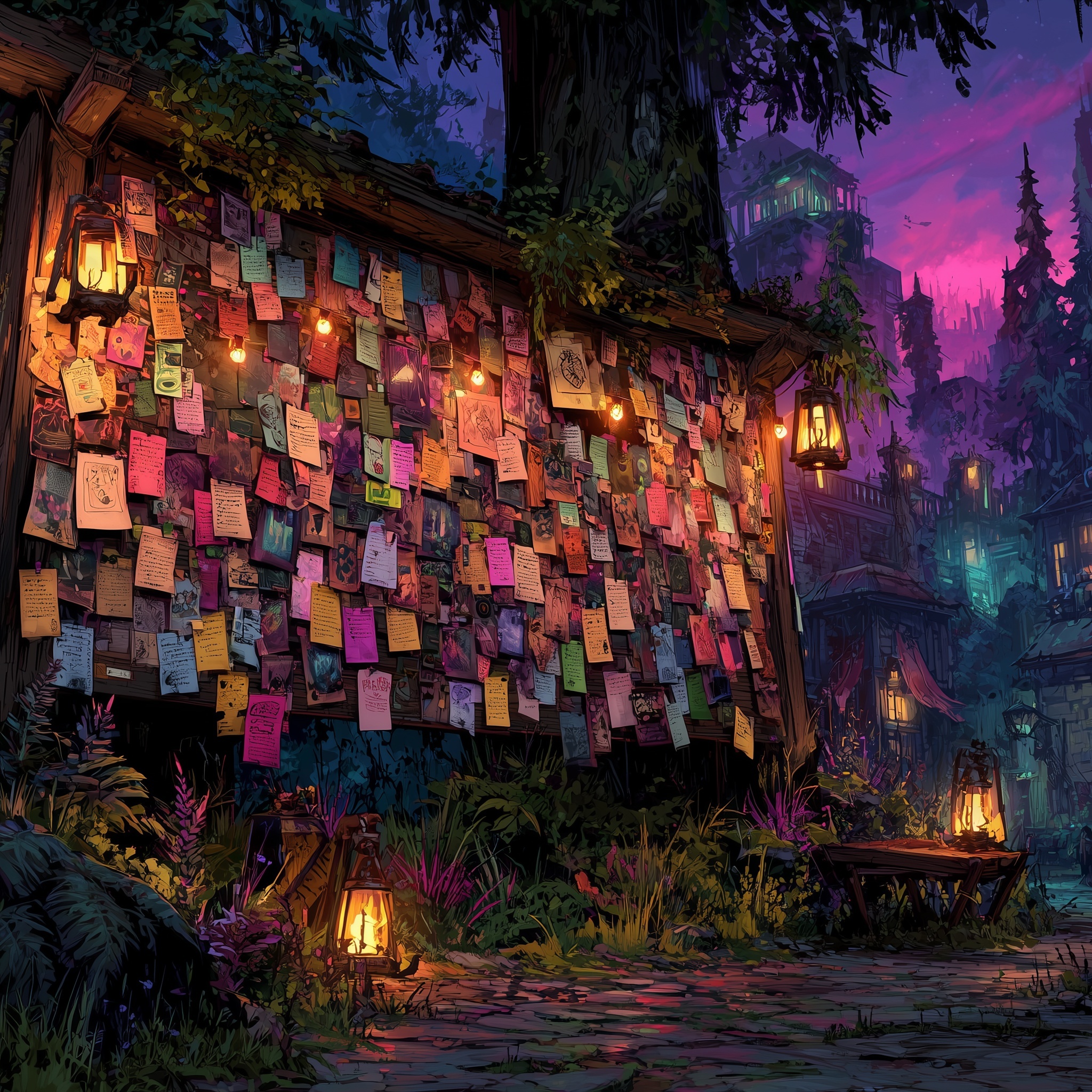



Hear ye, hear ye :P