



Fraternus Necrotis
In Defiance Of Death
"We do not seek to defeat death. We seek to build a life that no longer requires it."

Structure
"No Brother commands another. Truth commands us all."
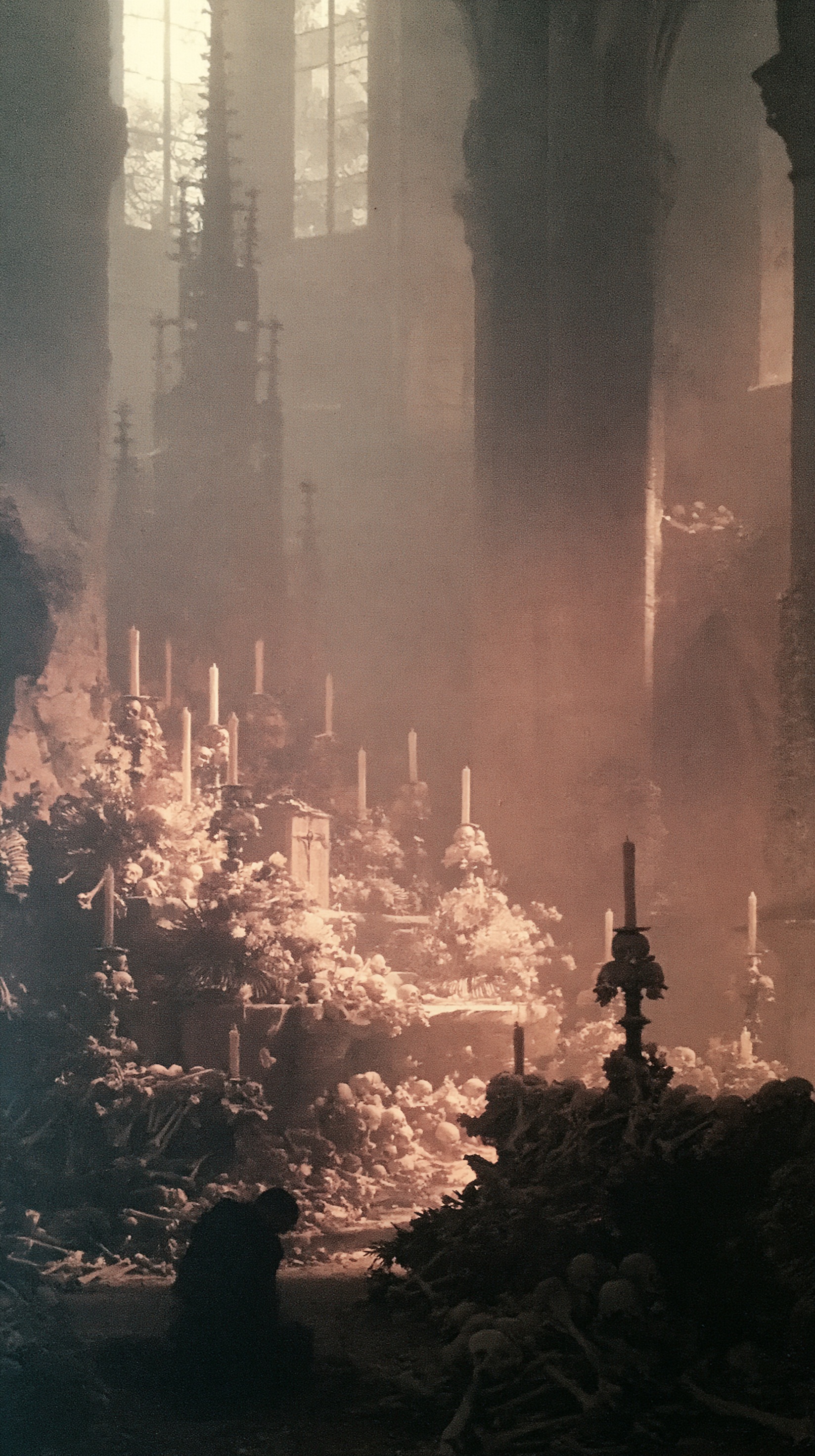
Unlike most organizations, the Fraternus Necrotis has no supreme master, ruling council, or hereditary leader. The Brotherhood is a meritocracy of scholars whose influence is measured by the value of their discoveries rather than by titles or political authority. Reputation is earned through research, experimentation, and the advancement of necromantic knowledge.
Communication between members is maintained through a network of magical correspondence that allows discoveries, theories, and experimental records to be shared across great distances. New findings are examined, tested, and debated by fellow Brothers. Once accepted, a discovery becomes part of the Brotherhood's collective body of knowledge and is preserved within its hidden archives.
Membership is by invitation only. A prospective initiate must first attract the attention of an established Brother through exceptional scholarship, magical talent, or original research. Their candidacy must then be sponsored by seven members in good standing before they are invited to present their work before an assembly of Brothers. The presentation serves as proof of both technical skill and the potential to advance the Brotherhood's understanding of life and death.
Those accepted undergo the ancient Rite of the Seventh Witness and swear themselves to the pursuit of knowledge above personal ambition, political loyalty, or religious doctrine. Upon completing the rite, the initiate is granted access to the Brotherhood's accumulated research and is expected to add to it throughout their life, or beyond.
Although there is no formal hierarchy, some members command great respect because of the importance of their work. These elder scholars often guide major research efforts, settle academic disputes, and mentor younger Brothers. Their influence comes from the respect of their peers rather than from any official office. A celebrated researcher can quickly lose that respect if their work is shown to be flawed, reckless, or impossible to reproduce.
To protect the Brotherhood from discovery, most members work within small research circles devoted to a single field of study. These circles regularly form, dissolve, and reorganize as new questions arise. This structure allows the Order to continue its work even if one laboratory or sanctuary is discovered and destroyed.
Culture
"Record every success. Record every failure. The dead teach both."
Public Agenda
"The body is not sacred because it is perfect. It is sacred because it can be perfected."
The Fraternus Necrotis seeks to advance the art and science of necromancy through disciplined research and experimentation. While many accuse the Brotherhood of pursuing immortality or dominion over life and death, its members reject both ambitions as misguided and ultimately incomplete.
The Brotherhood believes the mortal body is an imperfect creation. Disease, aging, and death are not sacred mysteries but flaws waiting to be understood. Their ultimate goal is the creation of a perfected living organism that is free from disease, capable of repairing itself, and able to endure indefinitely through natural biological processes alone. Such a being would require neither magical sustenance nor supernatural intervention to survive.
To achieve this goal, the Brotherhood studies every aspect of life and death. Anatomy, physiology, disease, decay, regeneration, the soul, and the energies that govern mortality are all considered parts of the same great puzzle. No avenue of research is dismissed if it offers insight into the perfection of mortal life.
The Fraternus does not view undeath as the answer to mortality. Liches, intelligent undead, and souls bound within artificial bodies are regarded as temporary solutions that replace one weakness with another. Such transformations may provide valuable knowledge, but they remain artificial states rather than true perfection.
Although many kingdoms condemn the Brotherhood for its methods, its members believe history will ultimately vindicate their work. They argue that every medical advancement, every cure, and every extension of life has been achieved only because someone was willing to question accepted limits. To the Brotherhood, the pursuit of perfection is neither heresy nor ambition. It is the next step in the evolution of mortal life.
Assets
"Every unanswered question is merely an experiment that has not yet been attempted."
Despite centuries of persecution, the Fraternus Necrotis possesses resources that rival many nations in both value and rarity. While their laboratories and sanctuaries are frequently abandoned and rebuilt, their greatest asset has always been their accumulated knowledge.
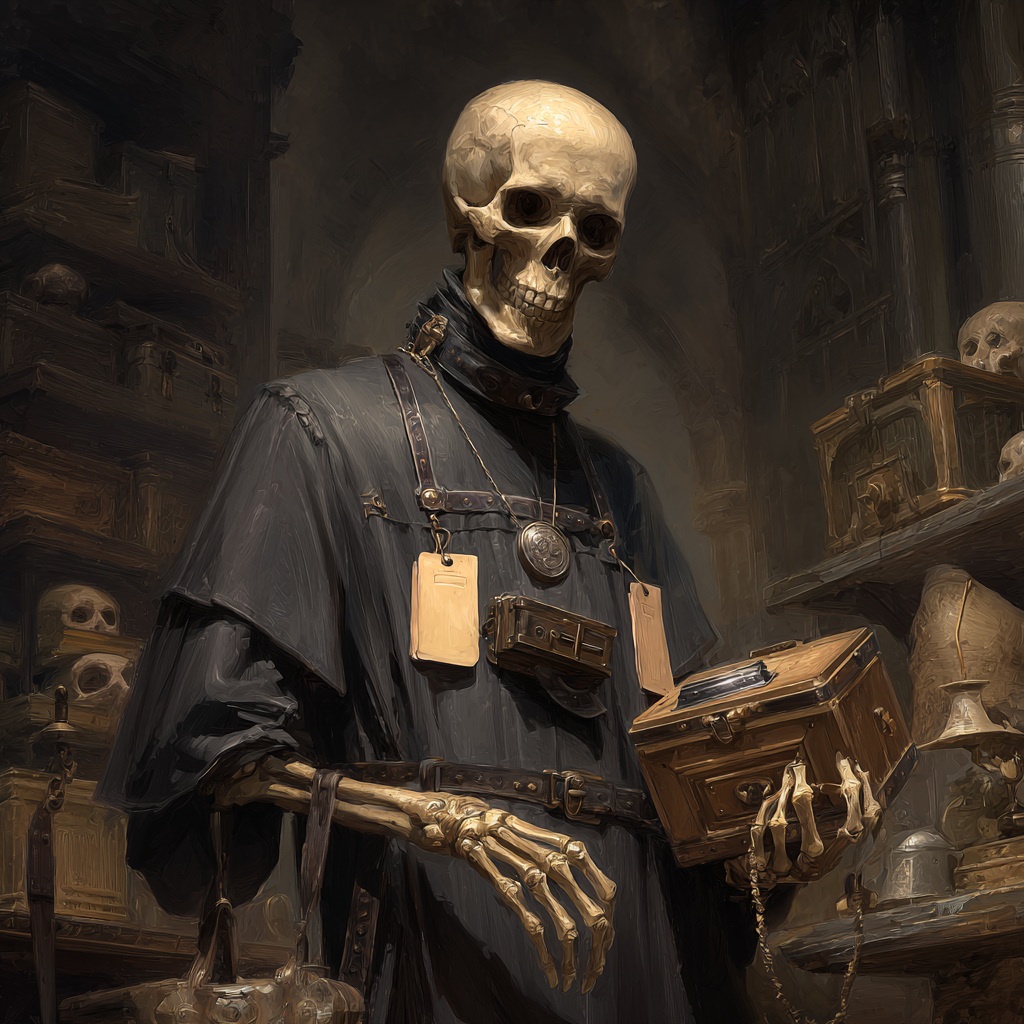
The Brotherhood maintains hidden repositories of anatomical texts, necromantic treatises, surgical observations, and experimental records dating back to the earliest days of Discipline Magic. Every experiment, whether successful or catastrophic, is meticulously documented and preserved through magical means, allowing discoveries to survive the deaths of individual researchers.
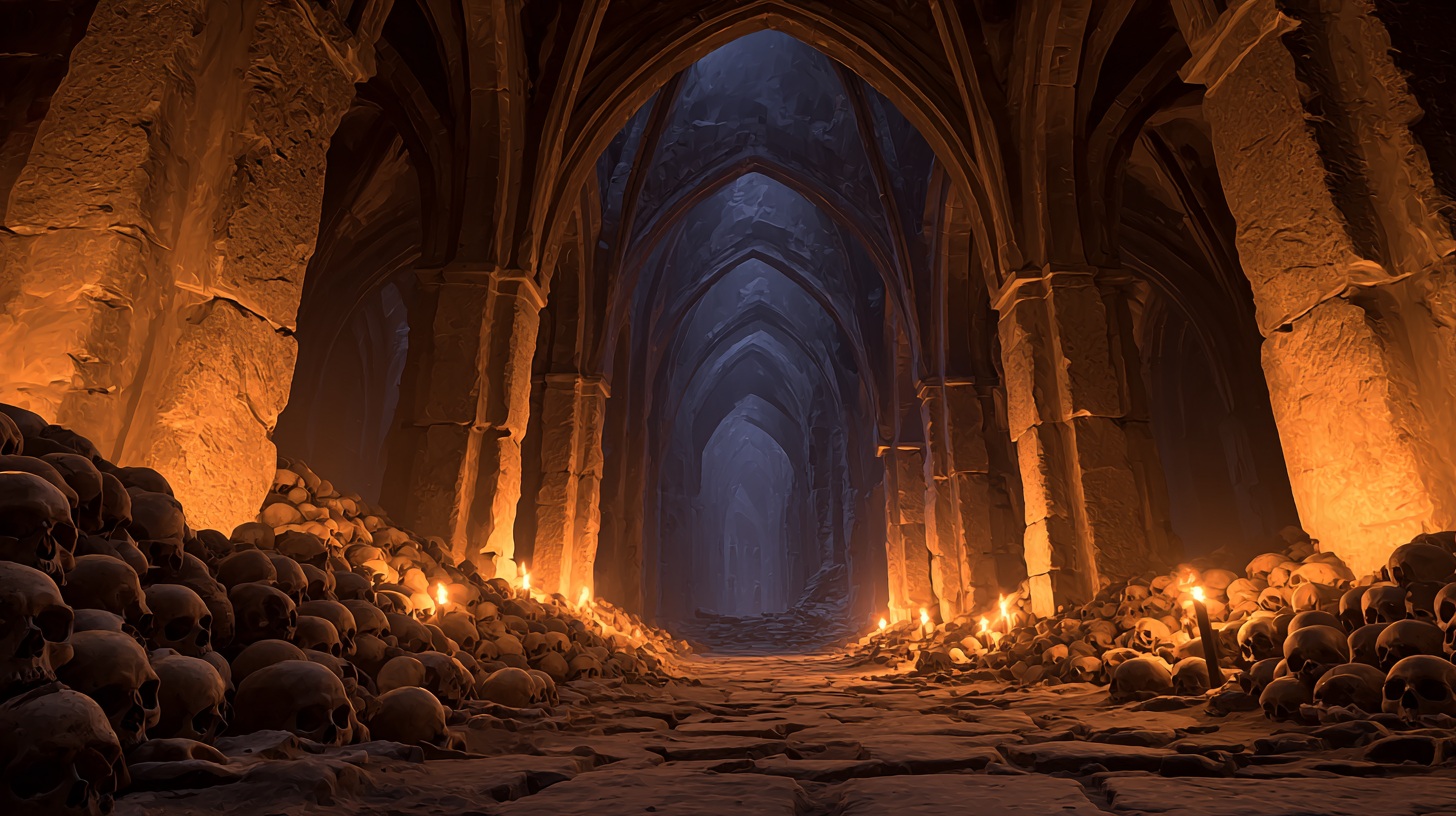
Many secluded laboratories are concealed beneath abandoned temples, forgotten catacombs, plague pits, and ancient ruins where their work can continue undisturbed. These facilities range from simple embalming chambers to elaborate research complexes equipped for magical surgery, planar experimentation, and the cultivation of unnatural biological specimens.
The Brotherhood commands a tireless labor force of undead servants. While outsiders often imagine shambling armies of corpses, most are employed in practical pursuits: maintaining laboratories, excavating forgotten tombs, operating mines, transporting materials, and performing dangerous experiments where the loss of life would otherwise be unavoidable.
Although officially outlawed in many realms, the Fraternity's influence quietly extends into universities, medical colleges, and apothecaries across Aerith. Physicians, surgeons, anatomists, and scholars unknowingly rely upon discoveries that originated within Brotherhood research. On rare occasions sympathetic academics continue to provide the organization with information, supplies, or promising students.
Their most valuable asset, however, remains their members themselves. Each Brother is expected to advance the collective understanding of life, death, and the perfection of the mortal form. Individual achievement is celebrated only insofar as it advances the work of the Brotherhood as a whole.
History
"History remembers the cure. It forgets the hands stained to discover it."
Even Death Will Bow
"The physician preserves life. The necromancer discovers why it fails."



This is the kind of necromancy stuff I LOVE! This personally is one of my favorite articles you've written. SO GOOD SO COOL!!!!
Your freind,
The Graiffe
Working hard at Summercamp 2026
Thank YOU! <3 These guys cause some trouble. From time to time ;)