

Kazaky
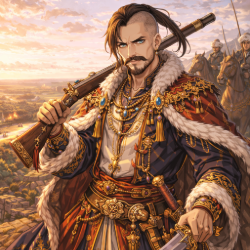
The Kazaky are the Crown’s most feared and most romanticized mounted formation: frontier riders, river-born enforcers, and inheritors of a martial tradition that predates the modern empire itself. Neither fully regular army nor civilian militia, the Kazaky occupy an ambiguous space within imperial power: celebrated in song and ceremony, reviled in memory, and indispensable in moments of unrest. Long before Serebraya Zorya achieved centralized rule, semi-nomadic rider communities guarded river crossings, patrolled trade routes, and enforced local customs along the empire’s frontiers. When the Crown consolidated authority, these groups were not destroyed but absorbed, formalized, and renamed. Thus were born the Kazaky: bound to imperial service by charter rather than conscription, loyal to the Crown as an idea rather than to the capital as a place. In public imagination, the Kazaky embody freedom, discipline, and ancestral honor. In practice, they function as rapid-response internal security, deployed where regular infantry would hesitate or fail. They are most often used during strikes, uprisings, border disputes, and “civil disturbances” where decisive action is required before disorder becomes precedent. Their reputation hardened irrevocably during the Silverwinter Revolt, when Kazaky detachments were dispatched into flooded districts and protest zones under emergency authority. Though officially tasked with restoring order and securing infrastructure, their actions (swift, brutal, and legally insulated) left scars that no subsequent proclamation could erase. To this day, the sound of hooves in narrow streets evokes both relief and terror. The Crown insists the Kazaky are guardians of continuity. The people remember them as the moment order arrived on horseback.
Composition
Manpower
Variable; estimated 18,000–25,000 across all hosts.
Equipment
- Lamellar or brigandine cuirasses
- Fur-lined greatcoats
- Argent-steel sabers
Weaponry
Sabers, carbines, lances, sidearms.
Vehicles
Horses (state-bred frontier stock).
Structure
Semi-autonomous hosts reporting to Crown military governors.
Tactics
Shock charges, encirclement, intimidation, pursuit.
Training
Apprenticeship-based; drills emphasize speed, cohesion, and psychological dominance.
Logistics
Logistical Support
Mixed; state arsenals and local provisioning.
Auxilia
Camp followers, farriers, river guides.
Upkeep
Subsidized land grants and stipends.
Recruitment
Hereditary service, frontier levies, voluntary enlistment.
History
From frontier guardians to instruments of internal repression, the Kazaky have evolved alongside the empire; never fully tamed, never fully independent.
Historical loyalties
- Primarily to the Imperial Crown
- Secondarily to regional Atamans


Comments