

Frame‑Bone Rig
Wind control using bone and leather
Background
The Frostborn lack perfectly straight building materials that would allow them to equip ships with traditional masts. The only material they can reliably work with is bone. For this reason, a unique sail‑rig system developed — one that functions entirely without masts. It has been known for a very long time, and no one remembers who originally invented it. Its roots reach back to the time before the Exodus.Structure
The frame‑bone rig is a sail construction with a three‑part movement mechanism (see terrestrial Wikipedia: gimbal). It consists of a rotation frame, a tilt frame, and a stable outer frame structure. This design allows precise control and flexible adjustment to changing wind conditions.The usually leather sail is stretched into a triangular rotation frame made of bone, which can rotate around a vertical axis. This allows the sail to be optimally aligned with the wind. The rotation frame is embedded within a tilt frame that controls the horizontal inclination of the sail and enables fine regulation of wind intake. Counterweights are attached to the tilt frame to prevent the construction from flipping over.
The entire system is supported by an outer frame made of tusk‑like bone struts. These run from one side of the railing to the other and are usually fixed in place. They give the construction its stability and are additionally secured with rope connections at bow and stern. Smaller military vessels that are loaded onto capital ships can disengage and fold down the entire rig to save space.
Control
Rotation and tilt frames are controlled via ropes guided through pulleys. The rotation frame has steering ropes at its lateral corners, while the tilt frame is guided at its upper point. If a ship needs to be taken completely out of the wind, the tilt frame is fixed horizontally so that the wind can pass through the sail unhindered.Size and Use
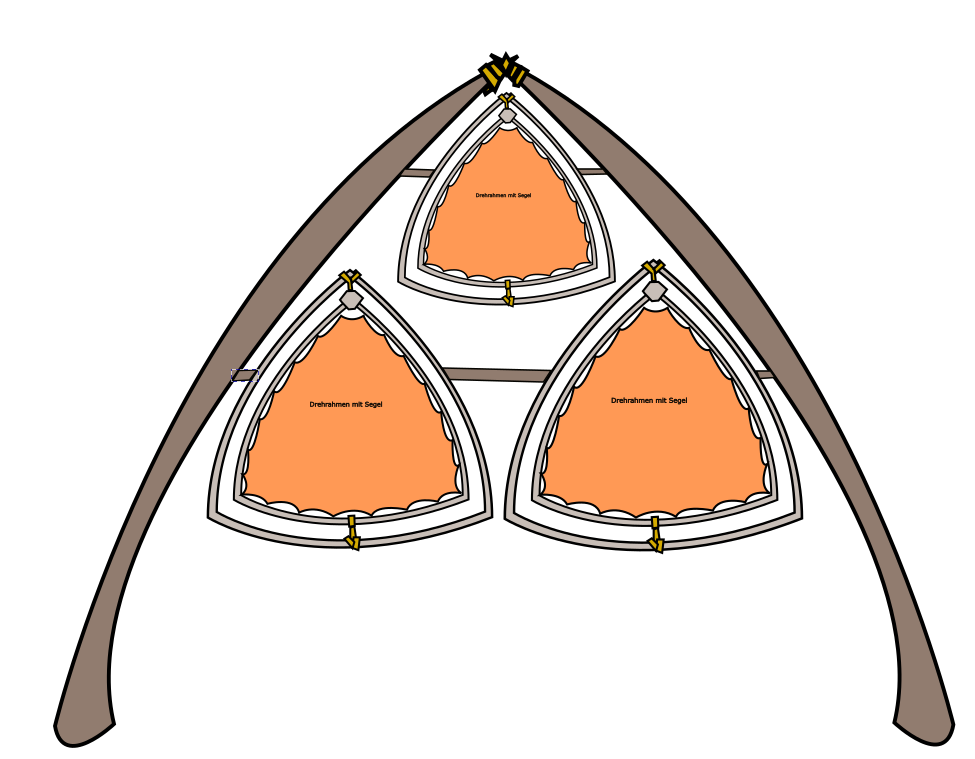
Because the construction consists of many moving parts exposed to high stress, relatively small sail surfaces have proven most effective. Normally, the sails measure no more than four by four meters. Capital ships therefore use so‑called tiled frame sails: within an outer frame that could theoretically hold a single large sail of about eight meters per side, three smaller sails are mounted instead.Experienced sailors move confidently within this mechanism, checking the moving parts, securing the tilt sails when anchored, or repairing damaged frame sails. There are special rope tensions that allow all frame sails of a tiled assembly to be controlled simultaneously and in identical alignment. Individual alignment is also possible, but makes handling significantly more complex. Only well‑coordinated crews master this technique reliably.
Technical Summary
The rotation frame enables vertical rotation of the sail and responds to wind changes and course adjustments. The tilt frame regulates the horizontal inclination of the sail and optimizes wind intake. The ropes are guided through several attachment points along the railing, pulleys ease control, and rope tensions ensure that the outer frame bones remain stably connected to the ship.Image Explanation:
The first image shows only the basic construction without steering ropes. The second image depicts a schematic tiled variant as used on capital ships.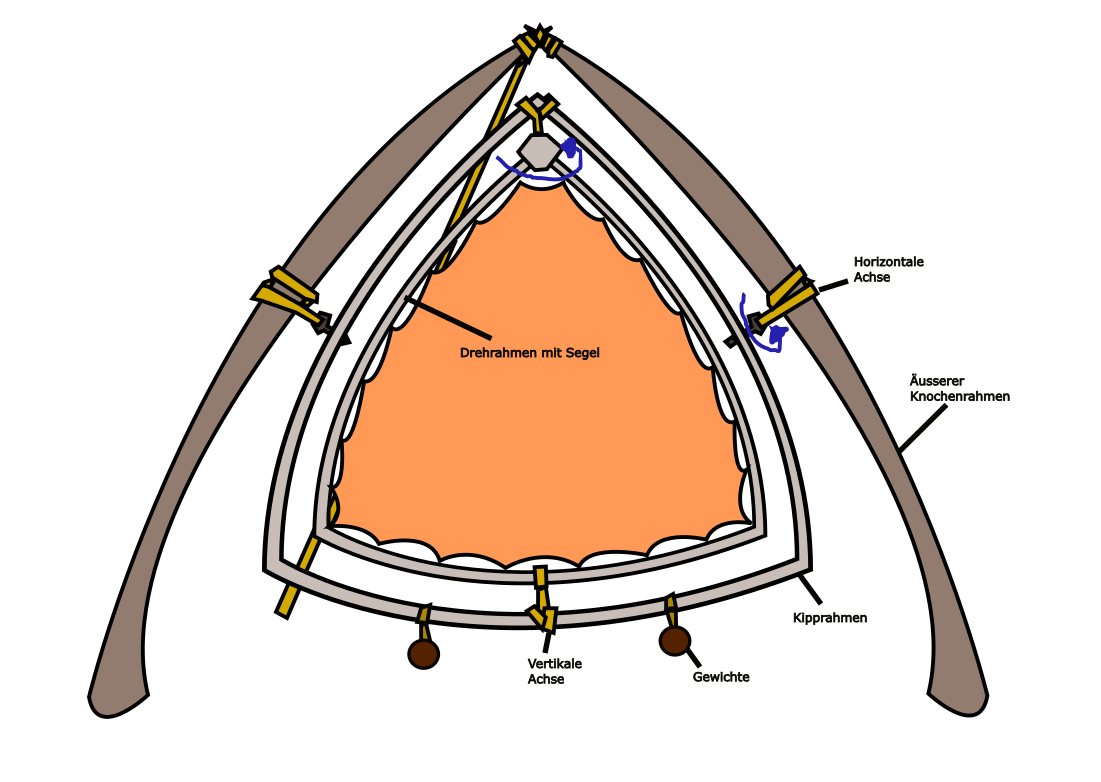
by Selibaque
by Selibaque
Created by Selibaque 2025

Kommentare