

Dodecadice
The life of even the most adventurous Traveller involves very long stretches of time with very little to do. Jumpspace travel involves week-long stretches of time with their ship isolated from the rest of space-time. Other, more mundane professions: planetary miners, belters, merchant crews, etc, must also find ways to either fill long periods of inactivity, or dispel the boredom of routine. Humans have used games to meet this need for diversion since the times they were cave-dwelling hunter-gatherers.
High technology offers solutions such as virtual reality immersion, but some alternatives have remained popular since the dawn of civilization. Nothing has stood the test of time better than dice games. Throughout history, simple cubes with six marked faces have been used in more games than could be counted. But even simple dice evolve, and today, the most popular variants are the twelve-sided Octadice.
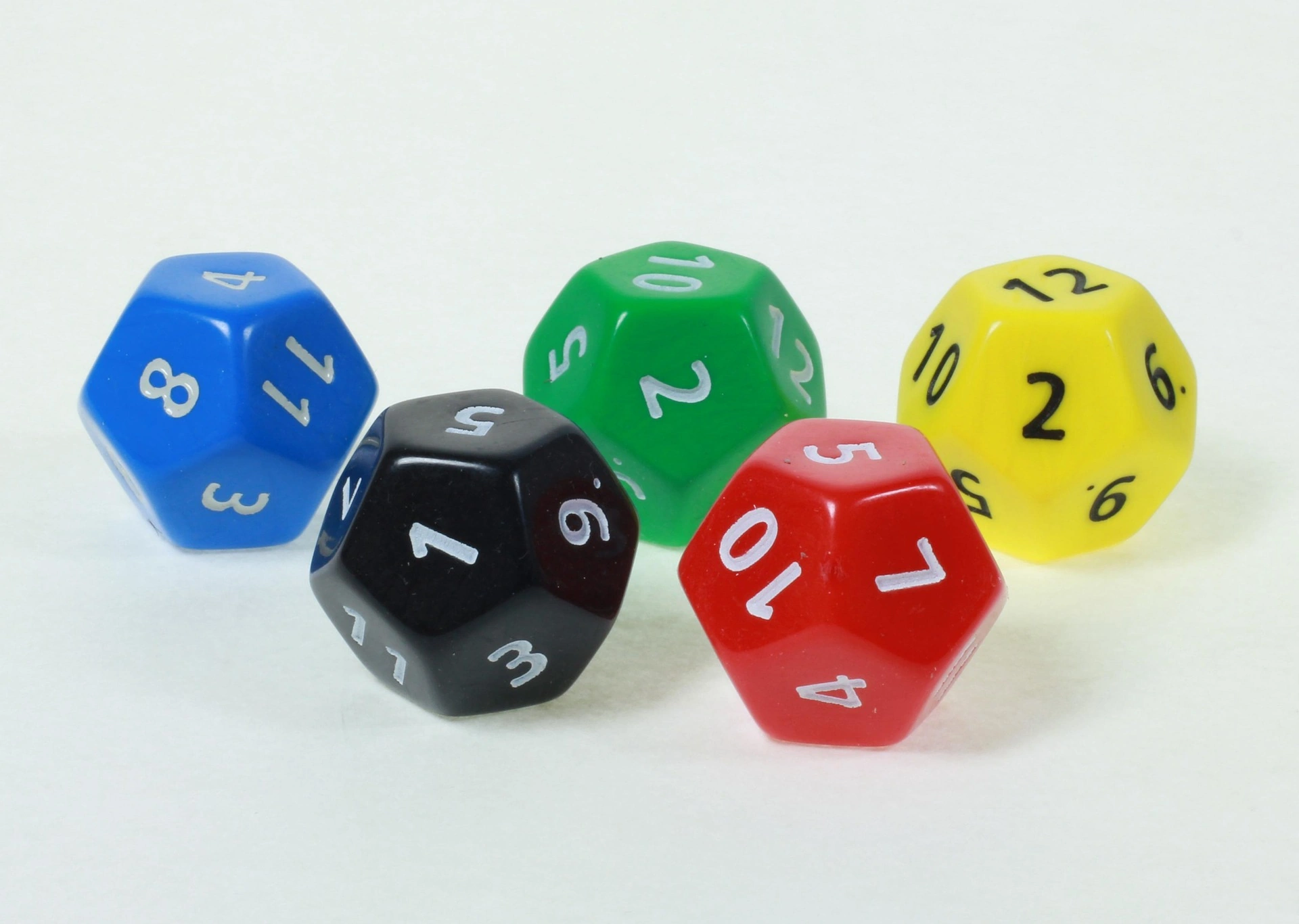 A regular solid with twelve equal pentagonal facets, an Octadie (singular) is most often marked with numbers in some manner. Often founds in sets of five, these are most often used in one of several universally popular games of chance; quite a few Credits have been won and lost on the toss of these dice. Popular games include Dice Poker, a variant on an ancient Solomani game involving decks of playing cards. (The original game, and hundreds of variations, are still quite popular as well.)
In Dice Poker, each player places five dodecadice into a cup or similar container. The container is then shaken and rapidly turned upside down. The player looks at the five resulting upturned faces of the dice, concealing them from others. Rounds of placing, meeting, and raising wagers follows, and the player with the highest valued "hand" of dice wins. The rare rolls with all five dice showing the same number are the best hand with five 12s being the ultimate. Decreasing in value from there are four of a kind, a run of five sequential numbers, three of a kind, a run of four sequential numbers, double pairs, and single pairs.
In some variants of the game, seven dice are used, two of which (players choice) are not counted in determining the winning hand.
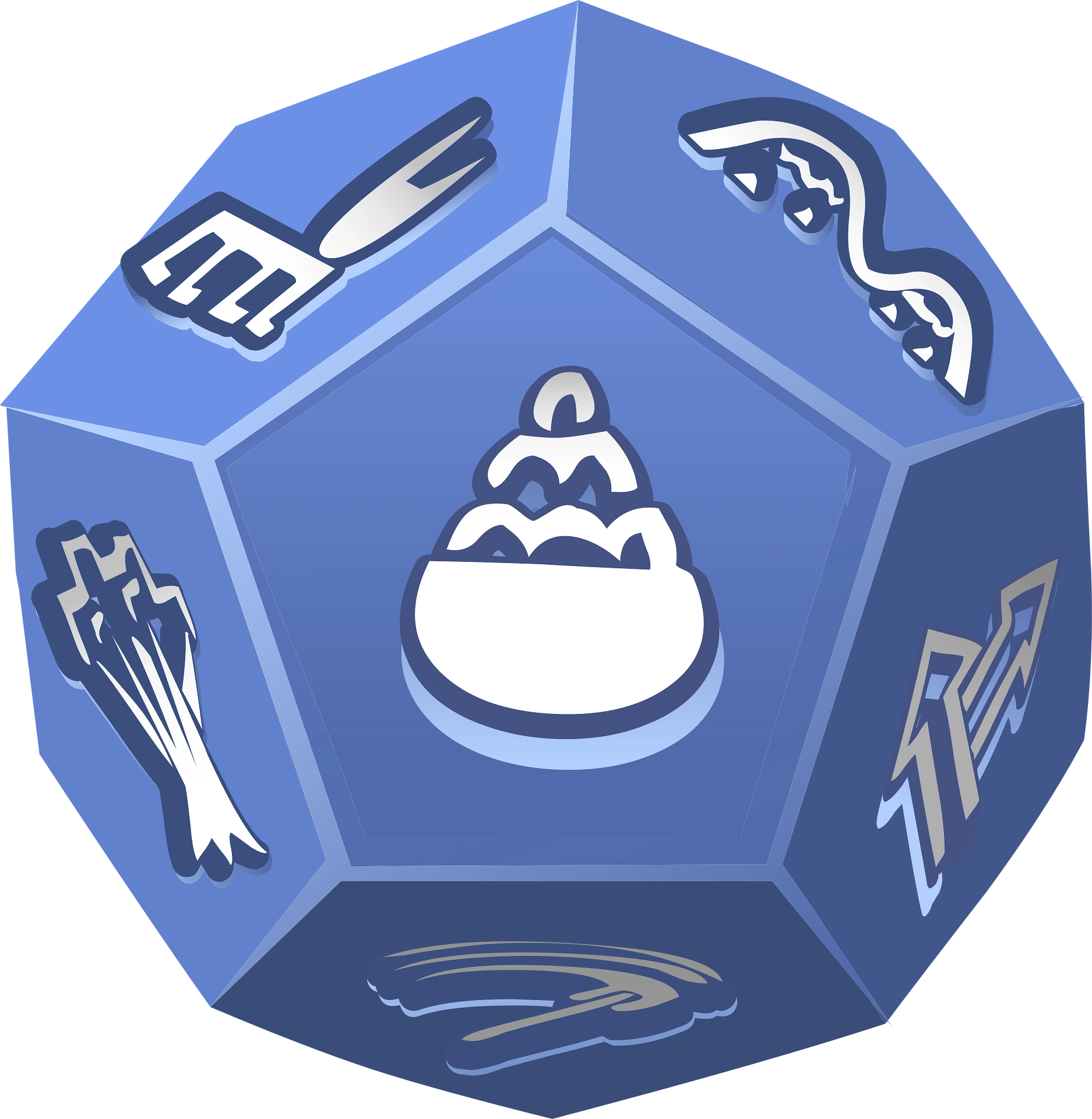
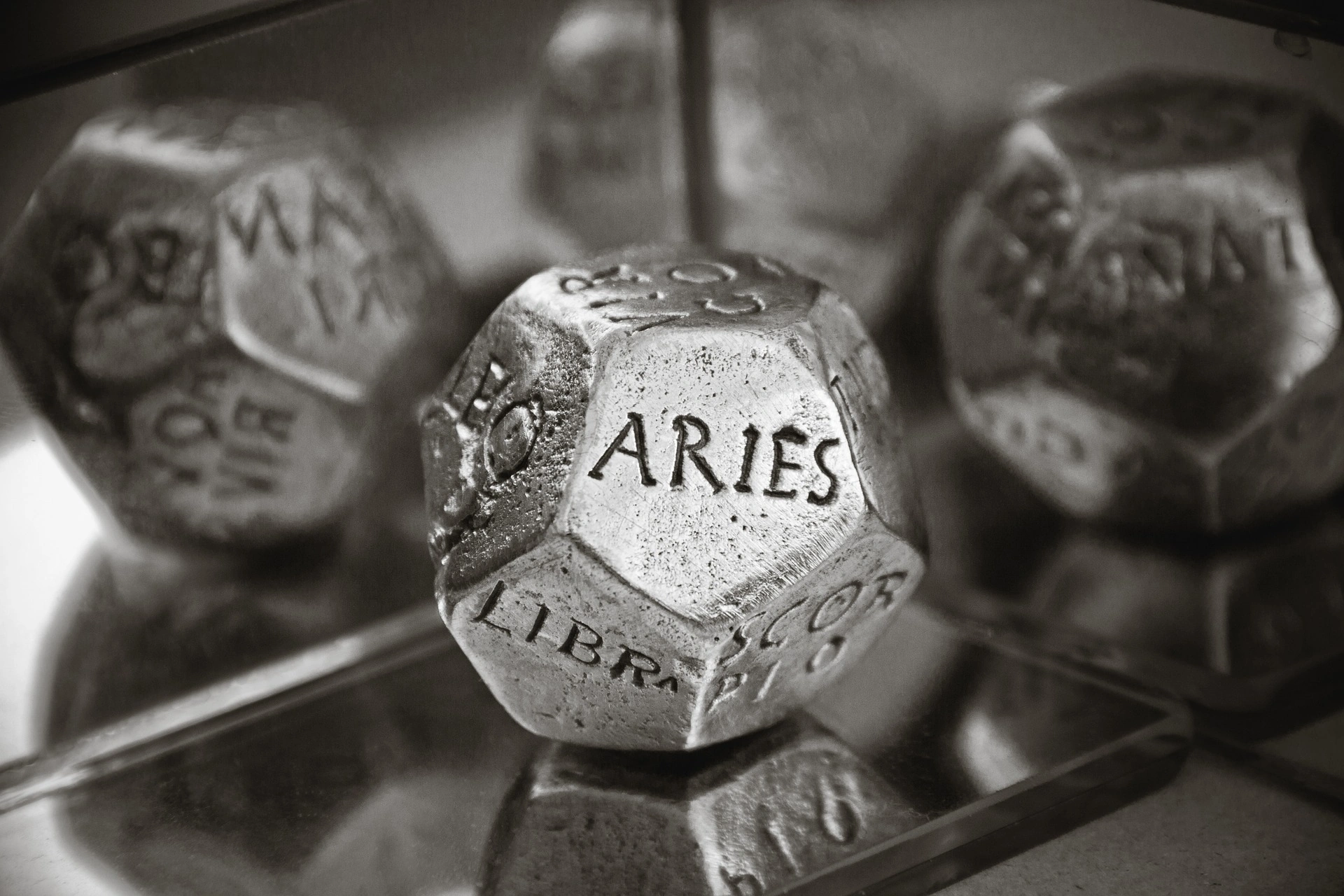 In some cultures, or for some games, the numbers on the dice can be replaced by symbols, words, or almost anything else that can be represented. A few known cultures have long-standing superstitious traditions that use specially marked octadice for fortune-telling.
It is not surprising that across the vastness of Charted Space, with its intermingling of myriad races, cultures, and histories, these simple, easy to carry chunks of rock, bone, plastic, dura-steel, or any other material should find their way into the pasttimes of sophonts everywhere.
High technology offers solutions such as virtual reality immersion, but some alternatives have remained popular since the dawn of civilization. Nothing has stood the test of time better than dice games. Throughout history, simple cubes with six marked faces have been used in more games than could be counted. But even simple dice evolve, and today, the most popular variants are the twelve-sided Octadice.
In Dice Poker, each player places five dodecadice into a cup or similar container. The container is then shaken and rapidly turned upside down. The player looks at the five resulting upturned faces of the dice, concealing them from others. Rounds of placing, meeting, and raising wagers follows, and the player with the highest valued "hand" of dice wins. The rare rolls with all five dice showing the same number are the best hand with five 12s being the ultimate. Decreasing in value from there are four of a kind, a run of five sequential numbers, three of a kind, a run of four sequential numbers, double pairs, and single pairs.
In some variants of the game, seven dice are used, two of which (players choice) are not counted in determining the winning hand.
It is not surprising that across the vastness of Charted Space, with its intermingling of myriad races, cultures, and histories, these simple, easy to carry chunks of rock, bone, plastic, dura-steel, or any other material should find their way into the pasttimes of sophonts everywhere.

So do ttrpgs still exist or have they been replaced by VR Larp? As always a great article my friend, such a good idea to use something many people on this site have used and interacted with, and the use is in such a great way.
Your freind,
The Graiffe
Working hard at Summercamp 2026
That's a good question! I can definitely see VR Larp being a thing, but I'd like to think that a bunch of people actually sitting around a table to make up epic stories would still have a place.
The Perseus Arm - A new, alternative setting for fans of Traveller in any of its variations.
Laurels & Loot is a new, lightweight TTRPG rules system that hearkens back to the early days.
I hope so too!
Your freind,
The Graiffe
Working hard at Summercamp 2026