
Patchbook
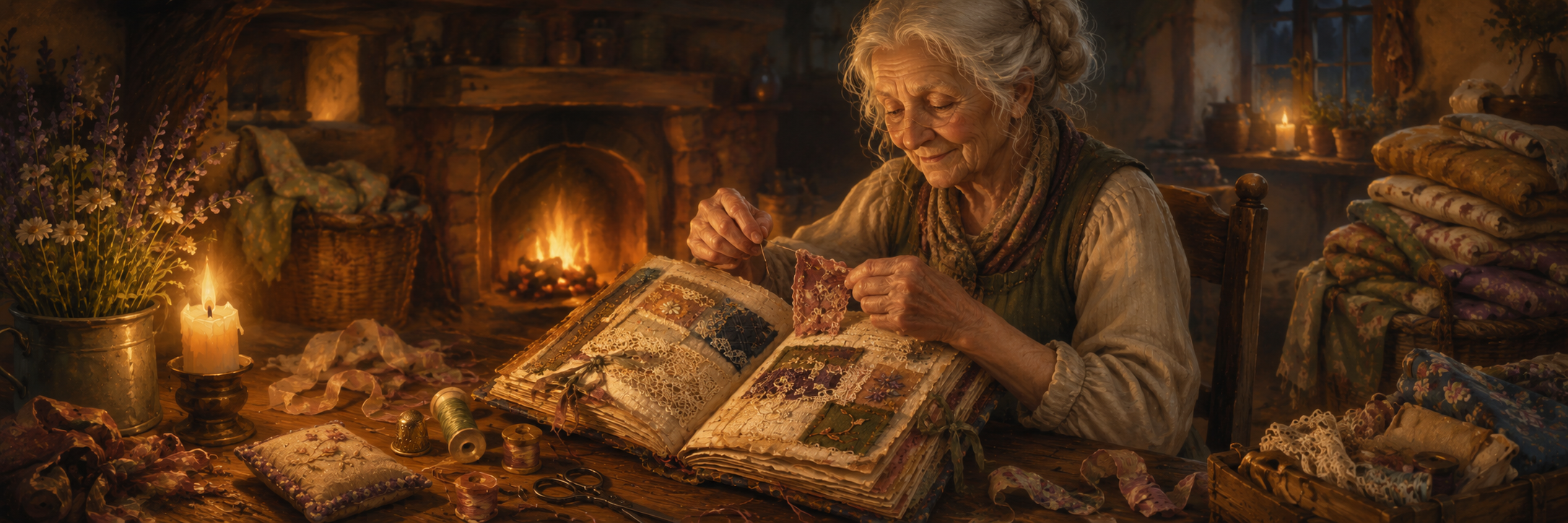
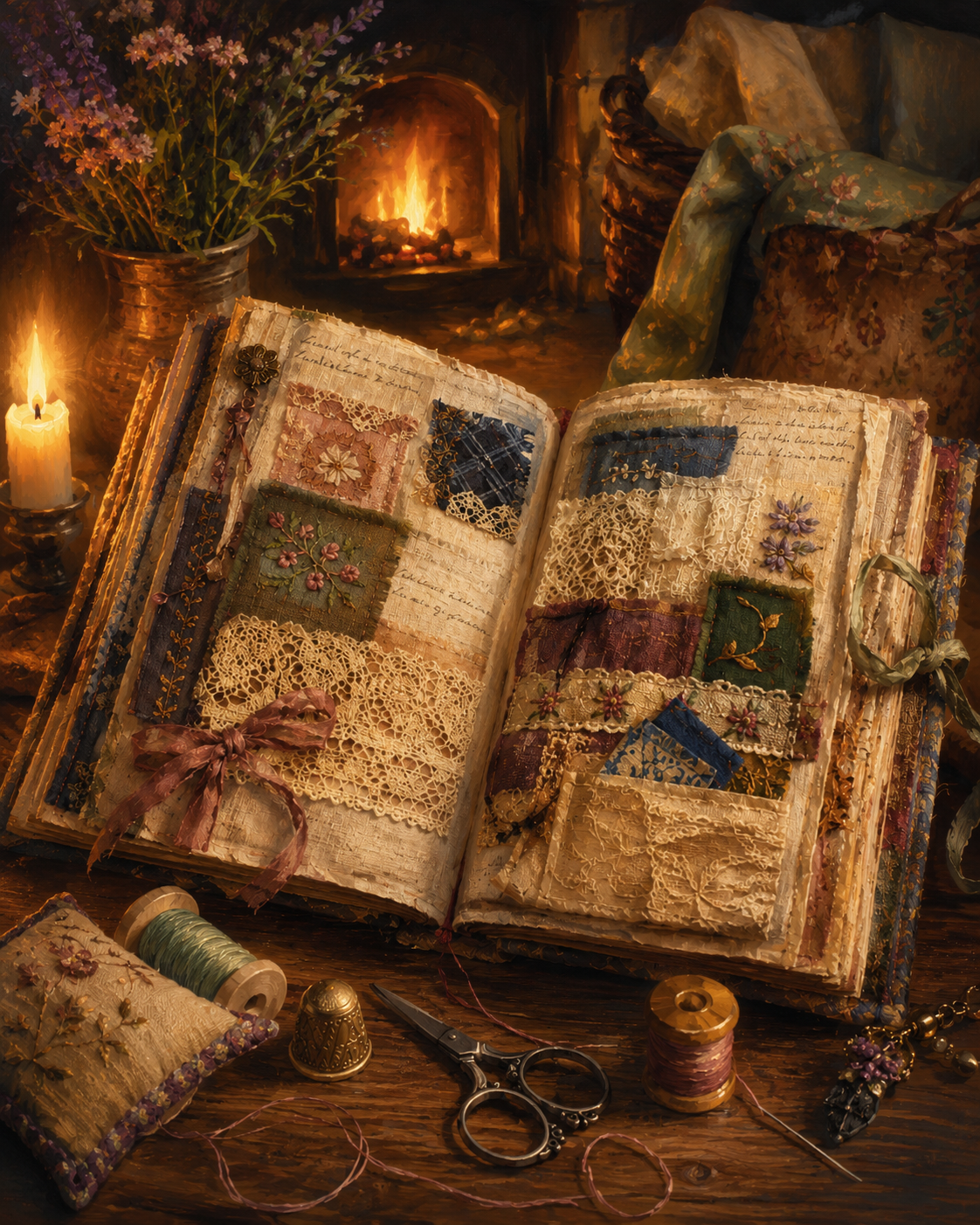
A Patchbook is a cloth-bound keepsake book used to preserve scraps of fabric from meaningful garments, household items, travels, ceremonies, and family events. Each page holds a stitched patch, ribbon, thread, or small piece of cloth, often accompanied by a name, date, place, or short written memory. Though some Patchbooks are carefully planned and beautifully embroidered, many are uneven, crowded, and deeply personal, filled slowly over years by many hands.
The hobby of keeping a Patchbook is known as memory-stitching. It is common among families, travelers, soldiers’ kin, crafters, children, and anyone who wishes to preserve moments that might otherwise fade. A patch may come from a wedding sash, a child’s first cloak, a festival costume, a sailor’s torn sleeve, a mourning veil, or the hem of a garment worn during an important journey. To outsiders, these scraps may look ordinary. To the keeper, each one is proof that something happened, someone lived, or a place was once called home.
Patchbooks are especially beloved because they require little wealth to begin. A poor household may keep one made from rough linen, patched hide, and scrap thread, while noble families may fill theirs with silk, velvet, lace, and embroidered records of marriages, births, alliances, and funerals. In either case, the purpose remains the same. A Patchbook turns worn cloth into memory.
The hobby of keeping a Patchbook is known as memory-stitching. It is common among families, travelers, soldiers’ kin, crafters, children, and anyone who wishes to preserve moments that might otherwise fade. A patch may come from a wedding sash, a child’s first cloak, a festival costume, a sailor’s torn sleeve, a mourning veil, or the hem of a garment worn during an important journey. To outsiders, these scraps may look ordinary. To the keeper, each one is proof that something happened, someone lived, or a place was once called home.
Patchbooks are especially beloved because they require little wealth to begin. A poor household may keep one made from rough linen, patched hide, and scrap thread, while noble families may fill theirs with silk, velvet, lace, and embroidered records of marriages, births, alliances, and funerals. In either case, the purpose remains the same. A Patchbook turns worn cloth into memory.
Significance
Patchbooks are valued because they preserve memories in a form that feels close to the body. A written record may name an event, but a piece of cloth can carry the touch of it. A scrap from a child’s first cloak, a wedding ribbon, a soldier’s sleeve, or a mourning veil is not merely a reminder of what happened. It is a surviving piece of the life that happened around it.
For many families, a Patchbook becomes an informal household history. Births, marriages, departures, festivals, apprenticeships, pilgrimages, military service, and deaths may all be marked through fabric. Some pages are carefully labeled, while others are understood only by the family that keeps them. A faded strip of blue linen may mean nothing to a stranger, but to the household it may recall the year a daughter left for Miranore, the last shirt worn by a grandfather, or the cloth wrapped around a newborn brought safely through winter.
Patchbooks are especially significant because they are not limited to the wealthy or formally educated. A family does not need fine parchment, trained scribes, or expensive ink to keep one. Poor households often make them from scrap cloth, rough thread, and worn covers, while noble families may preserve silk, brocade, lace, and embroidered crests. The materials differ, but the purpose remains the same: to keep memory from slipping away.
They also serve as quiet acts of grief. When a body cannot be returned, when a traveler vanishes, or when war takes someone far from home, a scrap of cloth may be the only physical piece left to preserve. Such patches are often sewn carefully, sometimes without a written note, and are rarely explained to outsiders. In many households, touching these pages is treated with the same respect as touching a grave marker.
Because Patchbooks are made slowly, often by many hands, they become shared objects of belonging. Children may add crooked stitches beside the neat work of grandparents. Spouses may sew in pieces from wedding clothes or work aprons. Travelers may bring home scraps from distant roads. Over time, the book becomes less an object owned by one person and more a record of everyone who has passed through the household.
In this way, the Patchbook is more than a hobby item. It is a domestic archive, a grief object, a family heirloom, and a piece of folk history. Where official records remember rulers, wars, treaties, and property, Patchbooks remember the texture of ordinary lives.
For many families, a Patchbook becomes an informal household history. Births, marriages, departures, festivals, apprenticeships, pilgrimages, military service, and deaths may all be marked through fabric. Some pages are carefully labeled, while others are understood only by the family that keeps them. A faded strip of blue linen may mean nothing to a stranger, but to the household it may recall the year a daughter left for Miranore, the last shirt worn by a grandfather, or the cloth wrapped around a newborn brought safely through winter.
Patchbooks are especially significant because they are not limited to the wealthy or formally educated. A family does not need fine parchment, trained scribes, or expensive ink to keep one. Poor households often make them from scrap cloth, rough thread, and worn covers, while noble families may preserve silk, brocade, lace, and embroidered crests. The materials differ, but the purpose remains the same: to keep memory from slipping away.
They also serve as quiet acts of grief. When a body cannot be returned, when a traveler vanishes, or when war takes someone far from home, a scrap of cloth may be the only physical piece left to preserve. Such patches are often sewn carefully, sometimes without a written note, and are rarely explained to outsiders. In many households, touching these pages is treated with the same respect as touching a grave marker.
Because Patchbooks are made slowly, often by many hands, they become shared objects of belonging. Children may add crooked stitches beside the neat work of grandparents. Spouses may sew in pieces from wedding clothes or work aprons. Travelers may bring home scraps from distant roads. Over time, the book becomes less an object owned by one person and more a record of everyone who has passed through the household.
In this way, the Patchbook is more than a hobby item. It is a domestic archive, a grief object, a family heirloom, and a piece of folk history. Where official records remember rulers, wars, treaties, and property, Patchbooks remember the texture of ordinary lives.
Item type
Miscellaneous
Rarity
Common
Base Price
Priceless


A great combination of a scrapbook and quilting. Wonderful idea