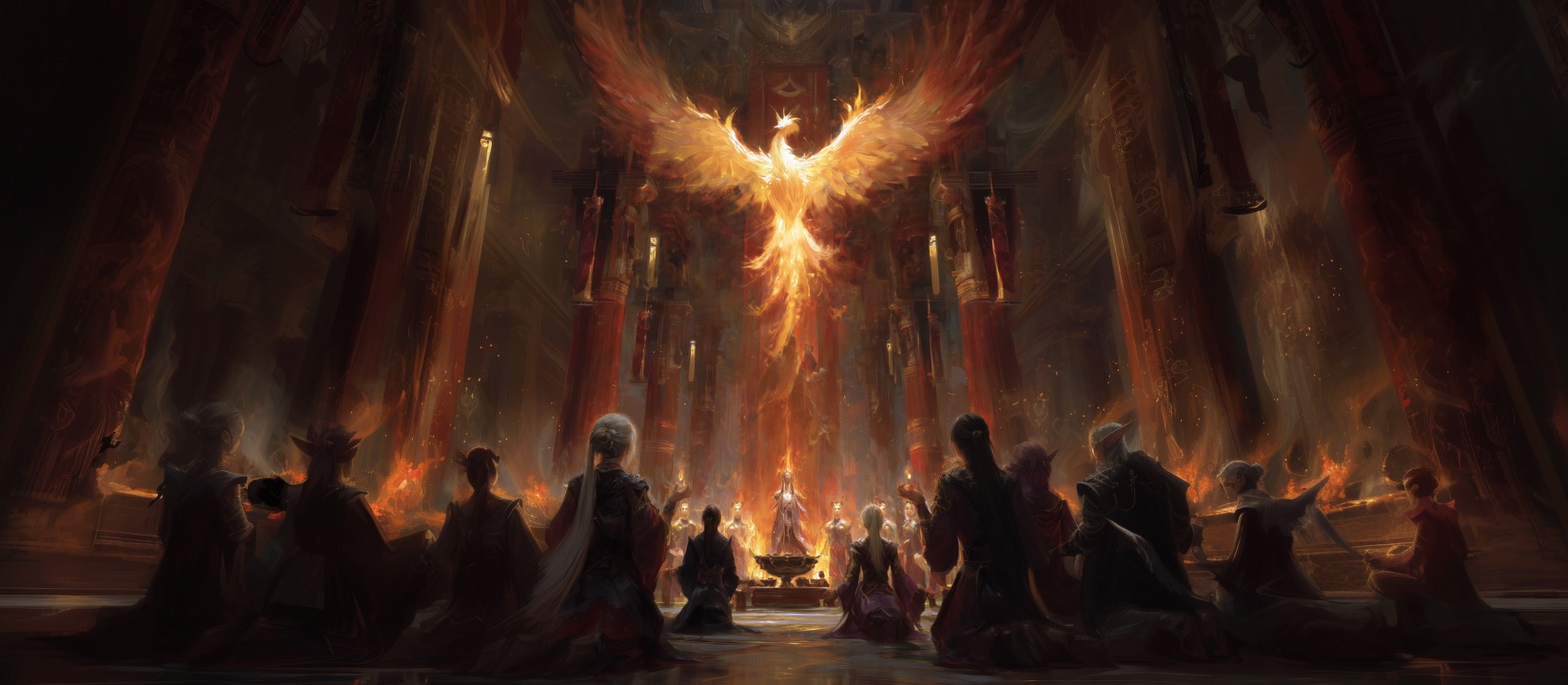
The Ashen Feather
Listen to the story
... as narrated by Lord Prince Shin Han, second son of the Holy Emperor Liu Rong Han
The Myth
In the First Age, when Heaven still leaned close enough to hear mortal prayers without intermediaries, there lived a woman named Mei-Lan, keeper of the eastern watchfires. Her duty was simple: each night she was to tend the flame that marked the boundary between order and the encroaching dark. So long as the fire burned, the land remained in balance.
Mei-Lan was neither noble nor priestess. She had no children, no husband, and no name recorded in the ancestral halls. Yet she performed her duty with perfect constancy, never allowing the fire to falter, even during storms that flayed the hills bare or winters that cracked stone.
One year, a great imbalance came upon the realm. Crops failed. Rivers receded. The sky dimmed as though Heaven itself had turned its face away. The scholars said the fire still burned—but the meaning of the fire had weakened. Duty, they whispered, had become habit. Habit had become hollow.
On the final night of the year, the eastern flame began to die.
Mei-Lan fed it oil. She fed it timber. She fed it her own cloak. Still the fire shrank, thin and trembling. From the dark beyond the watch-hills came the sound of wings, vast and unseen.
Then the Phoenix appeared.
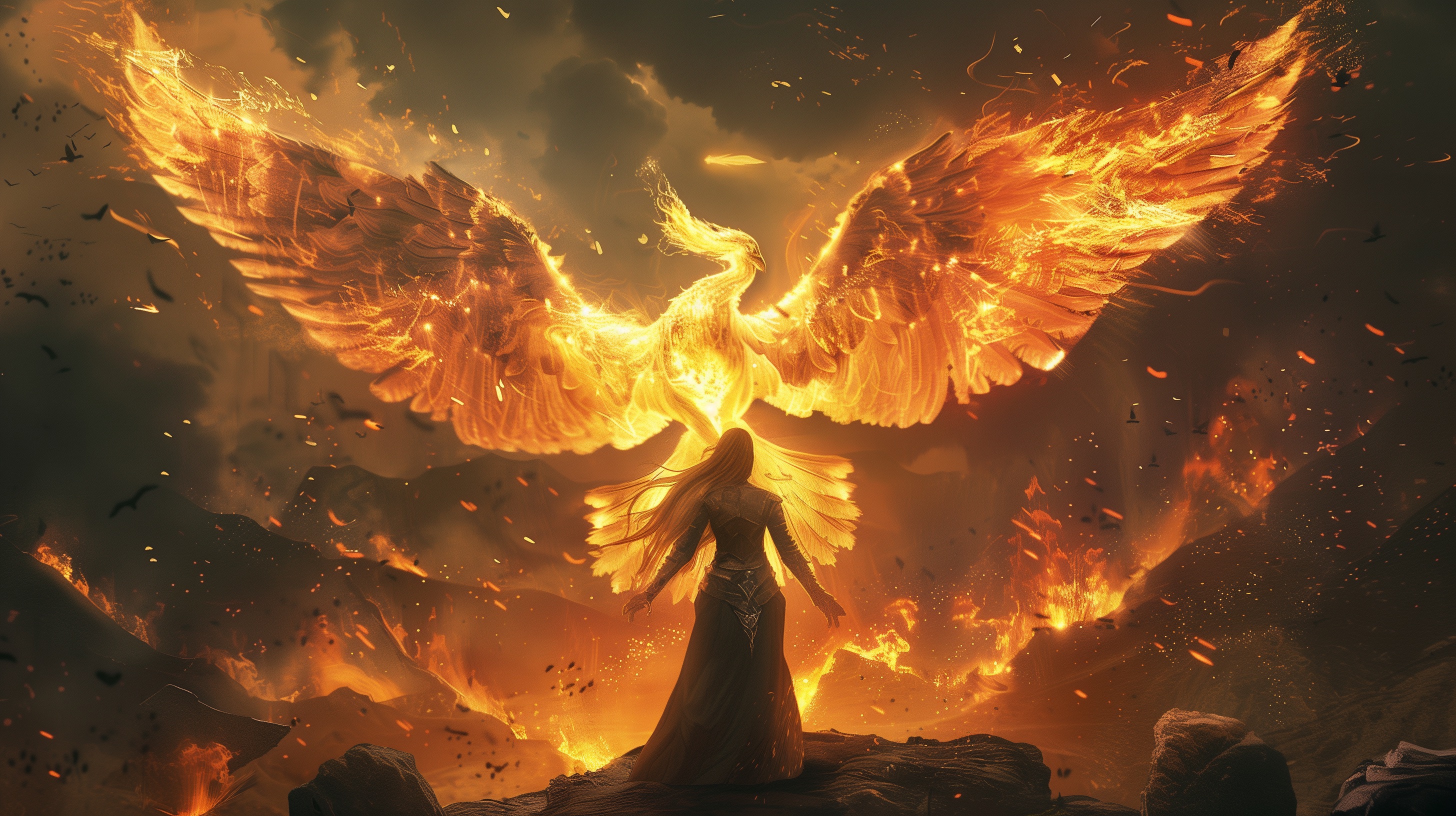
It descended not in glory, but in silence—its feathers blackened, its eyes dim embers. It spoke not with words, but with certainty:
“The fire no longer recognizes its purpose.”
Mei-Lan knelt. She did not beg. She did not ask to be spared. She asked only one question:
“What is required?”
The Phoenix answered:
“What has always been required.”
Mei-Lan understood.
She removed her name-token—the small wooden slip every citizen carried, carved with lineage and ward—and cast it into the fire. The flame brightened, but not enough. She cut her hair and fed it to the embers. The fire steadied, but still faltered.
At last, she stepped into the flame herself.
As her body burned, the fire roared back to life—not fed by flesh, but by intent. The Phoenix spread its wings, ignited, and was consumed alongside her. The night sky blazed like dawn.
By morning, the land was renewed. The rivers flowed. The sky cleared. Where the watchfire had stood, there was only ash—and within it, a single feather, unburned.
The scholars argued for years over what had been lost that night. Some claimed Mei-Lan had become the Phoenix. Others said the Phoenix had been reborn through her. The Imperial Cult recorded only this:
“She offered not her life, but her place in the world. And so the world endured.”
It is said that from that ash arose the first Emperor, crowned not by bloodline, but by sacrifice. And thus the Phoenix became the sacred symbol of the Yun—not because it rises again, but because it chooses to burn.
To this day, Yun children are taught:
“Greatness is not the will to survive.
It is the courage to be consumed,
so that others may stand in the light.”
And when an Emperor is crowned, a phoenix feather—white with ash-darkened tip—is placed upon the altar, to remind all present that divinity is not inherited. It is paid for.
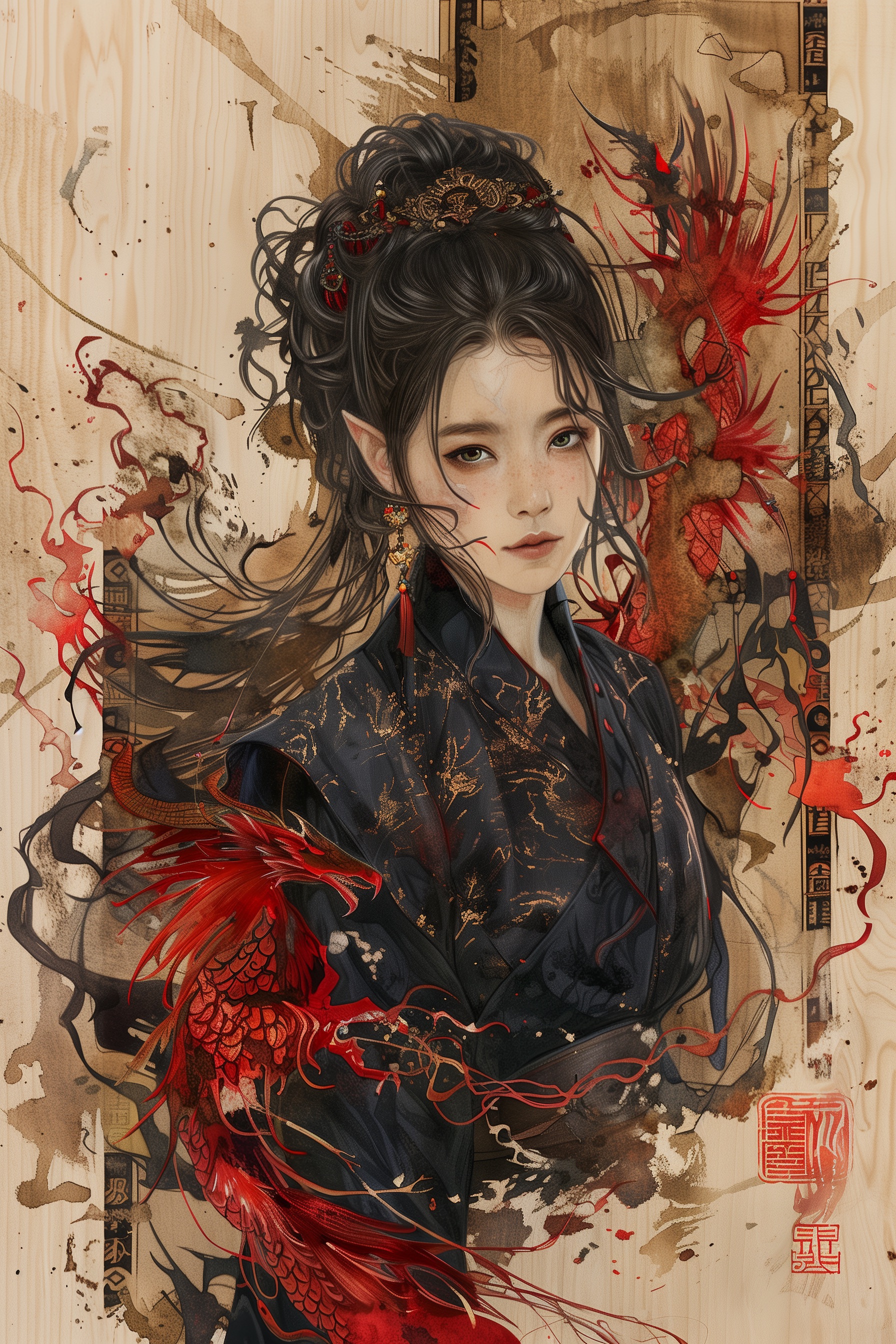
"Face of the Phoenix"
Traditional Yun painting Portraying Mei-Lan
A Yun Myth of Sacrifice, Duty, and the Sacred Phoenix
This story is told since the time before the empire, when the now Imperial Cult was called the Cult of the Phoenix
and it was the only connected link between the waring factions of the 7 kingdoms of Ancient Yun
The myth is a cornerstone of Yun culture and embodies its ethics and beliefs of honor and sacrifice for the greater good of the Yun Sacred Empire.
