

Witches/witchcraft.
Magic is a conversation. The witches of the realms speak in hands, listening deeply to know the response of the universe.
Within the witch there is always a touch of the outcast. No matter how connected or influential, witches brew within themselves something fiercely loyal to themselves and that makes them othered by the very communities they foster and try to protect. They deal in the interaction between chaos and nature, between chaos and community, bundling it all up into a package that is unique to each witch.
They blend their version of magic with basic Apothecary, being the local Ember, some light divination and often some sort of brewing or industry. Most see it as their task to uplift those around them, not through control but with providing skills that make the people they see to feel protected and safe and able to live their lives knowing there is backup - even if the backup is the weird one just outside town.
The Craft
Their works, their 'craft' is the interplay between themselves, the well of possibility and the rest of the world. Theirs is a conversation in gesture, movements turning into phrases, phrases gathering sentences until they speak a whole universe of possibility into being with just their hands. They draw from themselves, and this restricts the power of the craft. While magery or demonic energies can pull support from other factors, a witch's power is their own body, where great magics can leave a witch eternally altered.
Their craft, unlike magery is poured into everything they do, even the mundane - their will dipped over their works, providing a magic - a small spirit-like energy into every task in a way that sets aside their way of working a task from the normal way of doing it. To put it plainly, there is a metaphysical part of a witch in everything he/she/they do.
There's something universal in the candle, the cauldron and the station. While each cornerstone has its own name across the ages and the realms, they each are eternally a part of the toolbox of the witch.
The candle is the place beginnings start, it is a source of light and energy and is often the place the witch picks at the edge of reality and brings forth the well into their magic. Their art starts here, and most gestures at least give reference to it. Many witches place an effigy of it somewhere on their body in accessory or tattoo - so that they may carry the beginning of things with them always.
The cauldron is their place of creation, whether that be a hearty stew, or a complex potion. What the cauldron represents in a witch is not the possibility of creation, but the execution of it. A modern witch might find her cutting board her cauldron, or her fume hood. It is the place where things get done, and for that reason most cauldrons almost always have something on the go. There are stories of an Infernus witch whose cauldron was a forge, whose magma depths brought forth the strangest solutions to iron demon woes.
The station used to be called the shrine, a place where the witch communes with that outside themselves, but as the reader is viewing this through a Levis lens, as Levis has become more outwardsly secular, the shrine has taken on a new name. Still about seeking outwards, connotations of the shrine - worship and ritual, have changed to centering, spirituality and routine. The station is about the focus one recieves by doing the same tasks, and how one can let go of the now enough to see the whole picture.
Common Gestures
Enhance: when used in writing or hand movements it is a curve with a kick to it, used to add more power to a thing already containing power, this is like writing with an exclamation point or all in caps.
Call/draw: described as a swirling spiral in the horizontal plane with a clenched hand at the end (or a spiral with a thick centre when written), this gesture encourages a target to move towards a goal, usually the practitioner.
Call/draw: described as a swirling spiral in the horizontal plane with a clenched hand at the end (or a spiral with a thick centre when written), this gesture encourages a target to move towards a goal, usually the practitioner.
The Coven
Witches are a blend of outsider and community, and why it is less common to see a masculine presenting witch - for the masculine outsider is more comfortable being alone. In this energy the coven is the grouping of witches to create their own groupings of otherness. Whether to help each other out, pass on news from far edges of the circle, or to just collect and breathe as one - covens bring shared purpose to people whose personalities are as strange to each other as they are to their local communities.
Noted Practitioners
Modern witches (Levis coven):
- Astrid- witch of the Forbidden Forest, fey born and regal.
- Agava- advisor to lower Natare, Apothecary, and proud rabble rouser.
- Madam vesperine- Previous owner of Decadencey, she now sits on the natare city council, your mother gothel type, all hair and manipulation.
- Luysi - coven leader. Skulls and botany
- Ammythist- lace and cloaks and journeys from the starberry wine region.
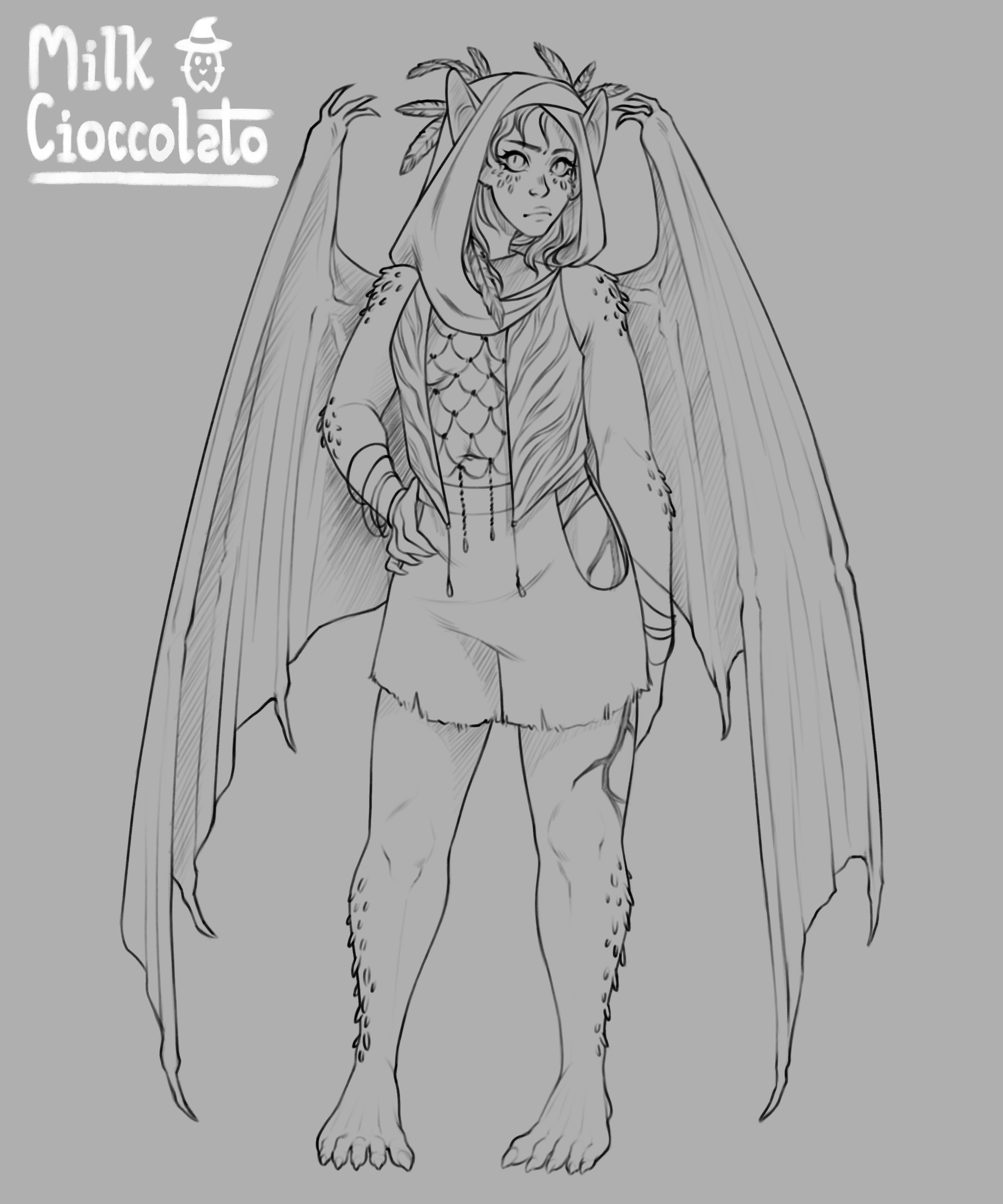
- Wren- bat creature-kin, guardian of the black pool of seeing, and virilant anti-human
Past witches:
- Nanna Del - resistance witch during the human years, hag, and main rival to the 'Stubbled man'
Astrid
Wren

Thank you for reading, feel free to give feedback.

Very cool! Love the artwork, and the nature/alchemy magic theme gives me a lot of inspiration! To answer question from your notification - I see levis coven and that makes me wonder how many more covens there are, if they are rare or abundant, and if there are larger forces at play. If certain covens or coven alliances have different morality where one side is focused on research, aiding the local communities, and discussing protection of nature and wildlife, and etc / while another coven has their focus on power and perhaps even politics? Big comment, I know, but I'd love to see some examples of coven focuses :D