
Fire Blight
Disease of the Fruit Trees
Green leaves grow splotches of brown, ones that will spread and eventually consume the entire leaf, letting it crumble at the slightest breeze. The buds and blooms will burn, showing signs of scorching that is not caused by an open flame. From the inside out, these trees will be consumed, a fire blazing through them that was not ignited, but brought on by things too small to see. Without proper care, the invisible fire will spread from one tree to the next, burning through the orchard like a thousand blazes.
Fire Blight is one of those things that is named for exactly what it is. This disease is a blight on orchards, burning through them with a fervor unless checked by the stewards of these places. Every tree shows signs of a fire that never was, burns and scorch marks left by something that cannot be seen, but can be dealt with if one has the knowledge. There was a point when only true fire scared the stewards of the Little Greenwood, quickly consuming everything they worked for. But now, something else threatens their livelihood the same way, except it cannot be seen nor is its true cause known.
With proper care and proactiveness, Fire Blight can be calmed and stopped and even prevented with the right tools. Even with all of that, it is still not something to be taken lightly as it can spread faster than wildfire, consuming an orchard, a forest, in a few days time. This is why the stewards and Botanists of the Little Greenwood paired with the Starlit Academy, hoping to stop something that so easily ravaged the fruit supply of most of the world.
Causes
While the exact cause of Fire Blight is unknown, Scholars at the Starlit Academy, along with many Botanists from the Little Greenwood, have discovered that this disease stems from some bacteria. It is believed that this disease is easily transmitted from tree to tree, especially through the movement of various pollinators such as bees, Butterflies, and birds.
The cause of Fire Blight is a specific strain of bacteria that tends to affect flowering fruit trees in particular, but mostly in the Little Greenwood. Fruit trees that grow in other areas of the world, especially the Cherry trees near the tundras, seem to be immune to this disease. Because of its transmission, the disease can spread quickly through orchards and cause massive damage if not caught early enough.
Symptoms
The symptoms of Fire Blight are where the disease gets its name. Various parts of the tree begin to look scorched, as if it had been burned. Blossoms and new growth are heavily targeted and are often surrounded by dark brown or blackened leaves that cling to twigs and branches that look burned. Over time, twigs and branches begin to die back, and the trees lose a great deal of their volume.
These symptoms can cut production of the fruit tree, but if left untreated, the tree will eventually die back to little more than a trunk before completely dying. Before a treatment was found, it was not uncommon to dig up these blighted trees and burn them so they could not spread the disease.
Treatment
As the causes of Fire Blight have been studied more in depth by Scholars and Botanists alike, those at the Starlit Academy eventually developed a powder that could be applied to afflicted trees in order to kill off the bacteria that caused the original symptoms. Once the bacteria seem to be removed, the trees can then be fertilized by a special mixture created by the Botanists that quickly feeds the trees a number of nutrients to bring the trees back to full strength.
Prevention
Through years of testing, it was learned that a special fertilizer created with plants and other items from near the Neither Tundra could give trees in the Little Greenwood the same immunity that trees near the tundra had. It is believed that an increase in nitrogen and other nutrients in the soil near the tundra gave those fruit trees an immunity boost that the Little Greenwood did not receive due to the more temperate climate.
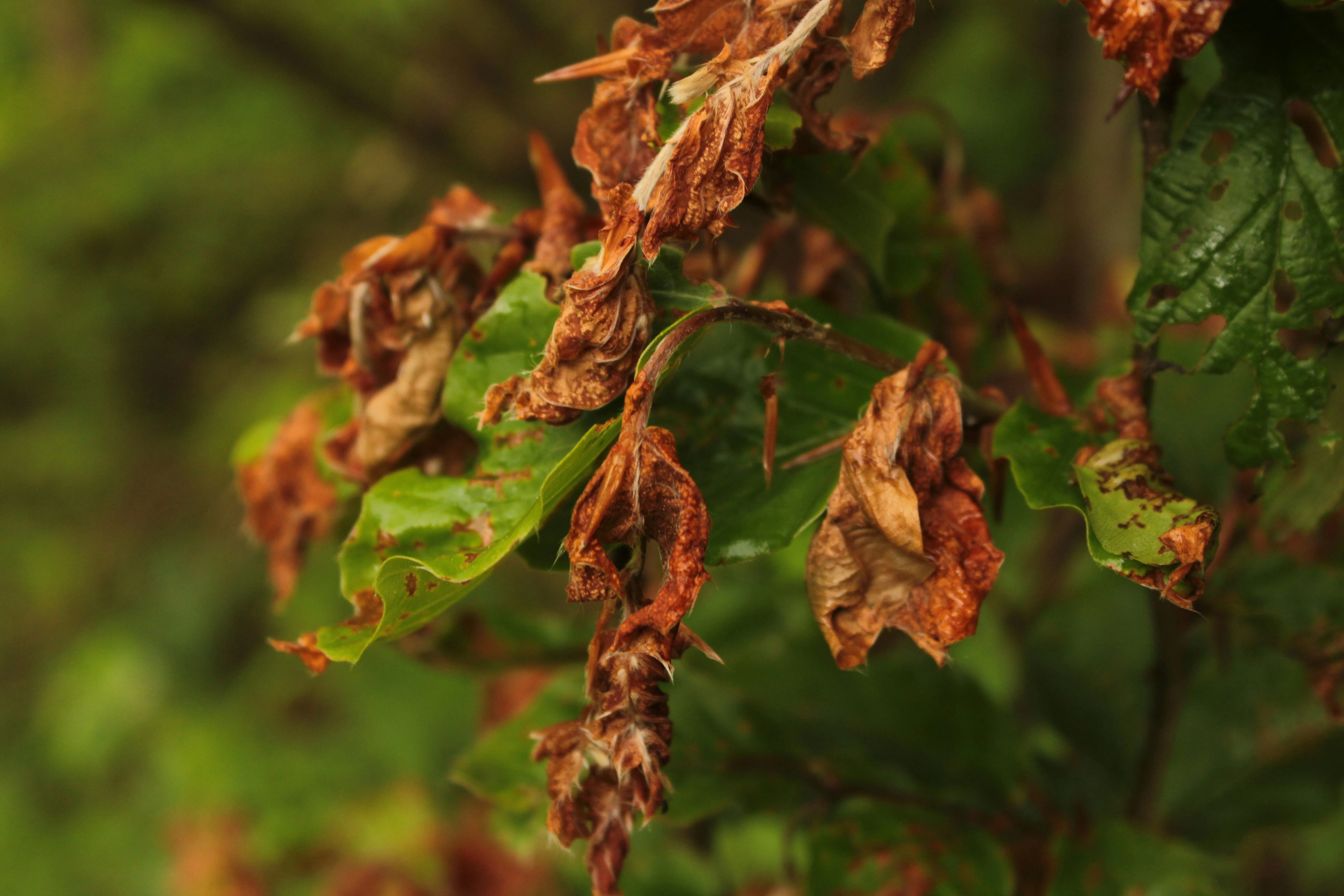
Fire Blight
Fire Blight gets its name from the way the bacteria makes the tree look as it slowly kills it. Oftentimes, branches, leaves, and other parts of the tree will look like they have been burned.
Type
Bacterial
Origin
Natural
Cycle
Chronic, Acquired
Rarity
Uncommon

Comments