
Bakongo
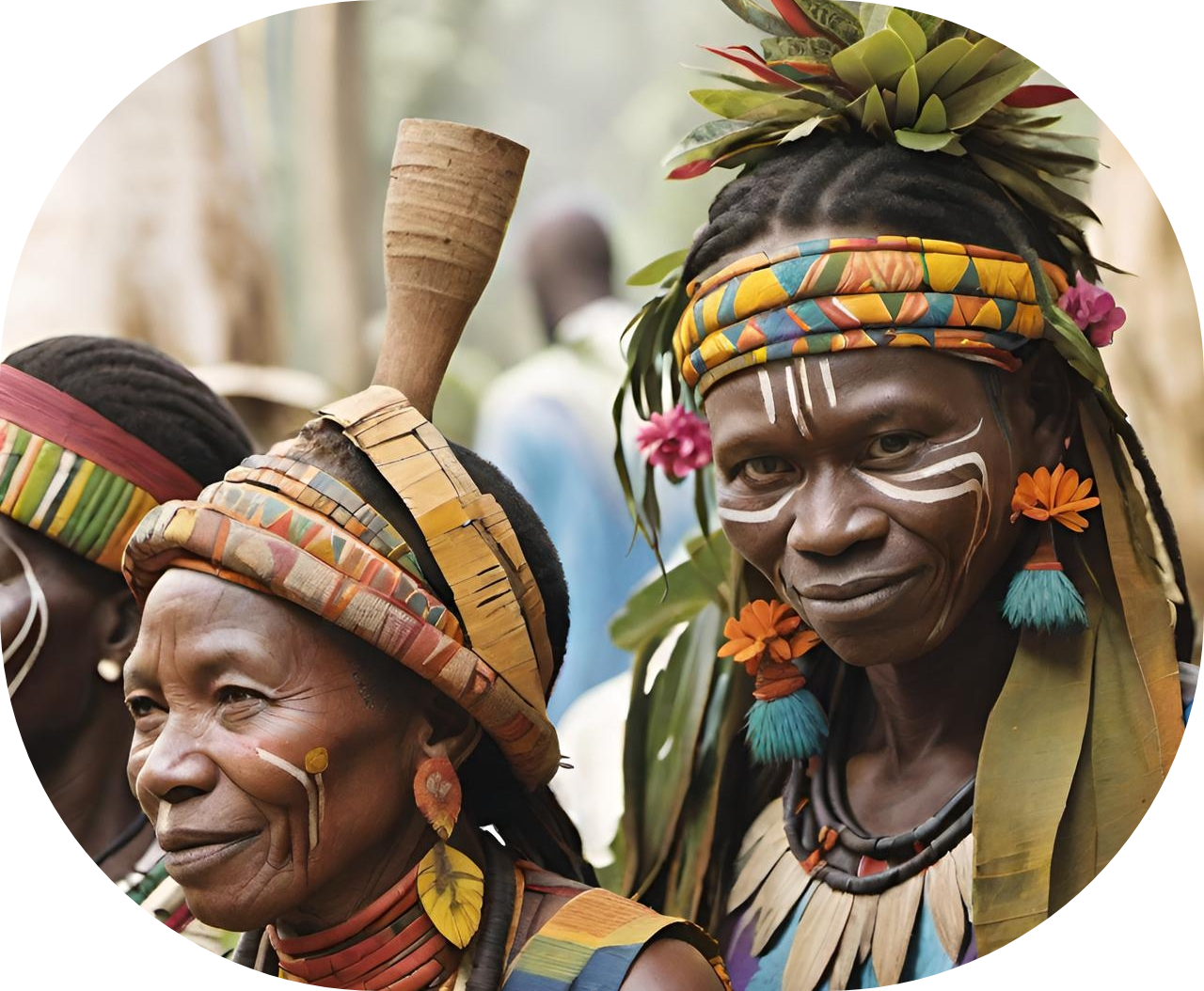
A mostly nomadic people whose tribes wander the southern end of Eluziar. They once boasted a large empire which spread throughout Musi Kongo and well into Alkelbulan. The remains of which can still be seen in their once capital, Ntima-Kongo, along the southern edge of Skaney. However, most Bakongo live a life deeply interwoven with the vibrant rainforest in small but tight knit communities. |
Bakongo tribes are very independent and barely tolerate the king of Ntima. And this tenuous respect has only plummeted further thanks to a "treaty" he struck with the Kingdom of Accia, agreeing to allow Accian soldiers to travel freely and "recruit" Bakongo teenagers without retaliation. In exchange, he is able to retain his position without threat of war from the kingdom—and the generous gold he was offered certainly sweetens the deal!
Thanks to their corrupt king, quickly bought out by the Kingdom of Accia, the kingdom's soldiers now freely roam the rainforest as they please. They patrol the jungle, regularly raiding villages and taking any child that appears close to sixteen. Most of these villages do not speak any Accian and hardly any Accians have learned Kikongo. These villages are unaccustomed to warfare, quickly overpowered by the intensively trained Accian soldiers and totally blindsided by their raids. These are a peaceful people who are intimately tight knit as a community, only worsening the wounds of these losses. The sudden abduction of their children by utter foreigners and continued inaction of their supposed king has left them rattled and desperate, none of those taken having been returned to them! |
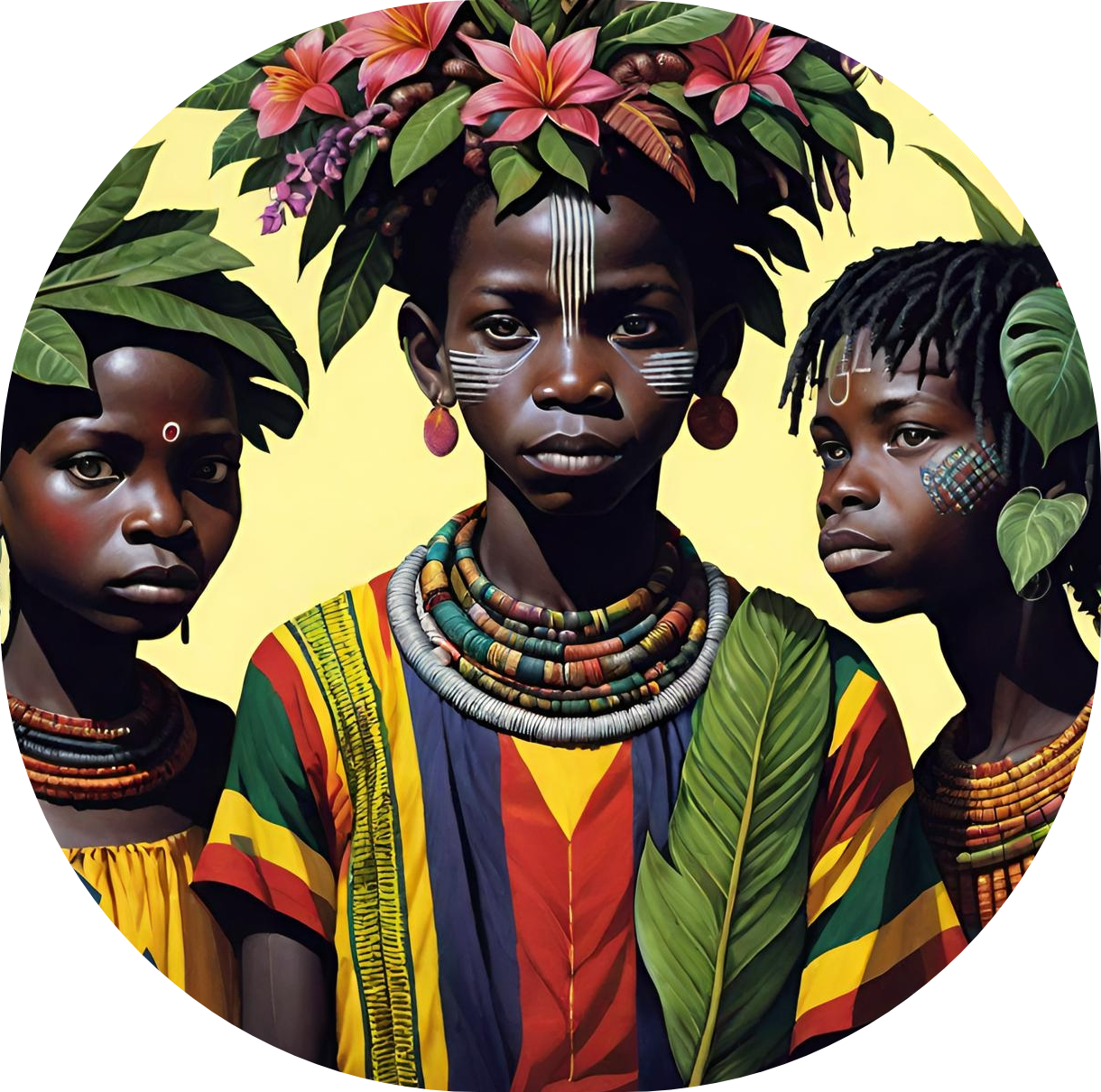

Desperate Bakongo refugees have fled south seeking Pakaysacha and the Chakuqpa Runankuna who have not only offered them haven but given them hope of resisting these invaders. With Supay the Huntsman leading the charge and bringing many of the Bakongo tribes together, allied tribes were even successful during the Mauling of the Iron Fort. He has offered them answers and hope but many are still wary of the Tawantinsuyu Empire that arrived with him. Now the Bakongo are squeezed on both sides by ambitious empires, uncertain of their future. |
Torrym | Maroksi |
Lithyr |
Maralith | Besida | Iliog |
Aura |
Body |
Craft |
Diet |
Eye |
Form |
Manipulation | Movement |
Sense |
Skin |
Slip |
Locations |
Language |
Kikongo is the primary language of Musi Kongo but dialects can be so different, speakers from different regions can hardly understand each other! The language of the Tawantinsuyu has become more prevalent among the rainforest since the arrival of Supay the Huntsman, those in Pakaysacha speaking both Kikongo and Runisimi. Meanwhile, hardly anyone in the rainforest speaks Accian, the language of their neighbors.
Kikongo itself has ancient traditions of both oral and written literature. Verses ares rich in proverbs, fables, riddles, and folk tales while both usic and dancing are a favorite pass time for many Bakongo tribes. |
Architecture |
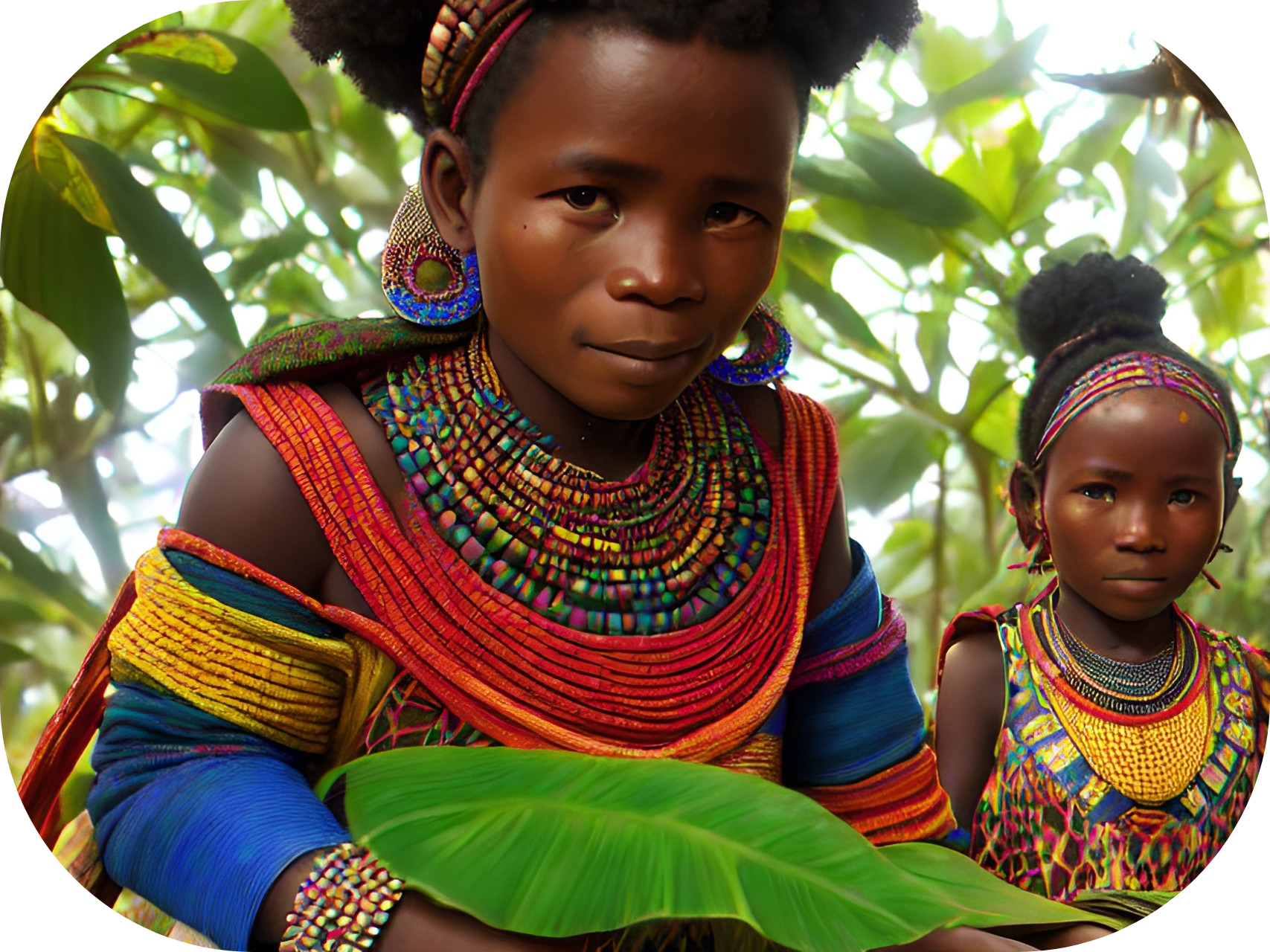
Bakongo homes are one to two room, mud-brick structures with leafy rooves. Yet the Bakongo live alongside the plants of the rainforest, any plant materials reinforcing their homes are left alive! Center posts are live trunks with the home built around them, wary not to harm them. Rooves consist of live branches, guided gently into place over time or via magic. Even the nomadic tribes rely on the plant Kaithur of one or more of their members to gently guide these constructions without harming the forest itself! Pakaysacha itself took inspiration from Bakongo architecture, its bridges and clusters of buildings crafted of living flora. |
Clothing |
Most Bakongo clothing is plant based, made from pounding bark until soft and dyed into vibrant colors with the flowers of the forest. A kind of skirt called a sarong is the mainstay, accentuated with geometric patterns and floral accessories. For different kinds of cloth, tribes may trade with the Tawantinsuyu or even the pirate strongholds a long the coast, offering rare plants from the jungle in exchange. |
Food |
The Bakongo have distinctive meals that incorporate non-conventional meats from animals of the rainforest such as chimpanzees, crocodiles and tortoises. A local vegetable known as matebele also plays an important role in their diet. Most of these tribes are hunter-gatherer societies, living a life deeply entwined with the rainforest. Cooking is done mostly outside. |
Ettiquette |
While wary of outsiders, among their own people the Bakongo are endlessly friendly and even intimate! Relationships between members of their tribe are remarkably close within their tight-knit communities, often far more touchy than foreigners are accustomed to. For example, even men commonly hold hands with each other in public as a sign of friendship.
Other forms of etiquette include holding the left hand to the right wrist when shaking hands with someone you respect and children are always to receive objects with both hands. But most distinctive is a practice interwoven with the plant Kaithur common to the region: an exchange. When parting ways, especially for more than a day, Bakongo will gift each other a piece of a plant associated with their kauthur and will keep this gift in their hair or on their clothing until they reunite. In this way, a part of them can accompany the other even while apart! It is also done in hopes that they will return to each other before the plant wilts away. |
Rites |
Most Bakongo rites and traditions revolve around children, the prize of their people. At brith, kobota elingi is performed which means "what a pleasure it is to give birth". A party is thrown wherein friends and relatives share in the parent's joy. Longo is another tradition lasting up to two months which passes along the secrets of Bakongo values which are seen as essential to taking on the responsibilities of adulthood. They are taught how to react to evil, suffering and death but the exact ceremonies differ from group to group. |

Family |
Bakongo society is matriarchal, descent tracked by matrilineal lines rather than patrilineal--through the mother's side instead of the father's. Children belong to their mother's family and the maternal uncle has more authority than even their father! While young people can marry who they choose, most Bakongo marriages are arranged by the family, partners often suggested by older siblings or extended relatives. Meanwhile individual families are usually nuclear and monogamous.
Children are a family's greatest sign of wealth but also success, so Bakongo women usually give birth to as many children as she can. But Musi Kongo is full of danger--especially predators. Bakongo mothers are very protective of their children, never leaving the youngest unattended or even putting their babies down in the first year of life. In fact even their Kaithur are generally defensive, useful for camouflage. |
Religion |

Bakongo religion revolves around ancestor worship and spiritualism. They revere Luxis by the name of Nzambe as the creator of the universe, believing they live above in a world of their ancestors' spirits. It is believed that when a family member dies an ordinary death, they join the ancestors in the spirit world and look after the living--protecting their descendants. However, those who die a violent or sudden death are thought not to rest until they have been avenged! Mystics act as guides to discover how to put a spirit to rest and discover who was responsible.
The Bakongo tie their ideas about magic to their spiritual beliefs. Enchantments are particularly well regarded, consisting of charms called nkisi. Meanwhile those with healing magic are called ngana, making use of Material Magic or herbal remedies. However, the most powerful ngana can wield True Magic in the form of glyphs, alchemy Clairvoyance, Illusionry, beastmasters and chloromancy. In contrast, there are forms of magic which are feared instead, often blamed for illnesses and misfortune. Casters with these magics are called kindoki and are believed to consume souls! Mages often labeled as kindoki wield Puppetry, bloodmagic, Telepathy and oration, commonly driven out of villages when discovered if not wrongly becoming the target of familial vengeance! |
Politics |
In the past, the Kingdom of Kongo boasted an elaborate and balanced political system. A king ruled surrounded by a council of twelve advisors representing each province. The king could be deposed by his advisors in cases of misconduct as the king was the servant of the people and entirely elected, not hereditary. When the previous king died, it was announced so that each province could prepare a candidate. The council then voted on the new king among these candidates. The new king then selected new governors to represent him in each province on a more local level. Overall, the king's role was to ensure equity among his people, maintain cosmic and social order and to humble pompous members of the community.
Unfortunately, the current political system is but a shadow of its former glory. The different provinces aren't as centrally organized as they were before and those living far from this ancient city often don't take these elections seriously, their lives hardly effected by these decisions—at least from their perspective. Most go through the motions and participate but are unaware of the corruption within the current court. Their current king keeps his advisors fat and wealthy--loyal to him alone. |



Comments