
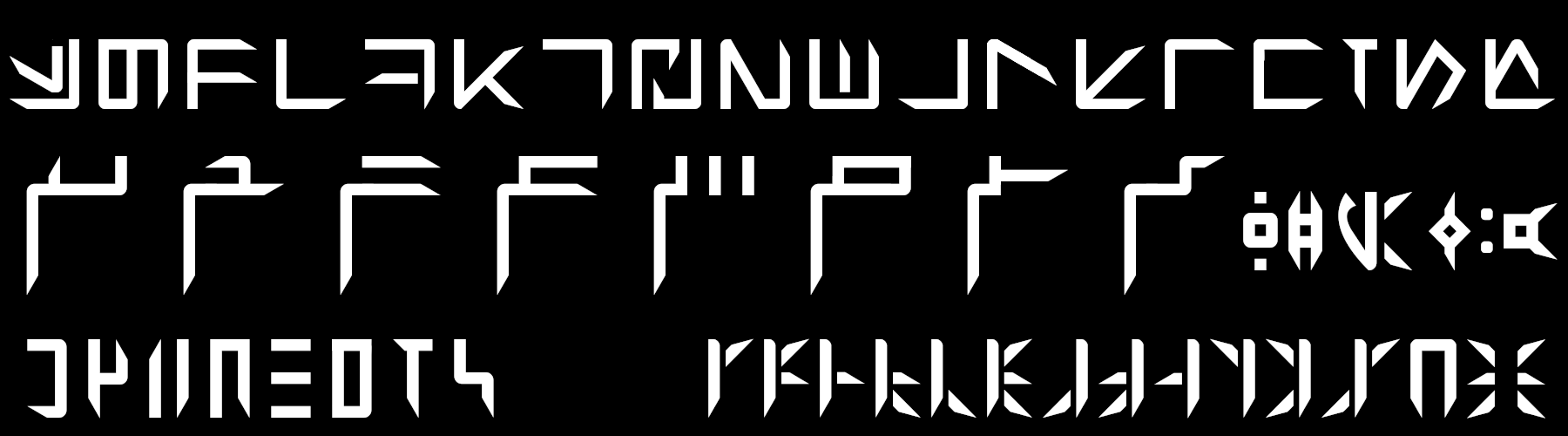
Vevari - Verbs
Verbs and Tenses
Vevari verbs have an infinitive form, plus six tenses: Simple Present, Simple Past, Simple Future, Present Progressive, Past Progressive, and Future Progressive. The simple forms can act as a participle (a verb used as an adjective) and the progressive forms can act as a gerund (a verb used as a noun) depending on the context. Participles and gerunds can have past, present, and future forms. There are numerous grammatical aspects and moods in Vevari that can modify verbs because of the nature of their most unique feature: Colors. This will be gone over in a later section.
Author's Note - As words like "To be" (Sik) tend to be irregular in most languages, and Vevari is no exception to that, I will be using the word Tev for "To Speak" in the examples below.
Infinitive and base forms
| Tense | Affix | Vevari | English |
|---|---|---|---|
| Infinitive Inf. | - | tev - Tev | To Speak |
| Simple Present Pr.Sim | -a, -na | an teva - An Teva | I Speak |
| Simple Past P.Sim | -ir, -nir | an tevir - An Tevir | I Spoke |
| Simple Future F.Sim | -or, -nor | an tevor - An Tevor | I will Speak |
| Present Progressive Pr.Prg | -sa, -esa, -nesa | an tevesa - An Tevesa | I am Speaking |
| Past Progressive P.Prg | -rs, -irs, -nirs | an tevirs - An Tevirs | I was speaking |
| Future Progressive F.Prg | -ra, -ora, -nora | an tevora - An Tevora | I will be Speaking |
Additional Aspects
Additional verb aspects are made by adding affixes to preceding pronouns. Any pronoun can be modified with these affixes. When pronouns are not used, helper words are used instead. When spoken it doesn't sound that different, and depending on the speaker, they might use independent words with pronouns instead of affixes, and they might modify regular nouns as if they were pronouns.
Further tenses can be made by combining these aspects, using both pronoun modification and helper words. It is possible though wildly improbable in Vevari to combine all of these to make a sentence that is perfect, imperative, passive, conditional and negative at the same time.
Even more additional aspects can be created by adding a color as an affix to a verb, and combinations can get even more absurd with these, which will be gone over later.
| Aspect | Pronoun affix | Helper Word | Vevari | English |
|---|---|---|---|---|
| Perfect Prf | -ni | Ani | anni teva - Anni Teva. | I have spoken. |
| Imperative* (command) Imp | -ki, -aki | Aki | denki teva - Denki Teva. | You speak. |
| Passive* Pass | au-* | au | an auteva - An Auteva. | I am spoken. |
| Conditional* Cond | -shi, -ashi | Ashi | anSi teva - Anshi Teva. | If I speak, (Then) |
| Negative* Neg | -so | So* | anso teva - Anso Teva. | I do not speak. |
Notes
*1) Imperatives are usually used in the second person only.
*2) "So" is also the Vevari word for No. As a helper word it is the only word that is written after the verb, while all others are written before.
*3: Vevari sentences have an active voice by default (the subject is the one performing the the verb on the object), but can be changed to passive (The subject has the verb being performed on them by the object).
*4) The passive affix ou- is considered irregular in Vevari, and is used on verbs instead of pronouns (and as mentioned earlier, is the only instance in this language of this sound occurring). Vevari sentences have an active voice by default, but are changed to passive by this affix. Passive sentences are a large part of Formal Vevari speak, but isn't used as often in casual speak. 5) Conditional statements generally require an object, though "If I speak" is a valid statement in Vevari.
*2) "So" is also the Vevari word for No. As a helper word it is the only word that is written after the verb, while all others are written before.
*3: Vevari sentences have an active voice by default (the subject is the one performing the the verb on the object), but can be changed to passive (The subject has the verb being performed on them by the object).
*4) The passive affix ou- is considered irregular in Vevari, and is used on verbs instead of pronouns (and as mentioned earlier, is the only instance in this language of this sound occurring). Vevari sentences have an active voice by default, but are changed to passive by this affix. Passive sentences are a large part of Formal Vevari speak, but isn't used as often in casual speak. 5) Conditional statements generally require an object, though "If I speak" is a valid statement in Vevari.
Creating Questions
Questions are created by moving the helper word to the start of a sentence. All aspects can create questions in this way. Using the Imperative to create a question like turns it into a Request rather than a command.
For Simple Tenses and Progressive Tenses with no aspect marker, the color Gray, or "Mara" is used, turning a sentence into a so-called "Inquisitve" form, allowing for simple questions to be asked.
For sentences with other verb aspects in them, questions can also be created with the color Gray, though Regalti often simplify it by moving the helper word to the start of a sentence and leaving out the color. All aspects can create questions in this way. Using the Imperative to create a question like turns it into a Request rather than a command.
| Tense | Helper Word | Vevari | English |
|---|---|---|---|
| Simple Present Pr.Sim | Mara | mara an teva - Mara An Teva? | Do you speak? |
| Simple Past P.Sim | Mara | mara an tevir - Mara An Tevir | Did you speak? |
| Simple Future F.Sim | Mara | mara an tevor - Mara An Tevor? | Will you Speak? |
| Present Progressive Pr.Prg | Mara | mara an tevesa - Mara An Tevesa? | Are you Speaking? |
| Past Progressive P.Prg | Mara | mara an tevirs - Mara An Tevirs? | Were you speaking? |
| Future Progressive F.Prg | Mara | mara an tevora - Mara An Tevora? | Will you be speaking? |
| Aspect | Pronoun affix | Helper Word | Vevari | English |
|---|---|---|---|---|
| Perfect Prf | -ni | Ani | ani an teva - Ani An Teva. mara anni teva - Mara Anni Teva. |
Have you spoken? |
| Imperative (request) Imp | -ki, -aki | Aki | aki den teva - Aki Den Teva? mara denki teva - Mara Denki Teva? |
Will You speak? |
| Passive Pass | au- | au | au an teva - Au An Teva? mara an auteva - Mara An Auteva? |
Are you spoken? |
| Conditional Cond | -shi, -ashi | Ashi | aSi an teva - ashi An Teva? mara anshi teva - Mara Anshi Teva? |
You would speak (if)? |
| Negative* Neg | -so | So* | so an teva - So An Teva? | Don't you speak? |
Colors to additional Verb Aspects
Each of the eleven base colors (and Gray) can create an additional verb aspect. Colors can be used as Verb Affixes, or as a helper word, depending on form.
((Author's Note: The English Language has an absurd number of verbs that all encode slightly different meanings, so many colored aspects can just be replaced by an English verb outright (shown in blue text below). With other colored aspects, especially Colorless, there are no English equivalents to these without writing out an entire set of extra words to convery the meaning.))
| Aspect | Pronoun affix | Helper Word | Vevari | English |
|---|---|---|---|---|
| Temperate (Engagement) Red | Tra- | Eshra | an tra-teva - An Tra-Teva. | I (engaged) Speak. I Firmly Speak. |
| Intentional Orange | Bi- | Ibba | an bi-teva - An Bi-Teva. | I (intentionally) speak. I Articulate. |
| Acceptive (or Neutral) Yellow | Fra- | Effra | an fra-teva - An Fra-Teva. | I (am fine to) speak. I Casually Speak. |
| Temperate (Detached) Blue | Lo- | Edda | an lo-teva - An Lo-Teva. | I (disengaged) speak. I Mutter. |
| Impulsive F-Violet | Ro- | Okka | an ro-teva - An Ro-Teva. | I (randomly) speak. I Exclaim. |
| Destructive Black | Leka- | Leka | an leka teva - An leka Teva. | I (Destructively) speak. I Curse. |
| Obligational White | Sara- | Sara | an sara teva - An Sara Teva. | I speak (Obligatively). I Testify. |
| Null Colorless | Nora- | Nora | an nora teva - An Nora Teva. | I (am not really here to) speak. |
| Ability/ Permissive Green | Ha- | Asha | an ha-teva - An ha-Teva. | I can speak. |
| Neccessitative Cyan | Sa- | Issa | an sa-teva - An Sa-Teva. | I need to speak. |
| Desire or Wish N-Violet | Ko- | Akko | an ko-teva - An Ko-Teva. | I want to speak. |
| Inquisitive Gray | Mara- | Mara | an mara teva - An mara Teva. | I speak (inquisitively). |
Complex Forms
Vevari can combine these additional aspects with each other as well as the simple and progressive forms. They can combine multiple aspects together for rather complex verb forms. When multiple additional aspects are combined together, the order matters and it can be somewhat complex.
| Combined Aspects | Vevari | English |
|---|---|---|
| Perfect Past Prf P. | anni tevir - Ani Tevir. | I had spoke. |
| Perfect Present Progressive Prf Pr.Prg | anni tevesa - Ani Tevesa. | I have been speaking. |
| Conditional Perfect Present Progressive Negative Cond Prf Pr.Prg Neg | anSini tevesa so - Anshini Tevesa so. |
I would not have been speaking. |
| Perfect Negative Past Prf Neg P. (Using the Pronoun "Soti" for Neither) | sotini tevir - Sotini Tevir. |
Neither had spoke. |
Sample Verb Conjugations
((Author's Note: I plan to eventually have 10-20 sample verbs in this section, and will make them up as I go...))To Speak
Definition: To say something.
| Tense | Vevari | English |
|---|---|---|
| Infinitive Inf. | tev - Tev | To Speak |
| Simple Present Pr.Sim | an teva - An Teva | I Speak |
| Simple Past P.Sim | an tevir - An Tevir | I Spoke |
| Simple Future F.Sim | an tevor - An Tevor | I will Speak |
| Present Progressive Pr.Prg | an tevesa - An Tevesa | I am Speaking |
| Past Progressive P.Prg | an tevirs - An Tevirs | I was Speaking |
| Future Progressive F.Prg | an tevora - An Tevora | I will be Speaking |
| Aspect | Helper Word | Vevari | English |
|---|---|---|---|
| Perfect | Ani | ani teva - Ani Teva. an ani teva - An Ani Teva. |
I have Spoken |
| Imperative | Aki | denki teva - Denki Teva. de aki teva - De Aki Teva. |
You Speak. |
| passive | Au | an auteva - An Auteva. an au teva - An Au Teva. |
I am spoken. |
| Conditional | Ashi | anSi teva - Anshi Teva. an aSi teva - An Ashi Teva. |
If I Speak. |
| Negative | So | anso teva - Anso teva. an teva so - An teva so. |
I do not Speak. |
To Acquire
Definition: To obtain an object or material (in a neutral sense compared to Take, Steal, Recieve, or Gift).
| Tense | Vevari | English |
|---|---|---|
| Infinitive Inf. | tev - Lor | To Acquire |
| Simple Present Pr.Sim | an lora - An Lora | I Acquire. |
| Simple Past P.Sim | an lornir - An lornir | I Acquired. |
| Simple Future F.Sim | an lornor - An Lornor | I will Acquire. |
| Present Progressive Pr.Prg | an loresa - An Loresa | I am Acquiring. |
| Past Progressive P.Prg | an lorirs - An Lornirs | I was Acquiring. |
| Future Progressive F.Prg | an lorora - An lorora | I will be Acquiring. |
| Aspect | Helper Word | Vevari | English |
|---|---|---|---|
| Perfect | Ani | ani lora - Ani Lora. an ani lora - An Ani Lora. |
I have Acquired |
| Imperative | Aki | denki lora - Denki Lora. de aki lora - De Aki Lora. |
You Acquire. |
| passive | Au | an aulora - An Aulora. an au lora - An Au Lora. |
I am Acquired. |
| Conditional | Ashi | anSi lora - Anshi Lora. an aSi lora - An Ashi Lora. |
If I Acquire. |
| Negative | So | anso lora - Anso lora. an lora so - An lora so. |
I do not Acquire. |
Irregular Verbs
Like all languages, Vevari has irregular verbs, and like all languages, these irregular verbs tend to be the most used ones. An irregular verb in Vevari is a verb that changes its form in unpredictable ways and do not follow the normal tense or aspect rules. This may include contracted forms, or special behavior with pronouns and helper words. Most irregular verbs describe basic states or state changes, while verbs describing other actions normally remain regular.
To Be
Definition (1): To exist.
Definition (2): To occur or take place.
Definition(3): To have a specified state or quality.
1) For Simple tenses, the verb is attached to the pronoun as a suffix, even for the pronoun for "We" (Issi). For other nouns, the verb is used as a stand alone word.
2) For Progressive tenses, the verb uses the endings like normal, but the /i/ sound in the verb itself is changed to a /e/ sound.
3) For additional verb aspects, the helper words are always used rather than the affixes.
Definition (2): To occur or take place.
Definition(3): To have a specified state or quality.
1) For Simple tenses, the verb is attached to the pronoun as a suffix, even for the pronoun for "We" (Issi). For other nouns, the verb is used as a stand alone word.
2) For Progressive tenses, the verb uses the endings like normal, but the /i/ sound in the verb itself is changed to a /e/ sound.
3) For additional verb aspects, the helper words are always used rather than the affixes.
| Tense | Vevari | English |
|---|---|---|
| Infinitive Inf. | sik - Sik | To Be |
| Simple Present Pr.Sim | ansi - Ansi | I Am |
| Simple Past P.Sim | ansir - Ansir | I was |
| Simple Future F.Sim | ansor - Ansor | I will be |
| Present Progressive Pr.Prg | an seka - An Seka | I am being |
| Past Progressive P.Prg | an sekirs - An Sekirs | I was being |
| Future Progressive F.Prg | an sekra - An Sekra | I will be being |
| Aspect | Helper Word | Vevari | English |
|---|---|---|---|
| Perfect | Ani | ansi ani - Ansi Ani. | I have been. |
| Imperative | Aki | desi aki - Desi Aki. | You are. |
| passive | Au | ansi au - Ansi Au. | I am being. |
| Conditional | Ashi | ansi ashi - Ansi Ashi. | If I am. |
| Negative | So | ansi so - Ansi so. | I am not. |
to Go
Definition: To move from one place or condition toward another by a person or thing's own course or motion.
1) Similar to "To Be", For Simple tenses, the verb is attached to the pronoun as a suffix. For other nouns, the verb is used as a stand alone word.
2) For Progressive tenses, the verb uses the endings like normal, but the /n/ sound in the verb itself is changed to an /s/ sound.
3) For additional verb aspects, the helper words are always used rather than the affixes.
1) Similar to "To Be", For Simple tenses, the verb is attached to the pronoun as a suffix. For other nouns, the verb is used as a stand alone word.
2) For Progressive tenses, the verb uses the endings like normal, but the /n/ sound in the verb itself is changed to an /s/ sound.
3) For additional verb aspects, the helper words are always used rather than the affixes.
| Tense | Vevari | English |
|---|---|---|
| Infinitive Inf. | ban - Ban | To Go |
| Simple Present Pr.Sim | anbi - Anbi | I go |
| Simple Past P.Sim | anbir - Anbir | I went |
| Simple Future F.Sim | anbor - Anbor | I will go |
| Present Progressive Pr.Prg | an basa - An Basa | I am going |
| Past Progressive P.Prg | an basirs - An Basirs | I was going |
| Future Progressive F.Prg | an basra - An Basra | I will be going |
| Aspect | Helper Word | Vevari | English |
|---|---|---|---|
| Perfect | Ani | anbi ani - Anbi Ani. | I have went. |
| Imperative | Aki | debi aki - Debi Aki. | You go. |
| passive | Au | anbi au - Anbi Au. | I am going. |
| Conditional | Ashi | anbi ashi - Anbi Ashi. | If I go. |
| Negative | So | anbi so - Anbi so. | I go not. |
To Have
Definition (1): To hold or possess, whether in object, quality, or state.
Definition (2): To bear as one's own.
1) Similar to "To Be", For Simple tenses, the verb is attached to the pronoun as a suffix. If there is an /n/ at the end, that consonant is dropped and the two words contract together, creating a new word. For other nouns, the verb is used as a stand alone word.
2) For Progressive tenses, the verb uses the endings like normal, but an /s/ sound is added between the verb and the affix. Also, the /ai/ sound drops into an /ei/ sound.
3) For additional verb aspects, the helper words are always used rather than the affixes.
Definition (2): To bear as one's own.
1) Similar to "To Be", For Simple tenses, the verb is attached to the pronoun as a suffix. If there is an /n/ at the end, that consonant is dropped and the two words contract together, creating a new word. For other nouns, the verb is used as a stand alone word.
2) For Progressive tenses, the verb uses the endings like normal, but an /s/ sound is added between the verb and the affix. Also, the /ai/ sound drops into an /ei/ sound.
3) For additional verb aspects, the helper words are always used rather than the affixes.
| Tense | Vevari | English |
|---|---|---|
| Infinitive Inf. | mj - Mai | To Have |
| Simple Present Pr.Sim | amj - Amai | I have |
| Simple Past P.Sim | amir - Amir | I had |
| Simple Future F.Sim | amor - Amor | I will have |
| Present Progressive Pr.Prg | an mqsa - An Meisa | I am having |
| Past Progressive P.Prg | an mqsirs - An meisirs | I was having |
| Future Progressive F.Prg | an mqsra - An meisra | I will be having |
| Aspect | Helper Word | Vevari | English |
|---|---|---|---|
| Perfect | Ani | amj ani - Amai Ani. | I have had. |
| Imperative | Aki | demj aki - Demai Aki. | You have. |
| passive | Au | anmj au - Amai Au. | I am haved. |
| Conditional | Ashi | amj ashi - Amai Ashi. | If I have. |
| Negative | So | amj so - Amai so. | I do not have. |
To get
Definition: To enter a state or condition either by change, effect, or occurrence.
1) Simple and progressive tenses use slightly altered forms. Aspects can use affixes or helper words like normal.
2) In the case of the helper words and vevari script, the condensed version is shown for formatting purposes.
1) Simple and progressive tenses use slightly altered forms. Aspects can use affixes or helper words like normal.
2) In the case of the helper words and vevari script, the condensed version is shown for formatting purposes.
| Tense | Vevari | English |
|---|---|---|
| Infinitive Inf. | mj - Kod | To Get |
| Simple Present Pr.Sim | an kod - An kod | I get |
| Simple Past P.Sim | an kir - An kir | I got |
| Simple Future F.Sim | an kor - An kor | I will get |
| Present Progressive Pr.Prg | an koda - An Koda | I am getting |
| Past Progressive P.Prg | an kodirs - An kodir | I was getting |
| Future Progressive F.Prg | an kodira - An kodira | I will be getting |
| Aspect | Helper Word | Vevari | English |
|---|---|---|---|
| Perfect | Ani | anni kod - Anni Kod. nA@ nA@i kOd - An Ani Kod. |
I have gotten. |
| Imperative | Aki | denki kod - Denki kod. dE kA@i kOd - De Aki Kod. |
You get. |
| passive | Au | an aukod - An Aukod. nA@ au kOd - An Au Kod. |
I am gotten. |
| Conditional | Ashi | anshi kod - Anshi Kod. nA@ SA@i kOd - An ashi Kod. |
If I get. |
| Negative | So | anso kod - Anso kod. nA@ kOd sO - An Kod So. |
I do not get. |
To Do
Definition: To perform or execute an unspecified action.
1) For Simple tenses, the verb is attached to the pronoun as a suffix. For other nouns, the verb is used as a stand alone word.
2) For Progressive tenses, the verb uses the endings like normal.
3) For additional verb aspects, the helper words are always used rather than the affixes.
1) For Simple tenses, the verb is attached to the pronoun as a suffix. For other nouns, the verb is used as a stand alone word.
2) For Progressive tenses, the verb uses the endings like normal.
3) For additional verb aspects, the helper words are always used rather than the affixes.
| Tense | Vevari | English |
|---|---|---|
| Infinitive Inf. | gar - Gar | To Do |
| Simple Present Pr.Sim | angar - Angar | I Do |
| Simple Past P.Sim | angir - Angir | I Did |
| Simple Future F.Sim | angor - Angor | I will Do |
| Present Progressive Pr.Prg | an gara - An gara | I am Doing |
| Past Progressive P.Prg | an gari - An gari | I was Doing |
| Future Progressive F.Prg | an garira - An garira | I will be Doing |
| Aspect | Helper Word | Vevari | English |
|---|---|---|---|
| Perfect | Ani | anni gar - Anni Gar. | I have done. |
| Imperative | Aki | denki gar - Denki Gar. | You do. |
| passive | Au | an augar - An Augar. | I am Done. |
| Conditional | Ashi | anshi gar - Anshi Gar. | If I Do. |
| Negative | So | anso gar - Anso Gar. | I do not Do. |

Comments
Author's Notes
I am not a conlanger. I speak American English and my grip on Spanish is about as stable as a first grader. If you look at it too closely you'll probably see the glue holding it together.