
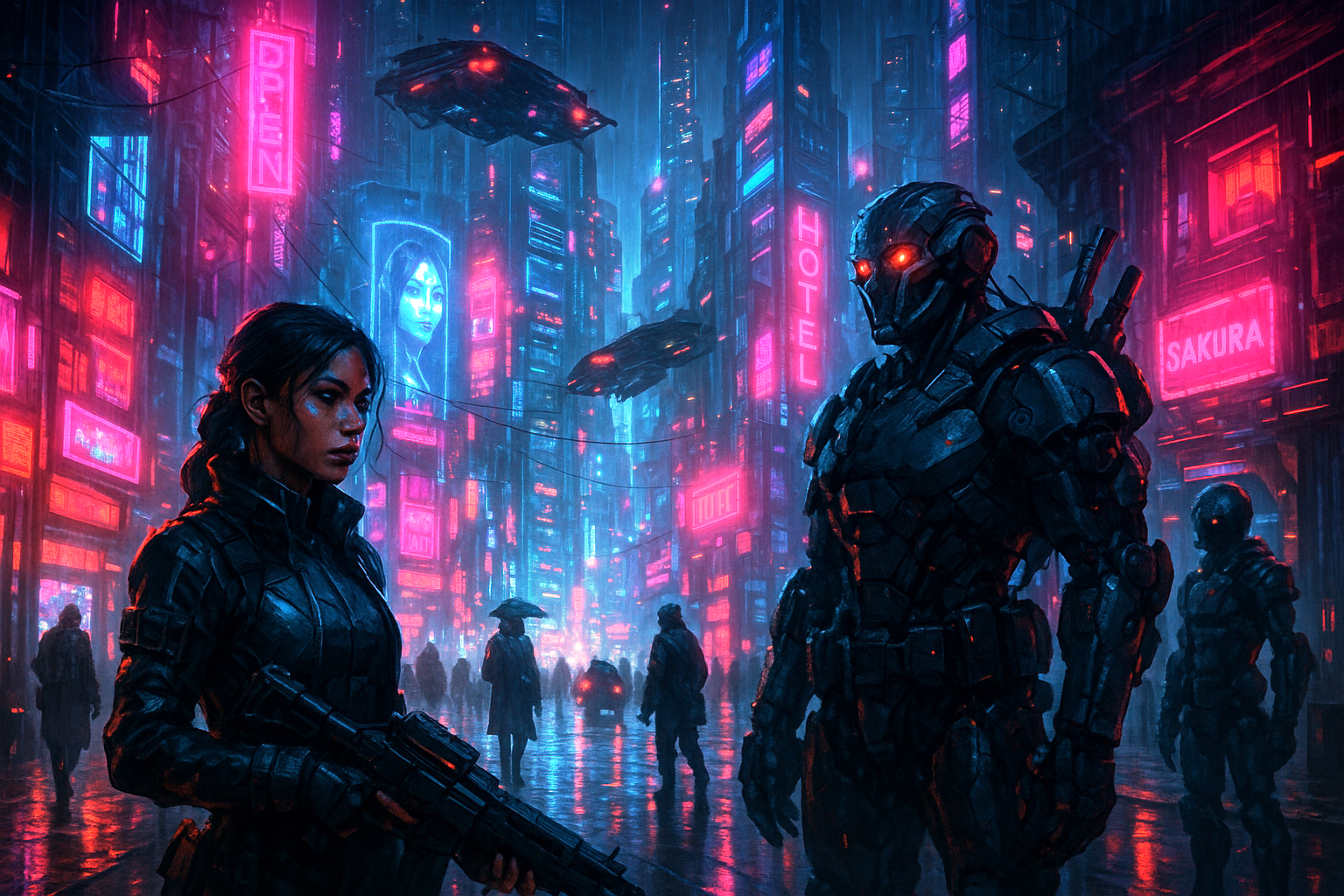
Triptych
Triptych
Street Names: Trippy, Triple-Vision, Third Eye, Saints, Threefold
Classification: Neuro-Optical Hallucinogenic / Legacy Anti-Seizure Pharmaceutical
Origin: Mars, 2389 CE
"Don't make life decisions on a Triptych night."
Overview
Triptych occupies a strange place in pharmaceutical history.
Unlike most recreational drugs, it was never intended to alter perception for pleasure. It was developed during the chaotic early decades of augmentation medicine when engineers and neurologists were still learning how artificial vision systems interacted with the Human brain.
The original drug worked.
Just not in the way anyone expected.
It successfully suppressed augmentation-induced seizure disorders.
Unfortunately, users also discovered that it produced one of the most unusual and addictive visual experiences ever encountered.
Today, Triptych is one of the most popular club drugs in human space.
Original Development
Created: 2389 CE
Developer: Martian Neuro-Optics Research Institute (MNORI - out of business)
Location: Olympus Medical Arcology, Mars
The problem facing researchers was straightforward.
Early ocular augmentations often suffered from:
signal feedback loops
visual processing conflicts
neurological overstimulation
Some patients experienced:
migraines
visual distortions
seizures
The worst cases occurred in people possessing multiple visual modes:
thermal
infrared
low-light
enhanced zoom
Triptych was created to calm the visual cortex and prevent seizure activity.
It accomplished this by altering how the brain processed overlapping visual inputs.
The seizures stopped.
The visual side effects became legendary.
Mechanism of Action
Triptych temporarily alters signal interpretation between:
visual cortex
augmented optic pathways
neural net processing centers
The drug intentionally introduces a slight temporal offset into visual processing.
Normally this offset is tiny.
In higher doses it becomes dramatic.
The result is: Triplopia
Everything appears in three overlapping images.
Unlike simple double vision, the three images are distinct and stable.
Users often describe seeing:
Past
Present
Future
This is not actually occurring.
But it certainly feels that way.
Effects
Low Dose
Mild color enhancement
Reduced visual fatigue
Slight image duplication
Relaxation
Medical patients originally used this dose.
Moderate Recreational Dose
Full triplopia
Enhanced color saturation
Motion trails
Perceived depth amplification
Increased emotional response to light and music
High Dose
Severe triplopia
Complex visual hallucinations
Geometric overlays
Persistent afterimages
Perceived visual time distortion
Some users claim they can see conversations before they happen.
They cannot.
The drug simply creates convincing illusions.
Onset Times
Injected: 15–30 seconds
Inhaled: 30–90 seconds
Oral: 5–15 minutes
Peak Effects: 20–40 minutes
Duration
Light dose: 2–3 hours
Moderate dose: 4–6 hours
Heavy dose: 8–12 hours. Residual visual artifacts may persist for a day.
Dosage
Medical Dose: 0.25 mg
Common Recreational Dose: 1–2 mg
Heavy Club Dose: 3–5 mg
Extreme Dose: 6+ mg. At very high doses users may lose the ability to distinguish real motion from visual artifacts.
Cost
Pharmaceutical Grade (historical): 40–80 credits
Modern Black Market: 10–50 credits
Premium Club Variants: 100+ credits. Particularly pure "First Generation" syntheses command enormous prices.
Why It Became Popular
Triptych became a club drug for one reason.
Lighting.
Modern clubs use:
holographics
laser systems
adaptive illumination
augmented reality projections
Triptych transforms these into overwhelming sensory experiences.
The effect became culturally linked with:
music
dancing
parties
nightlife
Many users report spending hours simply watching lights move.
Addiction
Triptych is notoriously addictive.
Unlike many narcotics, addiction is primarily psychological.
Users become dependent on:
visual enhancement
sensory intensity
the feeling of "seeing more"
Long-term users often report ordinary reality feeling:
flat
dull
lifeless
This contributes heavily to repeated use.
Withdrawal Symptoms
Visual depression
Color desaturation
Anxiety
Irritability
Sleep disturbances
Strong cravings
Many former users describe feeling blind despite normal vision.
Common Methods of Abuse
Club Use
The most common.
Visual Entertainment
Users attend light shows specifically designed around Triptych experiences.
Neural Net Streaming
Illegal visual recordings produced while under Triptych influence.
Stacking
Some users combine Triptych with:
Mars (Troplesidan)
Zipper (Vinarotipultide)
SuperIce IV. This combination is extremely dangerous and often lethal.
Street Variants
Trippy. Standard version.
Saints. Purportedly cleaner synthesis.
Threefold. Popular on stations and deep space habitats.
Cathedral. Luxury variant often sold to wealthy partygoers.
Manufacturing Today
Legitimate production ceased centuries ago.
Today production comes from:
black-market pharmaceutical labs
criminal organizations
rogue biotech operations
Several Chendiurian gangs previously maintained small production facilities. With the deep space construction companies completing the stargate and its associated controlling space stations in orbit, the demand for Triptych has increased to unprecedented levels for Chendiuria.
The Red Dragons tolerate limited Triptych distribution.
The Sanguine Needles are believed to move substantial quantities through First City's nightlife districts.
Cultural Reputation
Triptych is viewed very differently depending on who you ask.
Doctors remember it as a failed medicine.
Club owners love it.
Parents hate it.
Artists adore it.
Mercenaries avoid it.
Typical Phrases
"Seeing triples" has become common slang across human space.
"He's seeing triples." Used when someone is imagining opportunities, threats, or conspiracies that don't actually exist.
"Triptych makes every road look like three roads." An old spacer saying suggesting that confusion often creates false choices. Frequently used by ship captains, station and logistics managers.
Meaning: The complicated answer isn't always the real answer.
"Reality only comes with one copy." A phrase often spoken by doctors, police officers, and former addicts.
Meaning: Stop overthinking and deal with what's actually in front of you.
"Mars built Triptych. The clubs perfected it." A cynical joke about how Martian innovation often escapes its original purpose. The saying is commonly applied to other technologies as well.
"Three shadows, one mistake." An older anti-drug slogan that eventually entered everyday speech.
Meaning: When you're seeing too many possibilities, you're probably about to choose the wrong one.
"Even Triptych can't make a pretty future out of bad math." A favorite saying among engineers, accountants, and station managers.
Meaning: No amount of optimism can overcome reality.
Legacy
Triptych remains one of the most famous examples of a pharmaceutical that accidentally created its own recreational market.
It began as a treatment for a rare neurological problem.
Centuries later it is remembered for something entirely different:
Making people believe they could see three versions of reality at once.
Exceptionally common
All artwork by me using ChatGPT.

That's just unkind.... yeesh. No thanks
Thanks for reading and commenting. I've never used recreational drugs, not my thing. A former member of my Medical Hold platoon mentioned that one of the drugs he was prescribed gave him triplopia. Combined with the Oxy he was on, it looked like he was having a great time. Gave me the idea for this party drug.