

Morvathian Cant
The Language of Witches
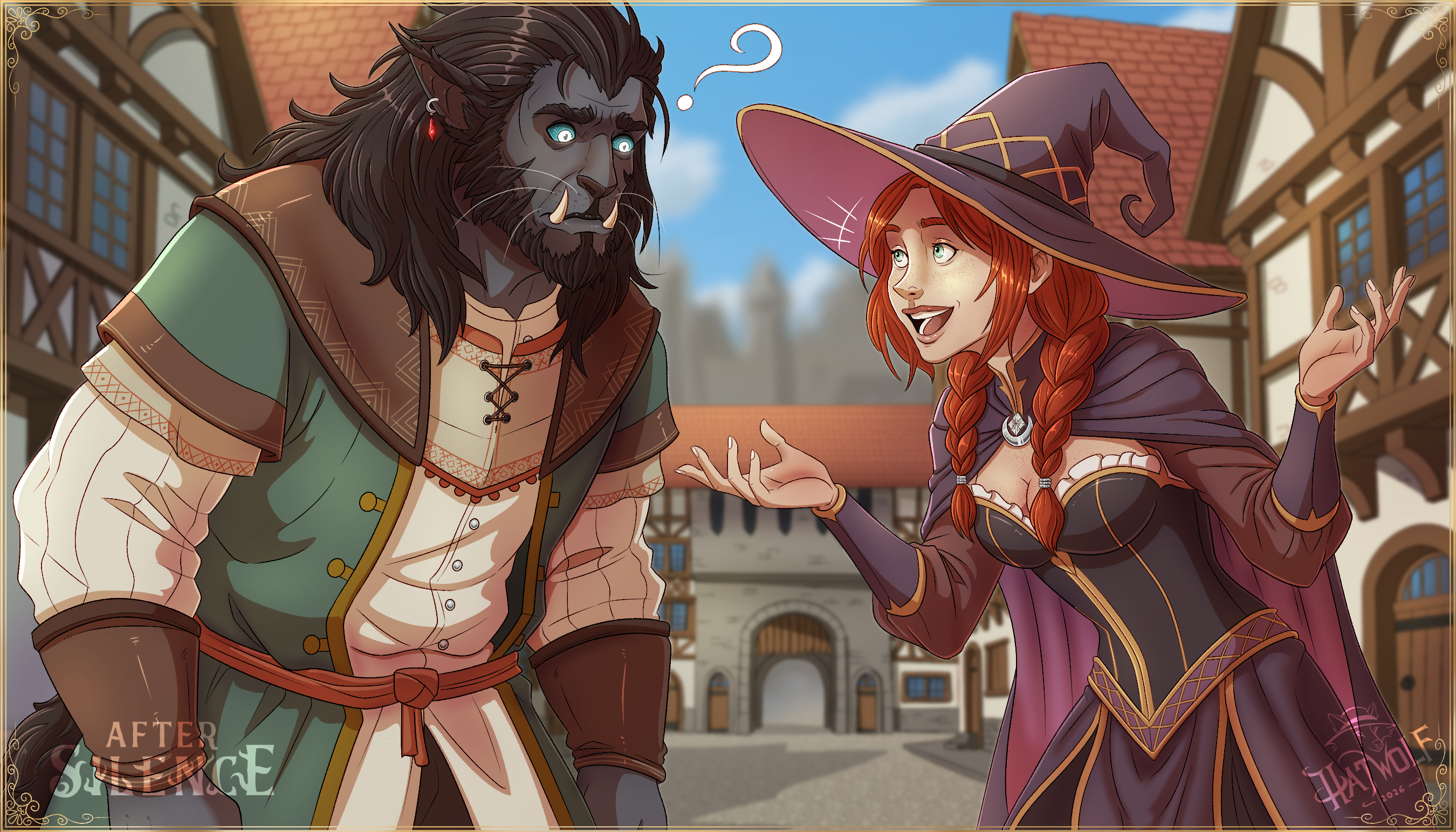
"Becoming a witch? Oh, sweet thing, it’s not as simple as swallowing demon blood and hoping for the best (though that step alone has a rather high fatality rate, mind you). No, the real trick is learning to sound like one. Witches speak like poetry gone feral. They have their own way of communicating, full of phrases more tangled than a cursed forest. I had to train my tongue as much as my hands. Fortunately for you, I wrote it all down. Because, let’s be honest, you’d never figure it out on your own. You're welcome."
While the official language of Morvathia is a modern derivative of Galdoric, as is common across most of North Vespero, the Witchrealm has cultivated a distinct, ever-shifting current of slang, idioms, spellcraft lingo, and cultural shorthand that reflects its unique history. This vernacular is collectively known as Morvathian Cant.
The roots of the Cant reach deep into Morvathia’s formation as a nation. As witchcraft became a tool of liberation from the Galdoric Empire, it was woven into the fabric of daily life, not merely as magic, but as philosophy, livelihood, and identity. Over time, this gave rise to a language shaped by the lived experiences of witches: the risks they take, the loves they lose, the secrets they keep.
Some of the terms found in Morvathian Cant evolved directly from ritual language, reworked from ceremonial syntax into more casual phrasing. Others emerged from criminal circles, street witchery, or trade jargon. Terms passed between hedge-witches, poisoners, curse-breakers, potion vendors, and spellwrights in dimly lit alcoves and crowded market stalls.
Though not every Morvathian is a witch, the influence of the Cant is ubiquitous. It is spoken by constables and courtiers, merchants and midwives, scoundrels and scholars. Its rhythm is heard in tavern gossip and courtroom accusations alike, used to cast judgment, throw praise, or cloak meaning in layered metaphor. In many ways, the Cant has become the second tongue of the realm, a living, breathing lexicon of a land defined by magic.
Lexicon of Morvathian Cant
Slang & Terminology
- Blackcasting: Using magic to aid or commit a crime.
"This is no ordinary crime. Two of the witnesses were charmed so that they could not remember the burglar's face. We are dealing with blackcasting, no question."
- Chalkhead: A dismissive nickname for an inexperienced or overly eager young witch, often one fresh out of their first lessons. Comes from the chalk-dust common in novice ritual work.
"Watch the wards, Chalkhead. This isn’t some academy exam."
- Cold (as in Casting Cold or Cold Spells): Refers to the casting of spells using a magical tradition other than witchcraft, such as wizardry or druidism. It refers to the idea that spells cast from witchblood come from within and are therefore metaphorically warm or warm-blooded, while other traditions draw their power from outside and are therefore 'cold', not part of themselves.
"It couldn't have been one of us. These enchantments were casted cold."
- Crestwitches or the Crests: A term used to refer to the upper-class witch families of Morvathia who sit just below the Thirteen in the social hierarchy. Derives from the ornate family crests proudly displayed by these houses.
"Say what you want about Crestwitches, but they know how to work a ballroom. And a council vote."
"Don’t mind the Crests—they'll say anything to endear themselves to the Thirteen."
"Don’t mind the Crests—they'll say anything to endear themselves to the Thirteen."
- Dust: Cheap, unstable reagents and components. Originally referred to diluted powders, but now used for any kind of weak or unreliable spell material.
"Don’t buy from him—sells nothing but dust."
- Flickerwitch: Someone who barely knows how to use their spells but still likes to show off. Sometimes affectionate, sometimes mocking.
"She lit one candle and thinks she’s Queen of Flame. She is such a flickerwitch."
- Hex: Originally used to describe a serious or malicious curse. Now, it refers to any lingering magical effect left on a person or object, harmful, unwanted, or simply persistent.
"I don't think the spell was meant to last that long. Have I hexed her?"
"Old books like that? Always full of little hexes. Don’t touch it unless you know the wards."
"Old books like that? Always full of little hexes. Don’t touch it unless you know the wards."
- Hexmark: A visible sign or symbol indicating a person has been cursed or is under a spell.
"He came back from the marsh with a hexmark on his chest and no memory of how he got it."
- Jinxed: Cursed, unlucky, or just caught up in bad spellwork. Can be half-joking.
"Yeah, I dated a mirror-reader once. Jinxed me proper."
- Mommet: A term of endearment between witches, used to signify deep affection, trust, or closeness. The word traces its origin to an older Morvathian term for a poppet, a small magical doll used in sympathetic magic.
"Don't worry, mommet, I've got your back."
- Shaggspells: A crude but commonly used term for spells with primary or secondary uses in the bedroom. Also known as wandplay, bedhex, pantsmagic or wankcharms (the latter referring to solo work).
"He acts all prim in public, but I found three shaggspells tucked in his grimoire."
- Simple-folk: A condescending term, used to describe a non-spellcrafters.
"Be gentle with him, mommet. He's one of the simple-folk. He couldn't have possibly noticed the ward before you did."
- Spellflick: A minor or trivial spell, often used for entertainment or simple tasks.
"Don’t act like you’re casting ancient rites, you’re doing party tricks and spellflicks."
- Sour/Sourcraft/Sourcasting: A spell or potion that has gone wrong, becoming corrupted, spoiled, or ineffective.
"I think my concentration potion has gone sour. It tastes like sewage and I don't feel any different."
- Streetbrewed: Refers to magic developed and honed outside the academic field. Also used to describe witches from lower districts or rougher roots, especially those clawing their way into the old institutions.
"He talks big now, but he was streetbrewed before the Council handed him a crest-ring."
- Trace: Residual energy left behind from spellwork. Can be used literally or when talking about tracking someone through magic.
"You left trace all over that gate. Any Widowbird could sniff it."
- Witchblood/Witchblooded: A term denoting someone with the ability to use witchcraft. It can be used both as a mark of pride or, in rural areas, as a term of envy or suspicion.
"They looked at me like I’d grow horns on the spot. I guess they never seen Witchblood before."
Expressions & Sayings
- "Brewing a storm": Means to deliberately cause trouble. Originally, it meant to prepare a spell or potion for the purpose of chaos, but today it is also used for plans and ideas in general.
"I don't know what she's up to, but I am pretty sure she is brewing a storm behind everyone's back. Be careful!"
- "Carrying the red": A euphemism for someone afflicted with bloodrot. Commonly used when the speaker wishes to avoid invoking the disease directly, either out of fear, superstition, or a desire to speak gently about the condition.
"No judgment here. My aunt carried the red for six winters before it took her."
- "Cut the circle": Means to drop the act, stop the ritual, or cut the formalities.
"We’re alone now. Cut the circle and speak plain."
- "Drama like a horned hound": Means to express displeasure or indignation in an exaggerated, theatrical manner, often over a relatively minor slight. The phrase originates from the well-known behavior of Brindlehounds, who are prone to dramatic howling, stamping, and demonstrative sulking when offended. It is commonly used with mockery, implying that the subject’s reaction is disproportionate, performative, or deliberately attention-seeking.
"I dismissed him one time, and now he has been complaining to everyone ever since. Honestly, drama like a horned hound."
- "Drinking from the chalice": An expression used when someone speaks with unwavering certainty or delivers a truth they believe to be beyond dispute. It harkens back to the Court of the Chalice’s custom of using a ceremonial chalice to divine guilt or innocence during trials.
"You can argue all you like, but when Eldric named her a traitor, he was drinking from the chalice."
- "Freshly brewed": A term for fresh gossip or the latest news, especially of a scandalous or intriguing nature. The phrase comes from the tradition of sharing stories and whispers during tea gatherings. Also the name of a widely read gossip sheet published in Serpenthall.
"Don't tell anyone, but Inghean told me the story about the missing astrolabe freshly brewed this morning."
"Wanna hear about the latest fresh brew? Piping hot, even."
"Wanna hear about the latest fresh brew? Piping hot, even."
- "Like a dog listening to poetry / Like reading poetry to a dog": Describes a mundane person, or 'simple-folk', trying and failing to comprehend the intricacies of magic. They can hear the words but have no grasp of the meaning.
"I tried to explain to him how the spell works, but it's like reading poetry to a dog. It's cute, but hopeless."
- "Paying the crow": Means doing everything necessary to postpone the consequences of one's actions, usually refering to spellwork. The expression refers to the fact that crows are considered messengers and soul collectors of the Nevermore.
"I'll pay the crow for another day if it gives me the chance to get back at her."
- "No hex on you": Like "good to see you." Usually used between younger witches and students.
"There you are. No hex on you, Mira, I hope." - "Yeah. Not yet anyway."
- "Rot take you": A vicious curse, sometimes used in a fit of rage—implies wishing bloodrot upon someone. It is considered highly offensive.
"May the rot take you, you miserable liar!"
- "Sharing the kettle": Indicates a moment of unity or coming together to discuss matters openly, originating from the Morvathian Tea Ceremony.
"Let’s share the kettle and talk this through."
- "Speaking under the oak": A metaphor for engaging in honest, weighty, or vulnerable conversation. The phrase references the founding of the Morvathian Coven beneath the Great Oak of Enshara.
"If we’re truly to unite, we must speak under the oak, not behind closed doors with half-truths."
- "Treading soft through the chalk": Used when warning someone to be cautious—socially, magically, or emotionally. References the fragile ritual circles drawn with chalk.
"She's very sensitive about this subject, so tread carefully through the chalk when you speak to her."




I love the phrase 'poetry gone feral.' I must say that wandplay and its associated words startled a laugh out of me. Lovely language article.
Explore Etrea | Summer Camp 2026
Thank you very much! Everyone I showed it so far, really loves the term "Shaggspells" x3 I suspect I will return to this article quite a lot to add new terms and expressions.
At the end of everything, hold onto anything.