
TABERNA LUCIS TARDÆ
The Late Light Inn · Inn and Tavern · Artists’ Quarter, Porta Silvae
"The artists’ quarter tavern opens at the hour when the anomalous light is ending. This is intentional. The proprietor explained it to me: the artists eat late, after their eastern windows’ light has gone, and the conversation that follows is the specific combination of the day’s work and the evening’s light still present as memory rather than experience. I find this the most interesting social space in the city. I also find it the most difficult to leave."
The Taberna Lucis Tardae — the late light inn, named for the anomalous light’s extended duration at the quarter’s eastern edge — is the Artists’ Quarter’s primary tavern and inn, organised explicitly around the community’s schedule: it opens at the hour when the afternoon light ends, serves the community’s late dinner, and closes when the conversation that begins over the dinner’s wine concludes, which is typically considerably later than the forum district’s establishments close. The proprietor, Lucius Arbor Pigmentor, forty-eight, in his fourteenth year, is a former Watching Painter who switched to innkeeping when he concluded that his contribution to the tradition was better made as a social facilitator than as a practitioner. The community considers this an accurate self-assessment and is grateful for it.
Purpose / Function
Inn and tavern calibrated to the artists’ community’s specific schedule and social requirements. The evening conversation that the late opening facilitates — after the day’s work, after the light, with the day’s experience available as shared context — is the community’s primary social function and the main mechanism through which the tradition’s technical development is discussed, contested, and occasionally advanced. Lucius facilitates this conversation by the method of ensuring that the wine arrives at the right pace and that the conversation’s quality is maintained by the specific social exclusion of the critics, who drink at the Western Quarter’s establishments.
Entries
The main entrance from the quarter’s main street. The common room’s eastern window is operable. Guest rooms on the upper floor are accessed from the common room’s stair. No private rooms. The tavern’s social function depends on the common space’s specific quality of shared company, and Lucius does not accommodate private dining.
Sensory & Appearance
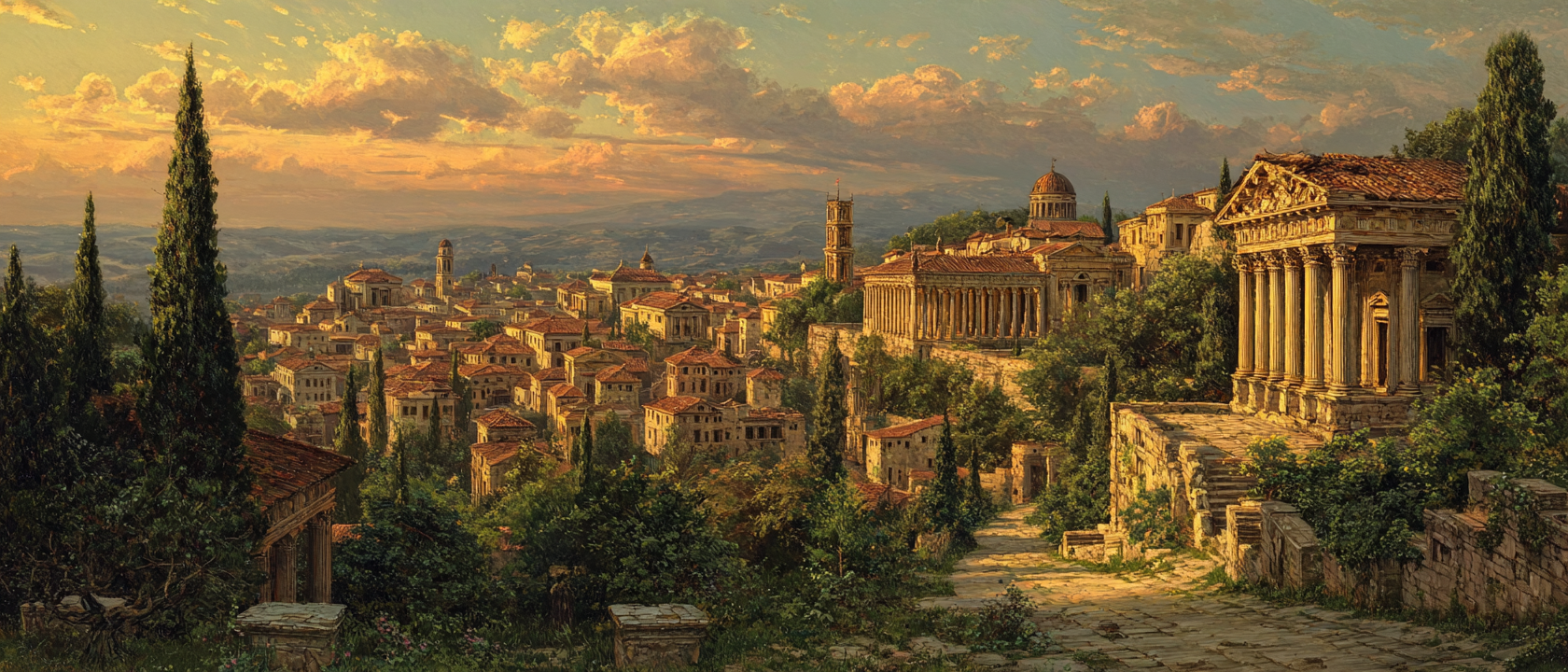
The tavern faces east on the quarter’s main street: its eastern window, open during the late afternoon’s working hours for the community’s benefit before service begins, catches the anomalous light’s end and holds its warmth in the interior’s stone after the light has gone. The common room in the evening: painters’ hands, the smell of turpentine and pigment compound that the community carries into every social space, the specific quality of a conversation where the participants have been looking at the same thing all day from different positions and are now describing what they saw. The inn’s walls carry the community’s minor works — not the Gallery’s significant collection but the studies, sketches, and pieces that practitioners have given Lucius over fourteen years as payment in kind for evenings they could not afford otherwise.
Denizens
Lucius Arbor Pigmentor , forty-eight, fourteen years: a former practitioner whose understanding of the tradition’s technical problem is sufficient to facilitate the community’s conversation without participating in it in the practitioner’s way. His walls carry fourteen years of the community’s minor works, which constitute a collection whose documentary value Tertia Arbor Custos has noted and which Lucius has agreed to have assessed but not catalogued, because cataloguing would change the works’ function from payment-in-kind to collection and he prefers to maintain them as the former.
Contents & Furnishings
The common room: twenty tables, the eastern window, the walls’ minor works collection. The wine cellar’s selection: the provincial production supplemented by Lucius’s specific purchases from the Via Orientalis’s commercial traffic, oriented toward the categories the community finds useful for the conversation’s later hours. Guest rooms: twelve rooms on the upper floor, east-facing where possible, used primarily by visiting practitioners from outside the city who come to work in the quarter for extended periods.
History
The Taberna Lucis Tardae was established by Lucius in his thirty-fourth year when he determined that the community’s social requirements and the existing establishments’ schedules were incompatible. The late-opening format was his original design. The community’s adoption of it was immediate and complete. See Annales Mundi for full chronological detail.
Rooms Available
12 rooms upper floor, east-facing where possible.
Used primarily by visiting practitioners from outside the city.

Comments