




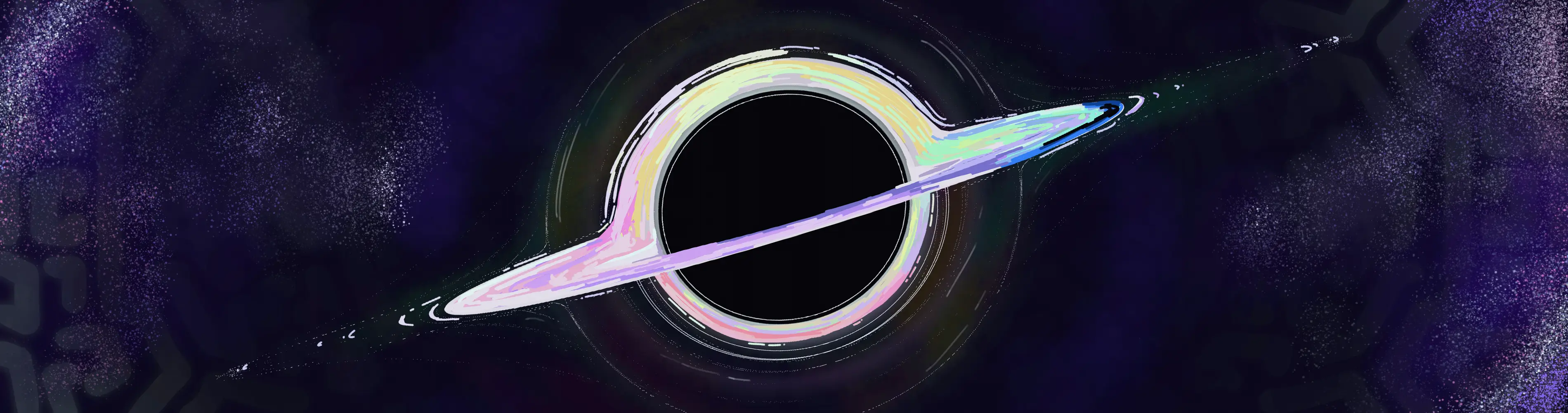
Alanaub
Alanaub is one of over three hundred planets in the Galanti Cluster. All life on this planet originates from Daenis, after an asteroid smashed into it. Debris from Daenis and the neighbouring asteroid belt aided in the formation of Alanaub, and micro-organisms caught in the event evolved into the lifeforms seen today.
The planet's oceanic ecosystems are vibrant and complex. The earliest lifeforms still exist, nearly three billion years later. Tiny bacteria thrive around hydrothermal vents, with jellies, sponges, and ctenophores navigating the boiling waters.
Thick, stodgy algaes clog the surface of the oceans, stopping most light from reaching even a few metres down. As the algaes cast shadows on the seabeds, small shoals of armoured fish make their way through kelp forests, hunted by skilled predators.
Small islands form major archipelagos around a single supercontinent. Local daenites tend to luscious gardens using the help of floramancy. Those that live around coastlines work together to build megareefs - some individual corals span hundreds of metres.
Geography, Location & Climate
Alanaub is famed for its oceans. Crossing the Equator is a snaking bone formations, millions of years old. Ribcages of ancient beings pierce the oceanbed. Between these fossils hide precious coral reefs, built off geothermal vents running thousands of miles.

The Golden Sands stretch across several archipelagos. Crystalline fragments produce a golden glow in the sunlight, attracting tourists from millions of light years away. The Golden Sands are often considered a biome in their own right, with localised ecosystems reliant on its unique climates.
The largest Sands wrap around Mistila, the most populated island on Alanaub.
Benthic reapers lurk in their own domain. This abyssal region is off-limits; only remotely piloted submarines may approach the territory of a benthic reaper. These gigantic medusae lurk thousands of metres below sea level and are known for their incredibly vicious temperament.
Reapers nest amongst thick kelp forests, weaving together the trunk-like kelps to build a study nest. Colonial creatures, they attack anything that gets close to their nests that may pose a threat. Submarines, anchors, anything that approaches this domain is destroyed.
History
Alanaub began its formation approximately three billion years ago. After an asteroid hit Daenis, debris from the planet and the asteroid belt caught up in orbit, piling together and building up over time. Alanaub eventually grew large enough that it cleared its orbital neighbourhood and had formed a spherical shape.
Ice from these asteroids turned the northern hemisphere into ice fields, while the southern hemisphere remained fairly temperate.
Over several billions of years and numerous ice ages, Alanaub is now a toasty blend of tropical and temperate, with average temperatures of around thirty-five degrees Celsius.
Alanaub is currently owned by Daenis, and has been under its ownership for the past five hundred years.
With the influence of daenites, the wildlife of Alanaub has flourished. The planet nearly suffered from total ecological collapse with its previous owners, Karkhala. Through an intense legal dispute, Daenis was able to negotiate complete ownership.
Ecology
Alanaub is home to millions of lifeforms, all evolved from micro-organisms native to Daenis. Alanaub's oceans are dominated by soft-bodied organisms, such as jellies and ctenophores. The land is not much different; gigantic jellies wriggle their way along the ground across the supercontinent and scattered islands.
Boltton Jelly
Boltton jellies are the largest land jelly on Alanaub. They roll along the ground, slapping their tentacles about, grasping at anything it might be able to drag into its mouth.Alanaubian Lightbulb
A mid-sized comb jelly with a bright white glow. They fill the oceans, with millions migrating across the planet. Prey animals for most omnivores.Garden Mottle
Garden mottles dance just above the surface of the rippling waters. With their magical energy, endless spores are released. They encourage the growth of ocean surface algaes.Benthic Reaper
The largest oceanic jelly on Alanaub. They patrol the Reaper's Domain. Benthic reapers are one of the most intelligent jelly species, nearing sapience.Sulphur Voom
Vooms are tube-shaped inanimals that feast on pure elements. Sulphur vooms live around hydrothermal vents, wrapping themselves around the chimney and sucking on the vent.Bunbun Sponge
The tiny bunbun sponge greatly resembles a domestic rabbit, with a pair of ear-like spongy structures. Like most sponges, they are filter feeders, consuming microplanktons.Bloomsnail
Bloomsnails are native to the Saman Islands. Their mucus acts as a fertiliser, vitalising the small pockets of jungle.Songweave
Songweaves bend sound waves to create rhythmic nets that capture prey. With the power of sound, they can stun creatures ten times their own size.Cynthymyum
Bright yellow ferns found in jungles across Alanaub. Cynthymyums coat the forest floors and flood the air with spores.15
Distance From Sun
47.9 AU
0
Population
16 million
Related Articles
| Atlas | Ash Field · Atigeo Sea · Chrihaia Lake · Endless Tower
| ||
|---|---|---|---|
| Biota | Atigean Clam · Clam-Eyed Fish · Fire Frog · Fire Noodle · Firepede · Firewood Beetle · Frogfish · Helsaurus · Mayhem Fish · Sawshark · Thermal Carp · Thorn-backed Thrasher | ||
| Cultures | Hell's Holiday | ||
| Misc | Hell · Hell Notes |





That new SC prompt made me immediately think of you, and I was right! This is such an interesting location with a bountiful ecology! All the different animals are great. Especially the Benthic Reaper - I'd want to know more about that. But also the Vooms... omg I love that name so much! <3
Summer Camp is here and so is My pledge! <3
Visit my world of Kena'an for tales of fantasy and magic! Or, if you fancy something darker, Crux Umbra awaits.
aaaaaaaaaaaa that's so sweet, thank you so much!! I am really quite excited to work more on this planet, and design some of these creatures. Maybe I'll make some artwork! <3