
Moryan Peninsula
Located in the easternmost part of the continent of Teria, the Moryan peninsula is the ancient heartland of the Ikarian civilization, a very wealthy, fertile and full of beautiful landscapes, monuments and places of worship, since this is also a land of very pious people. The native Ikarians/ Blatians say that in the Moryan peninsula you can experience three "climates", the one of the south, with its warm climate, and its turquoise blue waters, like in the rest of the lands around the Interior Sea; the one in the centre of the peninsula, a bit more arid , where agriculture is possible in the valleys and near the main rivers, while the rest is pastureland for cattle. The Northern part of the peninsula however has a colder, humid climate, similar to the island of Aros, Valia , the coast of Cloudia and the Southern part of the Kingdom of the Snow Elves.
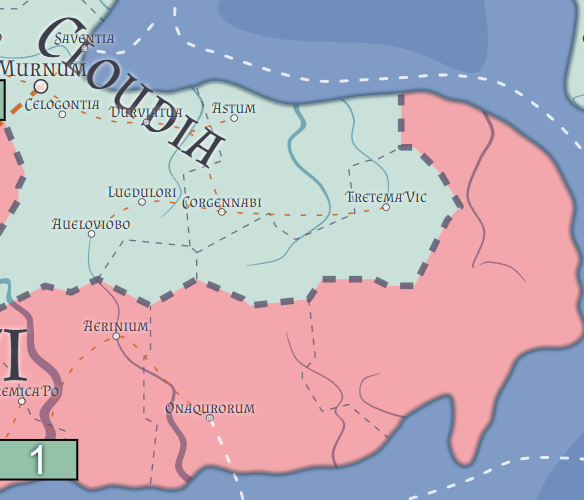 Its highest point and one of the region's most emblematic landmarks is White Mountain, at nearly 3,000 meters. The peninsula is divided into three main regions due to climatic factors: South, Central, and North. In the South, along the shoreline and a bit into the interior, areas which are the most populated area of the of the Peninsula, is famous for it's cosy warm climate and crystalline waters with abundant fish. The centre of the peninsula is characterized by a much drier climate, where irrigated lands are not so abundant, although a good part of the area is very good pastureland for livestock, as we will see below, livestock farming is the most important activity in this area of the Moryan Peninsula. Finally the North despite is colder climate is a very fertile land, and the people of this area. mainly in rural areas, are engaged in both livestock farming (such as cows and reindeer) and agriculture.
A bit of geography
Located in the South Eastern part of the continent of Teria, the Moryan Peninsula is bordered to the west by the Kallian Plains, with the Bormium River forming the boundary between the two regions. To the east, it is bordered by the Suris Strait, which separates it from the continent of Karia, to the north by the North Sea, and to the south by the Inland Sea.Moryan Peninsula by Callyxtus ( using with Azgaar fantasy map generator)
Demography
The original inhabitants of the region were the so called Tribesmen of Morya, whose relation to other peoples is unclear, perhaps related to the first humans who lived in this area as well as on the other side of the Suris Strait before the migrations of the proto-Davidovian peoples. After the settling of the Ikarians in the southern most part of the Peninsula and their first wars of expansion, most Moryan tribes, which already had force the early Seris to cross the Strait to the neighbouring continent, were either absorbed and assimilated by their conquerors or enslaved, and since at least the 7th century, Ikarians/ Blatians have been the majority of the population of the area, effectively becoming the natives of the land, and Morya becoming the heartland or their Empire until its centre moved to the Kallian Plains with the rise of Blati as the wealthiest city and later on, political and cultural capital of their world. In the last 200 years , Tieflings of Lighthave migrated to the Blatian Empire and one of the places where they have settled and thrived is the Moryan Peninsula. Many of them became Ikarianized in fashion, language and culture, and they have become an important and dynamic part of society, working as merchants, establishing trade relations with other communities of this race or, as in the case of many of them, working as cowboys on the ranches and villages scattered throughout the centre of the Peninsula. In terms of population's distribution across the Peninsula, the Southern and Northern regions are the areas where the largest concentration of the population lives, and are the areas with a higher concentration of cities, with its typical white houses covered in lime and tiled roofs and the main doors decorated in a very colourful way.Land of Piety....
One of the defining characteristics of the Iberian Peninsula's landscape is the abundance of monasteries and places of worship scattered across its plains and hills. This region is one of the main centres and origins of monasticism in ancient Ikaria. It is estimated that there are over five hundred monasteries strewn throughout the area, some possessing landholdings comparable to those of the largest local landowners. Some even own large herds of cattle and employ cowboys to tend them and move them from pasture to pasture. Some of these buildings or institutions are not only centres of piety but also great centres of knowledge, where the children of the local aristocracy who cannot afford to study at the Academy of Blati are sent to receive the best possible education, and where some of the most beautiful manuscripts of Blatian art have been created and where texts from other cultures are not only copied but also translated, such as works by classical Seris philosophers, scientific texts, poetry and myths of the elves, since the Peninsula is also a meeting point between different cultures such as that of the Snow Elves to the north and the Seris to the east. Then, there is also one of the main centres of pilgrimage in the Blatian world , the White Mountain with its temples, monasteries carved on the rock and of course the giant statue of Abbon Shabai. Each year hundreds of thousands of pilgrims arrive at this imposing religious centre in search of healing, spirituality, divine favour, or simply to pay respect to the gods and do some sightseeing in the area....and also of cowboys!
When Blatians think of the Moryan Peninsula the first thing that come to their minds are not the monasteries or the wealthy cities and towns near paradise beaches, but cowboys! one of the most common professions among the inhabitants of the central Peninsula, their mastery with the horse, their elegance in dress and their supposed code of honour have captured the imagination of numerous compatriots from other provinces for centuries. Both tieflings and Blatian humans spend much of their lives herding livestock, serving the local nobility, or working in monastic institutions. Their distinctive fashion makes them easily recognizable, with their hats, riding jackets worn over their robes, and characteristic trousers. Some of them live in villages close to the ranches or the aristocratic states where they work others choose to live in those places if their masters can afford it.A coveted land
Because of its overall wealth , its religious importance and its strategic position on the trade routes between east and west, this land has been a place of conflict between the Blatian states since the fall of the Ikarian Empire. Especially between the Blatian Empire and the Empire of Cloudia as well as the Kingdom of Signoria. The Blatian Empire managed to control the southern and central parts of the Peninsula over time, mainly after the reconquest of Ikaria and the capture of the White Fortress, the most imposing fortification in the entire region, but most of the north, including the White Mountain, remained in the hands of the Cloudian Empire after the war between the two empires. The north of the Peninsula has also been affected for centuries by the raids of the Nord, who infested the coasts of the region as if it were a plague, and who probably came attracted by the rumours of the riches of the cities and towns of the region.The Moryan Peninsula in Mythology
The Moryan Peninsula is the setting for some important myths, both in Ikarian mythology proper and in that of the Davidovian peoples in general. One of the first myths is the one of the Golden Cows of King Alymneus, who was the mythical ruler of the area, whose milk it was said, as touching the ground became gold, so King Lerimeus, after conquering Durstolon decided to pay a visit to the King of Morya, and while he was having a banquet with the King, his henchmen stole the cows and loaded them onto ships, which they used to cross the strait. Alymneus, upon waking the next day to the news, cursed his former host and, enraged, begged the gods for help. At that moment, the goddess Fer appeared in front of him, and promised him that help was on the way and it would soon arrive to his kingdom, and two weeks after the appearance of the goddess the fleet carrying the armies and heroes that were sailing to Dorstulon, the city of the Ten Walls arrived to the shores of his kingdom, looking for provisions. There the King informed them of the great crime committed by Lerimeus, and the Heroes promised to return the cows safely to him. And so they did, after the war , the triumphant hero king Tecilder stopped by Alymneus' kingdom and returned the cows which have been hiding by Lerimeus in what is today the Seris Protectorate of the East, and the god Abbon Shabai decided to place a giant eagle on top of the white mountain to keep an eye on the cows. Another myth, related to the previous one narrates how, after king Alymneus's death, his son Alikastor succeeded him to the throne, but he had two brothers, Alymnias and Leukon. Alymnias wanted the throne and sought to to undermine his brother's influence and legitimacy. In order to achieve that he released one of the Sphenetai, mythical monsters half human-half lizard, a gigantic creature, who killed the gigantic eagle that Abbon Shabai had placed there as well as the golden cows. Alikastor, troubled by this grave danger to his kingdom, consulted the oracle of the goddess Orbaia which advised him to called upon some famous heroes, the sons of Davidion, Kuchi , who alongside many members of his father tribe had settled in the Peninsula, and his brother Ikarus who ruled at the other side of the Albine Mountains. The two princes arrived with their hosts to fight the monster, the Sphenetai upon hearing the news raised goblins from the earth like if they were plants to face the invaders, the armies of the davidovian brothers defeated the goblins and killed Alymnias, but they couldn't kill the giant. So after much deliberation they decided to consult their "girlfriends" the goddesses Pyria and Zerah respectively who gave them a magical javelin, used during the War of the Gods and advice them to use their not their strength but their intelligence to defeat the monster. So they devised a plan. They both disguised themselves as shepherds and went to visit the giant in a cave where he spent the night. There they introduced themselves, and while Ikarus hid behind a rock, Kuchi asked the giant if he had seen the golden cows. The giant began to laugh. "What? Haven't you heard they're all dead? Where have you been all this time?" "You see, great lord, I returned by boat from the island of Cithaeron (now the island of Vegus) after burying my beloved mother, and I know nothing of what has happened. I came across a man who seemed to be a powerful lord; he called himself Kuchi, son of a king from beyond the mountains, and when I asked him, he told me that you were keeping them." "Hahahahaha!" the monster burst into laughter again. "Of course, I'm keeping them, in my belly!" " And as he said this, swift as lightning, he hurled the magic javelin, blazing with the flames of the fire goddess, shouting, "Keep this too!" The javelin pierced the monster's mouth, and it was consumed by a vast and ravenous divine fire. It is said that the brothers decapitated its corpse and offered the head to the gods, and that the griffin of the goddess Pyria carried the head and buried it beneath what is now the White Fortress.
Type
Peninsula

"Keep this too!" I love it XD