
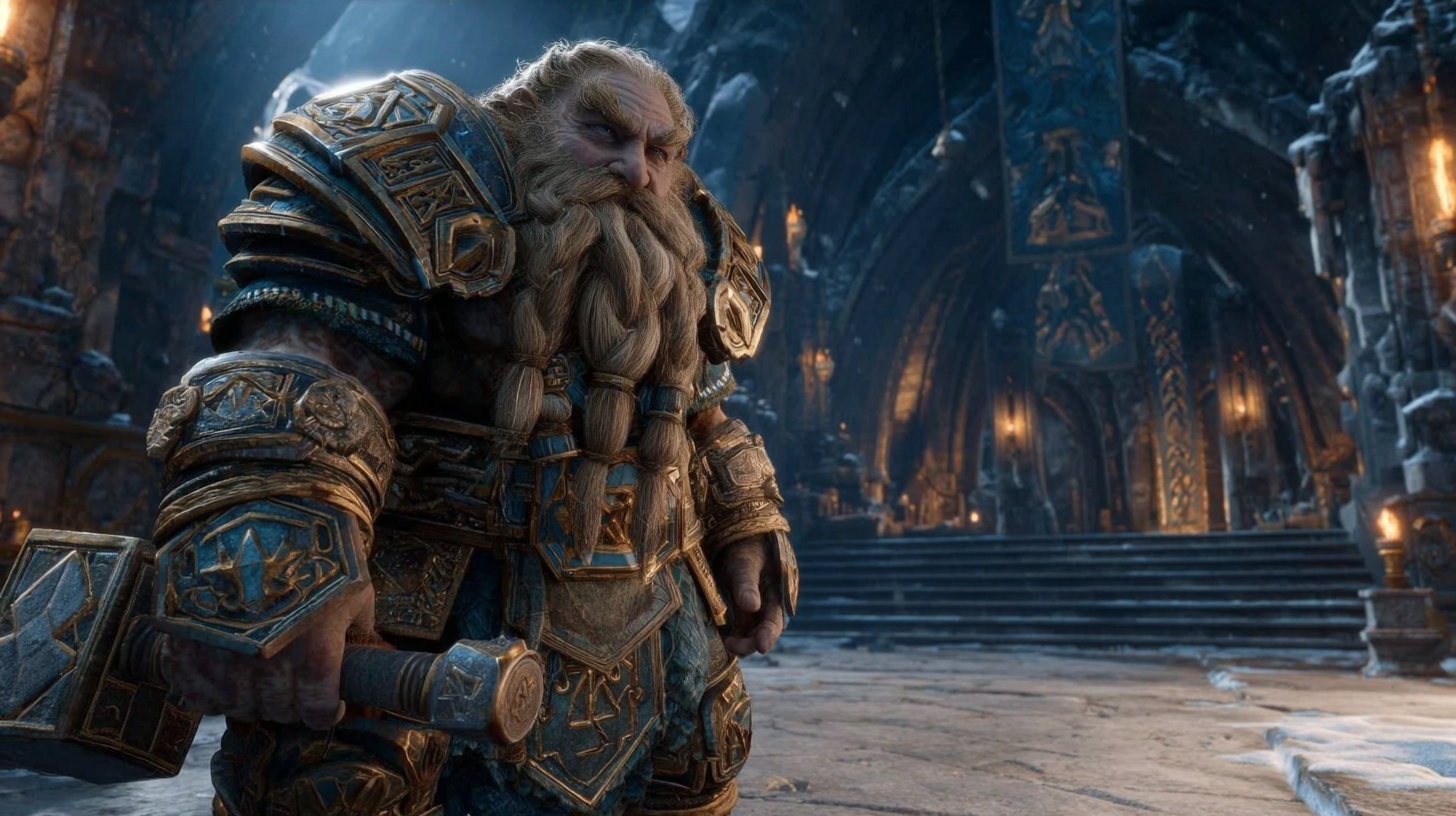
Dwarf
Dwarves
The Mountain’s Chosen
Dwarves are a proud, enduring people whose identity is inseparable from stone, craft, and lineage. Across Wakodia, they are known as builders of lasting works, keepers of ancient traditions, and defenders of hard-won realms. Their societies value resilience over speed, precision over flourish, and duty over ambition.
Though dwarves can be found throughout Wakodia, their culture is most strongly shaped by the kingdoms and holds of Stonefell, where mountain, forge, and clan remain central to daily life. Guided by a pantheon rooted in creation, hearth, memory, and endurance, dwarves measure success not in conquest, but in what survives the passage of time.
Physical Characteristics
Appearance: Dwarves are short, broad, and powerfully built, typically standing between 4 and 5 feet tall. Their dense musculature and wide frames give them a grounded, immovable presence. Facial features are heavy and angular, often marked by thick brows and strong noses. Beards are common among all genders and are worn with cultural significance—braided, bound, or adorned to reflect lineage, profession, or belief.
Skin & Hair: Skin tones range from pale stone and ash-gray to deep bronze and earthen brown, often influenced by regional heritage. Hair colors commonly include black, iron gray, auburn, and stone-blonde.
Lifespan: Dwarves mature slowly, reaching adulthood around age 50, and commonly live 300–350 years. Their long lives encourage patience, tradition, and careful planning.
Culture & Society
Dwarven culture is built on clan, craft, and continuity. Each dwarf is born into a lineage that carries history, obligation, and reputation. Individual achievement matters, but never outweighs the honor or failure of one’s clan.
Craftsmanship is not merely labor—it is devotion. Stonework, metalcraft, architecture, and engineering are considered sacred acts, reflecting both cultural pride and divine influence. Even dwarves who do not work the forge are taught to respect the process of making something that lasts.
Dwarven societies are traditionally conservative, slow to change, and deeply wary of reckless magic or rapid innovation. Change is accepted only when it proves its worth through endurance.
Faith & the Dwarven Pantheon
Dwarves follow a structured pantheon centered on stability, creation, and remembrance. While personal devotion varies, religious practice is woven tightly into daily life, rituals, and rites of passage.
Major Deities:
Morgrim, the Forgefather – Prime dwarven deity of creation, craft, and perfection through labor.
Thaldruna, the Hearthkeeper – Goddess of kinship, protection, and communal strength.
Revered Aspects & Lesser Gods:
Brômak – God of roots, memory, and ancestral reverence, followed primarily by Rootward Dwarves.
Durmgar – God of stone beneath the sea, endurance, and stability where land meets water; respected across dwarven culture and venerated most strongly by coastal dwarves.
Dwarves do not seek divine favor through grandeur. Their worship emphasizes work done correctly, oaths kept, and traditions honored.
Subraces & Ethnic Lineages
Dwarves are divided into distinct subraces, each shaped by environment, belief, and historical role. While all share a common cultural foundation, these lineages influence outlook, traditions, and social roles.
Draknhold Dwarves – Forge-masters and architects devoted to Morgrim’s ideals of perfection through labor.
Hearthfire Dwarves – Guardians of kin and tradition, embodying Thaldruna’s hearth-bound teachings.
Stonevein Dwarves – Miners, traders, and explorers who bridge dwarven society with the wider world.
Ironblood Dwarves – Martial defenders and warriors, forming the backbone of dwarven military strength.
Rootward Dwarves – Spiritual lorekeepers and mediators who follow the Way of the Root and preserve ancestral memory.
Wavebreaker Dwarves – Coastal dwarves of storm and stone, enduring where land meets sea and serving as naval engineers and defenders.
Relations with Other Races
Humans: Respected for adaptability and ambition, though often viewed as impatient and short-sighted.
Elves: Mutual respect exists for tradition and longevity, tempered by philosophical differences regarding magic and nature.
Gnomes: A complicated relationship shaped by shared ingenuity and historical tensions surrounding innovation and risk.
Halflings: Generally viewed favorably for their community-focused cultures and reliability in trade.
Orcs: Relationships vary widely, ranging from open conflict to wary respect, particularly along contested borders.
History & Legacy
Dwarves have shaped Wakodia through stone, steel, and resolve. Their fortresses have withstood calamity, their crafts have outlasted empires, and their societies have survived upheaval through unity rather than dominance.
Though often isolationist, dwarves remain a stabilizing force in the world’s political and cultural balance. When they act, they do so deliberately—and the consequences tend to last.
Playing a Dwarf
As a dwarf, you are a bearer of legacy. Your actions reflect not only yourself, but your clan, your craft, and the memory of those who came before.
Size: Medium.
Speed: 25 feet.
Darkvision: Accustomed to life underground, you can see in dim light within 60 feet as if it were bright light, and in darkness as if it were dim light. You can’t discern color in darkness, only shades of gray.
Stonecunning: Whenever you make an Intelligence (History) check related to the origin of stonework, you are considered proficient in the History skill and add double your proficiency bonus to the check.
Enduring Resolve: You have advantage on saving throws against being poisoned and resistance to poison damage.
Languages: You can speak, read, and write Common and Dwarvish.

Comments