
Hexalism
Description
Hexalism is a world religion, and the state religion of almost all of the nations of Western Varzzen. It is a henotheistic religion that focuses on worship of the Radiant Cocoon and following of its teachings. As the Cocoon is dormant, Hexalists also worship six deities that the Cocoon created: Katisan, the Jaw; Aurius, the Noble Breeze; Chitas, the Architect; Gnol-Dotera, Weaver of Words; Mairun, the Keeper of Festivals; and Zaqātu, Guardian of the Threshold. Worship of these six deities is also seen as worship of Radiant Cocoon. These seven deities are collectively called the Order Pantheon.
Chaos deities also play roles in Hexalism. The most significant of these is the Great Wurm, Devourer of Worlds, and the main enemy of the faith. Another important deity is Arachnida, the Shadewoven Queen, whose crimes of high treason, mass murder and deicide have made her almost as feared and hated as the Wurm.
However, Hexalism doesn't see all gods of Chaos negatively. In particular, Auromatra, the Golden Mother sees wide worship among some Hexalists, although her worship still remains tolerated rather than accepted among the majority of the faith.
Of other religions of Varzzen, Hexalism sees the faith of Yonghéng Dìguó, The Dragon’s Path, most negatively. The Ember Empire claims that the Radiant Cocoon is a false sun, a claim that Hexalism sees blasphemous. By contrast, Petal Tending, the faith practiced mainly in Kamaran, is seen positively. Although Petal Tending differs significantly from Hexalism, both faiths see the Radiant Cocoon as the highest authority in the world.
Teachings and Beliefs
Hexalism contains thousands of sacred tales written over a millennia in wildly varied nations. These tales cover an equally wildly varying amount of subjects: history, morality tales and even guidelines for pranks. Most common teachings vary from temple to temple, but some tales are taught to all Hexalists.
The sacred texts of Hexalism are collected in the Tomes of Order. They are separated into two categories: the Fundamental Tomes and the Supplementary Tomes. There are three Fundamental Tomes: Caothoe, Varlla and Ryssalis, whose contents are taught everywhere. There are many Supplementary Tomes, and more are written as needed. As the subjects of Supplementary Tomes vary widely, few Hexalists ever study all of them.
Creation Myth
Hexalism teaches that the Radiant One created the Luminous Tapestry, the Great Wurm tried to devour everything, and the Radiant One drove the Wurm away and spun the Radiant Web to protect all of creation. It then created the six gods of Order to act as the stewards of the world while the Radiant One rested as the Radiant Cocoon, which is the sun of Alvandis.
These six gods, then, following the Radiant One's instructions, each created a people in their own image: the Necrites, the Vespoids, the Formicoids, the Luni, the Beetlefolk, and the Scions. The gods then gave their peoples a holy purpose to shield the world from Chaos. Once those chosen peoples were ready, the deities revealed themselves to the world and helped their peoples to prosper.
Morality
The Radiant One knew that laws are useful in forbidding evil acts, but they can't be used to compel good behaviour. Such a law, in hands of mortals, would inevitably become a stifling noose at best, or corrupted into a tool of oppression at worst. By contrast, codifying moral behaviour into principles allows each person to apply said principles into any situation, in a way a rigid law can't be applied.
For this reason, the Radiant One empowered each of the gods of Order with a virtue to pass on to their people and to inspire their followers to aspire to. By following these virtues, a mortal can live a life that's good for them as well as their community.
Virtues
The six virtues of Hexalism are divided into two groups: earthly and heavenly. A virtue is considered "earthly" if even a creature that doesn't completely understand its actions (such as larvae, young nymphs and animals) can practice. A heavenly virtue, by contrast, requires understanding before it can be practised. This does not mean that earthy virtues are less important than heavenly virtues: indeed, if one can't practice even a simple virtue, how could they practice one that's more complex?
The virtues of Hexalism are:
- Ambition: Raising yourself and your community higher than your were the day before, always striving to be better and achieving success. Katisan and the necrites represent this heavenly virtue. Ambition is the first virtue, for without the willingness to better oneself, no virtue can be practiced. Moral behaviour does not come from external enforcement: it always grows from within.
- Courage: Facing fear and danger head-on, standing against Chaos despite one's fear. Aurius and the vespoids represent this earthly virtue. Courage is the second virtue, for knowing the difference between right and wrong is of no use without the courage to act on the knowledge. It's not what's on the inside that counts: it's what one chooses to let out that matters.
- Diligence: Doing one's job and doing it well, and seeking out a goal and continuing toward it. Chitas and the formicoids represent this earthly virtue. Diligence is the third virtue, for moral behaviour is not something done once and then forgotten: it requires constant work. A good person is always good, not just when it's convenient.
- Curiosity: Studying the world around you, and learning what you can in order to know what you will face. Gnol-Dotera and the luni represent this heavenly virtue. Curiosity is the fourth virtue, for with poor knowledge, it is easy to do harm despite good intentions. Reflection must follow action: if one has walked down the wrong path, the correct choice is to turn back and return to the right one.
- Wonder: Looking on the bright side, meeting creation and blessings with open arms. Mairun and the beetlefolk represent this earthly virtue. Wonder is the fifth virtue, for after all of the hard work, exhaustion is only natural, and with it, frustration. But those feelings pave the way for thoughts and acts of harm: thus, one should look for happiness around them, as well as not let go of their inner joy.
- Tolerance: Not taking more than you need, accepting all who need aid. Zaqātu and the scions represent this heavenly virtue. Tolerance is the sixth and final virtue, for after reaching such heights, it can be easy to look down others who haven't climbed as far. But doing so is not helping anyone: instead, one must bow down and extend a hand to help the struggling reach one's level.
Sins
Darkness does not exist: it is merely the absence of light. Cold does not exist: it is merely the absence of heat. Chaos does not exist: it is merely the absence of Order. All Hexalists know those truths. In the same way, sins do not exist: sin is merely the absence of virtue. Hexalism has given names to these absences:
- Apathy: Having no desire to better oneself or the world. Mirroring its opposing virtue, Apathy is the root of sins. A person lacking in all other virtues nevertheless wants to be better, and has already taken the first step on the road to healing. Apathy halts all progress, and is thus the first sin to conquer.
- Cowardice: Allowing evil to spread due to your own fear. Mirroring its opposing virtue, Cowardice is what allows the latter sins to flourish. In many cases, doing nothing is easier than facing evil, and this very inaction is what allows evil to grow.
- Negligence: Not taking care of essential tasks. Mirroring its opposing virtue, evil needs not start as something great. But a small crack can widen into a rockslide, and small evils can cascade into a great one.
- Ignorance: Ignoring the world and other perspectives. Mirroring its opposing virtue, Ignorance keeps one on a wrong path. Much like with Negligence, Ignorance's effects might not be immediately visible, but the longer one has travelled the wrong path, the longer the way back home will be.
- Despair: Looking only at the darkness, closing oneself off from others. Mirroring its opposing virtue, Despair paralyzes its victims and makes them fade away. It is a silent sin, and difficult to escape from, and so people must look after each other to keep everyone safe.
- Hatred: The desire to harm others for its own sake. Mirroring its opposing virtue, succumbing to Hatred is all too easy. Violence is sometimes necessary, but when violence becomes the goal, more Hatred will rise like poisonous mushrooms in a festering swamp.
Afterlife
Hexalism teaches people of six different heavenly realms their souls can travel to after their deaths. Each realm is associated with and inhabited by one of the deities of the Order Pantheon, apart from the Radiant Cocoon. Each person can choose which realm they would like to go to. However, Zaqātu's realm, Nib'qabal, is never chosen, since Zaqātu is dead. Furthermore, Arachnida was banished there, and she has turned the serene realm into a hive of Shadewoven - and any soul that enters it turns into one of the aforementioned foul abominations.
Other fates are possible for the dead who don't reach any of the six realms, and none of them are good. Some souls are too attached to Alvandis, and they will roam the realm as ghosts or similar creatures, causing problem to the living, including the people the dead cares about. Other souls might get lost in the Realm of the Wurm, where the Great Wurm will inevitably devour them.
Important Rites
With so many deities, it's no wonder that Hexalism has many important rites. Some rites are associated with the Radiant Cocoon, and are practiced everywhere, while others are associated with another god, and are only relevant to the worship of that particular god.
Burial Rites
Burial rites are very important to Hexalists. It is important to send the souls of the dead to their resting place as otherwise, restless souls will linger and in their fear summon Chaos. Hexalists have many burial rites: people are given the one associated with the deity most important to them.
For Aurius, the dead person's body is cremated and their ash is thrown through a special gate, so that the wind can carry the dead to Aerolithia.
Rites of the Cocoon
The most common rite related to Radiant Cocoon is Weekly Dawn. In this rite, on a Sunday morning at sunrise, a priest places an idol of the Radiant Cocoon on an altar, ready to greet the rising sun. The priest then reminds the audience that the Radiant Cocoon created Alvandis for the insectoids to live on, and this week for the people to claim as their own. The rite concludes on the evening, when the idol is removed when the last rays of the sun disappear.
The most important rite related to Radiant Cocoon is Solar Emergence. In this rite, an idol of the Radiant Cocoon is first covered in fine, light fabric. The priest tells their audience that one day, the Radiant Cocoon will emerge from its slumber and turn the entire Luminous Tapestry into a paradise. The priest removes the fabrics from the idol, revealing it. Most people believe that this emergence will happen long after anyone currently alive has perished, but they will continue awaiting in their chosen afterlife, and even more importantly, both their ancestors and descendants will get to enjoy the future paradise.
Holy Sites
The most sacred place for Hexalism is the Lake of Order, a hexagonal lake where the gods revealed themselves to mortals. Over time, many temples and monasteries have been built around the lake. Although the area is inside Auroma's borders, no noble wishes to claim the area for themself. For this reason, the area functions as its own nation, called Hexara. Hexara is a nation dedicated to handling matters of faith for Hexalism as a whole. Although the small nation has no direct political power, it's indirect power is immeasurable.
Religious Organization
With so many nations and people under it, Hexalism needs a robust organization to keep everything running. A key component is a common language so that all of the faithful can understand each other, no matter where they come from.
In the past, the seat of power of Hexalism was the Holy Sovereign Country of Hexara. The Tunnel War forced the people of Hexara to evacuate to avoid the White Flood. Today, the center of Hexalism the Radiant Sanctum of Arboraeum, the capital of Auroma.
Clerical Body
Any person who wishes to join the clergy of Hexalism starts as a Wick. Wicks are considered members of the clergy, but they are not yet priests, and are not permitted to perform any rites reserved for priests. A Wick may leave their life as an acolyte behind, but if they wish to join the clergy later, they must start their life as a Wick from the beginning.
Once a Wick finishes their training, they become a Lightbearer, with all of the privileges and responsibilities of one. It is important to note that attaining the priesthood makes one a Lightbearer of both the Radiant Cocoon and of one of the six other gods of Order Pantheon, not a Lightbearer of Hexalism as a whole. A Lightbearer of Katisan can't perform rites of Aurius, and vice versa. However, a person can attain priesthood for multiple deities, or even all of them. Attaining a new priesthood is faster than Wick training, since there is no need to learn about the Radiant Cocoon.
The Lightbearer in charge of a specific institution, such as a temple or a monastery, is called Leading Light. Becoming a Leading Light requires no further training: the position usually falls to the oldest Lightbearer of the institution. The age in this case means how long the person has been a Lightbearer, not their actual age. The Leading Light ensures that the duties of the institution are assigned evenly and are done in time.
Institutions of Hexalism are grouped in jurisdictions known as constellations. The leader of a constellation is called Hextant. Hextants are chosen by the Lightbearers of the constellation, and they must be particularly educated, not just in matters of faith, but also in governance. They must ensure that all of the institutions of their constellation get the resources they need for continued operation. Constellations of significance are called zodiacs, and their leaders Circle Hextants. A Hextant and a Circle Hextant are of the same rank.
The sectors of nation of Hexalism are governed by a High Hextant. The exceptions are Amber Fallow, which is governed by High Hextant of Courage, and Cavana, which has both the High Hextant of Diligence and the High Hextant of Tolerance. The latter mainly governs the scion population of the nation. Aciaroma is also a special case, since the High Hextant of Ambition is under constant surveillance by forces of the Royal Hexagon Alliance and has little if any power. High Hextants have usually attained several priesthoods of Hexalism. This is not a strict requirement, but in practice, the High Hextants of Tolerance are the only ones that haven't, and that is solely due to there not being many Lightbearers of Zaqātu in the first place.
The highest authority of Hexalism is the Solar Beacon. It is not a unique role, but an additional title bestowed upon one of the High Hextants. The title rotates between the High Hextants of different deities to ensure all points of view are equally considered.
Monastic Orders
Many monastic orders work inside Hexalism. Any Hexalist can take a monastic vow to join an order and become a Candle - a monk or a nun. The Candles live in the monastery, follow the rules of the order and work for the good of the monastery, so that the lack of distractions leads to spiritual growth. Vows usually last about a decade, but people can also take a lifetime vow.
While some monastic orders are dedicated to spiritual life in general, these are a minority. Most orders have a more narrow focus, typically dedicated towards pursuing a specific virtue. The lives within different monastic orders can thus vary greatly: an order dedicated to Curiosity might focus on studying and copying manuscript, while one dedicated to Courage could focus on development of martial skill.
Religious Symbols
The common symbol of Hexalism is a cocoon shining out six solar rays; they symbol of the Radiant Cocoon. However, as Hexalism is more that simply the worship of the Radiant Cocoon, the faith also employs a simpler symbol: a hexagon.
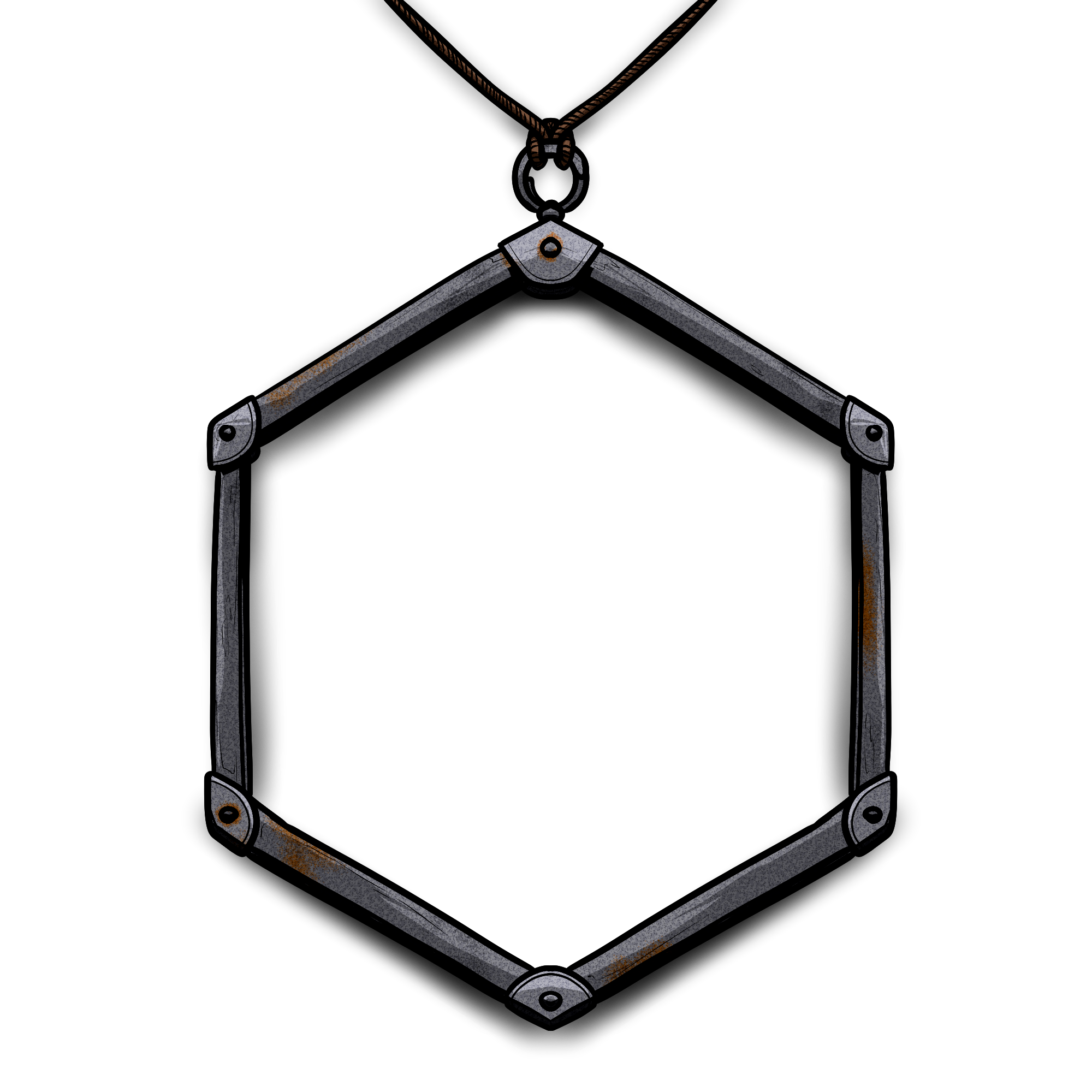
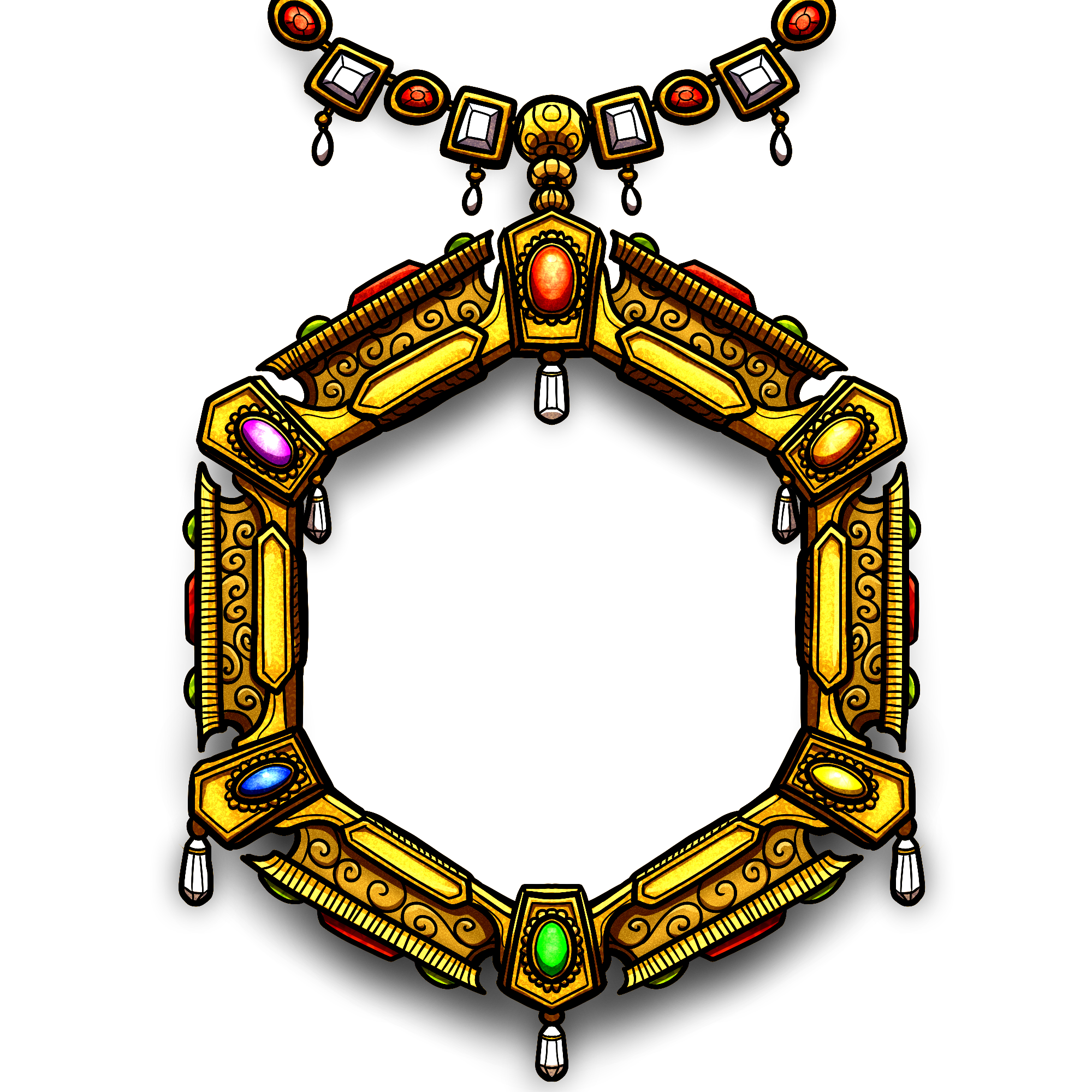
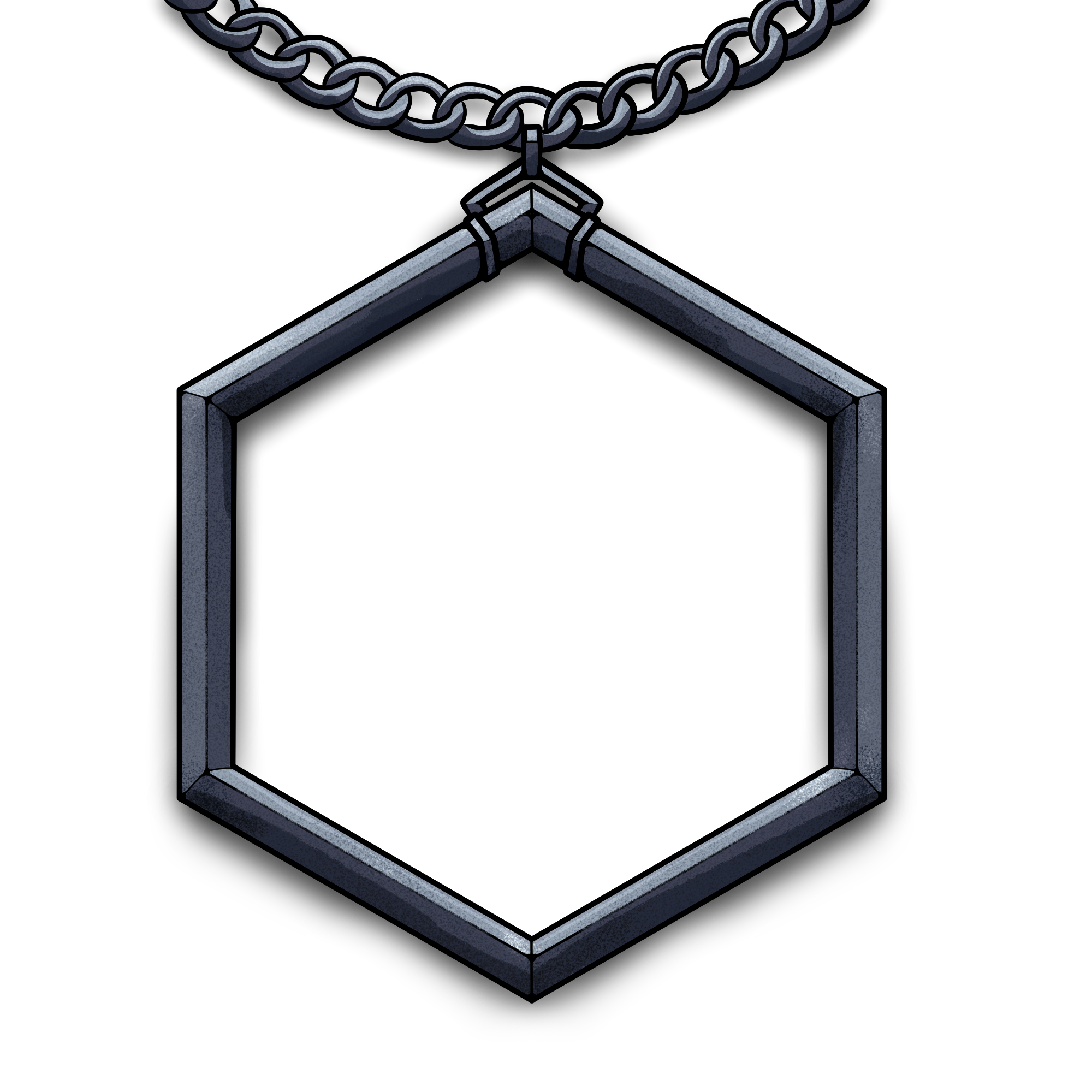
A typical Hexalist carries two amulets to show their faith: one that depicts the holy symbol of a deity, and a hexagon-shaped framing amulet. The Hexalist carries the former on top of the latter, so that the hexagon forms a frame around the holy symbol of a deity. This symbolizes that the deity is a part of Hexalism, and that the carrier of the amulets hasn’t forgotten about other deities.
As the only requisite for the framing amulet is its shape, the amulets come in countless shapes and sizes. An affordable amulet, one that a commoner or a Wick would carry, might be made of just wood, chitin or copper. The amulets that nobles and high-ranking priests carry can become very elaborate: engraved gold and platinum, with gems representing the six virtues.
History
The history of Hexalism is recorded in the first texts ever written. Although Hexalism is a relatively young religion, its roots date very far to the past.
Background
The background of Hexalism goes all the way back to the start of history, 1 AO. On that year, the gods of Order revealed themselves to the world and selected champions from their chosen peoples. The champions, with the backing of their gods, formed the first great nations of the world, and spread the word of their gods with them.
During these early years, gods walked with their people, and empowered many into divine thaumaturgists to help establish their realms. The chosen peoples lived in harmony, but interacted little with each other. The faiths of western Varzzen were not unified, but with the gods themselves leading the peoples, all of western Varzzen was working towards a common goal.
The Upheaval changed all of this. The destruction of the Gate of Death brought forth an Avatar of the Wurm. The gods of Order banished the Avatar, but during the fight, the newly ascended Arachnida slew Zaqātu. The remaining gods of Order retreated to their divine realms. This allowed Arachnida to claim all of Taḫūmu for herself, start the War of the Eight-Legged Terror and spread Chaos across all of Varzzen.
Founding
During early Age of Chaos, Hexalism was in a turmoil. People were used to their gods living with them: now, only prayer could communicate with the gods. All of the divinely empowered people found their supernatural power waning. For the first time in recorded history, mortals had to not only truly rule themselves, but prepare for a war against a mighty nation whose goddess did walk on Varzzen.
By 125 AC, all hope had died, and people began to prepare for a bitter war of attrition against an invincible foe. And it was on that moment, when a stranger arrived in Cor Quae'thum as if from nowhere. Carrying the lost wisdom of old Taḫūmu, he revealed a plan to seal Arachnida away, and gave the land light. The stranger, who had braved the frigid north to save western Varzzen, came to be known as the Solar Beacon.
The Solar Beacon travelled through all of western Varzzen, collecting the local tales of all of the gods of Order. He combined these tales with the ones he had recovered from Taḫūmu to codify the faith for all of the peoples of Order. He also taught people a common language: Insect-Common, which was based on Scion.
Hexalism was founded in 158 AC, and Solar Beacon became its leader. He rallied the scattered militaries of western Varzzen into a mighty army, one powerful enough to push back against Arachnida's forces. And push back they did: eventually, the capital of Taḫūmu was under attack. The forces of western Varzzen, led by the Solar Beacon, banished Arachnida to the Shyfell, just as he had planned, and broke the might of arachs for good.
After this great victory, when the Royal Hexagon Alliance began to change from a purely military alliance into a more general one, Solar Beacon chose a successor and left western Varzzen, but not before promising to return if he would be needed.
Where did the Solar Beacon go, and why...? None remain who know.
Present
Tunnel War left its marks on Hexalism as well. After the news of the war reached Hexara, the current Solar Beacon, Otrec Firebite, pleaded the ruler of the Detrinian Empire, Harko Ironfang, to stop the war. Harko replied, telling that he was planning on taking over Hexara as well. The faithful knew that they were no match against the White Flood, and fled to Radiant Sanctum, located within Auroma's capital. Radiant Sanctum has remained the head of Hexalism to this day, as Hexara has remained abandoned.
The war also marred the reputation of necrites and Katisan in eyes of many Hexalists. And with the Detrinian Empire no longer being part of the Royal Hexagon Alliance, necrites have trouble interacting with their fellow Hexalists. But necrites aren't the only people who feel mistreated: some Auromans have suggested making Auromatra an official part of Hexalism, as she is the consort of Aurius, upsetting peoples of other nations. Cavanans in particular feel that this is a grievous outreach, since Auroma already annexed Sweetwood after Tunnel War. Why would they need a second deity as well?
- Religious Symbol
Cocoon shining out six solar rays; Hexagon Type
Religious, Organized Religion Membership
~30 000 000 Demonym
Hexalist Divines
Radiant Cocoon, Katisan, Aurius, Chitas, Gnol-Dotera, Mairun, Zaqātu Dates Active
158 AC - present Important Locations
Hexara, Radiant Sanctum Notable Members
Solar Beacon Olivia Galeshield, Solar Beacon Otrec Firebite


I am glad I found this article. So far I haven't written a religion for any of my worlds, but this one I liked. I particularly love the fact that there are no strict commandments, but that faith is based on principles.
Thank you for your kind words! I took inspiration from the various virtue systems found in the Ultima games. You might want to check them out as well, if you are planning to do something similar.