


Weaverunner

Realize The Truth

"The academy can teach you to cast spells. It cannot teach you to question why those spells exist. That lesson begins the day they ask you to leave."
— The Archmage Seraphel Vey
The Arcane Tradition of the Weaverunner stands apart from every other school of wizardry in a single, profound way.   Most wizards devote their lives to mastering the use of magic.   Weaverunners devote theirs to understanding magic itself.   To an Evoker, a fireball is a weapon. To an Illusionist, an illusion is a carefully crafted deception. To a Necromancer, the boundary between life and death is a field of study. Every arcane tradition approaches the Weave through the lens of its chosen specialization, refining one expression of magic until it becomes second nature.   A Weaverunner sees something entirely different.   Every spell, enchanted object, magical ward, planar phenomenon, and supernatural effect is merely another arrangement of the same underlying structure. The differences between them are not fundamental, but architectural. Fireball and Teleport are written in the same language. A Cloak of Protection and a Glyph of Warding are woven from the same invisible threads. To the Weaverunner, the spell itself is almost incidental.   The pattern is what matters.   This perspective fundamentally changes how a Weaverunner approaches the world. Ancient ruins become libraries rather than treasure vaults. Enemy spellcasters become opportunities to observe unfamiliar techniques. Powerful enchantments are not obstacles to overcome but intricate puzzles waiting to be understood. Where another wizard sees finished magic, a Weaverunner sees construction.   They believe no magical law exists simply because it always has.   Every enchantment rests upon assumptions. Every spell follows rules. Every magical effect is built from countless interconnected patterns that can be observed, analyzed, and, with sufficient understanding, persuaded to behave differently than their creators intended.   This does not make Weaverunners more powerful than other wizards.   It makes them something far less predictable.   Their magic rarely produces greater explosions, stronger enchantments, or more devastating spells. Instead, they acquire an unusual authority over magic that already exists. They learn to recognize a spell's structure before it is completed. They separate enchantments from the objects that carry them. They exempt themselves from magical effects without destroying the spell itself. Eventually, they become capable of replacing one spell with another before the original pattern has fully unraveled.   To many spellcasters, such abilities appear deeply unsettling.   Centuries of magical scholarship have taught that spells are complete works, finished expressions of carefully crafted formulae. A Weaverunner treats them more like manuscripts awaiting revision. What others consider permanent, they consider provisional. What others regard as immutable law, they regard as an elegant solution that might not be the only one.   This philosophy has earned the tradition admiration from some of the greatest arcane minds of the age and suspicion from nearly everyone else. Established academies often regard Weaverunners as brilliant but dangerously irreverent, more interested in questioning accepted truths than preserving them. Religious scholars who view the Weave as part of the divine order frequently question whether mortals should interfere so directly with its underlying structure. Even experienced archmages sometimes find themselves unnerved by the casual confidence with which a Weaverunner dismantles magical principles that have stood unquestioned for centuries.   Yet Weaverunners themselves rarely consider their work revolutionary.   They believe they are simply following the evidence wherever it leads.   To them, the Weave is not sacred because it must never be questioned.   It is sacred because it is finally beginning to be understood.

Career

Career Progression

"Every spellbook you've ever opened teaches you how to ask the Weave for permission. Mine teaches you why it answered in the first place."
— The Archmage Seraphel
No academy advertises instruction in Weaverunning.   No university maintains a Chair of Arcane Architecture. No prestigious college awards degrees in rewriting the Weave, and no responsible instructor recommends the discipline to promising young students.   Yet Weaverunners continue to appear.   The path begins much like that of any other wizard. Nearly every Weaverunner first distinguishes themselves through exceptional aptitude in conventional magical study. They excel in magical theory, rapidly grasping relationships between seemingly unrelated spells and displaying an unusual fascination with the mechanics that underlie arcane practice. While their peers celebrate learning increasingly powerful magic, these students often become distracted by questions their instructors consider irrelevant.   Why do spells from different schools exhibit similar structural characteristics?   Why do enchantments created centuries apart obey identical underlying principles?   Why are so many magical effects governed by consistent limitations that seem entirely independent of the spell's intended purpose?   Most instructors answer such questions with the same response.   "Because that is simply how magic works."   For most students, that answer is sufficient.   For future Weaverunners, it never is.   The first signs usually appear during advanced theoretical studies, particularly among students pursuing Archaeomancy, magical history, or the analysis of ancient enchantments. The work demands careful observation rather than raw magical talent, making it fertile ground for inquisitive minds. Over time, certain individuals begin recognizing patterns that seem invisible to everyone around them. The realization is often deeply unsettling.   Magic appears to possess an underlying grammar.   Once that possibility takes hold, ordinary magical education becomes increasingly frustrating. Traditional curricula are designed to produce capable spellcasters, not philosophers of magic. Students are expected to master established principles, not question whether those principles are merely consequences of deeper ones.   The more gifted the student, the greater the friction becomes.   Some quietly abandon the questions and continue along conventional academic paths.   Others cannot.   They continue asking uncomfortable questions during lectures. They propose increasingly unconventional research projects. They spend nights dismantling old enchantments simply to understand how they were assembled, only to discover that the methods used by long-dead archmages differ far less than history suggests.   Eventually, someone notices.   Responses vary from one institution to another.   Some instructors recognize remarkable brilliance and quietly encourage private investigation, careful not to associate themselves too openly with such controversial work. Others become openly hostile, viewing these inquiries as reckless speculation that distracts from legitimate scholarship. More conservative academies may refuse funding, deny access to restricted collections, or forbid experiments altogether.   Occasionally, a student is simply asked to leave.   Not because they lack talent.   Because they possess too much curiosity.   This moment marks a turning point in nearly every Weaverunner's life.   Without institutional support, progress becomes difficult. Ancient libraries close their doors. Laboratories become inaccessible. Funding disappears. Most promising magical careers effectively end before they have truly begun.   For many, that would be the end of the story.   For a Weaverunner, it is often the beginning.   Freed from academic expectations, they pursue their research independently. Some earn a living as adventuring wizards, financing years of investigation through recovered artifacts and forgotten ruins. Others become consultants in magical analysis, hired to dismantle dangerous wards or identify unusual enchantments. Archaeomancers frequently prove valuable allies, providing access to relics whose construction raises entirely new questions about the Weave itself.   Formal mentorship is extraordinarily rare.   The tradition remains too young and too scattered to possess established schools or recognized orders. A Weaverunner who encounters another practitioner is far more likely to meet an equal than a teacher. Knowledge passes between them through conversation, collaboration, and shared observation rather than rigid hierarchy.   This isolation shapes the discipline profoundly.   No Weaverunner follows precisely the same path. Some become consummate magical investigators, capable of unraveling enchantments thought impenetrable. Others devote themselves to understanding magical artifacts, while a few pursue increasingly abstract theories concerning the architecture of reality itself. Their conclusions often differ, but all begin from the same premise.   Magic is not a collection of unrelated miracles.   It is a single structure viewed from countless different angles.   As Weaverunners mature, their reputations spread quietly through the arcane community. They become the scholars called upon when a spell behaves impossibly, when an ancient ward refuses every conventional solution, or when an artifact demonstrates properties no existing theory can explain. Other wizards may not always approve of their methods, but even their harshest critics recognize one uncomfortable truth.   When everyone else has exhausted what they know about magic...   A Weaverunner is often the only person willing to ask whether the accepted understanding was ever complete in the first place.

Perception

Social Status

"A swordsman learns to wield a blade. A blacksmith learns to forge one. Imagine the expression on both their faces when someone announces they've decided to redesign iron."
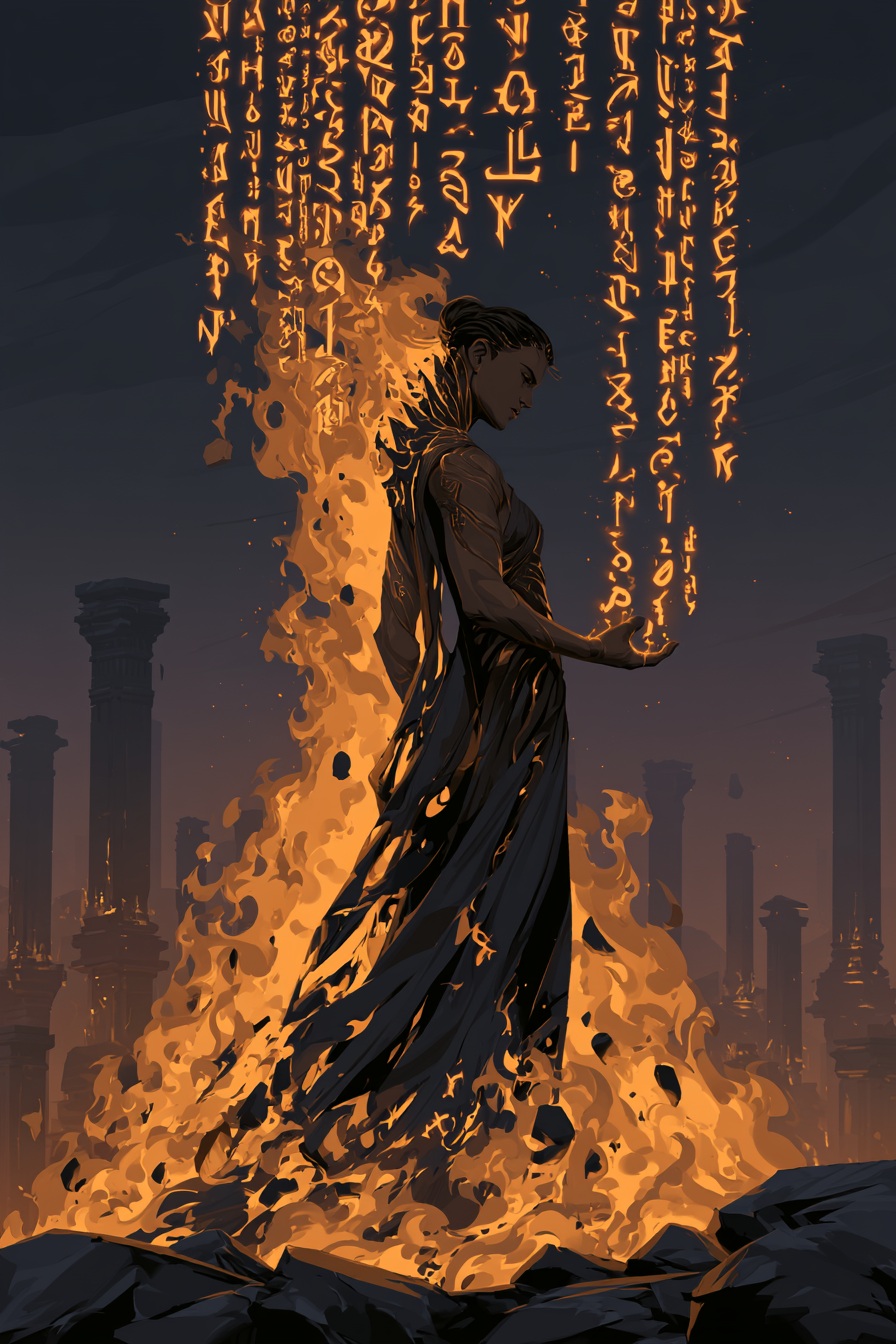
— The Archmage Seraphel
Few arcane traditions provoke stronger reactions than the Weaverunners.   Among ordinary folk, they are almost unknown. The average citizen has little reason to distinguish one wizard from another, and fewer still possess the knowledge necessary to appreciate the profound difference between casting a spell and questioning the principles that allow every spell to exist. To most people, a Weaverunner is simply another scholar carrying a spellbook.   Within the arcane community, however, that illusion vanishes almost immediately.   Most wizards spend years mastering increasingly sophisticated applications of magical theory. They devote themselves to schools of magic, perfect difficult formulae, and gradually develop a deep respect for the accumulated scholarship of countless generations that came before them. Even those who challenge accepted doctrine generally do so from within the established framework of magical understanding.   A Weaverunner begins by questioning the framework itself.   That distinction makes many accomplished spellcasters deeply uncomfortable.   It is not uncommon for traditional wizards to describe Weaverunners as brilliant, gifted, and dangerously arrogant in the same breath. Their critics argue that the discipline displays a profound lack of respect for the accumulated wisdom of earlier generations. To spend centuries refining magical theory only for a young researcher to suggest that many of its underlying assumptions are merely conventions strikes some as intellectual vanity bordering on recklessness.   Others object for more practical reasons.   Every archmage has spent decades becoming an authority within their chosen field. Weaverunners have an unfortunate habit of arriving with uncomfortable questions that expose gaps in even the most celebrated theories. Their work often reveals that effects once believed unique are manifestations of broader principles, that supposedly permanent enchantments can be analyzed more deeply than previously imagined, or that magical phenomena regarded as mysterious are merely poorly understood.   Such discoveries rarely make friends.   Professional rivalry is therefore common.   Some scholars refuse to collaborate with Weaverunners altogether, considering their methods academically irresponsible. Invitations to prestigious symposia have quietly disappeared after researchers became associated with the discipline. Funding for controversial studies is notoriously difficult to obtain, and papers exploring Weaverunning are frequently rejected by conservative journals before they are even reviewed.   Among younger researchers, however, the reputation is more complicated.   To gifted students frustrated by rigid academic traditions, Weaverunners possess an undeniable allure. They represent intellectual freedom, fearless inquiry, and a willingness to question ideas simply because they have always been accepted. More than a few promising scholars have quietly sought out Weaverunners after discovering that their own questions were unwelcome within conventional institutions.   If arcane academia views the discipline with suspicion, religious authorities often regard it with something considerably stronger.   The precise relationship between the gods and the Weave remains a subject of theological debate across countless worlds and faiths. Nevertheless, nearly every religion devoted to magic agrees upon one principle.   The Weave is not merely a tool.   It is part of the fundamental order of creation.   Whether bestowed by divine will, carefully maintained by celestial servants, or woven into existence at the dawn of time, it occupies a place that many faiths consider sacred. Mortals may draw upon it through study, prayer, instinct, or inherited talent, but they remain participants within a greater design rather than its architects.   Weaverunners appear to reject that distinction.   To a devout cleric, the difference between manipulating the Weave to produce a spell and altering the assumptions upon which the Weave itself operates is profound. The former is accepted as the proper use of a divine gift.   The latter begins to resemble trespass.   Many temples devoted to gods of magic therefore regard Weaverunners as deeply troubling figures. They are rarely condemned simply for studying magical theory, but the practical application of Weaverunning often crosses theological boundaries that conventional wizardry never approaches. The notion that a mortal might exempt themselves from an enchantment without dispelling it, separate magical properties from their intended vessels, or revise the expression of another spell challenges beliefs many clergy consider foundational.   Among more tolerant faiths, this earns Weaverunners the status of persona non grata. They are unwelcome within sacred libraries, denied access to certain relics, and excluded from theological discussions concerning the nature of magic. Their work is viewed as spiritually misguided rather than malicious.   Other faiths respond far more aggressively.   Religious orders dedicated to preserving the sanctity of magic have occasionally declared Weaverunning an act of arcane heresy. Individual practitioners have faced formal censure, excommunication, confiscation of research, and, in more extreme jurisdictions, active pursuit by inquisitorial orders charged with suppressing dangerous magical practices. To such organizations, a Weaverunner is not simply mistaken.   They are attempting to lay mortal hands upon something reserved for the divine.   Ironically, these reactions often reinforce the Weaverunner's own philosophy.   Most practitioners have little interest in defying the gods, overthrowing magical tradition, or proving themselves superior to other scholars. They simply refuse to accept that a question should remain unasked because its answer might be uncomfortable. To them, understanding the architecture of the Weave is no more blasphemous than understanding gravity, anatomy, or the movement of the stars.   Whether history will ultimately remember them as visionary scholars or dangerously ambitious meddlers remains impossible to say.   For now, they occupy an uneasy place within the world of magic.   Admired for their brilliance.   Distrusted for their methods.   And watched carefully by those who believe some truths exist not to be discovered, but to remain forever beyond mortal reach.

History

"You still believe the Weave is something you touch when you cast a spell. It isn't. You've spent your entire life swimming in an ocean while insisting you've only gotten your feet wet."
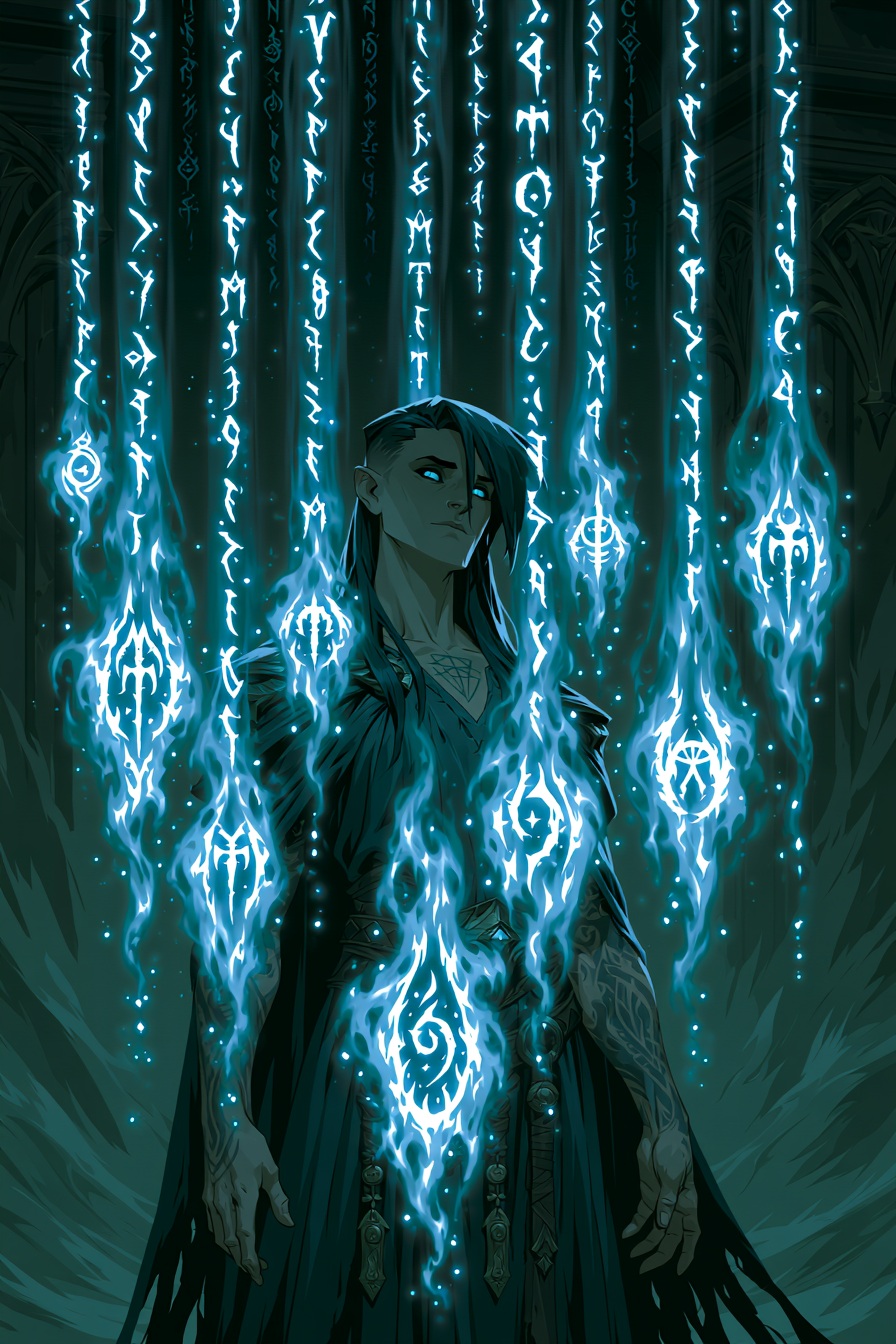
— The Archmage Seraphel
The Weaverunner is among the youngest recognized arcane traditions, emerging only within the last century from a line of inquiry that began nearly four hundred years earlier. Its origins lie not in the pursuit of greater magical power, but in the painstaking work of understanding how magic itself survived the aftermath of the Shattering.   When magic returned to the world, much of the knowledge required to wield it had been lost. Entire schools of magical theory had vanished, enchantments no longer functioned as they once had, and artifacts from the world before the Shattering became objects of intense scholarly interest. From this need arose the discipline of Archaeomancy, dedicated to recovering, studying, and reverse engineering the arcane achievements of earlier civilizations.   For generations, Archaeomancers rebuilt what history had forgotten.   Ancient grimoires were painstakingly deciphered. Ruined magical devices were reconstructed piece by piece. Long-abandoned wards were analyzed until their principles could once again be understood. Each discovery added another fragment to a growing picture of how magic had once functioned before the world itself had been broken.   As this body of knowledge expanded, a curious pattern began to emerge.   Regardless of who had created a spell, what civilization had first cast it, or what purpose it ultimately served, every magical effect appeared to follow the same underlying principles. The language changed. The methods differed. The outward results varied enormously. Yet beneath every enchantment lay an unmistakable structural consistency.   Most scholars regarded this as confirmation that the Weave possessed elegant, universal laws.   A small number reached a different conclusion.   If every spell shared the same underlying architecture, perhaps that architecture could itself be studied.   Not merely observed.   Understood.   The earliest researchers pursuing these questions remained Archaeomancers in every formal sense. Their work consisted largely of cataloging recurring magical structures and identifying relationships between seemingly unrelated enchantments. At first, few colleagues regarded the research as controversial. It appeared to be nothing more than another branch of theoretical arcane study.   The controversy began when theory produced results.   Researchers discovered that understanding a spell's internal structure often revealed far more than its intended effect. Spells could be identified before they were completed. Enchantments could be analyzed while still active. Ancient wards once thought unique proved to be constructed from familiar magical principles arranged in unfamiliar ways.   These discoveries transformed the study of counter-magic.   Soon afterward, they transformed something else.   A handful of researchers began asking whether enchantments were truly inseparable from the objects that bore them.   Others questioned whether magical effects necessarily applied to every creature they appeared designed to affect.   The boldest among them wondered whether a spell interrupted before completion might be rewritten into an entirely different expression of the same underlying pattern.   These ideas spread quietly.   Almost never through formal lectures.   Almost never through published papers.   Instead, they passed from mentor to student, whispered between gifted researchers who found themselves asking increasingly uncomfortable questions that conventional arcane education had no interest in pursuing.   By the time the discipline acquired the name Weaverunner, its practitioners had already become something distinct from Archaeomancers.   The relationship between the two traditions remains close.   Most Weaverunners receive their earliest exposure to magical theory through Archaeomantic study, and many Archaeomancers regard Weaverunning as a fascinating, if deeply dangerous, extension of their own work. Others reject the comparison entirely, arguing that Archaeomancy exists to recover lost knowledge while Weaverunning seeks to alter knowledge that already functions perfectly well.   Modern magical academies remain divided.   Some institutions refuse to acknowledge Weaverunning as a legitimate field of study, considering it an irresponsible departure from accepted magical scholarship. Students who openly pursue its methods often find themselves discouraged, denied research opportunities, or quietly encouraged to continue their investigations elsewhere. A few have been formally expelled after conducting experiments deemed unnecessarily hazardous.   Other academies adopt a more cautious approach, allowing limited research under strict supervision while discouraging practical experimentation. Even among those willing to tolerate the discipline, few instructors are comfortable teaching methods whose long-term consequences remain largely unknown.   As a result, most Weaverunners develop outside traditional academic structures.   Some continue their studies independently after leaving university. Others gather in small circles of trusted colleagues, sharing observations privately rather than publishing them. A rare few are fortunate enough to find an established Weaverunner willing to accept an apprentice, though such opportunities are exceptionally uncommon. The tradition remains too young, and its practitioners too few, for any formal lineage or institutional hierarchy to exist.   Despite this uncertain history, Weaverunning continues to grow.   Not because its practitioners seek to overturn centuries of magical scholarship, but because every generation produces a handful of minds unwilling to accept that understanding magic should end with learning how to cast it.   For those individuals, every spell raises one final question.   Not what does this magic do?   But why does it work at all?

Operations

Dangers & Hazards

"Every apprentice is taught to weave a thread into the tapestry. Every master learns to weave thousands. But there exists a line no mortal was ever meant to cross. The moment you cease weaving the tapestry and begin tugging upon its threads, you are no longer practicing magic. You are laying hands upon the loom itself. And I assure you... whatever built that loom will eventually notice."
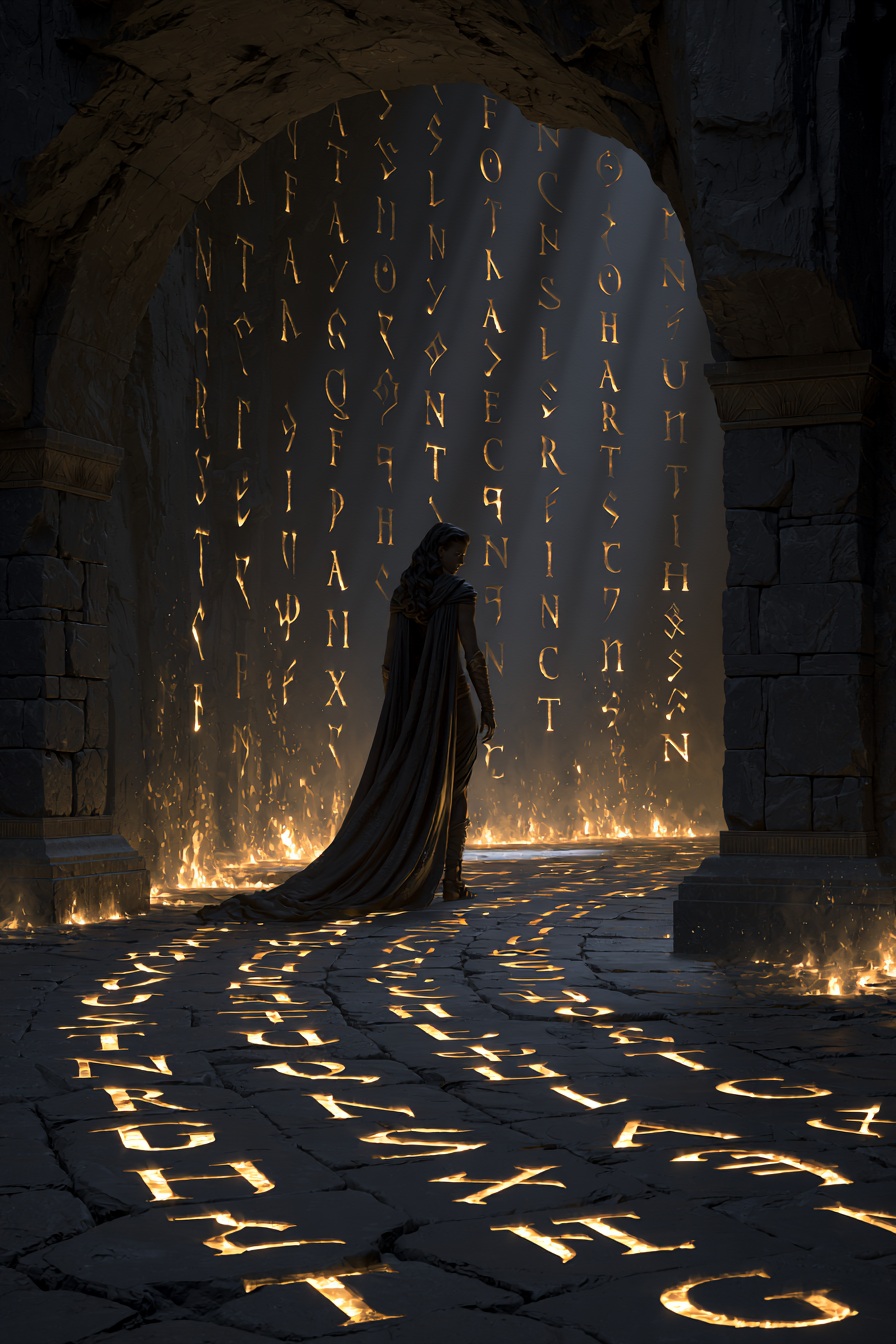
— The Archmage Seraphel
To most spellcasters, the Weave is a medium through which magic is expressed. It is the unseen fabric that allows mortal will to become supernatural effect. Wizards memorize formulae that shape it. Clerics invoke divine authority to guide it. Druids allow it to flow through the natural world, while sorcerers instinctively bend it according to their blood and talent.   None of these traditions seek to change the Weave itself.   They merely work within it.   A Weaverunner rejects that distinction.   Where others manipulate magic, a Weaverunner studies the architecture from which magic arises. Rather than accepting the Weave as an immutable foundation, they examine its underlying structure, searching for patterns that can be isolated, separated, rewritten, or quietly persuaded to behave differently than they were originally intended.   It is a subtle difference.   It is also one that has unsettled every major magical institution since the tradition first emerged.   The dangers begin with a simple misconception.   Many inexperienced students assume a Weaverunner is merely an unusually talented wizard specializing in counterspells, magical analysis, or enchantments. Nothing could be further from the truth. Those are merely the earliest practical applications of a philosophy whose implications become increasingly difficult to ignore.   Every spell rests upon assumptions.   A wall of force assumes it blocks everyone except those specifically exempted. A magical ward assumes it knows who is permitted to enter. An enchanted cloak assumes its magic belongs to the cloth that bears it. Most spellcasters accept those assumptions as inseparable from the spell itself.   A Weaverunner asks a different question.   "What if they aren't?"   History suggests that question should be approached with extreme caution.   The earliest Weaverunners emerged only after centuries of Archaeomancy had painstakingly reconstructed much of the magical knowledge lost during the Shattering. Archaeomancers learned to restore forgotten enchantments by studying ancient artifacts and deciphering the principles hidden within them. Their discoveries transformed modern magical scholarship.   A handful of their brightest students took one step further.   Rather than asking how ancient magic had been constructed, they began asking why every spell, regardless of age or origin, appeared to follow the same underlying rules.   Their conclusions became the foundation of Weaverunning.   Their colleagues considered them reckless.   Not because the theory was implausible.   Because it appeared increasingly correct.   To conservative arcane scholars, the discipline represents an unsettling shift in perspective. Magical law has always been treated much like mathematics. It is discovered rather than negotiated. A fireball explodes because that is the nature of the spell. A teleportation circle connects predetermined locations because that is how the magic functions.   Weaverunners quietly disagree.   To them, these are not laws.   They are conventions.   Conventions can be revised.   That belief alone has earned the tradition no shortage of critics.   Universities often discourage or outright forbid formal research into Weaverunning, not because its practitioners lack talent, but because they possess too much of it. The students most drawn to the discipline are almost invariably exceptional researchers, individuals capable of seeing relationships other mages overlook. Left unchecked, they begin asking questions that established institutions are increasingly uncomfortable answering.   Religious authorities express even greater concern.   Across many worlds and planes, the Weave is believed to exist beneath the protection, stewardship, or direct authority of divine beings. Manipulating it to produce spells is accepted as part of the natural order. Attempting to alter its underlying structure, however temporarily, is viewed by many theologians as something far more profound.   It is one thing to play a melody upon an instrument.   It is another to dismantle the instrument while the music is still playing.   Whether these fears are justified remains fiercely debated.   There are no verified accounts of a Weaverunner unraveling reality, tearing open planar boundaries, or permanently damaging the Weave itself. Yet absence of evidence has done little to quiet those who argue that mortals are trespassing upon mechanisms they were never meant to perceive, much less manipulate.   Experienced Weaverunners tend to dismiss such accusations with characteristic calm.   They point out that every advance in magical scholarship has, at some point, been declared impossible, irresponsible, or blasphemous. The first artificers were accused of imprisoning magic within machinery. Archaeomancers were criticized for attempting to restore knowledge the world had clearly been meant to lose. History, they argue, has rarely rewarded those content to leave difficult questions unanswered.   Even so, most Weaverunners develop a deep respect for the dangers inherent in their work.   Not fear.   Respect.   The Weave is unimaginably vast. Every spell cast by every mage, priest, druid, and sorcerer represents only the faintest ripple upon its surface. To study that structure is an extraordinary privilege.   To alter it, even briefly, demands absolute confidence in one's understanding.   Because the greatest danger facing a Weaverunner has never been magical backlash.   It has always been the quiet temptation to believe that understanding the rules of reality entitles one to rewrite them.

"Every wizard believes they understand the Weave because they have learned to cast a spell. That's like believing you understand a tapestry because you can admire the finished picture. A Weaverunner turns it over and studies the knots."
— The Archmage Seraphel
Alternative Names
Runner
Type
Arcane
Demand
Low
Legality
Varies
Famous in the Field
Other Associated professions


Unknown Shores

Weaverunner

“Every spell is written in the same language. Most wizards learn to speak it. Weaverunners learn to edit it.”

Weaverunners study the underlying architecture of magic rather than its individual expressions. To them, no spell is sacred, no enchantment permanent, and no magical law beyond revision.
Features

Level 3: Behold the Pattern

You instinctively recognize the structure of magic.   You always have Detect Magic and Identify prepared. These spells don’t count against the number of Wizard spells you have prepared.   When you reach Wizard level 5, Counterspell and Dispel Magic are added to your spellbook if they aren’t already there. You always have those spells prepared, and they don’t count against the number of Wizard spells you have prepared.   Whenever you perceive a creature casting a spell, you immediately learn the spell’s name, school of magic, and the level at which it is being cast.   When you cast Dispel Magic, before resolving it you learn the name, school of magic, and level of each ongoing spell on the target that Dispel Magic could end.   Whenever you make an ability check for a Dispel Magic spell you cast as a Wizard spell, add your Intelligence modifier to the check a second time.  

Level 6: Unravel Enchantment

You can temporarily separate magical patterns from the objects that bear them.   When you begin a Long Rest, choose two different objects within 5 feet of yourself: one non-Artifact magic item whose properties you know and one receiving object. The receiving object must be nonmagical or the receiving object of your current transfer. Both objects must remain within 5 feet of you until the rest ends.   At the end of the Long Rest, choose one transferable property of the magic item. A transferable property is a passive magical benefit that doesn’t:
  • Expend charges
  • Cast or replicate spells
  • Summon or create creatures
  • Grant sentience
  • Impose or remove curses
  • Alter the object’s base statistics
  • Depend on the original item’s physical form

  • The chosen property is suppressed on the original item and transferred to the receiving object until you finish your next Long Rest. The receiving object becomes a magic item for the duration.   Any prerequisites, limitations, drawbacks, and Attunement requirements of the transferred property apply to the receiving object. In the property’s description, references to the original item refer to the receiving object instead.   If the transferred property requires Attunement, one creature can attune to the receiving object during the same Long Rest. To do so, the creature must spend at least 1 hour of the rest in physical contact with the object, meet any Attunement prerequisites, and be able to attune to another magic item.   You can maintain only one transferred property at a time. A previous transfer ends when a new transfer takes effect.   An object can be affected by only one use of this feature at a time. A transferred property can’t be transferred again.   The transfer ends early if you die or if either object is destroyed.   When the transfer ends, any Attunement to the receiving object ends unless a new transferred property that requires Attunement takes effect on it at the same time.   The Dungeon Master determines what constitutes a single transferable property and whether it can be transferred to the chosen object.  

    Level 10: Loose Threads

    You have learned to quietly remove yourself from a spell’s assumptions without unraveling the spell itself.   When your Dispel Magic would end one or more ongoing spells, you can choose one of those spells. Instead of ending, the chosen spell has no direct effect on you for 1 hour or until it ends, whichever comes first.   While this feature lasts, you can’t trigger the spell, the spell can’t target you, and the spell’s areas don’t affect you. If the spell allows designated creatures to be exempt from its effects, you are treated as one of those creatures.   Any condition or other ongoing effect imposed directly on you by the chosen spell is suppressed for the duration.   Creatures and objects created, summoned, animated, controlled, transformed, or enhanced by the chosen spell can affect you normally.   This feature doesn’t allow you to pass through a barrier that normally prevents movement or through physical matter created by the spell unless the spell normally permits exempted creatures to do so.   Once you use this feature, you can’t use it again until you finish a Long Rest.  

    Level 14: Slip the Weave

    You understand magical architecture well enough to rewrite a spell before its structure collapses.   You can use this feature when either of the following occurs:   A creature fails its saving throw against a Counterspell you cast using a spell slot, and the spell it was casting is 1st level or higher. A Dispel Magic you cast using a spell slot ends one or more spells of 1st level or higher.   Choose the interrupted spell or one spell ended by Dispel Magic. The chosen spell is the source spell.   As part of the same Reaction used to cast Counterspell, or the same Action used to cast Dispel Magic, you can cast one Wizard spell you have prepared without expending another spell slot.   The warp level equals the lower of the source spell’s level and the level of the spell slot you expended to cast Counterspell or Dispel Magic.   The replacement spell must meet all the following requirements:
  • It belongs to the source spell’s school of magic.
  • Its base level is no higher than the warp level.
  • It has a casting time of one Action.
  • It has a range other than Self or Touch.

  • The replacement spell is cast at the warp level and produces the effects it would produce if cast using a spell slot of that level. You are the spell’s caster and choose its targets.   If this feature was triggered by Counterspell, choose a point you can see within the interrupted caster’s space.   If this feature was triggered by Dispel Magic, choose a point you can see within the target’s space or within the area of the targeted magical effect. The point must have been within the range of your Dispel Magic when you cast it.   Treat the chosen point as your space when determining the replacement spell’s range and point of origin. Measure the spell’s range and any area it creates from that point.   You don’t perceive through the chosen point and must satisfy any requirement to see a creature, object, or point using your own senses. Determine whether there is a clear path to each target from the chosen point.   The replacement spell requires its normal components. You can’t choose a spell with a Material component that has a listed cost or is consumed.   If the replacement spell requires Concentration, you maintain it normally.   Once you use this feature, you can’t use it again until you finish a Long Rest.

    Comments

    Author's Notes

    Thanks, Steve.
    C'ya on the other side.


    Please Login in order to comment!
    Powered by World Anvil