

Virellen Silk
The Touch of Iorill
“My grandmother still keeps the first strip of Virellen she ever wove after leaving the forest. She says as long as that thread survives, so do we.”
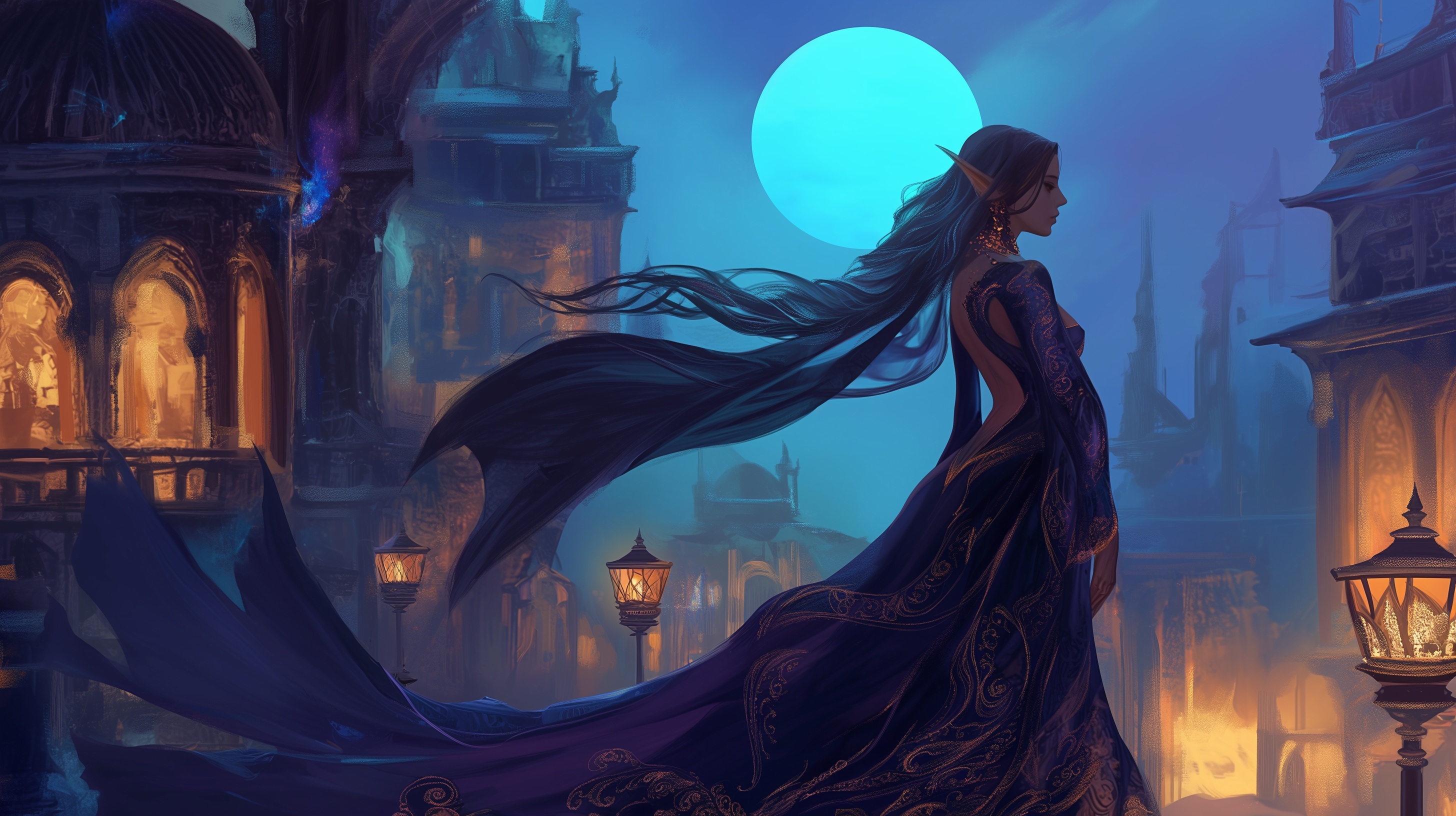
Virellen silk is the finest textile produced in Areeott and one of the most quietly influential crafts in the kingdom. It is not merely luxury fabric. It is structural to how the Arin elves anchor themselves within a society that is not wholly their own.
Raised in controlled subterranean cave networks beneath the cities and enclaves of Areeott, the Velthirae worms produce filament of remarkable consistency and tensile integrity. The caves provide stability against the brutal seasonal shifts of the Agriss, allowing production to remain reliable when surface agriculture falters. This is not aesthetic choice. It is logistical advantage.
The silk’s reputation rests on two pillars. First, quality. Virellen thread is finer and more uniform than competing local silks, allowing for smoother weave, better drape, and superior durability when properly finished. Second, trust. When silk must not fail, when Tracht must hold in mountain cold, when bespoke garments must endure both movement and climate, Virellen is the standard.
Though often associated with elegance and display, its most critical application lies in Arin Tracht production. In that context, the silk is not ornamental. It is part of survival infrastructure. Because of this, the elves guard its standards closely. Not out of vanity, but necessity.
Virellen silk is therefore both art and leverage. It weaves the elves into the economic and cultural spine of Areeott without requiring political spectacle. When the kingdom prepares for winter, for ceremony, or for presentation before foreign powers, the silk moves first.
Utility
“They say it's expensive. Of course it is. You're not paying for thread. You're paying for the certainty that someone raised it, reeled it, and wove it without cutting corners. That certainty has a price.”
Virellen silk was not developed in Areeott. It is a tradition the elves carried out of the Iorill Forest when they abandoned it and fled its aftermath. Whatever else was lost with that homeland, the knowledge of raising Velthirae and working their filament was preserved on purpose, treated as something too valuable to let die with the forest.
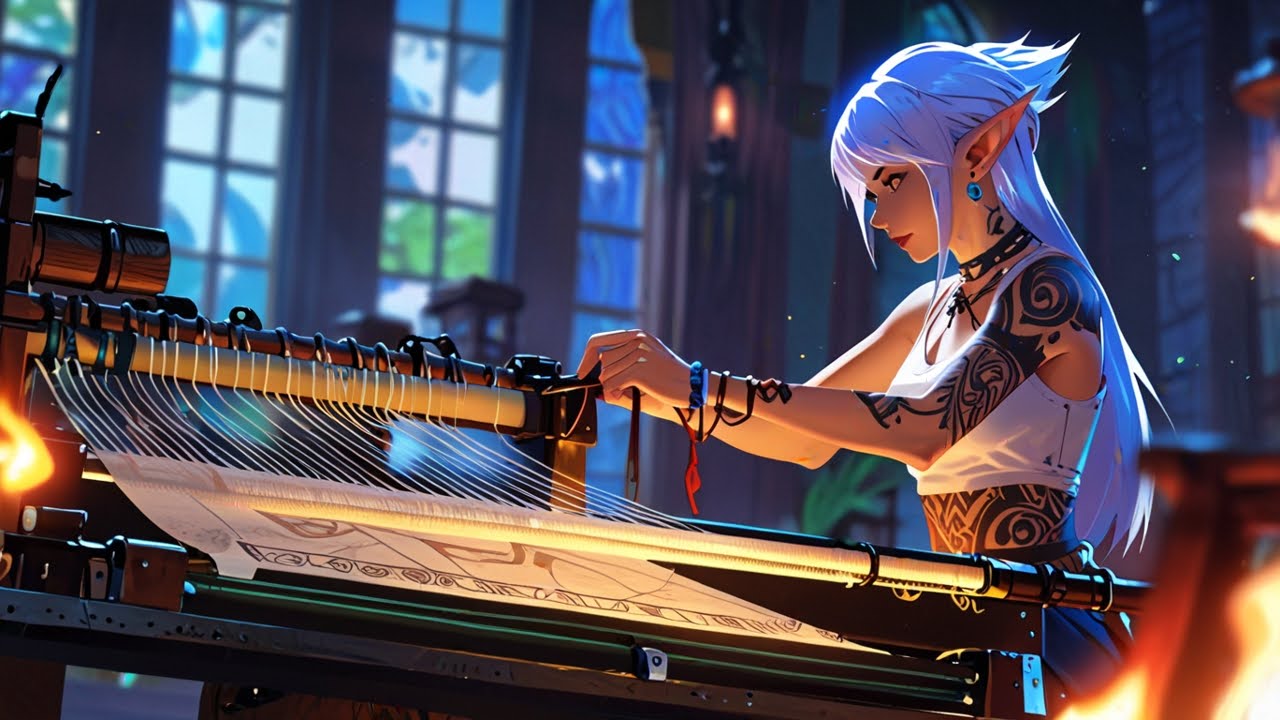
Its usefulness begins with the thread itself. Virellen can be spun fine without becoming fragile, and when it is woven correctly it produces cloth that holds shape, moves cleanly, and stays comfortable under long wear. It does not behave like common cloth. It is light without feeling thin, and it keeps its integrity when layered rather than turning into a slick nuisance that shifts and bunches.
That makes it practical in Areeott for reasons that have nothing to do with court fashion. People live in hard weather, they travel, they fight, and they work. Virellen performs as a base layer and interior lining because it reduces friction, handles moisture better than many alternatives, and stays stable against the skin. In a culture that values function as much as presentation, those properties are worth paying for even before anyone starts talking about beauty.
Its most critical use is in Arin Tracht production. In that context Virellen is part of survival infrastructure. It is used where failure cannot be tolerated, in lining, reinforcement, binding, and internal structure that lets the garment move with the wearer instead of against them. That is why the elves guard standards and process more tightly for Tracht work than they do for ordinary finery. It is not prestige. It is responsibility.
Outside of Tracht, Virellen is used in bespoke clothing because it supports the entire Arin elven approach to dress. It takes tailoring well, it can be cut to reveal tattoos and piercings cleanly without sagging or warping, and it pairs with other materials without fighting them. This matters in a culture where clothing is a chosen statement and rarely off the rack, and where personal story is often meant to be seen rather than hidden.
Misuse comes in three forms. The first is technical substitution, when inferior silk is passed off as Virellen or used where Virellen grade is required, especially in Tracht adjacent work. The second is careless treatment, when people handle it like common cloth and damage it through neglect. The third is social misuse, when outsiders treat Virellen as pure status costume and wear it in ways that ignore what it is meant to do, which is to function cleanly while framing the wearer’s chosen expression.
Manufacturing
“You think it's soft. That's the trick. It moves like water but holds like rope. I 've tried to copy it. I stopped trying.”
The manufacture of Virellen silk begins with the Velthirae worms, and nothing about that stage is casual. The worms are raised in controlled interior environments, most often within the subterranean districts beneath Areeott’s elven quarters. These spaces provide stable temperature and humidity, which are essential to consistent filament quality. Sudden drafts, vibration, or irregular feeding cycles weaken the yield. For that reason, rearing rooms are quiet, monitored, and managed with discipline rather than improvisation.
Feeding is deliberate and measured. The Velthirae do not thrive on common foliage. Their diet is cultivated specifically for filament strength and uniformity, and leaves are harvested and stored under controlled conditions before use. Overfeeding produces thick, inconsistent thread. Underfeeding weakens the cocoon. The goal is balance, and experienced keepers judge it by sight and timing rather than guesswork.
When the worms enter cocooning stage, the chambers are left undisturbed. Handling too early damages filament continuity. Handling too late alters texture and tensile response. Cocoons are collected at a precise interval determined by color shift and density rather than a fixed calendar date. This timing is one of the core guarded elements of the craft. It cannot be rushed without compromising the thread.
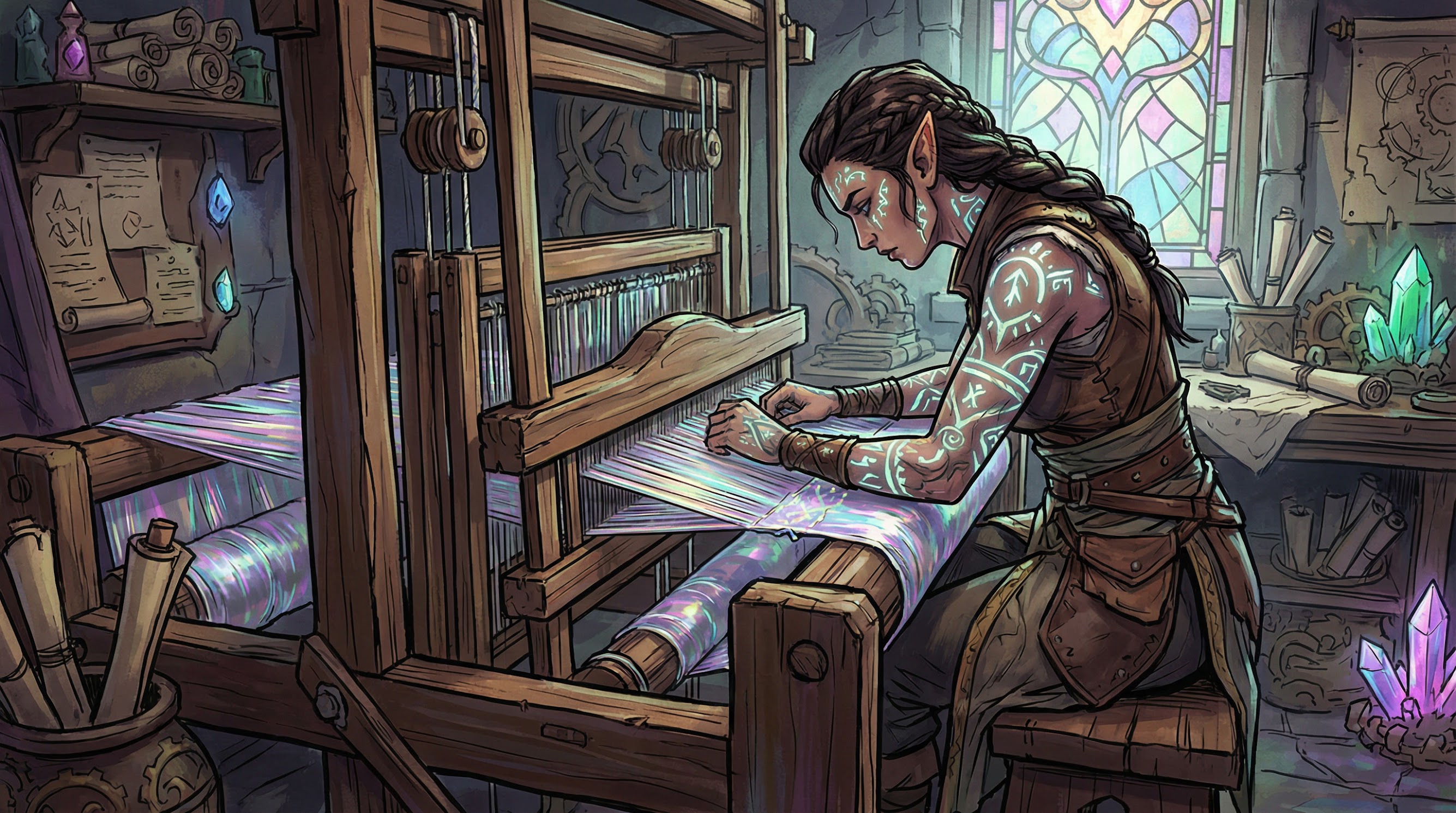
Reeling is performed by hand. The cocoon is carefully softened and the filament drawn in continuous length whenever possible. Breakage is considered a technical failure unless caused by unavoidable defect. Skilled reelers maintain even tension by touch, not by mechanical gauge. The thread must remain consistent in thickness and elasticity across the pull. Uneven tension produces weak weave later, even if the flaw is not visible at first glance.
The raw filament is then cleaned and sorted. Not all thread is equal. Higher grade strands are reserved for structural applications such as Tracht production and critical tailoring. Secondary grades may be used for decorative panels, lighter garments, or non load bearing components. The grading process is strict, and it is here that inferior imitations most often reveal themselves.
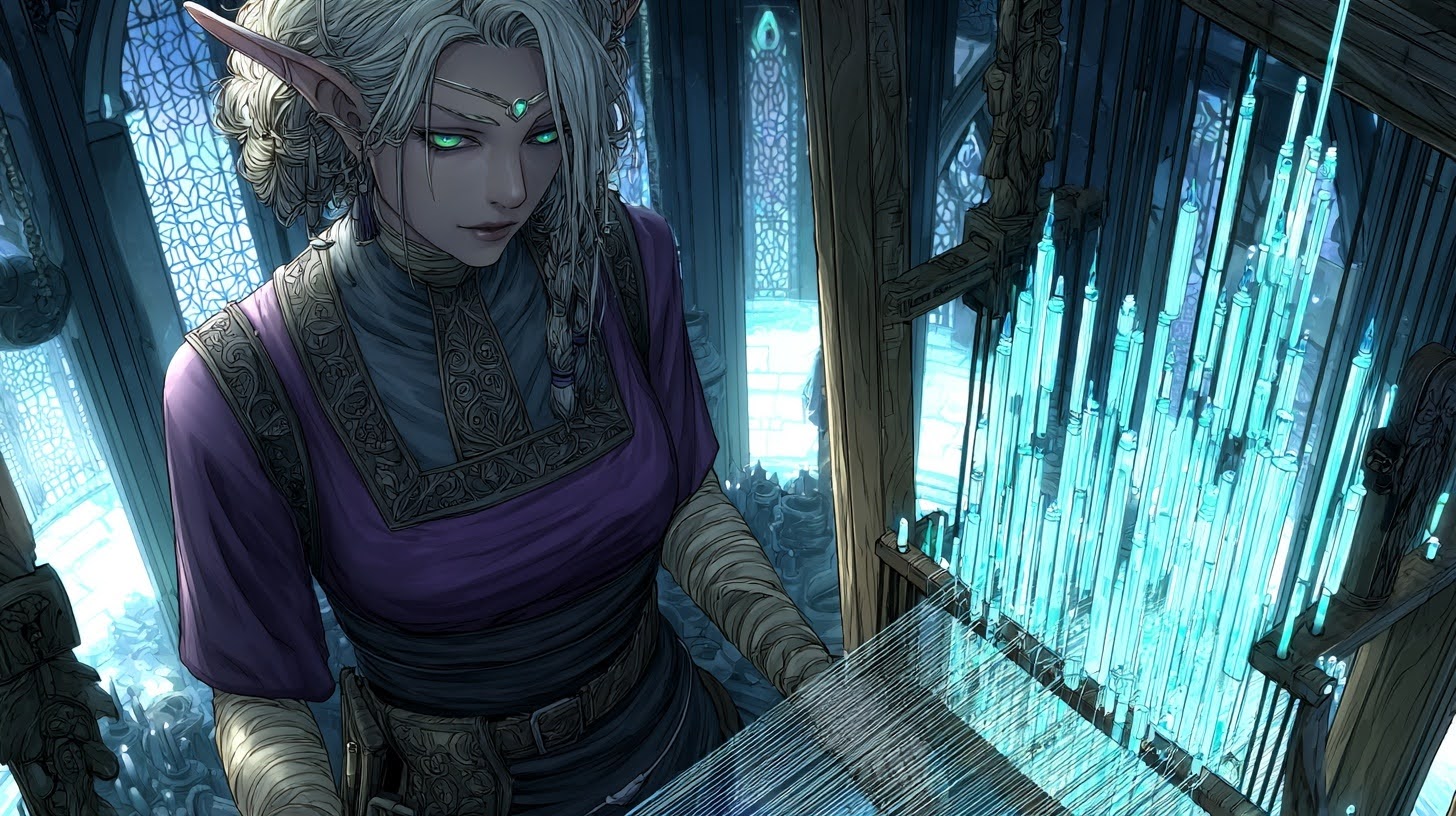
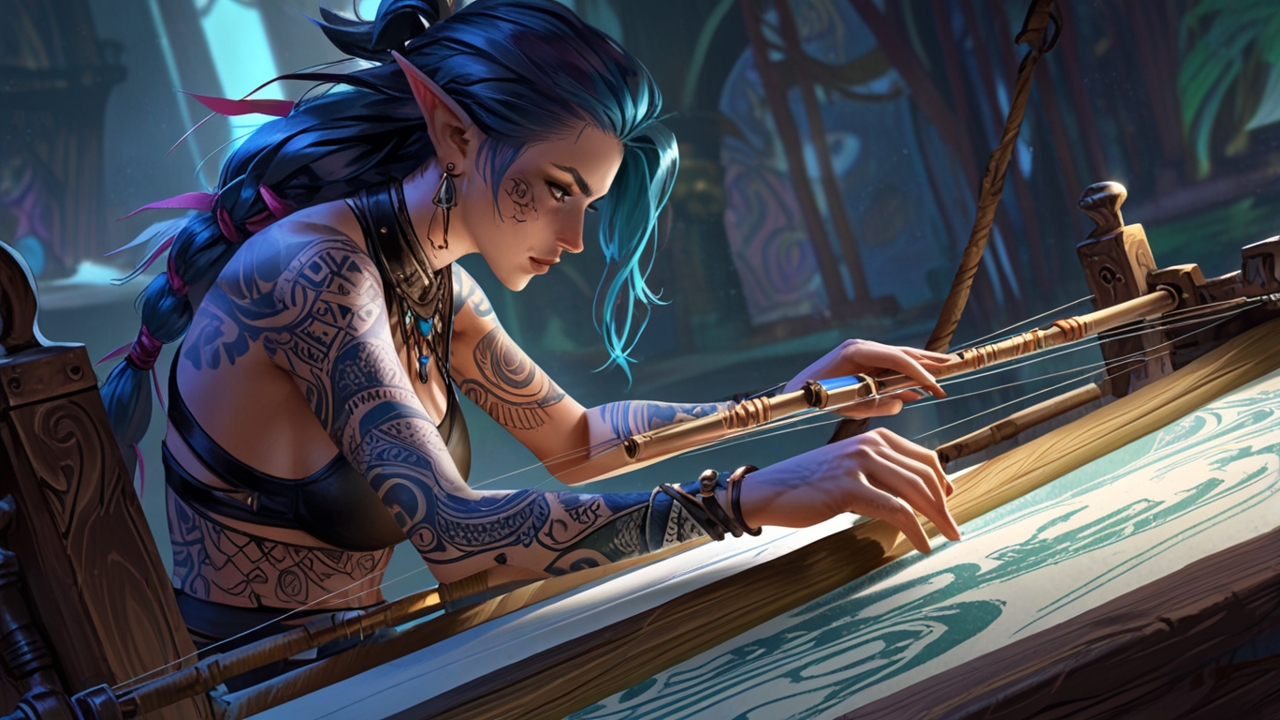
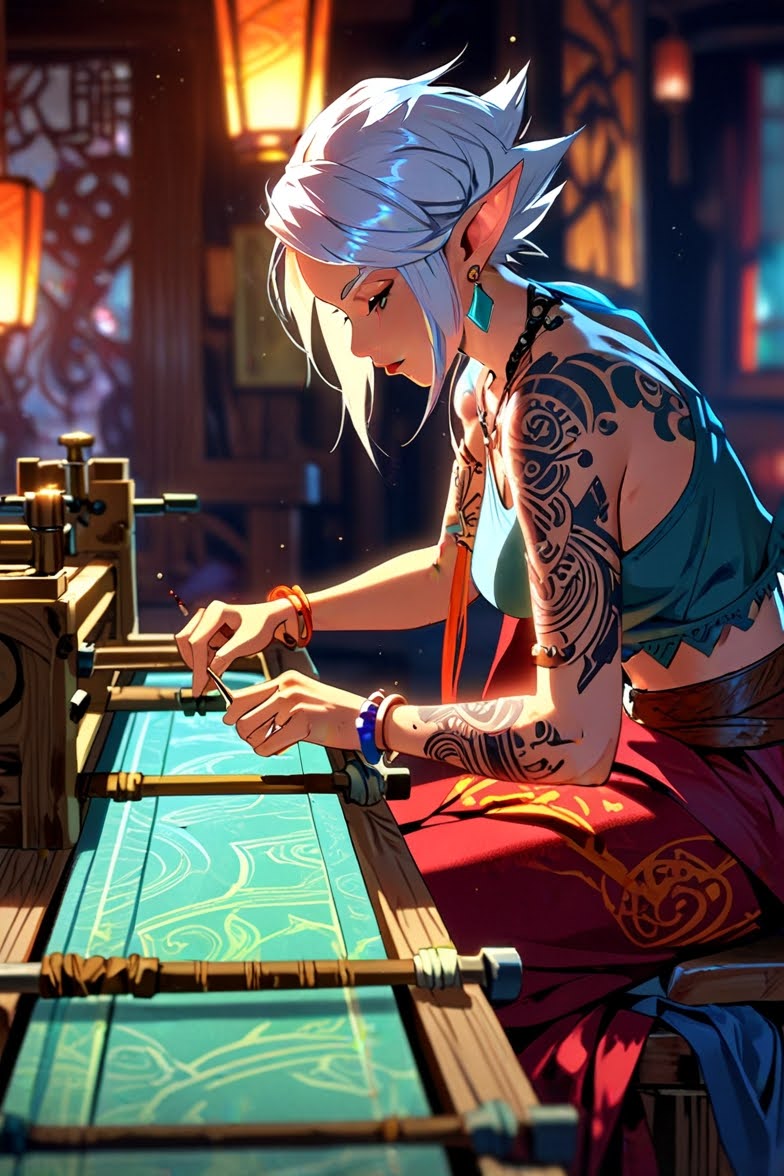
Weaving is done on looms calibrated for fine tension control. Warp threads are set tightly to ensure structural integrity, and weft insertion is paced rather than rushed. Virellen is not woven loosely. The cloth must hold form without becoming stiff. This balance requires constant adjustment during the weave. Experienced weavers make micro corrections by feel, altering pressure and spacing in response to thread behavior rather than relying solely on preset measurements.
Finishing is minimal but exact. The cloth is washed, tension reset, and dried under controlled conditions to prevent warping. Dyeing, when required, is performed after structural inspection, not before. No bolt leaves a reputable workshop without examination for weak points, irregular density, or dye inconsistency. The manufacturing process of Virellen silk is not fast. It is controlled. That control is what separates it from common silk and preserves its reputation.
Social Impact
“They say it’s just cloth. Fine. Then go wear something else for a week and come back to me when the seams start fighting you.”
Virellen silk did not reshape Arin society overnight. It reinforced patterns that already existed and sharpened distinctions that were already present. Because the knowledge of raising Velthirae and weaving the filament survived the fall of Iorill, it became one of the few intact continuities the elves carried into Areeott. That alone gave it weight beyond simple material value. It was proof that not everything had been erased.
Within the enclaves, mastery of Virellen production created lines of reputation rather than class. Families known for consistent rearing and weaving standards earned standing through reliability. Apprenticeship lines formed around workshops, and those lines carried influence in quiet ways. Not political authority, but cultural authority. If a house was trusted to produce structural grade silk for Tracht, that trust translated into social capital.
Outside the enclaves, Virellen shifted how the broader population viewed the Arin Elves. During and after the Civil War, the elves were known for skill in battle and precision in craft. Virellen reinforced the latter image. It became one of the visible markers that the elves were not temporary mercenaries or wandering refugees. They were producers of something no one else could replicate at the same standard. That stability altered suspicion into dependence in some sectors.
Economically, it created a controlled point of trade. Virellen is expensive, not because of artificial scarcity, but because of labor intensity and quality control. That price restricted access without creating outright resentment, since its performance justified the cost in contexts where failure mattered. For many non elves, owning even a small piece of Virellen became a signal of discernment rather than extravagance.
It also intensified internal debate among the elves themselves. Traditionalists treated Virellen as a sacred inheritance from Iorill and resisted experimentation. Younger generations were more willing to blend it with foreign materials or push its aesthetic boundaries. That tension did not fracture production, but it did shape how the silk was presented and marketed. The cloth became part of the broader argument over preservation versus adaptation.
In practical terms, Virellen contributed to Areeott’s resilience. In Tracht, in durable bespoke garments, and in specialized applications, it supported mobility, survival, and readiness. In a land that lives under the threat of sudden conflict from Stormwatch Pass, materials that perform reliably matter. The social impact of Virellen is therefore not theatrical. It is structural. It is one of the quiet technologies that allowed the Arin Elves to entangle their survival with that of the kingdom rather than remain apart from it.
“They brought it with them when everything else burned. That alone tells you what it is worth.”



Very cool.
Thank you! <3 I appreciate you took the time to read it. :)