


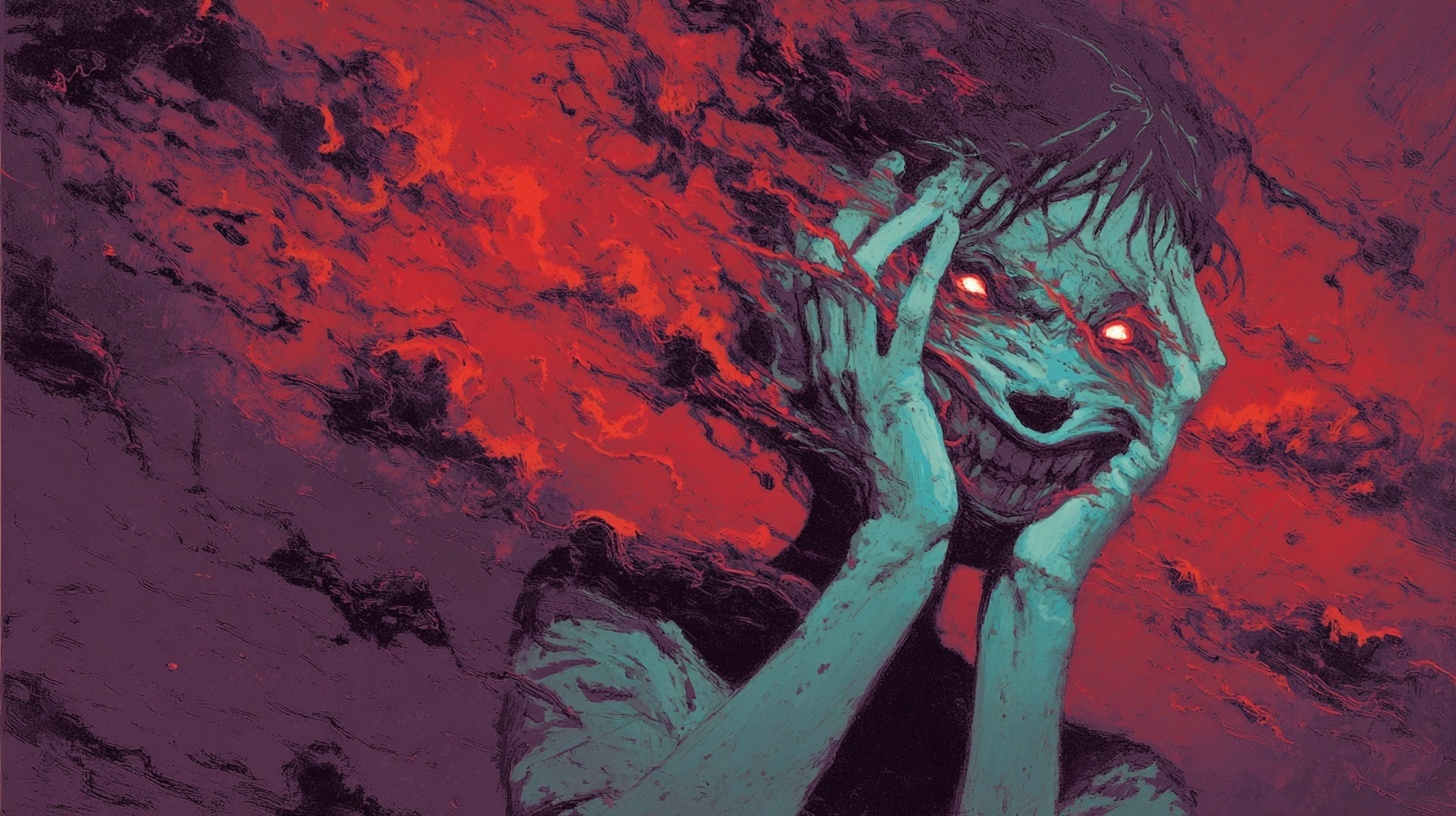
Tormented Soul
The Agony of Damnation
“There are spirits that linger because they cannot let go. And then there are those that linger because something will never let them.”
There are spirits that remain because they are remembered, and there are spirits that remain because something in the world has failed to release them. A tormented soul belongs to neither of these categories in any simple sense. It is not sustained by love, nor by vengeance in the way stories prefer to frame such things. It persists because a moment of its existence was so complete, so absolute in its suffering, that it did not pass when the body failed. It settled instead, like something driven into the foundation of the world, and from that point forward, it began to repeat.
To encounter such a thing is not to see a ghost drifting through familiar motions. It is to step into proximity with an event that has not finished happening.
The space around a tormented soul does not announce itself with spectacle. There is no immediate flash of terror or theatrical display. The change is quieter, more insidious, and far more difficult to ignore once it is felt. Those who draw near often describe a pressure that gathers behind the eyes and settles into the chest, a sensation that does not belong to the body so much as it intrudes upon it. It carries with it impressions that are not their own, fragments of something lived by another, forced into the present without context or permission.
These impressions do not present themselves clearly. They are not visions that can be interpreted at a distance or dismissed as illusion. They are emotional certainties without explanation. A sudden and inexplicable certainty that something has gone terribly wrong. The feeling of betrayal before the cause is known. The weight of regret without the memory that justifies it. These sensations arrive uninvited, and for a moment, they are indistinguishable from the individual’s own thoughts.
This is how the soul asserts itself.
Not through voice, but through recognition.
Those who resist find it difficult to explain what they are resisting. Those who fail to do so are caught in that moment, held not by force, but by an overwhelming sense that action itself is futile. It is not paralysis in the physical sense. It is the collapse of intent, the mind stalling under the weight of something it was never meant to carry.
When the soul turns its attention outward, the effect is no less disturbing. Its attacks are not strikes in any conventional understanding, but expressions of what it endured in its final moments. The energy it releases carries with it both heat and pressure, a combination that burns and fractures, leaving behind not just injury, but an echo. Those struck often report that the pain lingers in a way that does not correspond to the wound, as though something of the experience itself has been transferred along with the force.
It does not fight with precision.
It reacts.
This distinction matters, because it reveals something essential about its nature. A tormented soul is not acting with intent in the way a living creature does. It is repeating, responding to stimuli in ways shaped entirely by the moment that defines it. There is no strategy, no adaptation in the traditional sense, only variation within a fixed pattern that cannot resolve itself.
Even when it is struck, it does not behave as expected. Its form distorts, fragments, and displaces in ways that suggest it is not fully present in the space it occupies. A blow that should disperse it instead scatters it, and in the next instant, it reappears elsewhere, carrying with it a pulse of psychic force that ripples outward. This movement is abrupt and disorienting, not graceful or controlled, as though the soul itself cannot fully determine where it exists from one moment to the next.
This instability is not a defense.
It is a symptom.
At the center of this condition lies the anchor, though it is rarely recognized immediately. Every tormented soul is bound to something that existed at the moment of its death, something that fixed that moment in place rather than allowing it to pass. It may be an object that bore witness, a location where the event occurred, or even a person whose presence defined the final act. Whatever its form, the anchor is not merely symbolic. It is structural, the point at which the soul’s existence has been caught and held in place.
Destroying the body of the soul does nothing to resolve this.
When it is reduced to nothing, the result is not an ending, but an interruption. The form collapses, the pressure lifts for a brief and deceptive moment, and then, without warning, it returns. The reformation is not clean. It arrives violently, accompanied by a surge of the same intrusive presence that marks its existence, forcing those nearby to experience again the edge of that unresolved moment.
Each time it returns, something changes.
The illusion of coherence begins to erode. The shape it presents becomes less stable, less capable of maintaining whatever semblance of form it once held. At the same time, fragments of its final experience become clearer. Not as a narrative, not as a sequence of events that can be easily understood, but as flashes of certainty. A hand reaching where it should not. A voice speaking words that do not align with what followed. A realization, sudden and irreversible, that something has gone wrong in a way that cannot be undone.
These fragments are not offered willingly.
They bleed through.
Those who remain in proximity long enough begin to piece them together, not out of curiosity, but out of necessity. Understanding becomes the only path forward, because without it, the cycle continues indefinitely. The soul will persist, reforming again and again, each time weaker in structure but no less present in its effect, until something breaks the connection that binds it.
That connection cannot be severed through force alone.
The anchor must be addressed, and addressing it requires confronting the moment that created it. This is where most fail, not because the task is impossible, but because it demands engagement with something that resists being understood. The truth of the soul’s death is not hidden behind riddles or locked away through deliberate means. It is present, exposed in fragments that must be assembled into something coherent.
And coherence is not always comforting.
What emerges is rarely a clean tragedy. More often, it is something tangled, something that reveals choices made under pressure, betrayals that were not immediately obvious, or consequences that extended beyond what anyone involved intended. To resolve the soul is to accept this, to act upon it in a way that acknowledges what occurred without attempting to simplify it.
Until that happens, the soul remains.
Not as a memory preserved.
Not as a spirit wandering.
But as a moment that refuses to pass, repeating itself with enough variation to be endured, but never enough to be concluded, ensuring that anyone who encounters it will come away with a piece of something that was never meant to be shared, and never meant to last this long.
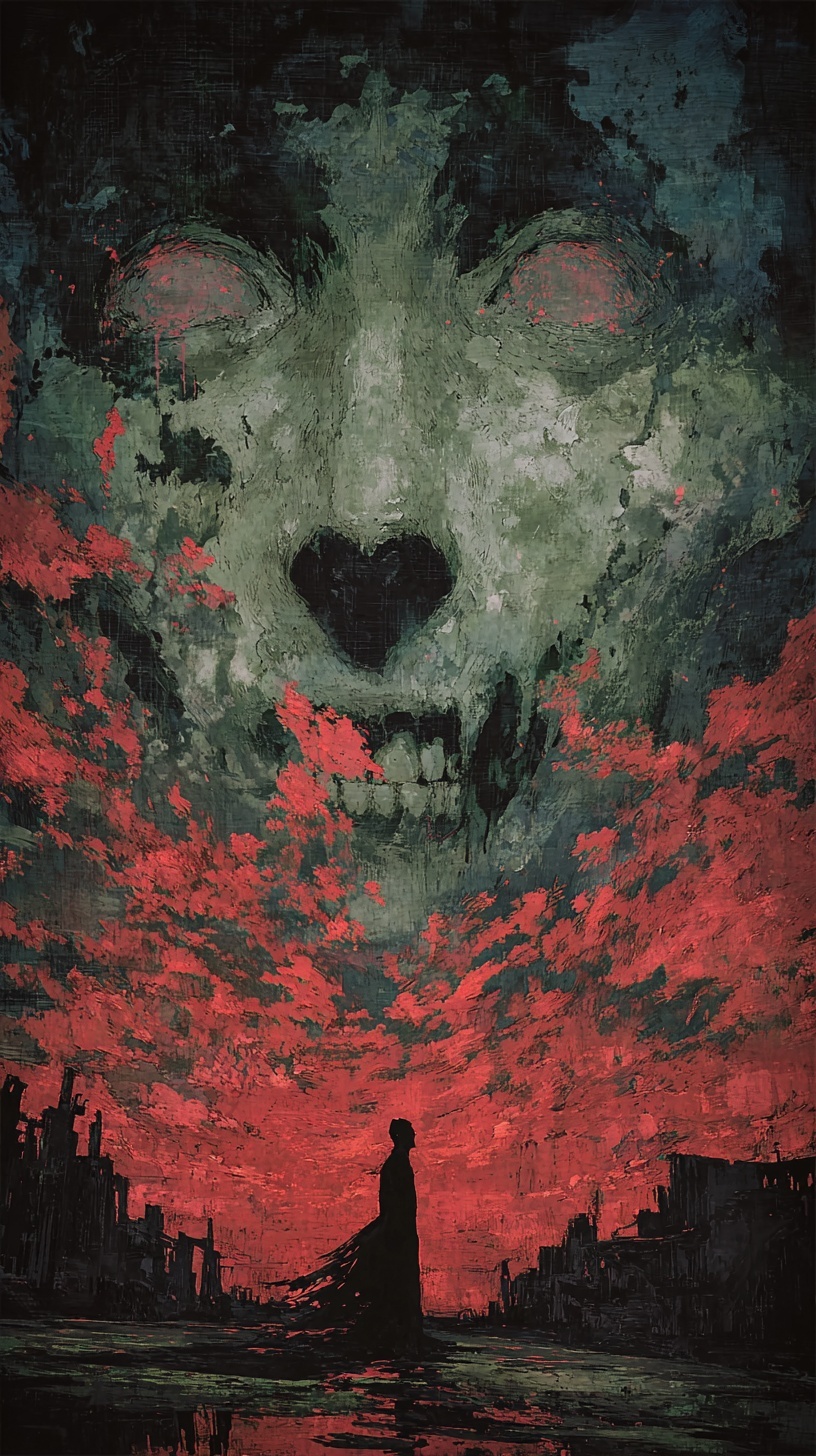
“My flesh did fail me, yet the pain did not depart. It clings, a faithful servant, long after breath and bone have taken leave of me.”
Lifespan
Undead



Comments