

The Weave
An Arcane Lattice
"The Weave is not a tool to be grasped, nor a flame to be kindled. It is the loom upon which reality is stretched, and we are merely fingers tugging at threads we did not spin."
The Weave is the unseen lattice that binds the world together and allows magic to function. It is not a god, nor a spell, nor a force with intention. It is the structure beneath reality itself, the quiet framework through which power flows. Every spell ever cast is not created from nothing but drawn through this underlying pattern. Without the Weave, magic would be raw chaos, unfocused and destructive.
At its simplest, the Weave can be understood as the medium of magic. Just as air carries sound and water carries a current, the Weave carries arcane energy. Those who practice magic do not generate power on their own. They shape and pull at what already exists within this structure. Skill in magic is therefore not about strength but about precision and understanding.
The Weave is present everywhere, though it is not equally strong in all places. In ancient forests, forgotten ruins, and sites of great historical events, it often gathers more densely. In barren lands scarred by catastrophe, it may be thin or unstable. These variations explain why some regions are rich with enchantment while others resist even the simplest incantations.
Scholars disagree on the origin of the Weave. Some claim it was formed at the dawn of creation, woven into the world alongside stone and sea. Others argue it is a remnant of a greater power that once shaped reality and then withdrew. There are even those who believe the Weave is slowly unraveling, though such claims remain unproven and controversial.
When the Weave is disturbed, the results are dangerous. Wild magic surges, dead zones where spells fail, and catastrophic magical storms are all signs of strain within the lattice. Large scale rituals, reckless experimentation, or the death of immensely powerful beings can tear at its fabric. Repairing such damage is difficult and often beyond mortal capability.
In everyday life, most people never perceive the Weave directly. It remains invisible and intangible, sensed only by those trained to feel its currents. Yet it touches every enchanted blade, every warded doorway, and every whispered charm. Whether understood or not, it is the foundation upon which all arcane tradition rests, steady and enduring beneath the surface of the world.
Manifestation
"Watch the color of a flame before you trust it. Gold speaks of balance. Blue whispers of strain. The Weave always shows its temper in light before it shows it in ruin."
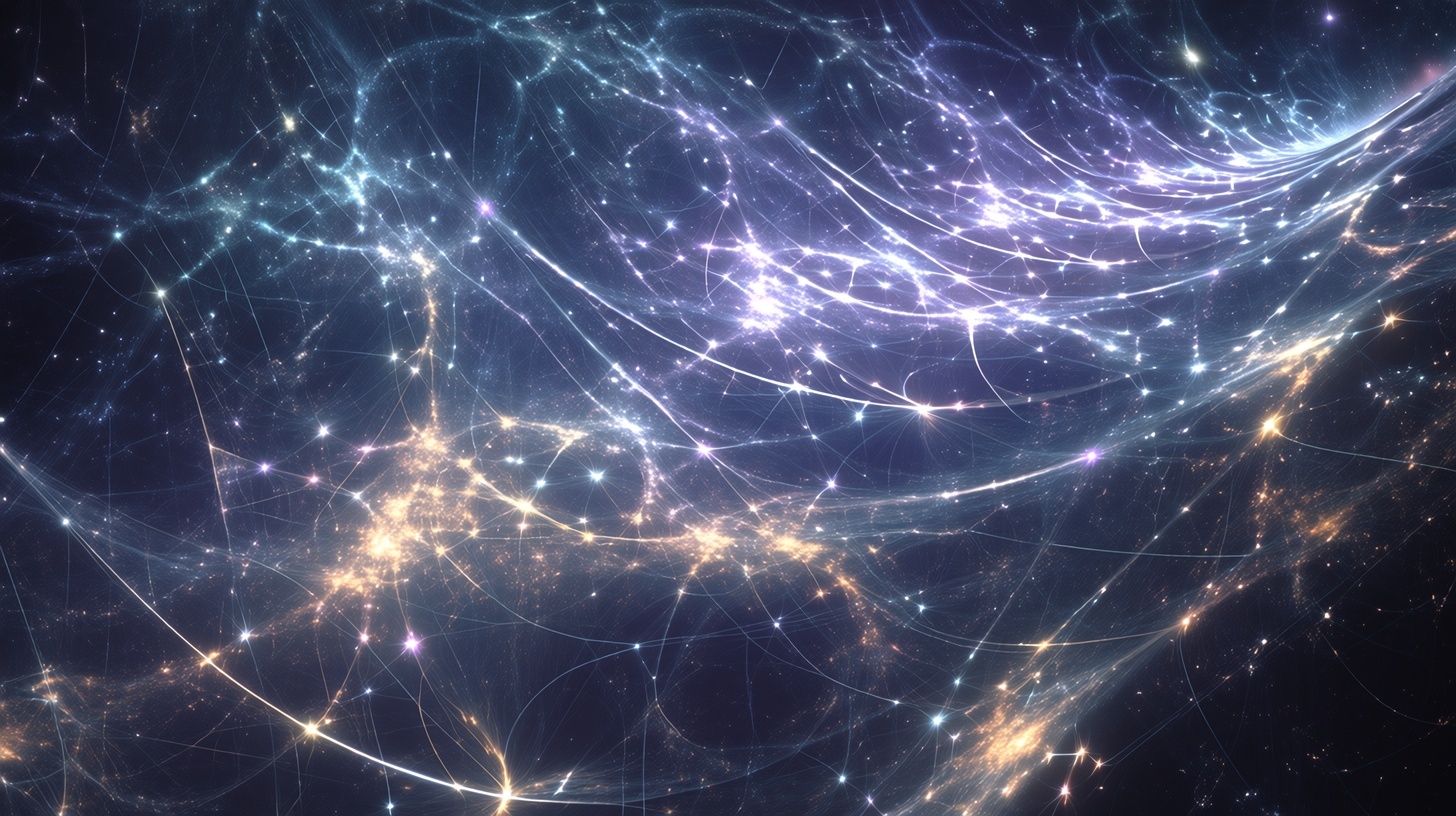
The Weave does not reveal itself as a solid structure, but as a pattern of motion and light that trained eyes can perceive. To those capable of sensing it, the air appears threaded with faint strands of luminescence, shifting in slow, deliberate currents. These strands are not uniform in color. They carry subtle hues that correspond to the dominant forces in a region. Where elemental fire is strong, the threads burn with deep crimson and copper. Where memory and spirit prevail, they shimmer in pale silver and muted violet.
When magic is invoked, the Weave responds visibly. The strands tighten and brighten, drawing inward toward the caster’s will. Fire drawn through a stable current burns a clean gold edged in white, steady and controlled. If the current is turbulent, the flame turns blue at its core and spits sparks of green along its edge, a sign of instability. Seasoned practitioners learn to read these changes instinctively, knowing at a glance whether the power they channel is safe or near rupture.
Gravity and magnetism also leave their imprint upon the sky. In the far north and south, where the world’s unseen forces bend most sharply, the night is often crowned with vast curtains of light. These auroras are not merely atmospheric spectacle. They are visible ripples in the Weave where planetary forces intersect with the arcane lattice. Bands of emerald and indigo stretch across the heavens, and on rare nights streaks of iron red cut through them like veins under tension.
Storms offer another manifestation of the law. Lightning does not simply strike downward. It forks along invisible lines that trace the underlying structure. During intense tempests, observers can see faint afterimages lingering in the air, ghostly lines marking where the Weave momentarily flared under stress. Thunder itself carries a secondary resonance, a low vibration felt in the bones by those attuned to such things.
Living beings distort the Weave in subtle ways. Around ordinary people the strands bend gently, parting and rejoining like grass in a current. Around sorcerers and ancient creatures the distortion is more pronounced. The air may shimmer, colors deepen, and nearby lights flicker without cause. In extreme cases the ground beneath such beings hums faintly, as if the world itself braces against the pressure of their presence.
Sacred sites and ancient ruins display more permanent signs. Stone carved in eras of strong magic often bears a faint sheen that never fully fades. At dusk these surfaces may glow softly, tracing old inscriptions in dim light. Water pooled in such places reflects not only the sky above but faint patterns beneath the surface, like constellations submerged in black glass.
In regions where the Weave has been damaged, manifestation takes on harsher traits. Colors desaturate, flames burn dull and smokeless, and shadows stretch too long even at noon. Compasses spin erratically. Small objects may tremble without wind. The sky above such areas sometimes carries a thin gray pall, as if the world itself has lost depth and clarity.
Though invisible to most, these signs are consistent and measurable. Scholars chart them, mages train to recognize them, and sailors learn to respect them. The Weave does not speak in words. It reveals itself through color, motion, and resonance. Those who pay attention can see its law written plainly across fire, sky, and stone.
Localization
"No land is born equal in the sight of the Weave. Some hills breathe it as naturally as air, while other fields choke upon its absence. Build your tower where the current runs strong, or do not build it at all."
The Weave is not evenly distributed across the world. While its presence is universal, its strength and stability vary according to geography, history, and forces beneath the surface. Certain regions act as natural conduits where arcane currents converge, while others resist or repel those same energies. These variations are not random. They follow patterns shaped by the world’s formation, its tectonic stress, and the accumulation of past magical events.
Leylines are the most recognized form of localization. These are narrow corridors where the Weave runs dense and fast, like a river constrained within stone banks. Settlements built along such lines often prosper in arcane study, as spells cast there require less effort and hold their structure longer. The reason is structural. The Weave aligns tightly along these paths, reducing turbulence and stabilizing the flow of power.
High mountain ranges frequently sit at the intersection of multiple currents. The immense pressure of continental plates and the abundance of mineral deposits create natural anchors in the lattice. As a result, peaks and ridgelines often hum with residual energy. Ancient orders built observatories and sanctuaries in these locations because divination and elemental workings respond with unusual clarity at such heights.
In contrast, dead magic zones form where the Weave has been torn or drained. These areas are often the aftermath of catastrophic rituals, divine conflict, or the collapse of powerful artifacts. Within their boundaries, spells unravel before completion and enchanted items lie dormant. The lattice in such places is thinned to near absence, leaving only a faint echo of its former structure. Recovery, if it occurs at all, takes generations.
Deep oceans present another form of localization. The weight of water and the constant motion of tides create slow but immense currents in the Weave. Magic associated with memory, dream, and spirit tends to gather in abyssal trenches where light does not reach. Coastal regions sometimes experience unpredictable surges as these underwater currents brush against shorelines, particularly during eclipses or rare celestial alignments.
Forests that have stood undisturbed for centuries also display localized strengthening. Life itself reinforces the lattice. Dense root systems and layered ecosystems produce a steady hum of low grade magical resonance. In such places enchantments tied to growth and healing take hold more easily. The Weave there is neither violent nor fast, but deep and resilient.
Ruined cities that once housed powerful civilizations often remain marked long after their fall. Prolonged arcane use leaves an imprint in stone and soil. Even if the original leyline has shifted, the residual shaping of the lattice persists. These sites can amplify certain forms of magic while distorting others, depending on what was practiced most heavily in their prime.
Localization ultimately reflects pressure and repetition. Where the world’s physical forces strain the lattice, currents tighten or fracture. Where mortal hands repeatedly shape it, grooves form in its structure. The Weave responds to both nature and will, settling into patterns that define regions as fertile, unstable, or barren in arcane terms. Understanding these localized laws is essential for anyone who intends to wield magic without courting disaster.
"If the Weave were to vanish tomorrow, the mountains would still stand and the rivers would still flow. Yet something immeasurable would be lost. Not power, but meaning. For it is the pattern beneath things that makes them more than stone and water."



Comments