


The Tontine
Where Trouble Finds You
“The Tontine is where problems go to eat before they decide whether they’re going to become paperwork. I don’t like it. I don’t shut it down. And every time I think about doing either, a ship clears on time and someone who should have caused a bigger mess doesn’t. So it stays.”
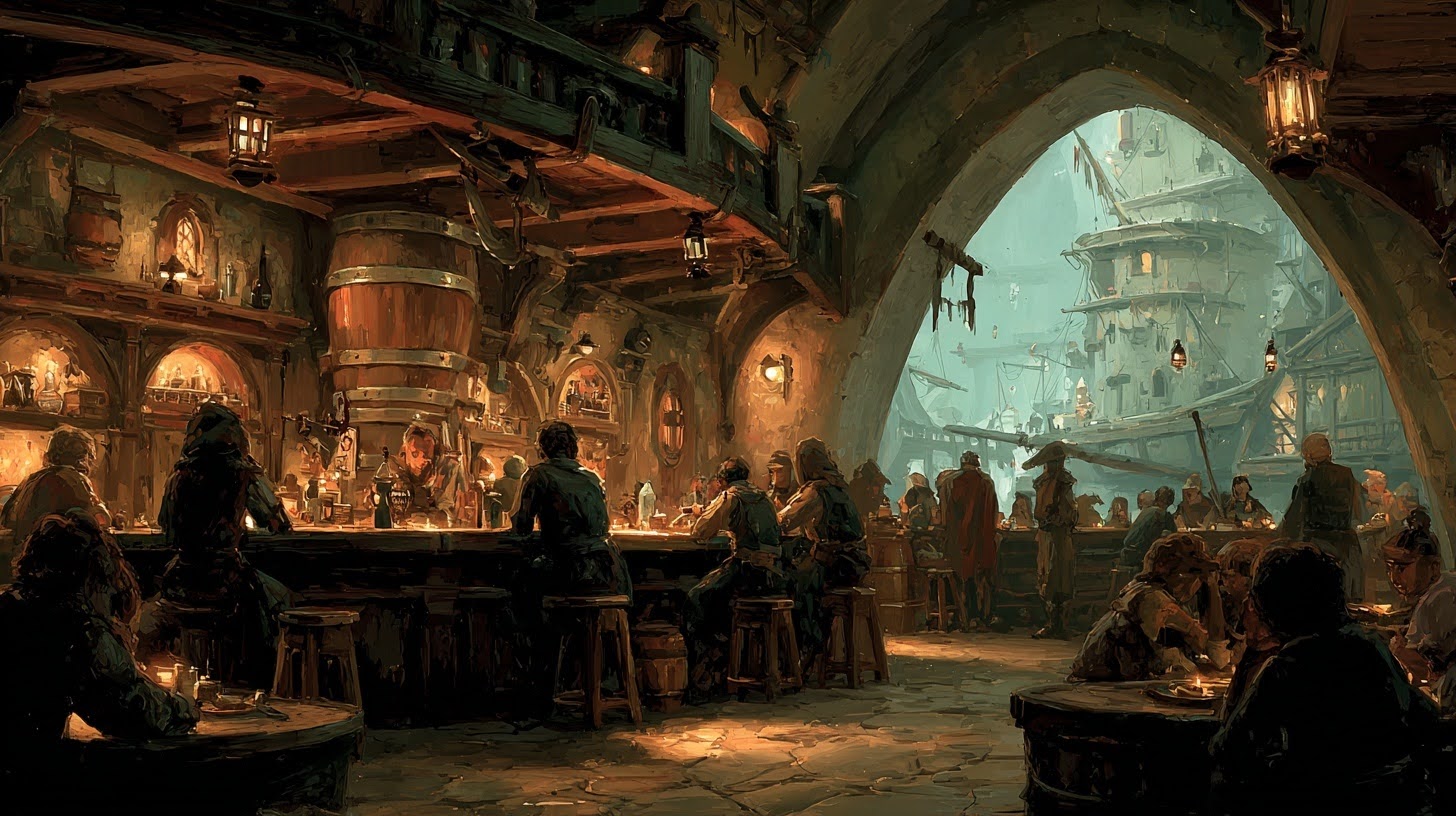
The Tontine is one of those places people learn about before they decide whether they want to admit they are curious. It comes up in conversation casually, almost carelessly, as if it were just another bar near the docks. Then someone pauses, or lowers their voice slightly, and adds a detail that makes it clear this is not a place you stumble into by accident. By the time directions are given, you already understand that choosing to go there is a decision, not a detour.
What makes that decision complicated is that the Tontine is not trying to be infamous. It does not advertise danger, and it does not trade on reputation the way some dockside dives do. It exists, it operates, and it feeds people well. The fact that violence sometimes happens there is treated as incidental, a byproduct of where it sits and who passes through, rather than as an attraction. That indifference is unsettling to newcomers and comforting to everyone else.
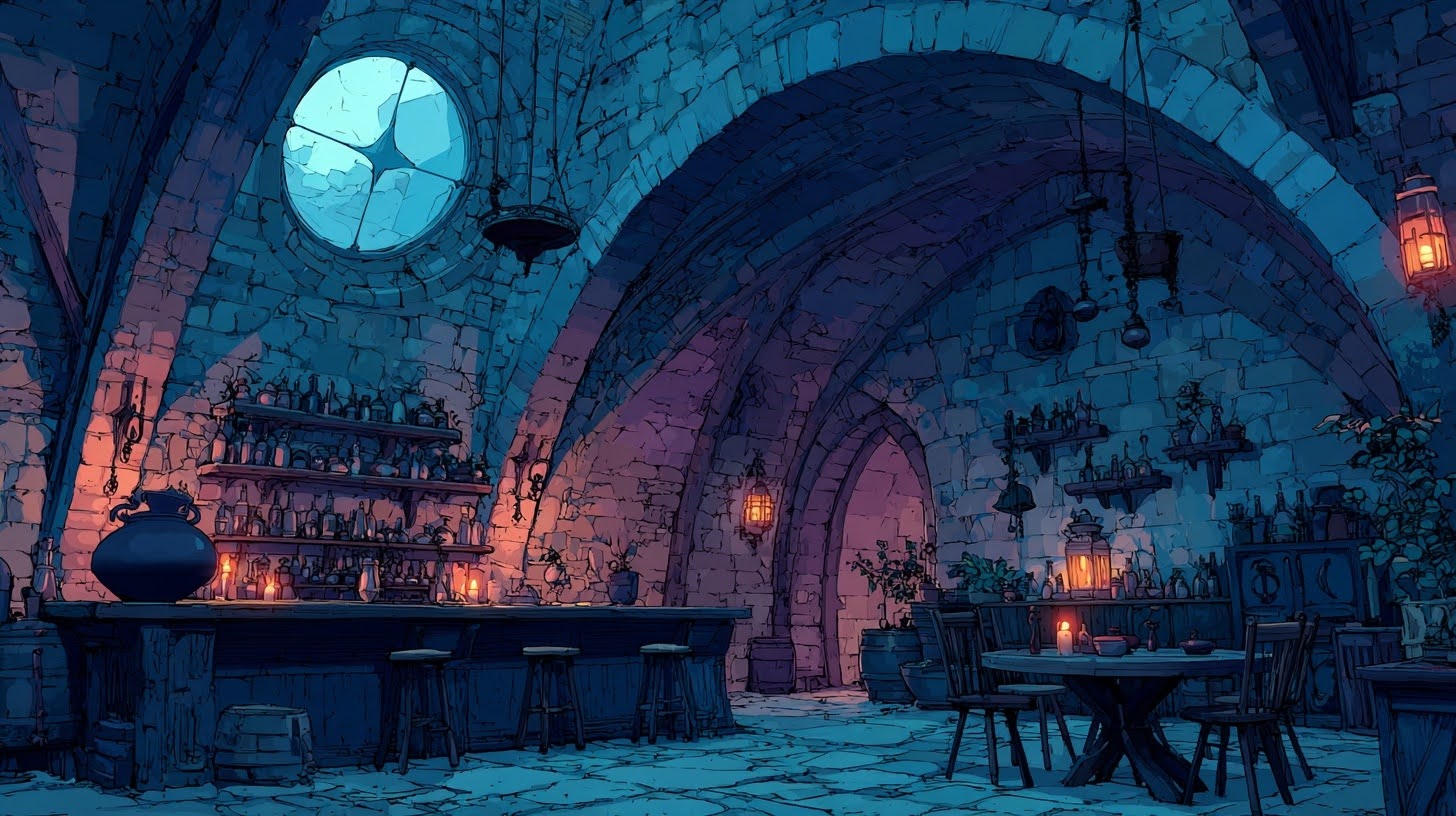
The building itself reinforces that feeling. It looks older than the businesses around it and heavier than anything nearby has a right to be. Thick stone walls and awkward angles hint at a purpose that never quite came to fruition. Repairs are visible and uneven, not hidden or beautified. At night, light leaks from the windows in narrow bands, doing nothing to soften the structure’s silhouette. It does not invite. It waits.
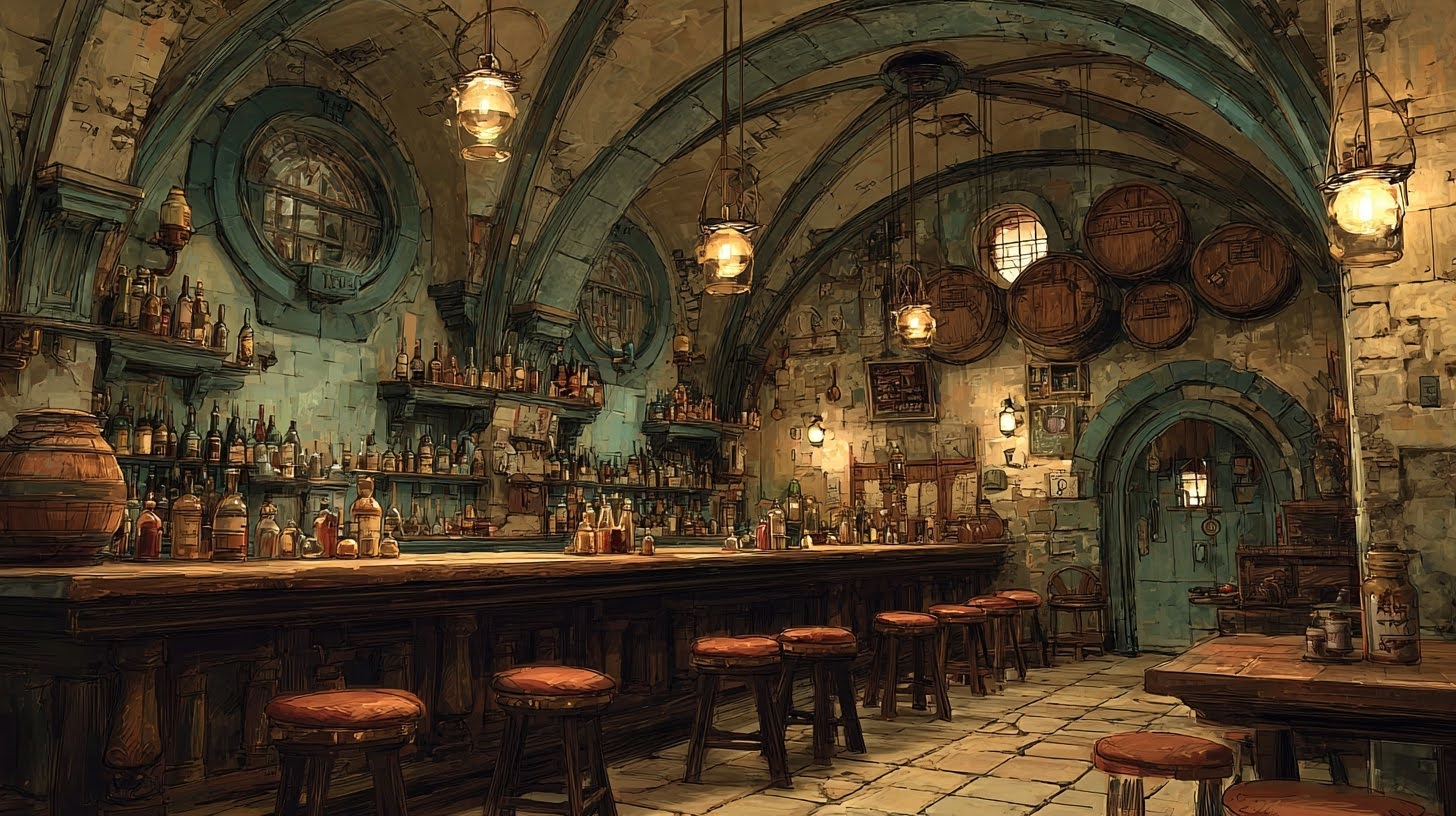
Inside, the room feels lived in rather than staged. Tables are worn smooth from use. The bar is scarred and solid, built to be leaned on more than admired. The space does not encourage lingering, but it does not rush you either. People find their places quickly and tend to keep them. Conversations happen in low tones, punctuated by laughter, arguments, and the constant background noise of a working kitchen.
That kitchen is the reason the Tontine endures. The food is not clever, and it is not cautious. It is prepared by people who know how to feed a port full of strangers efficiently and well. Meals arrive quickly, built from ingredients that reflect the traffic of the harbor and the habits of those who work it. People eat because they are hungry, because the food is good, and because sometimes eating well matters more than eating safely.
The Tontine’s reputation for danger is earned, but rarely in the ways outsiders expect. Trouble does not explode without warning. It simmers, then resolves, often before anyone unfamiliar with the place realizes what has happened. The staff and regulars understand the rhythm. They know when to step back, when to intervene, and when to let something burn itself out. Most nights pass without incident, which is precisely why the incidents that do occur travel so far in retelling.
Travelers who do venture inside often leave conflicted. They remember the food clearly. They remember the tension more vaguely. Some tell stories of close calls or narrow escapes. Others admit nothing happened at all, which somehow feels more unnerving. The Tontine does not offer a narrative. It offers an experience that resists easy explanation.
In Saint Sebastian, places like this are necessary. The city moves too fast and welcomes too many people to pretend that order can be neat or absolute. The Tontine absorbs a small portion of that reality and continues functioning anyway. It feeds those who choose to enter and asks nothing of them beyond knowing when it is time to leave. That is its role, and it fulfills it without apology.
Purpose / Function
“A city like Saint Sebastian needs a place where the sharp edges can rub against each other without cutting anything vital. The Tontine is ugly, loud, and occasionally bloody, but it keeps worse things from spilling into the streets. Call it a necessary evil if you like. I call it containment.”
The intended purpose of the building that became the Tontine has shifted so many times that intent itself feels like a loose concept when applied to it. What it is used for now is clear enough. It is a place to eat, drink, meet, wait, hide, and occasionally recover. What it was meant to be originally was something far more singular and aspirational, and that gap between intention and outcome defines the structure as much as stone or timber ever could.
Its original reason for being was devotional and symbolic. The planned maritime cathedral was meant to anchor Saint Sebastian spiritually as well as economically. It was designed to face the harbor, to be the first and last landmark sailors saw, and to remind them that the city claimed some authority over the sea that sustained and endangered them. It was a statement of permanence in a place defined by movement. That purpose assumed stability, continuity, and a shared belief system that never fully materialized.
Once construction stalled and the building was damaged, that original intent lost its relevance. A half built cathedral without congregants or patrons became a liability rather than a symbol. As control of the island shifted and priorities changed, the structure stopped being about what it represented and became about what could be done with it. Survival replaced symbolism. Utility replaced aspiration.
When the building was finally claimed and repurposed as a tavern, its purpose narrowed and broadened at the same time. Narrowed, because it no longer pretended to serve an abstract ideal. Broadened, because it began to serve many overlapping needs at once. It became a place to conduct business quietly, to move goods discreetly, to gather without asking permission, and to feed people who did not have the time or safety to be selective about where they ate.
Over time, the Tontine’s purpose settled into something unspoken but widely understood. It exists to absorb pressure. Social, economic, and personal tensions that would cause trouble elsewhere are allowed to bleed off inside its walls. Deals are made. Arguments end. People disappear into the crowd or out through doors that were not on the original plans. The building does not resolve these tensions. It contains them long enough for the city to keep functioning.
In that sense, the Tontine’s current purpose is the inverse of its original one. Where the cathedral was meant to impose order, the tavern accommodates disorder. Where the original design sought to elevate and unify, the present use accepts fragmentation and transience. The building endures because it no longer insists on being what it was meant to be. It serves the city as it is, not as anyone once hoped it might become.
Alterations
“I added three false walls, a crawlspace behind the west cellar, and a hatch under the second keg rack, all very clever at the time. Then one night I knocked through the wrong stone and found myself staring into the basement of the potion shop down the block. We just stood there for a while, all of us realizing at the same moment how much explaining this was going to require.”
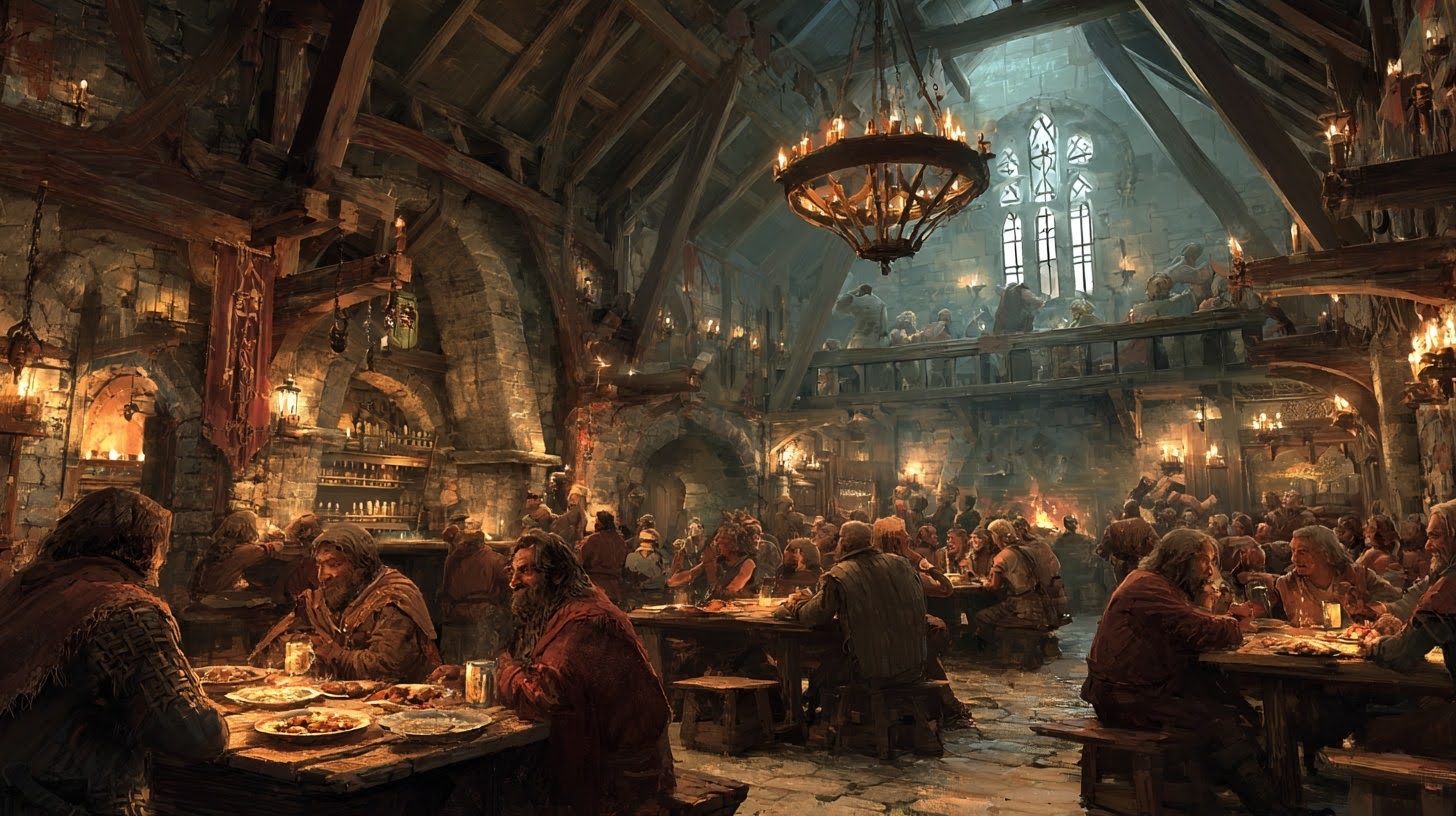
Alterations to the Tontine have never been planned in any official sense. They accumulated. Each owner inherited a building already bent out of shape by history and added whatever changes were necessary to survive their particular moment. Over time, those changes layered on top of one another until the structure became less a single design and more a record of dockside ingenuity applied under pressure.
Some of the earliest modifications were practical and illegal in equal measure. Spaces meant to be storage or clerical offices were quietly converted for bootleg distilling and unlicensed brewing. Floors were reinforced to hold weight they were never meant to bear. Chimneys were rerouted, vents disguised, and drains added where none should have existed. These changes were rarely removed when they were no longer needed. They were simply sealed, hidden, or built over.
Smuggling left deeper marks. False walls were introduced and later forgotten. Trapdoors appeared beneath rugs, behind barrels, and under loose planks near the bar. Narrow passages were cut through thick stone, connecting spaces that should not logically connect at all. Some routes were intended to move goods quickly from dock to cellar. Others were meant for people, offering exits that bypassed the main room entirely. A few no longer lead anywhere useful but remain sealed inside the walls.
As ownership changed hands, so did the nature of the alterations. One proprietor might add a hidden room for contraband storage. The next might wall it off and create something else entirely, unaware of what lay just beyond. Over time, modifications stacked without coordination. Old features were buried under new ones. Shortcuts overlapped. Voids were created accidentally and left alone because no one wanted to open them up again.
The result is a building that no one fully understands, not even the current owners. There are spaces that exist only on old mental maps passed down verbally. There are doors that open onto brick and panels that conceal nothing anyone remembers installing. Staff learn the useful parts by habit and avoid the rest. Every so often, someone stumbles onto a feature no one knew was still accessible.
This constant, opportunistic remodeling has given the Tontine a reputation among dockworkers and criminals alike. It is known as a place that adapts without ever quite settling. Like a ship refitted a dozen times by different crews, it carries systems layered atop older systems, some brilliant, some dangerous, and some entirely forgotten. The building works not because it makes sense, but because it has learned, piece by piece, how to survive.
Architecture
“This place was meant to be a warning light for sailors, a promise that the future could be read and endured. Now it is a knot of bad choices, blood on stone, and meals eaten in haste. Savras shows us what will be, not what should have been, and still I find it hard to look at these walls without mourning the difference.”
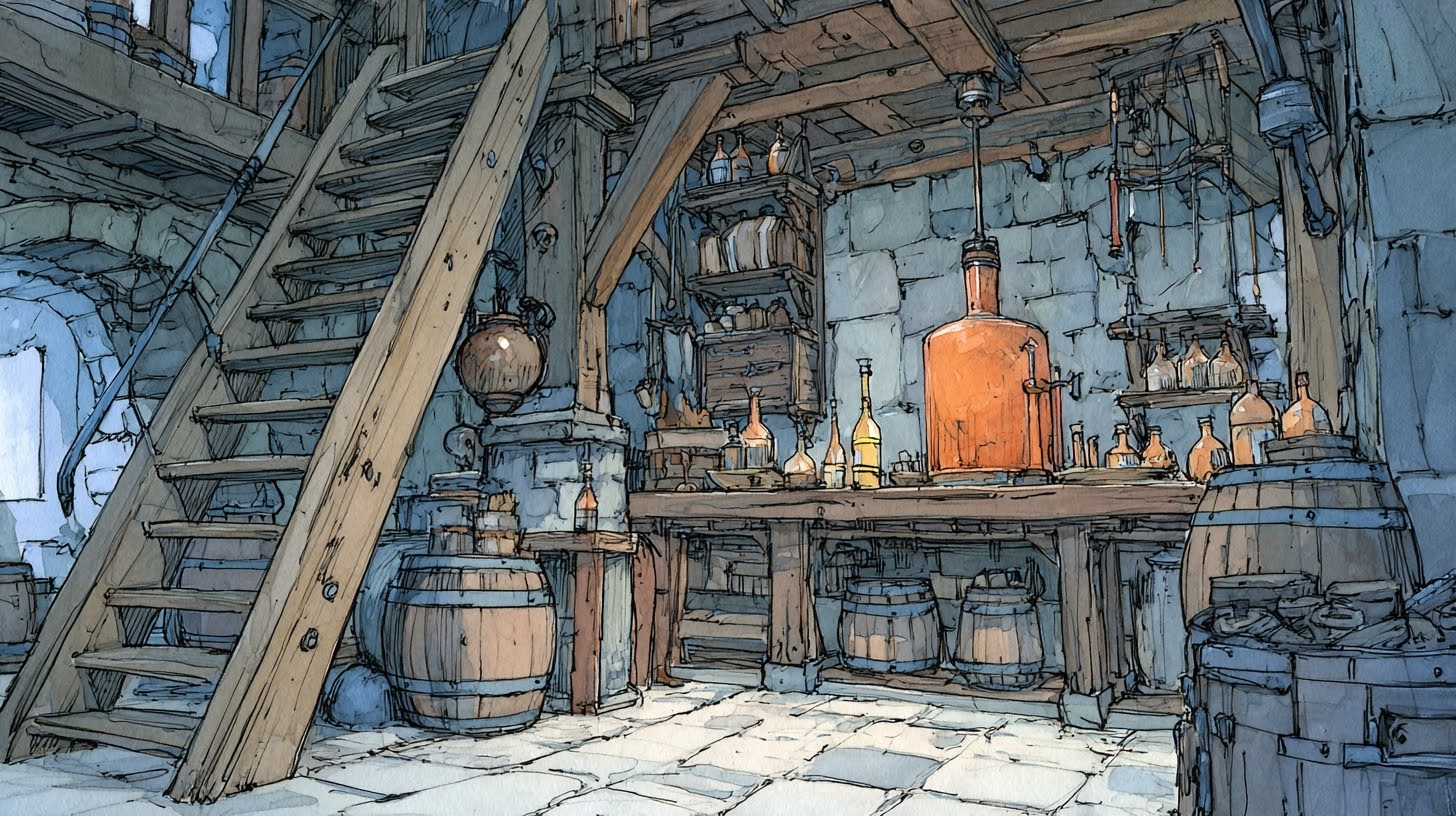
The Tontine’s architecture makes little sense until you know what it was meant to be. The original structure was laid out as a maritime cathedral, designed to be tall, imposing, and visible from the harbor. Its foundations were sunk deep and overbuilt, meant to support a roof and tower that were never completed. Even now, that intent is readable in the proportions. The footprint is broader than it needs to be, the walls thicker than any tavern would justify, and the interior space feels as though it was meant to hold something larger than tables and barrels.
That original vision never survived contact with history. The building was damaged while still incomplete during one of the naval sieges that swept Saint Sebastian when control of the island changed hands. Upper sections collapsed or were deliberately dismantled, and anything decorative that had been installed was lost early. What remained was a partial shell, too solid to tear down cheaply and too ruined to finish as planned. Over time, the city simply built around it and learned to live with the scar.
When the structure was repurposed, little effort was made to unify old and new construction. Repairs were practical and uneven. New walls were raised where old ones failed. Rooflines were improvised rather than restored. Support beams were added where they were needed and left exposed where no one cared to hide them. The result is a building that feels assembled rather than designed, held together by necessity instead of vision.
That patchwork quality is part of what gives the Tontine its character. The stonework changes texture and color from one section to the next. Wood replaces stone without warning. Angles are slightly off, doorways do not quite line up, and ceilings vary in height from room to room. Nothing about it suggests comfort or refinement, but everything about it suggests endurance. The building has survived too much to worry about aesthetics.
Its age shows everywhere. Cracks run through the exterior walls, some old and some newer. Sections sag just enough to be noticeable. Repairs are visible and unapologetic. Rather than weakening the place, this decay adds to its presence. On a dark night, the Tontine looms over the street like something that should have fallen long ago and somehow did not. Even longshoremen who have seen worse elsewhere tend to glance at it twice before going inside.
The exterior is especially unsettling after sunset. Light leaks unevenly from narrow windows that were never meant for a tavern. Shadows collect in recesses left over from unfinished architectural elements. The building does not glow or invite. It simply waits. The reputation does not help, but even without it, the structure alone would give pause. It looks like a place where things happen without announcement.
Despite all of this, the Tontine fits its surroundings perfectly. It sits on one of the more colorful wharfs in the city, in a district that favors function over polish and tolerates a certain amount of disorder. The neighborhood is rough but not lawless, chaotic but still governed. Much like Saint Sebastian itself, the building reflects a version of Tortuga that learned how to survive without completely falling apart. It is thrown together, aging, and ominous, but it stands, and that is enough.
Defenses
“I don’t care how good the food is. I went in there once, thought I knew the room, thought wrong, and woke up outside missing a tooth and my pride. Everyone says it wasn’t even a bad night. I’m not stepping foot back in that place. Ever. Anyone who does is welcome to it.”
The Tontine does not advertise defenses, but it was never a fragile building to begin with. The walls are thick stone meant for a structure larger and more permanent than a tavern. Many of the windows that would have existed in a finished cathedral were never cut, leaving the interior darker and more enclosed than most bars in Saint Sebastian. What openings do exist are narrow and set high enough to discourage easy entry. The door is heavy, reinforced, and replaced more often than repaired.
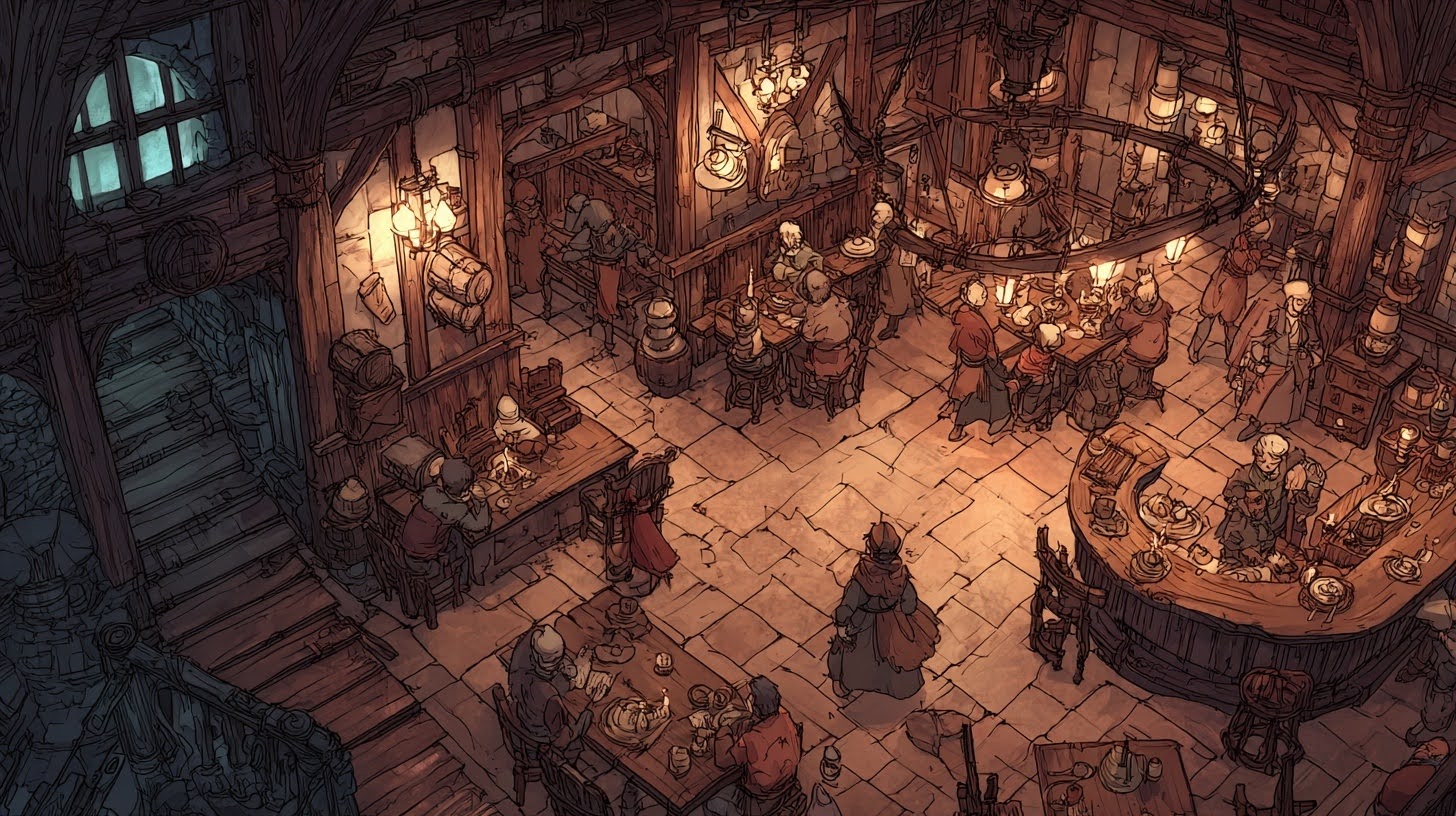
Inside, the layout works against chaos rather than inviting it. Sightlines are broken by pillars and partial walls left over from the original construction. There are few long, open spaces where a fight can gather momentum. Corners exist, but they are visible from the bar. The staff can see most of the room without moving, and regulars know who is being watched and who is not. This does not prevent violence, but it keeps it contained.
The bar itself is positioned deliberately. It is solid enough to serve as cover and wide enough to discourage anyone from trying to vault it. The space behind it is tight, controlled, and accessible only to staff. When trouble starts near the counter, it tends to stop there. The kitchen entrance is kept narrow and offset, making it difficult for anyone not meant to be there to rush it in the confusion.
The staff are not guards, but they are not unprepared. Anyone working the floor knows how to break contact, when to step back, and when to apply force without escalating a situation further. They carry tools meant for work that can double as weapons if necessary, and they are practiced in using them. This is not bravado. It is routine. People who mistake courtesy for weakness do not tend to repeat the error.
Regulars form another layer of defense. Not out of loyalty to the bar, but out of self interest. A fight that spills too far disrupts business, attracts the watch, and makes everyone’s night worse. When violence happens, it is often corrected from within before it grows. A chair moves. A body is steered toward the door. Someone is reminded, quietly or not, that this is not the place for whatever they are trying to do.
None of this makes the Tontine safe. It makes it survivable. Knives still come out. Blood is still spilled. People are still injured. The difference is that the damage rarely spreads beyond what started it. The building absorbs it. The staff contain it. The room moves on.
History
“This building has been a promise, a ruin, a shelter, a liability, and an embarrassment, sometimes all in the same decade. Every authority that held Saint Sebastian tried to decide what it meant, and every one of them eventually chose to stop asking. The Tontine remembers things the city prefers not to catalogue, which is why its history survives mostly in rumor and avoidance rather than ledgers.”
The structure that would eventually become the Tontine was never meant to be a tavern. It began as an ambitious maritime cathedral, commissioned when Saint Sebastian was still trying to present itself as a spiritual as well as commercial capital of the island. The plan was for a sailors’ house of worship that would dominate the harbor skyline, visible to ships before they even made port. Its scale was intended to impress arriving crews and reassure departing ones, a statement that the sea might be dangerous but the city stood firm.
Construction never progressed as intended. Funding came in irregular waves, tied closely to shipping fortunes and political favor, and the project stalled repeatedly. The foundations were laid and parts of the main hall raised, but entire wings remained skeletal. What stone was set often lacked ornament, and what ornament was planned was never carved. By the time work slowed to a crawl, the building already carried the look of something unfinished and slightly out of time with itself.
That incompleteness became permanent during the first naval siege of Saint Sebastian. At the time, the island was under the control of Avindor, whose colonial presence made the harbor a strategic target. During the fighting, the half built cathedral took damage from bombardment meant for nearby docks and fortifications. Sections of the upper structure collapsed, interior supports cracked, and parts of the roof were simply never repaired. When the siege ended, the building stood wounded and unusable, its original purpose effectively abandoned.
Control of the island changed hands more than once in the years that followed, passing between Estania, Louve, and Avindor as treaties shifted and fleets arrived or withdrew. Each regime inherited the damaged shell and chose not to invest in restoring it. For some it was a reminder of a previous authority’s ambitions, for others an expense without immediate return. Over time, the structure was stripped of anything easily salvaged. Stone blocks were reused elsewhere. Religious fittings were removed or sold. What remained was solid but unadorned.
Eventually the lot was sold cheaply, valued more for its location than its history. A private owner saw potential not in what the building had been meant to represent, but in what it already was. Thick walls, high ceilings, limited windows, and proximity to the docks made it suitable for a tavern that could handle crowds and noise without drawing attention. Repairs were practical rather than restorative. Collapsed sections were cleared, not rebuilt. Walls were reinforced where needed and ignored where they were not.
By the time it opened as a bar, few people still thought of it as a cathedral at all. The name changed, the purpose changed, and the clientele certainly changed, but the bones of the structure remained. That unfinished, repurposed quality never left it. The Tontine exists because a grand plan failed, survived violence, and was claimed by people who needed something sturdier than ideals. The building feeds people now, and that is the only purpose it has managed to keep consistently.
Tourism
“No sandwich is that good. I pushed the door open, saw three men go through a table, another get dragged out by his boots, and someone bleeding on the floor while still arguing about who started it. I closed the door and ate somewhere else. I was hungry, not suicidal.”
Visitors to Saint Sebastian are usually warned about the Tontine before they are told how to find it. The warning is rarely specific. People say it is dangerous, that fights happen, that knives come out, that it is not the sort of place you linger unless you know how to read a room. What often surprises travelers is that these warnings are delivered in the same breath as recommendations. The danger is real, but so is the food, and that contradiction is what gives the place its reputation beyond the island.
It is an odd thing for a tavern with such a reputation to become a destination, but Saint Sebastian has never been a city that catered to expectations. Word spreads the way it always does in ports. Through crews passing stories along. Through merchants who ate well once and remember it. Through travelers who were hungry, took a risk, and decided it was worth talking about afterward. The Tontine is not famous because it is dangerous. It is famous because people keep eating there despite the danger.
Many travelers never make it past the threshold. They stand outside, take in the heavy door and the narrow windows, listen to the noise inside, and decide that hunger can wait. For some, the idea of being stabbed over a meal, however unlikely, outweighs curiosity. These people leave with stories secondhand, told by others who were either braver or more foolish. Saint Sebastian does not begrudge them the choice. Neither does the Tontine.
Those who do step inside tend to be unprepared for how ordinary the place feels once they commit. The danger does not announce itself. There are no performances, no deliberate intimidation, no effort made to impress outsiders. It feels like a working bar because that is what it is. People eat, drink, argue, and move on. The food arrives quickly and without ceremony, and that normalcy is often more unsettling to visitors than overt hostility would be.
Some travelers come specifically for the food, treating the risk as part of the experience. They speak later of the stew, of the way the kitchen seems to know what it is doing, of meals that were good enough to distract them from the tension in the room. These stories tend to grow in the retelling, but the core truth remains. The food is not a novelty. It does not trade on danger for flavor. It stands on its own, which is why it draws people who would otherwise avoid places like it.
Others misjudge the place entirely. They arrive expecting chaos and find instead a kind of rough equilibrium. When trouble does happen, it is handled quickly and without spectacle. Staff and regulars alike know when to step back and when to step in. Travelers who stay too long or stare too hard tend to learn lessons they did not intend to, and those lessons travel just as far as praise for the food.
Because of that, the Tontine occupies an unusual place in Saint Sebastian’s informal travel culture. It is mentioned often, recommended cautiously, and rarely explained in detail. Guides gesture toward it without elaboration. Locals answer questions about it with shrugs or warnings that sound rehearsed from long use. Travelers who go inside tend to remember it clearly, while those who do not still repeat the stories. The bar neither welcomes nor discourages attention, and that indifference does more to shape its reputation than any single incident ever could.
“The Tontine is not lawless. It is simply selective about when the law needs to be present. I would rather know where trouble gathers than pretend it does not exist. As long as it stays inside those walls, my patrols sleep better than they would otherwise.”



I can almost hear the shanties being interrupted by breaking glass and a barfight :D
Un monde à explorer vous attend.
more glass on the floor than peanut shells ;)
I imagine a half-elven bard hopped up on PCP singing a few rounds of "Barnacle Bill the Sailor."
sounds like a typical lunch rush, lol